Rigveda 10.76: To the pressing stones
Introduction
Rigveda 10.76 is a hymn of 8 verses addressed to the pressing stones. It stands in book (maṇḍala) 10, the last and latest book. The Rigveda is the oldest collection of Sanskrit hymns, composed in the second half of the second millennium BCE and handed down orally for many centuries before it was written down.
The manuscript shown is Penn Ms. Coll. 390 Item 48 (University of Pennsylvania), a paper manuscript of the eighth aṣṭaka (RV 10.46-10.191) of the Ṛgveda Saṃhitā in Devanāgarī, 158 leaves, 6 lines to the page, with the accents marked in red; the scribe's colophon on fol. 158 gives Saṃvat 1768 (1711 CE); this hymn stands on fol. 42r-43r. Each section below gives the verses that end on one page; the page boundaries were read on the images (the opening words of every page), not counted out. Like most Rigveda manuscripts, Penn Ms. Coll. 390 Item 48 writes a repeated refrain in short form after its first occurrence (for example kasmai° for kasmai devāya haviṣā vidhema); the Sanskrit shown is the full text of Aufrecht's edition.
How was this verified? (Provenance)
Where on the image
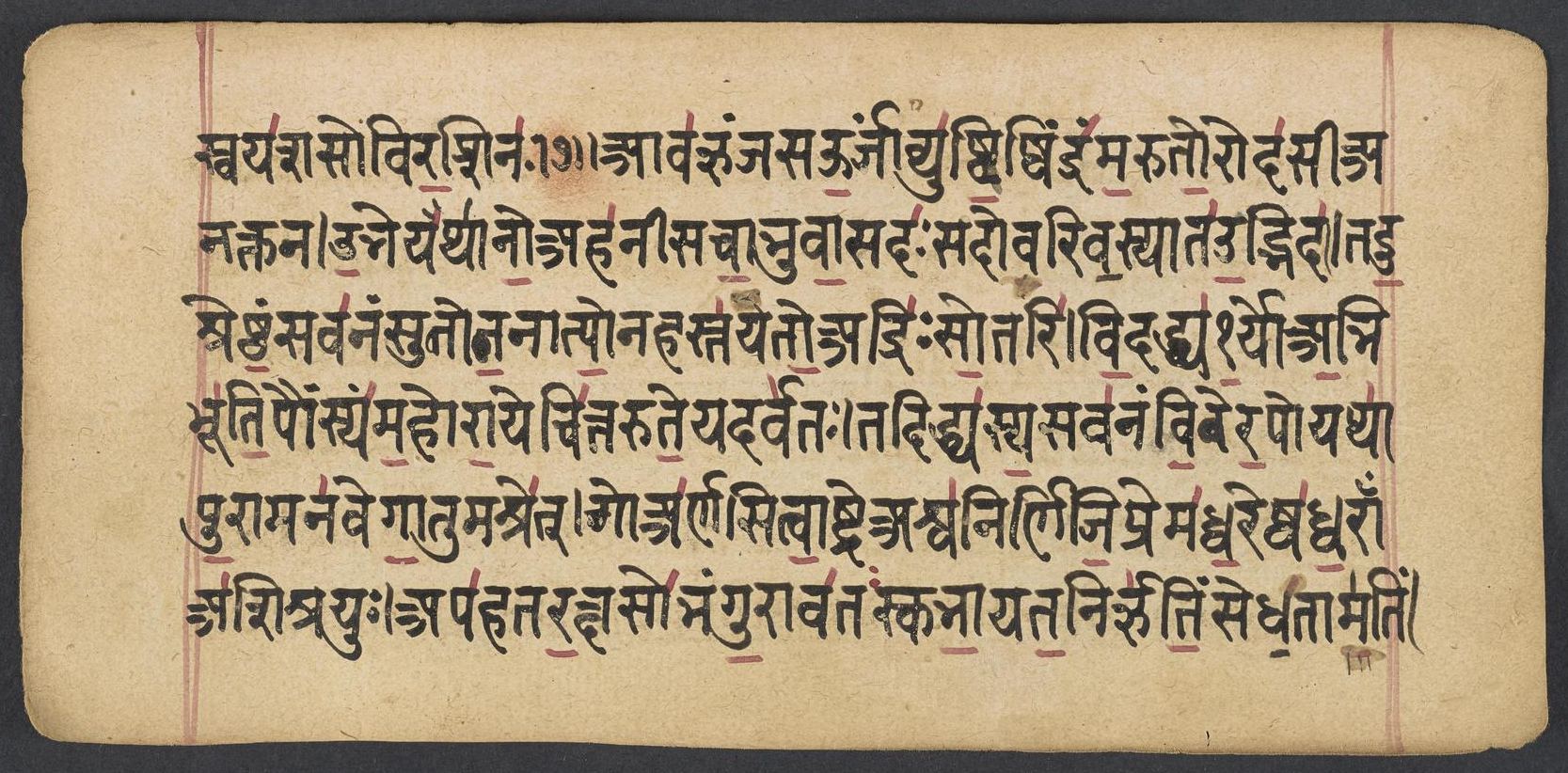
Penn Ms. Coll. 390 Item 48, fol. 42r (numbered 41r by the scribe) (OPenn image 41, lower leaf). Checked on the image: the Rigveda text on this page begins in RV 10.75.9 ‹svayaśaso virapśinaḥ›. The next page with Rigveda text, fol. 42v (numbered 41v by the scribe), begins in RV 10.76.4 ‹-sedhatāmatim›. Verses 10.76.1-3 end on this page.
1ā va̍ ṛñjasa ū̱rjāṁ vyu̍ṣṭi̱ṣv indra̍m ma̱ruto̱ roda̍sī anaktana | u̱bhe yathā̍ no̱ aha̍nī sacā̱bhuvā̱ sada̍ḥ-sado variva̱syāta̍ u̱dbhidā̍ ||
2tad u̱ śreṣṭha̱ṁ sava̍naṁ sunota̱nātyo̱ na hasta̍yato̱ adri̍ḥ so̱tari̍ | vi̱dad dhy a1̱̍ryo a̱bhibhū̍ti̱ pauṁsya̍m ma̱ho rā̱ye ci̍t tarute̱ yad arva̍taḥ ||
3tad id dhy a̍sya̱ sava̍naṁ vi̱ver a̱po yathā̍ pu̱rā mana̍ve gā̱tum aśre̍t | goa̍rṇasi tvā̱ṣṭre aśva̍nirṇiji̱ prem a̍dhva̱reṣv a̍dhva̱rām̐ a̍śiśrayuḥ ||
1I GRASP at you when power and strength begin to dawn: bedew ye, Indra and the Maruts, Heaven and Earth, That Day and Night, in every hall of sacrifice, may wait on us and bless us when they first spring forth.
2Press the libation out, most excellent of all: the Pressing-stone is grasped like a hand-guided steed. So let it win the valour that subdues the foe, and the fleet courser's might that speeds to ample wealth.
3Juice that this Stone pours out removes defect of ours, as in old time it brought prosperity to man. At sacrifices they established holy rites on Tvashṭar's milk-blent juice bright with the hue of steeds.
Where on the image
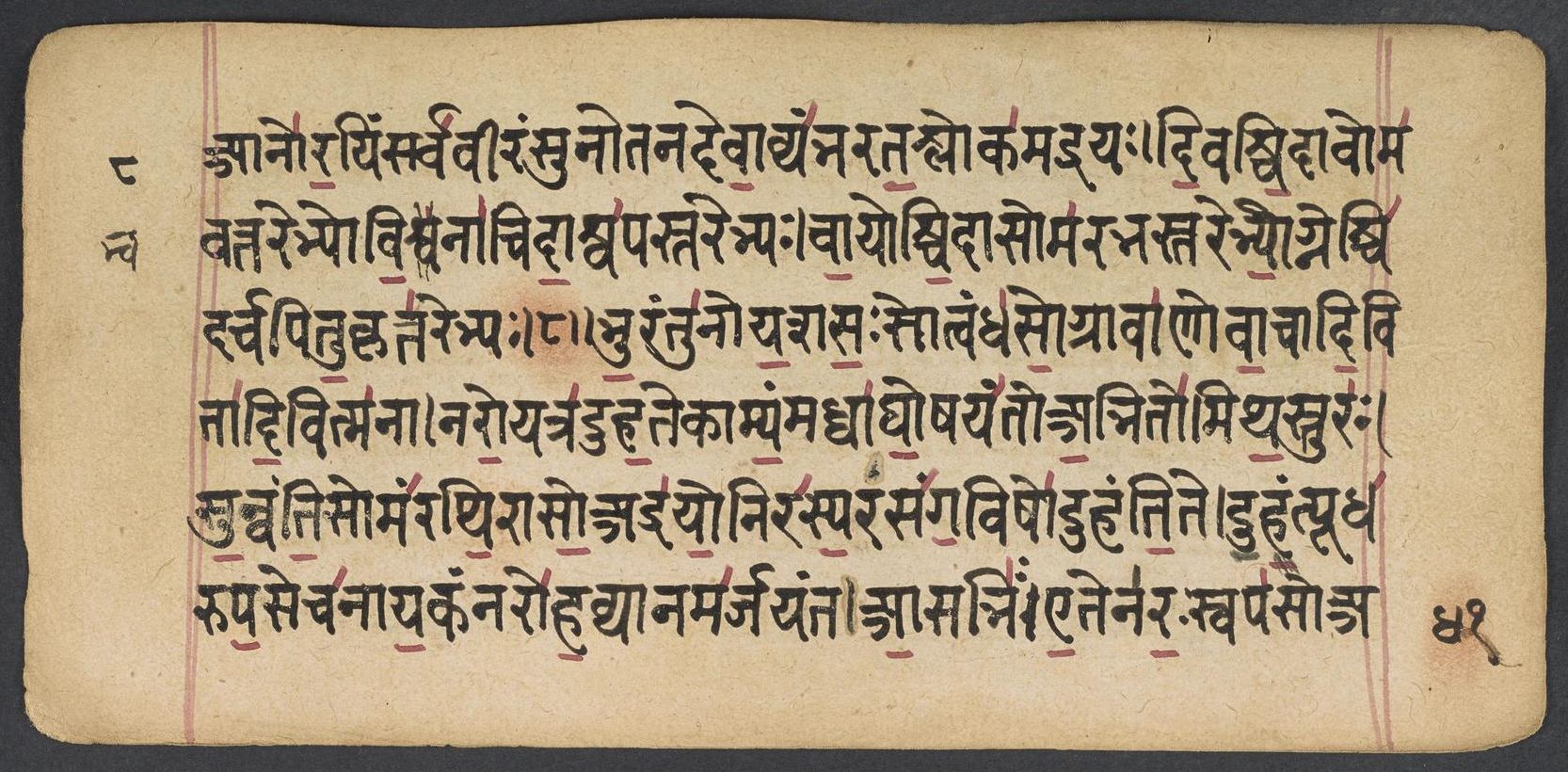
Penn Ms. Coll. 390 Item 48, fol. 42v (numbered 41v by the scribe) (OPenn image 42, upper leaf). Checked on the image: the Rigveda text on this page begins in RV 10.76.4 ‹-sedhatāmatim›. The next page with Rigveda text, fol. 43r (numbered 42r by the scribe), begins in RV 10.76.8 ‹-svapaso abhūtana ya indrāya›. Verses 10.76.4-7 end on this page; 10.76.4 begins on fol. 42r (numbered 41r by the scribe).
4apa̍ hata ra̱kṣaso̍ bhaṅgu̱rāva̍taḥ skabhā̱yata̱ nirṛ̍ti̱ṁ sedha̱tāma̍tim | ā no̍ ra̱yiṁ sarva̍vīraṁ sunotana devā̱vya̍m bharata̱ śloka̍m adrayaḥ ||
5di̱vaś ci̱d ā vo 'ma̍vattarebhyo vi̱bhvanā̍ cid ā̱śva̍pastarebhyaḥ | vā̱yoś ci̱d ā soma̍rabhastarebhyo̱ 'gneś ci̍d arca pitu̱kṛtta̍rebhyaḥ ||
6bhu̱rantu̍ no ya̱śasa̱ḥ sotv andha̍so̱ grāvā̍ṇo vā̱cā di̱vitā̍ di̱vitma̍tā | naro̱ yatra̍ duha̱te kāmya̱m madhv ā̍gho̱ṣaya̍nto a̱bhito̍ mitha̱stura̍ḥ ||
7su̱nvanti̱ soma̍ṁ rathi̱rāso̱ adra̍yo̱ nir a̍sya̱ rasa̍ṁ ga̱viṣo̍ duhanti̱ te | du̱hanty ūdha̍r upa̱seca̍nāya̱ kaṁ naro̍ ha̱vyā na ma̍rjayanta ā̱sabhi̍ḥ ||
4Drive ye the treacherous demons far away from us: keep Nirr̥iti afar and banish Penury. Pour riches forth for us with troops of hero sons, and bear ye up, O Stones, the song that visits Gods.
5To you who are more mighty than the heavens themselves, who, finishing your task with more than Vibhvan's speed, More rapidly than Vâyu seize the Soma juice, better than Agni give us food, to you I sing.
6Stirred be the glorious Stones: let it press out the juice, the Stone with heavenly song that reaches up to heaven, There where the men draw forth the meath for which they long, sending their voice around in rivalry of speed.
7The Stones press out the Soma, swift as car-borne men, and, eager for the spoil, drain forth the sap thereof To fill the beaker, they exhaust the udder's store, as the men purify oblations with their lips.
Where on the image
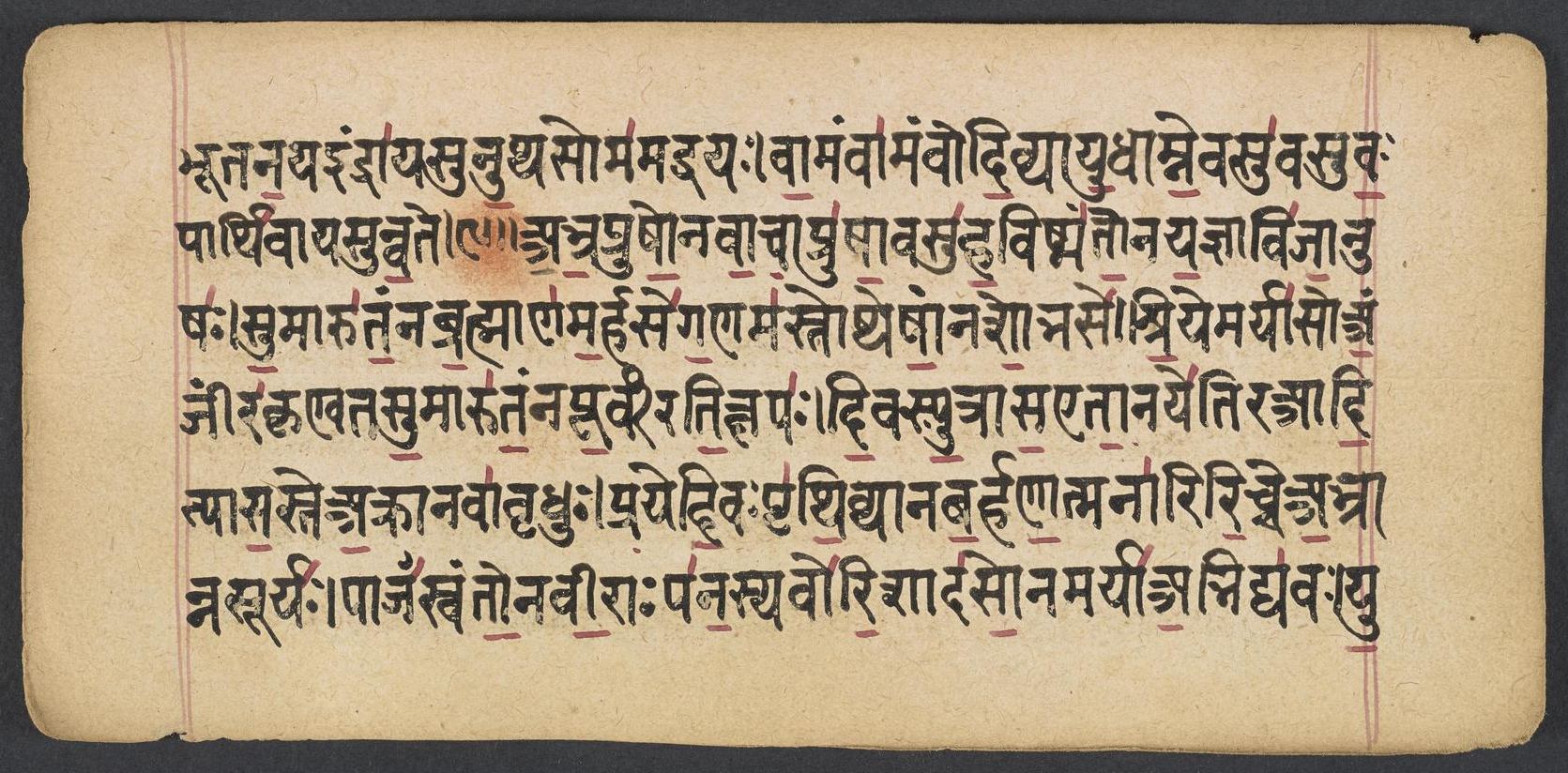
Penn Ms. Coll. 390 Item 48, fol. 43r (numbered 42r by the scribe) (OPenn image 42, lower leaf). Checked on the image: the Rigveda text on this page begins in RV 10.76.8 ‹-svapaso abhūtana ya indrāya›. The next page with Rigveda text, fol. 43v (numbered 42v by the scribe), begins in RV 10.77.4 ‹yuṣmākam budhne apāṁ na›. Verse 10.76.8 ends on this page; 10.76.8 begins on fol. 42v (numbered 41v by the scribe).
8e̱te na̍ra̱ḥ svapa̍so abhūtana̱ ya indrā̍ya sunu̱tha soma̍m adrayaḥ | vā̱maṁ-vā̍maṁ vo di̱vyāya̱ dhāmne̱ vasu̍-vasu va̱ḥ pārthi̍vāya sunva̱te ||
8Ye, present men, have been most skilful in your work, even ye, O Stones who pressed Soma for Indra's drink. May all ye have of fair go to the Heavenly Race, and all your treasure to the earthly worshipper.
Notes
- Sanskrit: Aufrecht's edition (1877) with the Vedic accents, as entered by van Nooten and Holland (GRETIL).
- English: Ralph T. H. Griffith, The Hymns of the Rigveda (1889-1892; 2nd ed. 1896-1897), from the VedaWeb digital text; OCR slips in that text were corrected against the printed 2nd edition (data/sources/rigveda/griffith_errata.json).
Cite
Sources
- Source: Penn Ms. Coll. 390 Item 48 (1711 CE (colophon: Saṃvat 1768)), OPenn, Public Domain Mark + Aufrecht's accented text (GRETIL) + Griffith's English (VedaWeb) (holding institution)
- Critical edition: Aufrecht (1877), accented e-text via GRETIL
← previous · → next · v cycle view · l back to library