Rigveda 10.75: Praise of the rivers (Nadistuti)
Introduction
Rigveda 10.75 is a hymn of 9 verses addressed to the rivers. It stands in book (maṇḍala) 10, the last and latest book. The Rigveda is the oldest collection of Sanskrit hymns, composed in the second half of the second millennium BCE and handed down orally for many centuries before it was written down.
The manuscript shown is Penn Ms. Coll. 390 Item 48 (University of Pennsylvania), a paper manuscript of the eighth aṣṭaka (RV 10.46-10.191) of the Ṛgveda Saṃhitā in Devanāgarī, 158 leaves, 6 lines to the page, with the accents marked in red; the scribe's colophon on fol. 158 gives Saṃvat 1768 (1711 CE); this hymn stands on fol. 40v-42r. Each section below gives the verses that end on one page; the page boundaries were read on the images (the opening words of every page), not counted out. Like most Rigveda manuscripts, Penn Ms. Coll. 390 Item 48 writes a repeated refrain in short form after its first occurrence (for example kasmai° for kasmai devāya haviṣā vidhema); the Sanskrit shown is the full text of Aufrecht's edition.
How was this verified? (Provenance)
Where on the image
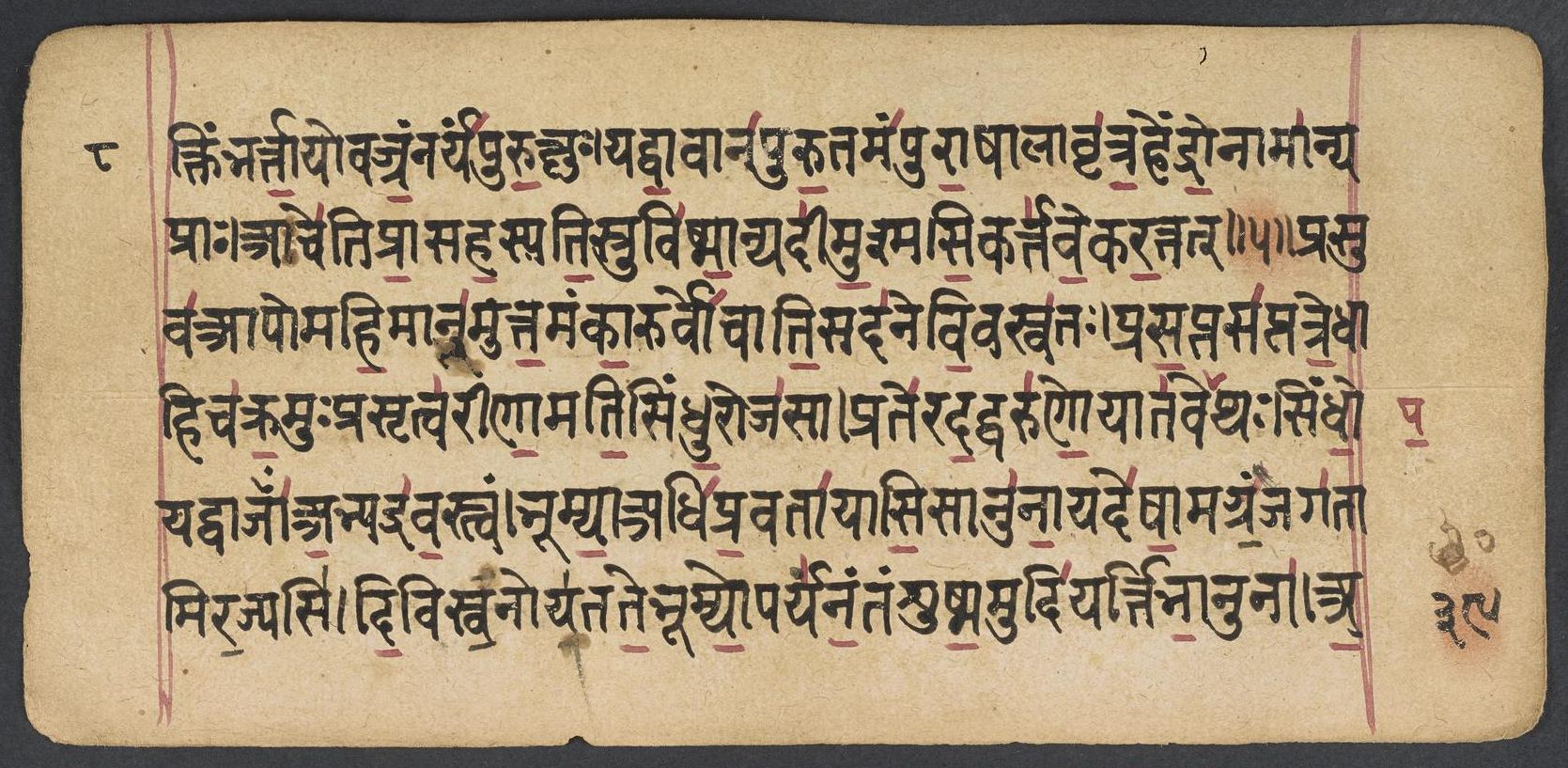
Penn Ms. Coll. 390 Item 48, fol. 40v (numbered 39v by the scribe) (OPenn image 40, upper leaf). Checked on the image: the Rigveda text on this page begins in RV 10.74.5 ‹-suvṛktim bhartā yo vajraṁ›. The next page with Rigveda text, fol. 41r (numbered 40r by the scribe), begins in RV 10.75.3 ‹-abhrād iva pra stanayanti›. Verses 10.75.1-2 end on this page.
1pra su va̍ āpo mahi̱māna̍m utta̱maṁ kā̱rur vo̍cāti̱ sada̍ne vi̱vasva̍taḥ | pra sa̱pta-sa̍pta tre̱dhā hi ca̍kra̱muḥ pra sṛtva̍rīṇā̱m ati̱ sindhu̱r oja̍sā ||
2pra te̍ 'rada̱d varu̍ṇo̱ yāta̍ve pa̱thaḥ sindho̱ yad vājā̍m̐ a̱bhy adra̍va̱s tvam | bhūmyā̱ adhi̍ pra̱vatā̍ yāsi̱ sānu̍nā̱ yad e̍ṣā̱m agra̱ṁ jaga̍tām ira̱jyasi̍ ||
1THE singer, O ye Waters in Vivasvan's place, shall tell your grandeur forth that is beyond compare. The Rivers have come forward triply, seven and seven. Sindhu in might surpasses all the streams that flow.
2Varuṇa cut the channels for thy forward course, O Sindhu, when thou rannest on to win the race. Thou speedest o'er precipitous ridges of the earth, when thou art Lord and Leader of these moving floods.
Where on the image
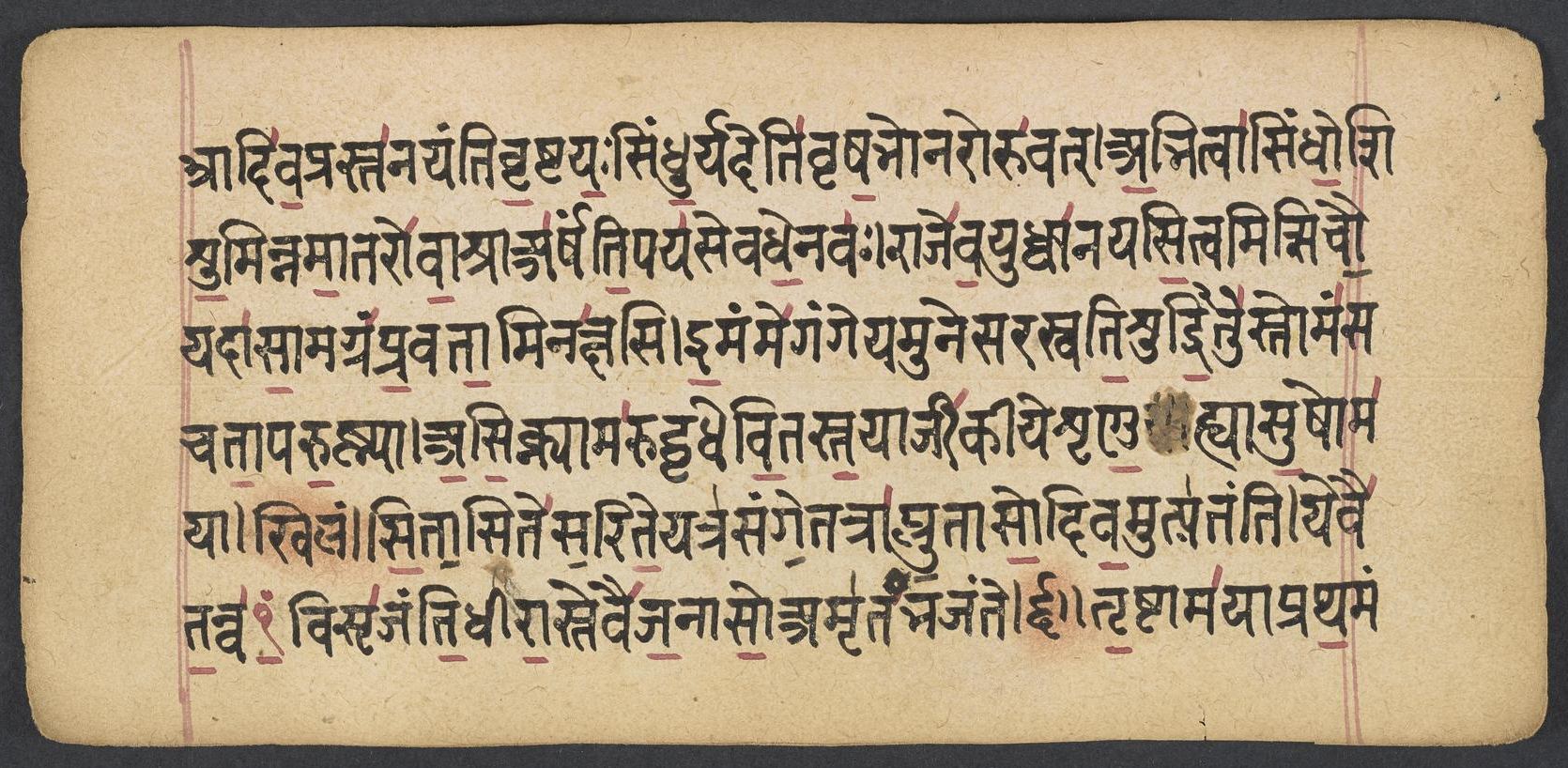
Penn Ms. Coll. 390 Item 48, fol. 41r (numbered 40r by the scribe) (OPenn image 40, lower leaf). Checked on the image: the Rigveda text on this page begins in RV 10.75.3 ‹-abhrād iva pra stanayanti›. 10.75.5 ends in line 5, followed by the heading khilaṃ and a khila (sitāsite sarite yatra saṃgate) with a varga number; 10.75.6 begins at the end of line 6. The next page with Rigveda text, fol. 41v (numbered 40v by the scribe), begins in RV 10.75.6 ‹yātave sajūḥ susartvā rasayā›. Verses 10.75.3-5 end on this page; 10.75.3 begins on fol. 40v (numbered 39v by the scribe).
3di̱vi sva̱no ya̍tate̱ bhūmyo̱pary a̍na̱ntaṁ śuṣma̱m ud i̍yarti bhā̱nunā̍ | a̱bhrād i̍va̱ pra sta̍nayanti vṛ̱ṣṭaya̱ḥ sindhu̱r yad eti̍ vṛṣa̱bho na roru̍vat ||
4a̱bhi tvā̍ sindho̱ śiśu̱m in na mā̱taro̍ vā̱śrā a̍rṣanti̱ paya̍seva dhe̱nava̍ḥ | rāje̍va̱ yudhvā̍ nayasi̱ tvam it sicau̱ yad ā̍sā̱m agra̍m pra̱vatā̱m ina̍kṣasi ||
5i̱mam me̍ gaṅge yamune sarasvati̱ śutu̍dri̱ stoma̍ṁ sacatā̱ paru̱ṣṇy ā | a̱si̱knyā ma̍rudvṛdhe vi̱tasta̱yārjī̍kīye śṛṇu̱hy ā su̱ṣoma̍yā ||
3His roar is lifted up to heaven above the earth: he puts forth endless vigour with a flash of light. Like floods of rain that fall- in thunder from the cloud, so Sindhu rushes on bellowing like a bull.
4Like mothers to their calves, like milch kine with their milk, so, Sindhu, unto thee the roaring rivers run. Thou leadest as a warrior king thine army's wings what time thou comest in the van of these swift streams.
5Favour ye this my laud, O Gangâ, Yamunâ, O Ṣutudrî, Parushṇî and Sarasvatî: With Asiknî, Vitastâ, O Marudvr̥idhâ, O Ârjîkîyâ with Sushomâ hear my call.
Where on the image
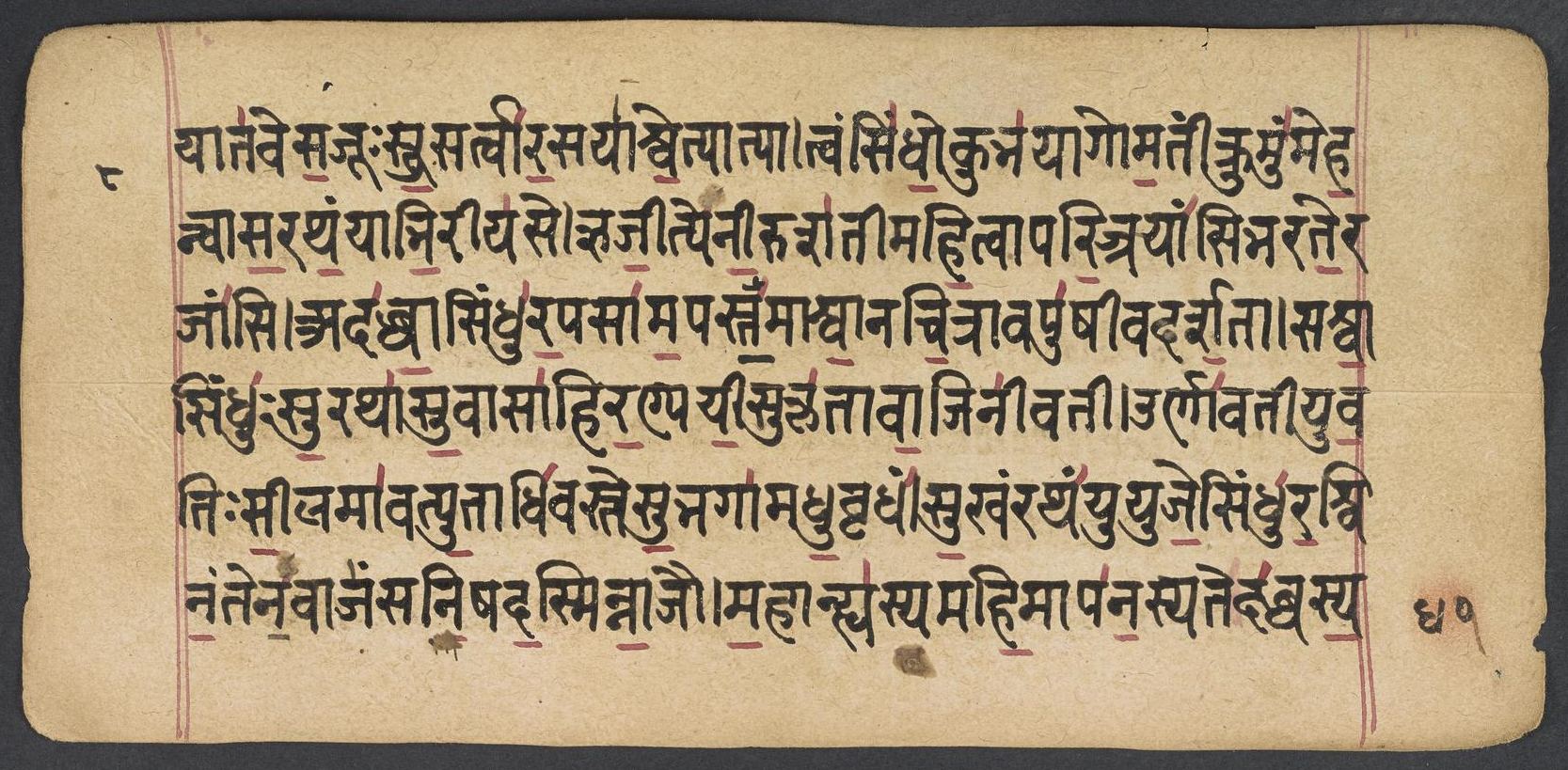
Penn Ms. Coll. 390 Item 48, fol. 41v (numbered 40v by the scribe) (OPenn image 41, upper leaf). Checked on the image: the Rigveda text on this page begins in RV 10.75.6 ‹yātave sajūḥ susartvā rasayā›. The next page with Rigveda text, fol. 42r (numbered 41r by the scribe), begins in RV 10.75.9 ‹svayaśaso virapśinaḥ›. Verses 10.75.6-8 end on this page; 10.75.6 begins on fol. 41r (numbered 40r by the scribe).
6tṛ̱ṣṭāma̍yā pratha̱maṁ yāta̍ve sa̱jūḥ su̱sartvā̍ ra̱sayā̍ śve̱tyā tyā | tvaṁ si̍ndho̱ kubha̍yā goma̱tīṁ krumu̍m meha̱tnvā sa̱ratha̱ṁ yābhi̱r īya̍se ||
7ṛjī̱ty enī̱ ruśa̍tī mahi̱tvā pari̱ jrayā̍ṁsi bharate̱ rajā̍ṁsi | ada̍bdhā̱ sindhu̍r a̱pasā̍m a̱pasta̱māśvā̱ na ci̱trā vapu̍ṣīva darśa̱tā ||
8svaśvā̱ sindhu̍ḥ su̱rathā̍ su̱vāsā̍ hira̱ṇyayī̱ sukṛ̍tā vā̱jinī̍vatī | ūrṇā̍vatī yuva̱tiḥ sī̱lamā̍vaty u̱tādhi̍ vaste su̱bhagā̍ madhu̱vṛdha̍m ||
6First with Tr̥ishṭâmâ thou art eager to flow forth, with Rasâ, and Susartu, and with Ṣvetyâ here, With Kubhâ; and with these, Sindhu and Mehatnu, thou seekest in thy course Krumu and Gomatî.
7Flashing and whitely-gleaming in her mightiness, she moves along her ample volumes through the realms, Most active of the active, Sindhu unrestrained, like to a dappled mare, beautiful, fair to see.
8Rich in good steeds is Sindhu, rich in cars and robes, rich in gold, nobly-fashioned, rich in ample wealth. Blest Sîlamâvatî and young Urnavati invest themselves with raiment rich in store of sweets.
Where on the image
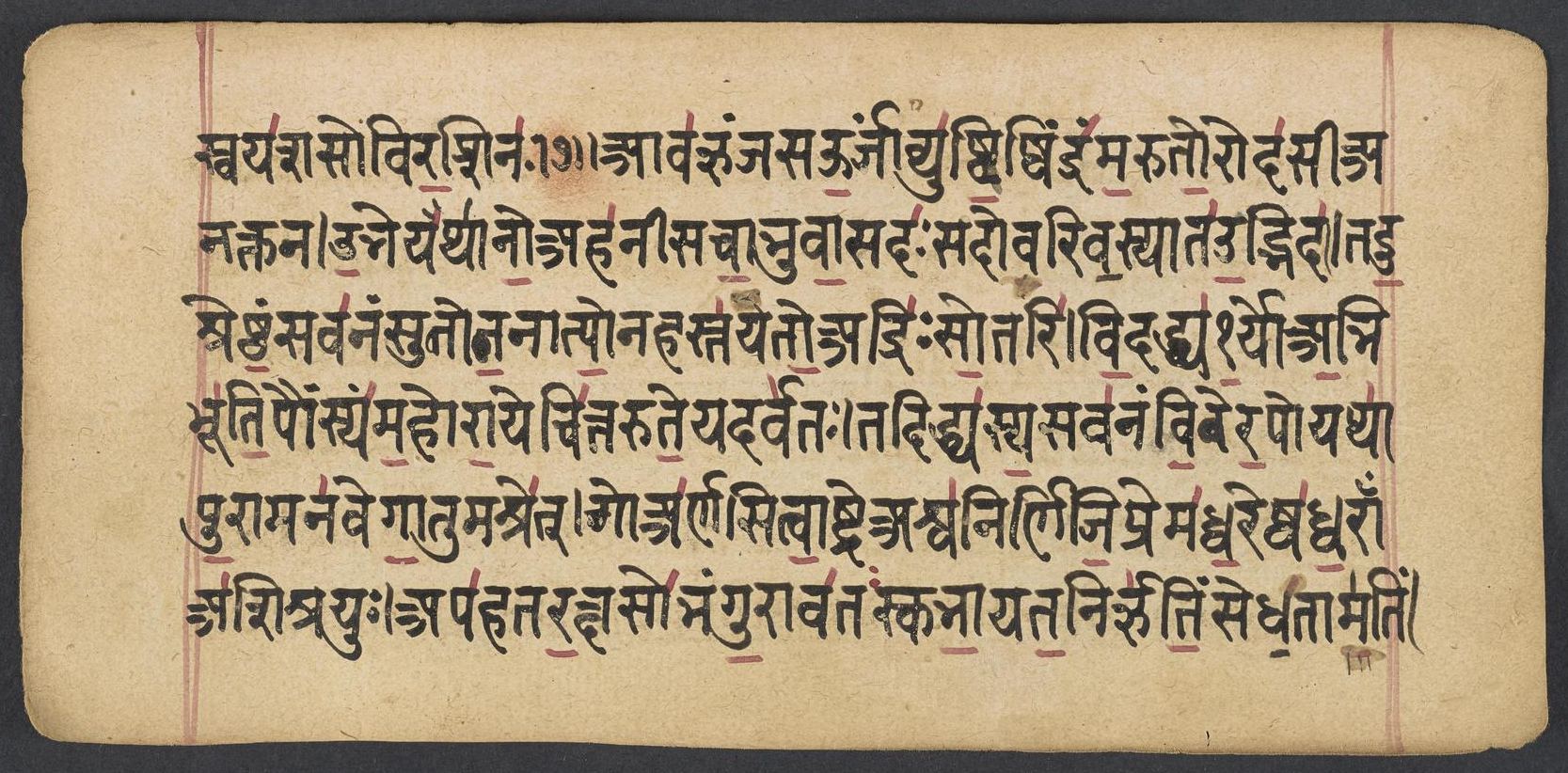
Penn Ms. Coll. 390 Item 48, fol. 42r (numbered 41r by the scribe) (OPenn image 41, lower leaf). Checked on the image: the Rigveda text on this page begins in RV 10.75.9 ‹svayaśaso virapśinaḥ›. The next page with Rigveda text, fol. 42v (numbered 41v by the scribe), begins in RV 10.76.4 ‹-sedhatāmatim›. Verse 10.75.9 ends on this page; 10.75.9 begins on fol. 41v (numbered 40v by the scribe).
9su̱khaṁ ratha̍ṁ yuyuje̱ sindhu̍r a̱śvina̱ṁ tena̱ vāja̍ṁ saniṣad a̱sminn ā̱jau | ma̱hān hy a̍sya mahi̱mā pa̍na̱syate 'da̍bdhasya̱ svaya̍śaso vira̱pśina̍ḥ ||
9Sindhu hath yoked her car, light-rolling, drawn by steeds, and with that car shall she win booty in this fight. So have I praised its power, mighty and unrestrained, of independent glory, roaring as it runs.
Notes
- Sanskrit: Aufrecht's edition (1877) with the Vedic accents, as entered by van Nooten and Holland (GRETIL).
- English: Ralph T. H. Griffith, The Hymns of the Rigveda (1889-1892; 2nd ed. 1896-1897), from the VedaWeb digital text; OCR slips in that text were corrected against the printed 2nd edition (data/sources/rigveda/griffith_errata.json).
- This manuscript inserts khila verses (supplementary hymns outside Aufrecht's text) at some hymn ends; they are noted in the section notes and not reproduced.
Cite
Sources
- Source: Penn Ms. Coll. 390 Item 48 (1711 CE (colophon: Saṃvat 1768)), OPenn, Public Domain Mark + Aufrecht's accented text (GRETIL) + Griffith's English (VedaWeb) (holding institution)
- Critical edition: Aufrecht (1877), accented e-text via GRETIL
← previous · → next · v cycle view · l back to library