Rigveda 10.79: To Agni
Introduction
Rigveda 10.79 is a hymn of 7 verses addressed to Agni. It stands in book (maṇḍala) 10, the last and latest book. The Rigveda is the oldest collection of Sanskrit hymns, composed in the second half of the second millennium BCE and handed down orally for many centuries before it was written down.
The manuscript shown is Penn Ms. Coll. 390 Item 48 (University of Pennsylvania), a paper manuscript of the eighth aṣṭaka (RV 10.46-10.191) of the Ṛgveda Saṃhitā in Devanāgarī, 158 leaves, 6 lines to the page, with the accents marked in red; the scribe's colophon on fol. 158 gives Saṃvat 1768 (1711 CE); this hymn stands on fol. 45r-46r. Each section below gives the verses that end on one page; the page boundaries were read on the images (the opening words of every page), not counted out. Like most Rigveda manuscripts, Penn Ms. Coll. 390 Item 48 writes a repeated refrain in short form after its first occurrence (for example kasmai° for kasmai devāya haviṣā vidhema); the Sanskrit shown is the full text of Aufrecht's edition.
How was this verified? (Provenance)
Where on the image
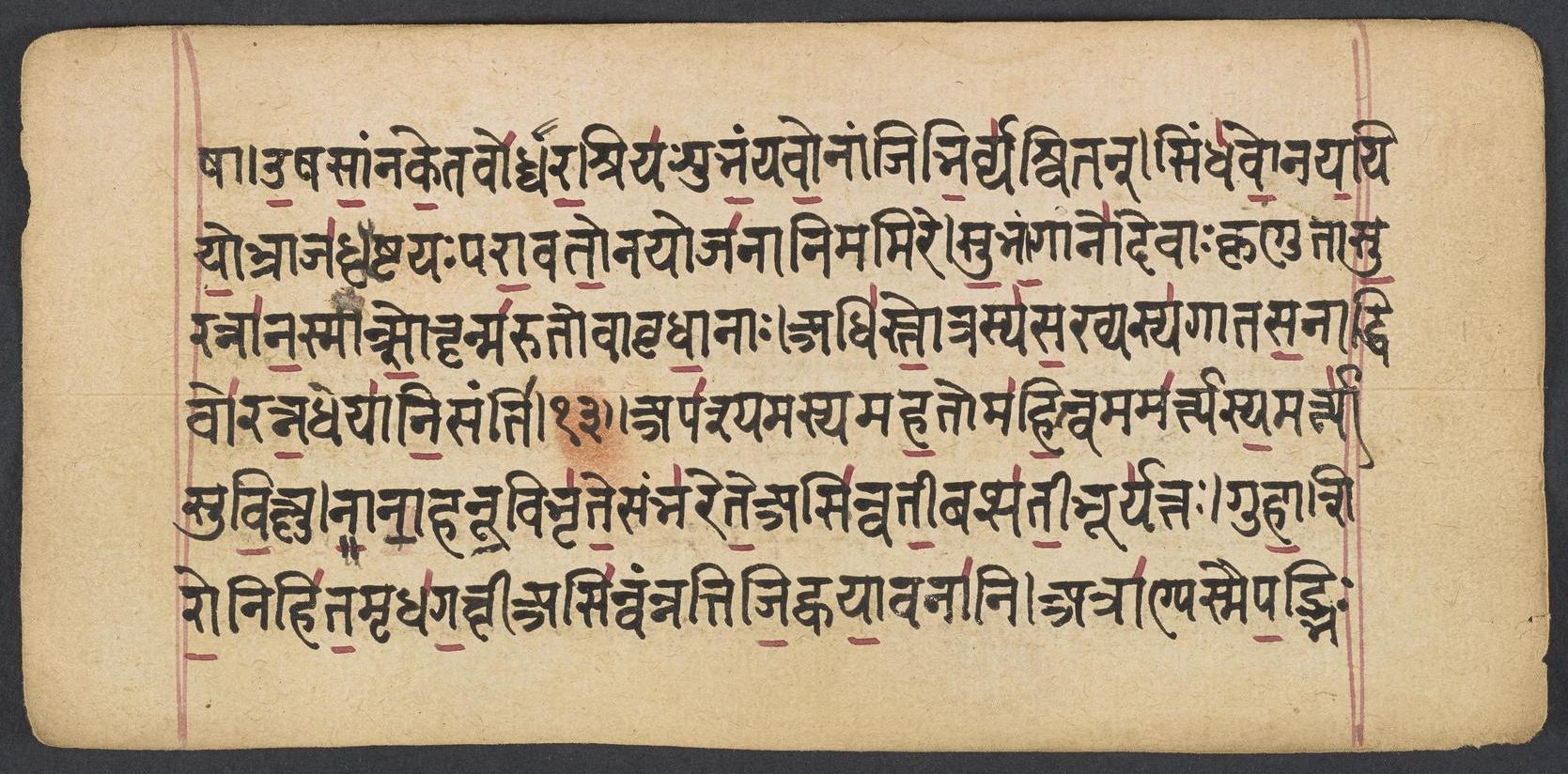
Penn Ms. Coll. 390 Item 48, fol. 45r (numbered 44r by the scribe) (OPenn image 44, lower leaf). Checked on the image: the Rigveda text on this page begins in RV 10.78.6 ‹-tviṣā›. The next page with Rigveda text, fol. 45v (numbered 44v by the scribe), begins in RV 10.79.2 ‹sam bharanty uttānahastā namasādhi›. Verse 10.79.1 ends on this page.
1apa̍śyam asya maha̱to ma̍hi̱tvam ama̍rtyasya̱ martyā̍su vi̱kṣu | nānā̱ hanū̱ vibhṛ̍te̱ sam bha̍rete̱ asi̍nvatī̱ bapsa̍tī̱ bhūry a̍ttaḥ ||
1I HAVE beheld the might of this Great Being. Immortal in the midst of tribes of mortals. His jaws now open and now shut together: much they devour, insatiately chewing.
Where on the image
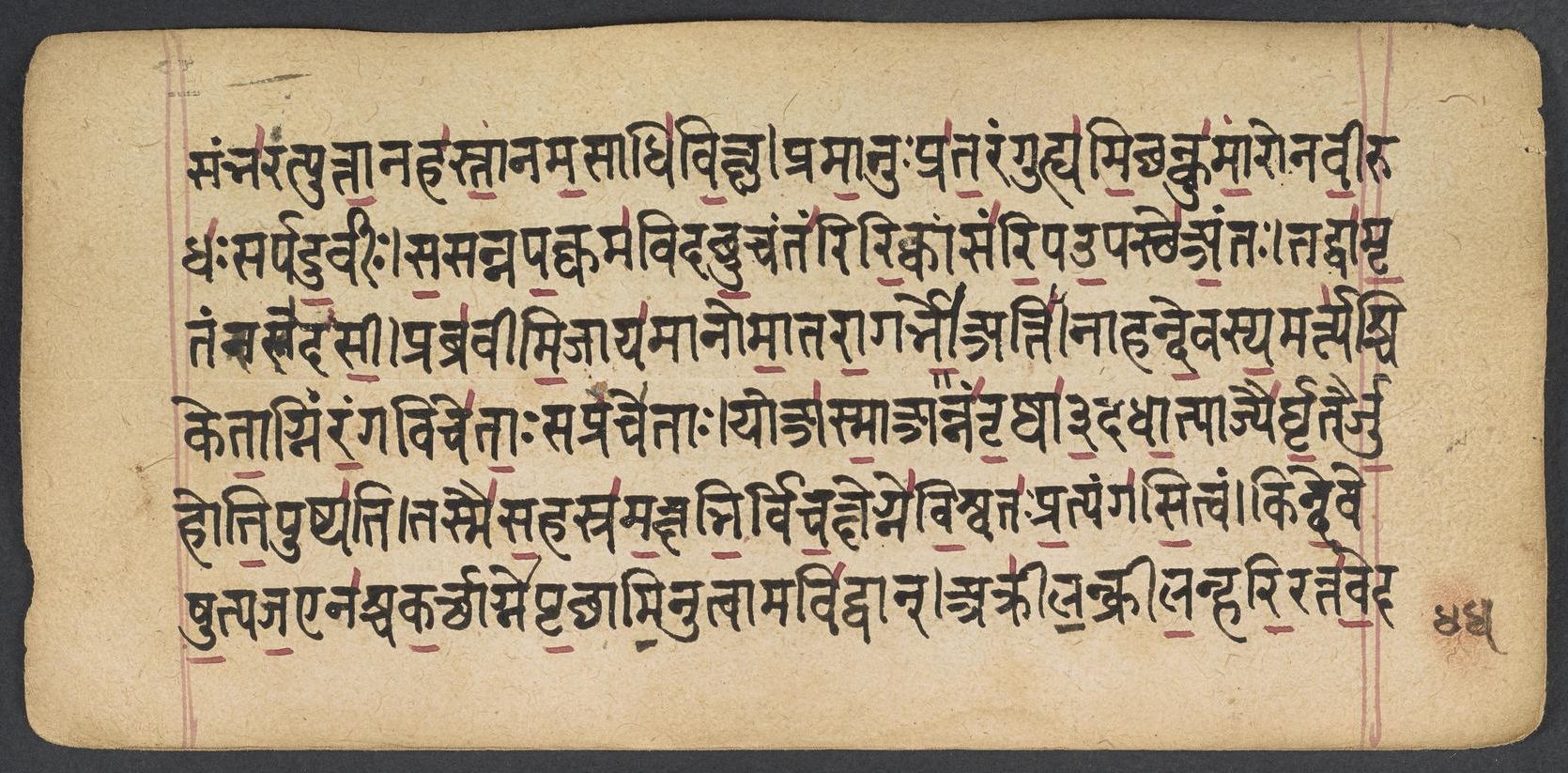
Penn Ms. Coll. 390 Item 48, fol. 45v (numbered 44v by the scribe) (OPenn image 45, upper leaf). Checked on the image: the Rigveda text on this page begins in RV 10.79.2 ‹sam bharanty uttānahastā namasādhi›. The next page with Rigveda text, fol. 46r (numbered 45r by the scribe), begins in RV 10.79.6 ‹vi parvaśaś cakarta gām›. Verses 10.79.2-5 end on this page; 10.79.2 begins on fol. 45r (numbered 44r by the scribe).
2guhā̱ śiro̱ nihi̍ta̱m ṛdha̍g a̱kṣī asi̍nvann atti ji̱hvayā̱ vanā̍ni | atrā̍ṇy asmai pa̱ḍbhiḥ sam bha̍ranty uttā̱naha̍stā̱ nama̱sādhi̍ vi̱kṣu ||
3pra mā̱tuḥ pra̍ta̱raṁ guhya̍m i̱cchan ku̍mā̱ro na vī̱rudha̍ḥ sarpad u̱rvīḥ | sa̱saṁ na pa̱kvam a̍vidac chu̱canta̍ṁ riri̱hvāṁsa̍ṁ ri̱pa u̱pasthe̍ a̱ntaḥ ||
4tad vā̍m ṛ̱taṁ ro̍dasī̱ pra bra̍vīmi̱ jāya̍māno mā̱tarā̱ garbho̍ atti | nāhaṁ de̱vasya̱ martya̍ś ciketā̱gnir a̱ṅga vice̍tā̱ḥ sa prace̍tāḥ ||
5yo a̍smā̱ anna̍ṁ tṛ̱ṣv ā̱3̱̍dadhā̱ty ājyai̍r ghṛ̱tair ju̱hoti̱ puṣya̍ti | tasmai̍ sa̱hasra̍m a̱kṣabhi̱r vi ca̱kṣe 'gne̍ vi̱śvata̍ḥ pra̱tyaṅṅ a̍si̱ tvam ||
2His eyes are turned away, his head is hidden: unsated with his tongue he eats the fuel. With hands upraised, with reverence in the houses, for him they quickly bring his food together.
3Seeking, as 'twere, his Mother's secret bosom, he, like a child, creeps on through wide-spread bushes. One he finds glowing like hot food made ready, and kissing deep within the earth's recmes.
4This holy Law I tell you, Earth and Heaven: the Infant at his birth devours his Parents. No knowledge of the God have I, a mortal. Yea, Agni knoweth best, for he hath wisdom.
5This man who quickly gives him food, who offers his gifts of oil and butter and supports him, – Him with his thousand eyes he closely looks on: thou showest him thy face from all sides, Agni.
Where on the image
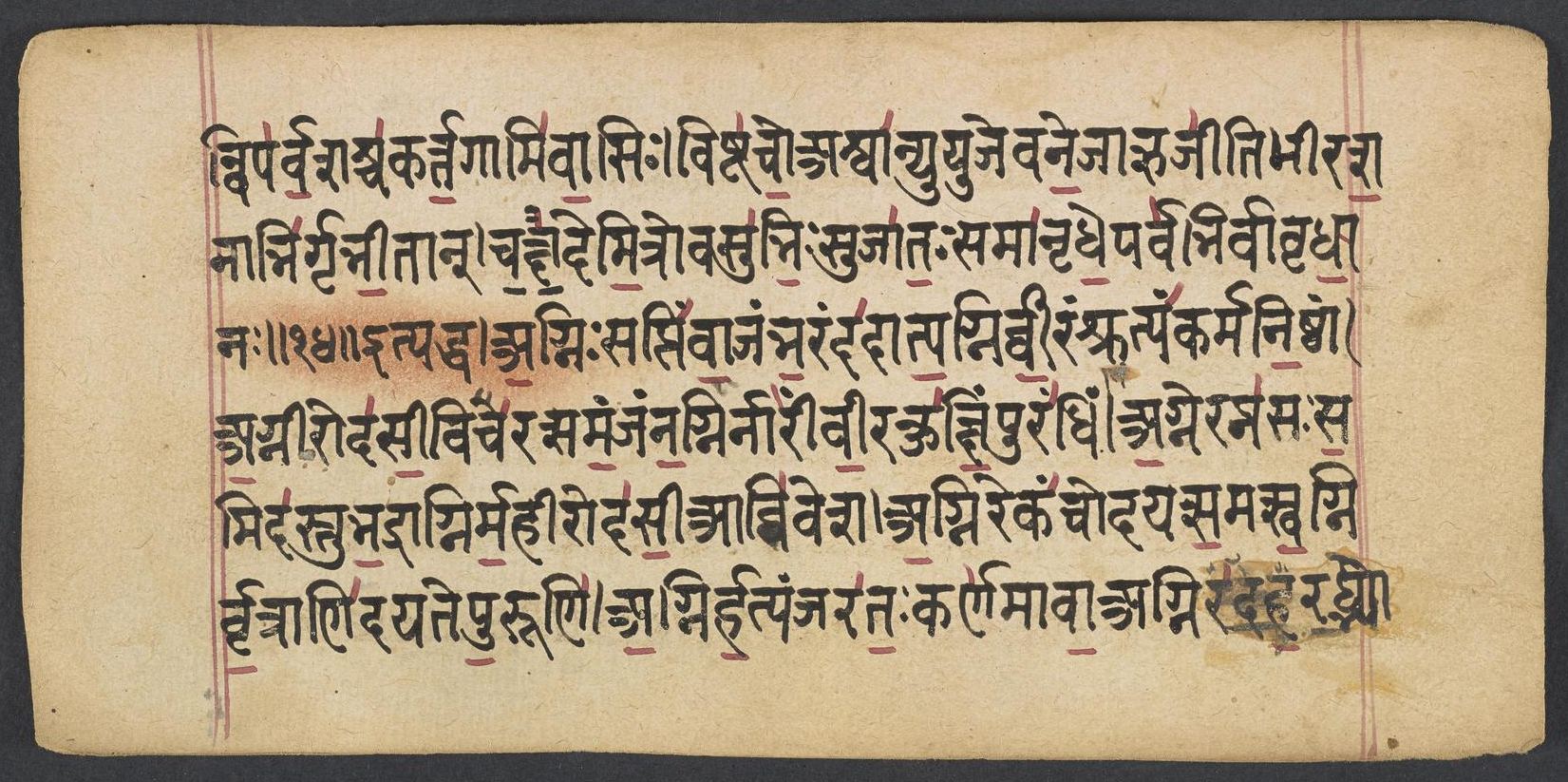
Penn Ms. Coll. 390 Item 48, fol. 46r (numbered 45r by the scribe) (OPenn image 45, lower leaf). Checked on the image: the Rigveda text on this page begins in RV 10.79.6 ‹vi parvaśaś cakarta gām›. The next page with Rigveda text, fol. 46v (numbered 45v by the scribe), begins in RV 10.80.3 ‹-adahaj jarūtham›. Verses 10.79.6-7 end on this page; 10.79.6 begins on fol. 45v (numbered 44v by the scribe).
6kiṁ de̱veṣu̱ tyaja̱ ena̍ś caka̱rthāgne̍ pṛ̱cchāmi̱ nu tvām avi̍dvān | akrī̍ḻa̱n krīḻa̱n hari̱r atta̍ve̱ 'dan vi pa̍rva̱śaś ca̍karta̱ gām i̍vā̱siḥ ||
7viṣū̍co̱ aśvā̍n yuyuje vane̱jā ṛjī̍tibhī raśa̱nābhi̍r gṛbhī̱tān | ca̱kṣa̱de mi̱tro vasu̍bhi̱ḥ sujā̍ta̱ḥ sam ā̍nṛdhe̱ parva̍bhir vāvṛdhā̱naḥ ||
6Agni, hast thou committed sin or treason among the Gods? In ignorance I ask thee. Playing, not playing, he gold-hued and toothless, hath cut his food up as the knife a victim.
7He born in wood hath yoked his horses rushing in all directions, held with reins that glitter. The well-born friend hath carved his food with Vasus: in all his limbs he hath increased and prospered.
Notes
- Sanskrit: Aufrecht's edition (1877) with the Vedic accents, as entered by van Nooten and Holland (GRETIL).
- English: Ralph T. H. Griffith, The Hymns of the Rigveda (1889-1892; 2nd ed. 1896-1897), from the VedaWeb digital text; OCR slips in that text were corrected against the printed 2nd edition (data/sources/rigveda/griffith_errata.json).
Cite
Sources
- Source: Penn Ms. Coll. 390 Item 48 (1711 CE (colophon: Saṃvat 1768)), OPenn, Public Domain Mark + Aufrecht's accented text (GRETIL) + Griffith's English (VedaWeb) (holding institution)
- Critical edition: Aufrecht (1877), accented e-text via GRETIL
← previous · → next · v cycle view · l back to library