Rigveda 10.80: To Agni
Introduction
Rigveda 10.80 is a hymn of 7 verses addressed to Agni. It stands in book (maṇḍala) 10, the last and latest book. The Rigveda is the oldest collection of Sanskrit hymns, composed in the second half of the second millennium BCE and handed down orally for many centuries before it was written down.
The manuscript shown is Penn Ms. Coll. 390 Item 48 (University of Pennsylvania), a paper manuscript of the eighth aṣṭaka (RV 10.46-10.191) of the Ṛgveda Saṃhitā in Devanāgarī, 158 leaves, 6 lines to the page, with the accents marked in red; the scribe's colophon on fol. 158 gives Saṃvat 1768 (1711 CE); this hymn stands on fol. 46r-47r. Each section below gives the verses that end on one page; the page boundaries were read on the images (the opening words of every page), not counted out. Like most Rigveda manuscripts, Penn Ms. Coll. 390 Item 48 writes a repeated refrain in short form after its first occurrence (for example kasmai° for kasmai devāya haviṣā vidhema); the Sanskrit shown is the full text of Aufrecht's edition.
How was this verified? (Provenance)
Where on the image
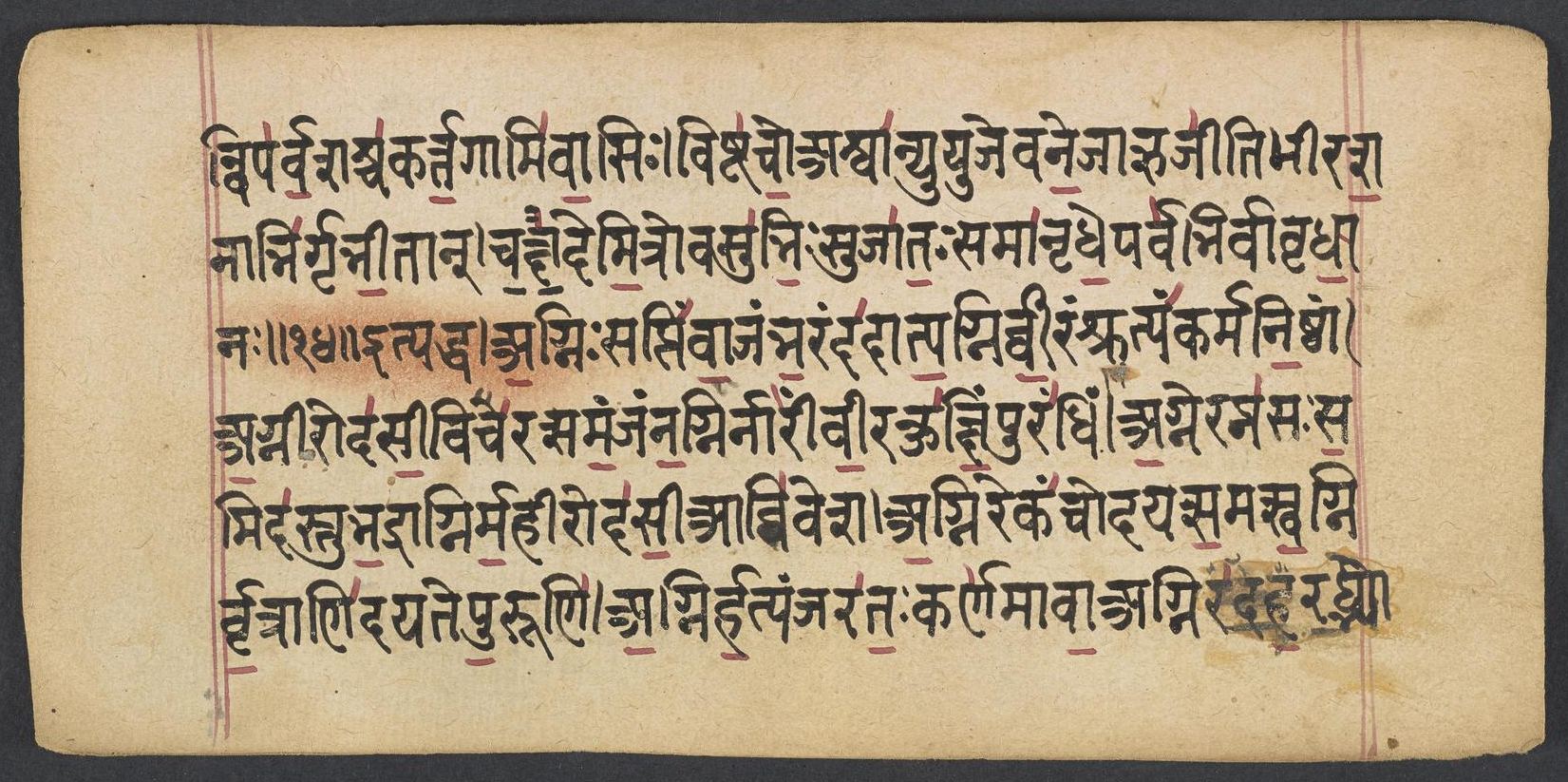
Penn Ms. Coll. 390 Item 48, fol. 46r (numbered 45r by the scribe) (OPenn image 45, lower leaf). Checked on the image: the Rigveda text on this page begins in RV 10.79.6 ‹vi parvaśaś cakarta gām›. The next page with Rigveda text, fol. 46v (numbered 45v by the scribe), begins in RV 10.80.3 ‹-adahaj jarūtham›. Verses 10.80.1-2 end on this page.
1a̱gniḥ sapti̍ṁ vājambha̱raṁ da̍dāty a̱gnir vī̱raṁ śrutya̍ṁ karmani̱ḥṣṭhām | a̱gnī roda̍sī̱ vi ca̍rat sama̱ñjann a̱gnir nārī̍ṁ vī̱raku̍kṣi̱m pura̍ṁdhim ||
2a̱gner apna̍saḥ sa̱mid a̍stu bha̱drāgnir ma̱hī roda̍sī̱ ā vi̍veśa | a̱gnir eka̍ṁ codayat sa̱matsv a̱gnir vṛ̱trāṇi̍ dayate pu̱rūṇi̍ ||
1AGNI bestows the fleet prize-winning courser: Agni, the hero famed and firm in duty. Agni pervades and decks the earth and heaven, and fills the fruitful dame who teems with heroes.
2Blest be the wood that feeds the active Agni: within the two great worlds hath Agni entered. Agni impels a single man to battle, and with him rends in pieces many a foeman.
Where on the image
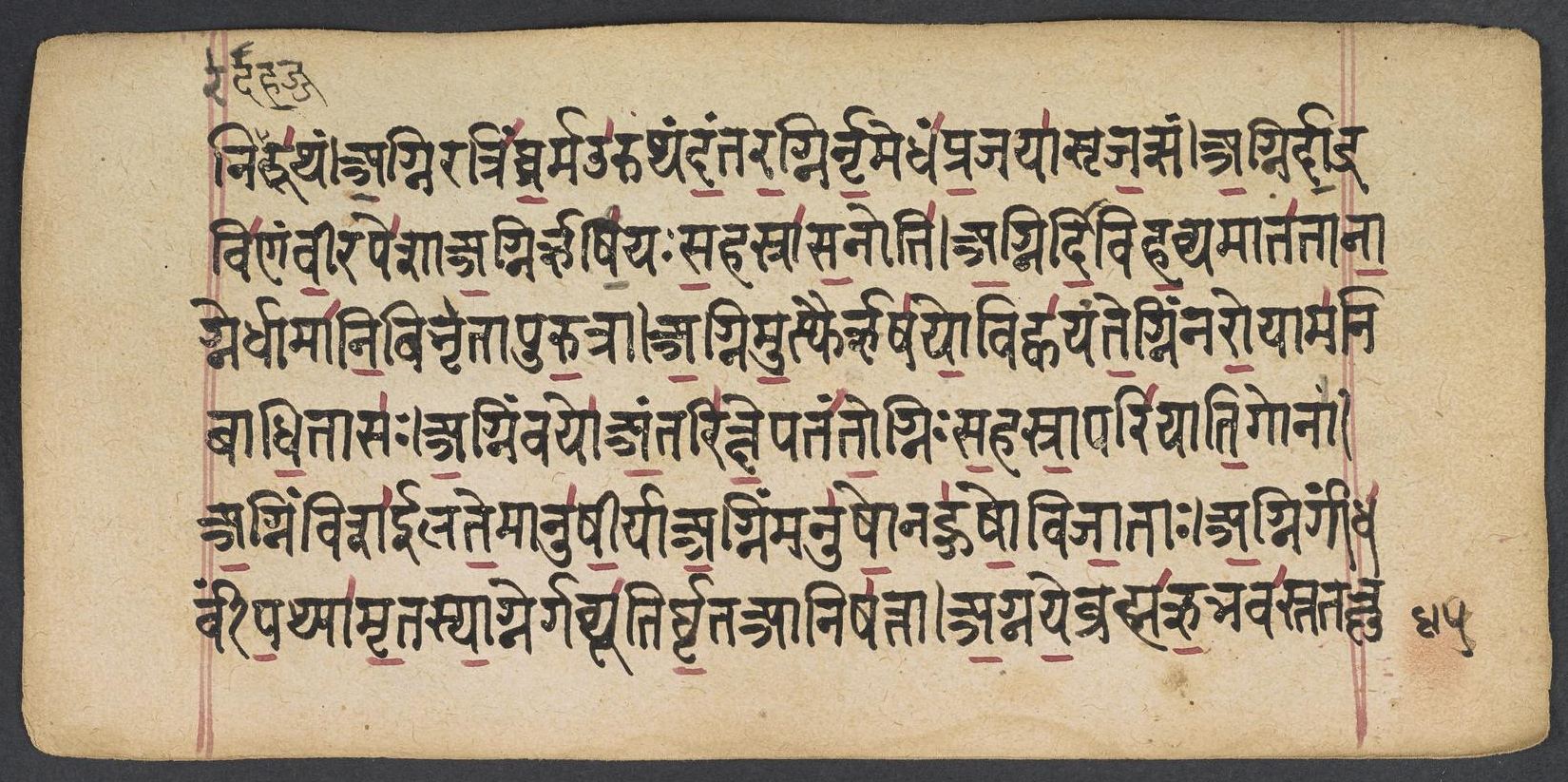
Penn Ms. Coll. 390 Item 48, fol. 46v (numbered 45v by the scribe) (OPenn image 46, upper leaf). Checked on the image: the Rigveda text on this page begins in RV 10.80.3 ‹-adahaj jarūtham›. The next page with Rigveda text, fol. 47r (numbered 46r by the scribe), begins in RV 10.80.7 ‹-tatakṣur agnim mahām avocāmā›. Verses 10.80.3-6 end on this page; 10.80.3 begins on fol. 46r (numbered 45r by the scribe).
3a̱gnir ha̱ tyaṁ jara̍ta̱ḥ karṇa̍m āvā̱gnir a̱dbhyo nir a̍daha̱j jarū̍tham | a̱gnir atri̍ṁ gha̱rma u̍ruṣyad a̱ntar a̱gnir nṛ̱medha̍m pra̱jayā̍sṛja̱t sam ||
4a̱gnir dā̱d dravi̍ṇaṁ vī̱rape̍śā a̱gnir ṛṣi̱ṁ yaḥ sa̱hasrā̍ sa̱noti̍ | a̱gnir di̱vi ha̱vyam ā ta̍tānā̱gner dhāmā̍ni̱ vibhṛ̍tā puru̱trā ||
5a̱gnim u̱kthair ṛṣa̍yo̱ vi hva̍yante̱ 'gniṁ naro̱ yāma̍ni bādhi̱tāsa̍ḥ | a̱gniṁ vayo̍ a̱ntari̍kṣe̱ pata̍nto̱ 'gniḥ sa̱hasrā̱ pari̍ yāti̱ gonā̍m ||
6a̱gniṁ viśa̍ īḻate̱ mānu̍ṣī̱r yā a̱gnim manu̍ṣo̱ nahu̍ṣo̱ vi jā̱tāḥ | a̱gnir gāndha̍rvīm pa̱thyā̍m ṛ̱tasyā̱gner gavyū̍tir ghṛ̱ta ā niṣa̍ttā ||
3Agni rejoiced the ear of him who praised him, and from the waters burnt away Jarûtha. Agni saved Atri in the fiery cavern, and made Nr̥imedha rich with troops of children.
4Agni hath granted wealth that decks the hero, and sent the sage who wins a thousand cattle. Agni hath made oblations rise to heaven: to every place are Agni's laws extended.
5With songs of praise the R̥ishis call on Agni; on Agni, heroes worsted in the foray. Birds flying in the region call on Agni around a thousand cattle Agni wanders.
6Races of human birth pay Agni worship, men who have sprung from Nahus' line adore him. Stablished in holy oil is Agni's pasture, on the Gandharva path of Law and Order.
Where on the image
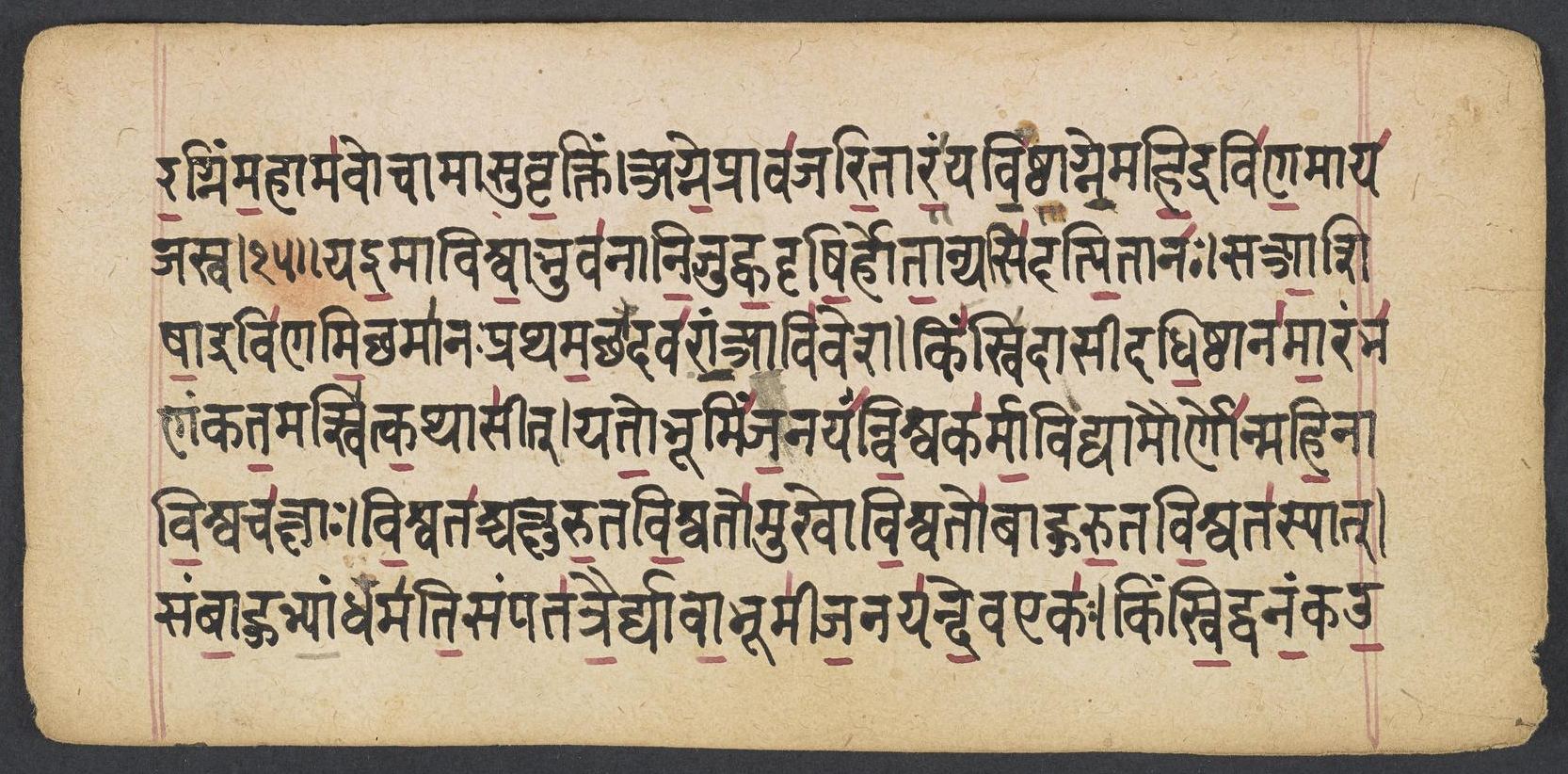
Penn Ms. Coll. 390 Item 48, fol. 47r (numbered 46r by the scribe) (OPenn image 46, lower leaf). Checked on the image: the Rigveda text on this page begins in RV 10.80.7 ‹-tatakṣur agnim mahām avocāmā›. The next page with Rigveda text, fol. 47v (numbered 46v by the scribe), begins in RV 10.81.4 ‹sa vṛkṣa āsa yato›. Verse 10.80.7 ends on this page; 10.80.7 begins on fol. 46v (numbered 45v by the scribe).
7a̱gnaye̱ brahma̍ ṛ̱bhava̍s tatakṣur a̱gnim ma̱hām a̍vocāmā suvṛ̱ktim | agne̱ prāva̍ jari̱tāra̍ṁ yavi̱ṣṭhāgne̱ mahi̱ dravi̍ṇa̱m ā ya̍jasva ||
7The R̥ibhus fabricated prayer for Agni, and we with mighty hymns have called on Agni. Agni, Most Youthful God, protect the singer: win us by worship, Agni, great possessions.
Notes
- Sanskrit: Aufrecht's edition (1877) with the Vedic accents, as entered by van Nooten and Holland (GRETIL).
- English: Ralph T. H. Griffith, The Hymns of the Rigveda (1889-1892; 2nd ed. 1896-1897), from the VedaWeb digital text; OCR slips in that text were corrected against the printed 2nd edition (data/sources/rigveda/griffith_errata.json).
Cite
Sources
- Source: Penn Ms. Coll. 390 Item 48 (1711 CE (colophon: Saṃvat 1768)), OPenn, Public Domain Mark + Aufrecht's accented text (GRETIL) + Griffith's English (VedaWeb) (holding institution)
- Critical edition: Aufrecht (1877), accented e-text via GRETIL
← previous · → next · v cycle view · l back to library