Rigveda 10.85: Surya's wedding (Vivaha Sukta)
Introduction
Rigveda 10.85 is a hymn of 47 verses addressed to wedding hymn. It stands in book (maṇḍala) 10, the last and latest book. The Rigveda is the oldest collection of Sanskrit hymns, composed in the second half of the second millennium BCE and handed down orally for many centuries before it was written down.
The manuscript shown is Penn Ms. Coll. 390 Item 48 (University of Pennsylvania), a paper manuscript of the eighth aṣṭaka (RV 10.46-10.191) of the Ṛgveda Saṃhitā in Devanāgarī, 158 leaves, 6 lines to the page, with the accents marked in red; the scribe's colophon on fol. 158 gives Saṃvat 1768 (1711 CE); this hymn stands on fol. 50v-55v. Each section below gives the verses that end on one page; the page boundaries were read on the images (the opening words of every page), not counted out. Like most Rigveda manuscripts, Penn Ms. Coll. 390 Item 48 writes a repeated refrain in short form after its first occurrence (for example kasmai° for kasmai devāya haviṣā vidhema); the Sanskrit shown is the full text of Aufrecht's edition.
How was this verified? (Provenance)
Where on the image
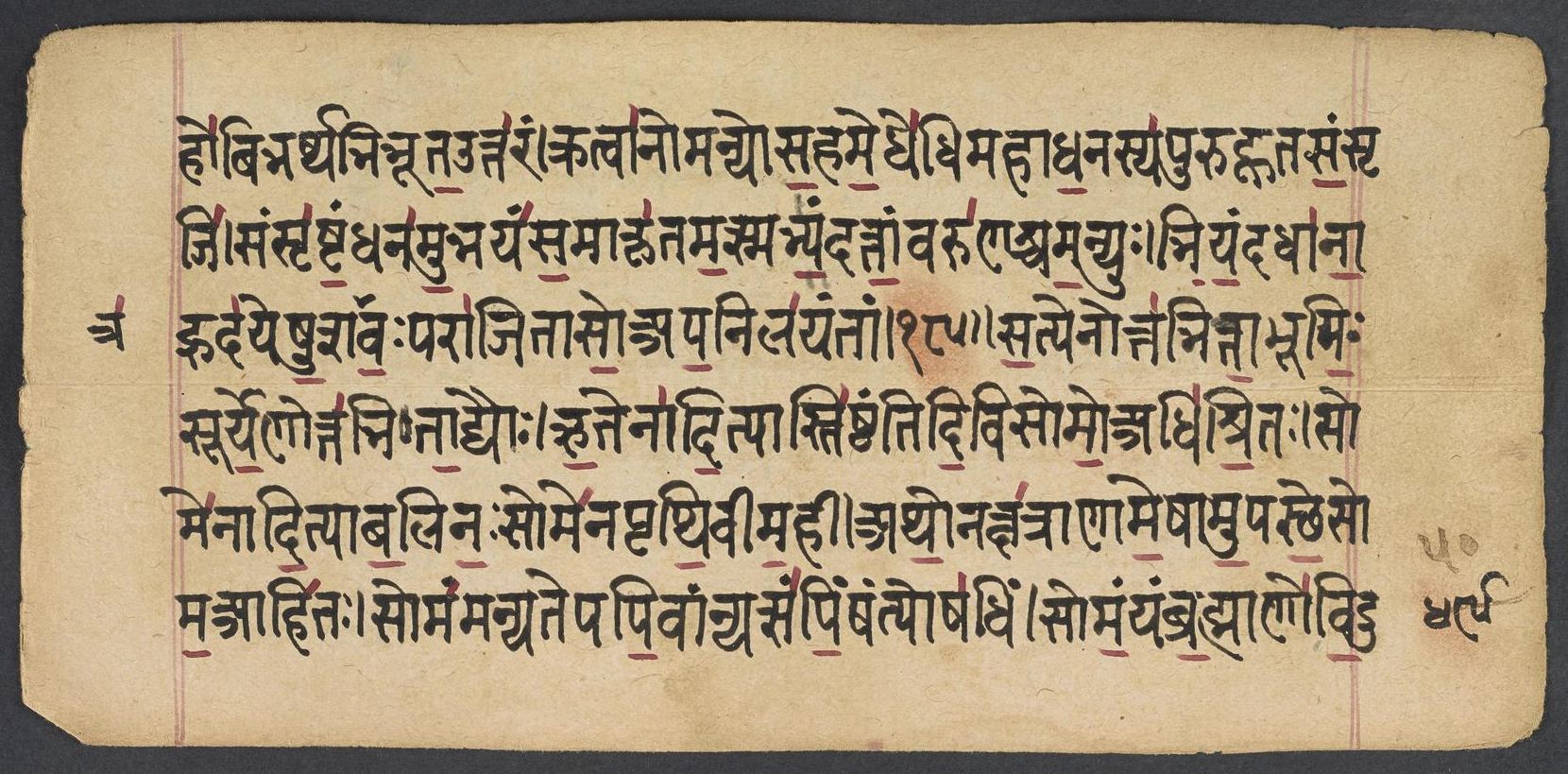
Penn Ms. Coll. 390 Item 48, fol. 50v (numbered 49v by the scribe) (OPenn image 50, upper leaf). Checked on the image: the Rigveda text on this page begins in RV 10.84.6 ‹-saho bibharṣy abhibhūta uttaram›. The next page with Rigveda text, fol. 51r (numbered 50r by the scribe), begins in RV 10.85.3 ‹na tasyāśnāti kaś cana›. Verses 10.85.1-2 end on this page.
1sa̱tyenotta̍bhitā̱ bhūmi̱ḥ sūrye̱ṇotta̍bhitā̱ dyauḥ | ṛ̱tenā̍di̱tyās ti̍ṣṭhanti di̱vi somo̱ adhi̍ śri̱taḥ ||
2some̍nādi̱tyā ba̱lina̱ḥ some̍na pṛthi̱vī ma̱hī | atho̱ nakṣa̍trāṇām e̱ṣām u̱pasthe̱ soma̱ āhi̍taḥ ||
1TRUTH is the base that bears the earth; by Sûrya are the heavens sustained. By Law the Âdityas stand secure, and Soma holds his place in heaven.
2By Soma are the Âdityas strong, by Soma mighty is the earth. Thus Soma in the midst of all these constellations hath his place.
Where on the image
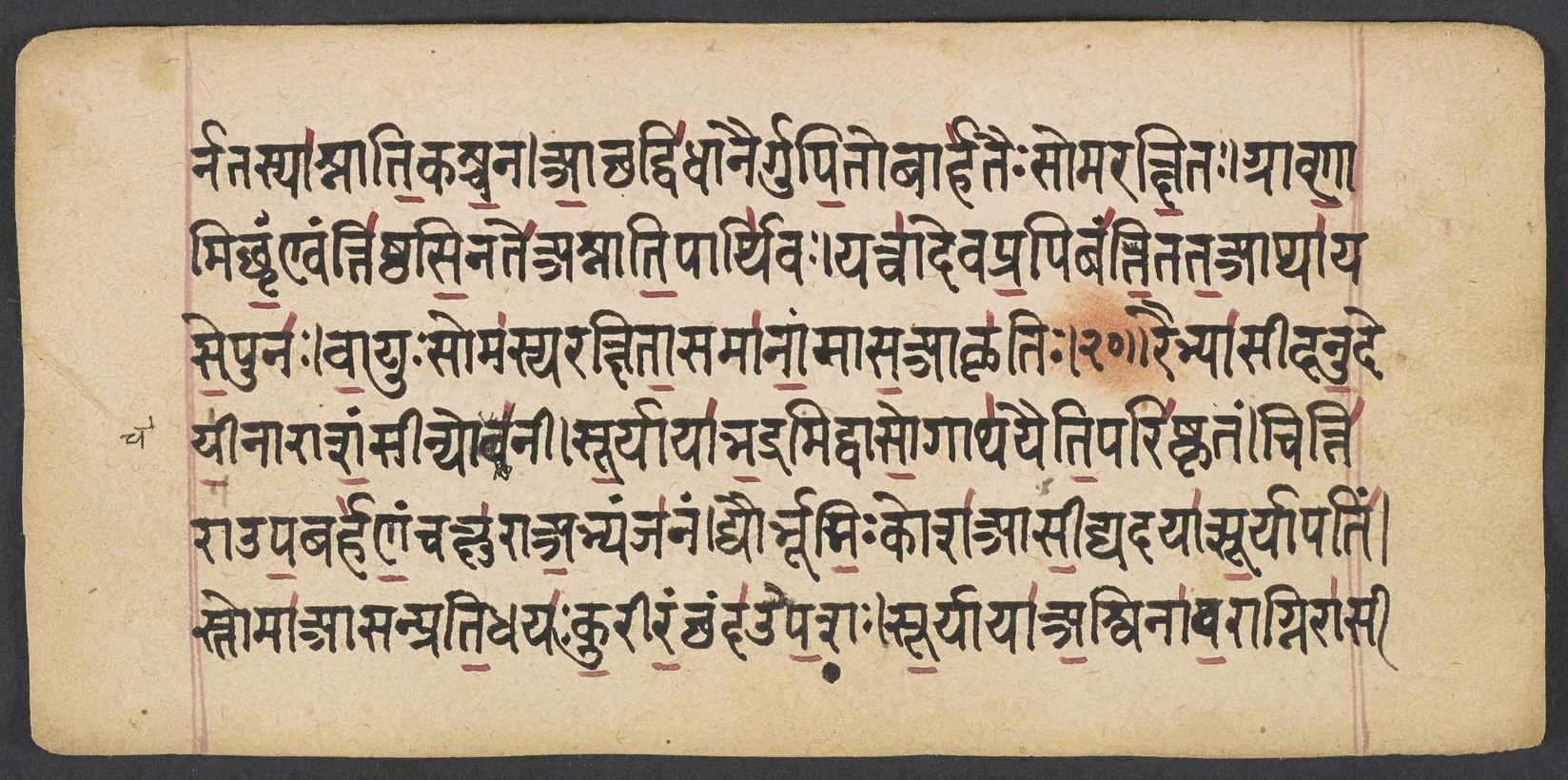
Penn Ms. Coll. 390 Item 48, fol. 51r (numbered 50r by the scribe) (OPenn image 50, lower leaf). Checked on the image: the Rigveda text on this page begins in RV 10.85.3 ‹na tasyāśnāti kaś cana›. The next page with Rigveda text, fol. 51v (numbered 50v by the scribe), begins in RV 10.85.9 ‹somo vadhūyur abhavad aśvināstām›. Verses 10.85.3-8 end on this page; 10.85.3 begins on fol. 50v (numbered 49v by the scribe).
3soma̍m manyate papi̱vān yat sa̍mpi̱ṁṣanty oṣa̍dhim | soma̱ṁ yam bra̱hmāṇo̍ vi̱dur na tasyā̍śnāti̱ kaś ca̱na ||
4ā̱cchadvi̍dhānair gupi̱to bārha̍taiḥ soma rakṣi̱taḥ | grāvṇā̱m ic chṛ̱ṇvan ti̍ṣṭhasi̱ na te̍ aśnāti̱ pārthi̍vaḥ ||
5yat tvā̍ deva pra̱piba̍nti̱ tata̱ ā pyā̍yase̱ puna̍ḥ | vā̱yuḥ soma̍sya rakṣi̱tā samā̍nā̱m māsa̱ ākṛ̍tiḥ ||
6raibhy ā̍sīd anu̱deyī̍ nārāśa̱ṁsī nyoca̍nī | sū̱ryāyā̍ bha̱dram id vāso̱ gātha̍yaiti̱ pari̍ṣkṛtam ||
7citti̍r ā upa̱barha̍ṇa̱ṁ cakṣu̍r ā a̱bhyañja̍nam | dyaur bhūmi̱ḥ kośa̍ āsī̱d yad ayā̍t sū̱ryā pati̍m ||
8stomā̍ āsan prati̱dhaya̍ḥ ku̱rīra̱ṁ chanda̍ opa̱śaḥ | sū̱ryāyā̍ a̱śvinā̍ va̱rāgnir ā̍sīt puroga̱vaḥ ||
3One thinks, when they have brayed the plant, that he hath drunk the Soma's juice; Of him whom Brahmans truly know as Soma no one ever tastes.
4Soma, secured by sheltering rules, guarded by hymns in Br̥ihatî, Thou standest listening to the stones none tastes of thee who dwells on earth.
5When they begin to drink thee then, O God, thou swellest out again. Vâyu is Soma's guardian God. The Moon is that which shapes the years.
6Raibhî was her dear bridal friend, and Nârâṣansî led her home. Lovely was Sûryâ's robe: she came to that which Gâthâ had adorned.
7Thought was the pillow of her couch, sight was the unguent for her eyes: Her treasury was earth and heaven..when Sûryâ went unto her Lord.
8Hymns were the cross-bars of the pole, Kurîra-metre decked the car: The bridesmen were the Aṣvin Pair Agni was leader of the train.
Where on the image
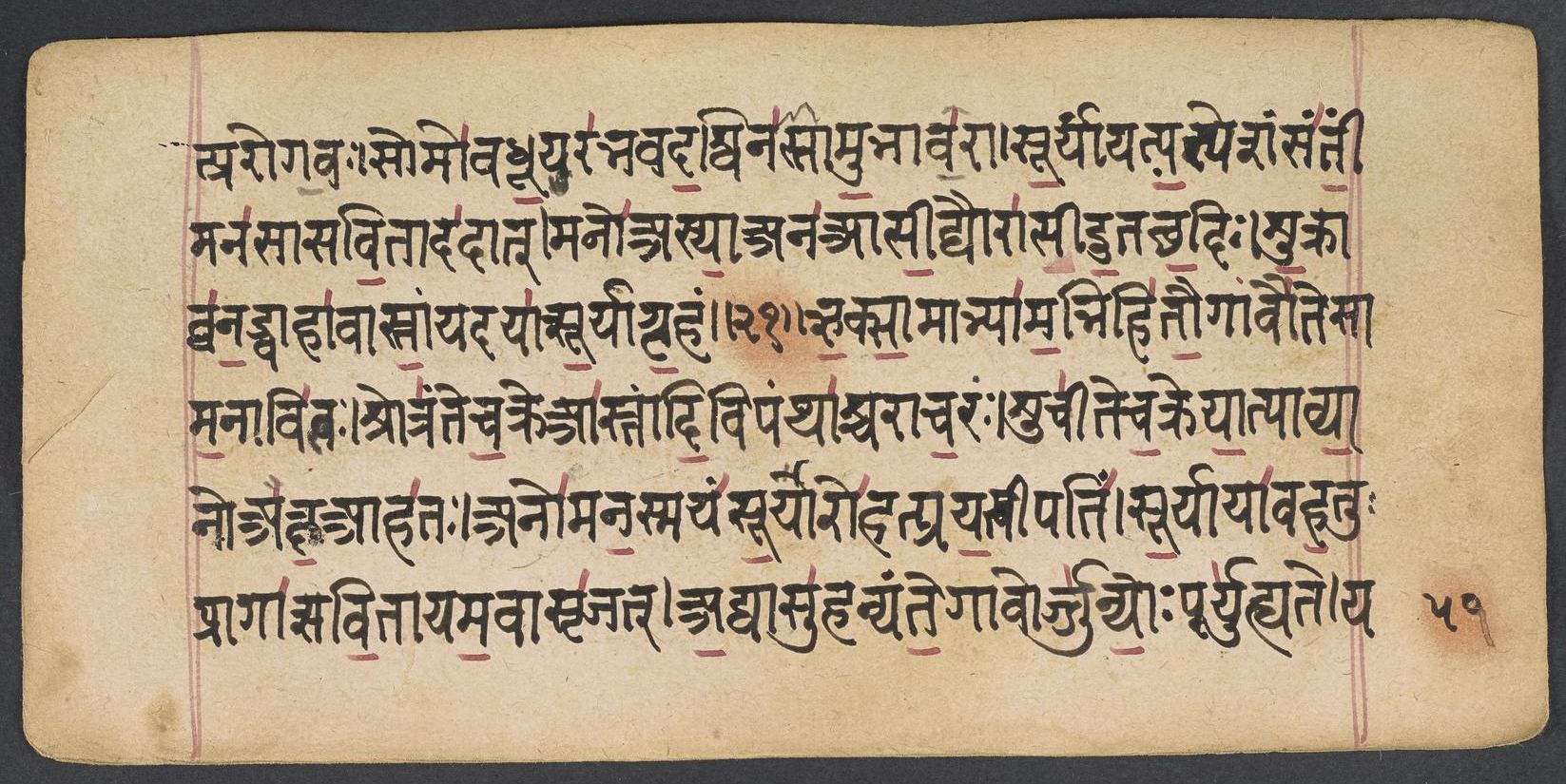
Penn Ms. Coll. 390 Item 48, fol. 51v (numbered 50v by the scribe) (OPenn image 51, upper leaf). Checked on the image: the Rigveda text on this page begins in RV 10.85.9 ‹somo vadhūyur abhavad aśvināstām›. The next page with Rigveda text, fol. 52r (numbered 51r by the scribe), begins in RV 10.85.14 ‹yad aśvinā pṛcchamānāv ayātaṁ›. Verses 10.85.9-13 end on this page.
9somo̍ vadhū̱yur a̍bhavad a̱śvinā̍stām u̱bhā va̱rā | sū̱ryāṁ yat patye̱ śaṁsa̍ntī̱m mana̍sā savi̱tāda̍dāt ||
10mano̍ asyā̱ ana̍ āsī̱d dyaur ā̍sīd u̱ta ccha̱diḥ | śu̱krāv a̍na̱ḍvāhā̍v āstā̱ṁ yad ayā̍t sū̱ryā gṛ̱ham ||
11ṛ̱ksā̱mābhyā̍m a̱bhihi̍tau̱ gāvau̍ te sāma̱nāv i̍taḥ | śrotra̍ṁ te ca̱kre ā̍stāṁ di̱vi panthā̍ś carācā̱raḥ ||
12śucī̍ te ca̱kre yā̱tyā vyā̱no akṣa̱ āha̍taḥ | ano̍ mana̱smaya̍ṁ sū̱ryāro̍hat praya̱tī pati̍m ||
13sū̱ryāyā̍ vaha̱tuḥ prāgā̍t savi̱tā yam a̱vāsṛ̍jat | a̱ghāsu̍ hanyante̱ gāvo 'rju̍nyo̱ḥ pary u̍hyate ||
9Soma was he who wooed the maid: the groomsmen were both Aṣvins, when The Sun-God Savitar bestowed his willing Sûryâ on her Lord.
10Her spirit was the bridal car; the covering thereof was heaven: Bright were both Steers that drew it when Sûryâ approached her husband's, home.
11Thy Steers were steady, kept in place by holy verse and Sâma-hymn: All ear were thy two chariot wheels: thy path was tremulous in the sky,
12Clean, as thou wentest, were thy wheels wind, was the axle fastened there. Sûryâ, proceeding to her Lord, mounted a spirit-fashioried car.
13The bridal pomp of Sûryâ, which Savitar started, moved along. In Maghâ days are oxen slain, in Arjunîs they wed the bride.
Where on the image
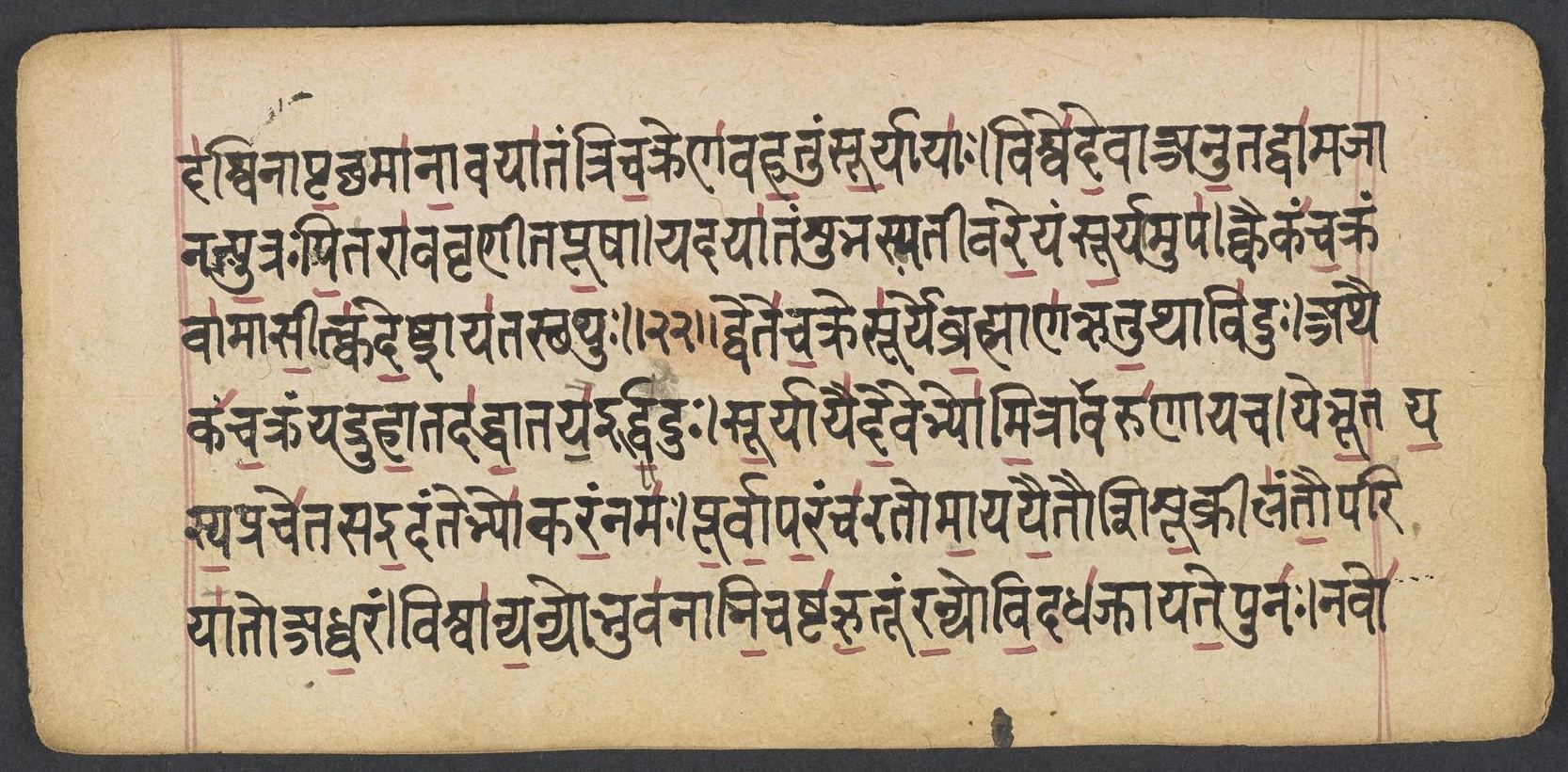
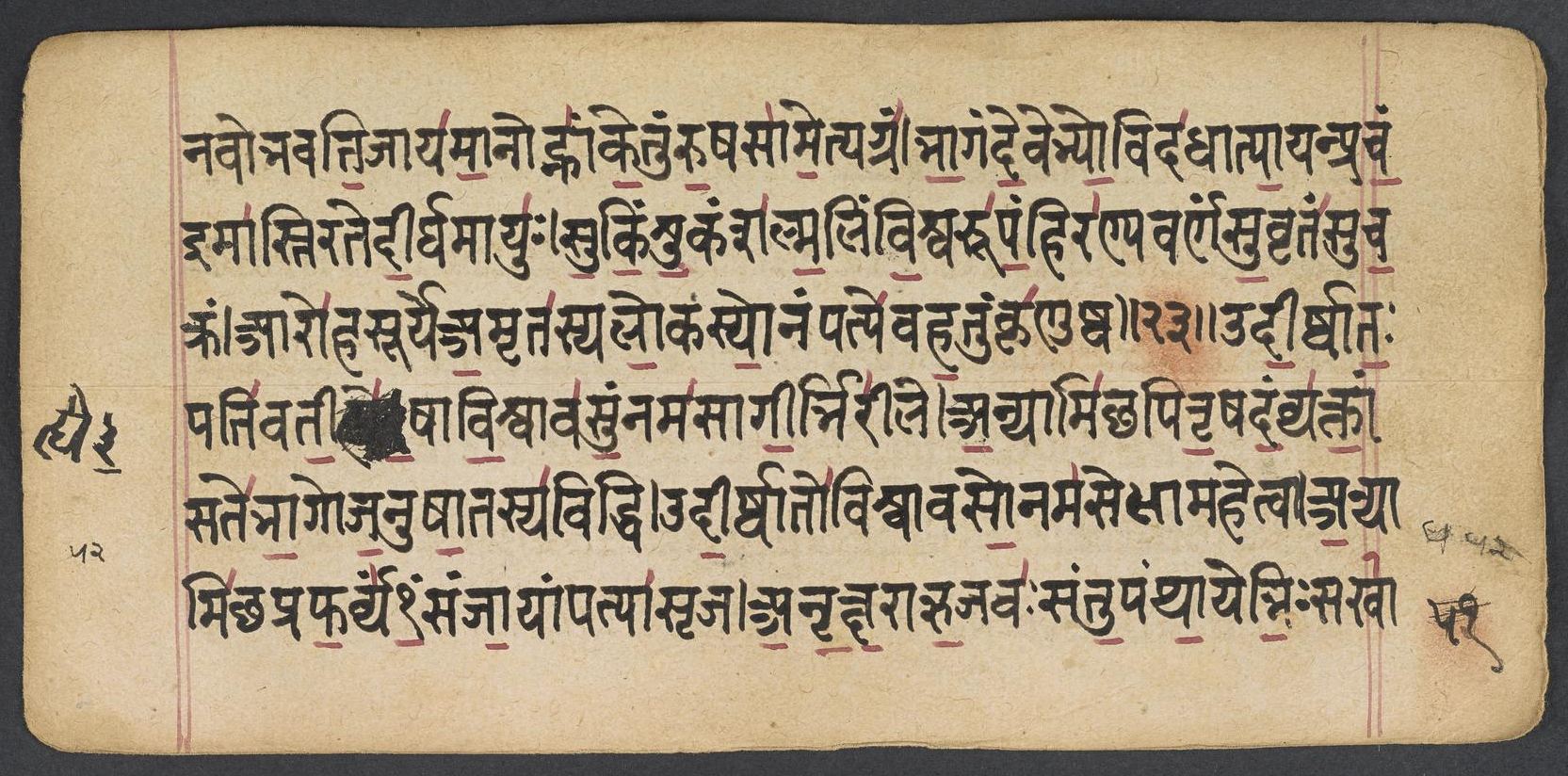
Penn Ms. Coll. 390 Item 48, fol. 52r (numbered 51r by the scribe) (OPenn image 51, lower leaf). Checked on the image: the Rigveda text on this page begins in RV 10.85.14 ‹yad aśvinā pṛcchamānāv ayātaṁ›. The next page with Rigveda text, fol. 52v (numbered 51v by the scribe), begins in RV 10.85.19 ‹navo-navo bhavati jāyamāno 'hnāṁ›. Verses 10.85.14-18 end on this page.
14yad a̍śvinā pṛ̱cchamā̍nā̱v ayā̍taṁ trica̱kreṇa̍ vaha̱tuṁ sū̱ryāyā̍ḥ | viśve̍ de̱vā anu̱ tad vā̍m ajānan pu̱traḥ pi̱tarā̍v avṛṇīta pū̱ṣā ||
15yad ayā̍taṁ śubhas patī vare̱yaṁ sū̱ryām upa̍ | kvaika̍ṁ ca̱kraṁ vā̍m āsī̱t kva̍ de̱ṣṭrāya̍ tasthathuḥ ||
16dve te̍ ca̱kre sū̍rye bra̱hmāṇa̍ ṛtu̱thā vi̍duḥ | athaika̍ṁ ca̱kraṁ yad guhā̱ tad a̍ddhā̱taya̱ id vi̍duḥ ||
17sū̱ryāyai̍ de̱vebhyo̍ mi̱trāya̱ varu̍ṇāya ca | ye bhū̱tasya̱ prace̍tasa i̱daṁ tebhyo̍ 'kara̱ṁ nama̍ḥ ||
18pū̱rvā̱pa̱raṁ ca̍rato mā̱yayai̱tau śiśū̱ krīḻa̍ntau̱ pari̍ yāto adhva̱ram | viśvā̍ny a̱nyo bhuva̍nābhi̱caṣṭa̍ ṛ̱tūm̐r a̱nyo vi̱dadha̍j jāyate̱ puna̍ḥ ||
14When on your three-wheeled chariot, O Aṣvins, ye came as wooers unto Sûryâ's bridal, Then all the Gods agreed to your proposal Pûshan as Son elected you as Fathers.
15O ye Two Lords of lustre, then when ye to Sûryâ's wooing came, Where was one chariot wheel of yours? Where stood ye for die Sire's command?
16The Brahmans, by their seasons, know, O Sûryâ, those two wheels of thine: One kept concealed, those only who are skilled in highest truths have learned.
17To Sûryâ and the Deities, to Mitra and to Varuṇa. Who know aright the thing that is, this adoration have I paid.
18By their own power these Twain in close succession move; They go as playing children round the sacrifice. One of the Pair beholdeth all existing things; the other ordereth seasons and is born again.
Where on the image
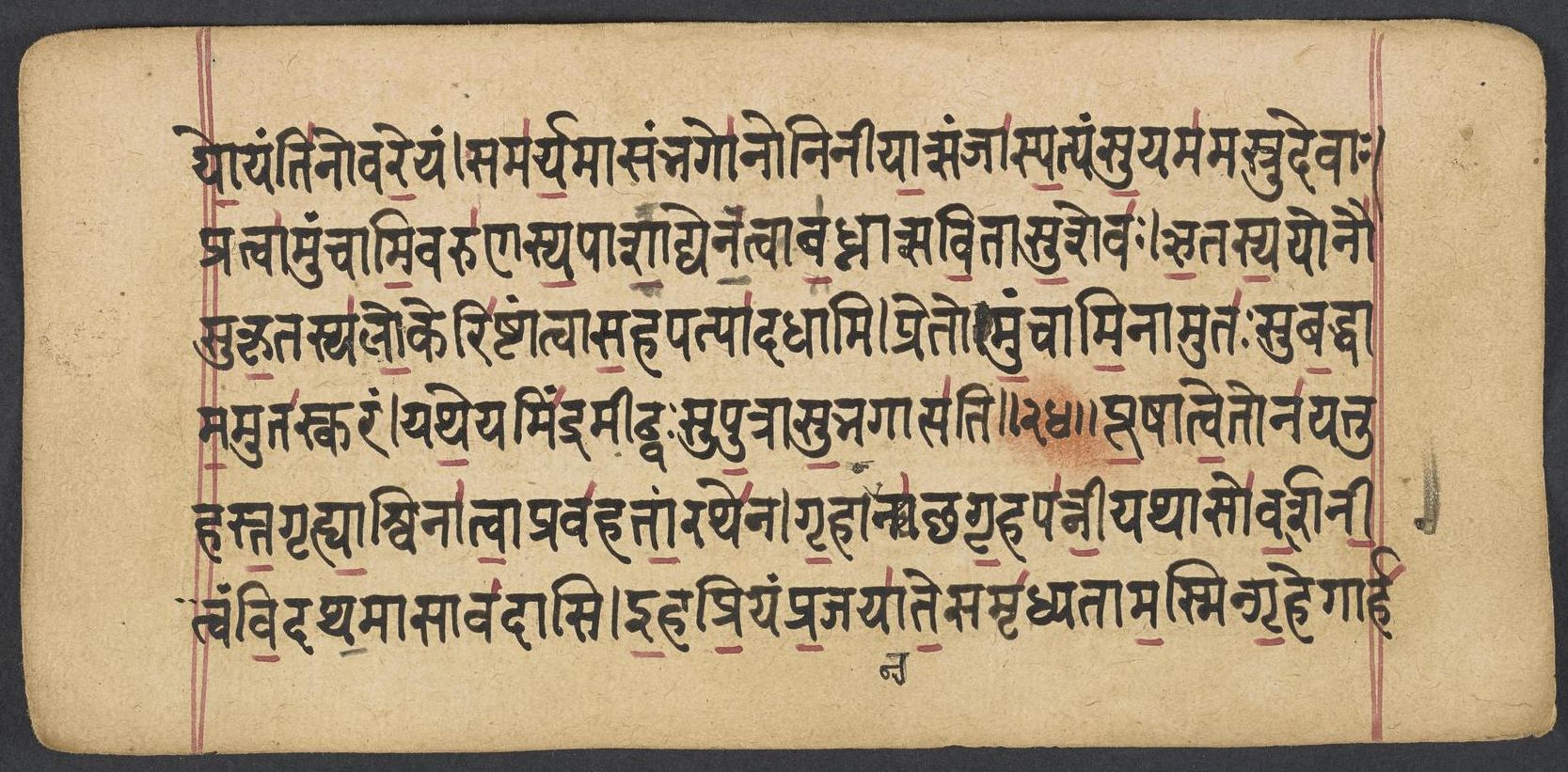
Penn Ms. Coll. 390 Item 48, fol. 52v (numbered 51v by the scribe) (OPenn image 52, upper leaf). Checked on the image: the Rigveda text on this page begins in RV 10.85.19 ‹navo-navo bhavati jāyamāno 'hnāṁ›. The next page with Rigveda text, fol. 53r (numbered 52r by the scribe), begins in RV 10.85.23 ‹-sakhāyo yanti no vareyam›. Verses 10.85.19-22 end on this page.
19navo̍-navo bhavati̱ jāya̍mā̱no 'hnā̍ṁ ke̱tur u̱ṣasā̍m e̱ty agra̍m | bhā̱gaṁ de̱vebhyo̱ vi da̍dhāty ā̱yan pra ca̱ndramā̍s tirate dī̱rgham āyu̍ḥ ||
20su̱ki̱ṁśu̱kaṁ śa̍lma̱liṁ vi̱śvarū̍pa̱ṁ hira̍ṇyavarṇaṁ su̱vṛta̍ṁ suca̱kram | ā ro̍ha sūrye a̱mṛta̍sya lo̱kaṁ syo̱nam patye̍ vaha̱tuṁ kṛ̍ṇuṣva ||
21ud ī̱rṣvāta̱ḥ pati̍vatī̱ hy e̱3̱̍ṣā vi̱śvāva̍su̱ṁ nama̍sā gī̱rbhir ī̍ḻe | a̱nyām i̍ccha pitṛ̱ṣada̱ṁ vya̍ktā̱ṁ sa te̍ bhā̱go ja̱nuṣā̱ tasya̍ viddhi ||
22ud ī̱rṣvāto̍ viśvāvaso̱ nama̍seḻā mahe tvā | a̱nyām i̍ccha prapha̱rvya1̱̍ṁ saṁ jā̱yām patyā̍ sṛja ||
19He, born afresh, is new and new for ever ensign of days he goes before the Mornings Coming, he orders for the Gods their portion. The Moon prolongs the days of our existence.
20Mount this, all-shaped, gold-hued, with strong wheels, fashioned of Kinṣuka and Ṣalmali, lightrolling, Bound for the world of life immortal, Sûryâ: make for thy lord a happy bridal journey.
21Rise up from hence: this maiden hath a husband. I laud Viṣvâvasu with hymns and homage. Seek in her father's home another fair one, and find the portion from of old assigned thee.
22Rise up from hence, Viṣvâvasu: with reverence we worship thee. Seek thou another willing maid, and with her husband leave the bride.
Where on the image
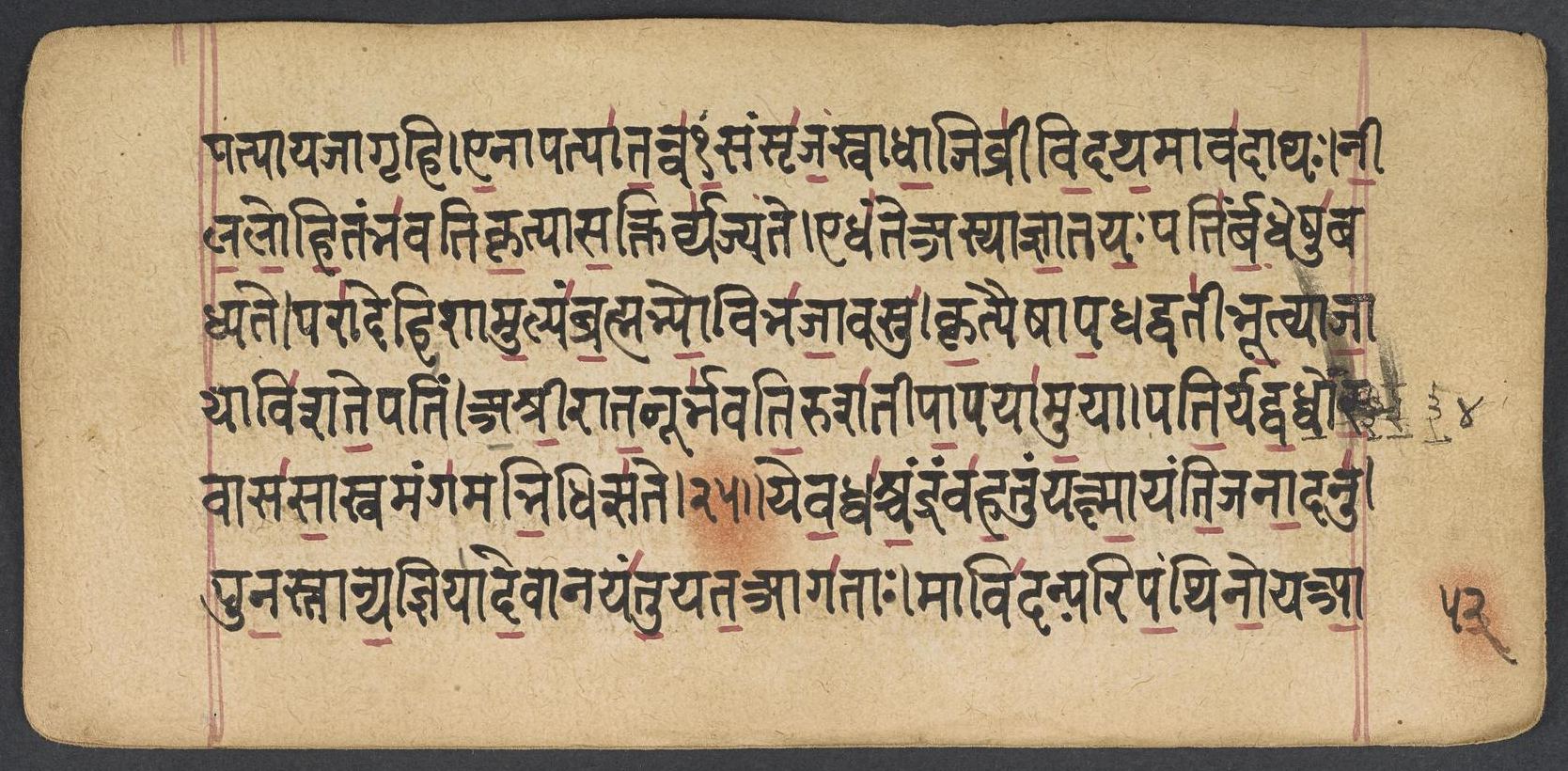
Penn Ms. Coll. 390 Item 48, fol. 53r (numbered 52r by the scribe) (OPenn image 52, lower leaf). Checked on the image: the Rigveda text on this page begins in RV 10.85.23 ‹-sakhāyo yanti no vareyam›. The next page with Rigveda text, fol. 53v (numbered 52v by the scribe), begins in RV 10.85.27 ‹-gārhapatyāya jāgṛhi›. Verses 10.85.23-26 end on this page; 10.85.23 begins on fol. 52v (numbered 51v by the scribe).
23a̱nṛ̱kṣa̱rā ṛ̱java̍ḥ santu̱ panthā̱ yebhi̱ḥ sakhā̍yo̱ yanti̍ no vare̱yam | sam a̍rya̱mā sam bhago̍ no ninīyā̱t saṁ jā̍spa̱tyaṁ su̱yama̍m astu devāḥ ||
24pra tvā̍ muñcāmi̱ varu̍ṇasya̱ pāśā̱d yena̱ tvāba̍dhnāt savi̱tā su̱śeva̍ḥ | ṛ̱tasya̱ yonau̍ sukṛ̱tasya̍ lo̱ke 'ri̍ṣṭāṁ tvā sa̱ha patyā̍ dadhāmi ||
25preto mu̱ñcāmi̱ nāmuta̍ḥ suba̱ddhām a̱muta̍s karam | yathe̱yam i̍ndra mīḍhvaḥ supu̱trā su̱bhagāsa̍ti ||
26pū̱ṣā tve̱to na̍yatu hasta̱gṛhyā̱śvinā̍ tvā̱ pra va̍hatā̱ṁ rathe̍na | gṛ̱hān ga̍ccha gṛ̱hapa̍tnī̱ yathāso̍ va̱śinī̱ tvaṁ vi̱datha̱m ā va̍dāsi ||
23Straight in direction be the path:s, and thornless, whereon our fellows travel to the wooing. Let Aryaman and Bhaga lead us: perfect, O Gods, the union of the wife and husband.
24Now from the noose of Varuṇa I free thee, wherewith Most Blessed Savitar hath bound thee. In Law's seat, to the world of virtuous action, I give thee up uninjured with thy consort.
25Hence, and not thence, I send these free. I make thee softly fettered there. That, Bounteous Indra, she may live blest in her fortune and her sons.
26Let Pûshan take thy hand and hence conduct thee; may the two Aṣvins on their car transport thee. Go to the house to be the household's mistress and speak as lady ito thy gathered people.
Where on the image
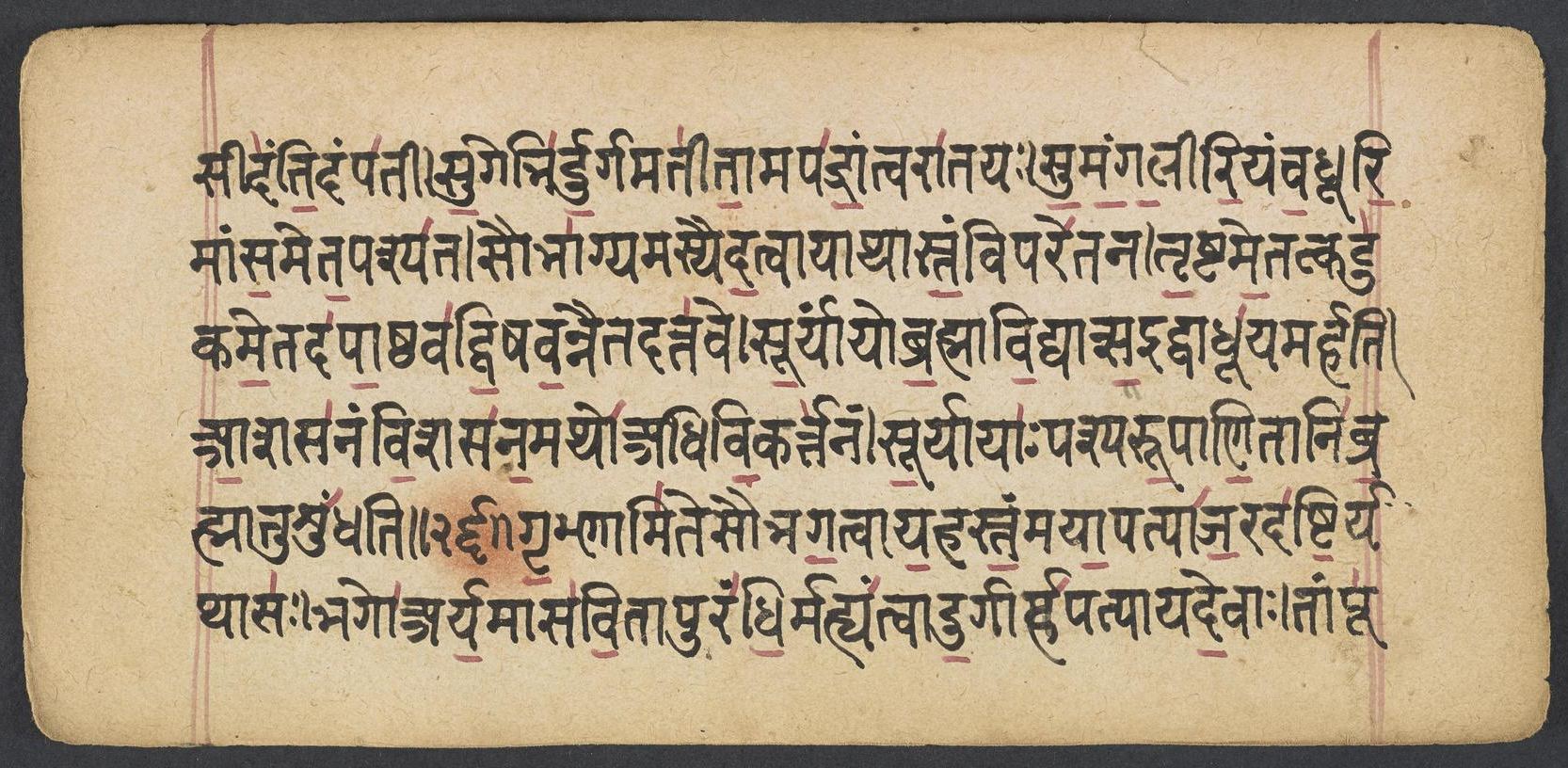
Penn Ms. Coll. 390 Item 48, fol. 53v (numbered 52v by the scribe) (OPenn image 53, upper leaf). Checked on the image: the Rigveda text on this page begins in RV 10.85.27 ‹-gārhapatyāya jāgṛhi›. The next page with Rigveda text, fol. 54r (numbered 53r by the scribe), begins in RV 10.85.32 ‹-āsīdanti dampatī›. Verses 10.85.27-31 end on this page; 10.85.27 begins on fol. 53r (numbered 52r by the scribe).
27i̱ha pri̱yam pra̱jayā̍ te̱ sam ṛ̍dhyatām a̱smin gṛ̱he gārha̍patyāya jāgṛhi | e̱nā patyā̍ ta̱nva1̱̍ṁ saṁ sṛ̍ja̱svādhā̱ jivrī̍ vi̱datha̱m ā va̍dāthaḥ ||
28nī̱la̱lo̱hi̱tam bha̍vati kṛ̱tyāsa̱ktir vy a̍jyate | edha̍nte asyā jñā̱taya̱ḥ pati̍r ba̱ndheṣu̍ badhyate ||
29parā̍ dehi śāmu̱lya̍m bra̱hmabhyo̱ vi bha̍jā̱ vasu̍ | kṛ̱tyaiṣā pa̱dvatī̍ bhū̱tvy ā jā̱yā vi̍śate̱ pati̍m ||
30a̱śrī̱rā ta̱nūr bha̍vati̱ ruśa̍tī pā̱payā̍mu̱yā | pati̱r yad va̱dhvo̱3̱̍ vāsa̍sā̱ svam aṅga̍m abhi̱dhitsa̍te ||
31ye va̱dhva̍ś ca̱ndraṁ va̍ha̱tuṁ yakṣmā̱ yanti̱ janā̱d anu̍ | puna̱s tān ya̱jñiyā̍ de̱vā naya̍ntu̱ yata̱ āga̍tāḥ ||
27Happy be thou and prosper with thy children here: be vigilant to rule thy household in this home. Closely unite thy body with this; man, thy lord. So shall ye, full of years, address your company.
28Her hue is blue and red: the fiend who clingeth close is driven off. Well thrive the kinsmen of this bride the husband is bound fast in bonds.
29Give thou the woollen robe away: deal treasure to the Brahman priests. This female fiend hath got her feet, and as a wife attends her lord.
30Unlovely is his body when it glistens with this wicked fiend, What time the husband wraps about his limbs the garment of his wife.
31Consumptions, from her people, which follow the bride's resplendent train,– These let the Holy Gods again bear to the place from which they came.
Where on the image
Penn Ms. Coll. 390 Item 48, fol. 54r (numbered 53r by the scribe) (OPenn image 53, lower leaf). Checked on the image: the Rigveda text on this page begins in RV 10.85.32 ‹-āsīdanti dampatī›. The next page with Rigveda text, fol. 54v (numbered 53v by the scribe), begins in RV 10.85.37 ‹-pūṣañ chivatamām erayasva yasyām›. Verses 10.85.32-36 end on this page; 10.85.32 begins on fol. 53v (numbered 52v by the scribe).
32mā vi̍dan paripa̱nthino̱ ya ā̱sīda̍nti̱ dampa̍tī | su̱gebhi̍r du̱rgam atī̍tā̱m apa̍ drā̱ntv arā̍tayaḥ ||
33su̱ma̱ṅga̱līr i̱yaṁ va̱dhūr i̱māṁ sa̱meta̱ paśya̍ta | saubhā̍gyam asyai da̱ttvāyāthāsta̱ṁ vi pare̍tana ||
34tṛ̱ṣṭam e̱tat kaṭu̍kam e̱tad a̍pā̱ṣṭhava̍d vi̱ṣava̱n naitad atta̍ve | sū̱ryāṁ yo bra̱hmā vi̱dyāt sa id vādhū̍yam arhati ||
35ā̱śasa̍naṁ vi̱śasa̍na̱m atho̍ adhivi̱karta̍nam | sū̱ryāyā̍ḥ paśya rū̱pāṇi̱ tāni̍ bra̱hmā tu śu̍ndhati ||
36gṛ̱bhṇāmi̍ te saubhaga̱tvāya̱ hasta̱m mayā̱ patyā̍ ja̱rada̍ṣṭi̱r yathāsa̍ḥ | bhago̍ arya̱mā sa̍vi̱tā pura̍ṁdhi̱r mahya̍ṁ tvādu̱r gārha̍patyāya de̱vāḥ ||
32Let not the highway thieves who lie in ambush find the wedded pair. By pleasant ways let them escape the danger, and let foes depart.
33Signs of good fortune mark the bride come all of you and look at her. Wish her prosperity, and then return unto your homes again.
34Pungent is this, and bitter this, filled, as it were, with arrow-barbs, Empoisoned and not fit for use. The Brahman who knows Sûryâ well deserves the garment of the bride.
35The fringe, the cloth that decks her head, and then the triply parted robe,– Behold the hues which Sûryâ wears these doth the Brahman purify.
36I take thy hand in mine for happy fortune that thou mayst reach old age with me thy husband. Gods, Aryaman, Bhaga, Savitar, Purandhi, have given thee to be my household's mistress.
Where on the image
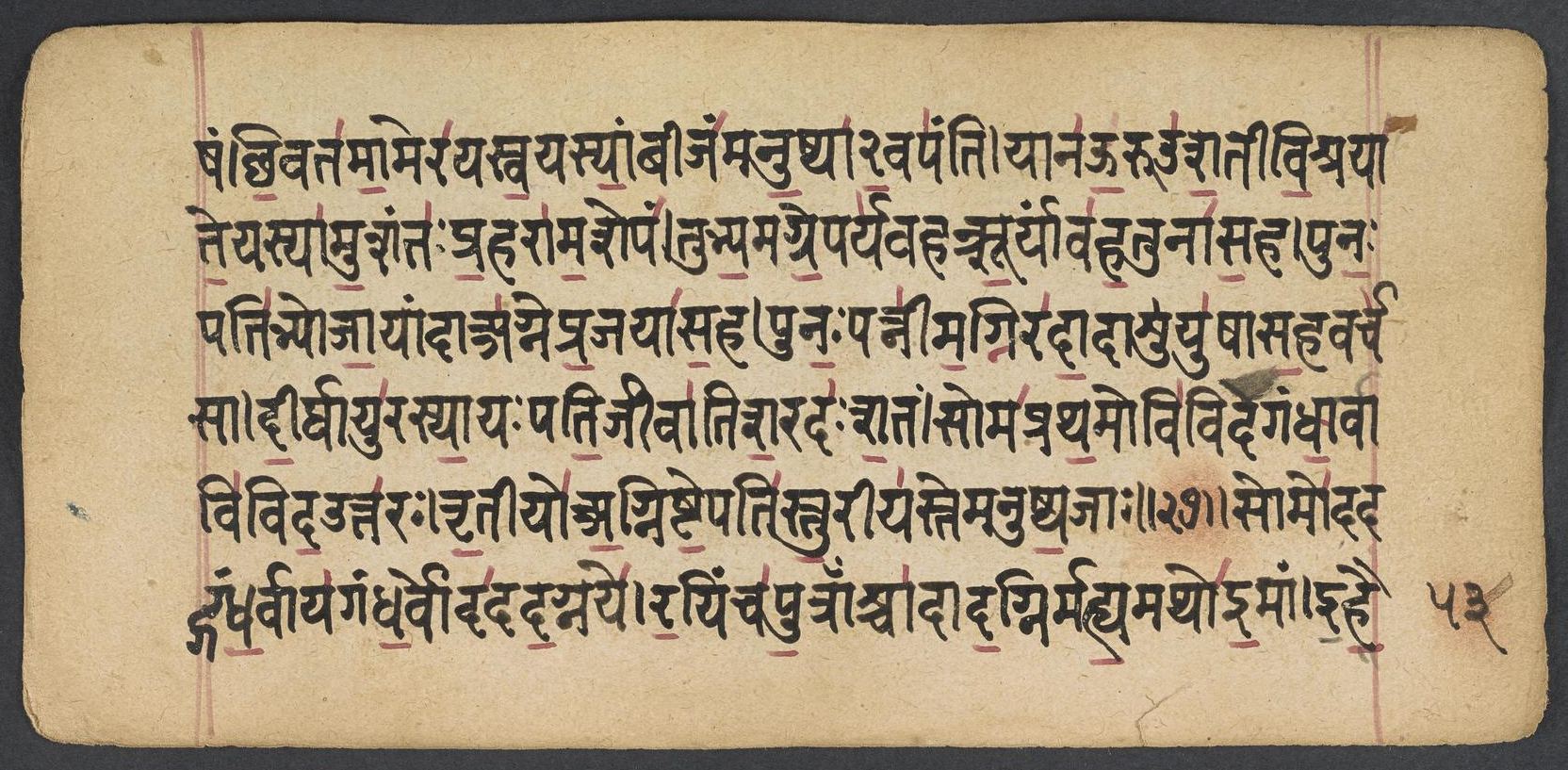
Penn Ms. Coll. 390 Item 48, fol. 54v (numbered 53v by the scribe) (OPenn image 54, upper leaf). Checked on the image: the Rigveda text on this page begins in RV 10.85.37 ‹-pūṣañ chivatamām erayasva yasyām›. The next page with Rigveda text, fol. 55r (numbered 54r by the scribe), begins in RV 10.85.42 ‹-ihaiva stam mā vi›. Verses 10.85.37-41 end on this page; 10.85.37 begins on fol. 54r (numbered 53r by the scribe).
37tām pū̍ṣañ chi̱vata̍mā̱m era̍yasva̱ yasyā̱m bīja̍m manu̱ṣyā̱3̱̍ vapa̍nti | yā na̍ ū̱rū u̍śa̱tī vi̱śrayā̍te̱ yasyā̍m u̱śanta̍ḥ pra̱harā̍ma̱ śepa̍m ||
38tubhya̱m agre̱ pary a̍vahan sū̱ryāṁ va̍ha̱tunā̍ sa̱ha | puna̱ḥ pati̍bhyo jā̱yāṁ dā a̍gne pra̱jayā̍ sa̱ha ||
39puna̱ḥ patnī̍m a̱gnir a̍dā̱d āyu̍ṣā sa̱ha varca̍sā | dī̱rghāyu̍r asyā̱ yaḥ pati̱r jīvā̍ti śa̱rada̍ḥ śa̱tam ||
40soma̍ḥ pratha̱mo vi̍vide gandha̱rvo vi̍vida̱ utta̍raḥ | tṛ̱tīyo̍ a̱gniṣ ṭe̱ pati̍s tu̱rīya̍s te manuṣya̱jāḥ ||
41somo̍ dadad gandha̱rvāya̍ gandha̱rvo da̍dad a̱gnaye̍ | ra̱yiṁ ca̍ pu̱trām̐ś cā̍dād a̱gnir mahya̱m atho̍ i̱mām ||
37O Pûshan, send her on as most auspicious, her who shall be the sharer of my pleasures; Her who shall twine her loving arms about me, and welcome all my love and mine embraces.
38For thee, with bridal train, they, first, escorted Sûryâ to her home. Give to the husband in return, Agni, the wife with progeny.
39Agni hath given the bride again with splendour and with ample life. Long lived be he who is her lord; a hundred autumns let him live.
40Soma obtained her first of all; next the Gandharva was her lord. Agni was thy third husband: now one bornof woman is thy fourth.
41Soma to the Gandharva, and to Agni the Gandharva gave: And Agni hath bestowed on me riches and sons and this my spouse.
Where on the image
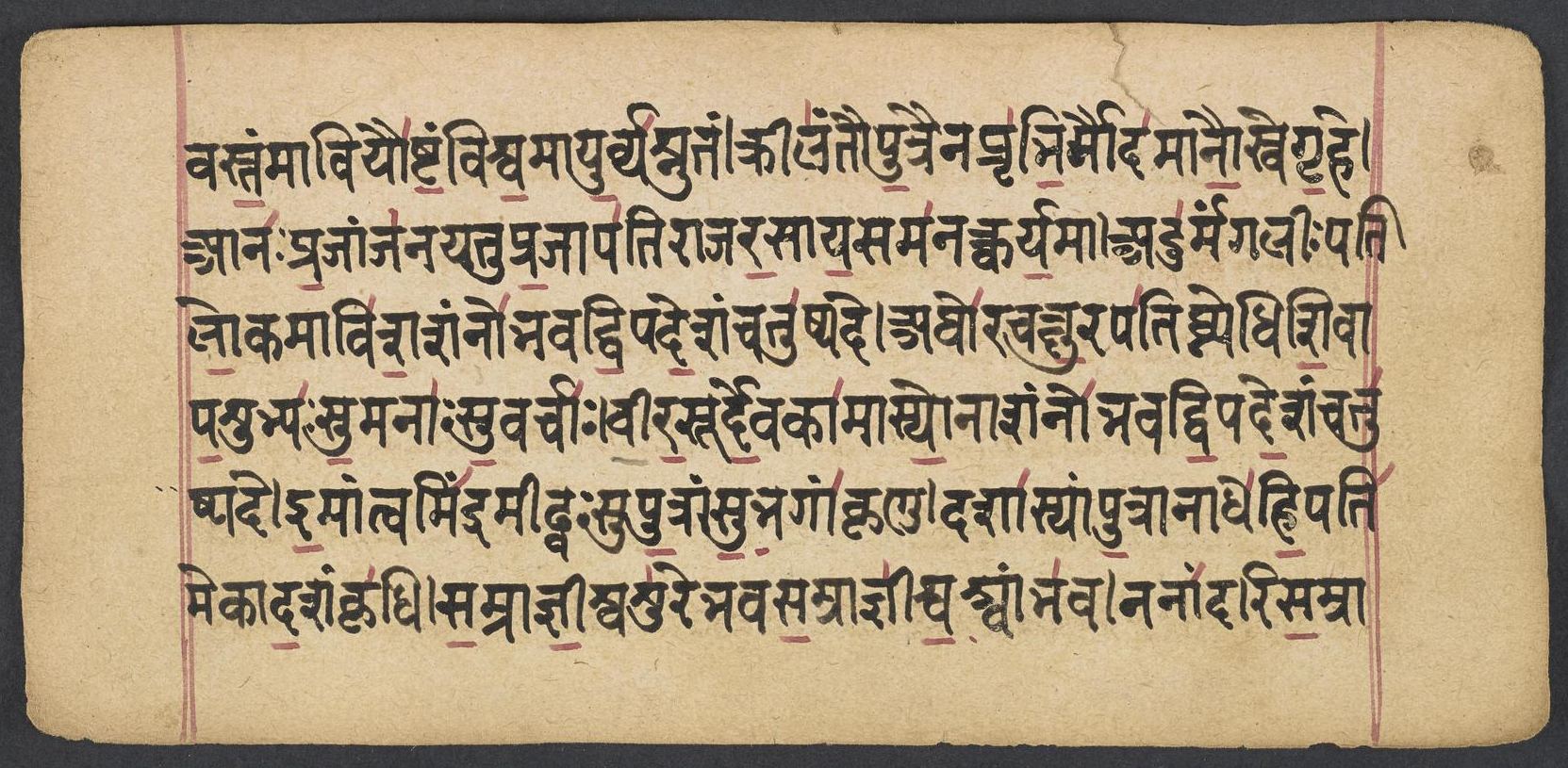
Penn Ms. Coll. 390 Item 48, fol. 55r (numbered 54r by the scribe) (OPenn image 54, lower leaf). Checked on the image: the Rigveda text on this page begins in RV 10.85.42 ‹-ihaiva stam mā vi›. The next page with Rigveda text, fol. 55v (numbered 54v by the scribe), begins in RV 10.85.46 ‹-śvaśure bhava samrājñī śvaśrvām›. Verses 10.85.42-45 end on this page; 10.85.42 begins on fol. 54v (numbered 53v by the scribe).
42i̱haiva sta̱m mā vi yau̍ṣṭa̱ṁ viśva̱m āyu̱r vy a̍śnutam | krīḻa̍ntau pu̱trair naptṛ̍bhi̱r moda̍mānau̱ sve gṛ̱he ||
43ā na̍ḥ pra̱jāṁ ja̍nayatu pra̱jāpa̍tir ājara̱sāya̱ sam a̍naktv arya̱mā | adu̍rmaṅgalīḥ patilo̱kam ā vi̍śa̱ śaṁ no̍ bhava dvi̱pade̱ śaṁ catu̍ṣpade ||
44agho̍racakṣu̱r apa̍tighny edhi śi̱vā pa̱śubhya̍ḥ su̱manā̍ḥ su̱varcā̍ḥ | vī̱ra̱sūr de̱vakā̍mā syo̱nā śaṁ no̍ bhava dvi̱pade̱ śaṁ catu̍ṣpade ||
45i̱māṁ tvam i̍ndra mīḍhvaḥ supu̱trāṁ su̱bhagā̍ṁ kṛṇu | daśā̍syām pu̱trān ā dhe̍hi̱ pati̍m ekāda̱śaṁ kṛ̍dhi ||
42Be ye not parted; dwell ye here reach the full time of human life. With sons and grandsons sport and play, rejoicing in your own abode.
43So may Prajâpati bring children forth to us; may Aryaman adorn us till old age come nigh. Not inauspicious enter thou thy husband's house: bring blessing to our bipeds and our quadrupeds.
44Not evil-eyed, no slayer of thy husband, bring weal to cattle, radiant, gentlehearted; Loving the Gods, delightful, bearing heroes, bring blessing to our quadrupeds and bipeds.
45O Bounteous Indra, make this bride blest in her sons and fortunate. Vouchsafe to her ten sons, and make her husband the eleventh man.
Where on the image
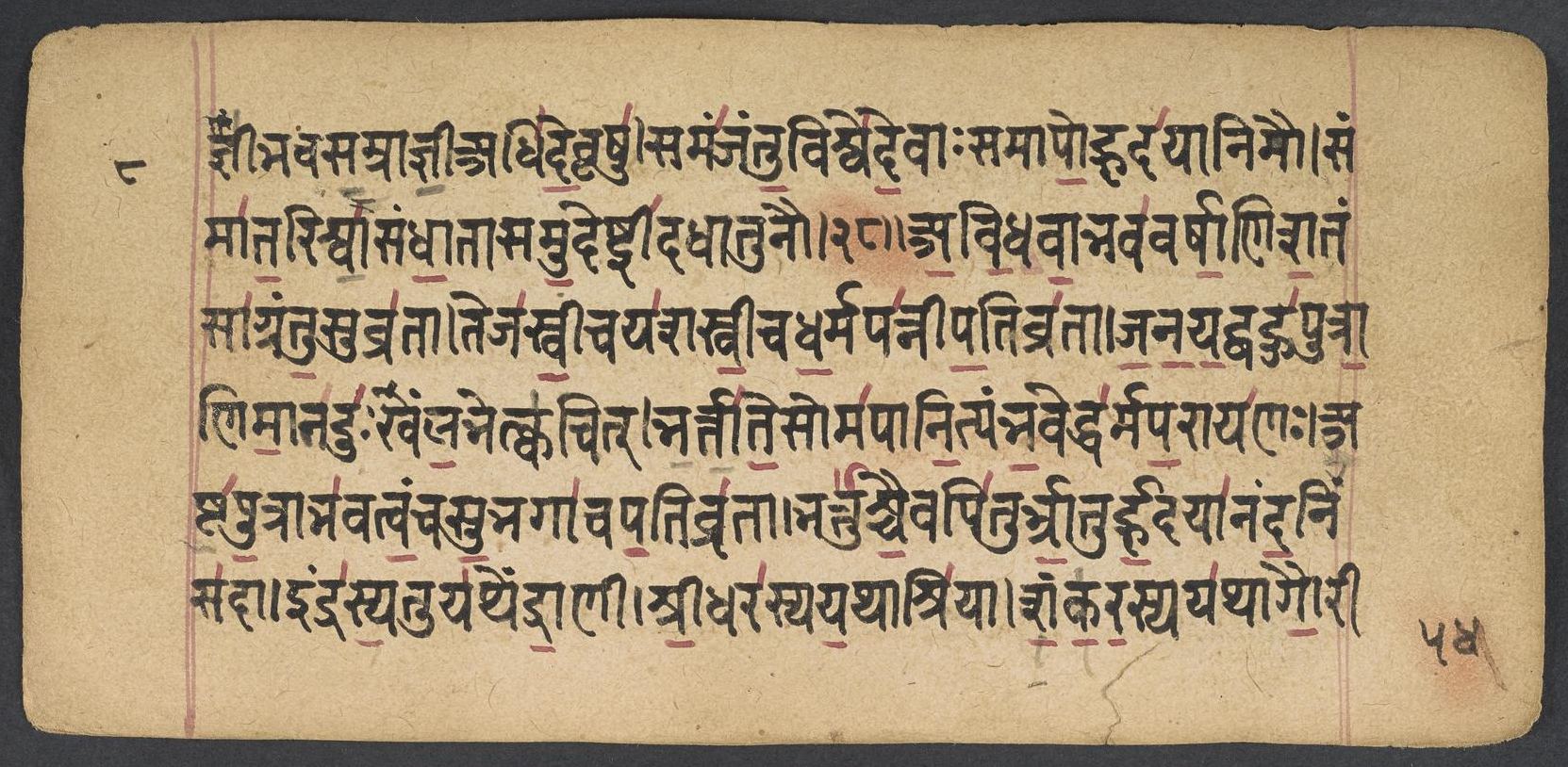
Penn Ms. Coll. 390 Item 48, fol. 55v (numbered 54v by the scribe) (OPenn image 55, upper leaf). Checked on the image: the Rigveda text on this page begins in RV 10.85.46 ‹-śvaśure bhava samrājñī śvaśrvām›. The next page with Rigveda text, fol. 56r (numbered 55r by the scribe), begins in RV 10.86.1 ‹vi hi sotor asṛkṣata›. Verses 10.85.46-47 end on this page; 10.85.46 begins on fol. 55r (numbered 54r by the scribe).
46sa̱mrājñī̱ śvaśu̍re bhava sa̱mrājñī̍ śva̱śrvām bha̍va | nanā̍ndari sa̱mrājñī̍ bhava sa̱mrājñī̱ adhi̍ de̱vṛṣu̍ ||
47sam a̍ñjantu̱ viśve̍ de̱vāḥ sam āpo̱ hṛda̍yāni nau | sam mā̍ta̱riśvā̱ saṁ dhā̱tā sam u̱ deṣṭrī̍ dadhātu nau ||
46Over thy husband's father and thy husband's mother bear full sway. Over the sister of thy lord, over his brothers rule supreme.
47So may the Universal Gods, so may the Waters join our hearts. May Mâtariṣvan, Dhatar, and Destri together bind us close.
Notes
- Sanskrit: Aufrecht's edition (1877) with the Vedic accents, as entered by van Nooten and Holland (GRETIL).
- English: Ralph T. H. Griffith, The Hymns of the Rigveda (1889-1892; 2nd ed. 1896-1897), from the VedaWeb digital text; OCR slips in that text were corrected against the printed 2nd edition (data/sources/rigveda/griffith_errata.json).
Cite
Sources
- Source: Penn Ms. Coll. 390 Item 48 (1711 CE (colophon: Saṃvat 1768)), OPenn, Public Domain Mark + Aufrecht's accented text (GRETIL) + Griffith's English (VedaWeb) (holding institution)
- Critical edition: Aufrecht (1877), accented e-text via GRETIL
← previous · → next · v cycle view · l back to library