Rigveda 10.84: To Manyu
Introduction
Rigveda 10.84 is a hymn of 7 verses addressed to Manyu. It stands in book (maṇḍala) 10, the last and latest book. The Rigveda is the oldest collection of Sanskrit hymns, composed in the second half of the second millennium BCE and handed down orally for many centuries before it was written down.
The manuscript shown is Penn Ms. Coll. 390 Item 48 (University of Pennsylvania), a paper manuscript of the eighth aṣṭaka (RV 10.46-10.191) of the Ṛgveda Saṃhitā in Devanāgarī, 158 leaves, 6 lines to the page, with the accents marked in red; the scribe's colophon on fol. 158 gives Saṃvat 1768 (1711 CE); this hymn stands on fol. 49v-50v. Each section below gives the verses that end on one page; the page boundaries were read on the images (the opening words of every page), not counted out. Like most Rigveda manuscripts, Penn Ms. Coll. 390 Item 48 writes a repeated refrain in short form after its first occurrence (for example kasmai° for kasmai devāya haviṣā vidhema); the Sanskrit shown is the full text of Aufrecht's edition.
How was this verified? (Provenance)
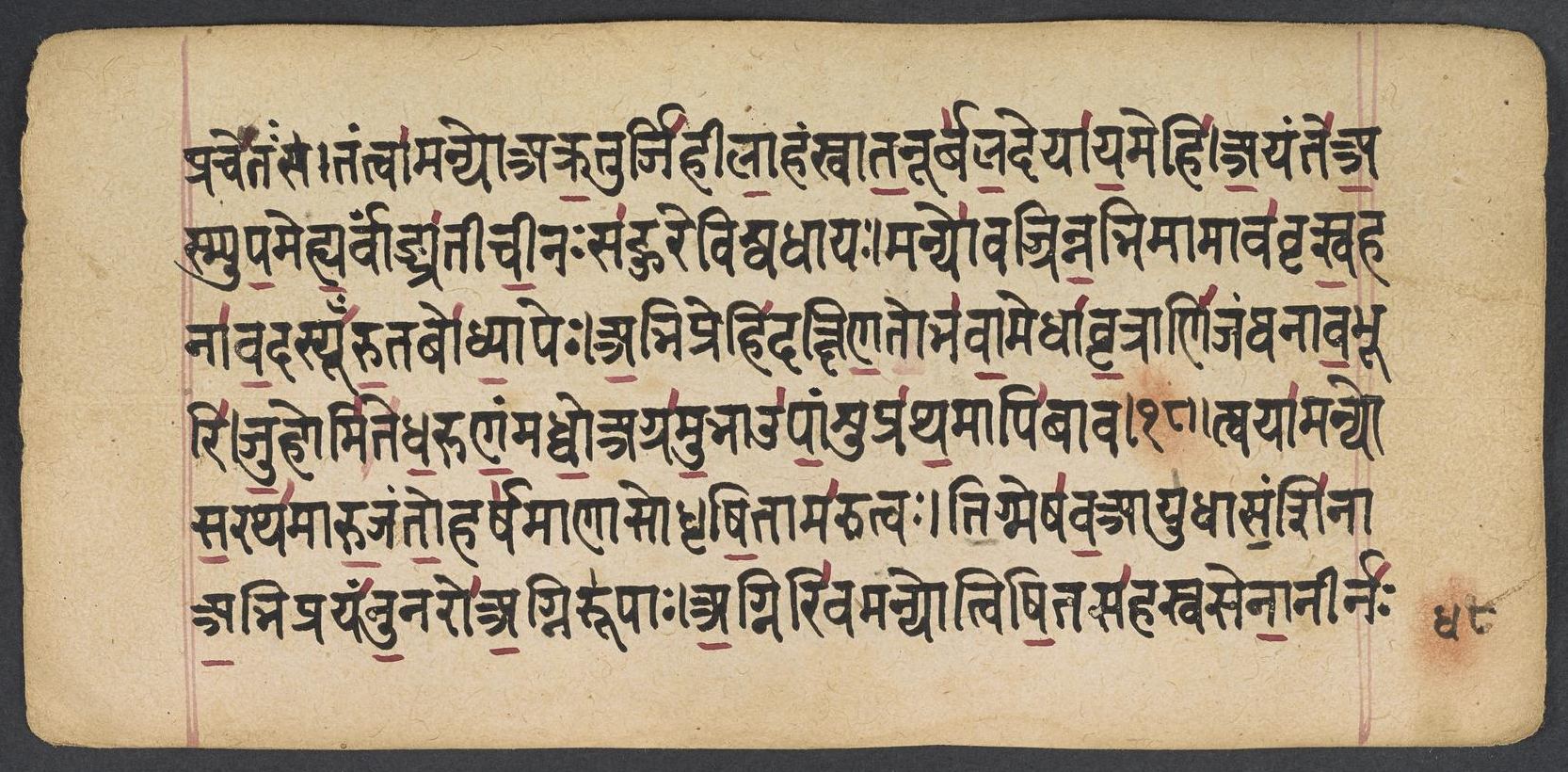
Where on the image
Penn Ms. Coll. 390 Item 48, fol. 49v (numbered 48v by the scribe) (OPenn image 49, upper leaf). Checked on the image: the Rigveda text on this page begins in RV 10.83.5 ‹-taviṣasya pracetaḥ›. The next page with Rigveda text, fol. 50r (numbered 49r by the scribe), begins in RV 10.84.2 ‹-senānīr naḥ sahure hūta›. Verse 10.84.1 ends on this page.
1tvayā̍ manyo sa̱ratha̍m āru̱janto̱ harṣa̍māṇāso dhṛṣi̱tā ma̍rutvaḥ | ti̱gmeṣa̍va̱ āyu̍dhā sa̱ṁśiśā̍nā a̱bhi pra ya̍ntu̱ naro̍ a̱gnirū̍pāḥ ||
1BORNE on with thee, O Manyu girt by Maruts, let our brave men, impetuous, bursting forward, March on, like flames of fire in form, exulting, with pointed arrows, sharpening their weapons.
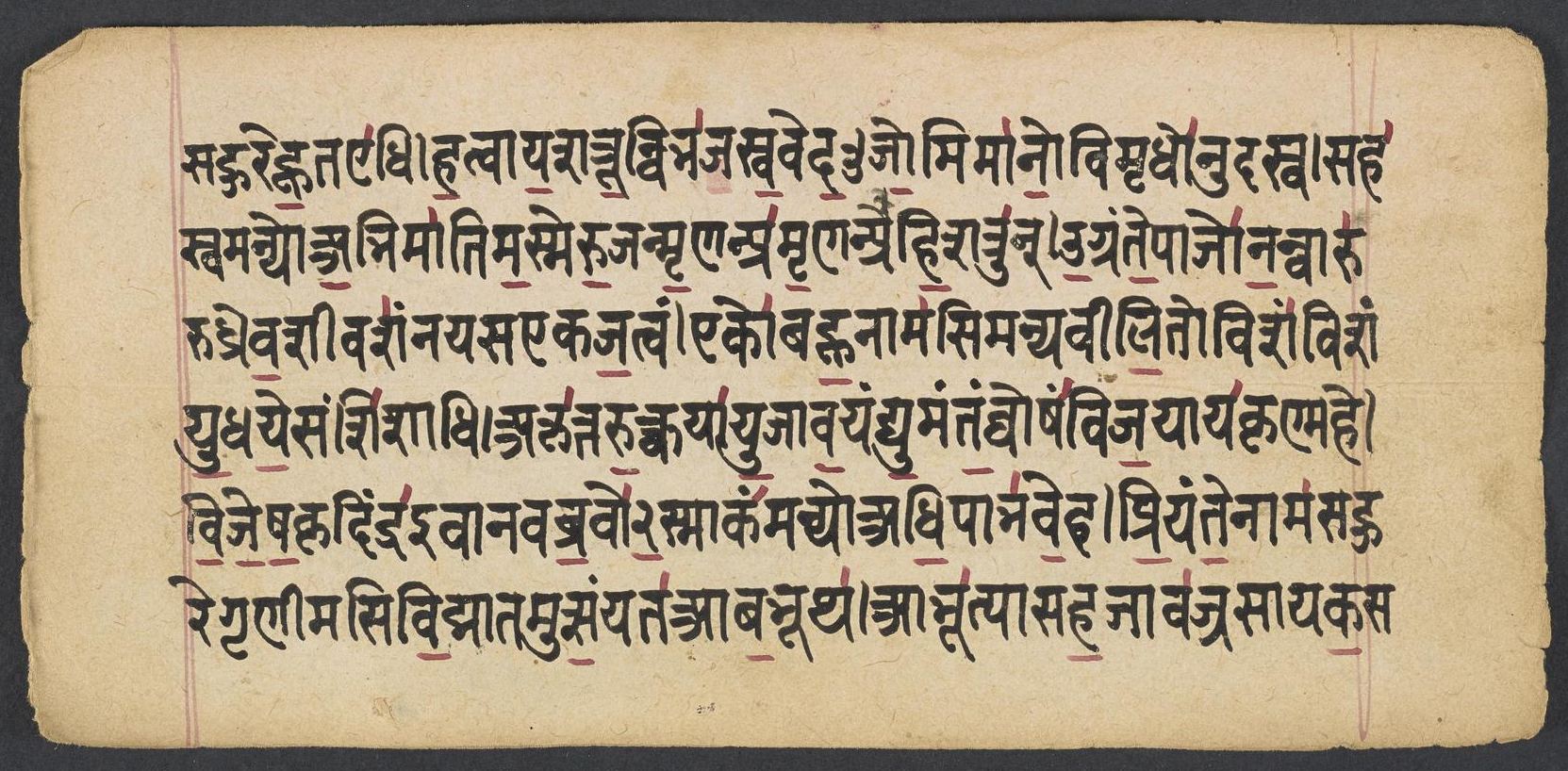
Where on the image
Penn Ms. Coll. 390 Item 48, fol. 50r (numbered 49r by the scribe) (OPenn image 49, lower leaf). Checked on the image: the Rigveda text on this page begins in RV 10.84.2 ‹-senānīr naḥ sahure hūta›. The next page with Rigveda text, fol. 50v (numbered 49v by the scribe), begins in RV 10.84.6 ‹-saho bibharṣy abhibhūta uttaram›. Verses 10.84.2-5 end on this page; 10.84.2 begins on fol. 49v (numbered 48v by the scribe).
2a̱gnir i̍va manyo tviṣi̱taḥ sa̍hasva senā̱nīr na̍ḥ sahure hū̱ta e̍dhi | ha̱tvāya̱ śatrū̱n vi bha̍jasva̱ veda̱ ojo̱ mimā̍no̱ vi mṛdho̍ nudasva ||
3saha̍sva manyo a̱bhimā̍tim a̱sme ru̱jan mṛ̱ṇan pra̍mṛ̱ṇan prehi̱ śatrū̍n | u̱graṁ te̱ pājo̍ na̱nv ā ru̍rudhre va̱śī vaśa̍ṁ nayasa ekaja̱ tvam ||
4eko̍ bahū̱nām a̍si manyav īḻi̱to viśa̍ṁ-viśaṁ yu̱dhaye̱ saṁ śi̍śādhi | akṛ̍ttaru̱k tvayā̍ yu̱jā va̱yaṁ dyu̱manta̱ṁ ghoṣa̍ṁ vija̱yāya̍ kṛṇmahe ||
5vi̱je̱ṣa̱kṛd indra̍ ivānavabra̱vo̱3̱̍ 'smāka̍m manyo adhi̱pā bha̍ve̱ha | pri̱yaṁ te̱ nāma̍ sahure gṛṇīmasi vi̱dmā tam utsa̱ṁ yata̍ āba̱bhūtha̍ ||
2Flashing like fire, be thou, O conquering Manyu, invoked, O Victor, as our army's leader. Slay thou our foes, distribute their possessions: show forth thy vigour, scatter those who hate us.
3O Manyu, overcome thou our assailant on! breaking, slaying, crushing down the foemen. They have not hindered thine impetuous vigour: Mighty, Sole born! thou makest them thy subjects.
4Alone or many thou art worshipped, Manyu: sharpen the spirit of each clan for battle. With thee to aid, O thou of perfect splendour, we will uplift the glorious shout for conquest.
5Unyielding bringing victory like Indra, O Manyu, be thou here our Sovran Ruler. To thy dear name, O Victor, we sing praises: we know the spring from which thou art come hither.
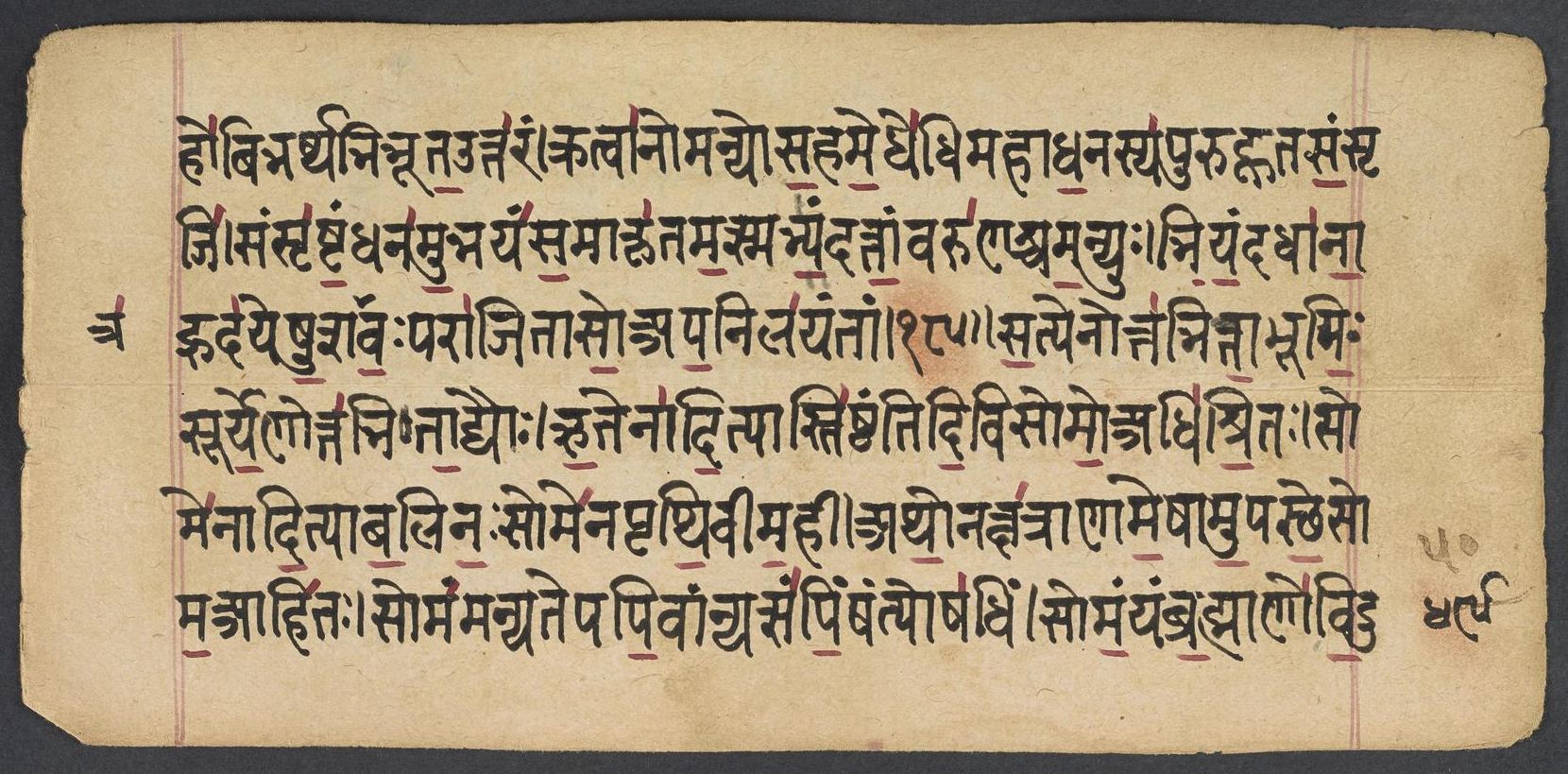
Where on the image
Penn Ms. Coll. 390 Item 48, fol. 50v (numbered 49v by the scribe) (OPenn image 50, upper leaf). Checked on the image: the Rigveda text on this page begins in RV 10.84.6 ‹-saho bibharṣy abhibhūta uttaram›. The next page with Rigveda text, fol. 51r (numbered 50r by the scribe), begins in RV 10.85.3 ‹na tasyāśnāti kaś cana›. Verses 10.84.6-7 end on this page; 10.84.6 begins on fol. 50r (numbered 49r by the scribe).
6ābhū̍tyā saha̱jā va̍jra sāyaka̱ saho̍ bibharṣy abhibhūta̱ utta̍ram | kratvā̍ no manyo sa̱ha me̱dy e̍dhi mahādha̱nasya̍ puruhūta sa̱ṁsṛji̍ ||
7saṁsṛ̍ṣṭa̱ṁ dhana̍m u̱bhaya̍ṁ sa̱mākṛ̍tam a̱smabhya̍ṁ dattā̱ṁ varu̍ṇaś ca ma̱nyuḥ | bhiya̱ṁ dadhā̍nā̱ hṛda̍yeṣu̱ śatra̍va̱ḥ parā̍jitāso̱ apa̱ ni la̍yantām ||
6Twin-born with power, destructive bolt of thunder, the highest conquering might is thine, Subduer! Be friendly to its in thy spirit, Manyu, O Much-invoked, in shock of mighty battle.
7For spoil let Varuṇa and Manyu give us the wealth of both sides gathered and collected; And let our enemies with stricken spirits, o'erwhelmed with terror, slink away defeated.
Notes
- Sanskrit: Aufrecht's edition (1877) with the Vedic accents, as entered by van Nooten and Holland (GRETIL).
- English: Ralph T. H. Griffith, The Hymns of the Rigveda (1889-1892; 2nd ed. 1896-1897), from the VedaWeb digital text; OCR slips in that text were corrected against the printed 2nd edition (data/sources/rigveda/griffith_errata.json).
Cite
Sources
- Source: Penn Ms. Coll. 390 Item 48 (1711 CE (colophon: Saṃvat 1768)), OPenn, Public Domain Mark + Aufrecht's accented text (GRETIL) + Griffith's English (VedaWeb) (holding institution)
- Critical edition: Aufrecht (1877), accented e-text via GRETIL
← previous · → next · v cycle view · l back to library