Rigveda 10.88: To Surya and Vaisvanara
Introduction
Rigveda 10.88 is a hymn of 19 verses addressed to Surya and Vaisvanara. It stands in book (maṇḍala) 10, the last and latest book. The Rigveda is the oldest collection of Sanskrit hymns, composed in the second half of the second millennium BCE and handed down orally for many centuries before it was written down.
The manuscript shown is Penn Ms. Coll. 390 Item 48 (University of Pennsylvania), a paper manuscript of the eighth aṣṭaka (RV 10.46-10.191) of the Ṛgveda Saṃhitā in Devanāgarī, 158 leaves, 6 lines to the page, with the accents marked in red; the scribe's colophon on fol. 158 gives Saṃvat 1768 (1711 CE); this hymn stands on fol. 61r-63r. Verses missing from it are shown from Penn Ms. Coll. 390 Item 41 (University of Pennsylvania), an undated paper manuscript of the padapāṭha (the word-by-word recitation text, in which every word is written separately and compounds are split) of the whole Ṛgveda in Devanāgarī, 884 leaves in fascicles, 7-9 lines to the page, accents in red; this hymn stands on fol. 828v-829r. Each section below gives the verses that end on one page; the page boundaries were read on the images (the opening words of every page), not counted out. Like most Rigveda manuscripts, Penn Ms. Coll. 390 Item 48 writes a repeated refrain in short form after its first occurrence (for example kasmai° for kasmai devāya haviṣā vidhema); the Sanskrit shown is the full text of Aufrecht's edition. Where the manuscript is a padapāṭha (the word-by-word recitation text), the section shows Aufrecht's continuous (saṃhitā) text first and, as the edition text, the padapāṭha of the same verses, which is the form written on the page.
How was this verified? (Provenance)
Where on the image
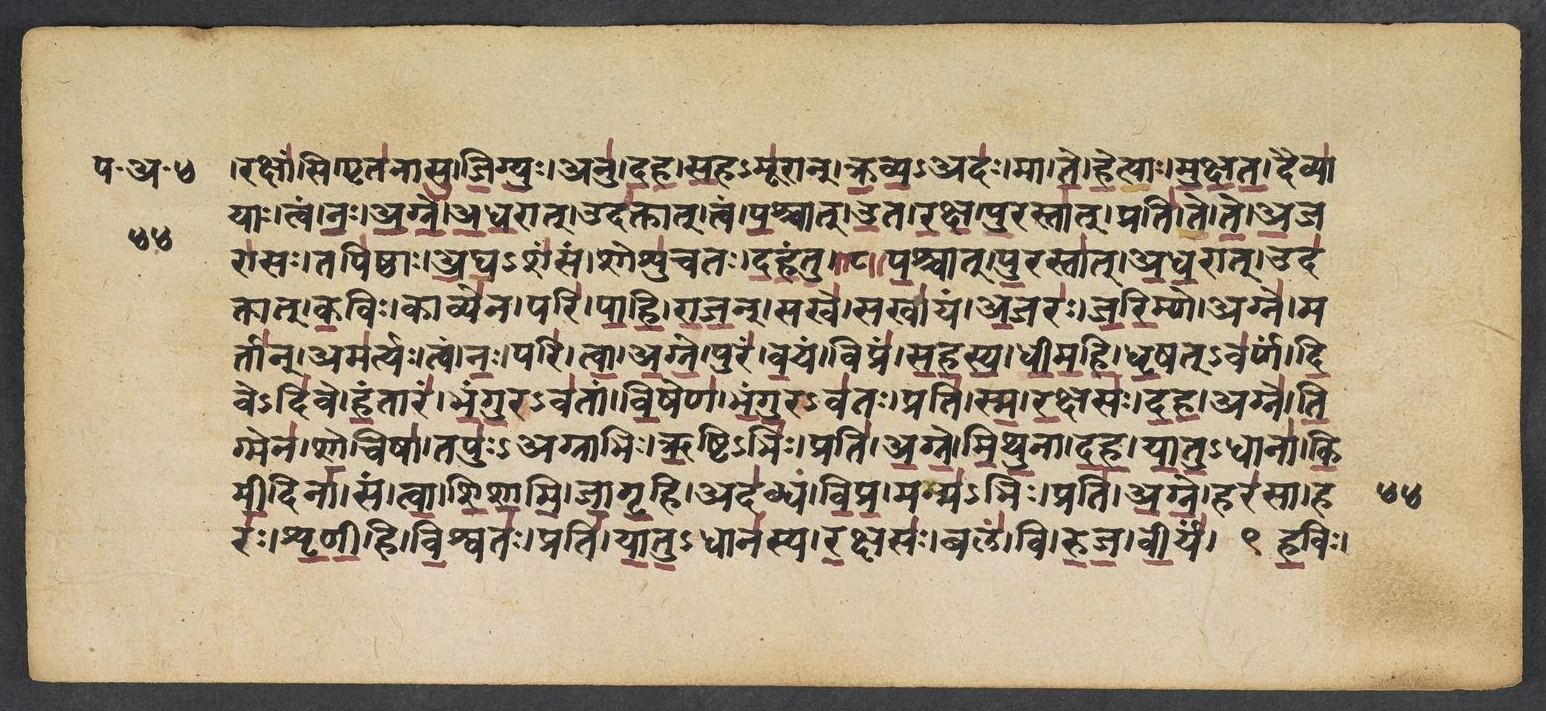
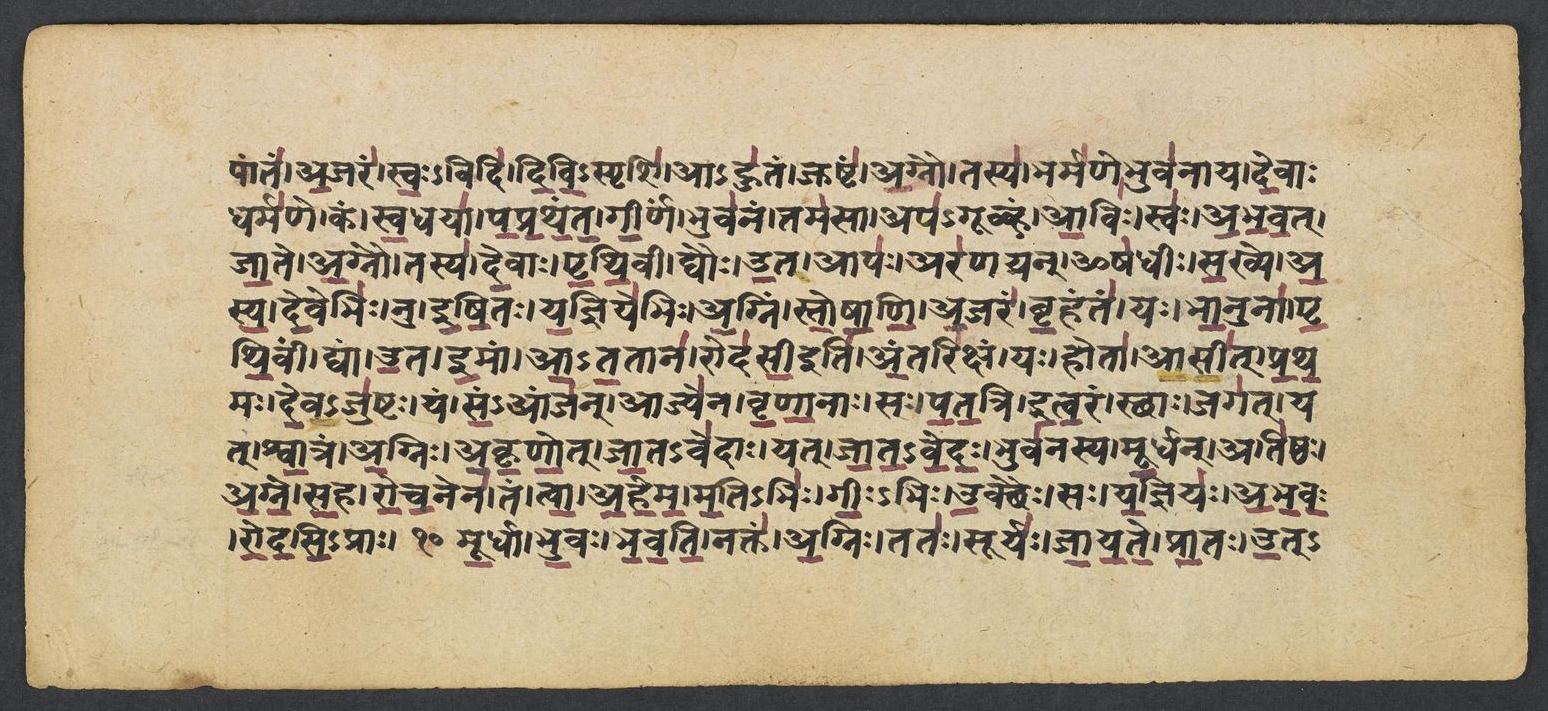
Penn Ms. Coll. 390 Item 41, fol. 829r (numbered 45r by the scribe) (OPenn image 829, lower leaf). Checked on the image: the Rigveda text on this page begins in RV 10.88.1 ‹pāntam ajaram svaḥ-vidi divi-spṛśi›. The next page with Rigveda text, fol. 829v (numbered 45v by the scribe), begins in RV 10.88.6 ‹-ut-yan māyām oṃ iti›. Verses 10.88.1-4 end on this page; 10.88.1 begins on fol. 828v (numbered 44v by the scribe).
1ha̱viṣ pānta̍m a̱jara̍ṁ sva̱rvidi̍ divi̱spṛśy āhu̍ta̱ṁ juṣṭa̍m a̱gnau | tasya̱ bharma̍ṇe̱ bhuva̍nāya de̱vā dharma̍ṇe̱ kaṁ sva̱dhayā̍ paprathanta ||
2gī̱rṇam bhuva̍na̱ṁ tama̱sāpa̍gūḻham ā̱viḥ sva̍r abhavaj jā̱te a̱gnau | tasya̍ de̱vāḥ pṛ̍thi̱vī dyaur u̱tāpo 'ra̍ṇaya̱nn oṣa̍dhīḥ sa̱khye a̍sya ||
3de̱vebhi̱r nv i̍ṣi̱to ya̱jñiye̍bhir a̱gniṁ sto̍ṣāṇy a̱jara̍m bṛ̱hanta̍m | yo bhā̱nunā̍ pṛthi̱vīṁ dyām u̱temām ā̍ta̱tāna̱ roda̍sī a̱ntari̍kṣam ||
4yo hotāsī̍t pratha̱mo de̱vaju̍ṣṭo̱ yaṁ sa̱māñja̱nn ājye̍nā vṛṇā̱nāḥ | sa pa̍ta̱trī̍tva̱raṁ sthā jaga̱d yac chvā̱tram a̱gnir a̍kṛṇoj jā̱tave̍dāḥ ||
Compare: Padapāṭha (word-by-word text written in the manuscript; Sansknet e-text via GRETIL)
1haviḥ | pāntam | ajaram | svaḥ-vidi | divi-spṛśi | āhutam | juṣṭam | agnau | tasya | bharmaṇe | bhuvanāya | devāḥ | dharmaṇe | kam | svadhayā | paprathanta
2gīrṇam | bhuvanam | tamasā | apa-gūḷham | āviḥ | svaḥ | abhavat | jāte | agnau | tasya | devāḥ | pṛthivī | dyauḥ | uta | āpaḥ | araṇayan | oṣadhīḥ | sakhye | asya
3devebhiḥ | nu | iṣitaḥ | yajñiyebhiḥ | agnim | stoṣāṇi | ajaram | bṛhantam | yaḥ | bhānunā | pṛthivīm | dyām | uta | imām | ātatāna | rodasī iti | antarikṣam
4yaḥ | hotā | āsīt | prathamaḥ | deva-juṣṭaḥ | yam | sam-āñjan | ājyena | vṛṇānāḥ | saḥ | patatri | itvaram | sthāḥ | jagat | yat | śvātram | agniḥ | akṛṇot | jāta-vedāḥ
1DEAR, ageless sacrificial drink is offered in light-discovering, heaven-pervading Agni. The Gods spread forth through his Celestial Nature, that he might bear the world up and sustain it.
2The world was swallowed and concealed in darkness: Agni was born, and light became apparent. The Deities, the broad earth, and the heavens, and plants, and waters gloried in his friendship.
3Inspired by Gods who claim our adoration, I now will laud Eternal Lofty Agni, Him who hath spread abroad the earth with lustre, this heaven, and both the worlds, and air's midregion.
4Earliest Priest whom all the Gods accepted, and chose him, and anointed him with butter, He swiftly made all things that fly, stand, travel, all that hath motion, Agni Jâtavedas.
Where on the image
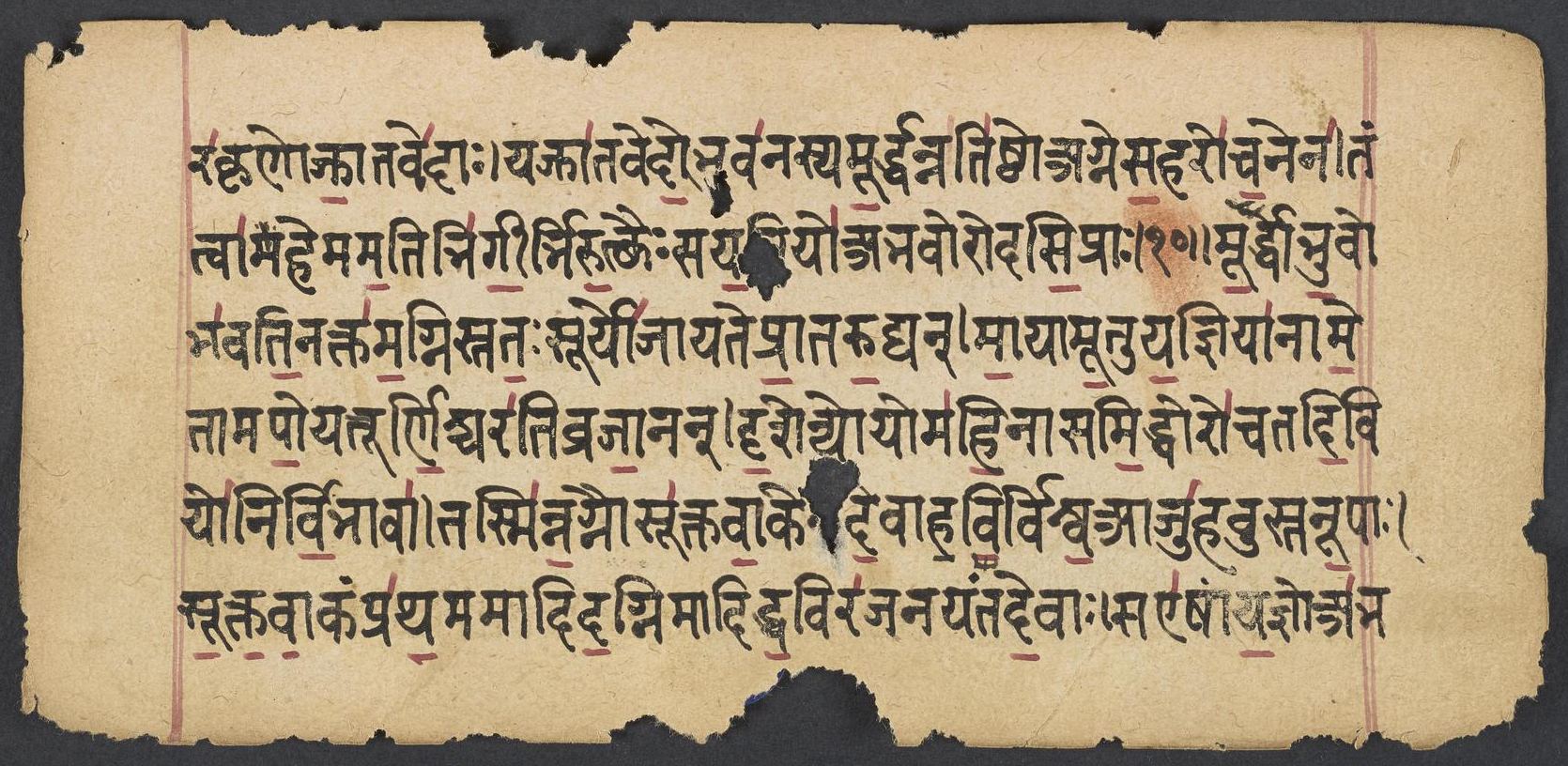
Penn Ms. Coll. 390 Item 48, fol. 61r (OPenn image 60, lower leaf). Checked on the image: the Rigveda text on this page begins in RV 10.88.4 ‹akṛṇoj jātavedāḥ›. LACUNA before this page: 60v ends in 10.87.20c (prati te te ajarāsas tapi-); the leaf numbered 60 by the scribe is missing (Penn sequence 59v=60v is followed by 61r); 10.87.20d-10.88.4c are not in this manuscript. The next page with Rigveda text, fol. 61v, begins in RV 10.88.8 ‹-abhavat tanūpās taṁ dyaur›. Verses 10.88.5-7 end on this page.
5yaj jā̍tavedo̱ bhuva̍nasya mū̱rdhann ati̍ṣṭho agne sa̱ha ro̍ca̱nena̍ | taṁ tvā̍hema ma̱tibhi̍r gī̱rbhir u̱kthaiḥ sa ya̱jñiyo̍ abhavo rodasi̱prāḥ ||
6mū̱rdhā bhu̱vo bha̍vati̱ nakta̍m a̱gnis tata̱ḥ sūryo̍ jāyate prā̱tar u̱dyan | mā̱yām ū̱ tu ya̱jñiyā̍nām e̱tām apo̱ yat tūrṇi̱ś cara̍ti prajā̱nan ||
7dṛ̱śenyo̱ yo ma̍hi̱nā sami̱ddho 'ro̍cata di̱viyo̍nir vi̱bhāvā̍ | tasmi̍nn a̱gnau sū̍ktavā̱kena̍ de̱vā ha̱vir viśva̱ āju̍havus tanū̱pāḥ ||
5Because thou, Agni, Jâtavedas, stoodest at the world's head with thy refulgent splendour, We sent thee forth with hymns and songs and praises: thou filledst heaven and earth, God meet for worship.
6Head of the world is Agni in the night-time; then, as the Sun, at morn springs up and rises. Then to his task goes the prompt Priest foreknowing the wondrous power of Gods who must be honoured.
7Lovely is he who, kindled in his greatness, hath shone forth, seated in the heavens, refulgent. With resonant hymns all Gods who guard our bodies have offered up oblation in this Agni.
Where on the image
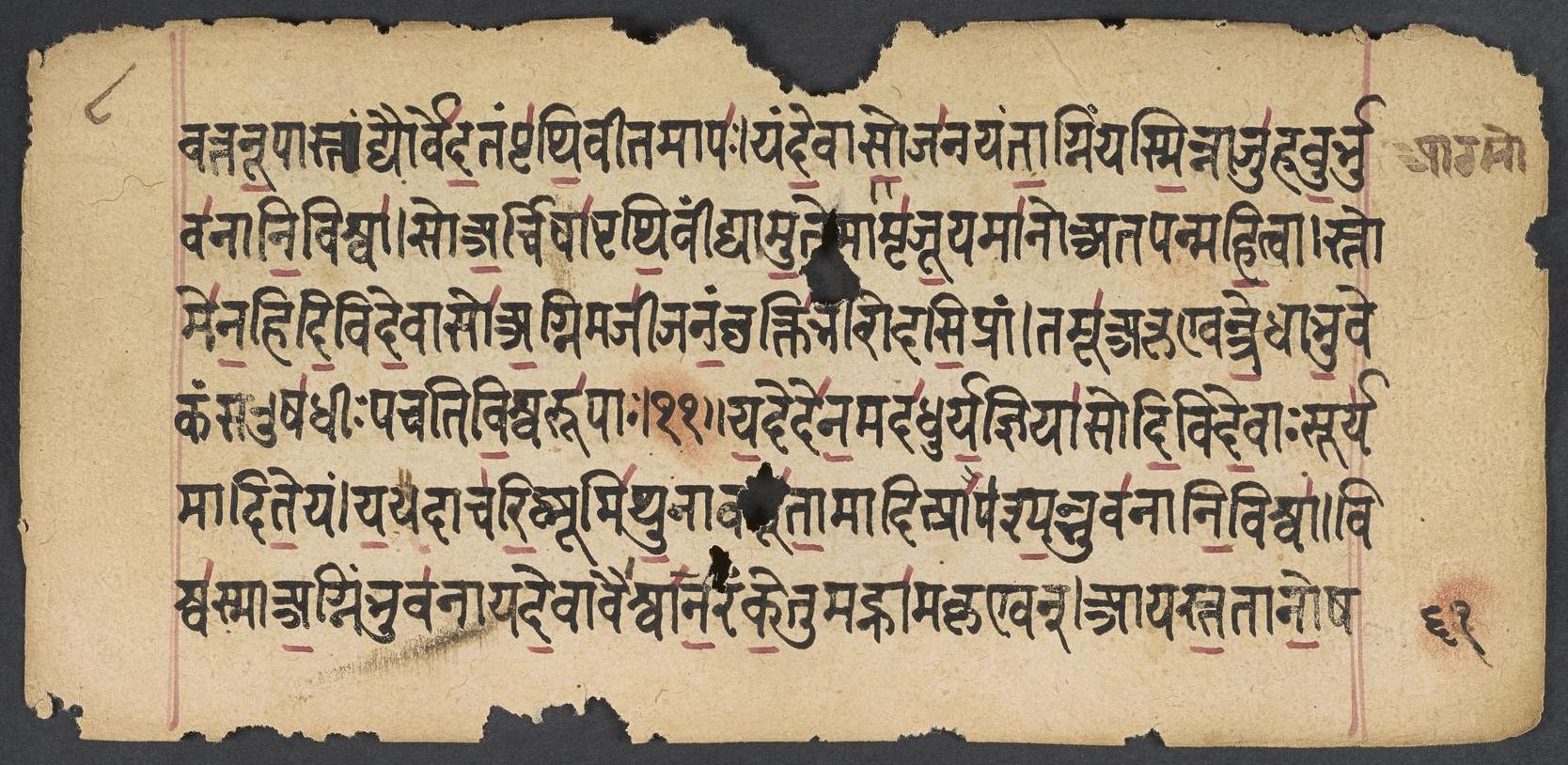
Penn Ms. Coll. 390 Item 48, fol. 61v (OPenn image 61, upper leaf). Checked on the image: the Rigveda text on this page begins in RV 10.88.8 ‹-abhavat tanūpās taṁ dyaur›. The next page with Rigveda text, fol. 62r, begins in RV 10.88.12 ‹-tatānoṣaso vibhātīr apo ūrṇoti›. Verses 10.88.8-11 end on this page; 10.88.8 begins on fol. 61r.
8sū̱kta̱vā̱kam pra̍tha̱mam ād id a̱gnim ād id dha̱vir a̍janayanta de̱vāḥ | sa e̍ṣāṁ ya̱jño a̍bhavat tanū̱pās taṁ dyaur ve̍da̱ tam pṛ̍thi̱vī tam āpa̍ḥ ||
9yaṁ de̱vāso 'ja̍nayantā̱gniṁ yasmi̱nn āju̍havu̱r bhuva̍nāni̱ viśvā̍ | so a̱rciṣā̍ pṛthi̱vīṁ dyām u̱temām ṛ̍jū̱yamā̍no atapan mahi̱tvā ||
10stome̍na̱ hi di̱vi de̱vāso̍ a̱gnim ajī̍jana̱ñ chakti̍bhī rodasi̱prām | tam ū̍ akṛṇvan tre̱dhā bhu̱ve kaṁ sa oṣa̍dhīḥ pacati vi̱śvarū̍pāḥ ||
11ya̱ded e̍na̱m ada̍dhur ya̱jñiyā̍so di̱vi de̱vāḥ sūrya̍m ādite̱yam | ya̱dā ca̍ri̱ṣṇū mi̍thu̱nāv abhū̍tā̱m ād it prāpa̍śya̱n bhuva̍nāni̱ viśvā̍ ||
8First the Gods brought the hymnal into being; then they engendered Agni, then oblation. He was their sacrifice that guards our bodies: him the heavens know, the earth, the waters know him.
9He, Agni, whom the Gods have generated, in whom they offered up all worlds and creatures, He with his bright glow heated earth and heaven, urging himself right onward in his grandeur.
10Then by the laud the Gods engendered Agni in heaven, who fills both worlds through strength and vigour. They made him to appear in threefold essence: he ripens plants of every form and nature.
11What time the Gods, whose due is worship, set him as Sûrya, Son of Aditi, in heaven, When the Pair, ever wandering, sprang to being, all creatures that existed looked upon them.
Where on the image
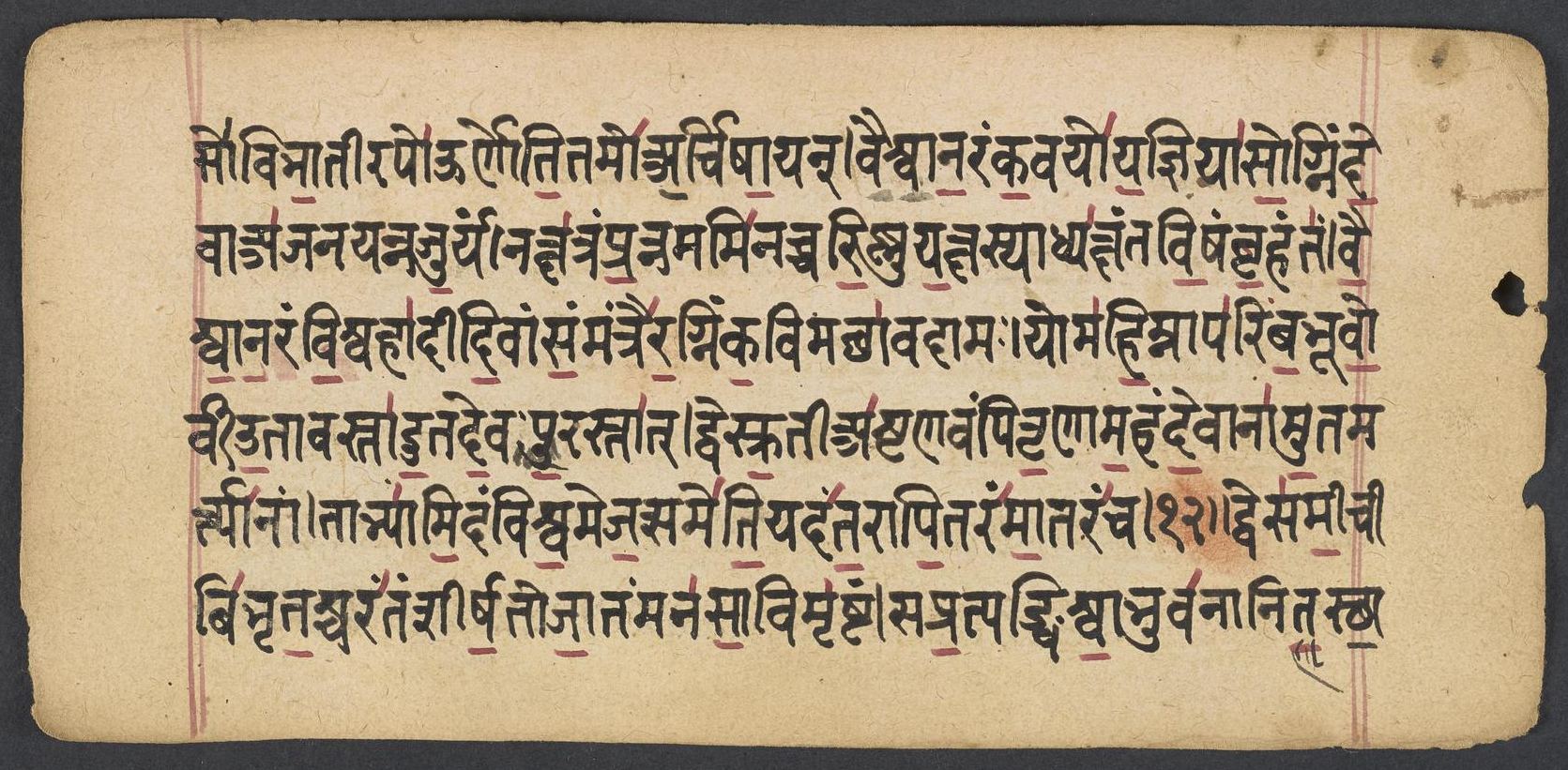
Penn Ms. Coll. 390 Item 48, fol. 62r (OPenn image 61, lower leaf). Checked on the image: the Rigveda text on this page begins in RV 10.88.12 ‹-tatānoṣaso vibhātīr apo ūrṇoti›. The next page with Rigveda text, fol. 62v, begins in RV 10.88.16 ‹-tasthāv aprayucchan taraṇir bhrājamānaḥ›. Verses 10.88.12-15 end on this page; 10.88.12 begins on fol. 61v.
12viśva̍smā a̱gnim bhuva̍nāya de̱vā vai̍śvāna̱raṁ ke̱tum ahnā̍m akṛṇvan | ā yas ta̱tāno̱ṣaso̍ vibhā̱tīr apo̍ ūrṇoti̱ tamo̍ a̱rciṣā̱ yan ||
13vai̱śvā̱na̱raṁ ka̱vayo̍ ya̱jñiyā̍so̱ 'gniṁ de̱vā a̍janayann aju̱ryam | nakṣa̍tram pra̱tnam ami̍nac cari̱ṣṇu ya̱kṣasyādhya̍kṣaṁ tavi̱ṣam bṛ̱hanta̍m ||
14vai̱śvā̱na̱raṁ vi̱śvahā̍ dīdi̱vāṁsa̱m mantrai̍r a̱gniṁ ka̱vim acchā̍ vadāmaḥ | yo ma̍hi̱mnā pa̍riba̱bhūvo̱rvī u̱tāvastā̍d u̱ta de̱vaḥ pa̱rastā̍t ||
15dve sru̱tī a̍śṛṇavam pitṝ̱ṇām a̱haṁ de̱vānā̍m u̱ta martyā̍nām | tābhyā̍m i̱daṁ viśva̱m eja̱t sam e̍ti̱ yad a̍nta̱rā pi̱tara̍m mā̱tara̍ṁ ca ||
12For all the world of life the Gods made Agni Vaiṣvânara to be the days' bright Banner,– Him who hath spread abroad the radiant Mornings, and, coming with his light, unveils the darkness.
13The wise and holy Deities engendered Agni Vaiṣvânara whom age ne'er touches. The Ancient Star that wanders on for ever, lofty and. strong, Lord of the Living Being.
14We call upon the Sage with holy verses, Agni Vaiṣvânara the ever-beaming, Who hath surpassed both heaven and earth in greatness: lie is a God below, a God above us.
15I have heard mention of two several pathways, ways of the Fathers and of Gods and mortals. On these two paths each moving creature travels, each thing between the Father and the Mother.
Where on the image
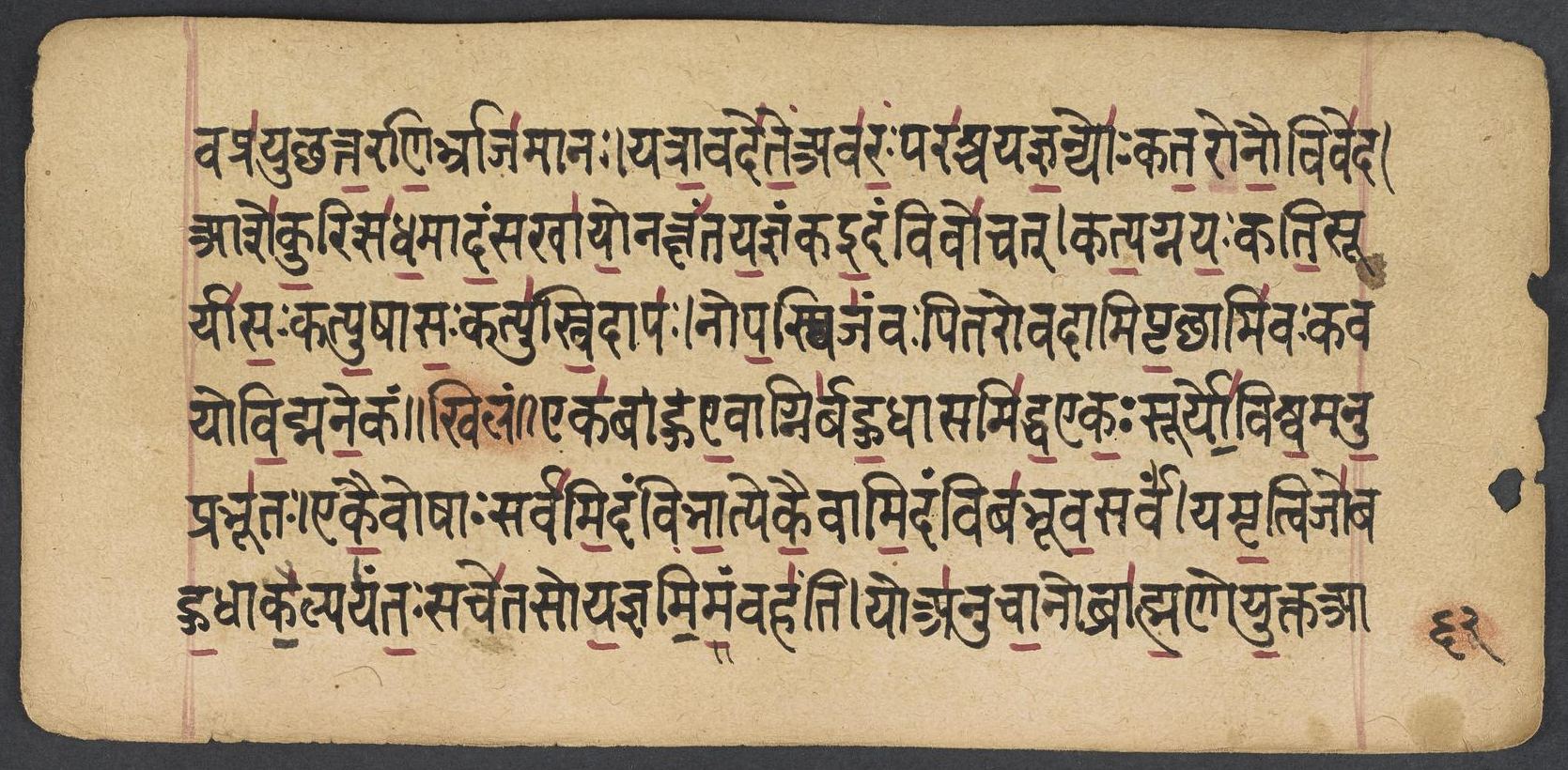
Penn Ms. Coll. 390 Item 48, fol. 62v (OPenn image 62, upper leaf). Checked on the image: the Rigveda text on this page begins in RV 10.88.16 ‹-tasthāv aprayucchan taraṇir bhrājamānaḥ›. 10.88.18 ends in line 4, followed by the heading khilaṃ and khila verses (eka evāgnir bahudhā samiddhaḥ) that run into 63r line 1. The next page with Rigveda text, fol. 63r, begins in RV 10.88.19 ‹yāvanmātram uṣaso na pratīkaṁ›. Verses 10.88.16-18 end on this page; 10.88.16 begins on fol. 62r.
16dve sa̍mī̱cī bi̍bhṛta̱ś cara̍ntaṁ śīrṣa̱to jā̱tam mana̍sā̱ vimṛ̍ṣṭam | sa pra̱tyaṅ viśvā̱ bhuva̍nāni tasthā̱v apra̍yucchan ta̱raṇi̱r bhrāja̍mānaḥ ||
17yatrā̱ vade̍te̱ ava̍ra̱ḥ para̍ś ca yajña̱nyo̍ḥ kata̱ro nau̱ vi ve̍da | ā śe̍ku̱r it sa̍dha̱māda̱ṁ sakhā̍yo̱ nakṣa̍nta ya̱jñaṁ ka i̱daṁ vi vo̍cat ||
18katy a̱gnaya̱ḥ kati̱ sūryā̍sa̱ḥ katy u̱ṣāsa̱ḥ katy u̍ svi̱d āpa̍ḥ | nopa̱spija̍ṁ vaḥ pitaro vadāmi pṛ̱cchāmi̍ vaḥ kavayo vi̱dmane̱ kam ||
16These two united paths bear him who journeys born from the head and pondered with the spirit He stands directed to all things existing, hasting, unresting in his fiery splendour.
17Which of us twain knows where they speak together, upper and lower of the two rite-leaders? Our friends have helped to gather our assembly. They came to sacrifice; who will announce it?
18How many are the Fires and Suns in number? What is the number of the Dawns and Waters? Not jestingly I speak to you, O Fathers. Sages, I ask you this for information.
Where on the image
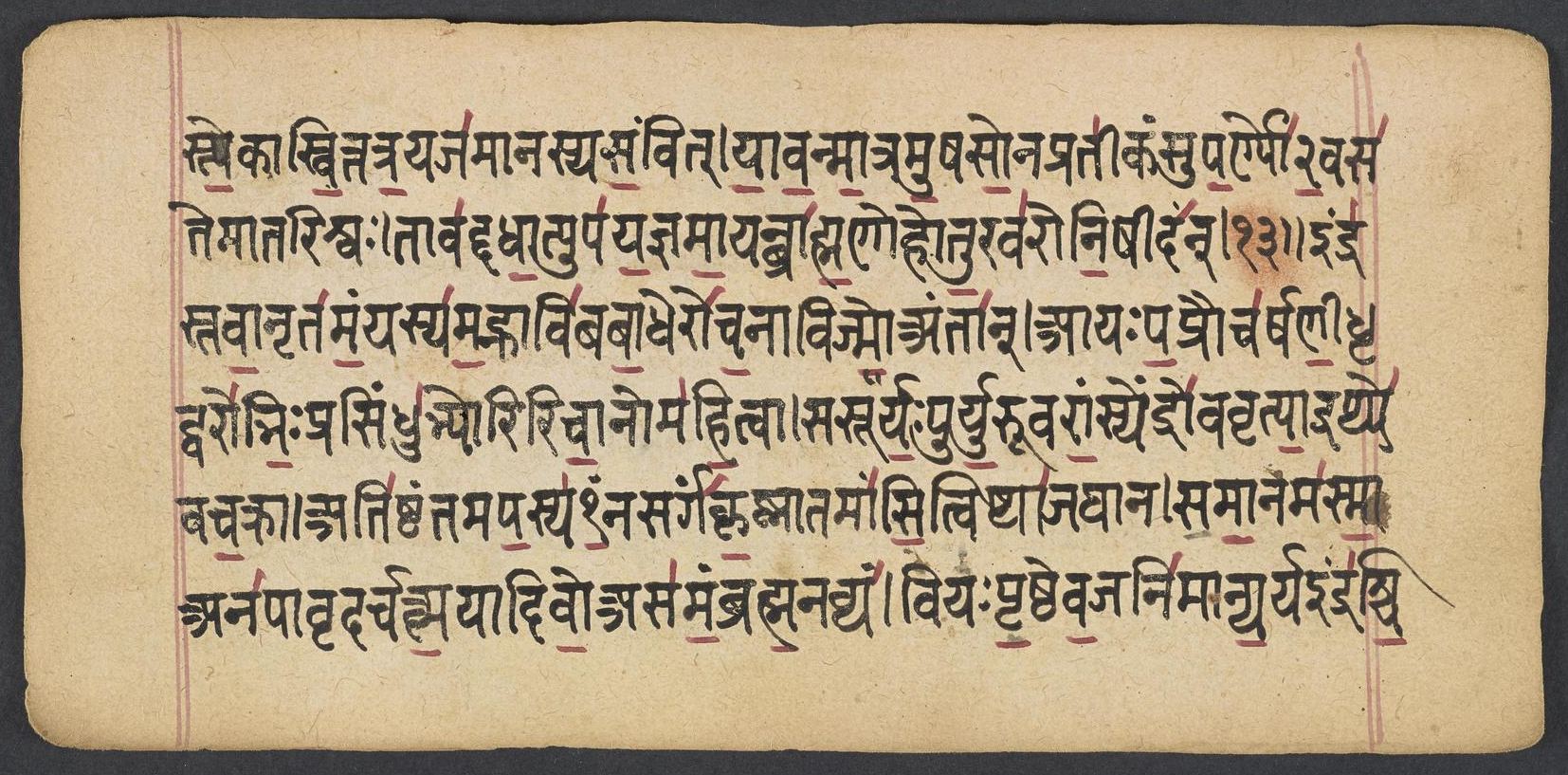
Penn Ms. Coll. 390 Item 48, fol. 63r (OPenn image 62, lower leaf). Checked on the image: the Rigveda text on this page begins in RV 10.88.19 ‹yāvanmātram uṣaso na pratīkaṁ›. Line 1 opens with the end of the khila begun on 62v (... yajamānasya saṃvit); 10.88.19 begins in line 1. The next page with Rigveda text, fol. 63v, begins in RV 10.89.3 ‹sakhāyam īṣe›. Verse 10.88.19 ends on this page.
19yā̱va̱nmā̱tram u̱ṣaso̱ na pratī̍kaṁ supa̱rṇyo̱3̱̍ vasa̍te mātariśvaḥ | tāva̍d dadhā̱ty upa̍ ya̱jñam ā̱yan brā̍hma̱ṇo hotu̱r ava̍ro ni̱ṣīda̍n ||
19As great as is the fair-winged Morning's presence to him who dwells beside us, Mâtariṣvan! Is what the Brahman does when he approaches to sacrifice and sits below the Hotar.
Notes
- Sanskrit: Aufrecht's edition (1877) with the Vedic accents, as entered by van Nooten and Holland (GRETIL).
- English: Ralph T. H. Griffith, The Hymns of the Rigveda (1889-1892; 2nd ed. 1896-1897), from the VedaWeb digital text; OCR slips in that text were corrected against the printed 2nd edition (data/sources/rigveda/griffith_errata.json).
- Padapāṭha (edition text): Sansknet e-text via GRETIL (CC BY-NC-SA 4.0).
- This manuscript inserts khila verses (supplementary hymns outside Aufrecht's text) at some hymn ends; they are noted in the section notes and not reproduced.
Cite
Sources
- Source: Penn Ms. Coll. 390 Item 48 (1711 CE (colophon: Saṃvat 1768)); Penn Ms. Coll. 390 Item 41 (undated (catalogued with Penn's 18th-19th c. Vedic manuscripts)), OPenn, Public Domain Mark + Aufrecht's accented text (GRETIL) + Griffith's English (VedaWeb) (holding institution)
- Critical edition: Aufrecht (1877), accented e-text via GRETIL
← previous · → next · v cycle view · l back to library