Rigveda 10.89: To Indra
Introduction
Rigveda 10.89 is a hymn of 18 verses addressed to Indra. It stands in book (maṇḍala) 10, the last and latest book. The Rigveda is the oldest collection of Sanskrit hymns, composed in the second half of the second millennium BCE and handed down orally for many centuries before it was written down.
The manuscript shown is Penn Ms. Coll. 390 Item 48 (University of Pennsylvania), a paper manuscript of the eighth aṣṭaka (RV 10.46-10.191) of the Ṛgveda Saṃhitā in Devanāgarī, 158 leaves, 6 lines to the page, with the accents marked in red; the scribe's colophon on fol. 158 gives Saṃvat 1768 (1711 CE); this hymn stands on fol. 63r-65r. Each section below gives the verses that end on one page; the page boundaries were read on the images (the opening words of every page), not counted out. Like most Rigveda manuscripts, Penn Ms. Coll. 390 Item 48 writes a repeated refrain in short form after its first occurrence (for example kasmai° for kasmai devāya haviṣā vidhema); the Sanskrit shown is the full text of Aufrecht's edition.
How was this verified? (Provenance)
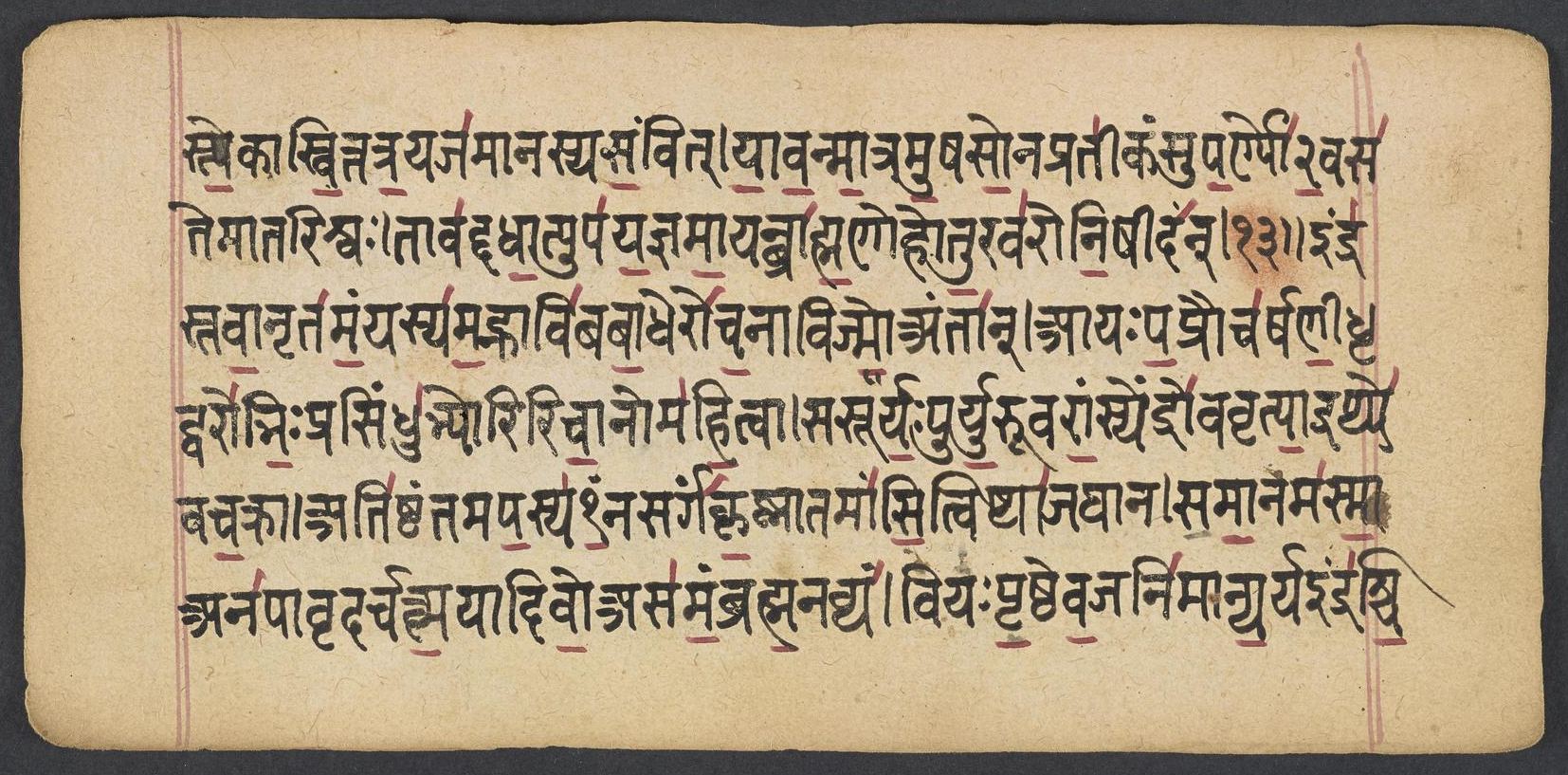
Where on the image
Penn Ms. Coll. 390 Item 48, fol. 63r (OPenn image 62, lower leaf). Checked on the image: the Rigveda text on this page begins in RV 10.88.19 ‹yāvanmātram uṣaso na pratīkaṁ›. Line 1 opens with the end of the khila begun on 62v (... yajamānasya saṃvit); 10.88.19 begins in line 1. The next page with Rigveda text, fol. 63v, begins in RV 10.89.3 ‹sakhāyam īṣe›. Verses 10.89.1-2 end on this page.
1indra̍ṁ stavā̱ nṛta̍ma̱ṁ yasya̍ ma̱hnā vi̍babā̱dhe ro̍ca̱nā vi jmo antā̍n | ā yaḥ pa̱prau ca̍rṣaṇī̱dhṛd varo̍bhi̱ḥ pra sindhu̍bhyo riricā̱no ma̍hi̱tvā ||
2sa sūrya̱ḥ pary u̱rū varā̱ṁsy endro̍ vavṛtyā̱d rathye̍va ca̱krā | ati̍ṣṭhantam apa̱sya1̱̍ṁ na sarga̍ṁ kṛ̱ṣṇā tamā̍ṁsi̱ tviṣyā̍ jaghāna ||
1I WILL extol the most heroic Indra who with his might forced earth and sky asunder; Who hath filled all with width as man's Upholder, surpassing floods and rivers in his greatness.
2Sûrya is he: throughout the wide expanses shall Indra turn him, swift as car-wheels, hither, Like a stream resting not but ever active he hath destroyed, with light, the blackhued darkness.
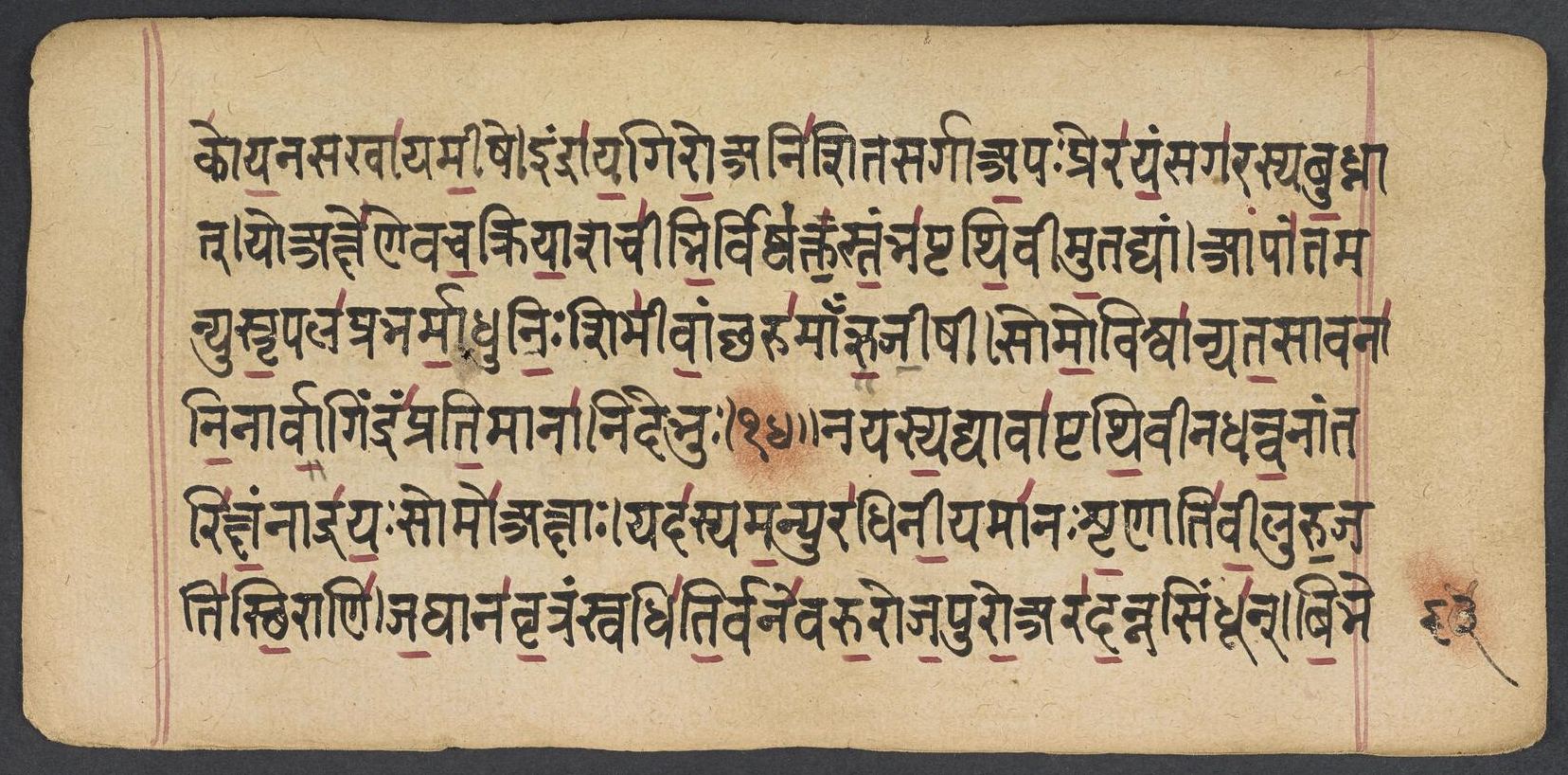
Where on the image
Penn Ms. Coll. 390 Item 48, fol. 63v (OPenn image 63, upper leaf). Checked on the image: the Rigveda text on this page begins in RV 10.89.3 ‹sakhāyam īṣe›. The next page with Rigveda text, fol. 64r, begins in RV 10.89.7 ‹-bibheda giriṁ navam in›. Verses 10.89.3-6 end on this page; 10.89.3 begins on fol. 63r.
3sa̱mā̱nam a̍smā̱ ana̍pāvṛd arca kṣma̱yā di̱vo asa̍ma̱m brahma̱ navya̍m | vi yaḥ pṛ̱ṣṭheva̱ jani̍māny a̱rya indra̍ś ci̱kāya̱ na sakhā̍yam ī̱ṣe ||
4indrā̍ya̱ giro̱ ani̍śitasargā a̱paḥ prera̍ya̱ṁ saga̍rasya bu̱dhnāt | yo akṣe̍ṇeva ca̱kriyā̱ śacī̍bhi̱r viṣva̍k ta̱stambha̍ pṛthi̱vīm u̱ta dyām ||
5āpā̍ntamanyus tṛ̱pala̍prabharmā̱ dhuni̱ḥ śimī̍vā̱ñ charu̍mām̐ ṛjī̱ṣī | somo̱ viśvā̍ny ata̱sā vanā̍ni̱ nārvāg indra̍m prati̱mānā̍ni debhuḥ ||
6na yasya̱ dyāvā̍pṛthi̱vī na dhanva̱ nāntari̍kṣa̱ṁ nādra̍ya̱ḥ somo̍ akṣāḥ | yad a̍sya ma̱nyur a̍dhinī̱yamā̍naḥ śṛ̱ṇāti̍ vī̱ḻu ru̱jati̍ sthi̱rāṇi̍ ||
3To him I sing a holy prayer, incessant new, matchless, common to the earth and heaven, Who marks, as they were backs, all living creatures: ne'er doth he fail a friend, the noble Indra.
4I will send forth my songs in flow unceasing, like water from the ocean's depth, to Indra. Who to his car on both its sides securely hath fixed the earth and heaven as with an axle.
5Rousing with draughts, the Shaker, rushing onward, impetuous, very strong, armed as with arrows Is Soma; forest trees and all the bushes deceive not Indra with their offered likeness.
6Soma hath flowed to him whom naught can equal, the earth, the heavens, the firmament, the mountains,– When heightened in his ire his indignation shatters the firm and breaks the strong in pieces.
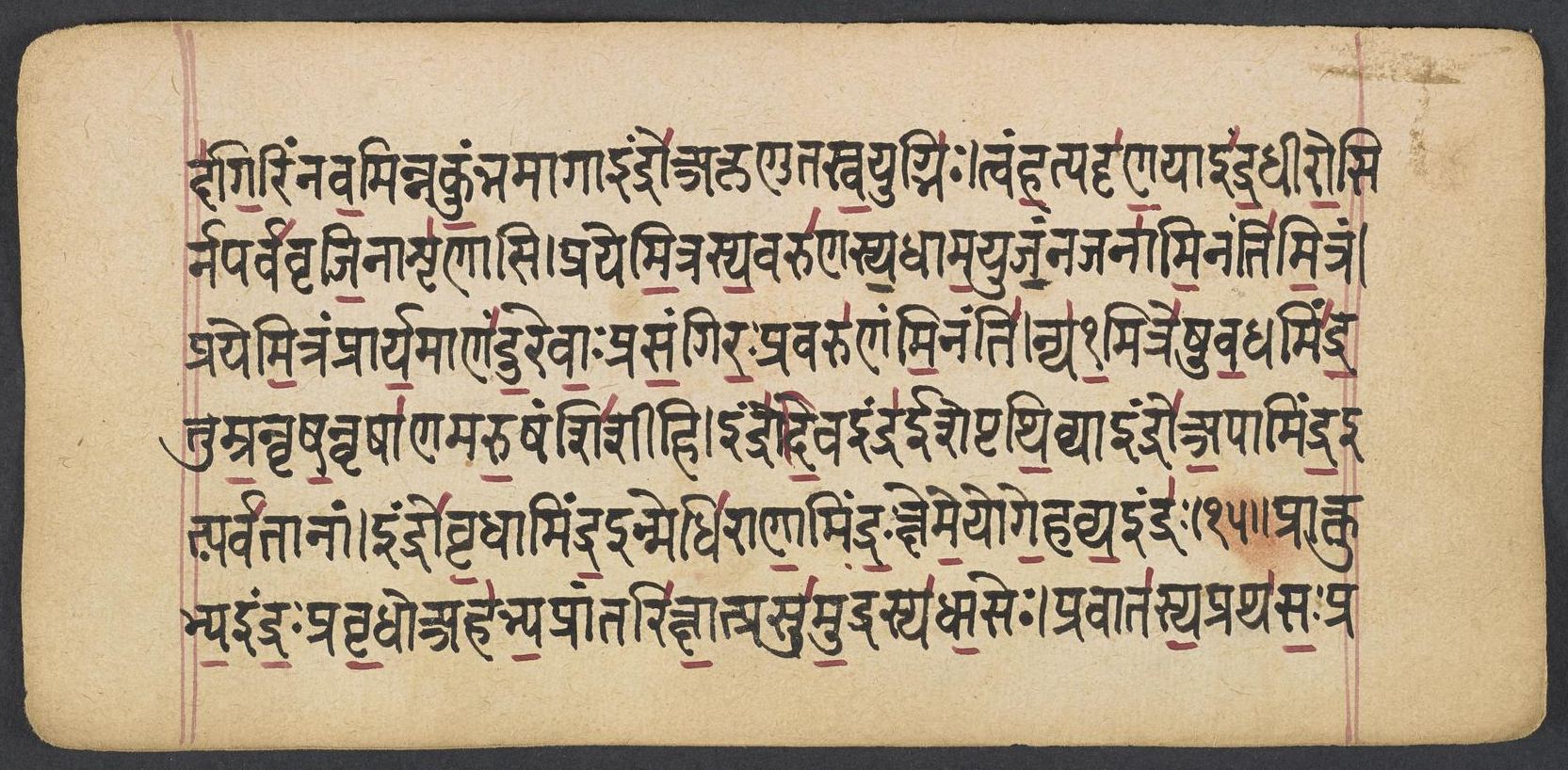
Where on the image
Penn Ms. Coll. 390 Item 48, fol. 64r (OPenn image 63, lower leaf). Checked on the image: the Rigveda text on this page begins in RV 10.89.7 ‹-bibheda giriṁ navam in›. The next page with Rigveda text, fol. 64v, begins in RV 10.89.11 ‹jmo antāt pra sindhubhyo›. Verses 10.89.7-10 end on this page; 10.89.7 begins on fol. 63v.
7ja̱ghāna̍ vṛ̱traṁ svadhi̍ti̱r vane̍va ru̱roja̱ puro̱ ara̍da̱n na sindhū̍n | bi̱bheda̍ gi̱riṁ nava̱m in na ku̱mbham ā gā indro̍ akṛṇuta sva̱yugbhi̍ḥ ||
8tvaṁ ha̱ tyad ṛ̍ṇa̱yā i̍ndra̱ dhīro̱ 'sir na parva̍ vṛji̱nā śṛ̍ṇāsi | pra ye mi̱trasya̱ varu̍ṇasya̱ dhāma̱ yuja̱ṁ na janā̍ mi̱nanti̍ mi̱tram ||
9pra ye mi̱tram prārya̱maṇa̍ṁ du̱revā̱ḥ pra sa̱ṁgira̱ḥ pra varu̍ṇam mi̱nanti̍ | ny a1̱̍mitre̍ṣu va̱dham i̍ndra̱ tumra̱ṁ vṛṣa̱n vṛṣā̍ṇam aru̱ṣaṁ śi̍śīhi ||
10indro̍ di̱va indra̍ īśe pṛthi̱vyā indro̍ a̱pām indra̱ it parva̍tānām | indro̍ vṛ̱dhām indra̱ in medhi̍rāṇā̱m indra̱ḥ kṣeme̱ yoge̱ havya̱ indra̍ḥ ||
7As an axe fells the tree so be slew Vr̥itra, brake down the strongholds and dug out the rivers. He cleft the mountain like a new-made pitcher. Indra brought forth the kine with his Companions.
8Wise art thou, Punisher of guilt, O Indra. The sword lops limbs, thou smitest down the sinner, The men who injure, as it were a comrade, the lofty Law of Varuṇa and Mitra.
9Men who lead evil lives, who break agreements, and injure Varuṇa, Aryaman and Mitra,– Against these foes, O Mighty Indra, sharpen, as furious death, thy Bull of fiery colour.
10Indra is Sovran Lord of Earth and Heaven, Indra is Lord of waters and of mountains. Indra is Lord of prosperers and sages Indra must be invoked in rest and effort.
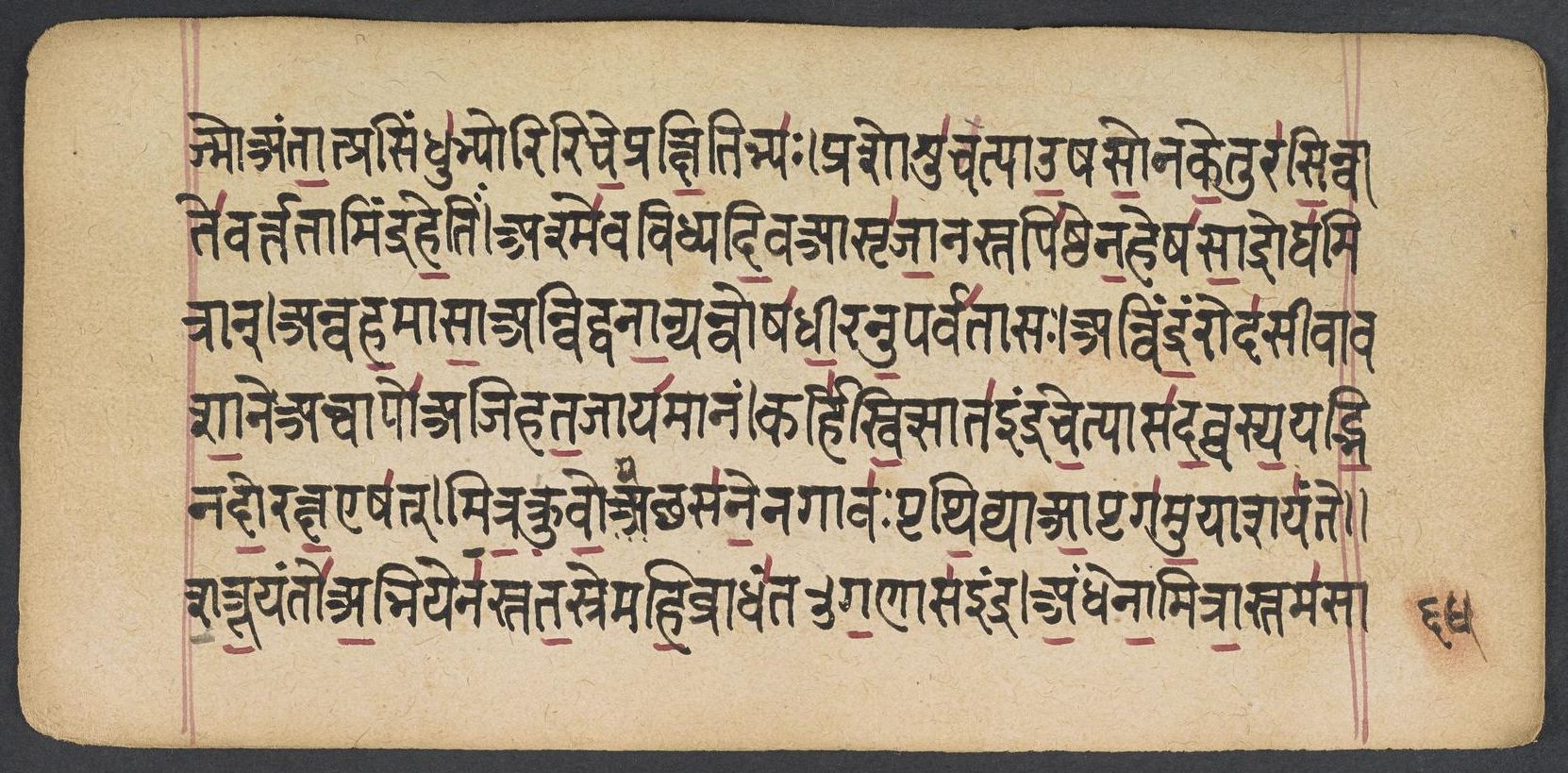
Where on the image
Penn Ms. Coll. 390 Item 48, fol. 64v (OPenn image 64, upper leaf). Checked on the image: the Rigveda text on this page begins in RV 10.89.11 ‹jmo antāt pra sindhubhyo›. The next page with Rigveda text, fol. 65r, begins in RV 10.89.15 ‹sacantāṁ sujyotiṣo aktavas tām̐›. Verses 10.89.11-14 end on this page; 10.89.11 begins on fol. 64r.
11prāktubhya̱ indra̱ḥ pra vṛ̱dho aha̍bhya̱ḥ prāntari̍kṣā̱t pra sa̍mu̱drasya̍ dhā̱seḥ | pra vāta̍sya̱ pratha̍sa̱ḥ pra jmo antā̱t pra sindhu̍bhyo ririce̱ pra kṣi̱tibhya̍ḥ ||
12pra śośu̍catyā u̱ṣaso̱ na ke̱tur a̍si̱nvā te̍ vartatām indra he̱tiḥ | aśme̍va vidhya di̱va ā sṛ̍jā̱nas tapi̍ṣṭhena̱ heṣa̍sā̱ drogha̍mitrān ||
13anv aha̱ māsā̱ anv id vanā̱ny anv oṣa̍dhī̱r anu̱ parva̍tāsaḥ | anv indra̱ṁ roda̍sī vāvaśā̱ne anv āpo̍ ajihata̱ jāya̍mānam ||
14karhi̍ svi̱t sā ta̍ indra ce̱tyāsa̍d a̱ghasya̱ yad bhi̱nado̱ rakṣa̱ eṣa̍t | mi̱tra̱kruvo̱ yac chasa̍ne̱ na gāva̍ḥ pṛthi̱vyā ā̱pṛg a̍mu̱yā śaya̍nte ||
11Vaster than days and nights, Giver of increase, vaster than firmament and flood of ocean, Vaster than bounds of earth and wind's extension, vaster than rivers and our lands is Indra.
12Forward, as herald of refulgent Morning, let thine insatiate arrow fly, O Indra. And pierce, as 'twere a stone launched forth from heaven, with hottest blaze the men who love deception.
13Him, verily, the moons, the mountains followed, the tall trees followed and the plants and herbage. Yearning with love both Worlds approached, the Waters waited on Indra when he first had being.
14Where was the vengeful dart when thou, O Indra, clavest the demon ever bent on outrage? When fiends lay there upon the ground extended like cattle in the place of immolation?
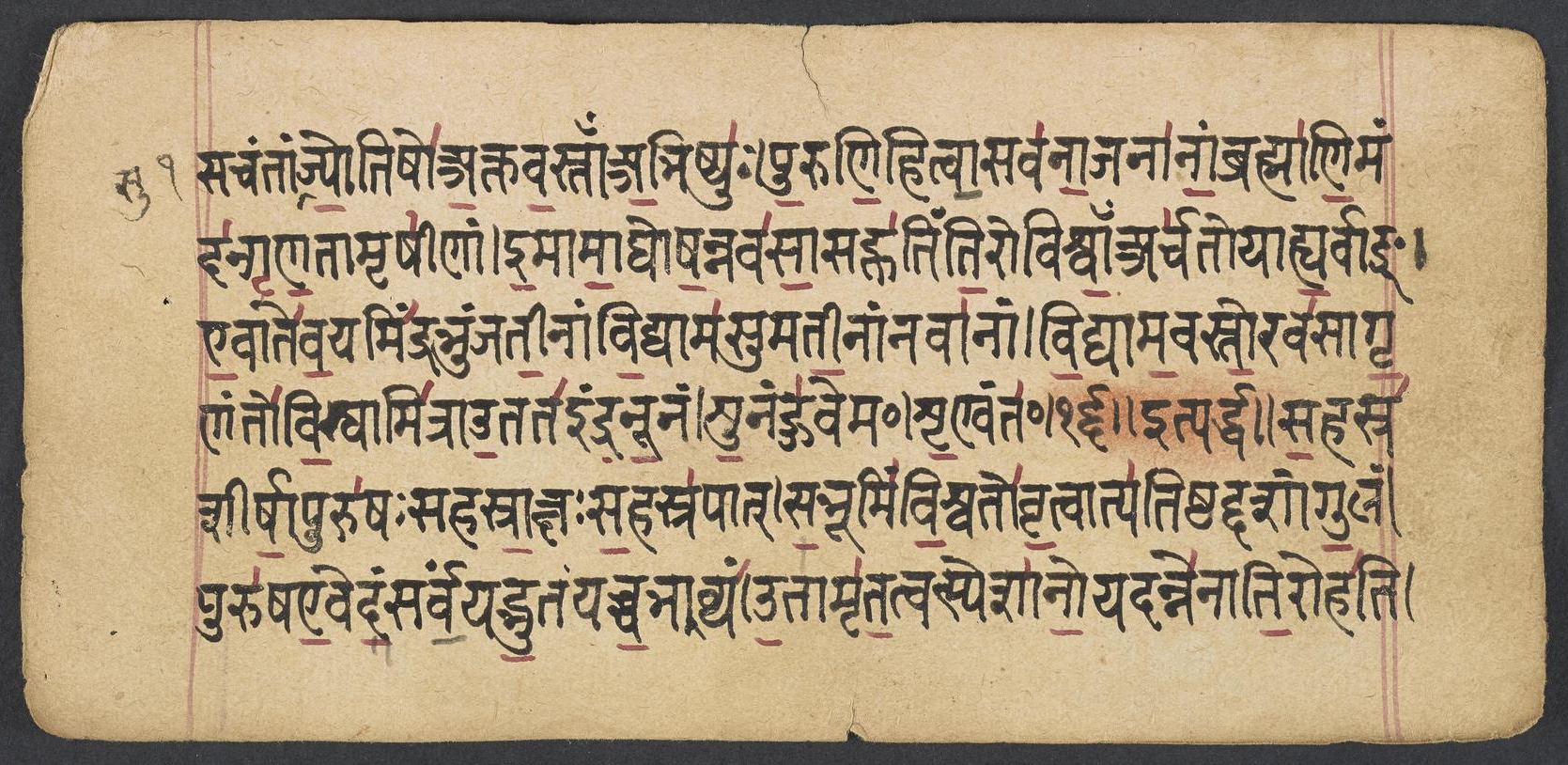
Where on the image
Penn Ms. Coll. 390 Item 48, fol. 65r (OPenn image 64, lower leaf). Checked on the image: the Rigveda text on this page begins in RV 10.89.15 ‹sacantāṁ sujyotiṣo aktavas tām̐›. The next page with Rigveda text, fol. 65v, begins in RV 10.90.3 ‹etāvān asya mahimāto jyāyām̐ś›. Verses 10.89.15-18 end on this page; 10.89.15 begins on fol. 64v.
15śa̱trū̱yanto̍ a̱bhi ye na̍s tata̱sre mahi̱ vrādha̍nta oga̱ṇāsa̍ indra | a̱ndhenā̱mitrā̱s tama̍sā sacantāṁ sujyo̱tiṣo̍ a̱ktava̱s tām̐ a̱bhi ṣyu̍ḥ ||
16pu̱rūṇi̱ hi tvā̱ sava̍nā̱ janā̍nā̱m brahmā̍ṇi̱ manda̍n gṛṇa̱tām ṛṣī̍ṇām | i̱mām ā̱ghoṣa̱nn ava̍sā̱ sahū̍tiṁ ti̱ro viśvā̱m̐ arca̍to yāhy a̱rvāṅ ||
17e̱vā te̍ va̱yam i̍ndra bhuñjatī̱nāṁ vi̱dyāma̍ sumatī̱nāṁ navā̍nām | vi̱dyāma̱ vasto̱r ava̍sā gṛ̱ṇanto̍ vi̱śvāmi̍trā u̱ta ta̍ indra nū̱nam ||
18śu̱naṁ hu̍vema ma̱ghavā̍na̱m indra̍m a̱smin bhare̱ nṛta̍ma̱ṁ vāja̍sātau | śṛ̱ṇvanta̍m u̱gram ū̱taye̍ sa̱matsu̱ ghnanta̍ṁ vṛ̱trāṇi̍ sa̱ṁjita̱ṁ dhanā̍nām ||
15Those who are set in enmity against us, the Oganas, O Indra, waxen mighty,– Let blinding darkness follow those our foemen, while these shall have bright shining nights to light them.
16May plentiful libations of the people, and singing R̥ishis' holy prayers rejoice thee. Hearing with love this common invocation, come unto us, pass by all those who praise thee.
17O Indra, thus may we be made partakers of thy new favours that shall bring us profit. Singing with love, may we the Viṣvâmitras win daylight even now through thee, O Indra.
18Call we on Maghavan, auspicious Indra, best hero in the fight where spoil is gathered, The Strong who listens, who gives aid in battles, who slays the Vr̥itras, wins and gathers riches.
Notes
- Sanskrit: Aufrecht's edition (1877) with the Vedic accents, as entered by van Nooten and Holland (GRETIL).
- English: Ralph T. H. Griffith, The Hymns of the Rigveda (1889-1892; 2nd ed. 1896-1897), from the VedaWeb digital text; OCR slips in that text were corrected against the printed 2nd edition (data/sources/rigveda/griffith_errata.json).
- This manuscript inserts khila verses (supplementary hymns outside Aufrecht's text) at some hymn ends; they are noted in the section notes and not reproduced.
Cite
Sources
- Source: Penn Ms. Coll. 390 Item 48 (1711 CE (colophon: Saṃvat 1768)), OPenn, Public Domain Mark + Aufrecht's accented text (GRETIL) + Griffith's English (VedaWeb) (holding institution)
- Critical edition: Aufrecht (1877), accented e-text via GRETIL
← previous · → next · v cycle view · l back to library