Rigveda 10.95: Pururavas and Urvashi
Introduction
Rigveda 10.95 is a hymn of 18 verses addressed to Pururavas and Urvasi. It stands in book (maṇḍala) 10, the last and latest book. The Rigveda is the oldest collection of Sanskrit hymns, composed in the second half of the second millennium BCE and handed down orally for many centuries before it was written down.
The manuscript shown is Penn Ms. Coll. 390 Item 48 (University of Pennsylvania), a paper manuscript of the eighth aṣṭaka (RV 10.46-10.191) of the Ṛgveda Saṃhitā in Devanāgarī, 158 leaves, 6 lines to the page, with the accents marked in red; the scribe's colophon on fol. 158 gives Saṃvat 1768 (1711 CE); this hymn stands on fol. 74r-76r. Each section below gives the verses that end on one page; the page boundaries were read on the images (the opening words of every page), not counted out. Like most Rigveda manuscripts, Penn Ms. Coll. 390 Item 48 writes a repeated refrain in short form after its first occurrence (for example kasmai° for kasmai devāya haviṣā vidhema); the Sanskrit shown is the full text of Aufrecht's edition.
How was this verified? (Provenance)
Where on the image
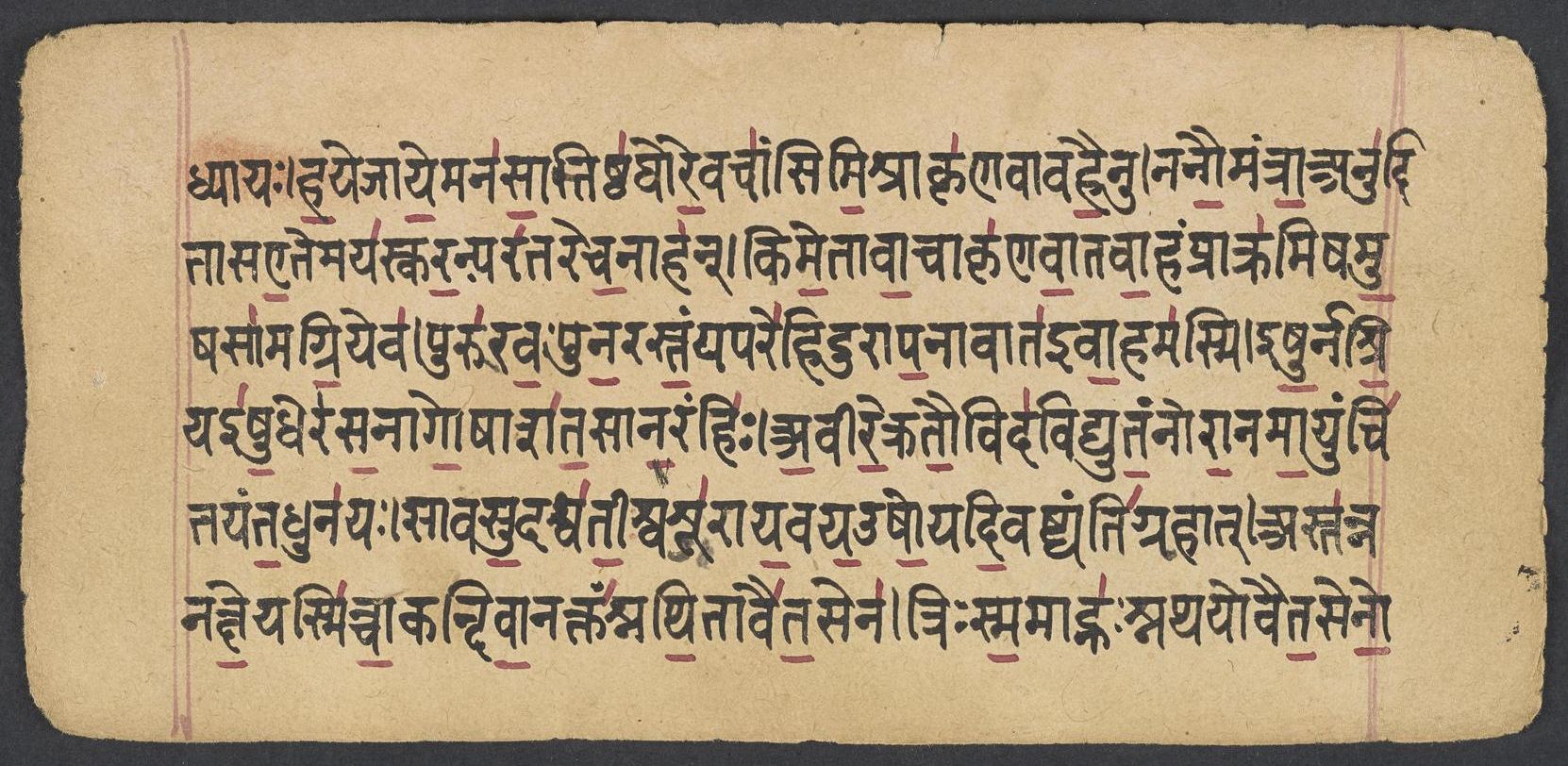
Penn Ms. Coll. 390 Item 48, fol. 74r (OPenn image 73, lower leaf). Checked on the image: the Rigveda text on this page begins in RV 10.94.14 ‹-cāyamānāḥ›. The next page with Rigveda text, fol. 74v, begins in RV 10.95.5 ‹-vaitasenota sma me 'vyatyai›. Verses 10.95.1-4 end on this page.
1ha̱ye jāye̱ mana̍sā̱ tiṣṭha̍ ghore̱ vacā̍ṁsi mi̱śrā kṛ̍ṇavāvahai̱ nu | na nau̱ mantrā̱ anu̍ditāsa e̱te maya̍s kara̱n para̍tare ca̱nāha̍n ||
2kim e̱tā vā̱cā kṛ̍ṇavā̱ tavā̱ham prākra̍miṣam u̱ṣasā̍m agri̱yeva̍ | purū̍rava̱ḥ puna̱r asta̱m pare̍hi durāpa̱nā vāta̍ ivā̱ham a̍smi ||
3iṣu̱r na śri̱ya i̍ṣu̱dher a̍sa̱nā go̱ṣāḥ śa̍ta̱sā na raṁhi̍ḥ | a̱vīre̱ kratau̱ vi da̍vidyuta̱n norā̱ na mā̱yuṁ ci̍tayanta̱ dhuna̍yaḥ ||
4sā vasu̱ dadha̍tī̱ śvaśu̍rāya̱ vaya̱ uṣo̱ yadi̱ vaṣṭy anti̍gṛhāt | asta̍ṁ nanakṣe̱ yasmi̍ñ cā̱kan divā̱ nakta̍ṁ śnathi̱tā vai̍ta̱sena̍ ||
1Ho there, my consort! Stay, thou fierce-souled lady, and let us reason for a while together. Such thoughts as these of ours, while yet unspoken in days gone by have never brought us comfort.
2What am I now to do with this thy saying? I have gone from thee like the first of Mornings. Purûravâs, return thou to thy dwelling: I, like the wind, am difficult to capture.
3Like a shaft sent for glory from the quiver, or swift-steed winning cattle winning hundreds. The lightning seemed to flash, as cowards planned it. The minstrels bleated like a lamb in trouble.
4Giving her husband's father life and riches, from the near dwelling, when her lover craved her, She sought the home wherein she found her pleasure, accepting day and night her lord's embraces.
Where on the image
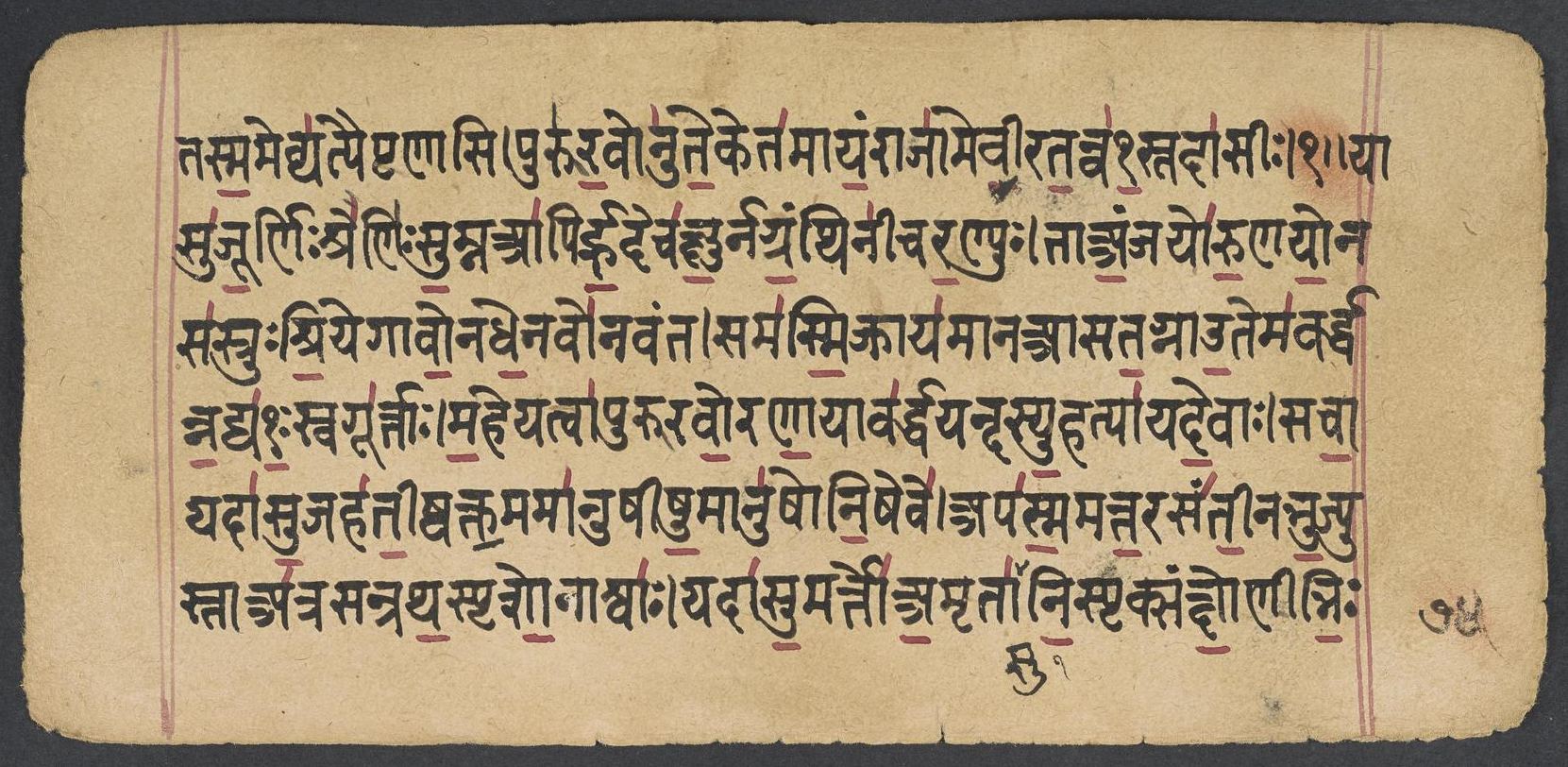
Penn Ms. Coll. 390 Item 48, fol. 74v (OPenn image 74, upper leaf). Checked on the image: the Rigveda text on this page begins in RV 10.95.5 ‹-vaitasenota sma me 'vyatyai›. The next page with Rigveda text, fol. 75r, begins in RV 10.95.9 ‹kratubhir na pṛṅkte›. Verses 10.95.5-8 end on this page; 10.95.5 begins on fol. 74r.
5triḥ sma̱ māhna̍ḥ śnathayo vaita̱seno̱ta sma̱ me 'vya̍tyai pṛṇāsi | purū̍ra̱vo 'nu̍ te̱ keta̍m āya̱ṁ rājā̍ me vīra ta̱nva1̱̍s tad ā̍sīḥ ||
6yā su̍jū̱rṇiḥ śreṇi̍ḥ su̱mnaā̍pir hra̱deca̍kṣu̱r na gra̱nthinī̍ cara̱ṇyuḥ | tā a̱ñjayo̍ 'ru̱ṇayo̱ na sa̍sruḥ śri̱ye gāvo̱ na dhe̱navo̍ 'navanta ||
7sam a̍smi̱ñ jāya̍māna āsata̱ gnā u̱tem a̍vardhan na̱dya1̱̍ḥ svagū̍rtāḥ | ma̱he yat tvā̍ purūravo̱ raṇā̱yāva̍rdhayan dasyu̱hatyā̍ya de̱vāḥ ||
8sacā̱ yad ā̍su̱ jaha̍tī̱ṣv atka̱m amā̍nuṣīṣu̱ mānu̍ṣo ni̱ṣeve̍ | apa̍ sma̱ mat ta̱rasa̍ntī̱ na bhu̱jyus tā a̍trasan ratha̱spṛśo̱ nāśvā̍ḥ ||
5Thrice in the day didst thou embrace thy consort, though coldly she received thy fond caresses. To thy desires, Purûravâs, I yielded: so wast thou king, O hero, of my body.
6The maids Sujûrṇi, Ṣreṇi, Sumne-âpi, Charaṇyu, Granthinî, and Hradechakshus,– These like red kine have hastened forth, the bright ones, and like milch-cows have lowed in emulation.
7While he was born the Dames sate down together, the Rivers with free kindness gave him nurture; And then, Purûravâs, the Gods increased thee for mighty battle, to destroy the Dasyus.
8When I, a mortal, wooed to mine embraces these heavenly nymphs who laid aside their raiment, Like a scared snake they fled from me in terror, like chariot horses when the car has touched them.
Where on the image
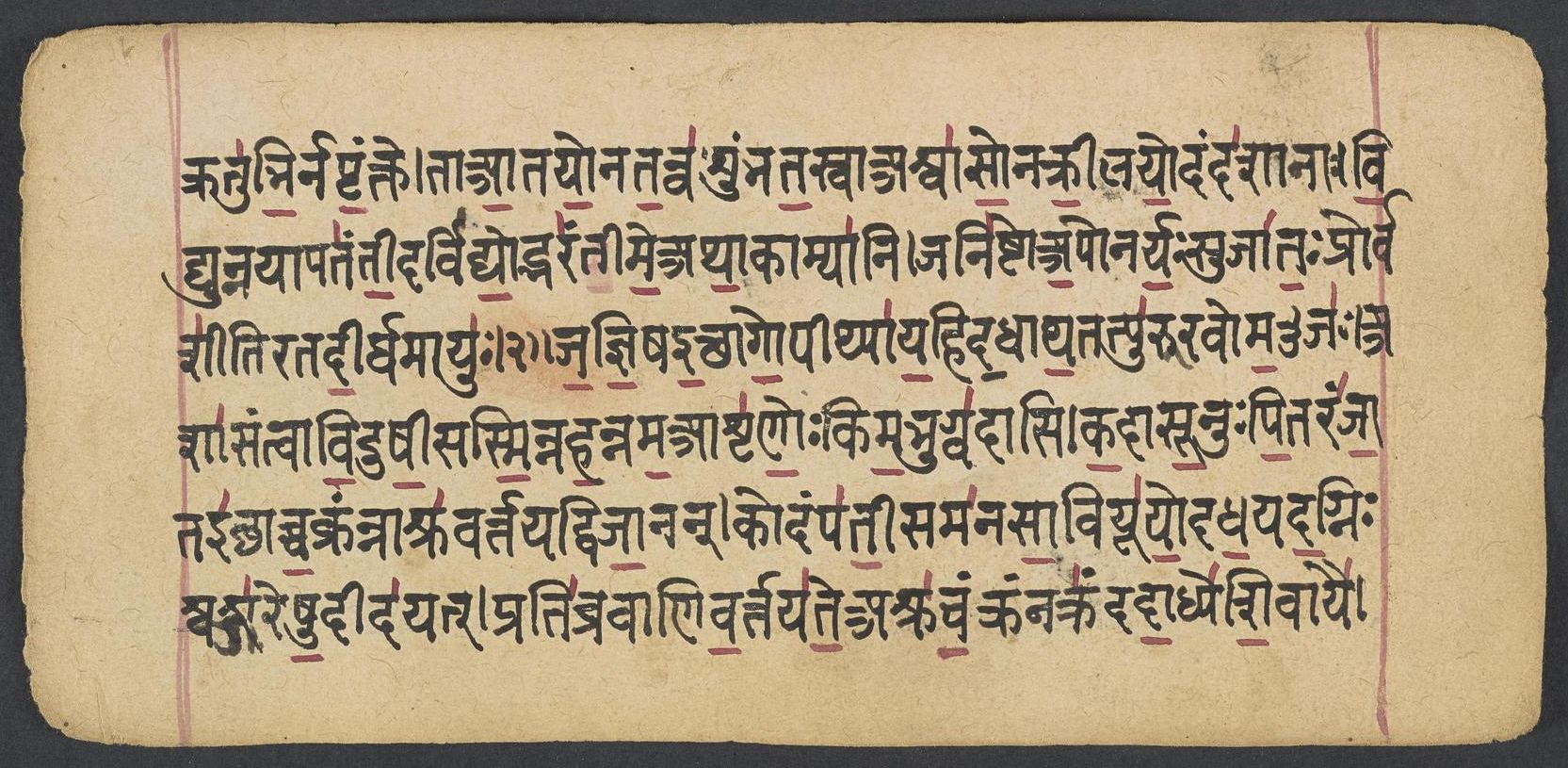
Penn Ms. Coll. 390 Item 48, fol. 75r (OPenn image 74, lower leaf). Checked on the image: the Rigveda text on this page begins in RV 10.95.9 ‹kratubhir na pṛṅkte›. The next page with Rigveda text, fol. 75v, begins in RV 10.95.13 ‹-śivāyai›. Verses 10.95.9-12 end on this page; 10.95.9 begins on fol. 74v.
9yad ā̍su̱ marto̍ a̱mṛtā̍su ni̱spṛk saṁ kṣo̱ṇībhi̱ḥ kratu̍bhi̱r na pṛ̱ṅkte | tā ā̱tayo̱ na ta̱nva̍ḥ śumbhata̱ svā aśvā̍so̱ na krī̱ḻayo̱ danda̍śānāḥ ||
10vi̱dyun na yā pata̍ntī̱ davi̍dyo̱d bhara̍ntī me̱ apyā̱ kāmyā̍ni | jani̍ṣṭo a̱po narya̱ḥ sujā̍ta̱ḥ prorvaśī̍ tirata dī̱rgham āyu̍ḥ ||
11ja̱jñi̱ṣa i̱tthā go̱pīthyā̍ya̱ hi da̱dhātha̱ tat pu̍rūravo ma̱ oja̍ḥ | aśā̍saṁ tvā vi̱duṣī̱ sasmi̱nn aha̱n na ma̱ āśṛ̍ṇo̱ḥ kim a̱bhug va̍dāsi ||
12ka̱dā sū̱nuḥ pi̱tara̍ṁ jā̱ta i̍cchāc ca̱kran nāśru̍ vartayad vijā̱nan | ko dampa̍tī̱ sama̍nasā̱ vi yū̍yo̱d adha̱ yad a̱gniḥ śvaśu̍reṣu̱ dīda̍yat ||
9When, loving these Immortal Ones, the mortal hath converse with the nymphs as they allow him. Like swans they show the beauty of their bodies, like horses in their play they bite and nibble.
10She who flashed brilliant as the falling lightning brought me delicious presents from the waters. Now from the flood be born a strong young hero May Urvaṣî prolong her life for ever
11Thy birth hath made me drink from earthly milch-kine: this power, Purûravâs, hast thou vouchsafed me. I knew, and, warned thee, on that day. Thou wouldst not hear me. What sayest thou, when naught avails thee?
12When will the son be born and seek his father? Mourner-like, will he weep when first he knows him? Who shall divide the accordant wife and husband, while fire is shining with thy consort's parents?
Where on the image
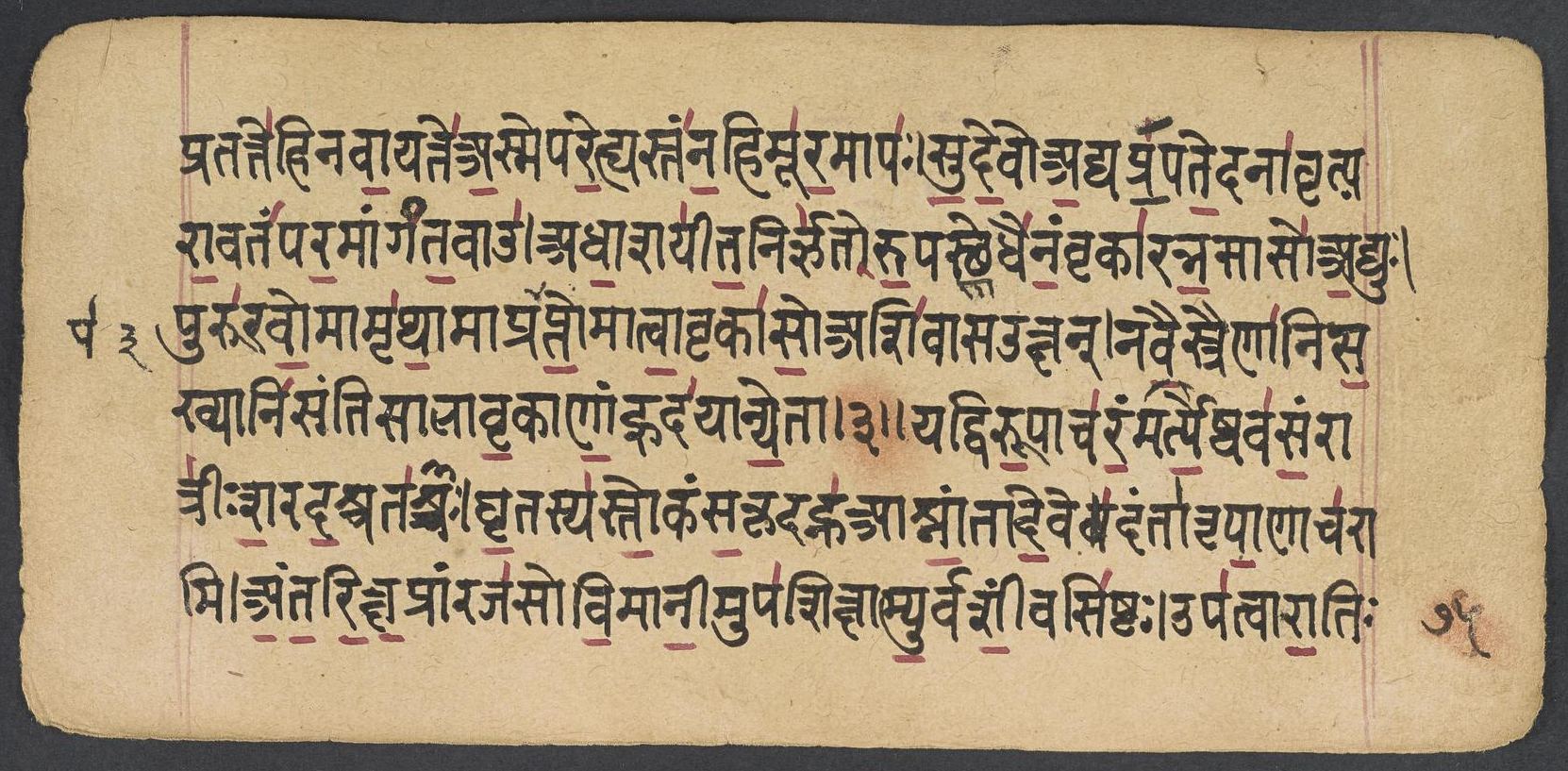
Penn Ms. Coll. 390 Item 48, fol. 75v (OPenn image 75, upper leaf). Checked on the image: the Rigveda text on this page begins in RV 10.95.13 ‹-śivāyai›. The next page with Rigveda text, fol. 76r, begins in RV 10.95.17 ‹sukṛtasya tiṣṭhān ni vartasva›. Verses 10.95.13-16 end on this page; 10.95.13 begins on fol. 75r.
13prati̍ bravāṇi va̱rtaya̍te̱ aśru̍ ca̱kran na kra̍ndad ā̱dhye̍ śi̱vāyai̍ | pra tat te̍ hinavā̱ yat te̍ a̱sme pare̱hy asta̍ṁ na̱hi mū̍ra̱ māpa̍ḥ ||
14su̱de̱vo a̱dya pra̱pate̱d anā̍vṛt parā̱vata̍m para̱māṁ ganta̱vā u̍ | adhā̱ śayī̍ta̱ nirṛ̍ter u̱pasthe 'dhai̍na̱ṁ vṛkā̍ rabha̱sāso̍ a̱dyuḥ ||
15purū̍ravo̱ mā mṛ̍thā̱ mā pra pa̍pto̱ mā tvā̱ vṛkā̍so̱ aśi̍vāsa u kṣan | na vai straiṇā̍ni sa̱khyāni̍ santi sālāvṛ̱kāṇā̱ṁ hṛda̍yāny e̱tā ||
16yad virū̱pāca̍ra̱m martye̱ṣv ava̍sa̱ṁ rātrī̍ḥ śa̱rada̱ś cata̍sraḥ | ghṛ̱tasya̍ sto̱kaṁ sa̱kṛd ahna̍ āśnā̱ṁ tād e̱vedaṁ tā̍tṛpā̱ṇā ca̍rāmi ||
13I will console him when his tears are falling: he shall not weep and cry for care that blesses. That which is thine, between us, will I send thee. Go home again, thou fool;.thou hast not won me.
14Thy lover shall flee forth this day for ever, to seek, without return, the farthest distance. Then let his bed be in Destruction's bosom, and there let fierce rapacious wolves devour him.
15Nay, do not die, Purûravâs, nor vanish: let not the evil-omened wolves devour thee. With women there can be no lasting friendship: hearts of hyenas are the hearts of women.
16When amid men in altered shape I sojourned, and through four autumns spent the nights among them, I tasted once a day a drop of butter; and even now with that am I am contented.
Where on the image
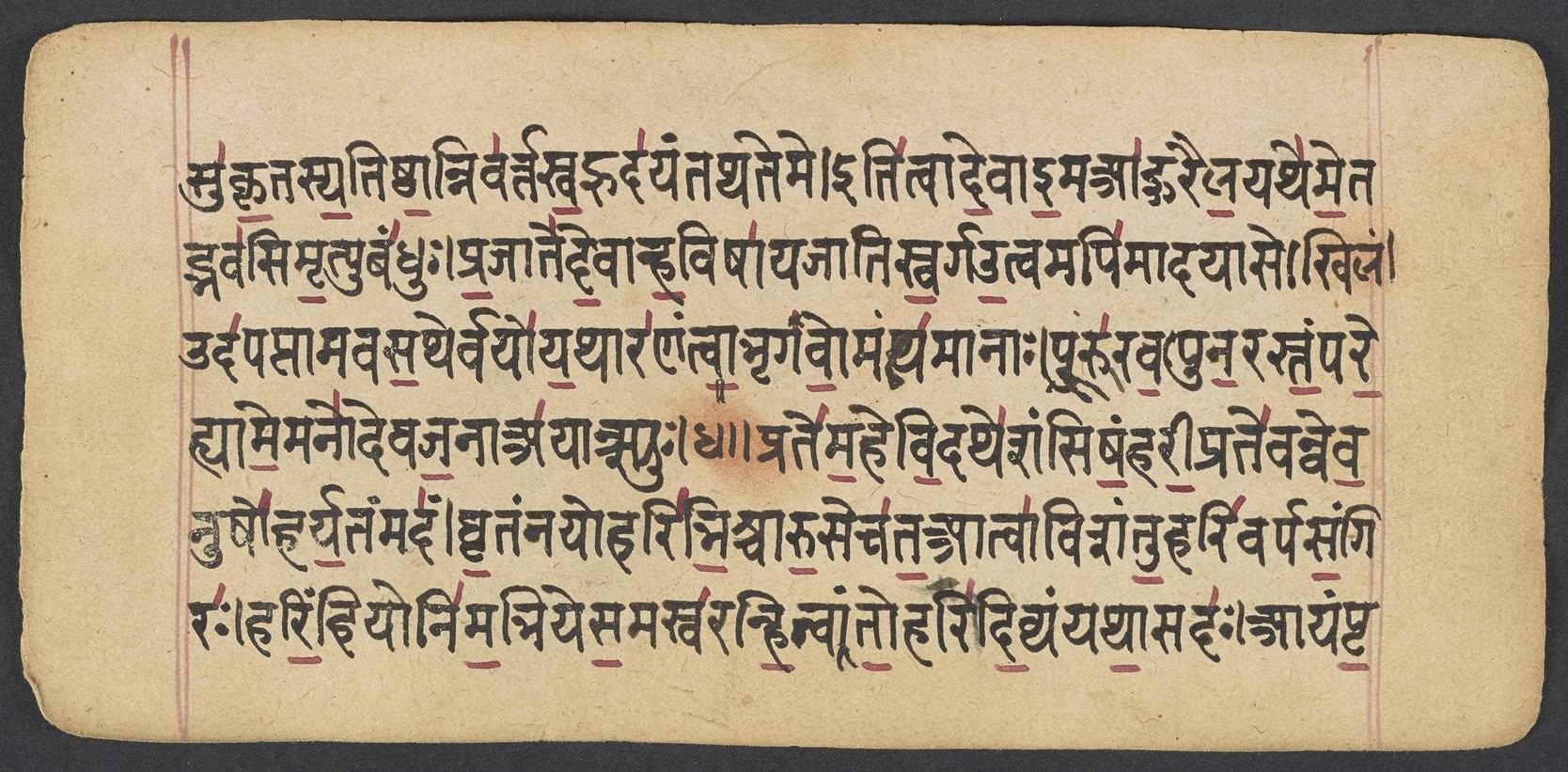
Penn Ms. Coll. 390 Item 48, fol. 76r (OPenn image 75, lower leaf). Checked on the image: the Rigveda text on this page begins in RV 10.95.17 ‹sukṛtasya tiṣṭhān ni vartasva›. The next page with Rigveda text, fol. 76v, begins in RV 10.96.2 ‹-pṛṇanti haribhir na dhenava›. Verses 10.95.17-18 end on this page; 10.95.17 begins on fol. 75v.
17a̱nta̱ri̱kṣa̱prāṁ raja̍so vi̱mānī̱m upa̍ śikṣāmy u̱rvaśī̱ṁ vasi̍ṣṭhaḥ | upa̍ tvā rā̱tiḥ su̍kṛ̱tasya̱ tiṣṭhā̱n ni va̍rtasva̱ hṛda̍yaṁ tapyate me ||
18iti̍ tvā de̱vā i̱ma ā̍hur aiḻa̱ yathe̍m e̱tad bhava̍si mṛ̱tyuba̍ndhuḥ | pra̱jā te̍ de̱vān ha̱viṣā̍ yajāti sva̱rga u̱ tvam api̍ mādayāse ||
17I, her best love, call Urvaṣî to meet me, her who fills air and measures out the region. Let the gift brought by piety approach thee. Turn thou to me again: my heart is troubled.
18Thus speak these Gods to thee, O son of Iḷâ: As death hath verily got thee for his subject, Thy sons shall serve the Gods with their oblation, and thou, moreover, shalt rejoice in Svarga.
Notes
- Sanskrit: Aufrecht's edition (1877) with the Vedic accents, as entered by van Nooten and Holland (GRETIL).
- English: Ralph T. H. Griffith, The Hymns of the Rigveda (1889-1892; 2nd ed. 1896-1897), from the VedaWeb digital text; OCR slips in that text were corrected against the printed 2nd edition (data/sources/rigveda/griffith_errata.json).
Cite
Sources
- Source: Penn Ms. Coll. 390 Item 48 (1711 CE (colophon: Saṃvat 1768)), OPenn, Public Domain Mark + Aufrecht's accented text (GRETIL) + Griffith's English (VedaWeb) (holding institution)
- Critical edition: Aufrecht (1877), accented e-text via GRETIL
← previous · → next · v cycle view · l back to library