Rigveda 10.94: To the pressing stones
Introduction
Rigveda 10.94 is a hymn of 14 verses addressed to the pressing stones. It stands in book (maṇḍala) 10, the last and latest book. The Rigveda is the oldest collection of Sanskrit hymns, composed in the second half of the second millennium BCE and handed down orally for many centuries before it was written down.
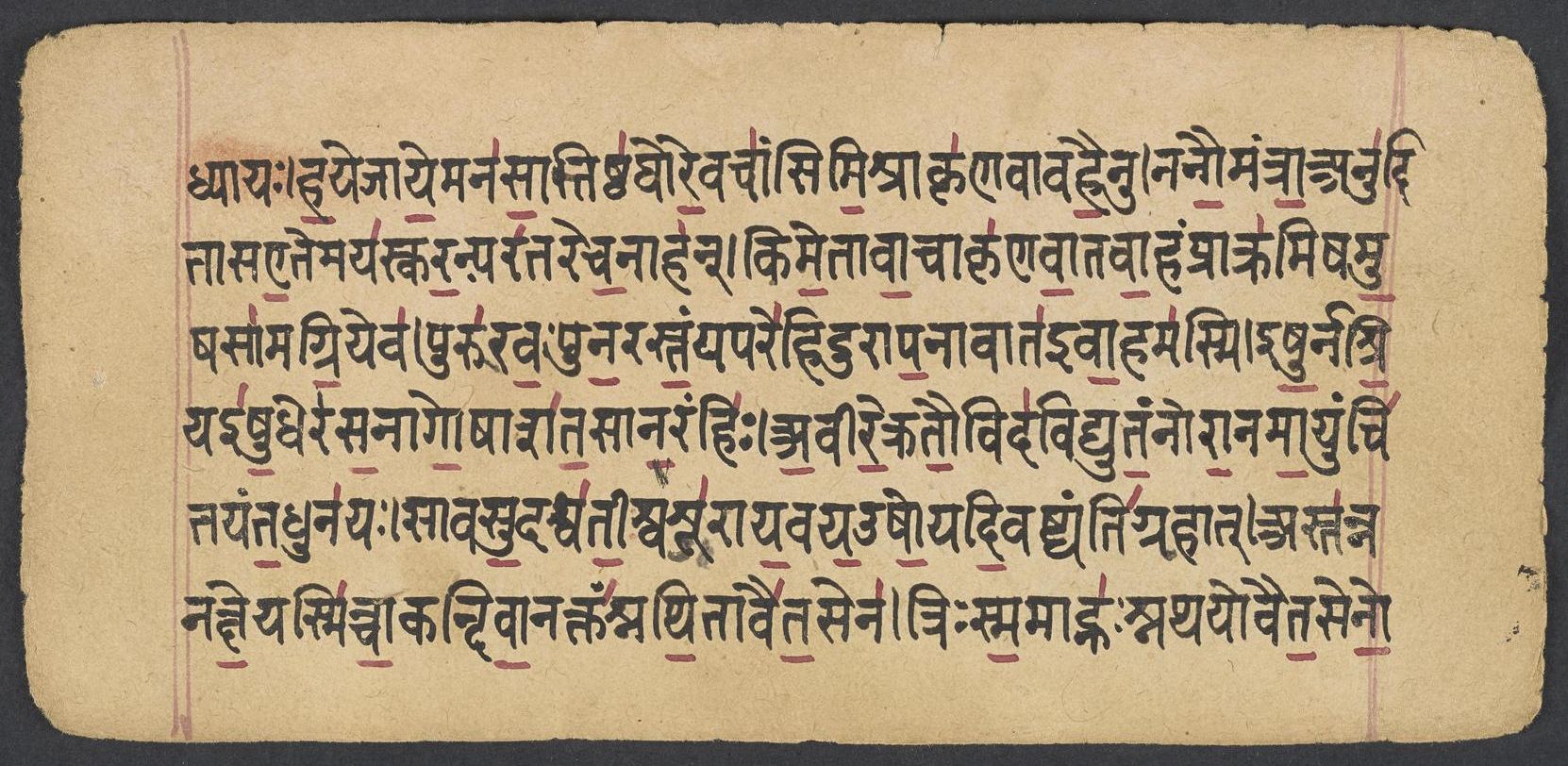
The manuscript shown is Penn Ms. Coll. 390 Item 48 (University of Pennsylvania), a paper manuscript of the eighth aṣṭaka (RV 10.46-10.191) of the Ṛgveda Saṃhitā in Devanāgarī, 158 leaves, 6 lines to the page, with the accents marked in red; the scribe's colophon on fol. 158 gives Saṃvat 1768 (1711 CE); this hymn stands on fol. 72r-74r. Each section below gives the verses that end on one page; the page boundaries were read on the images (the opening words of every page), not counted out. Like most Rigveda manuscripts, Penn Ms. Coll. 390 Item 48 writes a repeated refrain in short form after its first occurrence (for example kasmai° for kasmai devāya haviṣā vidhema); the Sanskrit shown is the full text of Aufrecht's edition.
How was this verified? (Provenance)
Where on the image
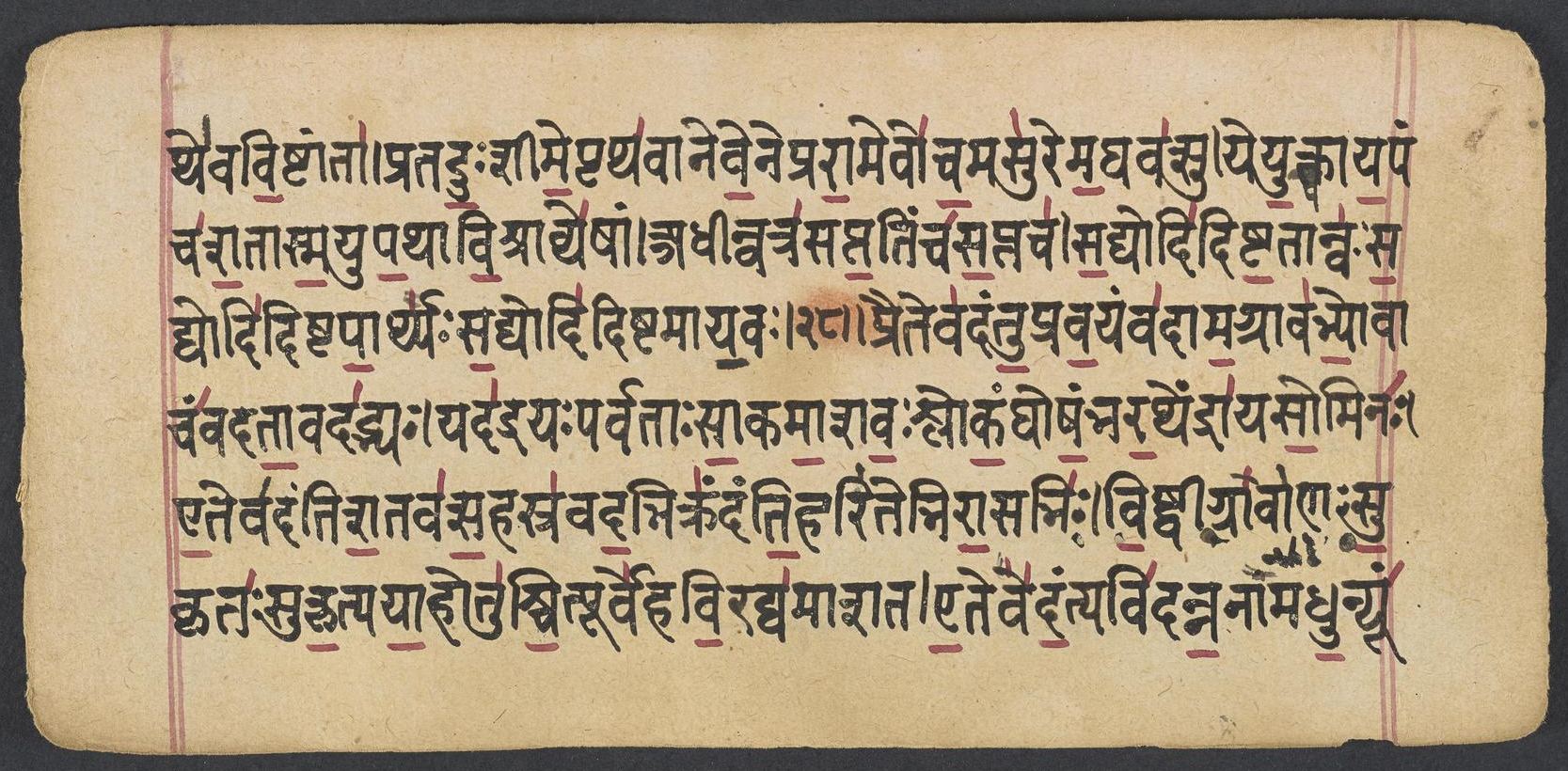
Penn Ms. Coll. 390 Item 48, fol. 72r (OPenn image 71, lower leaf). Checked on the image: the Rigveda text on this page begins in RV 10.93.13 ‹-vṛtheva viṣṭāntā›. The next page with Rigveda text, fol. 72v, begins in RV 10.94.3 ‹-ūṅkhayante adhi pakva āmiṣi›. Verses 10.94.1-2 end on this page.
1praite va̍dantu̱ pra va̱yaṁ va̍dāma̱ grāva̍bhyo̱ vāca̍ṁ vadatā̱ vada̍dbhyaḥ | yad a̍drayaḥ parvatāḥ sā̱kam ā̱śava̱ḥ śloka̱ṁ ghoṣa̱m bhara̱thendrā̍ya so̱mina̍ḥ ||
2e̱te va̍danti śa̱tava̍t sa̱hasra̍vad a̱bhi kra̍ndanti̱ hari̍tebhir ā̱sabhi̍ḥ | vi̱ṣṭvī grāvā̍ṇaḥ su̱kṛta̍ḥ sukṛ̱tyayā̱ hotu̍ś ci̱t pūrve̍ havi̱radya̍m āśata ||
1LET these speak loudly forth; let us speak out aloud: to the loud speaking Pressing-stones address the speech; When, rich with Soma juice, Stones of the mountain, ye, united, swift to Indra bring the sound of praise.
2They speak out like a hundred, like a thousand men: they cry aloud to us with their green-tinted mouths, While, pious Stones, they ply their task with piety, and, even before the Hotar, taste the offered food.
Where on the image
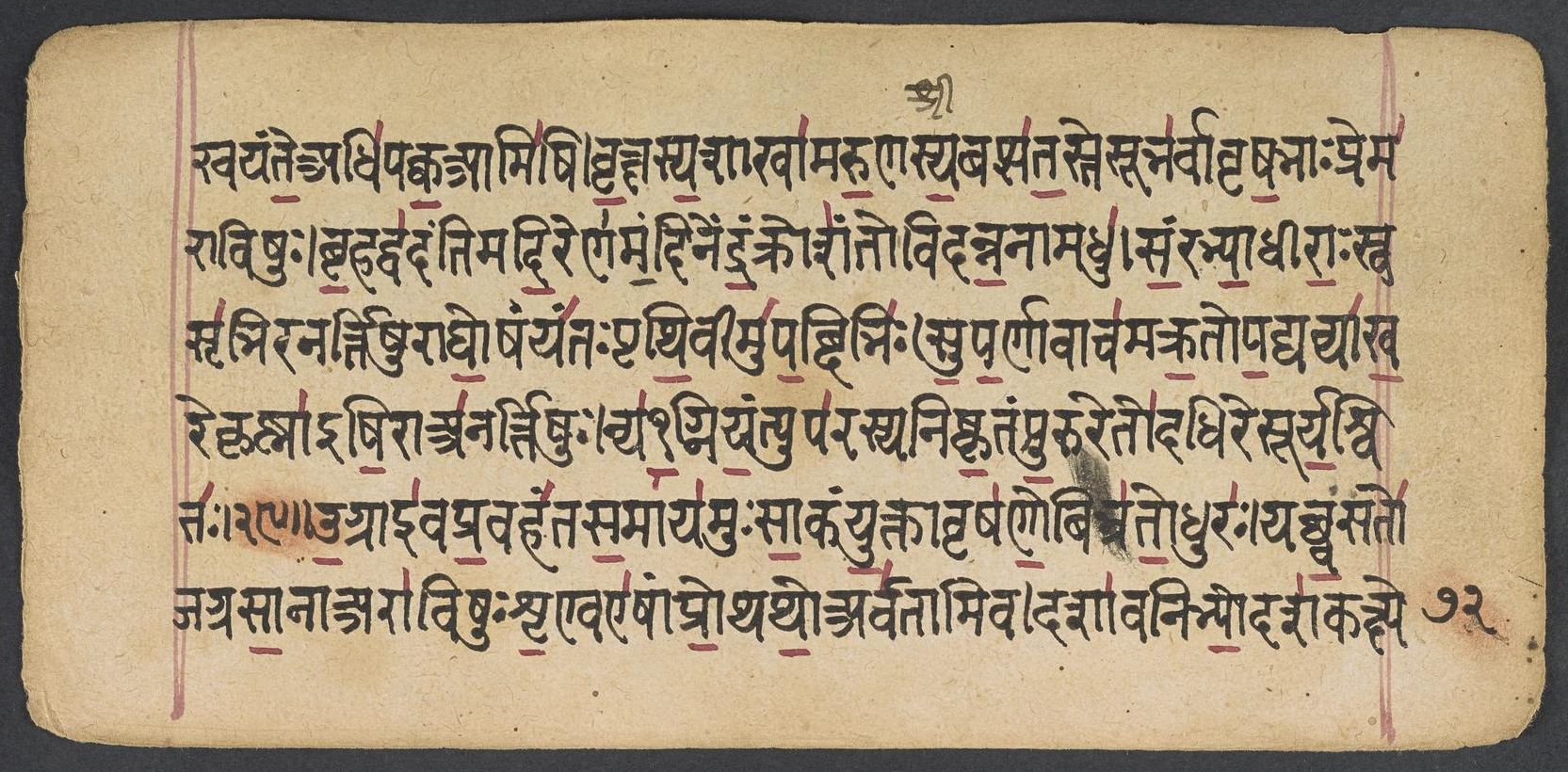
Penn Ms. Coll. 390 Item 48, fol. 72v (OPenn image 72, upper leaf). Checked on the image: the Rigveda text on this page begins in RV 10.94.3 ‹-ūṅkhayante adhi pakva āmiṣi›. The next page with Rigveda text, fol. 73r, begins in RV 10.94.7 ‹-daśakakṣyebhyo daśayoktrebhyo daśayojanebhyaḥ›. Verses 10.94.3-6 end on this page; 10.94.3 begins on fol. 72r.
3e̱te va̍da̱nty avi̍dann a̱nā madhu̱ ny ū̍ṅkhayante̱ adhi̍ pa̱kva āmi̍ṣi | vṛ̱kṣasya̱ śākhā̍m aru̱ṇasya̱ bapsa̍ta̱s te sūbha̍rvā vṛṣa̱bhāḥ prem a̍rāviṣuḥ ||
4bṛ̱had va̍danti madi̱reṇa̍ ma̱ndinendra̱ṁ krośa̍nto 'vidann a̱nā madhu̍ | sa̱ṁrabhyā̱ dhīrā̱ḥ svasṛ̍bhir anartiṣur āgho̱ṣaya̍ntaḥ pṛthi̱vīm u̍pa̱bdibhi̍ḥ ||
5su̱pa̱rṇā vāca̍m akra̱topa̱ dyavy ā̍kha̱re kṛṣṇā̍ iṣi̱rā a̍nartiṣuḥ | nya1̱̍ṅ ni ya̱nty upa̍rasya niṣkṛ̱tam pu̱rū reto̍ dadhire sūrya̱śvita̍ḥ ||
6u̱grā i̍va pra̱vaha̍ntaḥ sa̱māya̍muḥ sā̱kaṁ yu̱ktā vṛṣa̍ṇo̱ bibhra̍to̱ dhura̍ḥ | yac chva̱santo̍ jagrasā̱nā arā̍viṣuḥ śṛ̱ṇva e̍ṣām pro̱thatho̱ arva̍tām iva ||
3Loudly they speak, for they have found the savoury meath: they make a humming sound over the meat prepared. As they devour the branch of the Red-coloured Tree, these, the well-pastured Bulls, have uttered bellowings.
4They cry aloud, with strong exhilarating drink, calling on Indra now, for they have found the meath. Bold, with the sisters they have danced, embraced by them, making the earth reecho with their ringing sound.
5The Eagles have sent forth their cry aloft in heaven; in the sky's vault the dark impetuous ones have danced. Then downward to the nether stone's fixt place they sink, and, splendid as the Sun, effuse their copious stream.
6Like strong ones drawing, they have put forth all their strength: the Bulls, harnessed together, bear the chariot-poles. When they have bellowed, panting, swallowing their food, the sound of their loud snorting is like that of steeds.
Where on the image
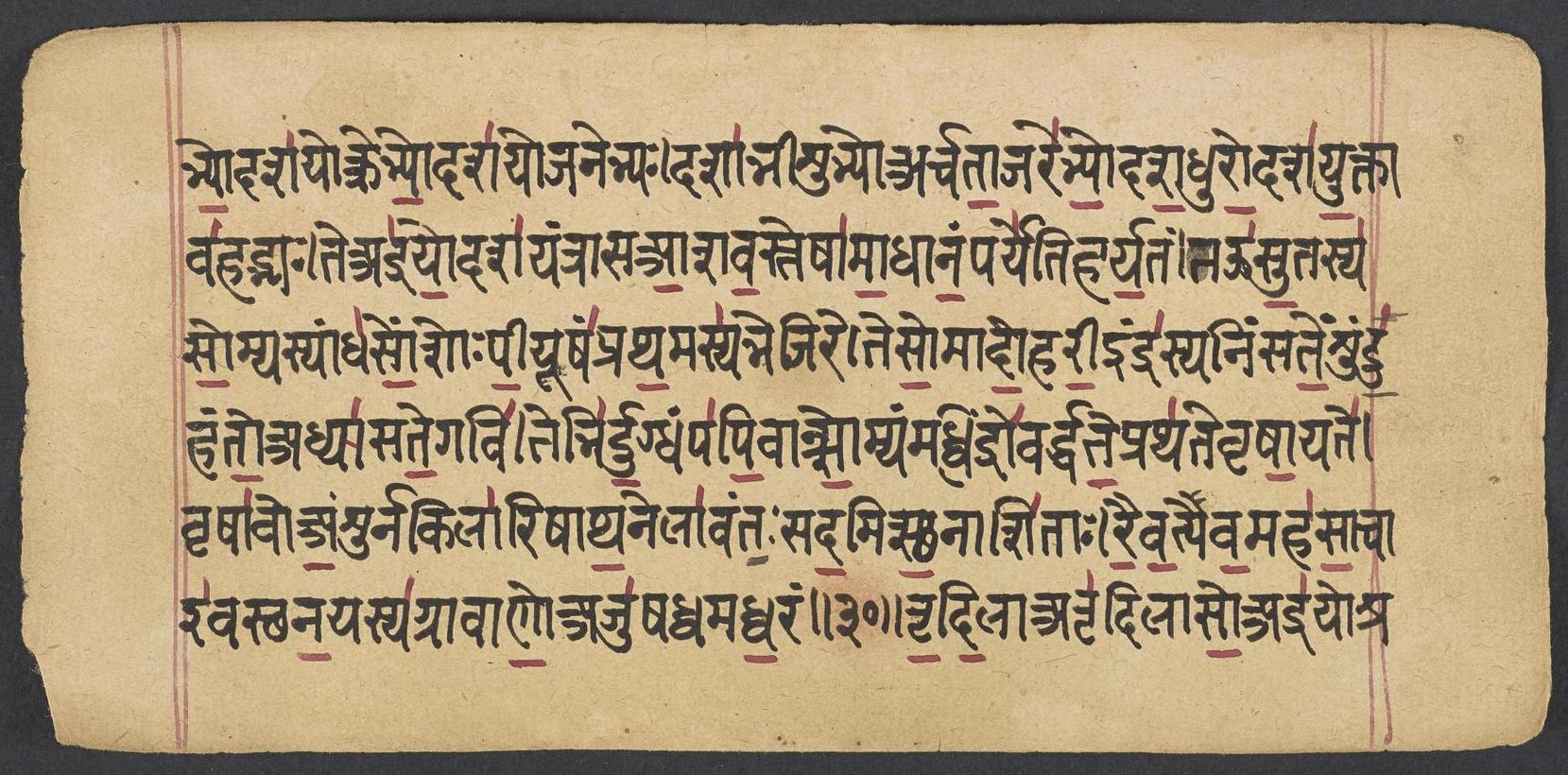
Penn Ms. Coll. 390 Item 48, fol. 73r (OPenn image 72, lower leaf). Checked on the image: the Rigveda text on this page begins in RV 10.94.7 ‹-daśakakṣyebhyo daśayoktrebhyo daśayojanebhyaḥ›. The next page with Rigveda text, fol. 73v, begins in RV 10.94.11 ‹-'śramaṇā aśṛthitā amṛtyavaḥ›. Verses 10.94.7-10 end on this page; 10.94.7 begins on fol. 72v.
7daśā̍vanibhyo̱ daśa̍kakṣyebhyo̱ daśa̍yoktrebhyo̱ daśa̍yojanebhyaḥ | daśā̍bhīśubhyo arcatā̱jare̍bhyo̱ daśa̱ dhuro̱ daśa̍ yu̱ktā vaha̍dbhyaḥ ||
8te adra̍yo̱ daśa̍yantrāsa ā̱śava̱s teṣā̍m ā̱dhāna̱m pary e̍ti harya̱tam | ta ū̍ su̱tasya̍ so̱myasyāndha̍so̱ 'ṁśoḥ pī̱yūṣa̍m pratha̱masya̍ bhejire ||
9te so̱mādo̱ harī̱ indra̍sya niṁsate̱ 'ṁśuṁ du̱hanto̱ adhy ā̍sate̱ gavi̍ | tebhi̍r du̱gdham pa̍pi̱vān so̱myam madhv indro̍ vardhate̱ pratha̍te vṛṣā̱yate̍ ||
10vṛṣā̍ vo a̱ṁśur na kilā̍ riṣātha̱neḻā̍vanta̱ḥ sada̱m it stha̱nāśi̍tāḥ | rai̱va̱tyeva̱ maha̍sā̱ cāra̍vaḥ sthana̱ yasya̍ grāvāṇo̱ aju̍ṣadhvam adhva̱ram ||
7To these who have ten workers and a tenfold girth, to these who have ten yoke-straps and ten binding thongs, To these who bear ten reins, the eternal, sing ye praise, to these who bear ten car-poles, ten when they are yoked.
8These Stones with ten conductors, rapid in their course, with lovely revolution travel round and round. They have been first to drink the flowing Soma juice, first to enjoy the milky fluid of the stalk.
9These Soma-eaters kiss Indra's Bay-coloured Steeds: draining. the stalk they sit upon the ox's hide. Indra, when he hath drunk Soma-nicath drawn by them, waxes in strength, is famed, is mighty as a Bull.
10Strong is your stalk; ye, verily, never shall be harmed; ye have refreshment, ye are ever satisfied. Fair are ye, as it were, through splendour of his wealth, his in whose sacrifice, O Stones, ye find delight.
Where on the image
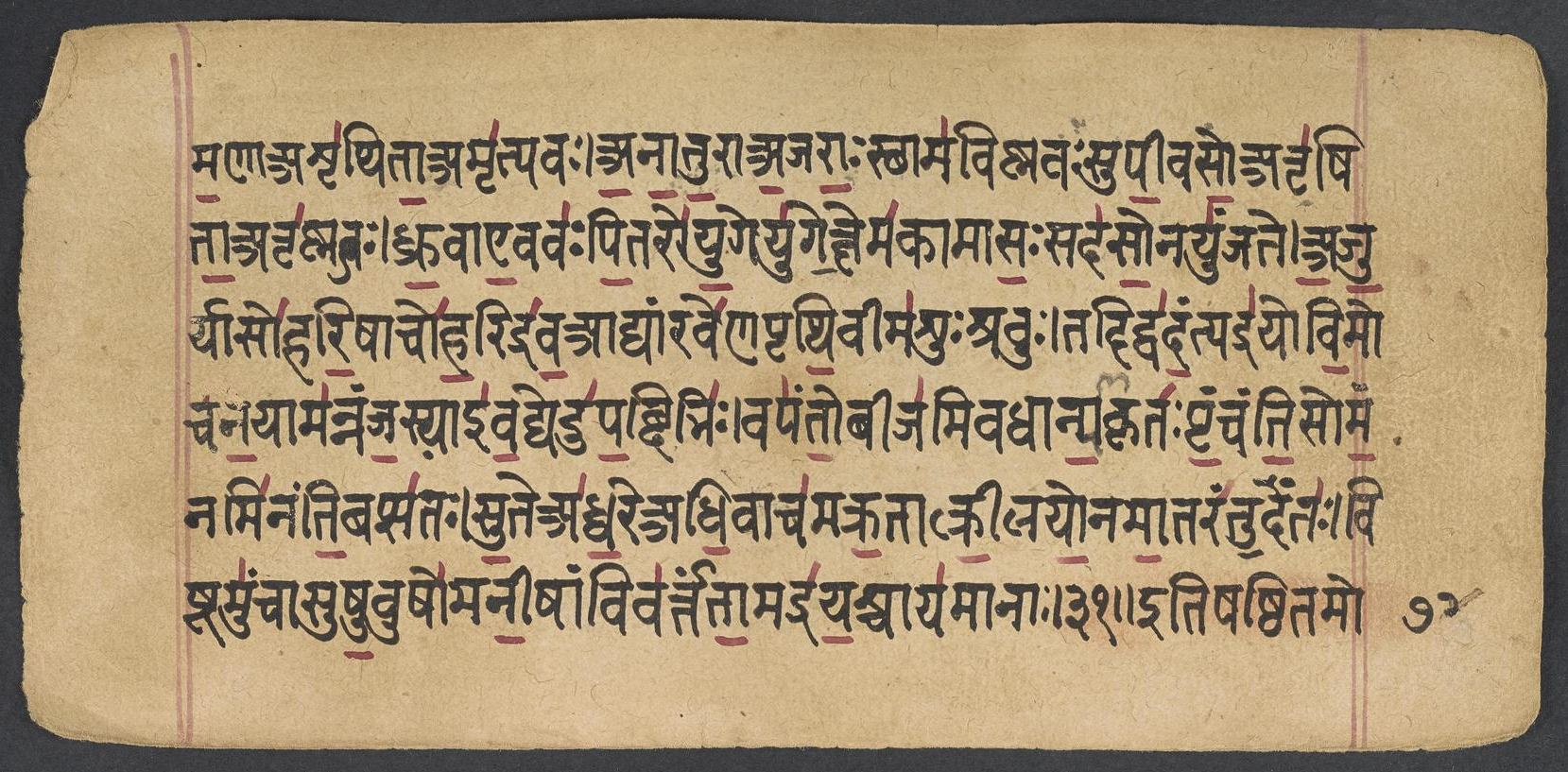
Penn Ms. Coll. 390 Item 48, fol. 73v (OPenn image 73, upper leaf). Checked on the image: the Rigveda text on this page begins in RV 10.94.11 ‹-'śramaṇā aśṛthitā amṛtyavaḥ›. The next page with Rigveda text, fol. 74r, begins in RV 10.94.14 ‹-cāyamānāḥ›. Verses 10.94.11-13 end on this page; 10.94.11 begins on fol. 73r.
11tṛ̱di̱lā atṛ̍dilāso̱ adra̍yo 'śrama̱ṇā aśṛ̍thitā̱ amṛ̍tyavaḥ | a̱nā̱tu̱rā a̱jarā̱ḥ sthāma̍viṣṇavaḥ supī̱vaso̱ atṛ̍ṣitā̱ atṛ̍ṣṇajaḥ ||
12dhru̱vā e̱va va̍ḥ pi̱taro̍ yu̱ge-yu̍ge̱ kṣema̍kāmāsa̱ḥ sada̍so̱ na yu̍ñjate | a̱ju̱ryāso̍ hari̱ṣāco̍ ha̱ridra̍va̱ ā dyāṁ rave̍ṇa pṛthi̱vīm a̍śuśravuḥ ||
13tad id va̍da̱nty adra̍yo vi̱moca̍ne̱ yāma̍nn añja̱spā i̍va̱ ghed u̍pa̱bdibhi̍ḥ | vapa̍nto̱ bīja̍m iva dhānyā̱kṛta̍ḥ pṛ̱ñcanti̱ soma̱ṁ na mi̍nanti̱ bapsa̍taḥ ||
11Bored deep, but not pierced through with holes, are ye, O Stones, not loosened, never weary, and exempt from death, Eternal, undiseased, moving in sundry ways, unthirsting, full of fatness, void of all desire.
12Your fathers, verily, stand firm from age to age: they, loving rest, are not dissevered from their seat. Untouched by time, ne'er lacking green plants and green trees, they with their voice have caused the heavens and earth to hear.
13This, this the Stones proclaim, what time they are disjoined, and when with ringing sounds they move and drink the balm. Like tillers of the ground when they are sowing seed, they mix the Soma, nor, devouring, minish it.
Where on the image
Penn Ms. Coll. 390 Item 48, fol. 74r (OPenn image 73, lower leaf). Checked on the image: the Rigveda text on this page begins in RV 10.94.14 ‹-cāyamānāḥ›. The next page with Rigveda text, fol. 74v, begins in RV 10.95.5 ‹-vaitasenota sma me 'vyatyai›. Verse 10.94.14 ends on this page; 10.94.14 begins on fol. 73v.
14su̱te a̍dhva̱re adhi̱ vāca̍m akra̱tā krī̱ḻayo̱ na mā̱tara̍ṁ tu̱danta̍ḥ | vi ṣū mu̍ñcā suṣu̱vuṣo̍ manī̱ṣāṁ vi va̍rtantā̱m adra̍ya̱ś cāya̍mānāḥ ||
14They have raised high their voice for juice, for sacrifice, striking the Mother earth as though they danced thereon. So loose thou too his thought who hath effused the sap, and let the Stones which we are honouring be disjoined.
Notes
- Sanskrit: Aufrecht's edition (1877) with the Vedic accents, as entered by van Nooten and Holland (GRETIL).
- English: Ralph T. H. Griffith, The Hymns of the Rigveda (1889-1892; 2nd ed. 1896-1897), from the VedaWeb digital text; OCR slips in that text were corrected against the printed 2nd edition (data/sources/rigveda/griffith_errata.json).
Cite
Sources
- Source: Penn Ms. Coll. 390 Item 48 (1711 CE (colophon: Saṃvat 1768)), OPenn, Public Domain Mark + Aufrecht's accented text (GRETIL) + Griffith's English (VedaWeb) (holding institution)
- Critical edition: Aufrecht (1877), accented e-text via GRETIL
← previous · → next · v cycle view · l back to library