Rigveda 10.98: To Devapi's prayer for rain
Introduction
Rigveda 10.98 is a hymn of 12 verses addressed to Devapi's prayer for rain. It stands in book (maṇḍala) 10, the last and latest book. The Rigveda is the oldest collection of Sanskrit hymns, composed in the second half of the second millennium BCE and handed down orally for many centuries before it was written down.
The manuscript shown is Penn Ms. Coll. 390 Item 48 (University of Pennsylvania), a paper manuscript of the eighth aṣṭaka (RV 10.46-10.191) of the Ṛgveda Saṃhitā in Devanāgarī, 158 leaves, 6 lines to the page, with the accents marked in red; the scribe's colophon on fol. 158 gives Saṃvat 1768 (1711 CE); this hymn stands on fol. 80r-81v. Each section below gives the verses that end on one page; the page boundaries were read on the images (the opening words of every page), not counted out. Like most Rigveda manuscripts, Penn Ms. Coll. 390 Item 48 writes a repeated refrain in short form after its first occurrence (for example kasmai° for kasmai devāya haviṣā vidhema); the Sanskrit shown is the full text of Aufrecht's edition.
How was this verified? (Provenance)
Where on the image
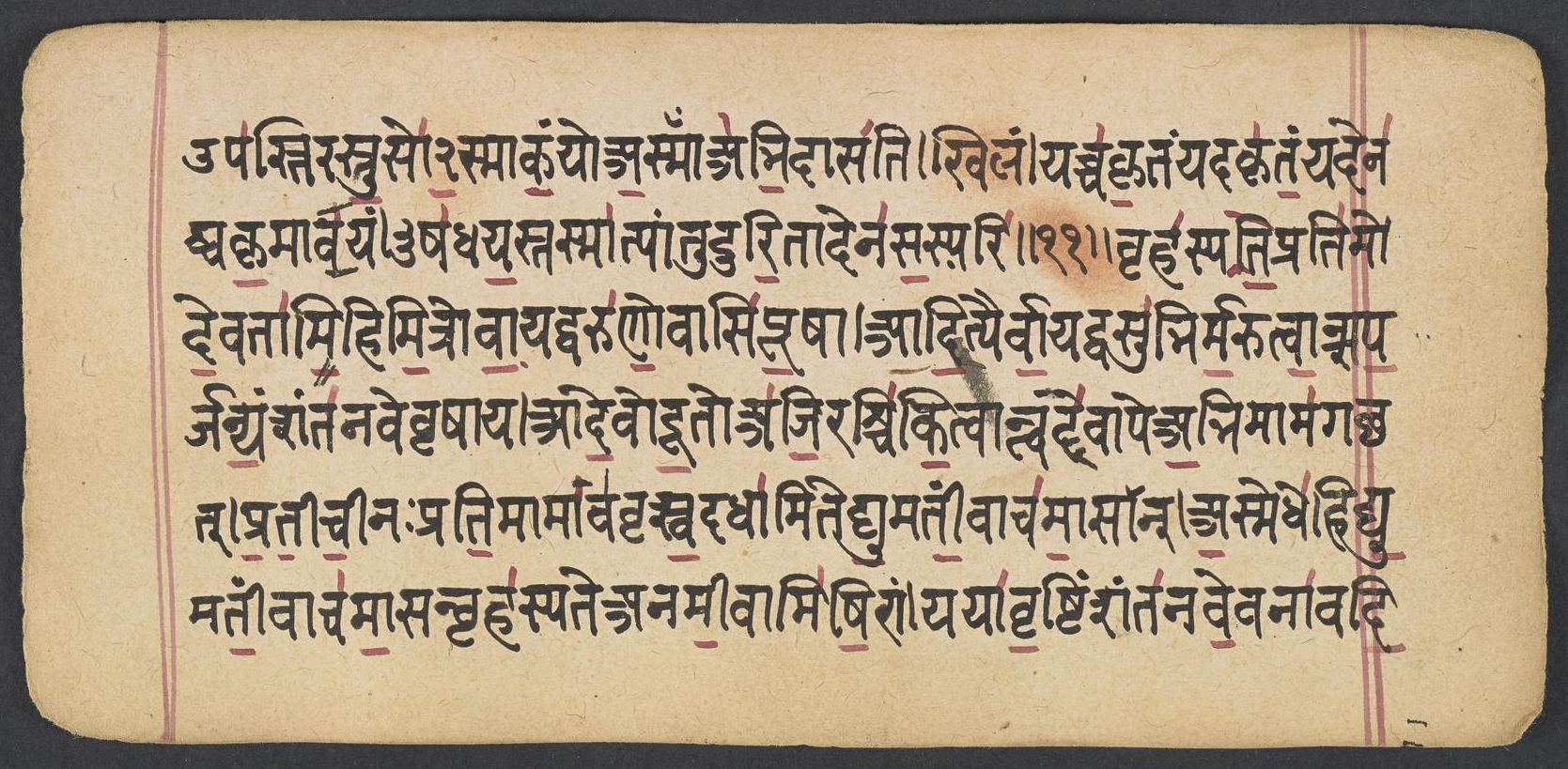
Penn Ms. Coll. 390 Item 48, fol. 80r (OPenn image 79, lower leaf). Checked on the image: the Rigveda text on this page begins in RV 10.97.23 ‹upastir astu so3 'smākaṁ›. The next page with Rigveda text, fol. 80v, begins in RV 10.98.3 ‹-vanāva divo drapso madhumām̐›. Verses 10.98.1-2 end on this page.
1bṛha̍spate̱ prati̍ me de̱vatā̍m ihi mi̱tro vā̱ yad varu̍ṇo̱ vāsi̍ pū̱ṣā | ā̱di̱tyair vā̱ yad vasu̍bhir ma̱rutvā̱n sa pa̱rjanya̱ṁ śaṁta̍nave vṛṣāya ||
2ā de̱vo dū̱to a̍ji̱raś ci̍ki̱tvān tvad de̍vāpe a̱bhi mām a̍gacchat | pra̱tī̱cī̱naḥ prati̱ mām ā va̍vṛtsva̱ dadhā̍mi te dyu̱matī̱ṁ vāca̍m ā̱san ||
1COME, be thou Mitra, Varuṇa, or Pûshan, come, O Br̥ihaspati, to mine oblation: With Maruts, Vasus, or Âdityas, make thou Parjanya pour for Ṣantanu his rain-drops.
2The God, intelligent, the speedy envoy whom thou hast sent hath come to me, Devâpi: Address thyself to me and turn thee hither within thy lips will I put brilliant language.
Where on the image
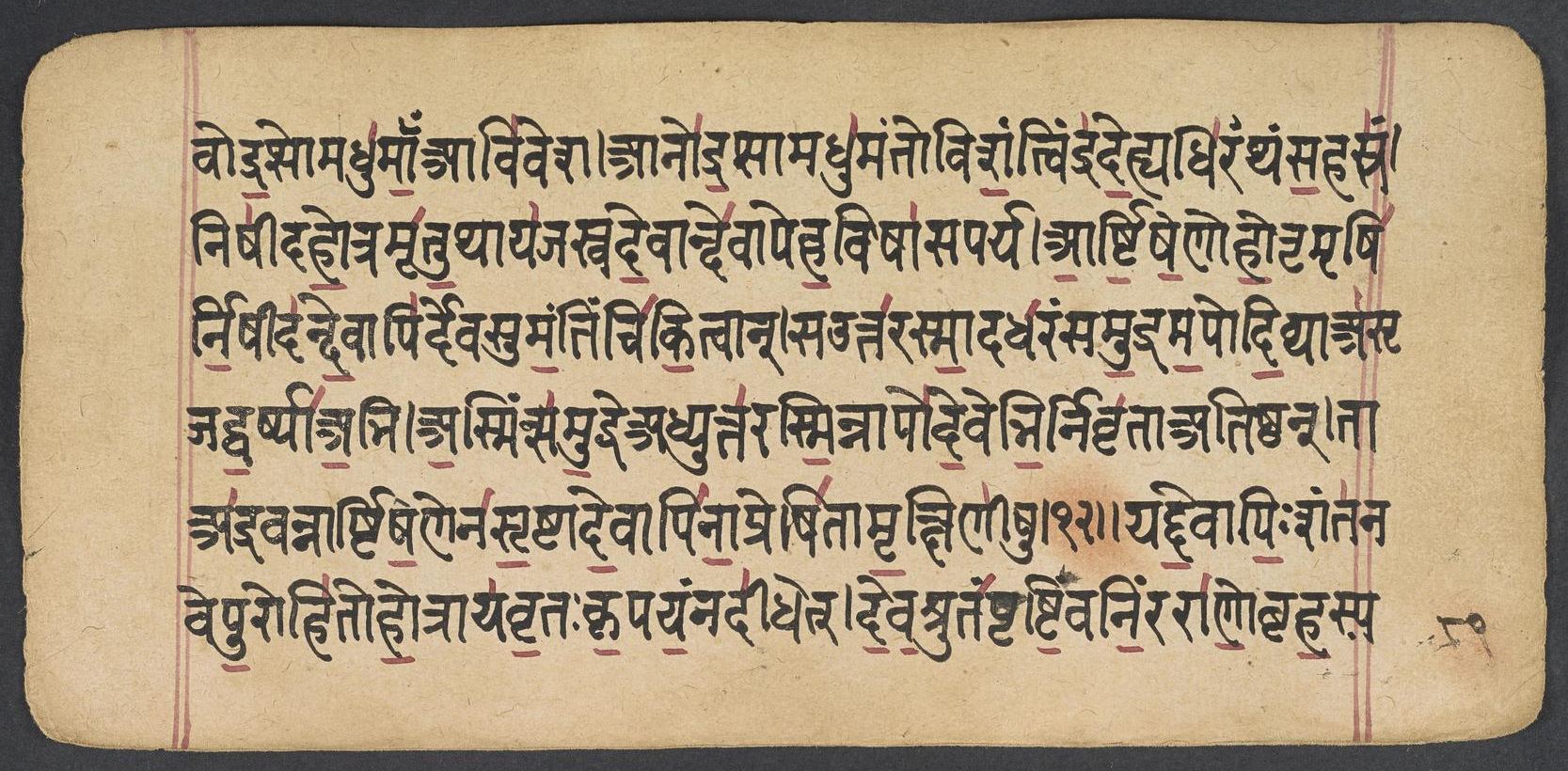
Penn Ms. Coll. 390 Item 48, fol. 80v (OPenn image 80, upper leaf). Checked on the image: the Rigveda text on this page begins in RV 10.98.3 ‹-vanāva divo drapso madhumām̐›. The next page with Rigveda text, fol. 81r, begins in RV 10.98.7 ‹-bṛhaspatir vācam asmā ayacchat›. Verses 10.98.3-6 end on this page; 10.98.3 begins on fol. 80r.
3a̱sme dhe̍hi dyu̱matī̱ṁ vāca̍m ā̱san bṛha̍spate anamī̱vām i̍ṣi̱rām | yayā̍ vṛ̱ṣṭiṁ śaṁta̍nave̱ vanā̍va di̱vo dra̱pso madhu̍mā̱m̐ ā vi̍veśa ||
4ā no̍ dra̱psā madhu̍manto viśa̱ntv indra̍ de̱hy adhi̍rathaṁ sa̱hasra̍m | ni ṣī̍da ho̱tram ṛ̍tu̱thā ya̍jasva de̱vān de̍vāpe ha̱viṣā̍ saparya ||
5ā̱rṣṭi̱ṣe̱ṇo ho̱tram ṛṣi̍r ni̱ṣīda̍n de̱vāpi̍r devasuma̱tiṁ ci̍ki̱tvān | sa utta̍rasmā̱d adha̍raṁ samu̱dram a̱po di̱vyā a̍sṛjad va̱rṣyā̍ a̱bhi ||
6a̱smin sa̍mu̱dre adhy utta̍rasmi̱nn āpo̍ de̱vebhi̱r nivṛ̍tā atiṣṭhan | tā a̍dravann ārṣṭiṣe̱ṇena̍ sṛ̱ṣṭā de̱vāpi̍nā̱ preṣi̍tā mṛ̱kṣiṇī̍ṣu ||
3Within my mouth, Br̥ihaspati, deposit speech lucid, vigorous, and free from weakness, Thereby to win for Ṣantanu the rain-fall. The meath-rich drop from heaven hath passed within it.
4Let the sweet drops descend on us, O Indra: give us enough to lade a thousand wagons. Sit to thy Hotar task; pay worship duly, and serve the Gods, Devâpi, with oblation.
5Knowing the God's good-will, Devâpi, R̥ishi, the son of R̥ishṭisheṇa, sate as Hotar. He hath brought down from heaven's most lofty summit the ocean of the rain, celestial waters.
6Gathered together in that highest ocean, the waters stood by deities obstructed. They hurried down set free by Ârshṭisheṇa, in gaping clefts, urged onward by Devâpi.
Where on the image
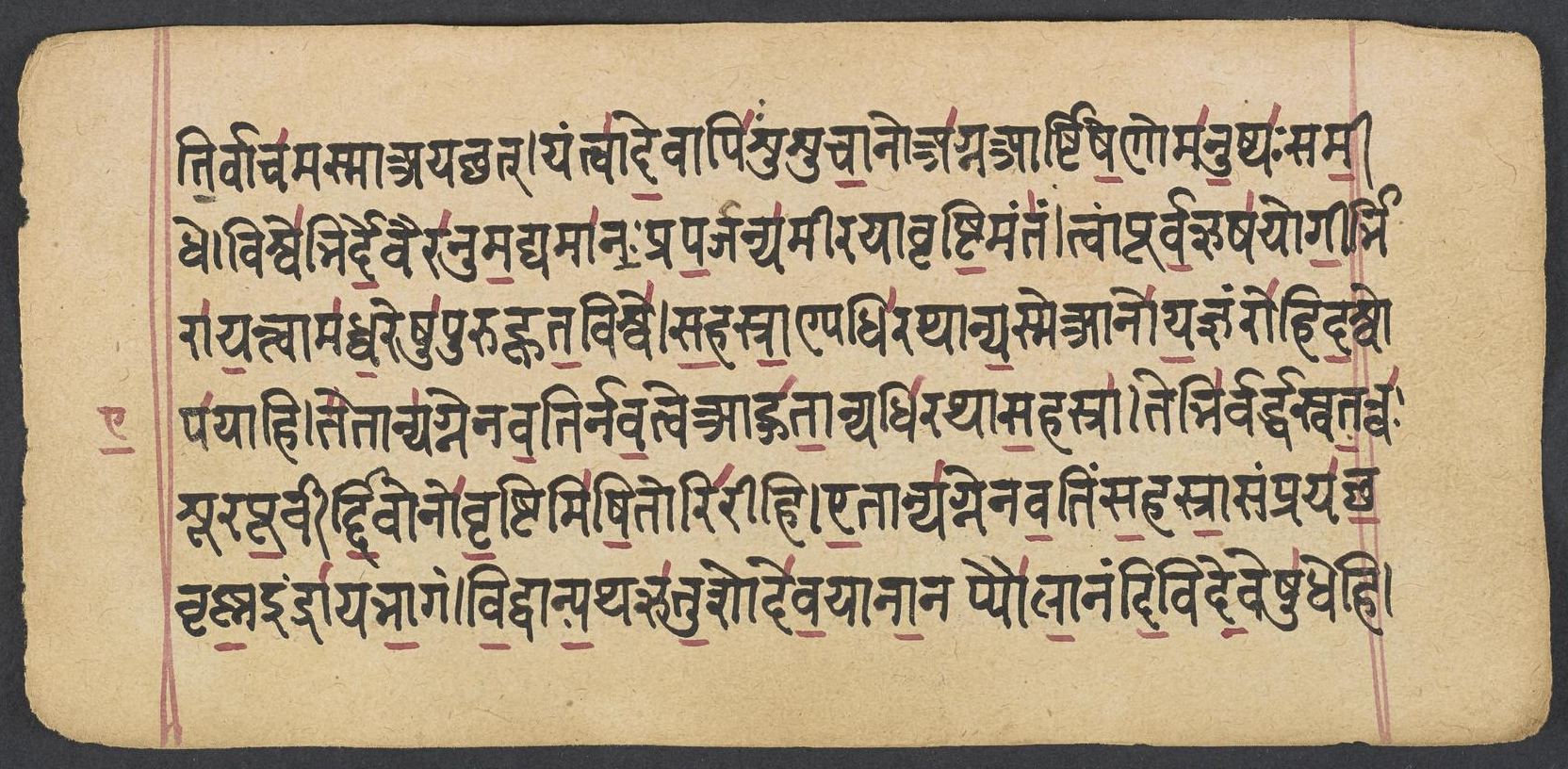
Penn Ms. Coll. 390 Item 48, fol. 81r (OPenn image 80, lower leaf). Checked on the image: the Rigveda text on this page begins in RV 10.98.7 ‹-bṛhaspatir vācam asmā ayacchat›. The next page with Rigveda text, fol. 81v, begins in RV 10.98.12 ‹agne bādhasva vi mṛdho›. Verses 10.98.7-11 end on this page; 10.98.7 begins on fol. 80v.
7yad de̱vāpi̱ḥ śaṁta̍nave pu̱rohi̍to ho̱trāya̍ vṛ̱taḥ kṛ̱paya̱nn adī̍dhet | de̱va̱śruta̍ṁ vṛṣṭi̱vani̱ṁ rarā̍ṇo̱ bṛha̱spati̱r vāca̍m asmā ayacchat ||
8yaṁ tvā̍ de̱vāpi̍ḥ śuśucā̱no a̍gna ārṣṭiṣe̱ṇo ma̍nu̱ṣya̍ḥ samī̱dhe | viśve̍bhir de̱vair a̍numa̱dyamā̍na̱ḥ pra pa̱rjanya̍m īrayā vṛṣṭi̱manta̍m ||
9tvām pūrva̱ ṛṣa̍yo gī̱rbhir ā̍ya̱n tvām a̍dhva̱reṣu̍ puruhūta̱ viśve̍ | sa̱hasrā̱ṇy adhi̍rathāny a̱sme ā no̍ ya̱jñaṁ ro̍hida̱śvopa̍ yāhi ||
10e̱tāny a̍gne nava̱tir nava̱ tve āhu̍tā̱ny adhi̍rathā sa̱hasrā̍ | tebhi̍r vardhasva ta̱nva̍ḥ śūra pū̱rvīr di̱vo no̍ vṛ̱ṣṭim i̍ṣi̱to ri̍rīhi ||
11e̱tāny a̍gne nava̱tiṁ sa̱hasrā̱ sam pra ya̍ccha̱ vṛṣṇa̱ indrā̍ya bhā̱gam | vi̱dvān pa̱tha ṛ̍tu̱śo de̍va̱yānā̱n apy au̍lā̱naṁ di̱vi de̱veṣu̍ dhehi ||
7When as chief priest for Ṣantanu, Devâpi, chosen for Hotar's duty, prayed beseeching, Graciously pleased Br̥ihaspati vouchsafed him a voice that reached the Gods and won the waters.
8O Agni whom Devâpi Arstisena, the mortal man, hath kindled in his glory, Joying in him with all the Gods together, urge on the sender of the rain, Parjanya.
9All ancient R̥ishis with their songs approached thee, even thee, O Much-invoked, at sacrifices. We have provided wagon-loads in thousands: come to the solemn rite, Lord of Red Horses.
10The wagon-loads, the nine-and-ninety thousand, these have been offered up to thee, O Agni. Hero, with these increase thy many bodies, and, stimulated, send us rain from heaven.
11Give thou these ninety thousand loads, O Agni, to Indra, to the Bull, to be his portion. Knowing the paths which Deities duly travel, set mid the Gods in heaven Aulâna also.
Where on the image
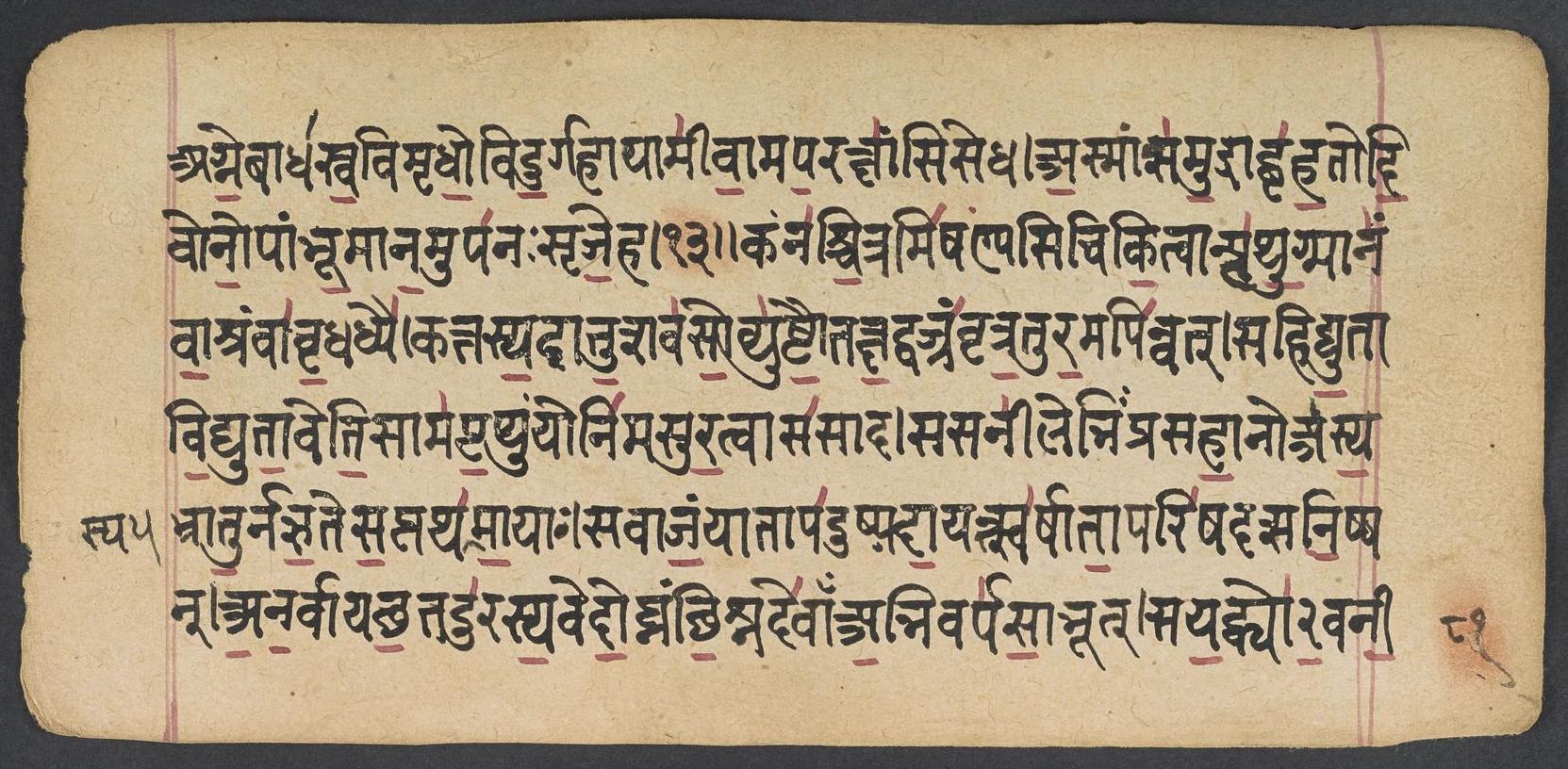
Penn Ms. Coll. 390 Item 48, fol. 81v (OPenn image 81, upper leaf). Checked on the image: the Rigveda text on this page begins in RV 10.98.12 ‹agne bādhasva vi mṛdho›. The next page with Rigveda text, fol. 82r, begins in RV 10.99.4 ‹-goṣv arvā juhoti pradhanyāsu›. Verse 10.98.12 ends on this page.
12agne̱ bādha̍sva̱ vi mṛdho̱ vi du̱rgahāpāmī̍vā̱m apa̱ rakṣā̍ṁsi sedha | a̱smāt sa̍mu̱drād bṛ̍ha̱to di̱vo no̱ 'pām bhū̱māna̱m upa̍ naḥ sṛje̱ha ||
12O Agni, drive afar our foes, our troubles chase malady away and wicked demons. From this air-ocean, from the lofty heavens, send down on us a mighty flood of waters.
Notes
- Sanskrit: Aufrecht's edition (1877) with the Vedic accents, as entered by van Nooten and Holland (GRETIL).
- English: Ralph T. H. Griffith, The Hymns of the Rigveda (1889-1892; 2nd ed. 1896-1897), from the VedaWeb digital text; OCR slips in that text were corrected against the printed 2nd edition (data/sources/rigveda/griffith_errata.json).
Cite
Sources
- Source: Penn Ms. Coll. 390 Item 48 (1711 CE (colophon: Saṃvat 1768)), OPenn, Public Domain Mark + Aufrecht's accented text (GRETIL) + Griffith's English (VedaWeb) (holding institution)
- Critical edition: Aufrecht (1877), accented e-text via GRETIL
← previous · → next · v cycle view · l back to library