Rigveda 2.13: To Indra
Introduction
Rigveda 2.13 is a hymn of 13 verses addressed to Indra. It stands in book (maṇḍala) 2, the family book of Gṛtsamada. The Rigveda is the oldest collection of Sanskrit hymns, composed in the second half of the second millennium BCE and handed down orally for many centuries before it was written down.
The manuscript shown is Penn Ms. Coll. 390 Item 41 (University of Pennsylvania), an undated paper manuscript of the padapāṭha (the word-by-word recitation text, in which every word is written separately and compounds are split) of the whole Ṛgveda in Devanāgarī, 884 leaves in fascicles, 7-9 lines to the page, accents in red; this hymn stands on fol. 159r-160r. Each section below gives the verses that end on one page; the page boundaries were read on the images (the opening words of every page), not counted out. Where the manuscript is a padapāṭha (the word-by-word recitation text), the section shows Aufrecht's continuous (saṃhitā) text first and, as the edition text, the padapāṭha of the same verses, which is the form written on the page.
How was this verified? (Provenance)
Where on the image
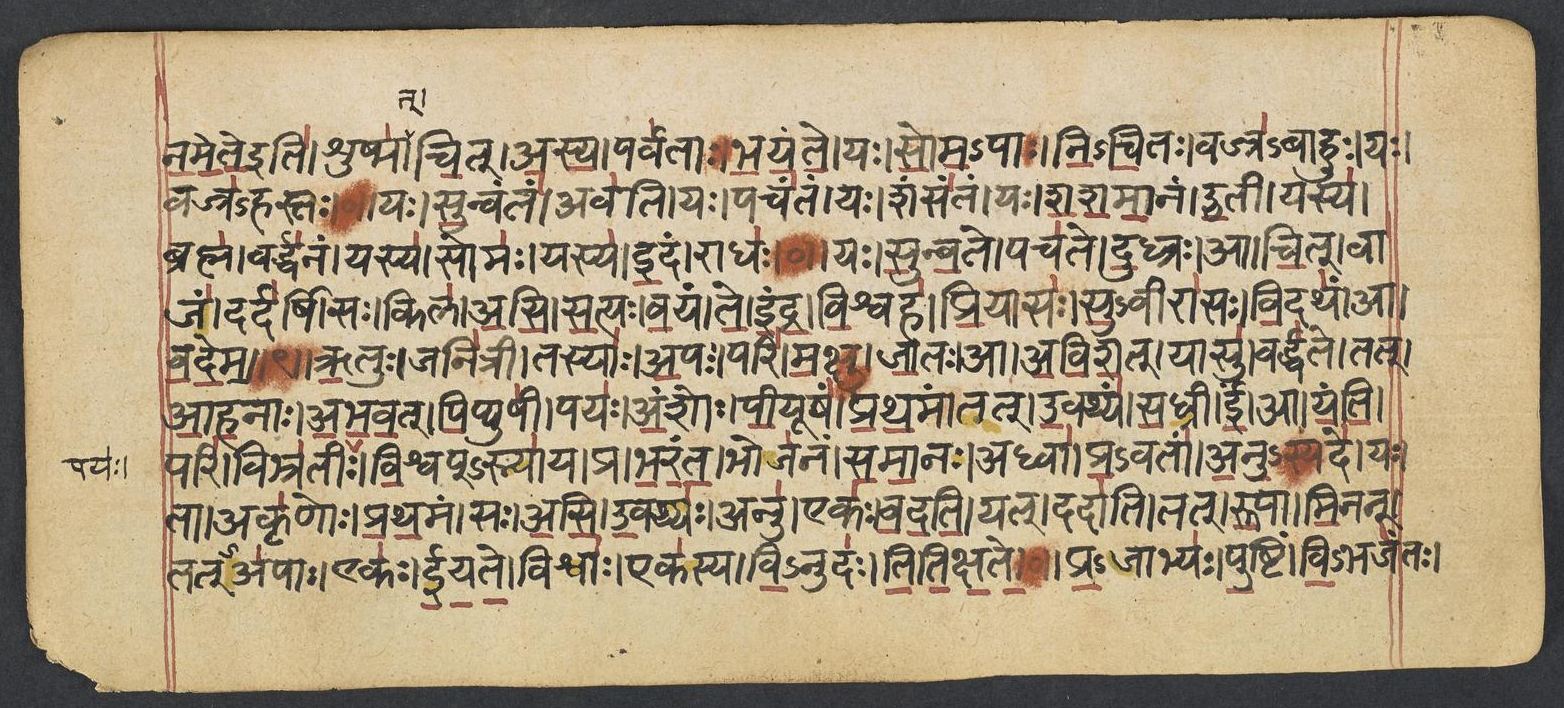
Penn Ms. Coll. 390 Item 41, fol. 159r (numbered 5r by the scribe) (OPenn image 160, lower leaf). Checked on the image: the Rigveda text on this page begins in RV 2.12.13 ‹nameteiti śuṣmāt cit asya›. The next page with Rigveda text, fol. 159v (numbered 5v by the scribe), begins in RV 2.13.4 ‹āsate rayim-iva pṛṣṭham pra-bhavantam›. Verses 2.13.1-3 end on this page.
1ṛ̱tur jani̍trī̱ tasyā̍ a̱pas pari̍ ma̱kṣū jā̱ta āvi̍śa̱d yāsu̱ vardha̍te | tad ā̍ha̱nā a̍bhavat pi̱pyuṣī̱ payo̱ 'ṁśoḥ pī̱yūṣa̍m pratha̱maṁ tad u̱kthya̍m ||
2sa̱dhrīm ā ya̍nti̱ pari̱ bibhra̍tī̱ḥ payo̍ vi̱śvapsnyā̍ya̱ pra bha̍ranta̱ bhoja̍nam | sa̱mā̱no adhvā̍ pra̱vatā̍m anu̱ṣyade̱ yas tākṛ̍ṇoḥ pratha̱maṁ sāsy u̱kthya̍ḥ ||
3anv eko̍ vadati̱ yad dadā̍ti̱ tad rū̱pā mi̱nan tada̍pā̱ eka̍ īyate | viśvā̱ eka̍sya vi̱nuda̍s titikṣate̱ yas tākṛ̍ṇoḥ pratha̱maṁ sāsy u̱kthya̍ḥ ||
Compare: Padapāṭha (word-by-word text written in the manuscript; Sansknet e-text via GRETIL)
1ṛtuḥ | janitrī | tasyāḥ | apaḥ | pari | makṣu | jātaḥ | ā | aviśat | yāsu | vardhate | tat | āhanāḥ | abhavat | pipyuṣī | payaḥ | aṃśoḥ | pīyūṣam | prathamam | tat | ukthyam
2sadhrī | īm | ā | yanti | pari | bibhratīḥ | payaḥ | viśva-psnyāya | pra | bharanta | bhojanam | samānaḥ | adhvā | pra-vatām | anu-syade | yaḥ | tā | akṛṇoḥ | prathamam | saḥ | asi | ukthyaḥ
3anu | ekaḥ | vadati | yat | dadāti | tat | rūpā | minan | tat-apāḥ | ekaḥ | īyate | viśvāḥ | ekasya | vi-nudaḥ | titikṣate | yaḥ | tā | akṛṇoḥ | prathamam | saḥ | asi | ukthyaḥ
1THE Season was the parent, and when born therefrom it entered rapidly the floods wherein it grows. Thence was it full of sap, streaming with milky juice: the milk of the plant's stalk is chief and meet for lauds.
2They come trooping together bearing milk to him, and bring him sustenance who gives support to all. The way is common for the downward streams to flow. Thou who didst these things first art worthy of our lauds.
3One priest announces what the institutor gives: one, altering the forms, zealously plies his task, The third corrects the imperfections left by each. Thou who didst these things first art worthy of our lauds.
Where on the image
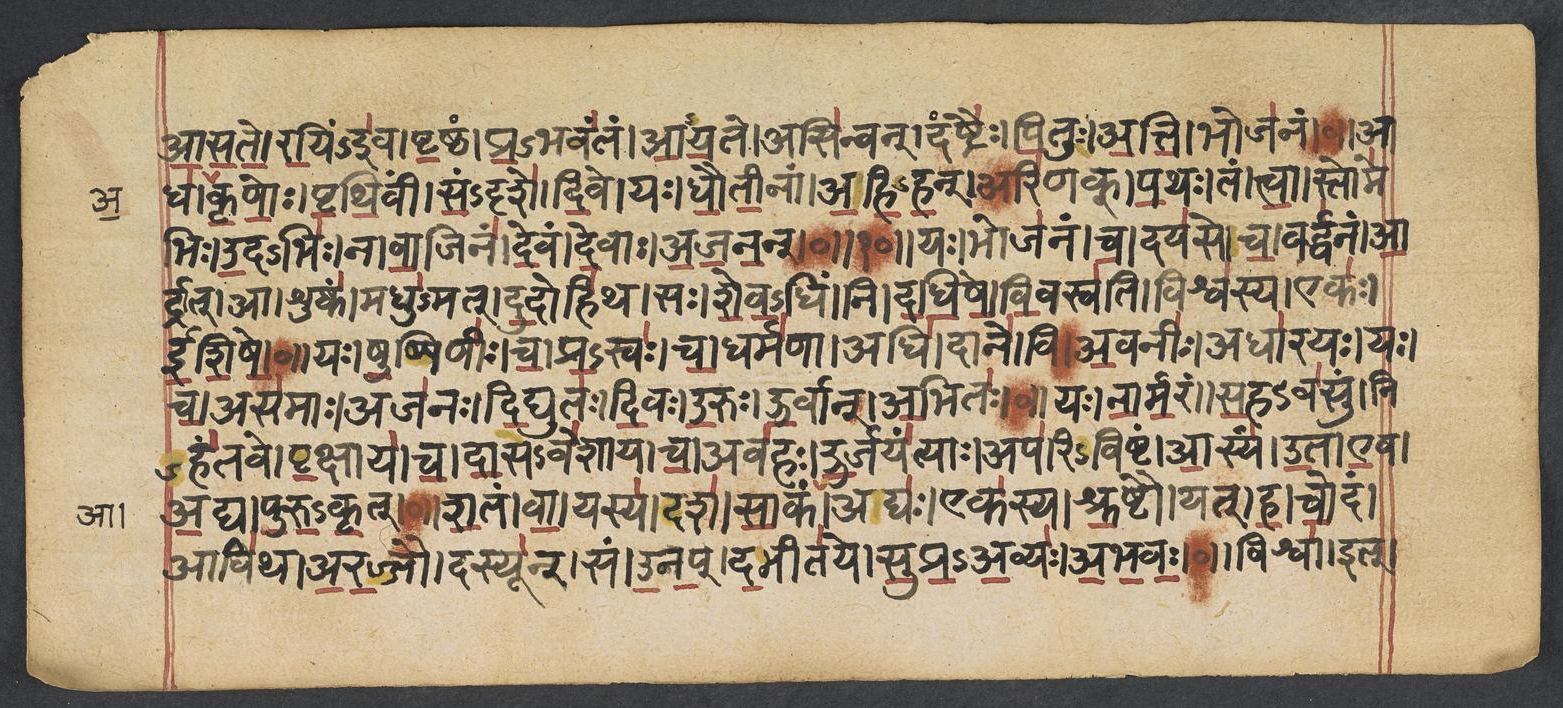
Penn Ms. Coll. 390 Item 41, fol. 159v (numbered 5v by the scribe) (OPenn image 161, upper leaf). Checked on the image: the Rigveda text on this page begins in RV 2.13.4 ‹āsate rayim-iva pṛṣṭham pra-bhavantam›. The next page with Rigveda text, fol. 160r (numbered 6r by the scribe), begins in RV 2.13.10 ‹anu rodhanāḥ asya paiṃsyam›. Verses 2.13.4-9 end on this page; 2.13.4 begins on fol. 159r (numbered 5r by the scribe).
4pra̱jābhya̍ḥ pu̱ṣṭiṁ vi̱bhaja̍nta āsate ra̱yim i̍va pṛ̱ṣṭham pra̱bhava̍ntam āya̱te | asi̍nva̱n daṁṣṭrai̍ḥ pi̱tur a̍tti̱ bhoja̍na̱ṁ yas tākṛ̍ṇoḥ pratha̱maṁ sāsy u̱kthya̍ḥ ||
5adhā̍kṛṇoḥ pṛthi̱vīṁ sa̱ṁdṛśe̍ di̱ve yo dhau̍tī̱nām a̍hiha̱nn āri̍ṇak pa̱thaḥ | taṁ tvā̱ stome̍bhir u̱dabhi̱r na vā̱jina̍ṁ de̱vaṁ de̱vā a̍jana̱n sāsy u̱kthya̍ḥ ||
6yo bhoja̍naṁ ca̱ daya̍se ca̱ vardha̍nam ā̱rdrād ā śuṣka̱m madhu̍mad du̱dohi̍tha | sa śe̍va̱dhiṁ ni da̍dhiṣe vi̱vasva̍ti̱ viśva̱syaika̍ īśiṣe̱ sāsy u̱kthya̍ḥ ||
7yaḥ pu̱ṣpiṇī̍ś ca pra̱sva̍ś ca̱ dharma̱ṇādhi̱ dāne̱ vy a1̱̍vanī̱r adhā̍rayaḥ | yaś cāsa̍mā̱ aja̍no di̱dyuto̍ di̱va u̱rur ū̱rvām̐ a̱bhita̱ḥ sāsy u̱kthya̍ḥ ||
8yo nā̍rma̱raṁ sa̱hava̍su̱ṁ niha̍ntave pṛ̱kṣāya̍ ca dā̱save̍śāya̱ cāva̍haḥ | ū̱rjaya̍ntyā̱ apa̍riviṣṭam ā̱sya̍m u̱taivādya pu̍rukṛ̱t sāsy u̱kthya̍ḥ ||
9śa̱taṁ vā̱ yasya̱ daśa̍ sā̱kam ādya̱ eka̍sya śru̱ṣṭau yad dha̍ co̱dam āvi̍tha | a̱ra̱jjau dasyū̱n sam u̍nab da̱bhīta̍ye suprā̱vyo̍ abhava̱ḥ sāsy u̱kthya̍ḥ ||
Compare: Padapāṭha (word-by-word text written in the manuscript; Sansknet e-text via GRETIL)
4pra-jābhyaḥ | puṣṭim | vi-bhajantaḥ | āsate | rayim-iva | pṛṣṭham | pra-bhavantam | āyate | asinvan | daṃṣṭraiḥ | pituḥ | atti | bhojanam | yaḥ | tā | akṛṇoḥ | prathamam | saḥ | asi | ukthyaḥ
5adha | akṛṇoḥ | pṛthivīm | sam-dṛśe | dive | yaḥ | dhautīnām | ahi-han | ariṇak | pathaḥ | tam | tvā | stomebhiḥ | uda-bhiḥ | na | vājinam | devam | devāḥ | ajanan | saḥ | asi | ukthyaḥ
6yaḥ | bhojanam | ca | dayase | ca | vardhanam | ārdrāt | ā | śuṣkam | madhu-mat | dudohitha | saḥ | śevadhim | ni | dadhiṣe | vivasvati | viśvasya | ekaḥ | īśiṣe | saḥ | asi | ukthyaḥ
7yaḥ | puṣpiṇīḥ | ca | pra-svaḥ | ca | dharmaṇā | adhi | dāne | vi | avanīḥ | adhārayaḥ | yaḥ | ca | asamāḥ | ajanaḥ | didyutaḥ | divaḥ | uruḥ | ūrvān | abhitaḥ | saḥ | asi | ukthyaḥ
8yaḥ | nārmaram | saha-vasum | ni-hantave | pṛkṣāya | ca | dāsa-veśāya | ca | avahaḥ | ūrjayantyāḥ | apari-viṣṭam | āsyam | uta | eva | adya | puru-kṛt | saḥ | asi | ukthyaḥ
9śatam | vā | yasya | daśa | sākam | ā | adyaḥ | ekasya | śruṣṭau | yat | ha | codam | āv itha | arajjau | dasyūn | sam | unap | dabhītaye | supra-avyaḥ | abhavaḥ | saḥ | asi | ukthyaḥ
4Dealing out food unto their people there they sit, like wealth to him who comes, more than the back can bear. Greedily with his teeth he eats the master's food. Thou who didst these things first art worthy of our lauds.
5Thou hast created earth to look upon the sky: thou, slaying Ahi, settest free the river's paths. Thee, such, a God, the Gods have quickened with their lauds, even as a steed with waters: meet for praise art thou.
6Thou givest increase, thou dealest to us our food: thou milkest from the moist the dry, the rich in sweets. Thou by the worshipper layest thy precious store: thou art sole Lord of all. Meet for our praise art thou.
7Thou who hast spread abroad the streams by stablished law, and in the field the plants that blossom and bear seed; Thou who hast made the matchless lightnings of the sky,– vast, compassing vast realms, meet for our praise art thou.
8Who broughtest Nârmara with all his wealth, for sake of food, to slay him that the fiends might be destroyed, Broughtest the face unclouded of the strengthening one, performing much even now, worthy art thou of praise.
9Thou boundest up the Dâsa's hundred friends and ten, when, at one's hearing, thou belpest thy worshipper. Thou for Dabhîti boundest Dasyus not with cords; Thou wast a mighty help. Worthy of lauds art thou.
Where on the image
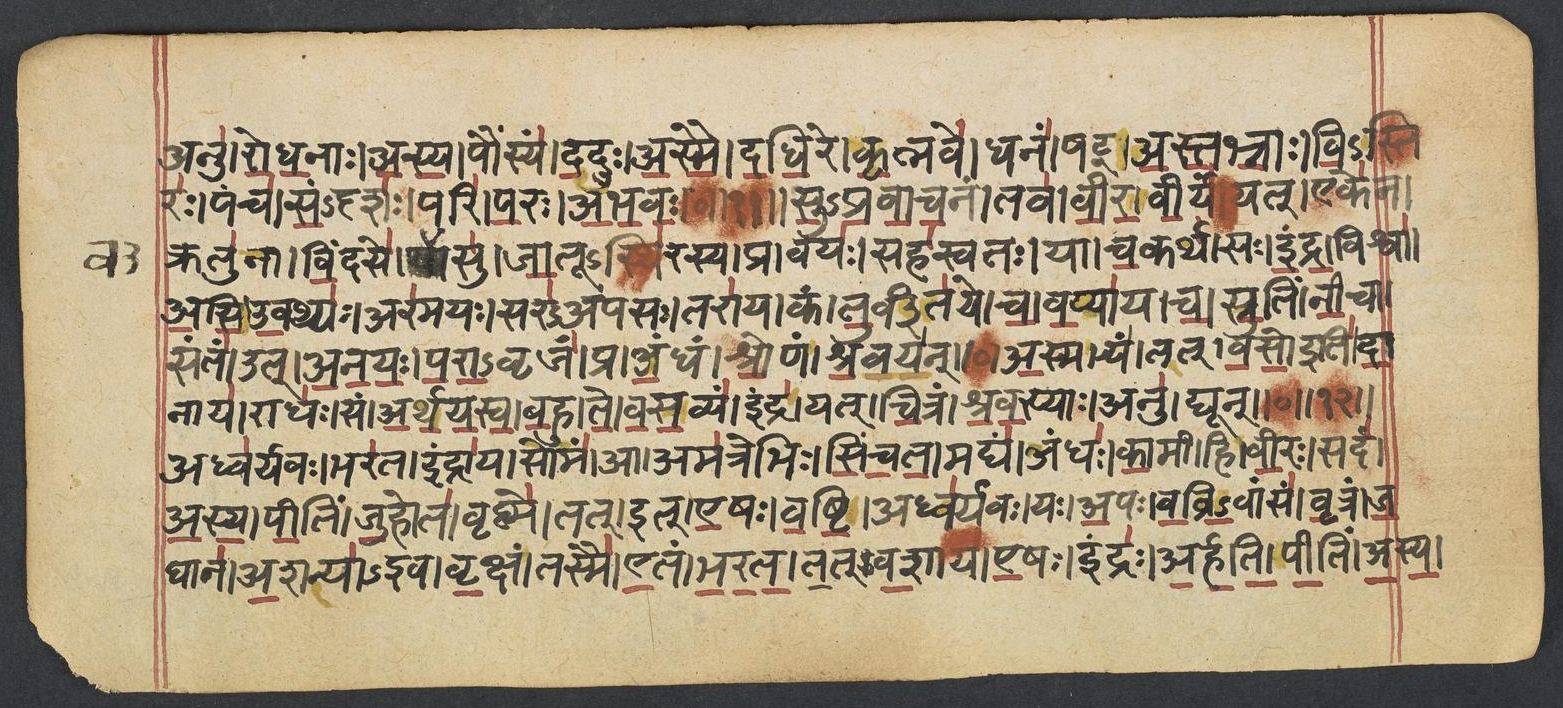
Penn Ms. Coll. 390 Item 41, fol. 160r (numbered 6r by the scribe) (OPenn image 161, lower leaf). Checked on the image: the Rigveda text on this page begins in RV 2.13.10 ‹anu rodhanāḥ asya paiṃsyam›. The next page with Rigveda text, fol. 160v (numbered 6v by the scribe), begins in RV 2.14.3 ‹adhvaryavaḥ yaḥ dṛbhīkam jaghāna›. Verses 2.13.10-13 end on this page; 2.13.10 begins on fol. 159v (numbered 5v by the scribe).
10viśved anu̍ rodha̱nā a̍sya̱ pauṁsya̍ṁ da̱dur a̍smai dadhi̱re kṛ̱tnave̱ dhana̍m | ṣaḻ a̍stabhnā vi̱ṣṭira̱ḥ pañca̍ sa̱ṁdṛśa̱ḥ pari̍ pa̱ro a̍bhava̱ḥ sāsy u̱kthya̍ḥ ||
11su̱pra̱vā̱ca̱naṁ tava̍ vīra vī̱rya1̱̍ṁ yad eke̍na̱ kratu̍nā vi̱ndase̱ vasu̍ | jā̱tūṣṭhi̍rasya̱ pra vaya̱ḥ saha̍svato̱ yā ca̱kartha̱ sendra̱ viśvā̍sy u̱kthya̍ḥ ||
12ara̍maya̱ḥ sara̍pasa̱s tarā̍ya̱ kaṁ tu̱rvīta̍ye ca va̱yyā̍ya ca sru̱tim | nī̱cā santa̱m ud a̍nayaḥ parā̱vṛja̱m prāndhaṁ śro̱ṇaṁ śra̱vaya̱n sāsy u̱kthya̍ḥ ||
13a̱smabhya̱ṁ tad va̍so dā̱nāya̱ rādha̱ḥ sam a̍rthayasva ba̱hu te̍ vasa̱vya̍m | indra̱ yac ci̱traṁ śra̍va̱syā anu̱ dyūn bṛ̱had va̍dema vi̱dathe̍ su̱vīrā̍ḥ ||
Compare: Padapāṭha (word-by-word text written in the manuscript; Sansknet e-text via GRETIL)
10viśvā | it | anu | rodhanāḥ | asya | paiṃsyam | daduḥ | asmai | dadhire | kṛtnave | dhanam | ṣaṭ | astabhnāḥ | vi-stiraḥ | pañca | sam-dṛśaḥ | pari | paraḥ | abhavaḥ | saḥ | asi | ukthyaḥ
11su-pravācanam | tava | vīra | vīryam | yat | ekena | kratunā | vindase | vasu | jātū-sthirasya | pra | vayaḥ | sahasvataḥ | yā | cakartha | saḥ | indra | viśvā | asi | ukthyaḥ
12aramayaḥ | sara-apasaḥ | tarāya | kam | turvītaye | ca | vayyāya | ca | srutim | nīcā | santam | ut | anayaḥ | parāvṛjam | pra | andham | śroṇam | śravayan | saḥ | asi | ukthyaḥ
13asmabhyam | tat | vaso iti | dānāya | rādhaḥ | sam | arthayasva | bahu | te | vasavyam | indra | yat | citram | śravasyāḥ | anu | dyūn | bṛhat | vadema | vidathe | su-vīrāḥ
10All banks of rivers yielded to his manly might; to him they gave, to him, the Strong, gave up their wealth. The six directions hast thou fixed, a five-fold view: thy victories reached afar. Worthy of lauds art thou.
11Meet for high praise, O Hero, is thy power, that with thy single wisdom thou obtainest wealth, The life-support of conquering Jatusthira. Indra, for all thy deeds, worthy of lauds art thou.
12Thou for Turvîti heldest still the flowing floods, the river-stream for Vayya easily to pass Didst raise the outcast from the depths, and gavest fame unto the halt and blind. Worthy of lauds art thou.
13Prepare thyself to grant us that great bounty, O Vasu, for abundant is thy treasure. Snatch up the wonderful, O Indra, daily. Loud may we speak, with heroes, in assembly.
Notes
- Sanskrit: Aufrecht's edition (1877) with the Vedic accents, as entered by van Nooten and Holland (GRETIL).
- English: Ralph T. H. Griffith, The Hymns of the Rigveda (1889-1892; 2nd ed. 1896-1897), from the VedaWeb digital text; OCR slips in that text were corrected against the printed 2nd edition (data/sources/rigveda/griffith_errata.json).
- Padapāṭha (edition text): Sansknet e-text via GRETIL (CC BY-NC-SA 4.0).
Cite
Sources
- Source: Penn Ms. Coll. 390 Item 41 (undated (catalogued with Penn's 18th-19th c. Vedic manuscripts)), OPenn, Public Domain Mark + Aufrecht's accented text (GRETIL) + Griffith's English (VedaWeb) (holding institution)
- Critical edition: Aufrecht (1877), accented e-text via GRETIL
← previous · → next · v cycle view · l back to library