Rigveda 2.12: To Indra
Introduction
Rigveda 2.12 is a hymn of 15 verses addressed to Indra. It stands in book (maṇḍala) 2, the family book of Gṛtsamada. The Rigveda is the oldest collection of Sanskrit hymns, composed in the second half of the second millennium BCE and handed down orally for many centuries before it was written down.
The manuscript shown is Penn Ms. Coll. 390 Item 41 (University of Pennsylvania), an undated paper manuscript of the padapāṭha (the word-by-word recitation text, in which every word is written separately and compounds are split) of the whole Ṛgveda in Devanāgarī, 884 leaves in fascicles, 7-9 lines to the page, accents in red; this hymn stands on fol. 157v-159r. Each section below gives the verses that end on one page; the page boundaries were read on the images (the opening words of every page), not counted out. Where the manuscript is a padapāṭha (the word-by-word recitation text), the section shows Aufrecht's continuous (saṃhitā) text first and, as the edition text, the padapāṭha of the same verses, which is the form written on the page.
How was this verified? (Provenance)
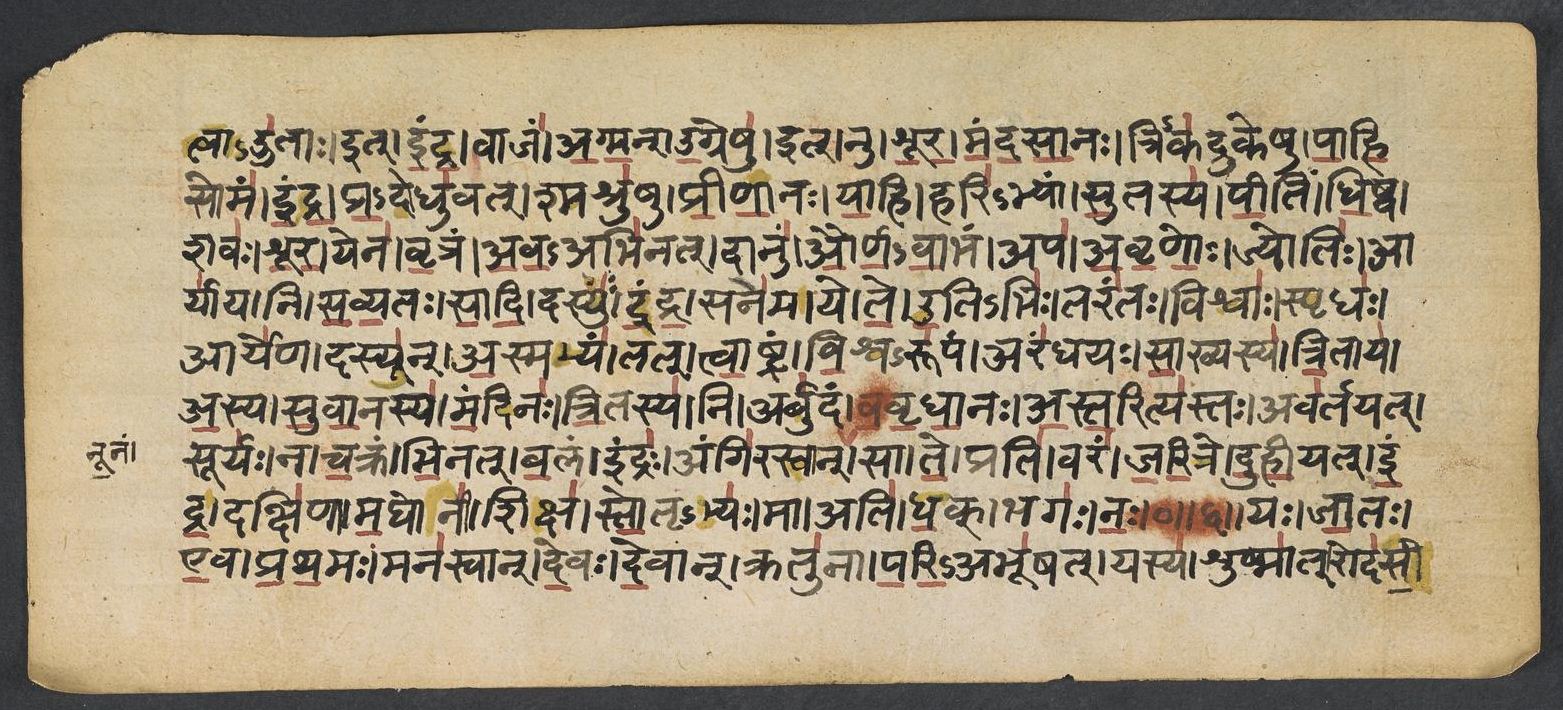
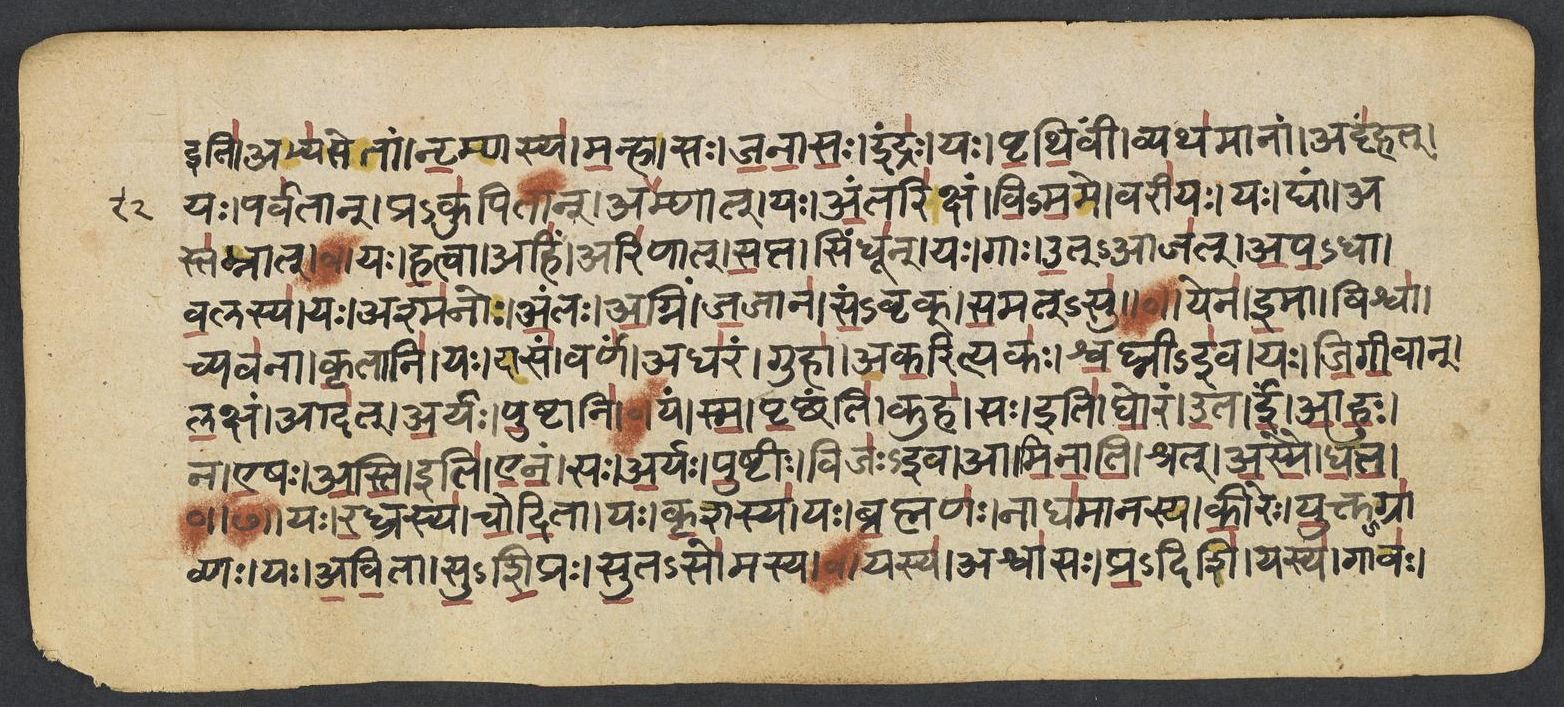
Where on the image
Penn Ms. Coll. 390 Item 41, fol. 158r (numbered 4r by the scribe) (OPenn image 159, lower leaf). Checked on the image: the Rigveda text on this page begins in RV 2.12.1 ‹iti abhyasetām nṛmṇasya mahnā›. The next page with Rigveda text, fol. 158v (numbered 4v by the scribe), begins in RV 2.12.7 ‹yasya grāmāḥ yasya viśve›. Verses 2.12.1-6 end on this page; 2.12.1 begins on fol. 157v (numbered 3v by the scribe).
1yo jā̱ta e̱va pra̍tha̱mo mana̍svān de̱vo de̱vān kratu̍nā pa̱ryabhū̍ṣat | yasya̱ śuṣmā̱d roda̍sī̱ abhya̍setāṁ nṛ̱mṇasya̍ ma̱hnā sa ja̍nāsa̱ indra̍ḥ ||
2yaḥ pṛ̍thi̱vīṁ vyatha̍mānā̱m adṛ̍ṁha̱d yaḥ parva̍tā̱n praku̍pitā̱m̐ ara̍mṇāt | yo a̱ntari̍kṣaṁ vima̱me varī̍yo̱ yo dyām asta̍bhnā̱t sa ja̍nāsa̱ indra̍ḥ ||
3yo ha̱tvāhi̱m ari̍ṇāt sa̱pta sindhū̱n yo gā u̱dāja̍d apa̱dhā va̱lasya̍ | yo aśma̍nor a̱ntar a̱gniṁ ja̱jāna̍ sa̱ṁvṛk sa̱matsu̱ sa ja̍nāsa̱ indra̍ḥ ||
4yene̱mā viśvā̱ cyava̍nā kṛ̱tāni̱ yo dāsa̱ṁ varṇa̱m adha̍ra̱ṁ guhāka̍ḥ | śva̱ghnīva̱ yo ji̍gī̱vām̐l la̱kṣam āda̍d a̱ryaḥ pu̱ṣṭāni̱ sa ja̍nāsa̱ indra̍ḥ ||
5yaṁ smā̍ pṛ̱cchanti̱ kuha̱ seti̍ gho̱ram u̱tem ā̍hu̱r naiṣo a̱stīty e̍nam | so a̱ryaḥ pu̱ṣṭīr vija̍ i̱vā mi̍nāti̱ śrad a̍smai dhatta̱ sa ja̍nāsa̱ indra̍ḥ ||
6yo ra̱dhrasya̍ codi̱tā yaḥ kṛ̱śasya̱ yo bra̱hmaṇo̱ nādha̍mānasya kī̱reḥ | yu̱ktagrā̍vṇo̱ yo̍ 'vi̱tā su̍śi̱praḥ su̱taso̍masya̱ sa ja̍nāsa̱ indra̍ḥ ||
Compare: Padapāṭha (word-by-word text written in the manuscript; Sansknet e-text via GRETIL)
1yaḥ | jātaḥ | eva | prathamaḥ | manasvān | devaḥ | devān | kratunā | pari-abhūṣat | yasya | śuṣmāt | rodasī iti | abhyasetām | nṛmṇasya | mahnā | saḥ | janāsaḥ | indraḥ
2yaḥ | pṛthivīm | vyathamānām | adṛṃhat | yaḥ | parvatān | pra-kupitān | aramṇāt | yaḥ | antarikṣam | vi-mame | varīyaḥ | yaḥ | dyām | astabhnāt | saḥ | janāsaḥ | indraḥ
3yaḥ | hatvā | ahim | ariṇāt | sapta | sindhūn | yaḥ | gāḥ | ut-ājat | apa-dhā | valasya | yaḥ | aśmanoḥ | antaḥ | agnim | jajāna | sam-vṛk | samat-su | saḥ | janāsaḥ | indraḥ
4yena | imā | viśvā | cyavanā | kṛtāni | yaḥ | dāsam | varṇam | adharam | guhā | akar ityakaḥ | śvaghnī-iva | yaḥ | jigīvān | lakṣam | ādat | aryaḥ | puṣṭāni | saḥ | janāsaḥ | indraḥ
5yam | sma | pṛcchanti | kuha | saḥ | iti | ghoram | uta | īm | āhuḥ | na | eṣaḥ | asti | iti | enam | saḥ | aryaḥ | puṣṭīḥ | vijaḥ-iva | ā | mināti | śrat | asmai | dhatta | saḥ | janāsaḥ | indraḥ
6yaḥ | radhrasya | coditā | yaḥ | kṛśasya | yaḥ | brahmaṇaḥ | nādhamānasya | kīreḥ | yukta-grāvṇaḥ | yaḥ | avitā | su-śipraḥ | suta-somasya | saḥ | janāsaḥ | indraḥ
1HE who, just born, chief God of lofty spirit by power and might became the Gods' protector, Before whose breath through greatness of his valour the two worlds trembled, He, O men, is Indra.
2He who fixed fast and firm the earth that staggered, and set at rest the agitated mountains, Who measured out the air's wide middle region and gave the heaven support, He, men, is Indra.
3Who slew the Dragon, freed the Seven Rivers, and drove the kine forth from the cave of Vala, Begat the fire between two stones, the spoiler in warriors' battle, He, O men, is Indra.
4By whom this universe was made to tremble, who chased away the humbled brood of demons, Who, like a gambler gathering his winnings seized the foe's riches, He, O men, is Indra.
5Of whom, the Terrible, they ask, Where is He? or verily they say of him, He is not. He sweeps away, like birds, the foe's possessions. Have faith in him, for He, O men, is Indra.
6Stirrer to action of the poor and lowly, of priest, of suppliant who sings his praises; Who, fair-faced, favours him who presses Soma with stones made ready, He, O men, is Indra.
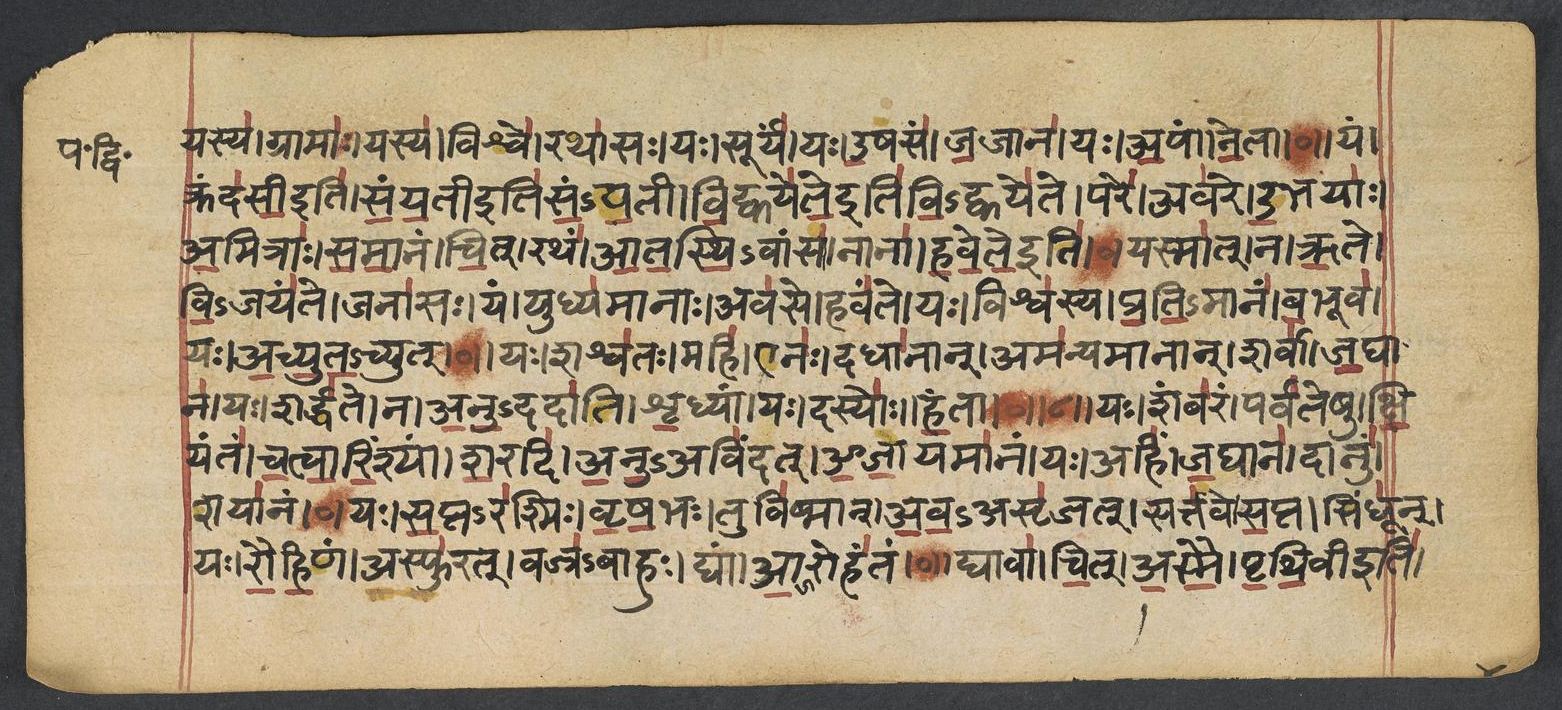
Where on the image
Penn Ms. Coll. 390 Item 41, fol. 158v (numbered 4v by the scribe) (OPenn image 160, upper leaf). Checked on the image: the Rigveda text on this page begins in RV 2.12.7 ‹yasya grāmāḥ yasya viśve›. The next page with Rigveda text, fol. 159r (numbered 5r by the scribe), begins in RV 2.12.13 ‹nameteiti śuṣmāt cit asya›. Verses 2.12.7-12 end on this page; 2.12.7 begins on fol. 158r (numbered 4r by the scribe).
7yasyāśvā̍saḥ pra̱diśi̱ yasya̱ gāvo̱ yasya̱ grāmā̱ yasya̱ viśve̱ rathā̍saḥ | yaḥ sūrya̱ṁ ya u̱ṣasa̍ṁ ja̱jāna̱ yo a̱pāṁ ne̱tā sa ja̍nāsa̱ indra̍ḥ ||
8yaṁ kranda̍sī saṁya̱tī vi̱hvaye̍te̱ pare 'va̍ra u̱bhayā̍ a̱mitrā̍ḥ | sa̱mā̱naṁ ci̱d ratha̍m ātasthi̱vāṁsā̱ nānā̍ havete̱ sa ja̍nāsa̱ indra̍ḥ ||
9yasmā̱n na ṛ̱te vi̱jaya̍nte̱ janā̍so̱ yaṁ yudhya̍mānā̱ ava̍se̱ hava̍nte | yo viśva̍sya prati̱māna̍m ba̱bhūva̱ yo a̍cyuta̱cyut sa ja̍nāsa̱ indra̍ḥ ||
10yaḥ śaśva̍to̱ mahy eno̱ dadhā̍nā̱n ama̍nyamānā̱ñ charvā̍ ja̱ghāna̍ | yaḥ śardha̍te̱ nānu̱dadā̍ti śṛ̱dhyāṁ yo dasyo̍r ha̱ntā sa ja̍nāsa̱ indra̍ḥ ||
11yaḥ śamba̍ra̱m parva̍teṣu kṣi̱yanta̍ṁ catvāri̱ṁśyāṁ śa̱rady a̱nvavi̍ndat | o̱jā̱yamā̍na̱ṁ yo ahi̍ṁ ja̱ghāna̱ dānu̱ṁ śayā̍na̱ṁ sa ja̍nāsa̱ indra̍ḥ ||
12yaḥ sa̱ptara̍śmir vṛṣa̱bhas tuvi̍ṣmān a̱vāsṛ̍ja̱t sarta̍ve sa̱pta sindhū̍n | yo rau̍hi̱ṇam asphu̍ra̱d vajra̍bāhu̱r dyām ā̱roha̍nta̱ṁ sa ja̍nāsa̱ indra̍ḥ ||
Compare: Padapāṭha (word-by-word text written in the manuscript; Sansknet e-text via GRETIL)
7yasya | aśvāsaḥ | pra-diśi | yasya | gāvaḥ | yasya | grāmāḥ | yasya | viśve | rathāsaḥ | yaḥ | sūryam | yaḥ | uṣasam | jajāna | yaḥ | apām | netā | saḥ | janāsaḥ | indraḥ
8yam | krandasī iti | saṃyatī itisam-yatī | vihvayeteitivi-hvayete | pare | avare | ubhayāḥ | amitrāḥ | samānam | cit | ratham | ātasthi-vāṃsā | nānā | haveteiti | saḥ | janāsaḥ | indraḥ
9yasmāt | na | ṛte | vi-jayante | janāsaḥ | yam | yudhyamānāḥ | avase | havante | yaḥ | viśvasya | prati-mānam | babhūva | yaḥ | acyuta-cyut | saḥ | janāsaḥ | indraḥ
10yaḥ | śaśvataḥ | mahi | enaḥ | dadhānān | amanyamānān | śarvā | jaghāna | yaḥ | śardhate | na | anu-dadāti | śṛdhyām | yaḥ | dasyoḥ | hantā | saḥ | janāsaḥ | indraḥ
11yaḥ | śambaram | parvateṣu | kṣiyantam | catvāriṃśyām | śaradi | anu-avindat | ojāyamānam | yaḥ | ahim | jaghāna | dānum | śayānam | saḥ | janāsaḥ | indraḥ
12yaḥ | sapta-raśmiḥ | vṛṣabhaḥ | tuviṣmān | ava-asṛjat | sartave | sapta | s indhūn | yaḥ | rauhiṇam | asphurat | vajra-bāhuḥ | dyām | ārohantam | saḥ | janāsaḥ | indraḥ
7He under whose supreme control are horses, all chariots, and the villages, and cattle; He who gave being to the Sun and Morning, who leads the waters, He, O men, is Indra.
8To whom two armies cry in close encounter, both enemies, the stronger and the weaker; Whom two invoke upon one chariot mounted, each for himself, He, O ye men, is Indra.
9Without whose help our people never conquer; whom, battling, they invoke to give them succour; He of whom all this world is but the copy, who shakes things moveless, He, O men, is Indra.
10He who hath smitten, ere they knew their danger, with his hurled weapon many grievous sinners; Who pardons not his boldness who provokes him, who slays the Dasyu, He, O men, is Indra.
11He who discovered in the fortieth autumn Ṣambara as he dwelt among the mountains; Who slew the Dragon putting forth his vigour, the demon lying there, He, men, is Indra.
12Who with seven guiding reins, the Bull, the Mighty, set free the Seven great Floods to flow at pleasure; Who, thunder-armed, rent Rauhiṇa in pieces when scaling heaven, He, O ye men, is Indra.
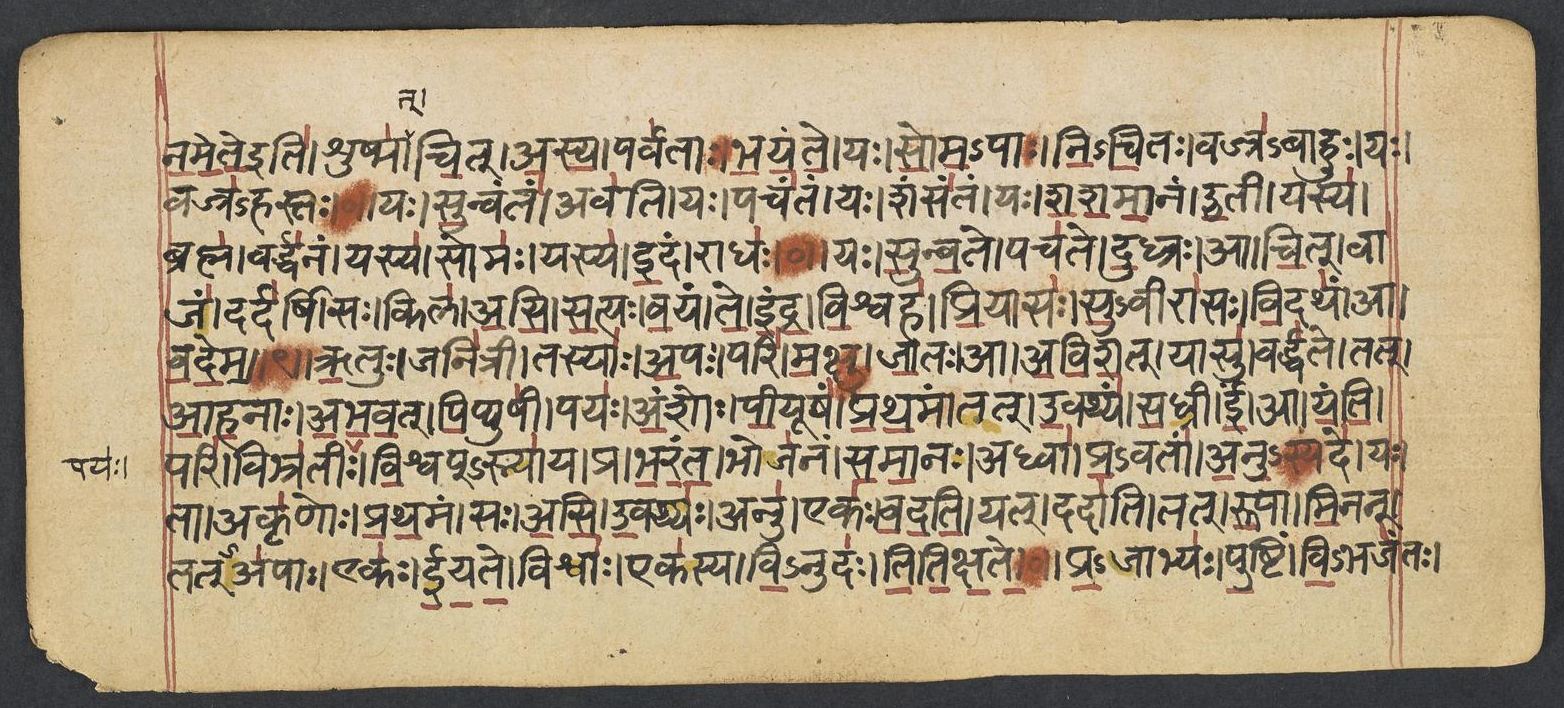
Where on the image
Penn Ms. Coll. 390 Item 41, fol. 159r (numbered 5r by the scribe) (OPenn image 160, lower leaf). Checked on the image: the Rigveda text on this page begins in RV 2.12.13 ‹nameteiti śuṣmāt cit asya›. The next page with Rigveda text, fol. 159v (numbered 5v by the scribe), begins in RV 2.13.4 ‹āsate rayim-iva pṛṣṭham pra-bhavantam›. Verses 2.12.13-15 end on this page; 2.12.13 begins on fol. 158v (numbered 4v by the scribe).
13dyāvā̍ cid asmai pṛthi̱vī na̍mete̱ śuṣmā̍c cid asya̱ parva̍tā bhayante | yaḥ so̍ma̱pā ni̍ci̱to vajra̍bāhu̱r yo vajra̍hasta̱ḥ sa ja̍nāsa̱ indra̍ḥ ||
14yaḥ su̱nvanta̱m ava̍ti̱ yaḥ paca̍nta̱ṁ yaḥ śaṁsa̍nta̱ṁ yaḥ śa̍śamā̱nam ū̱tī | yasya̱ brahma̱ vardha̍na̱ṁ yasya̱ somo̱ yasye̱daṁ rādha̱ḥ sa ja̍nāsa̱ indra̍ḥ ||
15yaḥ su̍nva̱te paca̍te du̱dhra ā ci̱d vāja̱ṁ darda̍rṣi̱ sa kilā̍si sa̱tyaḥ | va̱yaṁ ta̍ indra vi̱śvaha̍ pri̱yāsa̍ḥ su̱vīrā̍so vi̱datha̱m ā va̍dema ||
Compare: Padapāṭha (word-by-word text written in the manuscript; Sansknet e-text via GRETIL)
13dyāvā | cit | asmai | pṛthivī iti | nameteiti | śuṣmāt | cit | asya | parvatāḥ | bhayante | yaḥ | soma-pāḥ | ni-citaḥ | vajra-bāhuḥ | yaḥ | vajra-hastaḥ | saḥ | janāsaḥ | indraḥ
14yaḥ | sunvantam | avati | yaḥ | pacantam | yaḥ | śaṃsantam | yaḥ | śaśamānam | ūtī | yasya | brahma | vardhanam | yasya | somaḥ | yasya | idam | rādhaḥ | saḥ | janāsaḥ | indraḥ
15yaḥ | sunvate | pacate | dudhraḥ | ā | cit | vājam | dardarṣi | saḥ | kila | asi | satyaḥ | vayam | te | indra | viśvaha | priyāsaḥ | su-vīrāsaḥ | vidatham | ā | vadema
13Even the Heaven and Earth bow down before him, before his very breath the mountains tremble. Known as the Soma-drinker, armed with thunder, who wields the bolt, He, O ye men, is Indra.
14Who aids with favour him who pours the Soma and him who brews it, sacrificer, singer. Whom prayer exalts, and pouring forth of Soma, and this our gift, He, O ye men, Is Indra.
15Thou verily art fierce and true who sendest strength to the man who brews and pours libation. So may we evermore, thy friends, O Indra, speak loudly to the synod with our heroes.
Notes
- Sanskrit: Aufrecht's edition (1877) with the Vedic accents, as entered by van Nooten and Holland (GRETIL).
- English: Ralph T. H. Griffith, The Hymns of the Rigveda (1889-1892; 2nd ed. 1896-1897), from the VedaWeb digital text; OCR slips in that text were corrected against the printed 2nd edition (data/sources/rigveda/griffith_errata.json).
- Padapāṭha (edition text): Sansknet e-text via GRETIL (CC BY-NC-SA 4.0).
Cite
Sources
- Source: Penn Ms. Coll. 390 Item 41 (undated (catalogued with Penn's 18th-19th c. Vedic manuscripts)), OPenn, Public Domain Mark + Aufrecht's accented text (GRETIL) + Griffith's English (VedaWeb) (holding institution)
- Critical edition: Aufrecht (1877), accented e-text via GRETIL
← previous · → next · v cycle view · l back to library