Rigveda 2.39: To Asvins
Introduction
Rigveda 2.39 is a hymn of 8 verses addressed to Asvins. It stands in book (maṇḍala) 2, the family book of Gṛtsamada. The Rigveda is the oldest collection of Sanskrit hymns, composed in the second half of the second millennium BCE and handed down orally for many centuries before it was written down.
The manuscript shown is Penn Ms. Coll. 390 Item 41 (University of Pennsylvania), an undated paper manuscript of the padapāṭha (the word-by-word recitation text, in which every word is written separately and compounds are split) of the whole Ṛgveda in Devanāgarī, 884 leaves in fascicles, 7-9 lines to the page, accents in red; this hymn stands on fol. 180v-181r. Each section below gives the verses that end on one page; the page boundaries were read on the images (the opening words of every page), not counted out. Where the manuscript is a padapāṭha (the word-by-word recitation text), the section shows Aufrecht's continuous (saṃhitā) text first and, as the edition text, the padapāṭha of the same verses, which is the form written on the page.
How was this verified? (Provenance)
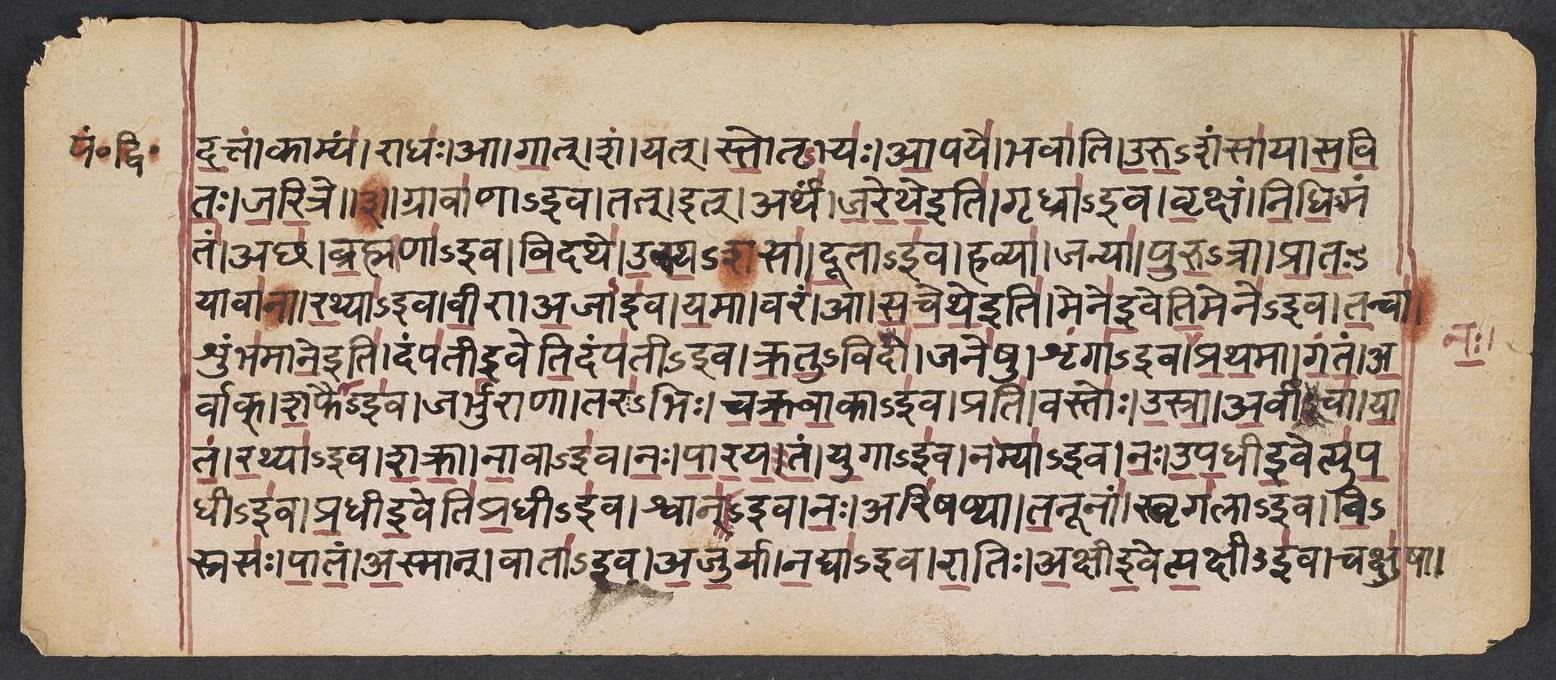
Where on the image
Penn Ms. Coll. 390 Item 41, fol. 180v (numbered 2v by the scribe) (OPenn image 182, upper leaf). Checked on the image: the Rigveda text on this page begins in RV 2.38.11 ‹dattam kāmyam rādhaḥ ā›. The next page with Rigveda text, fol. 181r (numbered 3r by the scribe), begins in RV 2.39.5 ‹ā yātam arvāk hastau-iva›. Verses 2.39.1-4 end on this page.
1grāvā̍ṇeva̱ tad id artha̍ṁ jarethe̱ gṛdhre̍va vṛ̱kṣaṁ ni̍dhi̱manta̱m accha̍ | bra̱hmāṇe̍va vi̱datha̍ uktha̱śāsā̍ dū̱teva̱ havyā̱ janyā̍ puru̱trā ||
2prā̱ta̱ryāvā̍ṇā ra̱thye̍va vī̱rājeva̍ ya̱mā vara̱m ā sa̍cethe | mene̍ iva ta̱nvā̱3̱̍ śumbha̍māne̱ dampa̍tīva kratu̱vidā̱ jane̍ṣu ||
3śṛṅge̍va naḥ pratha̱mā ga̍ntam a̱rvāk cha̱phāv i̍va̱ jarbhu̍rāṇā̱ taro̍bhiḥ | ca̱kra̱vā̱keva̱ prati̱ vasto̍r usrā̱rvāñcā̍ yātaṁ ra̱thye̍va śakrā ||
4nā̱veva̍ naḥ pārayataṁ yu̱geva̱ nabhye̍va na upa̱dhīva̍ pra̱dhīva̍ | śvāne̍va no̱ ari̍ṣaṇyā ta̱nūnā̱ṁ khṛga̍leva vi̱srasa̍ḥ pātam a̱smān ||
Compare: Padapāṭha (word-by-word text written in the manuscript; Sansknet e-text via GRETIL)
1grāvāṇāiva | tat | it | artham | jaretheiti | gṛdhrāiva | vṛkṣam | nidhi-mantam | accha | brahmāṇāiva | vidathe | uktha-śasā | dūtāiva | havyā | janyā | puru-trā
2prātaḥ-yāvānā | rathyāiva | vīrā | ajāiva | yamā | varam | ā | sacetheiti | meneivetimene--iva | tanvā | śumbhamāneiti | dampatīivetidampatī-iva | kratu-vidā | janeṣu
3śṛṇgāiva | naḥ | prathamā | gantam | arvāk | śaphau-iva | jarbhurāṇā | taraḥ-bhiḥ | cakravākāiva | prati | vastoḥ | usrā | arvāñcā | yātam | rathyāiva | śakrā
4nāvāiva | naḥ | pārayatam | yugāiva | nabhyāiva | naḥ | upadhī ivety upadhī-iva | pradhī ivety pradhī-iva | / śvānāiva | naḥ | ariṣaṇyā | tanūnām khṛgalāiva | vi-srasaḥ | pātam | asmān
1SING like the two press-stones for this same purpose; come like two misers to the tree of treasure; Like two laud-singing Brahmans in the assembly, like the folk's envoys called in many places.
2Moving at morning like two car-borne heroes, like to a pair of goats ye come electing; Like two fair dames embellishing their bodies, like a wise married pair among the people.
3Like to a pair of horns come first to usward, like to a pair of hoofs with rapid motion; Come like two Chakwâs in the grey of morning, come like two chariot wheels at dawn, ye Mighty.
4Bear us across the rivers like two vessels, save us as ye were yokes, naves, spokes and fellies. Be like two dogs that injure not our bodies; preserve us, like two crutches, that we fall not.
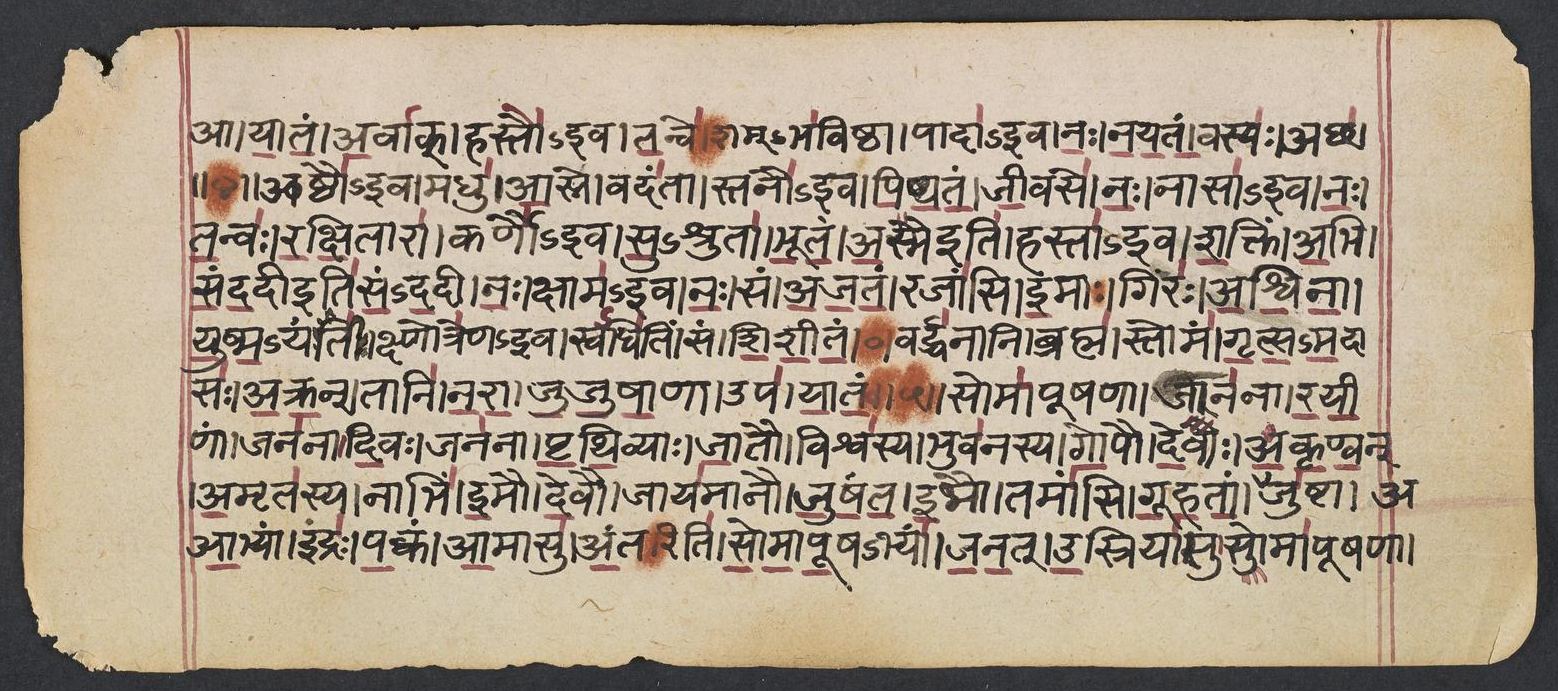
Where on the image
Penn Ms. Coll. 390 Item 41, fol. 181r (numbered 3r by the scribe) (OPenn image 182, lower leaf). Checked on the image: the Rigveda text on this page begins in RV 2.39.5 ‹ā yātam arvāk hastau-iva›. The next page with Rigveda text, fol. 181v (numbered 3v by the scribe), begins in RV 2.40.3 ‹rajasaḥ vi-mānam sapta-cakram ratham›. Verses 2.39.5-8 end on this page; 2.39.5 begins on fol. 180v (numbered 2v by the scribe).
5vāte̍vāju̱ryā na̱dye̍va rī̱tir a̱kṣī i̍va̱ cakṣu̱ṣā yā̍tam a̱rvāk | hastā̍v iva ta̱nve̱3̱̍ śambha̍viṣṭhā̱ pāde̍va no nayata̱ṁ vasyo̱ accha̍ ||
6oṣṭhā̍v iva̱ madhv ā̱sne vada̍ntā̱ stanā̍v iva pipyataṁ jī̱vase̍ naḥ | nāse̍va nas ta̱nvo̍ rakṣi̱tārā̱ karṇā̍v iva su̱śrutā̍ bhūtam a̱sme ||
7haste̍va śa̱ktim a̱bhi sa̍ṁda̱dī na̱ḥ kṣāme̍va na̱ḥ sam a̍jata̱ṁ rajā̍ṁsi | i̱mā giro̍ aśvinā yuṣma̱yantī̱ḥ kṣṇotre̍ṇeva̱ svadhi̍ti̱ṁ saṁ śi̍śītam ||
8e̱tāni̍ vām aśvinā̱ vardha̍nāni̱ brahma̱ stoma̍ṁ gṛtsama̱dāso̍ akran | tāni̍ narā jujuṣā̱ṇopa̍ yātam bṛ̱had va̍dema vi̱dathe̍ su̱vīrā̍ḥ ||
Compare: Padapāṭha (word-by-word text written in the manuscript; Sansknet e-text via GRETIL)
5vātāiva | ajuryā | nadyāiva | rītiḥ | akṣīivety akṣī-iva | cakṣuṣā | ā | yātam | arvāk | hastau-iva | tanve | śam-bhaviṣṭhā | pādāiva | naḥ | nayatam | vasyaḥ | accha
6oṣṭhau-iva | madhu | āsne | vadantā | stanau-iva | pipyatam | jīvase | naḥ | nāsāiva | naḥ | tanvaḥ | rakṣitārā | karṇau-iva | su-śrutā | bhūtam | asme iti
7hastāiva | śaktim | abhi | sandadī itisam-dadī | naḥ | kṣāmāiva | naḥ | sam | ajatam | rajāṃsi | imāḥ | giraḥ | aśv inā | yuṣma-yantīḥ | kṣṇotreṇa-iva | sva-dhitim | sam | śiśītam
8etāni | vām | aśvinā | vardhanāni | brahma | stomam | gṛtsa-madāsaḥ | akran | tāni | narā | jujuṣāṇā | upa | yātam | bṛhat | vadema | vidathe | su-vīrāḥ
5Like two winds ageing not, two confluent rivers, come with quick vision like two eyes before us. Come like two hands most helpful to the body, and guide us like two feet to what is precious.
6Even as two lips that with the mouth speak honey, even as two breasts that nourish our existence, Like the two nostrils that protect our being, be to us as our ears that hear distinctly.
7Like two hands give ye us increasing vigour; like heaven and earth constrain the airy regions. Aṣvins, these hymns that struggle to approach you, sharpen ye like an axe upon a whetstone.
8These prayers of ours exalting you, O Aṣvins, have the Gr̥itsamadas, for a laud, made ready. Welcome them, O ye Heroes, and come hither. Loud may we speak. with brave men, in assembly.
Notes
- Sanskrit: Aufrecht's edition (1877) with the Vedic accents, as entered by van Nooten and Holland (GRETIL).
- English: Ralph T. H. Griffith, The Hymns of the Rigveda (1889-1892; 2nd ed. 1896-1897), from the VedaWeb digital text; OCR slips in that text were corrected against the printed 2nd edition (data/sources/rigveda/griffith_errata.json).
- Padapāṭha (edition text): Sansknet e-text via GRETIL (CC BY-NC-SA 4.0).
Cite
Sources
- Source: Penn Ms. Coll. 390 Item 41 (undated (catalogued with Penn's 18th-19th c. Vedic manuscripts)), OPenn, Public Domain Mark + Aufrecht's accented text (GRETIL) + Griffith's English (VedaWeb) (holding institution)
- Critical edition: Aufrecht (1877), accented e-text via GRETIL
← previous · → next · v cycle view · l back to library