Rigveda 2.38: To Savitri
Introduction
Rigveda 2.38 is a hymn of 11 verses addressed to Savitri. It stands in book (maṇḍala) 2, the family book of Gṛtsamada. The Rigveda is the oldest collection of Sanskrit hymns, composed in the second half of the second millennium BCE and handed down orally for many centuries before it was written down.
The manuscript shown is Penn Ms. Coll. 390 Item 41 (University of Pennsylvania), an undated paper manuscript of the padapāṭha (the word-by-word recitation text, in which every word is written separately and compounds are split) of the whole Ṛgveda in Devanāgarī, 884 leaves in fascicles, 7-9 lines to the page, accents in red; this hymn stands on fol. 179v-180v. Each section below gives the verses that end on one page; the page boundaries were read on the images (the opening words of every page), not counted out. Where the manuscript is a padapāṭha (the word-by-word recitation text), the section shows Aufrecht's continuous (saṃhitā) text first and, as the edition text, the padapāṭha of the same verses, which is the form written on the page.
How was this verified? (Provenance)
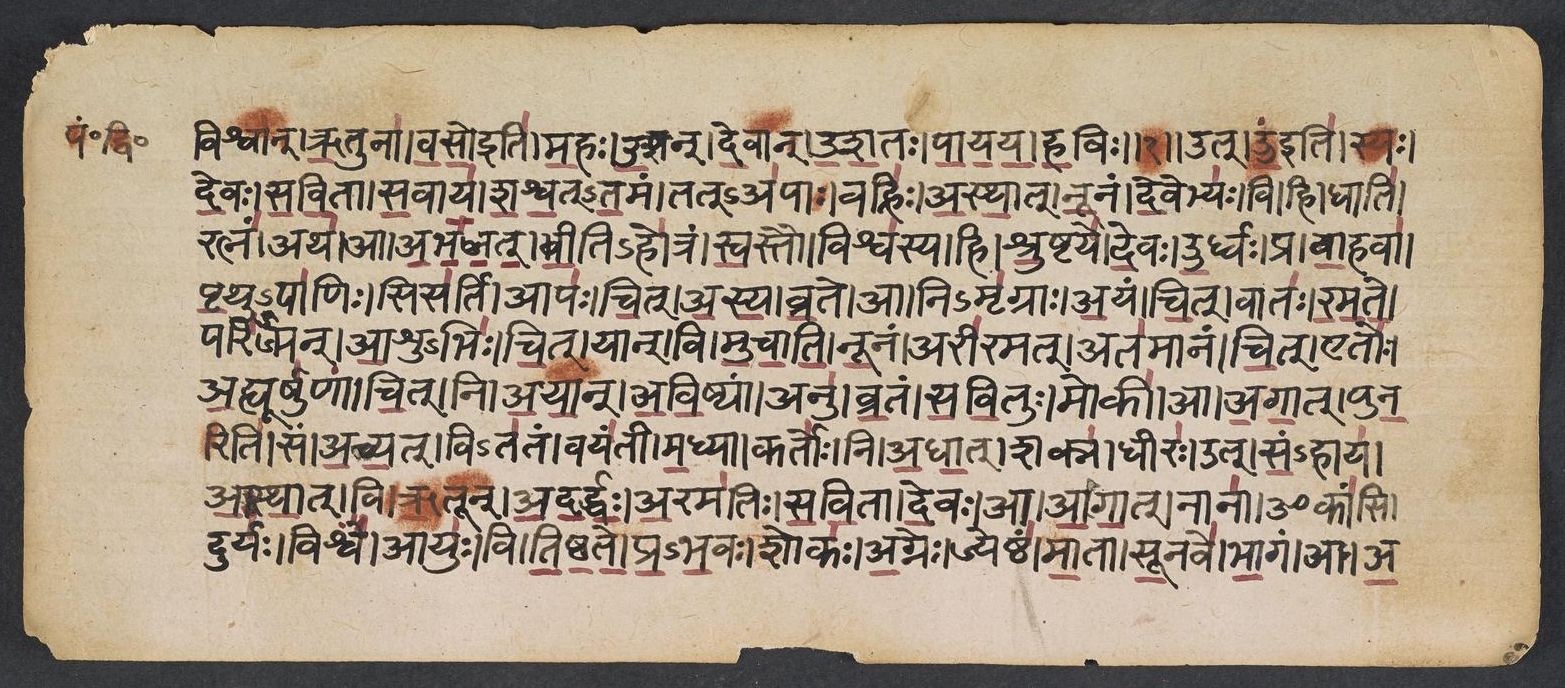
Where on the image
Penn Ms. Coll. 390 Item 41, fol. 179v (numbered 1v by the scribe) (OPenn image 181, upper leaf). Checked on the image: the Rigveda text on this page begins in RV 2.37.6 ‹viśvān ṛtunā vaso iti›. The next page with Rigveda text, fol. 180r (numbered 2r by the scribe), begins in RV 2.38.5 ‹-adhāt anu asya ketam›. Verses 2.38.1-4 end on this page.
1ud u̱ ṣya de̱vaḥ sa̍vi̱tā sa̱vāya̍ śaśvatta̱maṁ tada̍pā̱ vahni̍r asthāt | nū̱naṁ de̱vebhyo̱ vi hi dhāti̱ ratna̱m athābha̍jad vī̱tiho̍traṁ sva̱stau ||
2viśva̍sya̱ hi śru̱ṣṭaye̍ de̱va ū̱rdhvaḥ pra bā̱havā̍ pṛ̱thupā̍ṇi̱ḥ sisa̍rti | āpa̍ś cid asya vra̱ta ā nimṛ̍grā a̱yaṁ ci̱d vāto̍ ramate̱ pari̍jman ||
3ā̱śubhi̍ś ci̱d yān vi mu̍cāti nū̱nam arī̍rama̱d ata̍mānaṁ ci̱d eto̍ḥ | a̱hyarṣū̍ṇāṁ ci̱n ny a̍yām̐ avi̱ṣyām anu̍ vra̱taṁ sa̍vi̱tur moky āgā̍t ||
4puna̱ḥ sam a̍vya̱d vita̍ta̱ṁ vaya̍ntī ma̱dhyā karto̱r ny a̍dhā̱c chakma̱ dhīra̍ḥ | ut sa̱ṁhāyā̍sthā̱d vy ṛ1̱̍tūm̐r a̍dardhar a̱rama̍tiḥ savi̱tā de̱va āgā̍t ||
Compare: Padapāṭha (word-by-word text written in the manuscript; Sansknet e-text via GRETIL)
1ut | oṃ iti | syaḥ | devaḥ | savitā | savāya | śaśvat-tamam | tat-apāḥ | vahniḥ | asthāt | nūnam | devebhyaḥ | vi | hi | dhāti | ratnam | atha | abhajat | vīti-hotram | svastau
2viśvasya | hi | śruṣṭaye | devaḥ | ūrdhvaḥ | pra | bāhavā | pṛthu-pāṇiḥ | sisarti | āpaḥ | cit | asya | vrate | ā | ni-mṛgrāḥ | ayam | cit | vātaḥ | ramate | pari-jman
3āśu-bhiḥ | cit | yān | vi | mucāti | nūnam | arīramat | atamānam | cit | etoḥ | ahyarṣūṇām | cit | ni | ayān | aviṣyām | anu | vratam | savituḥ | mokī | ā | agāt
4punariti | sam | avyat | vi-tatam | vayantī | madhyā | kartoḥ | ni | adhāt | śakma | dhīraḥ | ut | sam-hāya | asthāt | vi | ṛtūn | adardhaḥ | aramatiḥ | savitā | devaḥ | ā | agāt
1UPRISEN is Savitar, this God, to quicken, Priest who neglects not this most constant duty. To the Gods, verily, he gives rich treasure, and blesses him who calls them to the banquet.
2Having gone up on high, the God broadhanded spreads his arms widely forth that all may mark him. Even the waters bend them to his service: even this wind rests in the circling region.
3Though borne by swift steeds he will yet unyoke them: e'en the fleet chariot hath he stayed from going. He hath checked e'en their haste who glide like serpents. Night closely followed Savitar's dominion.
4What was spread out she weaves afresh, re-weaving: the skilful leaves his labour half-completed. He hath arisen from rest, and parted seasons: Savitar hath approached, God, holy-minded.
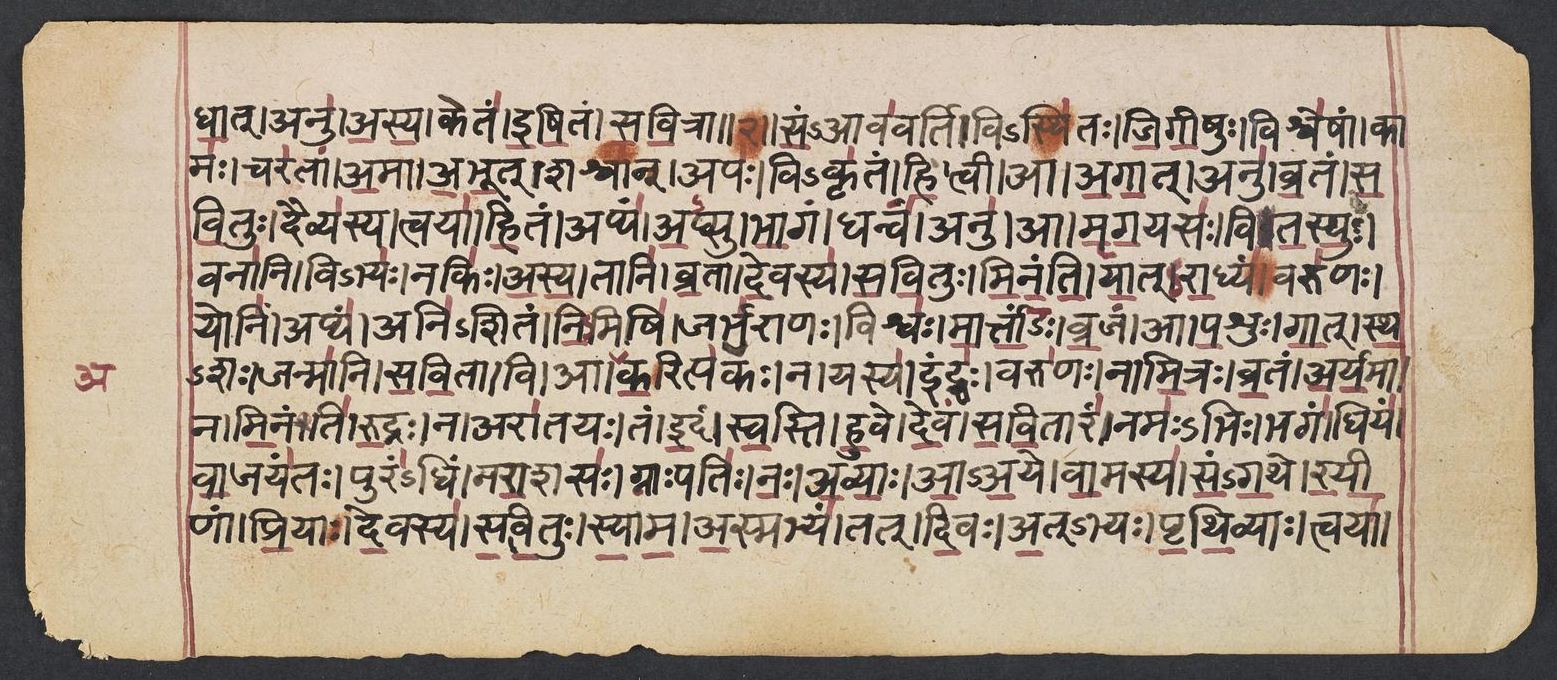
Where on the image
Penn Ms. Coll. 390 Item 41, fol. 180r (numbered 2r by the scribe) (OPenn image 181, lower leaf). Checked on the image: the Rigveda text on this page begins in RV 2.38.5 ‹-adhāt anu asya ketam›. The next page with Rigveda text, fol. 180v (numbered 2v by the scribe), begins in RV 2.38.11 ‹dattam kāmyam rādhaḥ ā›. Verses 2.38.5-10 end on this page; 2.38.5 begins on fol. 179v (numbered 1v by the scribe).
5nānaukā̍ṁsi̱ duryo̱ viśva̱m āyu̱r vi ti̍ṣṭhate prabha̱vaḥ śoko̍ a̱gneḥ | jyeṣṭha̍m mā̱tā sū̱nave̍ bhā̱gam ādhā̱d anv a̍sya̱ keta̍m iṣi̱taṁ sa̍vi̱trā ||
6sa̱māva̍varti̱ viṣṭhi̍to jigī̱ṣur viśve̍ṣā̱ṁ kāma̱ś cara̍tām a̱mābhū̍t | śaśvā̱m̐ apo̱ vikṛ̍taṁ hi̱tvy āgā̱d anu̍ vra̱taṁ sa̍vi̱tur daivya̍sya ||
7tvayā̍ hi̱tam apya̍m a̱psu bhā̱gaṁ dhanvānv ā mṛ̍ga̱yaso̱ vi ta̍sthuḥ | vanā̍ni̱ vibhyo̱ naki̍r asya̱ tāni̍ vra̱tā de̱vasya̍ savi̱tur mi̍nanti ||
8yā̱drā̱dhya1̱̍ṁ varu̍ṇo̱ yoni̱m apya̱m ani̍śitaṁ ni̱miṣi̱ jarbhu̍rāṇaḥ | viśvo̍ mārtā̱ṇḍo vra̱jam ā pa̱śur gā̍t stha̱śo janmā̍ni savi̱tā vy āka̍ḥ ||
9na yasyendro̱ varu̍ṇo̱ na mi̱tro vra̱tam a̍rya̱mā na mi̱nanti̍ ru̱draḥ | nārā̍taya̱s tam i̱daṁ sva̱sti hu̱ve de̱vaṁ sa̍vi̱tāra̱ṁ namo̍bhiḥ ||
10bhaga̱ṁ dhiya̍ṁ vā̱jaya̍nta̱ḥ pura̍ṁdhi̱ṁ narā̱śaṁso̱ gnāspati̍r no avyāḥ | ā̱ye vā̱masya̍ saṁga̱the ra̍yī̱ṇām pri̱yā de̱vasya̍ savi̱tuḥ syā̍ma ||
Compare: Padapāṭha (word-by-word text written in the manuscript; Sansknet e-text via GRETIL)
5nānā | okāṃsi | duryaḥ | viśvam | āyuḥ | vi | tiṣṭhate | pra-bhavaḥ | śokaḥ | agneḥ | jyeṣṭham | mātā | sūnave | bhāgam | ā | adhāt | anu | asya | ketam | iṣitam | savitrā
6sam-āvavarti | vi-sthitaḥ | jigīṣuḥ | viśveṣām | kāmaḥ | caratām | amā | abhūt | śaśvān | apaḥ | vi-kṛtam | hitvī | ā | agāt | anu | vratam | savituḥ | daivyasya
7tvayā | hitam | apyam | ap-su | bhāgam | dhanva | anu | ā | mṛgayasaḥ | vi | tasthuḥ | vanāni | vi-bhyaḥ | nakiḥ | asya | tāni | vratā | devasya | savituḥ | minanti
8yāt-rādhyam | varuṇaḥ | yonim | apyam | ani-śitam | ni-miṣi | jarbhurāṇaḥ | viśvaḥ | mārtāṇḍaḥ | vrajam | ā | paśuḥ | gāt | stha-śaḥ | janmāni | savitā | vi | ā | akar ity akaḥ
9na | yasya | indraḥ | varuṇaḥ | na | mitraḥ | vratam | aryamā | na | minanti | rudraḥ | na | arātayaḥ | tam | idam | svasti | huve | devam | savitāram | namaḥ-bhiḥ
10bhagam | dhiyam | vājayantaḥ | puram-dhim | narāśaṃsaḥ | gnāḥpatiḥ | naḥ | avyāḥ | āaye | vāmasya | sam-gathe | rayīṇām | priyāḥ | devasya | savituḥ | syāma
5Tlirough various dwellings, through entire existence, spreads, manifest, the household light of Agni. The Mother gives her Son the goodliest portion, and Savitar hath sped to meet his summons.
6He comes again, unfolded, fain for conquest: at home was he, the love of all things moving. Each man hath come leaving his evil doings, after the Godlike Savitar's commandment.
7The wild beasts spread through desert places seeking their watery share which thou hast set in waters. The woods are given to the birds. These statutes of the God Savitar none disobeyeth.
8With utmost speed, in restless haste at sunset Varuṇa seeks his watery habitation. Then seeks each bird his nest, each beast his lodging. In due place Savitar hath set each creature.
9Him whose high law not Varuṇa nor Indra, not Mitra, Aryaman, nor Rudra breaketh, Nor evil-hearted fiends, here for my welfare him I invoke, God Savitar, with worship.
10May they who strengthen bliss, and thought and wisdom, and the Dames' Lord and Narâṣansa aid us. That good may come to us and wealth be gathered, may we be Savitar the God's beloved.
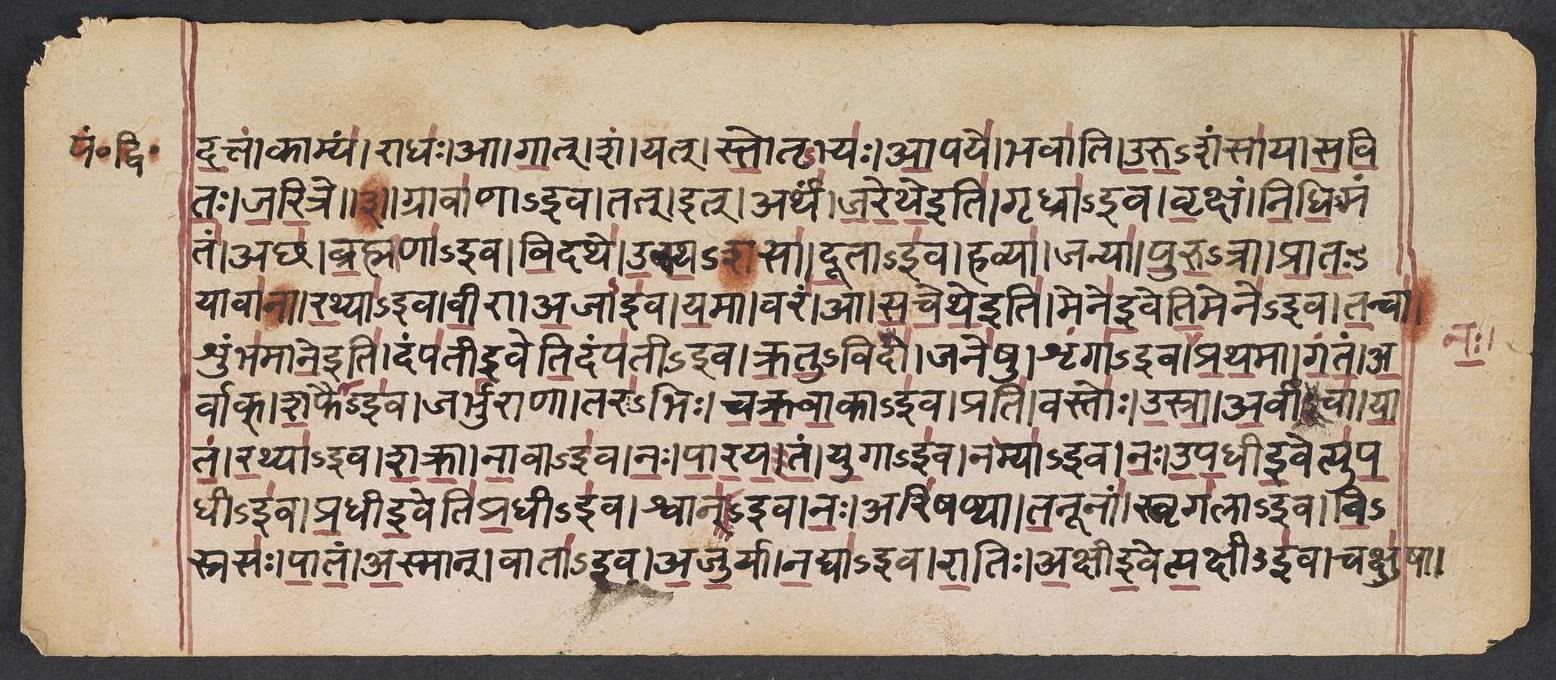
Where on the image
Penn Ms. Coll. 390 Item 41, fol. 180v (numbered 2v by the scribe) (OPenn image 182, upper leaf). Checked on the image: the Rigveda text on this page begins in RV 2.38.11 ‹dattam kāmyam rādhaḥ ā›. The next page with Rigveda text, fol. 181r (numbered 3r by the scribe), begins in RV 2.39.5 ‹ā yātam arvāk hastau-iva›. Verse 2.38.11 ends on this page; 2.38.11 begins on fol. 180r (numbered 2r by the scribe).
11a̱smabhya̱ṁ tad di̱vo a̱dbhyaḥ pṛ̍thi̱vyās tvayā̍ da̱ttaṁ kāmya̱ṁ rādha̱ ā gā̍t | śaṁ yat sto̱tṛbhya̍ ā̱paye̱ bhavā̍ty uru̱śaṁsā̍ya savitar jari̱tre ||
Compare: Padapāṭha (word-by-word text written in the manuscript; Sansknet e-text via GRETIL)
11asmabhyam | tat | divaḥ | at-bhyaḥ | pṛthivyāḥ | tvayā | dattam | kāmyam | rādhaḥ | ā | gāt | śam | yat | stotṛ-bhyaḥ | āpaye | bhavāti | uru-śaṃsāya | savitaḥ | jaritre
11So come to us our hearts' desire, the bounty bestowed by thee, from heaven and earth and waters, That it be well with friends and those who praise thee, and, Savitar, with the loud-lauding singer.
Notes
- Sanskrit: Aufrecht's edition (1877) with the Vedic accents, as entered by van Nooten and Holland (GRETIL).
- English: Ralph T. H. Griffith, The Hymns of the Rigveda (1889-1892; 2nd ed. 1896-1897), from the VedaWeb digital text; OCR slips in that text were corrected against the printed 2nd edition (data/sources/rigveda/griffith_errata.json).
- Padapāṭha (edition text): Sansknet e-text via GRETIL (CC BY-NC-SA 4.0).
Cite
Sources
- Source: Penn Ms. Coll. 390 Item 41 (undated (catalogued with Penn's 18th-19th c. Vedic manuscripts)), OPenn, Public Domain Mark + Aufrecht's accented text (GRETIL) + Griffith's English (VedaWeb) (holding institution)
- Critical edition: Aufrecht (1877), accented e-text via GRETIL
← previous · → next · v cycle view · l back to library