Rigveda 2.42: Bird of omen
Introduction
Rigveda 2.42 is a hymn of 3 verses addressed to bird of omen. It stands in book (maṇḍala) 2, the family book of Gṛtsamada. The Rigveda is the oldest collection of Sanskrit hymns, composed in the second half of the second millennium BCE and handed down orally for many centuries before it was written down.
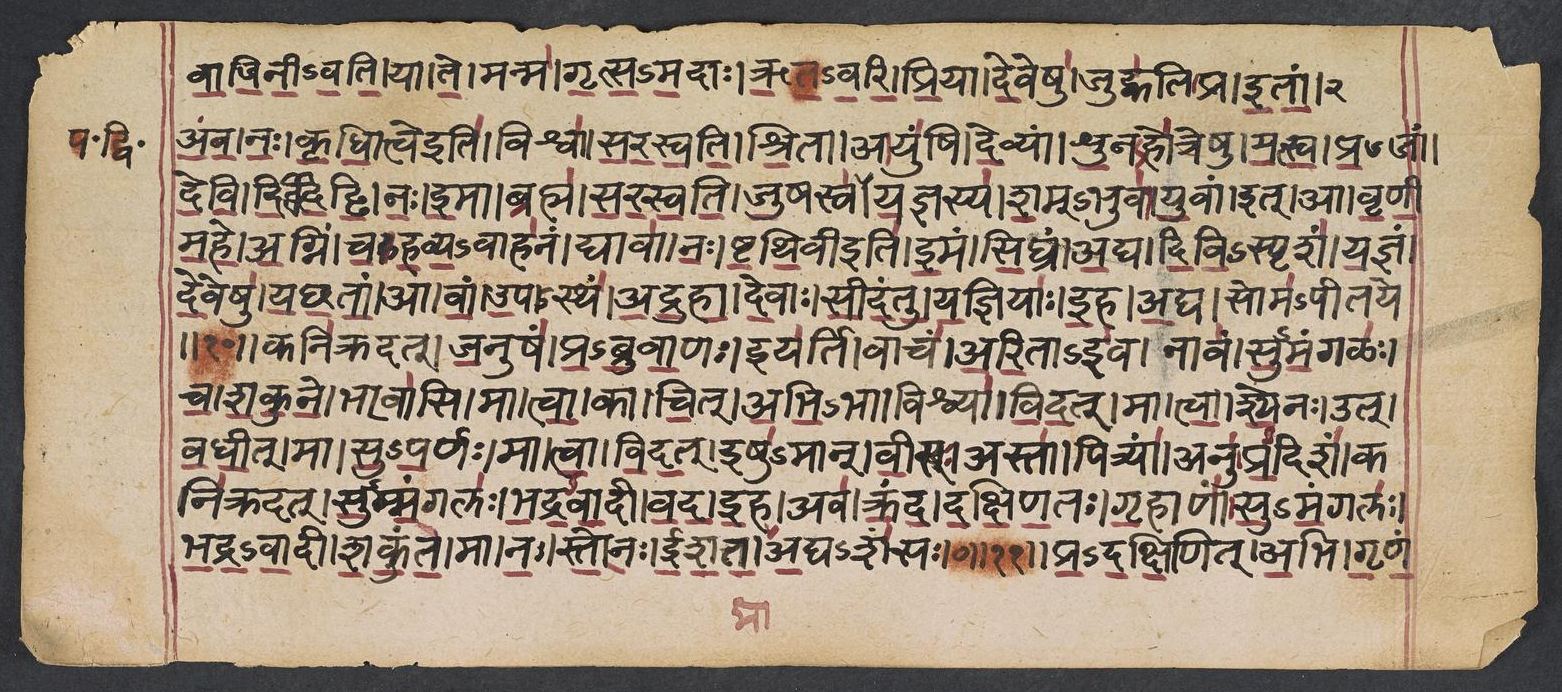
The manuscript shown is Penn Ms. Coll. 390 Item 41 (University of Pennsylvania), an undated paper manuscript of the padapāṭha (the word-by-word recitation text, in which every word is written separately and compounds are split) of the whole Ṛgveda in Devanāgarī, 884 leaves in fascicles, 7-9 lines to the page, accents in red; this hymn stands on fol. 182v. Each section below gives the verses that end on one page; the page boundaries were read on the images (the opening words of every page), not counted out. Where the manuscript is a padapāṭha (the word-by-word recitation text), the section shows Aufrecht's continuous (saṃhitā) text first and, as the edition text, the padapāṭha of the same verses, which is the form written on the page.
How was this verified? (Provenance)
Where on the image
Penn Ms. Coll. 390 Item 41, fol. 182v (numbered 4v by the scribe) (OPenn image 184, upper leaf). Checked on the image: the Rigveda text on this page begins in RV 2.41.18 ‹vājinīvati yā te manma›. The next page with Rigveda text, fol. 183r (numbered 5r by the scribe), begins in RV 2.43.1 ‹-gṛṇanti kāravaḥ vayaḥ vadantaḥ›. Verses 2.42.1-3 end on this page.
1kani̍kradaj ja̱nuṣa̍m prabruvā̱ṇa iya̍rti̱ vāca̍m ari̱teva̱ nāva̍m | su̱ma̱ṅgala̍ś ca śakune̱ bhavā̍si̱ mā tvā̱ kā ci̍d abhi̱bhā viśvyā̍ vidat ||
2mā tvā̍ śye̱na ud va̍dhī̱n mā su̍pa̱rṇo mā tvā̍ vida̱d iṣu̍mān vī̱ro astā̍ | pitryā̱m anu̍ pra̱diśa̱ṁ kani̍kradat suma̱ṅgalo̍ bhadravā̱dī va̍de̱ha ||
3ava̍ kranda dakṣiṇa̱to gṛ̱hāṇā̍ṁ suma̱ṅgalo̍ bhadravā̱dī śa̍kunte | mā na̍ḥ ste̱na ī̍śata̱ māghaśa̍ṁso bṛ̱had va̍dema vi̱dathe̍ su̱vīrā̍ḥ ||
Compare: Padapāṭha (word-by-word text written in the manuscript; Sansknet e-text via GRETIL)
1kanikradat | januṣam | pra-bruvāṇaḥ | iyarti | vācam | aritāiva | nāvam | su-maṅgalaḥ | ca | śakune | bhavāsi | mā | tvā | kā | cit | abhi-bhā | viśvyā | vidat
2mā | tvā | śyenaḥ | ut | vadhīt | mā | su-parṇaḥ | mā | tvā | vidat | iṣu-mān | vīraḥ | astā | pitryām | anu | pra-diśam | kanikradat | su-maṅgalaḥ | bhadra-vādī | vada | iha
3ava | kranda | dakṣiṇataḥ | gṛhāṇām | su-maṅgalaḥ | bhadra-vādī | śakunte | mā | naḥ | stenaḥ | īśata | mā | agha-śaṃsaḥ | bṛhat | vadema | vidathe | su-vīrāḥ
1TELLING his race aloud with cries repeated, he sends his voice out as his boat a steersman. O Bird, be ominous of happy fortune from no side may calamity befall thee.
2Let not the falcon kill thee, nor the eagle let not the arrow-bearing archer reach thee. Still crying in the region of the Fathers, speak here auspicious, bearing joyful tidings.
3Bringing good tidings, Bird of happy omen, call thou out loudly southward of our dwellings, So that no thief, no sinner may oppress us. Loud may we speak, with heroes, in assembly.
Notes
- Sanskrit: Aufrecht's edition (1877) with the Vedic accents, as entered by van Nooten and Holland (GRETIL).
- English: Ralph T. H. Griffith, The Hymns of the Rigveda (1889-1892; 2nd ed. 1896-1897), from the VedaWeb digital text; OCR slips in that text were corrected against the printed 2nd edition (data/sources/rigveda/griffith_errata.json).
- Padapāṭha (edition text): Sansknet e-text via GRETIL (CC BY-NC-SA 4.0).
Cite
Sources
- Source: Penn Ms. Coll. 390 Item 41 (undated (catalogued with Penn's 18th-19th c. Vedic manuscripts)), OPenn, Public Domain Mark + Aufrecht's accented text (GRETIL) + Griffith's English (VedaWeb) (holding institution)
- Critical edition: Aufrecht (1877), accented e-text via GRETIL
← previous · → next · v cycle view · l back to library