Rigveda 3.26: To Agni Vaisvanara
Introduction
Rigveda 3.26 is a hymn of 9 verses addressed to Agni Vaisvanara. It stands in book (maṇḍala) 3, the family book of Viśvāmitra. The Rigveda is the oldest collection of Sanskrit hymns, composed in the second half of the second millennium BCE and handed down orally for many centuries before it was written down.
The manuscript shown is Penn Ms. Coll. 390 Item 41 (University of Pennsylvania), an undated paper manuscript of the padapāṭha (the word-by-word recitation text, in which every word is written separately and compounds are split) of the whole Ṛgveda in Devanāgarī, 884 leaves in fascicles, 7-9 lines to the page, accents in red; this hymn stands on fol. 205v-206v. Each section below gives the verses that end on one page; the page boundaries were read on the images (the opening words of every page), not counted out. Where the manuscript is a padapāṭha (the word-by-word recitation text), the section shows Aufrecht's continuous (saṃhitā) text first and, as the edition text, the padapāṭha of the same verses, which is the form written on the page.
How was this verified? (Provenance)
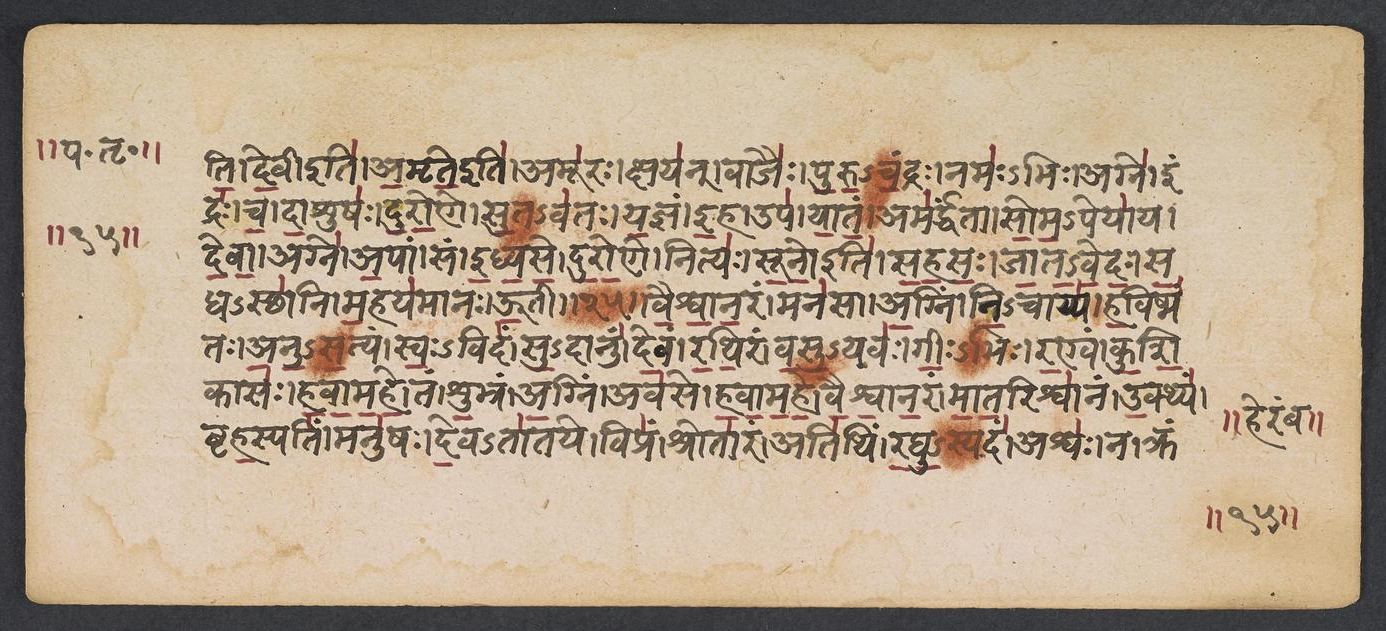
Where on the image
Penn Ms. Coll. 390 Item 41, fol. 205v (numbered 15v by the scribe) (OPenn image 207, upper leaf). Checked on the image: the Rigveda text on this page begins in RV 3.25.3 ‹-bhāti devī iti amṛteiti›. The next page with Rigveda text, fol. 206r (numbered 16r by the scribe), begins in RV 3.26.3 ‹-krandan jani-bhiḥ sam idhyate›. Verses 3.26.1-2 end on this page.
1vai̱śvā̱na̱ram mana̍sā̱gniṁ ni̱cāyyā̍ ha̱viṣma̍nto anuṣa̱tyaṁ sva̱rvida̍m | su̱dānu̍ṁ de̱vaṁ ra̍thi̱raṁ va̍sū̱yavo̍ gī̱rbhī ra̱ṇvaṁ ku̍śi̱kāso̍ havāmahe ||
2taṁ śu̱bhram a̱gnim ava̍se havāmahe vaiśvāna̱ram mā̍ta̱riśvā̍nam u̱kthya̍m | bṛha̱spati̱m manu̍ṣo de̱vatā̍taye̱ vipra̱ṁ śrotā̍ra̱m ati̍thiṁ raghu̱ṣyada̍m ||
Compare: Padapāṭha (word-by-word text written in the manuscript; Sansknet e-text via GRETIL)
1vaiśvānaram | manasā | agnim | ni-cāyya | haviṣmantaḥ | anu-ṣatyam | svaḥ-vidam | su-dānum | devam | rathiram | vasu-yavaḥ | gīḥ-bhiḥ | raṇvam | kuśikāsaḥ | havāmahe
2tam | śubhram | agnim | avase | havāmahe | vaiśvānaram | mātariśvānam | ukthyam | bṛhaspatim | manuṣaḥ | deva-tātaye | vipram | śrotāram | atithim | raghu-syadam
1REVERING in our heart Agni Vaiṣvânara, the finder of the light, whose promises are true, The liberal, gladsome, car-borne God we Kuṣikas invoke him with oblation, seeking wealth with songs.
2That Agni, bright, Vaiṣvânara, we invoke for help, and Mâtariṣvan worthy of the song of praise; Br̥ihaspati for man's observance of the Gods, the Singer prompt to hear, the swiftly-moving guest.
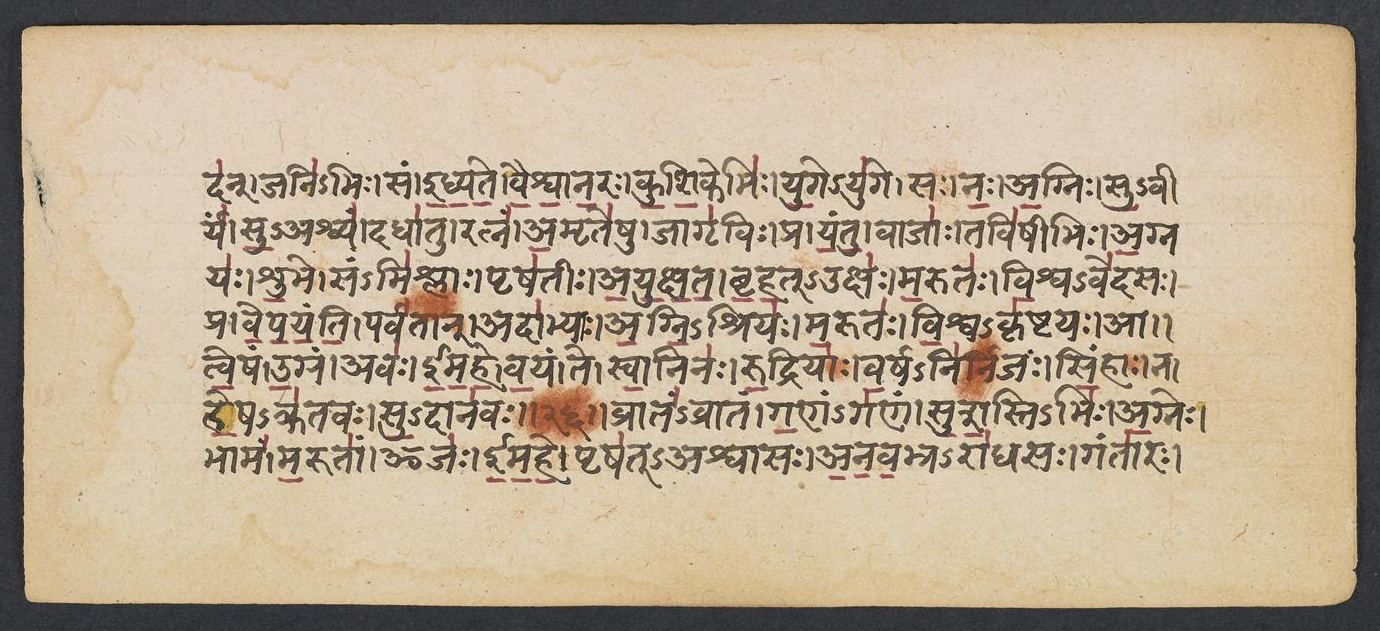
Where on the image
Penn Ms. Coll. 390 Item 41, fol. 206r (numbered 16r by the scribe) (OPenn image 207, lower leaf). Checked on the image: the Rigveda text on this page begins in RV 3.26.3 ‹-krandan jani-bhiḥ sam idhyate›. The next page with Rigveda text, fol. 206v (numbered 16v by the scribe), begins in RV 3.26.6 ‹yajñam vidatheṣu dhīrāḥ›. Verses 3.26.3-5 end on this page; 3.26.3 begins on fol. 205v (numbered 15v by the scribe).
3aśvo̱ na kranda̱ñ jani̍bhi̱ḥ sam i̍dhyate vaiśvāna̱raḥ ku̍śi̱kebhi̍r yu̱ge-yu̍ge | sa no̍ a̱gniḥ su̱vīrya̱ṁ svaśvya̱ṁ dadhā̍tu̱ ratna̍m a̱mṛte̍ṣu̱ jāgṛ̍viḥ ||
4pra ya̍ntu̱ vājā̱s tavi̍ṣībhir a̱gnaya̍ḥ śu̱bhe sammi̍ślā̱ḥ pṛṣa̍tīr ayukṣata | bṛ̱ha̱dukṣo̍ ma̱ruto̍ vi̱śvave̍dasa̱ḥ pra ve̍payanti̱ parva̍tā̱m̐ adā̍bhyāḥ ||
5a̱gni̱śriyo̍ ma̱ruto̍ vi̱śvakṛ̍ṣṭaya̱ ā tve̱ṣam u̱gram ava̍ īmahe va̱yam | te svā̱nino̍ ru̱driyā̍ va̱rṣani̍rṇijaḥ si̱ṁhā na he̱ṣakra̍tavaḥ su̱dāna̍vaḥ ||
Compare: Padapāṭha (word-by-word text written in the manuscript; Sansknet e-text via GRETIL)
3aśvaḥ | na | krandan | jani-bhiḥ | sam | idhyate | vaiśvānaraḥ | kuśikebhiḥ | yuge--yuge | saḥ | naḥ | agniḥ | su-vīryam | su-aśvyam | dadhātu | ratnam | amṛteṣu | jāgṛviḥ
4pra | yantu | vājāḥ | taviṣībhiḥ | agnayaḥ | śubhe | sam-miślāḥ | pṛṣatīḥ | ayukṣata | bṛhat-ukṣaḥ | marutaḥ | viśva-vedasaḥ | pra | vepayanti | parvatān | adābhyāḥ
5agni-śriyaḥ | marutaḥ | viśva-kṛṣṭayaḥ | ā | tveṣam | ugram | avaḥ | īmahe | vayam | te | svāninaḥ | rudriyāḥ | varṣa-nirnijaḥ | siṃhāḥ | na | heṣa-kratavaḥ | su-dānavaḥ
3Age after age Vaiṣvânara, neighing like a horse, is kindled with the women by the Kuṣikas. May Agni, he who wakes among Immortal Gods, grant us heroic strength and wealth in noble steeds.
4Let them go forth, the strong, as flames of fire with might. Gathered for victory they have yoked their spotted deer. Pourers of floods, the Maruts, Masters of all wealth, they who can ne'er be conquered, make the mountains shake.
5The Maruts, Friends of men, are glorious as the fire: their mighty and resplendent succour we implore. Those storming Sons of Rudra clothed in robes of rain, boon-givers of good gifts, roar as the lions roar.
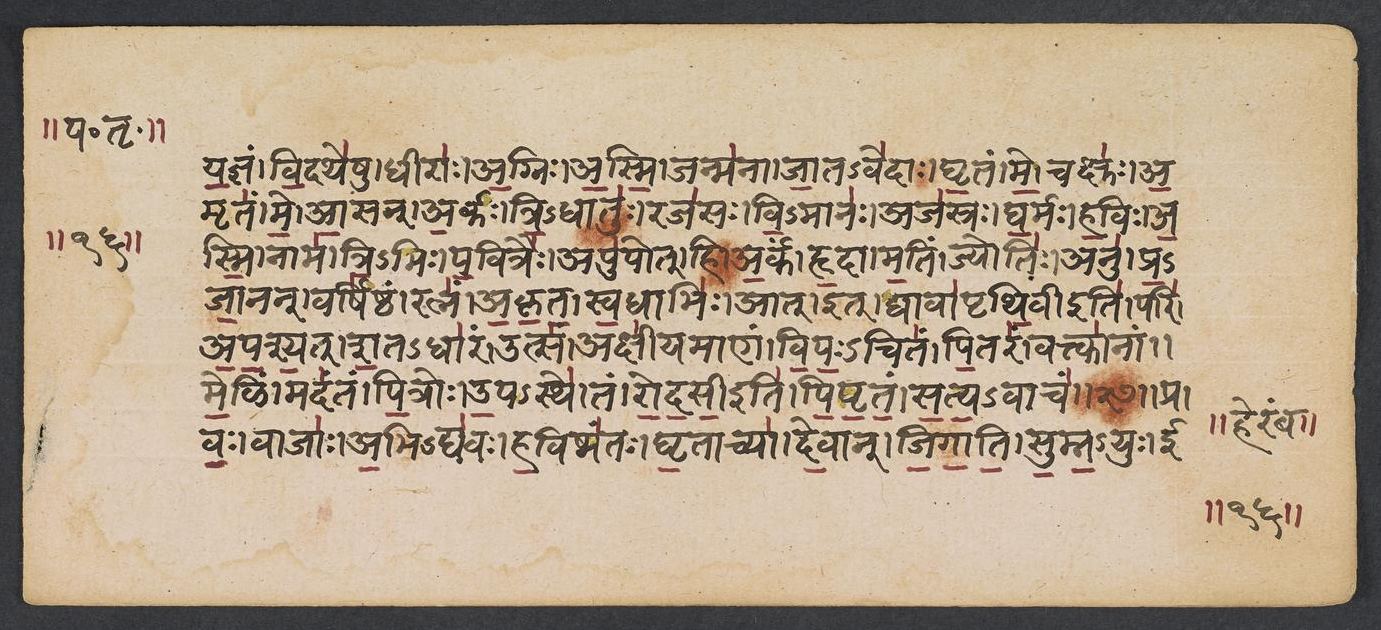
Where on the image
Penn Ms. Coll. 390 Item 41, fol. 206v (numbered 16v by the scribe) (OPenn image 208, upper leaf). Checked on the image: the Rigveda text on this page begins in RV 3.26.6 ‹yajñam vidatheṣu dhīrāḥ›. The next page with Rigveda text, fol. 207r (numbered 17r by the scribe), begins in RV 3.27.2 ‹īḷe agnim vipaḥ-citam girā›. Verses 3.26.6-9 end on this page; 3.26.6 begins on fol. 206r (numbered 16r by the scribe).
6vrāta̍ṁ-vrātaṁ ga̱ṇaṁ-ga̍ṇaṁ suśa̱stibhi̍r a̱gner bhāma̍m ma̱rutā̱m oja̍ īmahe | pṛṣa̍daśvāso anava̱bhrarā̍dhaso̱ gantā̍ro ya̱jñaṁ vi̱dathe̍ṣu̱ dhīrā̍ḥ ||
7a̱gnir a̍smi̱ janma̍nā jā̱tave̍dā ghṛ̱tam me̱ cakṣu̍r a̱mṛta̍m ma ā̱san | a̱rkas tri̱dhātū̱ raja̍so vi̱māno 'ja̍sro gha̱rmo ha̱vir a̍smi̱ nāma̍ ||
8tri̱bhiḥ pa̱vitrai̱r apu̍po̱d dhy a1̱̍rkaṁ hṛ̱dā ma̱tiṁ jyoti̱r anu̍ prajā̱nan | varṣi̍ṣṭha̱ṁ ratna̍m akṛta sva̱dhābhi̱r ād id dyāvā̍pṛthi̱vī pary a̍paśyat ||
9śa̱tadhā̍ra̱m utsa̱m akṣī̍yamāṇaṁ vipa̱ścita̍m pi̱tara̱ṁ vaktvā̍nām | me̱ḻim mada̍ntam pi̱tror u̱pasthe̱ taṁ ro̍dasī pipṛtaṁ satya̱vāca̍m ||
Compare: Padapāṭha (word-by-word text written in the manuscript; Sansknet e-text via GRETIL)
6vrātam-vrātam | gaṇam-gaṇam | suśasti-bhiḥ | agneḥ | bhāmam | marutām | ojaḥ | īmahe | pṛṣat-aśvāsaḥ | anavabhra-rādhasaḥ | gantāraḥ | yajñam | vidatheṣu | dhīrāḥ
7agniḥ | asmi | janmanā | jāta-vedāḥ | ghṛtam | me | cakṣuḥ | amṛtam | me | āsan | arkaḥ | tri-dhātuḥ | rajasaḥ | vi-mānaḥ | ajasraḥ | gharmaḥ | haviḥ | asmi | nāma
8tri-bhiḥ | pavitraiḥ | apupot | hi | arkam | hṛdā | matim | jyotiḥ | anu | pra-jānan | varṣiṣṭham | ratnam | akṛta | svadhābhiḥ | āt | it | dyāvāpṛthivī iti | pari | apaśyat
9śata-dhāram | utsam | akṣīyamāṇam | vipaḥ-citam | pitaram | vaktvānām | meḷim | madantam | pitroḥ | upa-sthe | tam | rodasī iti | pipṛtam | satya-vācam
6We, band on band and troop following troop, entreat with fair lauds Agni's splendour and the Maruts' might, With spotted deer for steeds, with wealth that never fails, they, wise Ones, come to sacrifice at our gatherings.
7Agni am I who know, by birth, all creatures. Mine eye is butter, in my mouth is nectar. I am light threefold, measurer of the region exhaustless heat am I, named burnt-oblation.
8Bearing in mind a thought with light accordant, he purified the Sun with three refinings; By his own nature gained the highest treasure, and looked abroad over the earth and heaven.
9The Spring that fails not with a hundred streamlets, Father inspired of' prayers that men should utter, The Sparkler, joyous in his Parents' bosorn, -him, the Truth-speaker, sate ye, Earth and Heaven.
Notes
- Sanskrit: Aufrecht's edition (1877) with the Vedic accents, as entered by van Nooten and Holland (GRETIL).
- English: Ralph T. H. Griffith, The Hymns of the Rigveda (1889-1892; 2nd ed. 1896-1897), from the VedaWeb digital text; OCR slips in that text were corrected against the printed 2nd edition (data/sources/rigveda/griffith_errata.json).
- Padapāṭha (edition text): Sansknet e-text via GRETIL (CC BY-NC-SA 4.0).
Cite
Sources
- Source: Penn Ms. Coll. 390 Item 41 (undated (catalogued with Penn's 18th-19th c. Vedic manuscripts)), OPenn, Public Domain Mark + Aufrecht's accented text (GRETIL) + Griffith's English (VedaWeb) (holding institution)
- Critical edition: Aufrecht (1877), accented e-text via GRETIL
← previous · → next · v cycle view · l back to library