Rigveda 3.27: To Agni
Introduction
Rigveda 3.27 is a hymn of 15 verses addressed to Agni. It stands in book (maṇḍala) 3, the family book of Viśvāmitra. The Rigveda is the oldest collection of Sanskrit hymns, composed in the second half of the second millennium BCE and handed down orally for many centuries before it was written down.
The manuscript shown is Penn Ms. Coll. 390 Item 41 (University of Pennsylvania), an undated paper manuscript of the padapāṭha (the word-by-word recitation text, in which every word is written separately and compounds are split) of the whole Ṛgveda in Devanāgarī, 884 leaves in fascicles, 7-9 lines to the page, accents in red; this hymn stands on fol. 206v-207v. Each section below gives the verses that end on one page; the page boundaries were read on the images (the opening words of every page), not counted out. Where the manuscript is a padapāṭha (the word-by-word recitation text), the section shows Aufrecht's continuous (saṃhitā) text first and, as the edition text, the padapāṭha of the same verses, which is the form written on the page.
How was this verified? (Provenance)
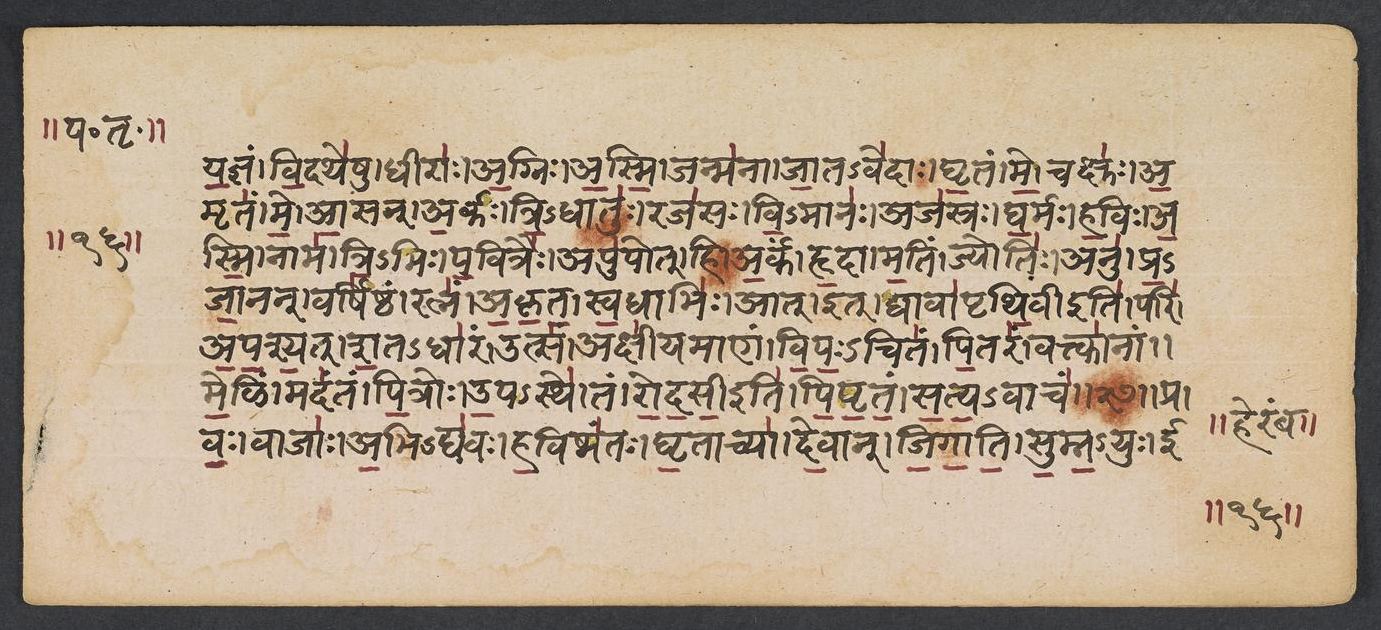
Where on the image
Penn Ms. Coll. 390 Item 41, fol. 206v (numbered 16v by the scribe) (OPenn image 208, upper leaf). Checked on the image: the Rigveda text on this page begins in RV 3.26.6 ‹yajñam vidatheṣu dhīrāḥ›. The next page with Rigveda text, fol. 207r (numbered 17r by the scribe), begins in RV 3.27.2 ‹īḷe agnim vipaḥ-citam girā›. Verse 3.27.1 ends on this page.
1pra vo̱ vājā̍ a̱bhidya̍vo ha̱viṣma̍nto ghṛ̱tācyā̍ | de̱vāñ ji̍gāti sumna̱yuḥ ||
Compare: Padapāṭha (word-by-word text written in the manuscript; Sansknet e-text via GRETIL)
1pra | vaḥ | vājāḥ | abhi-dyavaḥ | haviṣmantaḥ | ghṛtācyā | devān | jigāti | sumnayuḥ
1IN ladle dropping oil your food goes in oblation up to heaven, Goes to the Gods in search of bliss.
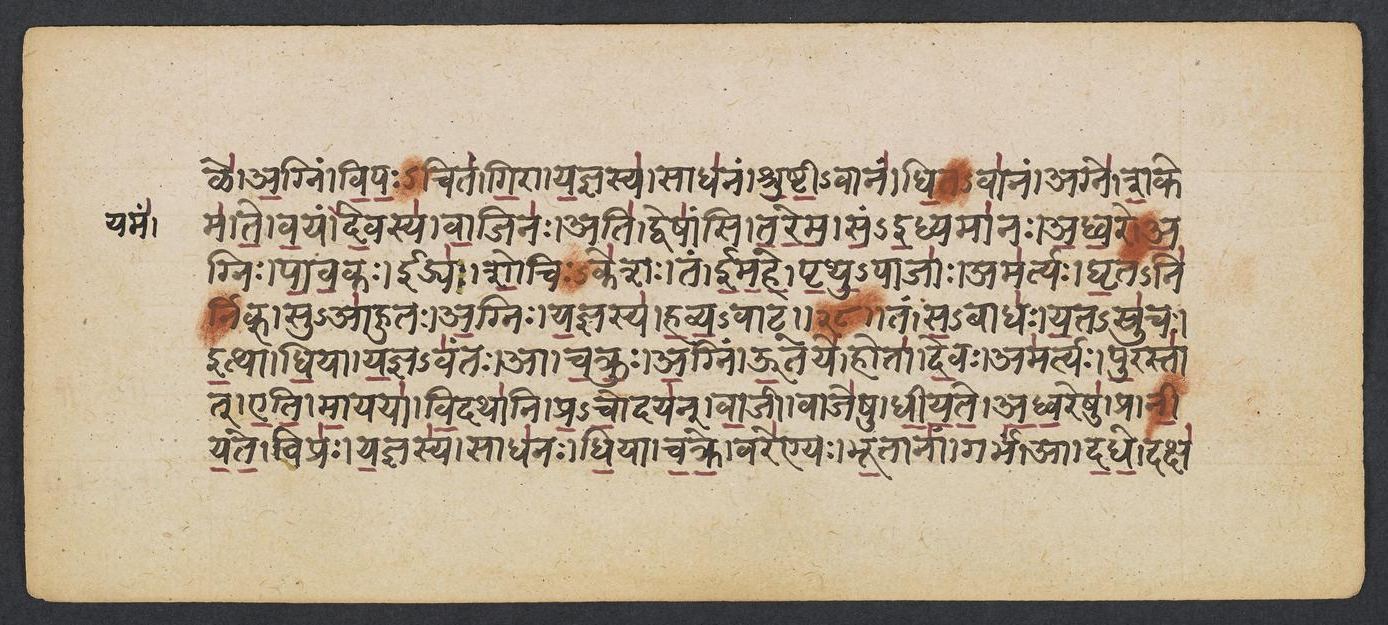
Where on the image
Penn Ms. Coll. 390 Item 41, fol. 207r (numbered 17r by the scribe) (OPenn image 208, lower leaf). Checked on the image: the Rigveda text on this page begins in RV 3.27.2 ‹īḷe agnim vipaḥ-citam girā›. The next page with Rigveda text, fol. 207v (numbered 17v by the scribe), begins in RV 3.27.9 ‹-dakṣasya pitaram tanā›. Verses 3.27.2-8 end on this page.
2īḻe̍ a̱gniṁ vi̍pa̱ścita̍ṁ gi̱rā ya̱jñasya̱ sādha̍nam | śru̱ṣṭī̱vāna̍ṁ dhi̱tāvā̍nam ||
3agne̍ śa̱kema̍ te va̱yaṁ yama̍ṁ de̱vasya̍ vā̱jina̍ḥ | ati̱ dveṣā̍ṁsi tarema ||
4sa̱mi̱dhyamā̍no adhva̱re̱3̱̍ 'gniḥ pā̍va̱ka īḍya̍ḥ | śo̱ciṣke̍śa̱s tam ī̍mahe ||
5pṛ̱thu̱pājā̱ ama̍rtyo ghṛ̱tani̍rṇi̱k svā̍hutaḥ | a̱gnir ya̱jñasya̍ havya̱vāṭ ||
6taṁ sa̱bādho̍ ya̱tasru̍ca i̱tthā dhi̱yā ya̱jñava̍ntaḥ | ā ca̍krur a̱gnim ū̱taye̍ ||
7hotā̍ de̱vo ama̍rtyaḥ pu̱rastā̍d eti mā̱yayā̍ | vi̱dathā̍ni praco̱daya̍n ||
8vā̱jī vāje̍ṣu dhīyate 'dhva̱reṣu̱ pra ṇī̍yate | vipro̍ ya̱jñasya̱ sādha̍naḥ ||
Compare: Padapāṭha (word-by-word text written in the manuscript; Sansknet e-text via GRETIL)
2īḷe | agnim | vipaḥ-citam | girā | yajñasya | sādhanam | śruṣṭī-vānam | dhita-vānam
3agne | śakema | te | vayam | yamam | devasya | vājinaḥ | ati | dveṣāṃsi | tarema
4sam-idhyamānaḥ | adhvare | agniḥ | pāvakaḥ | īḍyaḥ | śociḥ-keśaḥ | tam | īmahe
5pṛthu-pājāḥ | amartyaḥ | ghṛta-nirnik | su-āhutaḥ | agniḥ | yajñasya | havya-vāṭ
6tam | sa-bādhaḥ | yata-srucaḥ | itthā | dhiyā | yajña-vantaḥ | ā | cakruḥ | agnim | ūtaye
7hotā | devaḥ | amartyaḥ | purastāt | eti | māyayā | vidathāni | pra-codayan
8vājī | vājeṣu | dhīyate | adhvareṣu | pra | nīyate | vipraḥ | yajñasya | sādhanaḥ
2Agni I laud, the Sage inspired, crowner of sacrifice through song, Who listens and gives bounteous gifts.
3O Agni, if we might obtain control of thee the potent God, Then should we overcome our foes.
4Kindled at sacrifices he is Agni, hallower, meet for praise, With flame for hair: to him we seek.
5Immortal Agni, shining far, enrobed with oil, well worshipped, bears The gifts of sacrifice away.
6The priests with ladles lifted up, worshipping here with holy thought, Have brought this Agni for our aid.
7Immortal, Sacrificer, God, with wondrous power he leads the way, Urging the great assembly on.
8Strong, he is set on deeds ofstrength. In sacrifices led in front, As Singer he completes the rite.
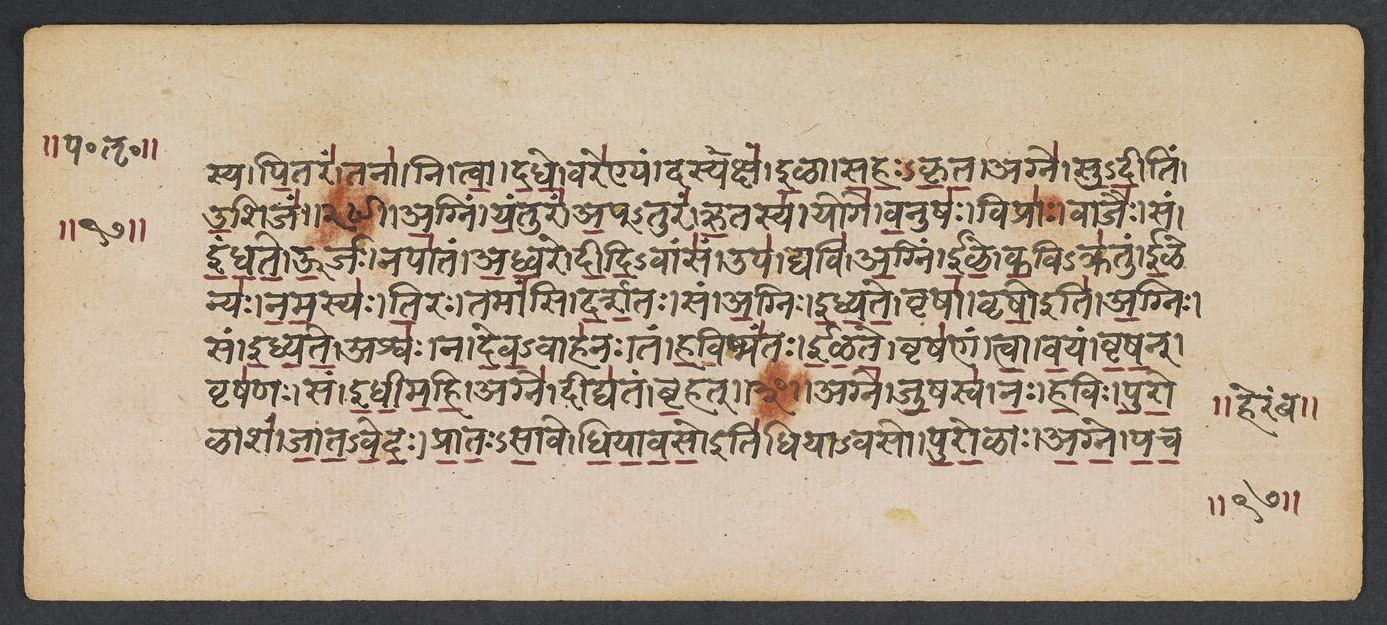
Where on the image
Penn Ms. Coll. 390 Item 41, fol. 207v (numbered 17v by the scribe) (OPenn image 209, upper leaf). Checked on the image: the Rigveda text on this page begins in RV 3.27.9 ‹-dakṣasya pitaram tanā›. The next page with Rigveda text, fol. 208r (numbered 18r by the scribe), begins in RV 3.28.2 ‹-pacataḥ tubhyam vā gha›. Verses 3.27.9-15 end on this page; 3.27.9 begins on fol. 207r (numbered 17r by the scribe).
9dhi̱yā ca̍kre̱ vare̍ṇyo bhū̱tānā̱ṁ garbha̱m ā da̍dhe | dakṣa̍sya pi̱tara̱ṁ tanā̍ ||
10ni tvā̍ dadhe̱ vare̍ṇya̱ṁ dakṣa̍sye̱ḻā sa̍haskṛta | agne̍ sudī̱tim u̱śija̍m ||
11a̱gniṁ ya̱ntura̍m a̱ptura̍m ṛ̱tasya̱ yoge̍ va̱nuṣa̍ḥ | viprā̱ vājai̱ḥ sam i̍ndhate ||
12ū̱rjo napā̍tam adhva̱re dī̍di̱vāṁsa̱m upa̱ dyavi̍ | a̱gnim ī̍ḻe ka̱vikra̍tum ||
13ī̱ḻenyo̍ nama̱sya̍s ti̱ras tamā̍ṁsi darśa̱taḥ | sam a̱gnir i̍dhyate̱ vṛṣā̍ ||
14vṛṣo̍ a̱gniḥ sam i̍dhya̱te 'śvo̱ na de̍va̱vāha̍naḥ | taṁ ha̱viṣma̍nta īḻate ||
15vṛṣa̍ṇaṁ tvā va̱yaṁ vṛ̍ṣa̱n vṛṣa̍ṇa̱ḥ sam i̍dhīmahi | agne̱ dīdya̍tam bṛ̱hat ||
Compare: Padapāṭha (word-by-word text written in the manuscript; Sansknet e-text via GRETIL)
9dhiyā | cakre | vareṇyaḥ | bhūtānām | garbham | ā | dadhe | dakṣasya | pitaram | tanā
10ni | tvā | dadhe | vareṇyam | dakṣasya | iḷā | sahaḥ-kṛta | agne | su-dītim | uśijam
11agnim | yanturam | ap-turam | ṛtasya | yoge | vanuṣaḥ | viprāḥ | vājaiḥ | sam | indhate
12ūrjaḥ | napātam | adhvare | dīdi-vāṃsam | upa | dyavi | agnim | īḷe | kavi-kratum
13īḷenyaḥ | namasyaḥ | tiraḥ | tamāṃsi | darśataḥ | sam | agniḥ | idhyate | vṛṣā
14vṛṣo iti | agniḥ | sam | idhyate | aśvaḥ | na | deva-vāhanaḥ | tam | haviṣmantaḥ | īḷate
15vṛṣaṇam | tvā | vayam | vṛṣan | vṛṣaṇaḥ | sam | idhīmahi | agne | dīdyatam | bṛhat
9Excellent, he was made by thought. The Germ of beings have I gained, Yea, and die Sire of active strength.
10Thee have I stablished, Excellent, O strengthened by the sage's prayer, Thee, Agni, longing, nobly bright.
11Agni, the swift and active One, singers, at time of sacrifice, Eagerly kindle with their food.
12Agni the Son of Strength who shines up to the heaven in solemn rites, The wise of heart, I glorify.
13Meet to be lauded and adored, showing in beauty through the dark, Agni, the Strong, is kindled well.
14Agni is kindled as a bull, like a horsebearer of the Gods: Men with oblations worship him.
15Thee will we kindle as a bull, we who are Bulls ourselves, O Bull. Thee, Agni, shining mightily.
Notes
- Sanskrit: Aufrecht's edition (1877) with the Vedic accents, as entered by van Nooten and Holland (GRETIL).
- English: Ralph T. H. Griffith, The Hymns of the Rigveda (1889-1892; 2nd ed. 1896-1897), from the VedaWeb digital text; OCR slips in that text were corrected against the printed 2nd edition (data/sources/rigveda/griffith_errata.json).
- Padapāṭha (edition text): Sansknet e-text via GRETIL (CC BY-NC-SA 4.0).
Cite
Sources
- Source: Penn Ms. Coll. 390 Item 41 (undated (catalogued with Penn's 18th-19th c. Vedic manuscripts)), OPenn, Public Domain Mark + Aufrecht's accented text (GRETIL) + Griffith's English (VedaWeb) (holding institution)
- Critical edition: Aufrecht (1877), accented e-text via GRETIL
← previous · → next · v cycle view · l back to library