Rigveda 3.29: To Agni
Introduction
Rigveda 3.29 is a hymn of 16 verses addressed to Agni. It stands in book (maṇḍala) 3, the family book of Viśvāmitra. The Rigveda is the oldest collection of Sanskrit hymns, composed in the second half of the second millennium BCE and handed down orally for many centuries before it was written down.
The manuscript shown is Penn Ms. Coll. 390 Item 41 (University of Pennsylvania), an undated paper manuscript of the padapāṭha (the word-by-word recitation text, in which every word is written separately and compounds are split) of the whole Ṛgveda in Devanāgarī, 884 leaves in fascicles, 7-9 lines to the page, accents in red; this hymn stands on fol. 208r-210r. Each section below gives the verses that end on one page; the page boundaries were read on the images (the opening words of every page), not counted out. Where the manuscript is a padapāṭha (the word-by-word recitation text), the section shows Aufrecht's continuous (saṃhitā) text first and, as the edition text, the padapāṭha of the same verses, which is the form written on the page.
How was this verified? (Provenance)
Where on the image
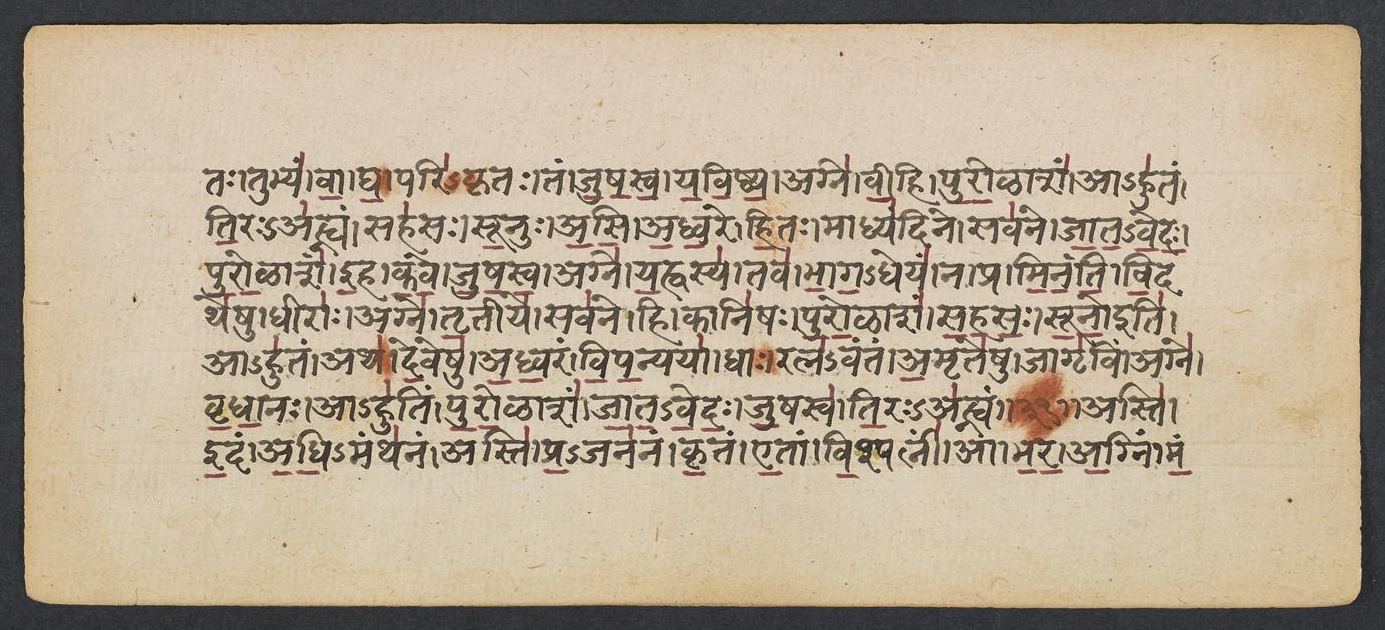
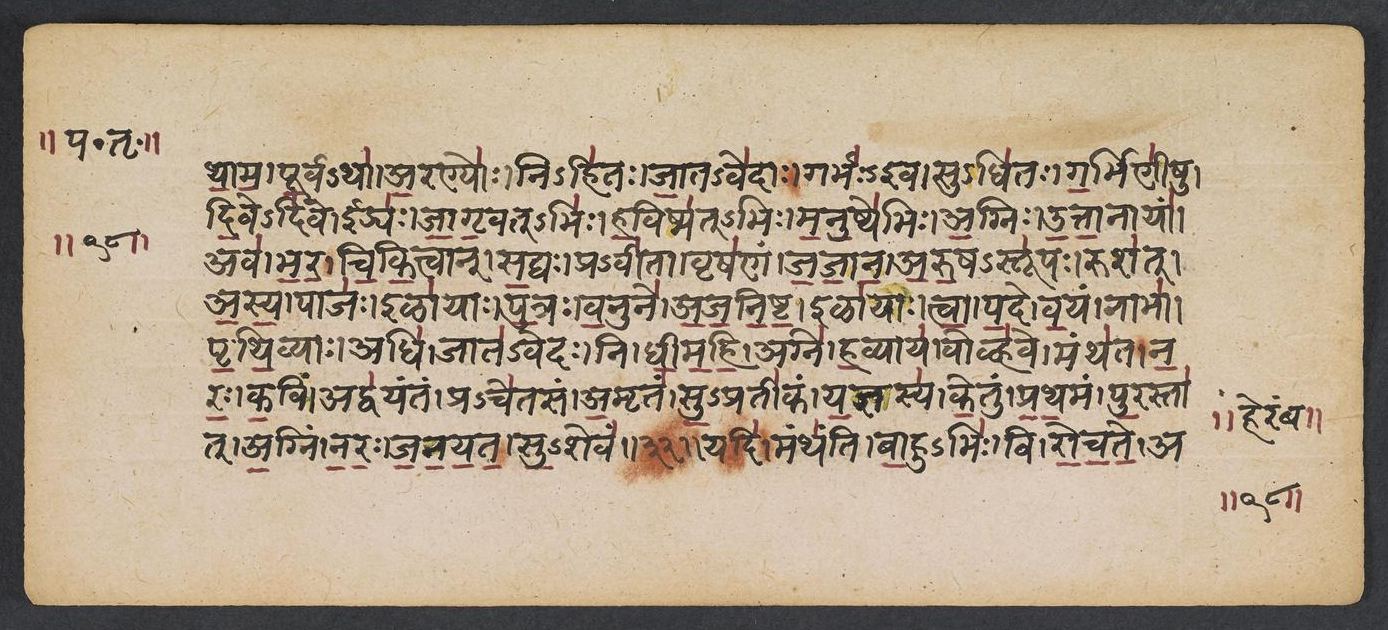
Penn Ms. Coll. 390 Item 41, fol. 208v (numbered 18v by the scribe) (OPenn image 210, upper leaf). Checked on the image: the Rigveda text on this page begins in RV 3.29.1 ‹-manthāma pūrva-thā›. The next page with Rigveda text, fol. 209r (numbered 19r by the scribe), begins in RV 3.29.6 ‹-aśvaḥ na vājī aruṣaḥ›. Verses 3.29.1-5 end on this page; 3.29.1 begins on fol. 208r (numbered 18r by the scribe).
1astī̱dam a̍dhi̱mantha̍na̱m asti̍ pra̱jana̍naṁ kṛ̱tam | e̱tāṁ vi̱śpatnī̱m ā bha̍rā̱gnim ma̍nthāma pū̱rvathā̍ ||
2a̱raṇyo̱r nihi̍to jā̱tave̍dā̱ garbha̍ iva̱ sudhi̍to ga̱rbhiṇī̍ṣu | di̱ve-di̍va̱ īḍyo̍ jāgṛ̱vadbhi̍r ha̱viṣma̍dbhir manu̱ṣye̍bhir a̱gniḥ ||
3u̱ttā̱nāyā̱m ava̍ bharā ciki̱tvān sa̱dyaḥ pravī̍tā̱ vṛṣa̍ṇaṁ jajāna | a̱ru̱ṣastū̍po̱ ruśa̍d asya̱ pāja̱ iḻā̍yās pu̱tro va̱yune̍ 'janiṣṭa ||
4iḻā̍yās tvā pa̱de va̱yaṁ nābhā̍ pṛthi̱vyā adhi̍ | jāta̍vedo̱ ni dhī̍ma̱hy agne̍ ha̱vyāya̱ voḻha̍ve ||
5mantha̍tā naraḥ ka̱vim adva̍yanta̱m prace̍tasam a̱mṛta̍ṁ su̱pratī̍kam | ya̱jñasya̍ ke̱tum pra̍tha̱mam pu̱rastā̍d a̱gniṁ na̍ro janayatā su̱śeva̍m ||
Compare: Padapāṭha (word-by-word text written in the manuscript; Sansknet e-text via GRETIL)
1asti | idam | adhi-manthanam | asti | pra-jananam | kṛtam | etām | viśpatnīm | ā | bhara | agnim | manthāma | pūrva-thā
2araṇyoḥ | ni-hitaḥ | jāta-vedāḥ | garbhaḥ-iva | su-dhitaḥ | garbhiṇīṣu | dive--di ve | īḍyaḥ | jāgṛvat-bhiḥ | haviṣmat-bhiḥ | manuṣyebhiḥ | agniḥ
3uttānāyām | ava | bhara | cikitvān | sadyaḥ | pra-vītā | vṛṣaṇam | jajāna | aruṣa-stūpaḥ | ruśat | asya | pājaḥ | iḷāyāḥ | putraḥ | vayune | ajaniṣṭa
4iḷāyāḥ | tvā | pade | vayam | nābhā | pṛthivyāḥ | adhi | jāta-vedaḥ | ni | dhīmahi | agne | havyāya | voḷhave
5manthata | naraḥ | kavim | advayantam | pra-cetasam | amṛtam | su-pratīkam | yajñasya | ketum | prathamam | purastāt | agnim | naraḥ | janayata | su-śevam
1HERE is the gear for friction, here tinder made ready for the spark. Bring thou the Matron: we will rub Agni in ancient fashion forth.
2In the two fire-sticks Jâtavedas lieth, even as the well-set germ in pregnant women, Agni who day by day must be exalted by men who watch and worship with oblations.
3Lay this with care on that which lies extended: straight hath she borne the Steerwhen made prolific. With his red pillar-radiant is his splendour -in our skilled task is born the Son of Iḷâ.
4In Iḷâ's place we set thee down, upon the central point of earth, That, Agni Jâtavedas, thou mayst bear our offerings to the Gods.
5Rub into life, ye men, the Sage, the guileless, Immortal, very wise and fair to look on. O men, bring forth the most propitious Agni, first ensign of the sacrifice to eastward.
Where on the image
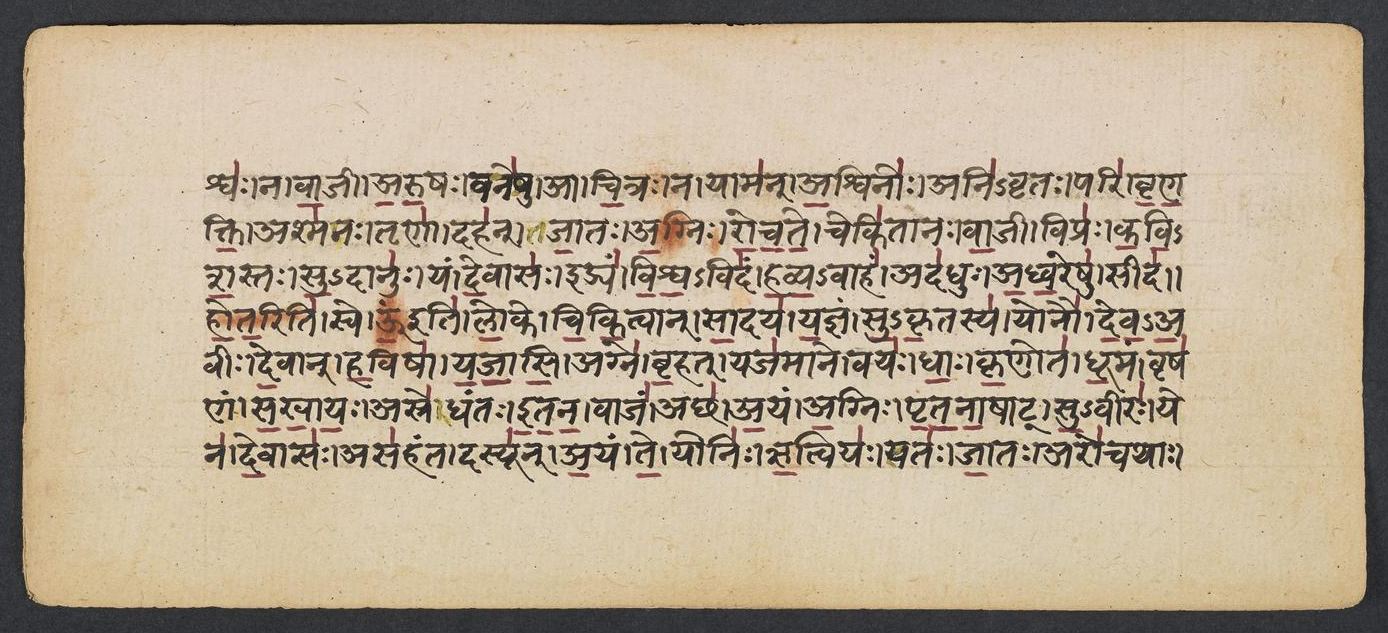
Penn Ms. Coll. 390 Item 41, fol. 209r (numbered 19r by the scribe) (OPenn image 210, lower leaf). Checked on the image: the Rigveda text on this page begins in RV 3.29.6 ‹-aśvaḥ na vājī aruṣaḥ›. The next page with Rigveda text, fol. 209v (numbered 19v by the scribe), begins in RV 3.29.10 ‹tam jānan agne ā›. Verses 3.29.6-9 end on this page; 3.29.6 begins on fol. 208v (numbered 18v by the scribe).
6yadī̱ mantha̍nti bā̱hubhi̱r vi ro̍ca̱te 'śvo̱ na vā̱jy a̍ru̱ṣo vane̱ṣv ā | ci̱tro na yāma̍nn a̱śvino̱r ani̍vṛta̱ḥ pari̍ vṛṇa̱kty aśma̍na̱s tṛṇā̱ daha̍n ||
7jā̱to a̱gnī ro̍cate̱ ceki̍tāno vā̱jī vipra̍ḥ kaviśa̱staḥ su̱dānu̍ḥ | yaṁ de̱vāsa̱ īḍya̍ṁ viśva̱vida̍ṁ havya̱vāha̱m ada̍dhur adhva̱reṣu̍ ||
8sīda̍ hota̱ḥ sva u̍ lo̱ke ci̍ki̱tvān sā̱dayā̍ ya̱jñaṁ su̍kṛ̱tasya̱ yonau̍ | de̱vā̱vīr de̱vān ha̱viṣā̍ yajā̱sy agne̍ bṛ̱had yaja̍māne̱ vayo̍ dhāḥ ||
9kṛ̱ṇota̍ dhū̱maṁ vṛṣa̍ṇaṁ sakhā̱yo 'sre̍dhanta itana̱ vāja̱m accha̍ | a̱yam a̱gniḥ pṛ̍tanā̱ṣāṭ su̱vīro̱ yena̍ de̱vāso̱ asa̍hanta̱ dasyū̍n ||
Compare: Padapāṭha (word-by-word text written in the manuscript; Sansknet e-text via GRETIL)
6yadi | manthanti | bāhu-bhiḥ | vi | rocate | aśvaḥ | na | vājī | aruṣaḥ | vaneṣu | ā | citraḥ | na | yāman | aśvinoḥ | ani-vṛtaḥ | pari | vṛṇakti | aśmanaḥ | tṛṇā | dahan
7jātaḥ | agniḥ | rocate | cekitānaḥ | vājī | vipraḥ | kavi-śastaḥ | su-dānuḥ | yam | devāsaḥ | īḍyam | viśva-vidam | havya-vāham | adadhuḥ | adhvareṣu
8sīda | hotariti | sve | oṃ iti | loke | cikitvān | sādaya | yajñam | su-kṛtasya | yonau | deva-avīḥ | devān | haviṣā | yajāsi | agne | bṛhat | yajamāne | vayaḥ | dhāḥ
9kṛṇota | dhūmam | vṛṣaṇam | sakhāyaḥ | asredhantaḥ | itana | vājam | accha | ayam | agniḥ | pṛtanāṣāṭ | su-vīraḥ | yena | devāsaḥ | asahanta | dasyūn
6When with their arms they rub him straight he shineth forth like a strong courser, red in colour, in the wood. Bright, checkless, as it were upon the Aṣvins' path, lie passeth by the stones and burneth up the grass.
7Agni shines forth when born, observant, mighty, the bountiful, the Singer praised by sages; Whom, as adorable and knowing all things, Gods set at solemn rites as offeringbearer.
8Set thee, O Priest, in, thine own place, observant: lay down the sacrifice in the home of worship. Thou, dear to Gods, shalt serve them with oblation: Agni, give long life to the sacrificer.
9Raise ye a mighty smoke, my fellow-workers! Ye shall attain to wealth without obstruction. This Agni is the battle-winning Hero by whom the Gods have overcome the Dasyus.
Where on the image
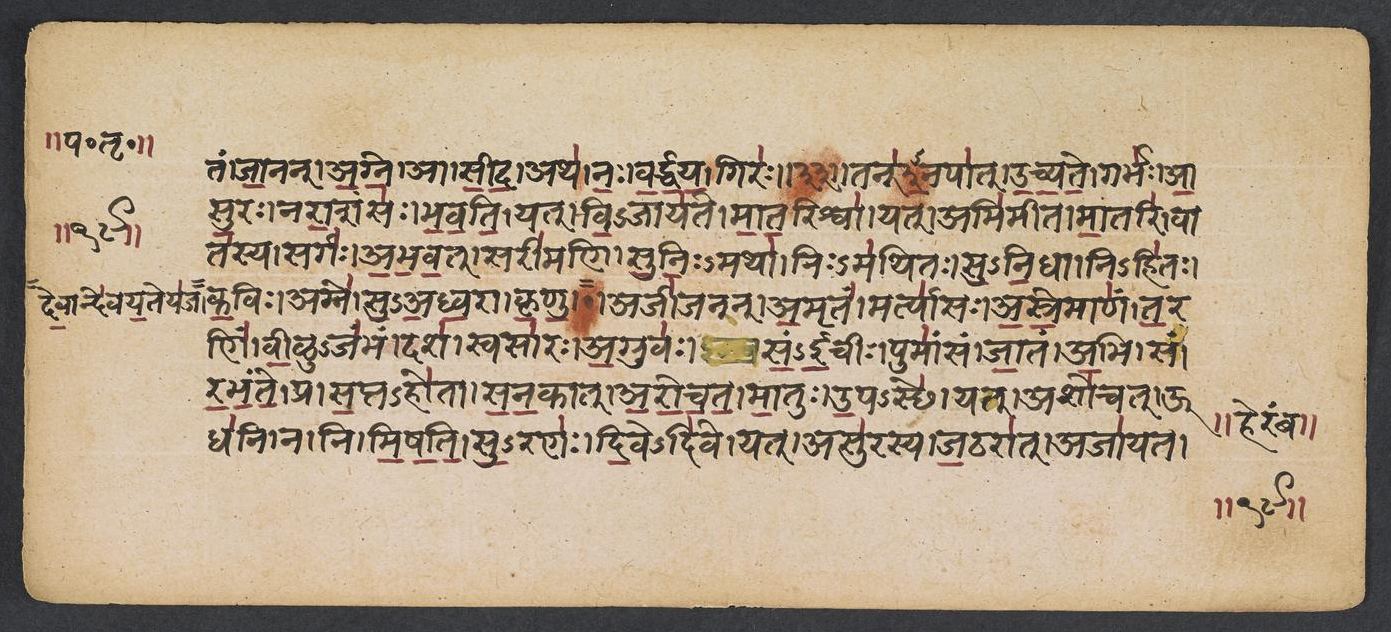
Penn Ms. Coll. 390 Item 41, fol. 209v (numbered 19v by the scribe) (OPenn image 211, upper leaf). Checked on the image: the Rigveda text on this page begins in RV 3.29.10 ‹tam jānan agne ā›. The next page with Rigveda text, fol. 210r (numbered 20r by the scribe), begins in RV 3.29.15 ‹amitra-yudhaḥ marutām-iva pra-yāḥ prathama-jāḥ›. Verses 3.29.10-14 end on this page; 3.29.10 begins on fol. 209r (numbered 19r by the scribe).
10a̱yaṁ te̱ yoni̍r ṛ̱tviyo̱ yato̍ jā̱to aro̍cathāḥ | taṁ jā̱nann a̍gna̱ ā sī̱dāthā̍ no vardhayā̱ gira̍ḥ ||
11tanū̱napā̍d ucyate̱ garbha̍ āsu̱ro narā̱śaṁso̍ bhavati̱ yad vi̱jāya̍te | mā̱ta̱riśvā̱ yad ami̍mīta mā̱tari̱ vāta̍sya̱ sargo̍ abhava̱t sarī̍maṇi ||
12su̱ni̱rmathā̱ nirma̍thitaḥ suni̱dhā nihi̍taḥ ka̱viḥ | agne̍ svadhva̱rā kṛ̍ṇu de̱vān de̍vaya̱te ya̍ja ||
13ajī̍janann a̱mṛta̱m martyā̍so 'sre̱māṇa̍ṁ ta̱raṇi̍ṁ vī̱ḻuja̍mbham | daśa̱ svasā̍ro a̱gruva̍ḥ samī̱cīḥ pumā̍ṁsaṁ jā̱tam a̱bhi saṁ ra̍bhante ||
14pra sa̱ptaho̍tā sana̱kād a̍rocata mā̱tur u̱pasthe̱ yad aśo̍ca̱d ūdha̍ni | na ni mi̍ṣati su̱raṇo̍ di̱ve-di̍ve̱ yad asu̍rasya ja̱ṭharā̱d ajā̍yata ||
Compare: Padapāṭha (word-by-word text written in the manuscript; Sansknet e-text via GRETIL)
10ayam | te | yoniḥ | ṛtviyaḥ | yataḥ | jātaḥ | arocathāḥ | tam | jānan | agne | ā | sīda | atha | naḥ | vardhaya | giraḥ
11tanū-napāt | ucyate | garbhaḥ | āsuraḥ | narāśaṃsaḥ | bhavati | yat | vi-jāyate | mātariśvā | yat | amimīta | mātari | vātasya | sargaḥ | abhavat | sarīmaṇi
12suniḥ-mathā | niḥ-mathitaḥ | su-nidhā | ni-hitaḥ | kaviḥ | agne | su-adhvarā | kṛṇu | devān | deva-yate | yaja
13ajījanan | amṛtam | martyāsaḥ | asremāṇam | taraṇim | vīḷu-jambham | daśa | svasāraḥ | agruvaḥ | samīcīḥ | pumāṃsam | jātam | abhi | sam | rabhante
14pra | sapta-hotā | sanakāt | arocata | mātuḥ | upa-sthe | yat | aśocat | ūdhani | na | ni | miṣati | su-raṇaḥ | dive--dive | yat | asurasya | jaṭharāt | ajāyata
10This is thine ordered place of birth whence sprung to life thou shonest forth. Knowing this, Agni, sit thee down, and prosper thou the songs we sing.
11As Germ Celestial he is called Tanûnapât, and Narâṣansa born diffused in varied shape. Formed in his Mother he is Mâtariṣvan; he hath, in his course, become the rapid flight of wind.
12With strong attrition rubbed to life, laid down with careful hand, a Sage, Agni, make sacrifices good, and for the pious bring the Gods.
13Mortals have brought to life the God Immortal, the Conqueror with mighty jaws, unfailing. The sisters ten, unwedded and united, together grasp the Babe, the new-born Infant.
14Served by the seven priests, he shone forth from ancient time, when in his Mother's bosom, in her lap, he glowed. Giving delight each day he closeth not his eye, since from the Asura's body hewas brought to life.
Where on the image
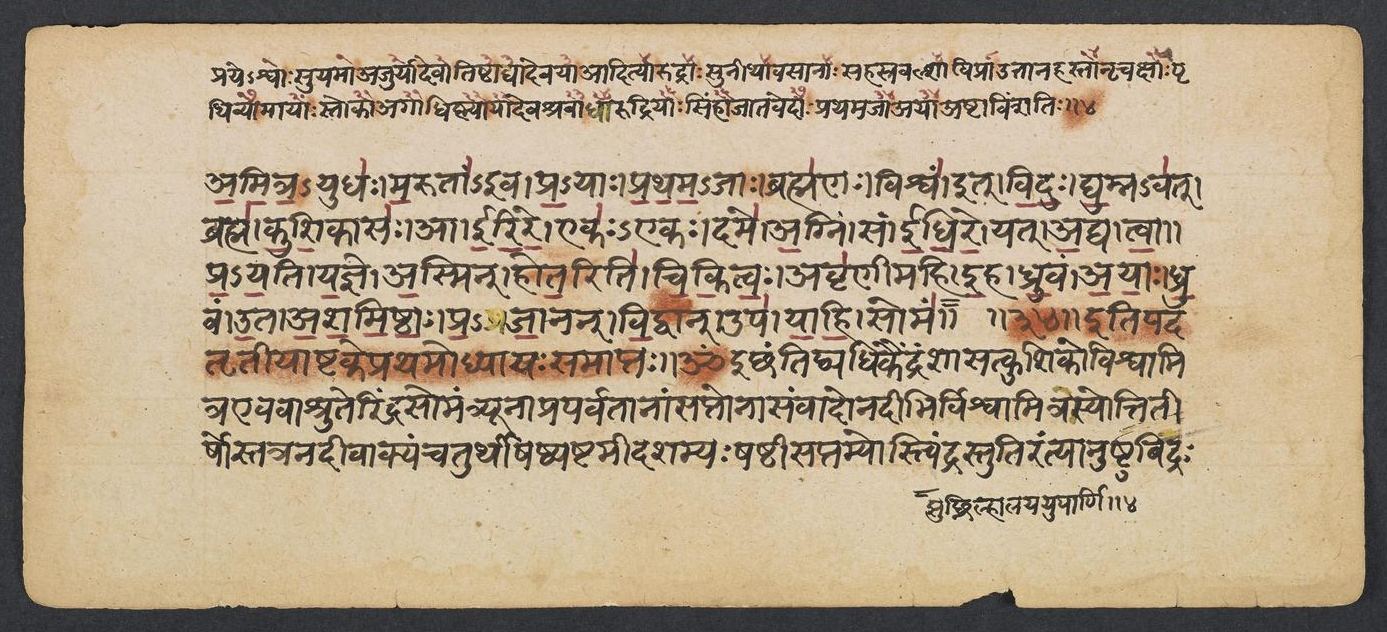
Penn Ms. Coll. 390 Item 41, fol. 210r (numbered 20r by the scribe) (OPenn image 211, lower leaf). Checked on the image: the Rigveda text on this page begins in RV 3.29.15 ‹amitra-yudhaḥ marutām-iva pra-yāḥ prathama-jāḥ›. The next page with Rigveda text, fol. 210v (numbered 20v by the scribe), begins in RV 3.30.1 ‹icchanti tvā somyāsaḥ sakhāyaḥ›. Verses 3.29.15-16 end on this page.
15a̱mi̱trā̱yudho̍ ma̱rutā̍m iva pra̱yāḥ pra̍thama̱jā brahma̍ṇo̱ viśva̱m id vi̍duḥ | dyu̱mnava̱d brahma̍ kuśi̱kāsa̱ eri̍ra̱ eka̍-eko̱ dame̍ a̱gniṁ sam ī̍dhire ||
16yad a̱dya tvā̍ praya̱ti ya̱jñe a̱smin hota̍ś ciki̱tvo 'vṛ̍ṇīmahī̱ha | dhru̱vam a̍yā dhru̱vam u̱tāśa̍miṣṭhāḥ prajā̱nan vi̱dvām̐ upa̍ yāhi̱ soma̍m ||
Compare: Padapāṭha (word-by-word text written in the manuscript; Sansknet e-text via GRETIL)
15amitra-yudhaḥ | marutām-iva | pra-yāḥ | prathama-jāḥ | brahmaṇaḥ | viśvam | it | viduḥ | dyumna-vat | brahma | kuśikāsaḥ | ā | īrire | ekaḥ-ekaḥ | dame | agn im | sam | īdhire
16yat | adya | tvā | pra-yati | yajñe | asmin | hotariti | cikitvaḥ | avṛṇīmahi | iha | dhruvam | ayāḥ | dhruvam | uta | aśamiṣṭha#aḥ | pra-jānan | vidvān | upa | yāhi | somam
15Even as the Maruts, onslaughts who attack the foe, those born the first of all knew the full power of prayer. The Kuṣikas have made the glorious hymn ascend, and, each one singly in his home, have kindled fire.
16As we, O Priest observant, have elected thee this day, what time the solemn sacrifice began, So surely hast thou worshipped, surely hast thou toiled: come thou unto the Soma, wise and knowing all.
Notes
- Sanskrit: Aufrecht's edition (1877) with the Vedic accents, as entered by van Nooten and Holland (GRETIL).
- English: Ralph T. H. Griffith, The Hymns of the Rigveda (1889-1892; 2nd ed. 1896-1897), from the VedaWeb digital text; OCR slips in that text were corrected against the printed 2nd edition (data/sources/rigveda/griffith_errata.json).
- Padapāṭha (edition text): Sansknet e-text via GRETIL (CC BY-NC-SA 4.0).
Cite
Sources
- Source: Penn Ms. Coll. 390 Item 41 (undated (catalogued with Penn's 18th-19th c. Vedic manuscripts)), OPenn, Public Domain Mark + Aufrecht's accented text (GRETIL) + Griffith's English (VedaWeb) (holding institution)
- Critical edition: Aufrecht (1877), accented e-text via GRETIL
← previous · → next · v cycle view · l back to library