Rigveda 3.30: To Indra
Introduction
Rigveda 3.30 is a hymn of 22 verses addressed to Indra. It stands in book (maṇḍala) 3, the family book of Viśvāmitra. The Rigveda is the oldest collection of Sanskrit hymns, composed in the second half of the second millennium BCE and handed down orally for many centuries before it was written down.
The manuscript shown is Penn Ms. Coll. 390 Item 41 (University of Pennsylvania), an undated paper manuscript of the padapāṭha (the word-by-word recitation text, in which every word is written separately and compounds are split) of the whole Ṛgveda in Devanāgarī, 884 leaves in fascicles, 7-9 lines to the page, accents in red; this hymn stands on fol. 210v-213r. Each section below gives the verses that end on one page; the page boundaries were read on the images (the opening words of every page), not counted out. Where the manuscript is a padapāṭha (the word-by-word recitation text), the section shows Aufrecht's continuous (saṃhitā) text first and, as the edition text, the padapāṭha of the same verses, which is the form written on the page.
How was this verified? (Provenance)
Where on the image
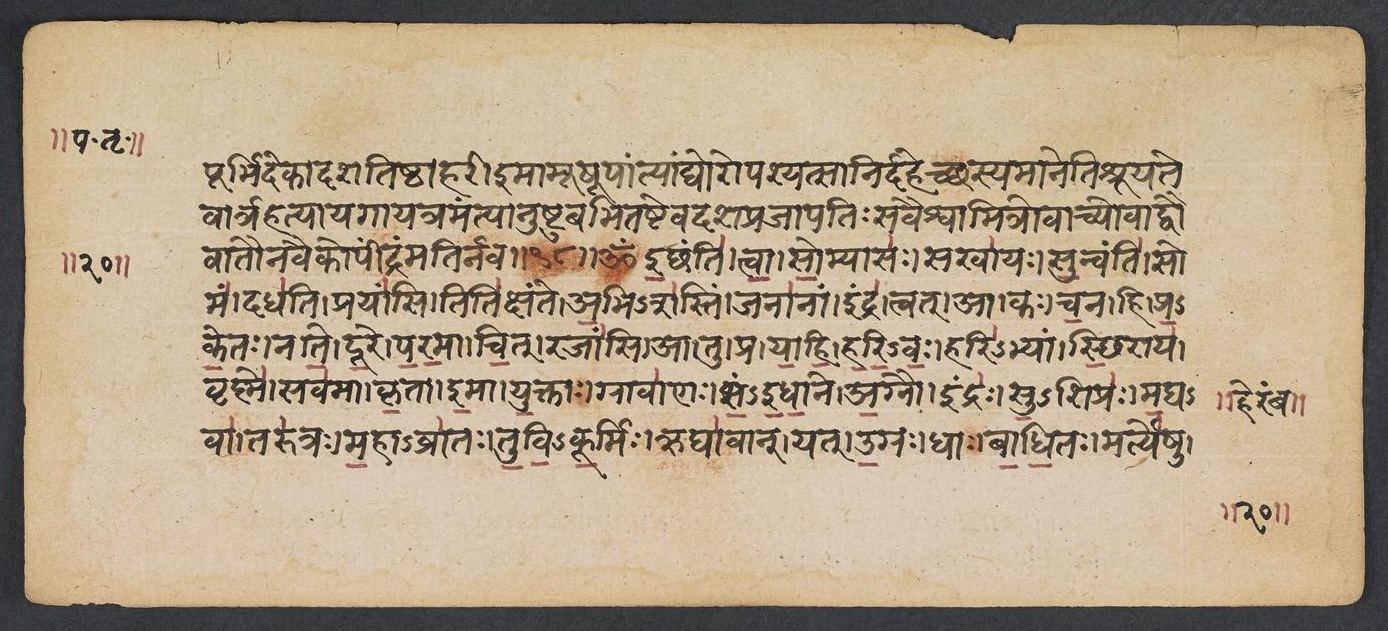
Penn Ms. Coll. 390 Item 41, fol. 210v (numbered 20v by the scribe) (OPenn image 212, upper leaf). Checked on the image: the Rigveda text on this page begins in RV 3.30.1 ‹icchanti tvā somyāsaḥ sakhāyaḥ›. Lines 1-3 carry the anukramaṇī for aṣṭaka 3, adhyāya 2; 3.30.1 (icchanti tvā somyāsaḥ sakhāyaḥ) begins in line 3 after oṃ. The next page with Rigveda text, fol. 211r (numbered 21r by the scribe), begins in RV 3.30.3 ‹kva tyā te vṛṣabha›. Verses 3.30.1-2 end on this page.
1i̱cchanti̍ tvā so̱myāsa̱ḥ sakhā̍yaḥ su̱nvanti̱ soma̱ṁ dadha̍ti̱ prayā̍ṁsi | titi̍kṣante a̱bhiśa̍sti̱ṁ janā̍nā̱m indra̱ tvad ā kaś ca̱na hi pra̍ke̱taḥ ||
2na te̍ dū̱re pa̍ra̱mā ci̱d rajā̱ṁsy ā tu pra yā̍hi harivo̱ hari̍bhyām | sthi̱rāya̱ vṛṣṇe̱ sava̍nā kṛ̱temā yu̱ktā grāvā̍ṇaḥ samidhā̱ne a̱gnau ||
Compare: Padapāṭha (word-by-word text written in the manuscript; Sansknet e-text via GRETIL)
1icchanti | tvā | somyāsaḥ | sakhāyaḥ | sunvanti | somam | dadhati | prayāṃsi | tat ikṣante | abhi-śastim | janānām | indra | tvat | ā | kaḥ | cana | hi | pra-ketaḥ
2na | te | dūre | paramā | cit | rajāṃsi | ā | tu | pra | yāhi | hari-vaḥ | hari-bhyām | sth irāya | vṛṣṇe | savanā | kṛtā | imā | yuktāḥ | grāvāṇaḥ | sam-idhāne | agnau
1THE friends who offer Soma long to find thee: they pour forth Soma and present their viands. They bear unmoved the cursing of the people, for all our wisdom comes from thee, O Indra.
2Not far for thee are mid-air's loftiest regions: start hither, Lord of Bays, with thy Bay Horses. Made for the Firm and Strong are these libations. The pressing-stones are set and fire is kindled.
Where on the image
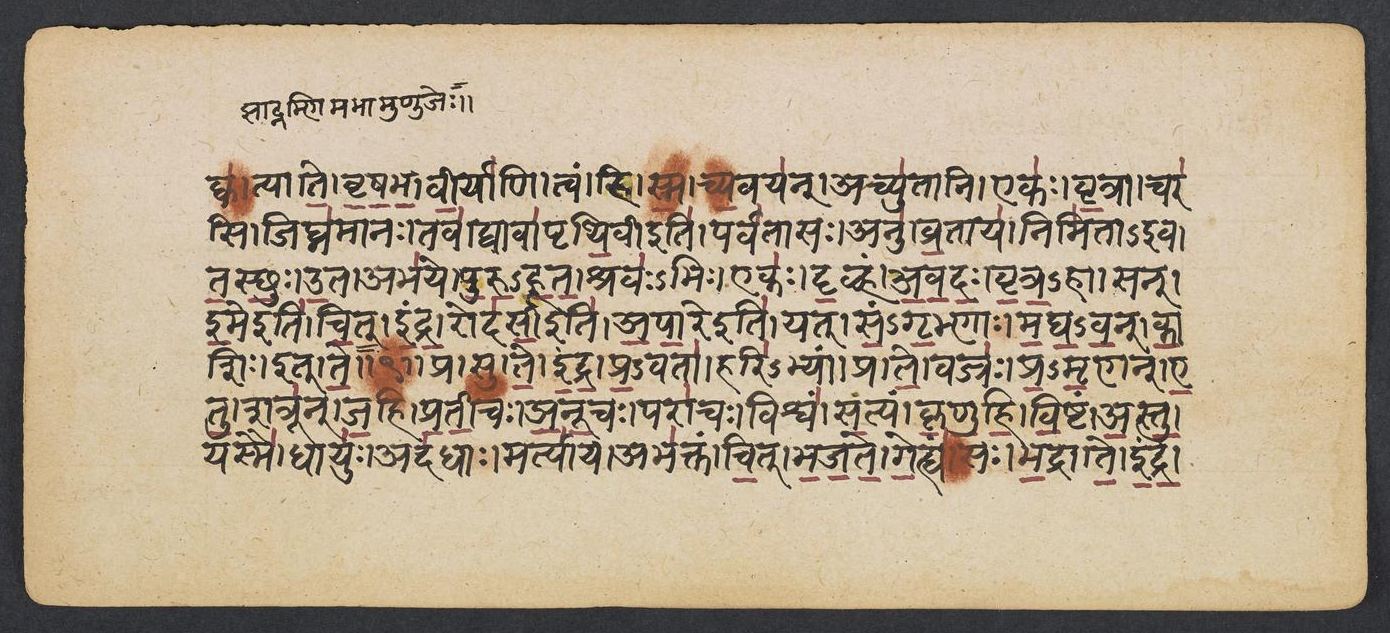
Penn Ms. Coll. 390 Item 41, fol. 211r (numbered 21r by the scribe) (OPenn image 212, lower leaf). Checked on the image: the Rigveda text on this page begins in RV 3.30.3 ‹kva tyā te vṛṣabha›. The next page with Rigveda text, fol. 211v (numbered 21v by the scribe), begins in RV 3.30.7 ‹su-matiḥ ghṛtācī sahasra-dānā puru-hūta›. Verses 3.30.3-6 end on this page; 3.30.3 begins on fol. 210v (numbered 20v by the scribe).
3indra̍ḥ su̱śipro̍ ma̱ghavā̱ taru̍tro ma̱hāvrā̍tas tuvikū̱rmir ṛghā̍vān | yad u̱gro dhā bā̍dhi̱to martye̍ṣu̱ kva1̱̍ tyā te̍ vṛṣabha vī̱ryā̍ṇi ||
4tvaṁ hi ṣmā̍ cyā̱vaya̱nn acyu̍tā̱ny eko̍ vṛ̱trā cara̍si̱ jighna̍mānaḥ | tava̱ dyāvā̍pṛthi̱vī parva̍tā̱so 'nu̍ vra̱tāya̱ nimi̍teva tasthuḥ ||
5u̱tābha̍ye puruhūta̱ śravo̍bhi̱r eko̍ dṛ̱ḻham a̍vado vṛtra̱hā san | i̱me ci̍d indra̱ roda̍sī apā̱re yat sa̍ṁgṛ̱bhṇā ma̍ghavan kā̱śir it te̍ ||
6pra sū ta̍ indra pra̱vatā̱ hari̍bhyā̱m pra te̱ vajra̍ḥ pramṛ̱ṇann e̍tu̱ śatrū̍n | ja̱hi pra̍tī̱co a̍nū̱caḥ parā̍co̱ viśva̍ṁ sa̱tyaṁ kṛ̍ṇuhi vi̱ṣṭam a̍stu ||
Compare: Padapāṭha (word-by-word text written in the manuscript; Sansknet e-text via GRETIL)
3indraḥ | su-śipraḥ | magha-vā | tarutraḥ | mahāvrātaḥ | tuvi-kūrmiḥ | ṛghāvān | yat | ugraḥ | dhāḥ | bādhitaḥ | martyeṣu | kva | tyā | te | vṛṣabha | vīryāṇi
4tvam | hi | sma | cyāvayan | acyutāni | ekaḥ | vṛtrā | carasi | jighnamānaḥ | tava | dyāvāpṛthivī iti | parvatāsaḥ | anu | vratāya | nimitāiva | tasthuḥ
5uta | abhaye | puru-hūta | śravaḥ-bhiḥ | ekaḥ | dṛḷham | avadaḥ | vṛtra-hā | san | ime | cit | indra | rodasī iti | apāre iti | yat | sam-gṛbhṇāḥ | maghavan | kāśiḥ | it | te
6pra | su | te | indra | pra-vatā | hari-bhyām | pra | te | vajraḥ | pra-mṛṇan | etu | śatrūn | jahi | pratīcaḥ | anūcaḥ | parācaḥ | viśvam | satyam | kṛṇuhi | viṣṭam | astu
3Fair cheeks hath Indra, Maghavan, the Victor, Lord of a great host, Stormer, strong in action. What once thou didst in might when mortals vexed thee,– where now, O Bull, are those thy hero exploits?
4For, overthrowing what hath ne'er been shaken, thou goest forth alone destroying Vr̥itras. For him who followeth thy Law the mountains and heaven and earth stand as if firmly stablished.
5Yea, Much-invoked! in safety through thy glories alone thou speakest truth as Vr̥itra's slayer. E'en these two boundless worlds to thee, O Indra, what time thou graspest them, are but a handful.
6Forthwith thy Bay steeds down the steep, O Indra, forth, crushing foemen, go thy bolt of thunder! Slay those who meet thee, those who flee, who follow: make all thy promise true; be all completed.
Where on the image
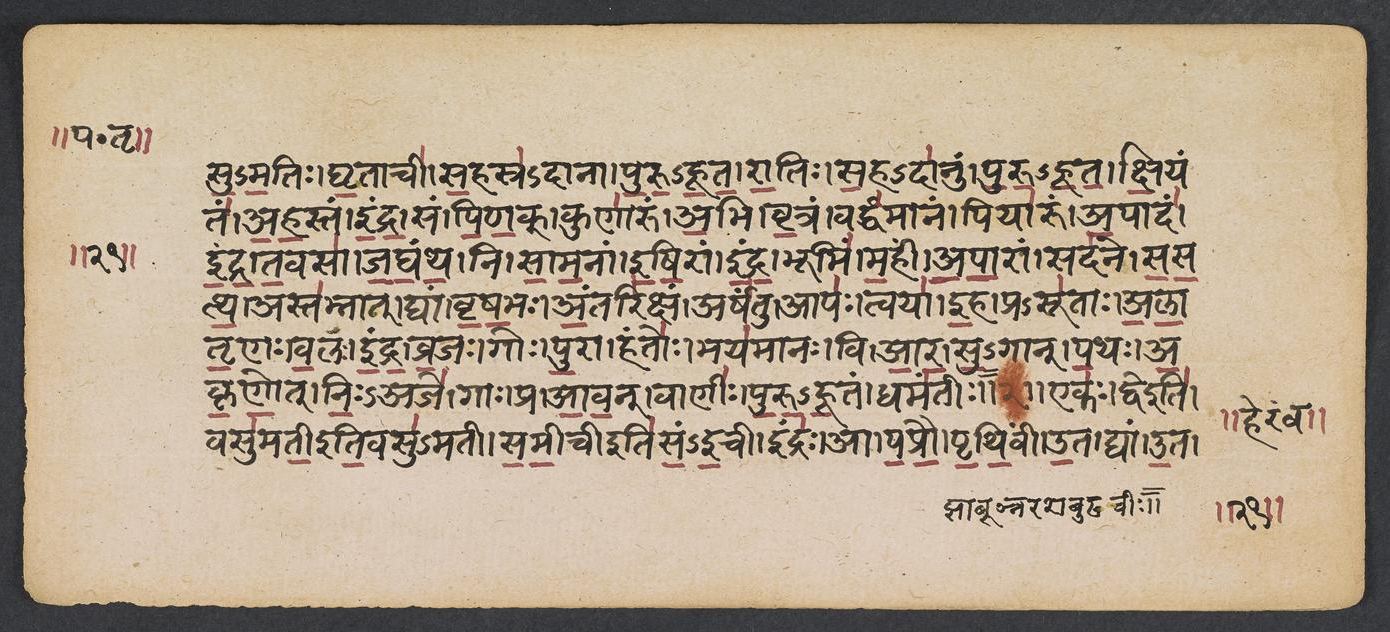
Penn Ms. Coll. 390 Item 41, fol. 211v (numbered 21v by the scribe) (OPenn image 213, upper leaf). Checked on the image: the Rigveda text on this page begins in RV 3.30.7 ‹su-matiḥ ghṛtācī sahasra-dānā puru-hūta›. The next page with Rigveda text, fol. 212r (numbered 22r by the scribe), begins in RV 3.30.11 ‹antarikṣāt abhi naḥ sam-īke›. Verses 3.30.7-10 end on this page; 3.30.7 begins on fol. 211r (numbered 21r by the scribe).
7yasmai̱ dhāyu̱r ada̍dhā̱ martyā̱yābha̍ktaṁ cid bhajate ge̱hya1̱̍ṁ saḥ | bha̱drā ta̍ indra suma̱tir ghṛ̱tācī̍ sa̱hasra̍dānā puruhūta rā̱tiḥ ||
8sa̱hadā̍num puruhūta kṣi̱yanta̍m aha̱stam i̍ndra̱ sam pi̍ṇa̱k kuṇā̍rum | a̱bhi vṛ̱traṁ vardha̍māna̱m piyā̍rum a̱pāda̍m indra ta̱vasā̍ jaghantha ||
9ni sā̍ma̱nām i̍ṣi̱rām i̍ndra̱ bhūmi̍m ma̱hīm a̍pā̱rāṁ sada̍ne sasattha | asta̍bhnā̱d dyāṁ vṛ̍ṣa̱bho a̱ntari̍kṣa̱m arṣa̱ntv āpa̱s tvaye̱ha prasū̍tāḥ ||
10a̱lā̱tṛ̱ṇo va̱la i̍ndra vra̱jo goḥ pu̱rā hanto̱r bhaya̍māno̱ vy ā̍ra | su̱gān pa̱tho a̍kṛṇon ni̱raje̱ gāḥ prāva̱n vāṇī̍ḥ puruhū̱taṁ dhama̍ntīḥ ||
Compare: Padapāṭha (word-by-word text written in the manuscript; Sansknet e-text via GRETIL)
7yasmai | dhāyuḥ | adadhāḥ | martyāya | abhaktam | cit | bhajate | gehyam | saḥ | bhadrā | te | indra | su-matiḥ | ghṛtācī | sahasra-dānā | puru-hūta | rātiḥ
8saha-dānum | puru-hūta | kṣiyantam | ahastam | indra | sam | piṇak | kuṇārum | abhi | vṛtram | vardhamānam | piyārum | apādam | indra | tavasā | jaghantha
9ni | sāmanām | iṣirām | indra | bhūmim | mahīm | apārām | sadane | sasattha | astabhnāt | dyām | vṛṣabhaḥ | antarikṣam | arṣantu | āpaḥ | tvayā | iha | pra-sūtāḥ
10alātṛṇaḥ | valaḥ | indra | vrajaḥ | goḥ | purā | hantoḥ | bhayamānaḥ | vi | āra | su-gān | pathaḥ | akṛṇot | niḥ-aje | gāḥ | pra | āvan | vāṇīḥ | puru-hūtam | dhamantīḥ
7The man to whom thou givest as Provider enjoys domestic plenty undivided. Blest, Indra, is thy favour dropping fatness: thy worship, Much-invoked! brings gifts in thousands.
8Thou, Indra, Much-invoked! didst crush to pieces Kuṇâru handless fiend who dwelt with Dânu. Thou with might, Indra, smotest dead the scorner, the footless Vr̥itra as he waxed in vigour.
9Thou hast established in her seat, O Indra, the level earth, vast, vigorous, unbounded. The Bull hath propped the heaven and air's mid-region. By thee sent onward let the floods flow hither.
10He who withheld the kine, in silence I yielded in fear before thy blow, O Indra. He made paths easy to drive forth the cattle. Loud-breathing praises helped the Much-invoked One.
Where on the image
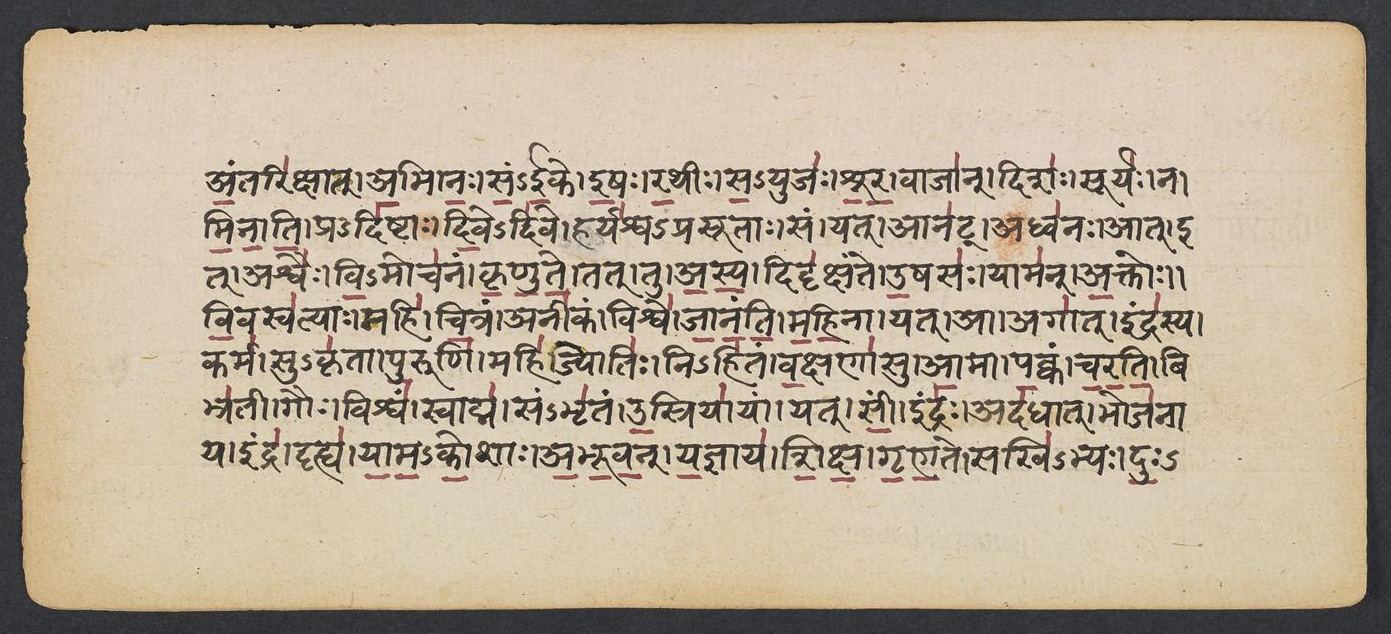
Penn Ms. Coll. 390 Item 41, fol. 212r (numbered 22r by the scribe) (OPenn image 213, lower leaf). Checked on the image: the Rigveda text on this page begins in RV 3.30.11 ‹antarikṣāt abhi naḥ sam-īke›. The next page with Rigveda text, fol. 212v (numbered 22v by the scribe), begins in RV 3.30.15 ‹-duḥ-māyavaḥ duḥ-evāḥ martyāsaḥ niṣaṅgiṇaḥ›. Verses 3.30.11-14 end on this page; 3.30.11 begins on fol. 211v (numbered 21v by the scribe).
11eko̱ dve vasu̍matī samī̱cī indra̱ ā pa̍prau pṛthi̱vīm u̱ta dyām | u̱tāntari̍kṣād a̱bhi na̍ḥ samī̱ka i̱ṣo ra̱thīḥ sa̱yuja̍ḥ śūra̱ vājā̍n ||
12diśa̱ḥ sūryo̱ na mi̍nāti̱ pradi̍ṣṭā di̱ve-di̍ve̱ harya̍śvaprasūtāḥ | saṁ yad āna̱ḻ adhva̍na̱ ād id aśvai̍r vi̱moca̍naṁ kṛṇute̱ tat tv a̍sya ||
13didṛ̍kṣanta u̱ṣaso̱ yāma̍nn a̱ktor vi̱vasva̍tyā̱ mahi̍ ci̱tram anī̍kam | viśve̍ jānanti mahi̱nā yad āgā̱d indra̍sya̱ karma̱ sukṛ̍tā pu̱rūṇi̍ ||
14mahi̱ jyoti̱r nihi̍taṁ va̱kṣaṇā̍sv ā̱mā pa̱kvaṁ ca̍rati̱ bibhra̍tī̱ gauḥ | viśva̱ṁ svādma̱ sambhṛ̍tam u̱sriyā̍yā̱ṁ yat sī̱m indro̱ ada̍dhā̱d bhoja̍nāya ||
Compare: Padapāṭha (word-by-word text written in the manuscript; Sansknet e-text via GRETIL)
11ekaḥ | dve iti | vasumatī itivasu-matī | samīcī itisam-īcī | indraḥ | ā | paprau | pṛthivīm | uta | dyām | uta | antarikṣāt | abhi | naḥ | sam-īke | iṣaḥ | rathīḥ | sa-yujaḥ | śūra | vājān
12diśaḥ | sūryaḥ | na | mināti | pra-diṣṭāḥ | dive--dive | haryaśva-prasūtāḥ | sam | yat | ānaṭ | adhvanaḥ | āt | it | aśvaiḥ | vi-mocanam | kṛṇute | tat | tu | asya
13didṛkṣante | uṣasaḥ | yāman | aktoḥ | vivasvatyāḥ | mahi | citram | anīkam | viśve | jānanti | mahinā | yat | ā | agāt | indrasya | karma | su-kṛtā | purūṇi
14mahi | jyotiḥ | ni-hitam | vakṣaṇāsu | āmā | pakvam | carati | bibhratī | gauḥ | viśvam | svādma | sam-bhṛtam usriyāyām | yat | sīm | indraḥ | adadhāt | bhojanāya
11Indra alone filled full the earth and heaven, the Pair who meet together, rich in treasures. Yea, bring thou near us from the air's mid-region strength, on thy car, and wholesome food, O Hero.
12Sûrya transgresses not the ordered limits set daily by the Lord of Tawny Coursers. When to the goal he comes, his journey ended, his Steeds he looses: this is Indra's doing.
13Men gladly in the course of night would look on the broad bright front of the refulgent Morning; And all acknowledge, when she comes in glory, the manifold and goodly works of Indra.
14A mighty splendour rests upon her bosom: bearing ripe milk the Cow, unripe, advances. All sweetness is collected in the Heifer, sweetness which Indra made for our enjoyment.
Where on the image
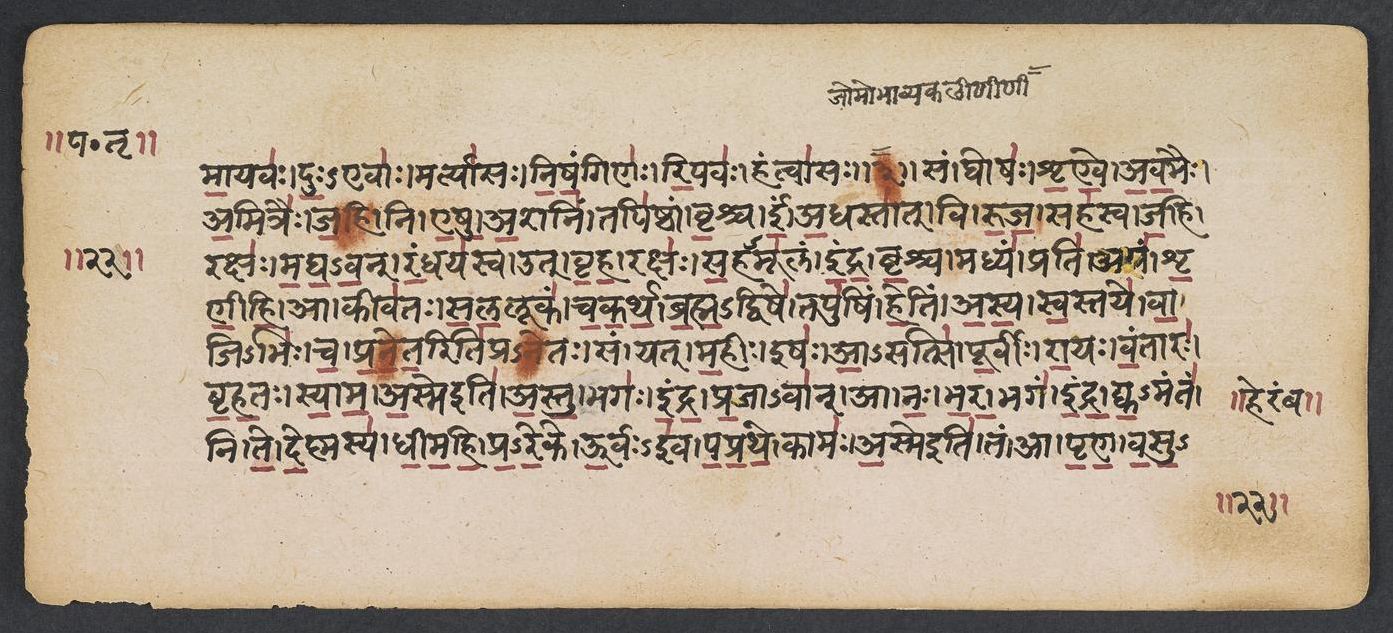
Penn Ms. Coll. 390 Item 41, fol. 212v (numbered 22v by the scribe) (OPenn image 214, upper leaf). Checked on the image: the Rigveda text on this page begins in RV 3.30.15 ‹-duḥ-māyavaḥ duḥ-evāḥ martyāsaḥ niṣaṅgiṇaḥ›. The next page with Rigveda text, fol. 213r (numbered 23r by the scribe), begins in RV 3.30.19 ‹-vasu-pate vasūnām›. Verses 3.30.15-18 end on this page; 3.30.15 begins on fol. 212r (numbered 22r by the scribe).
15indra̱ dṛhya̍ yāmako̱śā a̍bhūvan ya̱jñāya̍ śikṣa gṛṇa̱te sakhi̍bhyaḥ | du̱rmā̱yavo̍ du̱revā̱ martyā̍so niṣa̱ṅgiṇo̍ ri̱pavo̱ hantvā̍saḥ ||
16saṁ ghoṣa̍ḥ śṛṇve 'va̱mair a̱mitrai̍r ja̱hī ny e̍ṣv a̱śani̱ṁ tapi̍ṣṭhām | vṛ̱ścem a̱dhastā̱d vi ru̍jā̱ saha̍sva ja̱hi rakṣo̍ maghavan ra̱ndhaya̍sva ||
17ud vṛ̍ha̱ rakṣa̍ḥ sa̱hamū̍lam indra vṛ̱ścā madhya̱m praty agra̍ṁ śṛṇīhi | ā kīva̍taḥ sala̱lūka̍ṁ cakartha brahma̱dviṣe̱ tapu̍ṣiṁ he̱tim a̍sya ||
18sva̱staye̍ vā̱jibhi̍ś ca praṇeta̱ḥ saṁ yan ma̱hīr iṣa̍ ā̱satsi̍ pū̱rvīḥ | rā̱yo va̱ntāro̍ bṛha̱taḥ syā̍mā̱sme a̍stu̱ bhaga̍ indra pra̱jāvā̍n ||
Compare: Padapāṭha (word-by-word text written in the manuscript; Sansknet e-text via GRETIL)
15indra | dṛhya | yāma-kośāḥ | abhūvan | yajñāya | śikṣa | gṛṇate | sakhi-bhyaḥ | duḥ-māyavaḥ | duḥ-evāḥ | martyāsaḥ | niṣaṅgiṇaḥ | ripavaḥ | hantvāsaḥ
16sam | ghoṣaḥ | śṛṇve | avamaiḥ | amitraiḥ | jahi | ni | eṣu | aśanim | tapiṣṭhām | vṛśca | īm | adhastāt | vi | ruja | sahasva | jahi | rakṣaḥ | magha-van | randhayasva
17ut | vṛha | rakṣaḥ | saha-mūlam | indra | vṛśca | madhyam | prati | agram | śṛṇīhi | ā | kīvataḥ | salalūkam | cakartha | brahma-dviṣe | tapuṣim | hetim | asya
18svastaye | vāji-bhiḥ | ca | pranetaritipra-netaḥ | sam | yat | mahīḥ | iṣaḥ | āsatsi | pūrvīḥ | rāyaḥ | vantāraḥ | bṛhataḥ | syāma | asme iti | astu | bhagaḥ | indra | prajāvān
15Barring the way they come. Be firm, O Indra; aid friends to sacrifice and him who singeth. These must be slain by thee, malignant mortals, armed with ill arts, our quiverbearing foemen.
16A cry is beard from enemies most near us: against them send thy fiercest-flaming weapon. Rend them from under, crush them and subdue them. Slay, Maghavan, and make the fiends our booty.
17Root up the race of Râkshasas, O Indra rend it in front and crush it in the middle. How long hast thou bebaved as one who wavers? Cast thy hot dart at him who hates devotion:
18When borne by strong Steeds for our weal, O Leader, thou seatest thee at many noble viands. May we be winners of abundant riches. May Indra be our wealth with store of children.
Where on the image
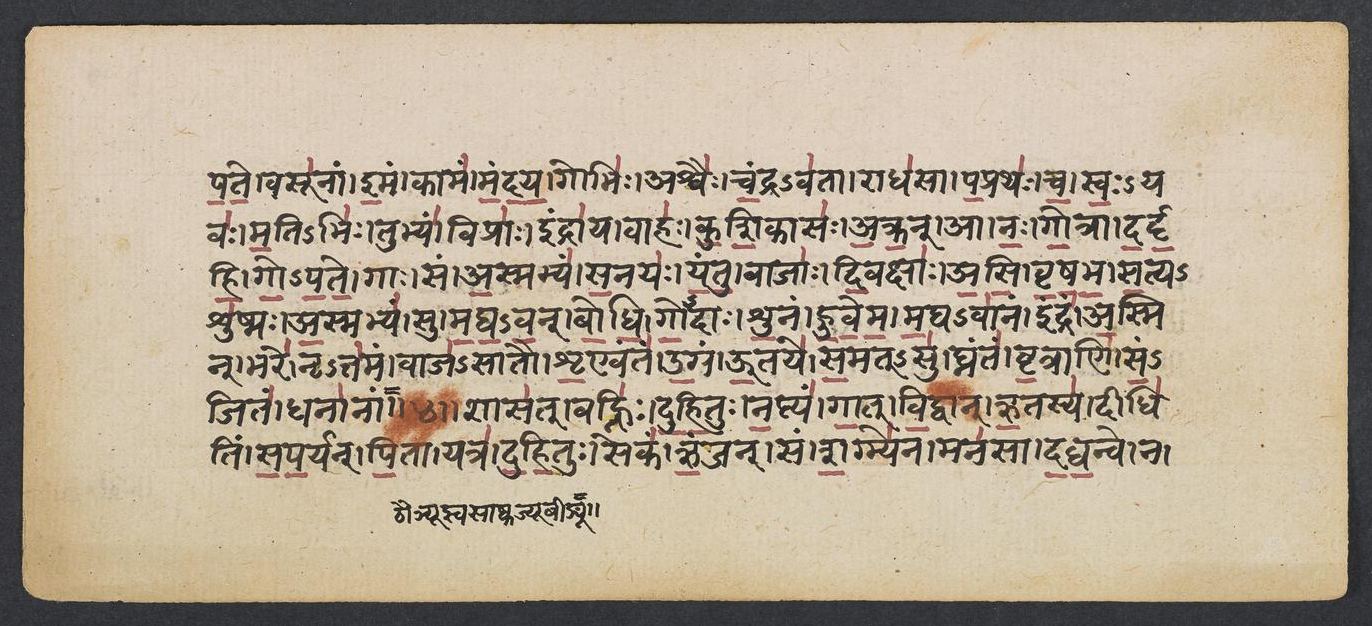
Penn Ms. Coll. 390 Item 41, fol. 213r (numbered 23r by the scribe) (OPenn image 214, lower leaf). Checked on the image: the Rigveda text on this page begins in RV 3.30.19 ‹-vasu-pate vasūnām›. The next page with Rigveda text, fol. 213v (numbered 23v by the scribe), begins in RV 3.31.2 ‹na jāmaye tānvaḥ riktham›. Verses 3.30.19-22 end on this page; 3.30.19 begins on fol. 212v (numbered 22v by the scribe).
19ā no̍ bhara̱ bhaga̍m indra dyu̱manta̱ṁ ni te̍ de̱ṣṇasya̍ dhīmahi prare̱ke | ū̱rva i̍va paprathe̱ kāmo̍ a̱sme tam ā pṛ̍ṇa vasupate̱ vasū̍nām ||
20i̱maṁ kāma̍m mandayā̱ gobhi̱r aśvai̍ś ca̱ndrava̍tā̱ rādha̍sā pa̱pratha̍ś ca | sva̱ryavo̍ ma̱tibhi̱s tubhya̱ṁ viprā̱ indrā̍ya̱ vāha̍ḥ kuśi̱kāso̍ akran ||
21ā no̍ go̱trā da̍rdṛhi gopate̱ gāḥ sam a̱smabhya̍ṁ sa̱nayo̍ yantu̱ vājā̍ḥ | di̱vakṣā̍ asi vṛṣabha sa̱tyaśu̍ṣmo̱ 'smabhya̱ṁ su ma̍ghavan bodhi go̱dāḥ ||
22śu̱naṁ hu̍vema ma̱ghavā̍na̱m indra̍m a̱smin bhare̱ nṛta̍ma̱ṁ vāja̍sātau | śṛ̱ṇvanta̍m u̱gram ū̱taye̍ sa̱matsu̱ ghnanta̍ṁ vṛ̱trāṇi̍ sa̱ṁjita̱ṁ dhanā̍nām ||
Compare: Padapāṭha (word-by-word text written in the manuscript; Sansknet e-text via GRETIL)
19ā | naḥ | bhara | bhagam | indra | dyu-mantam | ni | te | deṣṇasya | dhīmahi | pra-reke | ūrvaḥ-iva | paprathe | kāmaḥ | asme iti | tam | ā | pṛṇa | vasu-pate | vasūnām
20imam | kāmam | mandaya | go--bhiḥ | aśvaiḥ | candra-vatā | rādhasā | paprathaḥ | ca | svaḥ-yavaḥ | mati-bhiḥ | tubhyam | viprāḥ | indrāya | vāhaḥ | kuśikāsaḥ | akran
21ā | naḥ | gotrā | dadṛrhi | go--pate | gāḥ | sam | asmabhyam | sanayaḥ | yantu | vājāḥ | divakṣāḥ | asi | vṛṣabha | satya-śuṣmaḥ | asmabhyam | su | magha-van | bodhi | go--dāḥ
22śunam | huvema | maghavānam | indram | asmin | bhare | nṛ-tamam | vāja-sātau | śṛṇvantam | ugram | ūtaye | samat-su | ghnantam | vṛtrāṇi | sam-jitam | dhanānām
19Bestow on us resplendent wealth. O Indra let us enjoy thine overflow of bounty. Wide as a sea our longing hath expanded, fulfil it, O thou Treasure-Lord of treasures.
20With kine and horses satisfy this longing with very splendid bounty still extend it. Seeking the light, with hymns to thee, O Indra, Kuṣikas have brought their gift, the singers.
21Lord of the kine, burst the kine's stable open: cows shall be ours, and strength that wins the booty. Hero, whose might is true, thy home is heaven: to us, O Maghavan, grant gifts of cattle.
22Call we on Maghavan, auspicious Indra, best Hero in this fight where spoil is gathered, The Strong who listens, who gives aid in battles, who slays the Vr̥itras, wins and gathers riches.
Notes
- Sanskrit: Aufrecht's edition (1877) with the Vedic accents, as entered by van Nooten and Holland (GRETIL).
- English: Ralph T. H. Griffith, The Hymns of the Rigveda (1889-1892; 2nd ed. 1896-1897), from the VedaWeb digital text; OCR slips in that text were corrected against the printed 2nd edition (data/sources/rigveda/griffith_errata.json).
- Padapāṭha (edition text): Sansknet e-text via GRETIL (CC BY-NC-SA 4.0).
Cite
Sources
- Source: Penn Ms. Coll. 390 Item 41 (undated (catalogued with Penn's 18th-19th c. Vedic manuscripts)), OPenn, Public Domain Mark + Aufrecht's accented text (GRETIL) + Griffith's English (VedaWeb) (holding institution)
- Critical edition: Aufrecht (1877), accented e-text via GRETIL
← previous · → next · v cycle view · l back to library