Rigveda 3.43: To Indra
Introduction
Rigveda 3.43 is a hymn of 8 verses addressed to Indra. It stands in book (maṇḍala) 3, the family book of Viśvāmitra. The Rigveda is the oldest collection of Sanskrit hymns, composed in the second half of the second millennium BCE and handed down orally for many centuries before it was written down.
The manuscript shown is Penn Ms. Coll. 390 Item 41 (University of Pennsylvania), an undated paper manuscript of the padapāṭha (the word-by-word recitation text, in which every word is written separately and compounds are split) of the whole Ṛgveda in Devanāgarī, 884 leaves in fascicles, 7-9 lines to the page, accents in red; this hymn stands on fol. 228r-229r. Each section below gives the verses that end on one page; the page boundaries were read on the images (the opening words of every page), not counted out. Where the manuscript is a padapāṭha (the word-by-word recitation text), the section shows Aufrecht's continuous (saṃhitā) text first and, as the edition text, the padapāṭha of the same verses, which is the form written on the page.
How was this verified? (Provenance)
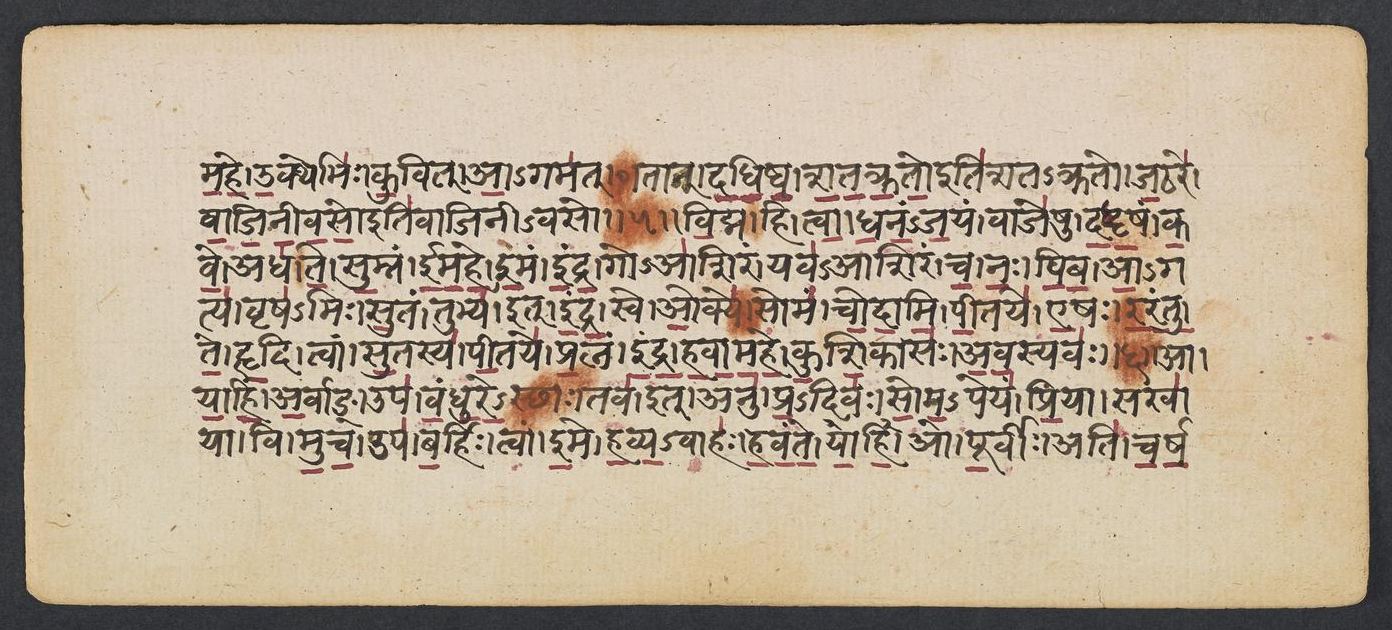
Where on the image
Penn Ms. Coll. 390 Item 41, fol. 228r (numbered 38r by the scribe) (OPenn image 229, lower leaf). Checked on the image: the Rigveda text on this page begins in RV 3.42.4 ‹-havāmahe ukthebhiḥ kuvit āgamat›. The next page with Rigveda text, fol. 228v (numbered 38v by the scribe), begins in RV 3.43.2 ‹-carṣaṇīḥ ā aryaḥ āśiṣaḥ›. Verse 3.43.1 ends on this page.
1ā yā̍hy a̱rvāṅ upa̍ vandhure̱ṣṭhās taved anu̍ pra̱diva̍ḥ soma̱peya̍m | pri̱yā sakhā̍yā̱ vi mu̱copa̍ ba̱rhis tvām i̱me ha̍vya̱vāho̍ havante ||
Compare: Padapāṭha (word-by-word text written in the manuscript; Sansknet e-text via GRETIL)
1ā | yāhi | arvāṅ | upa | vandhure--sthāḥ | tava | it | anu | pra-divaḥ | soma-peyam | priyā | sakhāyā | vi | muca | upa | barhiḥ | tvām | ime | havya-vāhaḥ | havante
1MOUNTED upon thy chariot-seat approach us: thine is the Soma-draught from days aforetime. Loose for the sacred grass thy dear companions. These men who bring oblation call thee hither.
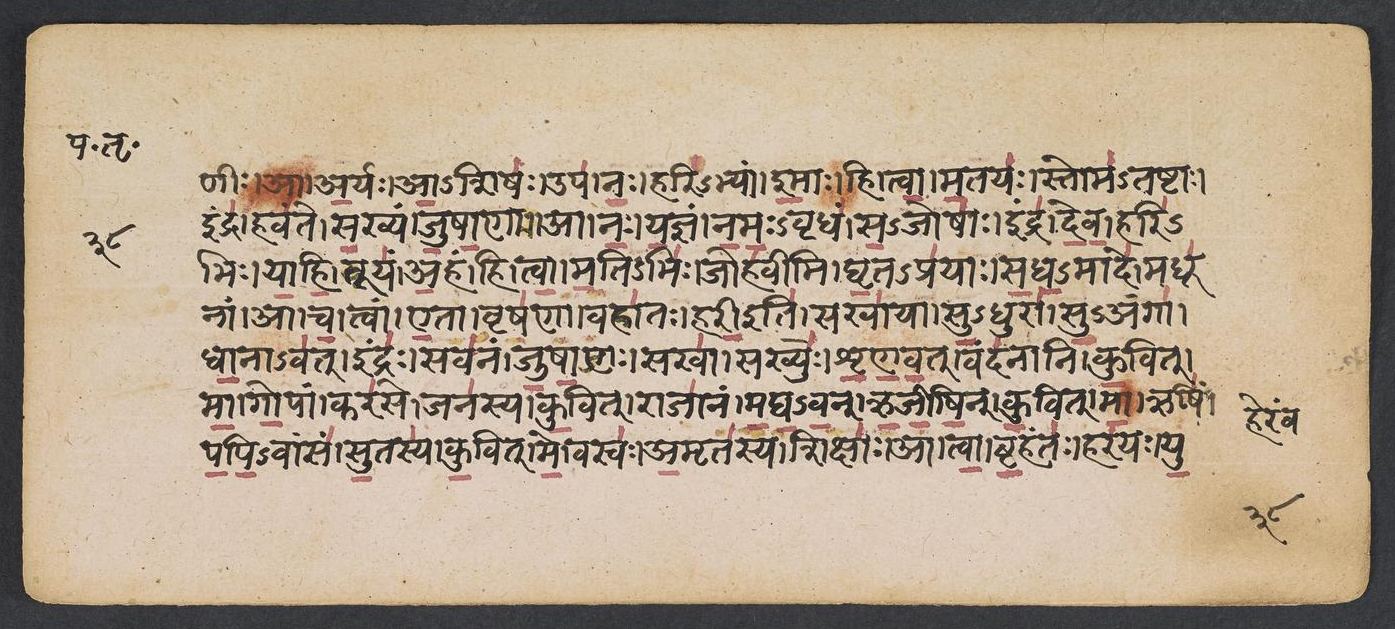
Where on the image
Penn Ms. Coll. 390 Item 41, fol. 228v (numbered 38v by the scribe) (OPenn image 230, upper leaf). Checked on the image: the Rigveda text on this page begins in RV 3.43.2 ‹-carṣaṇīḥ ā aryaḥ āśiṣaḥ›. The next page with Rigveda text, fol. 229r (numbered 39r by the scribe), begins in RV 3.43.6 ‹-yujānāḥ arvāk indra sadha-mādaḥ›. Verses 3.43.2-5 end on this page; 3.43.2 begins on fol. 228r (numbered 38r by the scribe).
2ā yā̍hi pū̱rvīr ati̍ carṣa̱ṇīr ām̐ a̱rya ā̱śiṣa̱ upa̍ no̱ hari̍bhyām | i̱mā hi tvā̍ ma̱taya̱ḥ stoma̍taṣṭā̱ indra̱ hava̍nte sa̱khyaṁ ju̍ṣā̱ṇāḥ ||
3ā no̍ ya̱jñaṁ na̍mo̱vṛdha̍ṁ sa̱joṣā̱ indra̍ deva̱ hari̍bhir yāhi̱ tūya̍m | a̱haṁ hi tvā̍ ma̱tibhi̱r joha̍vīmi ghṛ̱tapra̍yāḥ sadha̱māde̱ madhū̍nām ||
4ā ca̱ tvām e̱tā vṛṣa̍ṇā̱ vahā̍to̱ harī̱ sakhā̍yā su̱dhurā̱ svaṅgā̍ | dhā̱nāva̱d indra̱ḥ sava̍naṁ juṣā̱ṇaḥ sakhā̱ sakhyu̍ḥ śṛṇava̱d vanda̍nāni ||
5ku̱vin mā̍ go̱pāṁ kara̍se̱ jana̍sya ku̱vid rājā̍nam maghavann ṛjīṣin | ku̱vin ma̱ ṛṣi̍m papi̱vāṁsa̍ṁ su̱tasya̍ ku̱vin me̱ vasvo̍ a̱mṛta̍sya̱ śikṣā̍ḥ ||
Compare: Padapāṭha (word-by-word text written in the manuscript; Sansknet e-text via GRETIL)
2ā | yāhi | pūrvīḥ | ati | carṣaṇīḥ | ā | aryaḥ | āśiṣaḥ | upa | naḥ | hari-bhyām | imāḥ | hi | tvā | matayaḥ | stoma-taṣṭāḥ | indra | havante | sakhyam | juṣāṇāḥ
3ā | naḥ | yajñam | namaḥ-vṛdham | sa-joṣāḥ | indra | deva | hari-bhiḥ | yāhi | tūyam | aham | hi | tvā | mati-bhiḥ | johavīmi | ghṛta-prayāḥ | sadha-māde | madhūnām
4ā | ca | tvām | etā | vṛṣaṇā | vahātaḥ | harī iti | sakhāyā | su-dhurā | su-aṅgā | dhānāvat | indraḥ | savanam | juṣāṇaḥ | sakhā | sakhyuḥ | śṛṇavat | vandanāni
5kuvit | mā | gopām | karase | janasya | kuvit | rājānam | magha-van | ṛjīṣin | kuvit | mā | ṛṣim | papi-vāṃsam | sutasya | kuvit | me | vasvaḥ | amṛtasya | śikṣāḥ
2Come our true Friend, passing by many people; come with thy two Bay Steeds to our devotions; For these our hymns are calling thee, O Indra, hymns formed for praise, soliciting thy friendship.
3Pleased, with thy Bay Steeds, Indra, God, come quickly to this our sacrifice that heightens worship; For with my thoughts, presenting oil to feed thee, I call thee to the feast of sweet libations.
4Yea, let thy two Bay Stallions bear thee hither, well limbed and good to draw, thy dear companions. Pleased with the corn-blent offering which we bring thee, may Indra, Friend, hear his friend's adoration.
5Wilt thou not make me guardian of the people, make me, impetuous Maghavan, their ruler? Make me a R̥ishi having drunk of Soma? Wilt thou not give me wealth that lasts for ever?
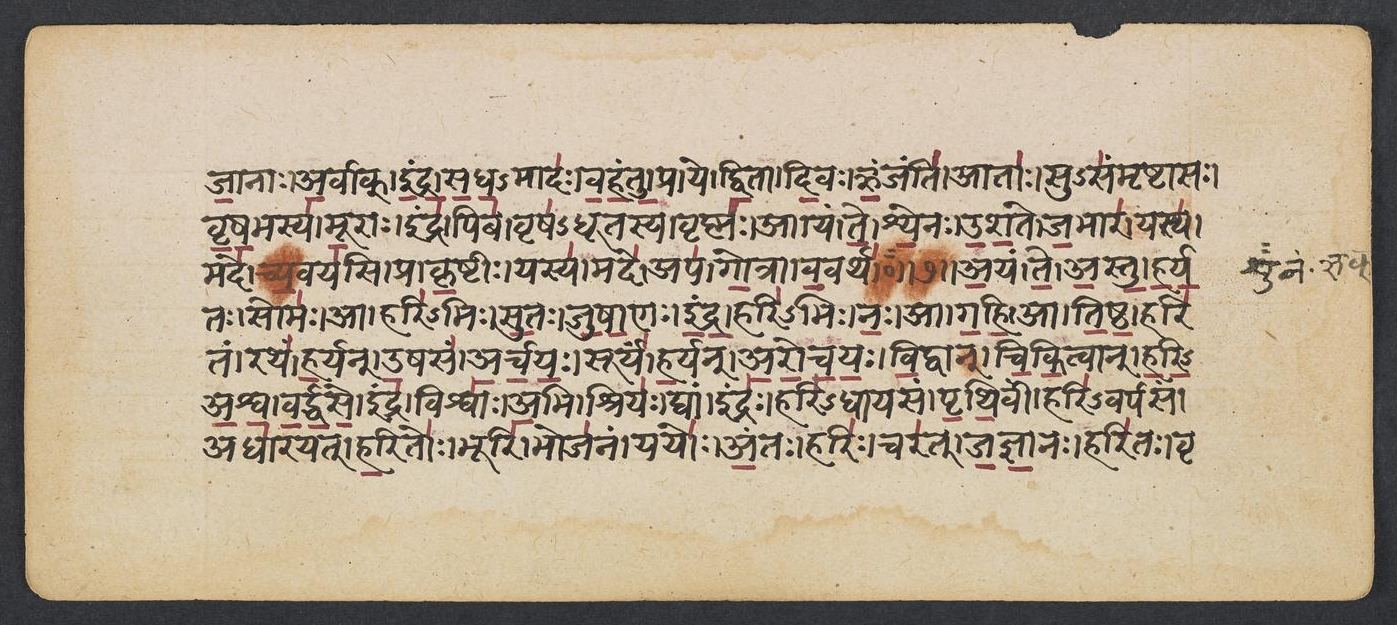
Where on the image
Penn Ms. Coll. 390 Item 41, fol. 229r (numbered 39r by the scribe) (OPenn image 230, lower leaf). Checked on the image: the Rigveda text on this page begins in RV 3.43.6 ‹-yujānāḥ arvāk indra sadha-mādaḥ›. The next page with Rigveda text, fol. 229v (numbered 39v by the scribe), begins in RV 3.44.4 ‹-vṛṣā viśvam ā bhāti›. Verses 3.43.6-8 end on this page; 3.43.6 begins on fol. 228v (numbered 38v by the scribe).
6ā tvā̍ bṛ̱hanto̱ hara̍yo yujā̱nā a̱rvāg i̍ndra sadha̱mādo̍ vahantu | pra ye dvi̱tā di̱va ṛ̱ñjanty ātā̱ḥ susa̍mmṛṣṭāso vṛṣa̱bhasya̍ mū̱rāḥ ||
7indra̱ piba̱ vṛṣa̍dhūtasya̱ vṛṣṇa̱ ā yaṁ te̍ śye̱na u̍śa̱te ja̱bhāra̍ | yasya̱ made̍ cyā̱vaya̍si̱ pra kṛ̱ṣṭīr yasya̱ made̱ apa̍ go̱trā va̱vartha̍ ||
8śu̱naṁ hu̍vema ma̱ghavā̍na̱m indra̍m a̱smin bhare̱ nṛta̍ma̱ṁ vāja̍sātau | śṛ̱ṇvanta̍m u̱gram ū̱taye̍ sa̱matsu̱ ghnanta̍ṁ vṛ̱trāṇi̍ sa̱ṁjita̱ṁ dhanā̍nām ||
Compare: Padapāṭha (word-by-word text written in the manuscript; Sansknet e-text via GRETIL)
6ā | tvā | bṛhantaḥ | harayaḥ | yujānāḥ | arvāk | indra | sadha-mādaḥ | vahantu | pra | ye | dvitā | divaḥ | ṛñjanti | ātāḥ | su-sammṛṣṭāsaḥ | vṛṣabhasya | mūrāḥ
7indra | piba | vṛṣa-dhūtasya | vṛṣṇaḥ | ā | yam | te | śyenaḥ | uśate | jabhāra | yasya | made | cyāvayasi | pra | kṛṣṭīḥ | yasya | made | apa | gotrā | vavartha
8śunam | huvema | maghavānam | indram | asmin | bhare | nṛ-tamam | vāja-sātau | śṛṇvantam | ugram | ūtaye | samat-su | ghnantam | vṛtrāṇi | sam-jitam | dhanānām
6Yoked to thy chariot, let thy tall Bays, Indra, companions of thy banquet, bear thee hither, Who from of old press to heaven's farthest limits, the Bull's impetuous and well-groomed Horses.
7Drink of the strong pressed out by strong ones, Indra, that which the Falcon brought thee when thou longedst; In whose wild joy thou stirrest up the people, in whose wild joy thou didst unbar the cow-stalls.
8Call we on Indra, Maghavan, auspicious, best Hero in the fight where spoil is gathered; The Strong, who listens, who gives aid in battles, who slays the Vr̥itras, wins and gathers riches.
Notes
- Sanskrit: Aufrecht's edition (1877) with the Vedic accents, as entered by van Nooten and Holland (GRETIL).
- English: Ralph T. H. Griffith, The Hymns of the Rigveda (1889-1892; 2nd ed. 1896-1897), from the VedaWeb digital text; OCR slips in that text were corrected against the printed 2nd edition (data/sources/rigveda/griffith_errata.json).
- Padapāṭha (edition text): Sansknet e-text via GRETIL (CC BY-NC-SA 4.0).
Cite
Sources
- Source: Penn Ms. Coll. 390 Item 41 (undated (catalogued with Penn's 18th-19th c. Vedic manuscripts)), OPenn, Public Domain Mark + Aufrecht's accented text (GRETIL) + Griffith's English (VedaWeb) (holding institution)
- Critical edition: Aufrecht (1877), accented e-text via GRETIL
← previous · → next · v cycle view · l back to library