Rigveda 3.51: To Indra
Introduction
Rigveda 3.51 is a hymn of 12 verses addressed to Indra. It stands in book (maṇḍala) 3, the family book of Viśvāmitra. The Rigveda is the oldest collection of Sanskrit hymns, composed in the second half of the second millennium BCE and handed down orally for many centuries before it was written down.
The manuscript shown is Penn Ms. Coll. 390 Item 41 (University of Pennsylvania), an undated paper manuscript of the padapāṭha (the word-by-word recitation text, in which every word is written separately and compounds are split) of the whole Ṛgveda in Devanāgarī, 884 leaves in fascicles, 7-9 lines to the page, accents in red; this hymn stands on fol. 232v-234r. Each section below gives the verses that end on one page; the page boundaries were read on the images (the opening words of every page), not counted out. Where the manuscript is a padapāṭha (the word-by-word recitation text), the section shows Aufrecht's continuous (saṃhitā) text first and, as the edition text, the padapāṭha of the same verses, which is the form written on the page.
How was this verified? (Provenance)
Where on the image
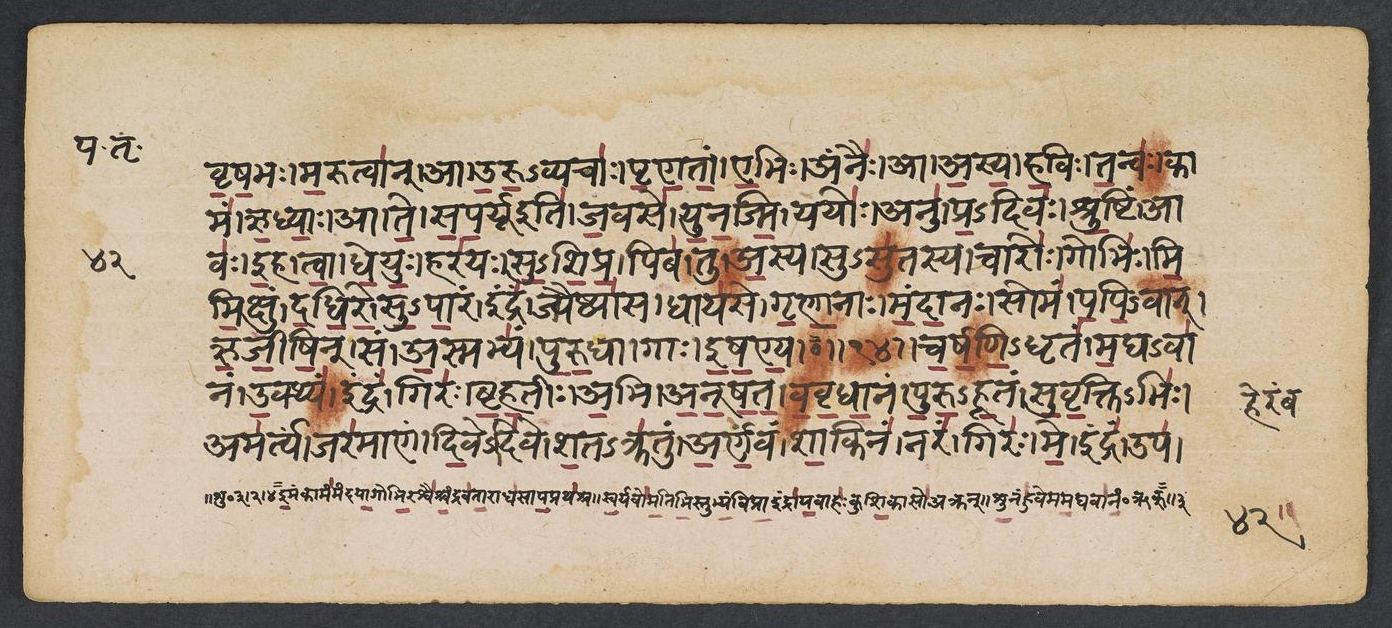
Penn Ms. Coll. 390 Item 41, fol. 232v (numbered 42v by the scribe) (OPenn image 234, upper leaf). Checked on the image: the Rigveda text on this page begins in RV 3.50.1 ‹vṛṣabhaḥ marutvān ā uru-vyacāḥ›. The next page with Rigveda text, fol. 233r (numbered 43r by the scribe), begins in RV 3.51.2 ‹yanti viśvataḥ vāja-sanim pūḥ-bhidam›. Verse 3.51.1 ends on this page.
1ca̱rṣa̱ṇī̱dhṛta̍m ma̱ghavā̍nam u̱kthya1̱̍m indra̱ṁ giro̍ bṛha̱tīr a̱bhy a̍nūṣata | vā̱vṛ̱dhā̱nam pu̍ruhū̱taṁ su̍vṛ̱ktibhi̱r ama̍rtya̱ṁ jara̍māṇaṁ di̱ve-di̍ve ||
Compare: Padapāṭha (word-by-word text written in the manuscript; Sansknet e-text via GRETIL)
1carṣaṇi-dhṛtam | magha-vānam | ukthyam | indram | giraḥ | bṛhatīḥ | abhi | anūṣata | vavṛdhanam | puru-hūtam | suvṛkti-bhiḥ | amartyam | jaramāṇam | dive--dive
1HIGH hymns have sounded forth the praise of Maghavan, supporter of mankind, of Indra meet for lauds; Him who hath waxen great, invoked with beauteous songs, Immortal One, whose praise each day is sung aloud.
Where on the image
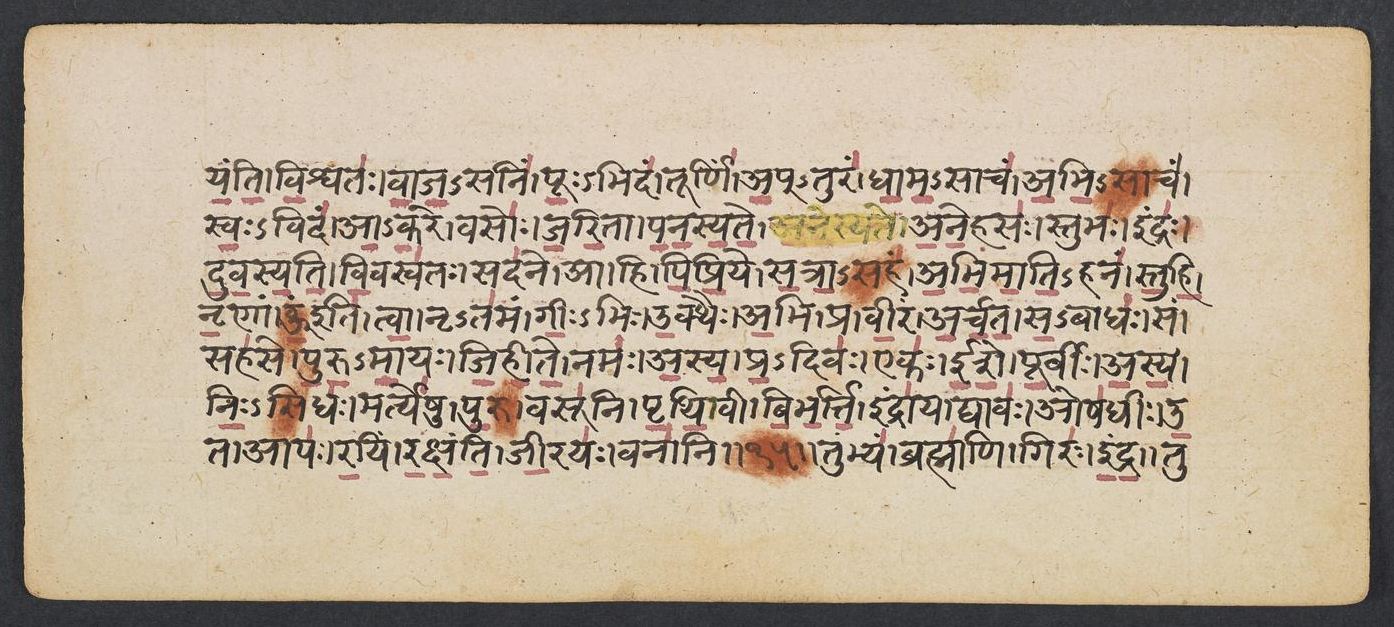
Penn Ms. Coll. 390 Item 41, fol. 233r (numbered 43r by the scribe) (OPenn image 234, lower leaf). Checked on the image: the Rigveda text on this page begins in RV 3.51.2 ‹yanti viśvataḥ vāja-sanim pūḥ-bhidam›. The next page with Rigveda text, fol. 233v (numbered 43v by the scribe), begins in RV 3.51.6 ‹-tubhyam satrā dadhire hari-vaḥ›. Verses 3.51.2-5 end on this page; 3.51.2 begins on fol. 232v (numbered 42v by the scribe).
2śa̱takra̍tum arṇa̱vaṁ śā̱kina̱ṁ nara̱ṁ giro̍ ma̱ indra̱m upa̍ yanti vi̱śvata̍ḥ | vā̱ja̱sani̍m pū̱rbhida̱ṁ tūrṇi̍m a̱ptura̍ṁ dhāma̱sāca̍m abhi̱ṣāca̍ṁ sva̱rvida̍m ||
3ā̱ka̱re vaso̍r jari̱tā pa̍nasyate 'ne̱hasa̱ḥ stubha̱ indro̍ duvasyati | vi̱vasva̍ta̱ḥ sada̍na̱ ā hi pi̍pri̱ye sa̍trā̱sāha̍m abhimāti̱hana̍ṁ stuhi ||
4nṛ̱ṇām u̍ tvā̱ nṛta̍maṁ gī̱rbhir u̱kthair a̱bhi pra vī̱ram a̍rcatā sa̱bādha̍ḥ | saṁ saha̍se purumā̱yo ji̍hīte̱ namo̍ asya pra̱diva̱ eka̍ īśe ||
5pū̱rvīr a̍sya ni̱ṣṣidho̱ martye̍ṣu pu̱rū vasū̍ni pṛthi̱vī bi̍bharti | indrā̍ya̱ dyāva̱ oṣa̍dhīr u̱tāpo̍ ra̱yiṁ ra̍kṣanti jī̱rayo̱ vanā̍ni ||
Compare: Padapāṭha (word-by-word text written in the manuscript; Sansknet e-text via GRETIL)
2śata-kratum | arṇavam | śākinam | naram | giraḥ | me | indram | upa | yanti | viśvataḥ | vāja-sanim | pūḥ-bhidam | tūrṇim | ap-turam | dhāma-sācam | abhi-ṣācam | svaḥ-vidam
3ākare | vasoḥ | jaritā | panasyate | anehasaḥ | stubhaḥ | indraḥ | duvasyat i | vivasvataḥ | sadane | ā | hi | pipriye | satrāsaham | abhimāti-hanam | stuhi
4nṛṇām | oṃ iti | tvā | nṛ-tamam | gīḥ-bhiḥ | ukthaiḥ | abhi | pra | vīram | arcata | sa-bādhaḥ | sam | sahase | puru-māyaḥ | jihīte | namaḥ | asya | pra-divaḥ | ekaḥ | īśe
5pūrvīḥ | asya | niḥ-sidhaḥ | martyeṣu | puru | vasūni | pṛthivī | bibharti | indrāya | dyāvaḥ | oṣadhīḥ | uta | āpaḥ | rayim | rakṣanti | jīrayaḥ | vanāni
2To Indra from all sides go forth my songs of praise, the Lord of Hundred Powers, strong, Hero, like the sea, Swift, winner of the booty, breaker-down of forts, faithful and ever-glorious, finder of the light.
3Where battle's spoil is piled the singer winneth praise, for Indra taketh care of matchless worshippers. He in Vivasvan's dwelling findeth his delight: praise thou the ever-conquering slayer of the foe.
4Thee, valorous, most heroic of the heroes, shall the priests glorify with songs and praises. Full of all wondrous power he goes to conquest: worship is his, sole Lord from days aforetime.
5Abundant are the gifts he gives to mortals: for him the earth bears a rich store of treasures. The heavens, the growing plants, the living waters, the forest trees preserve their wealth for Indra.
Where on the image
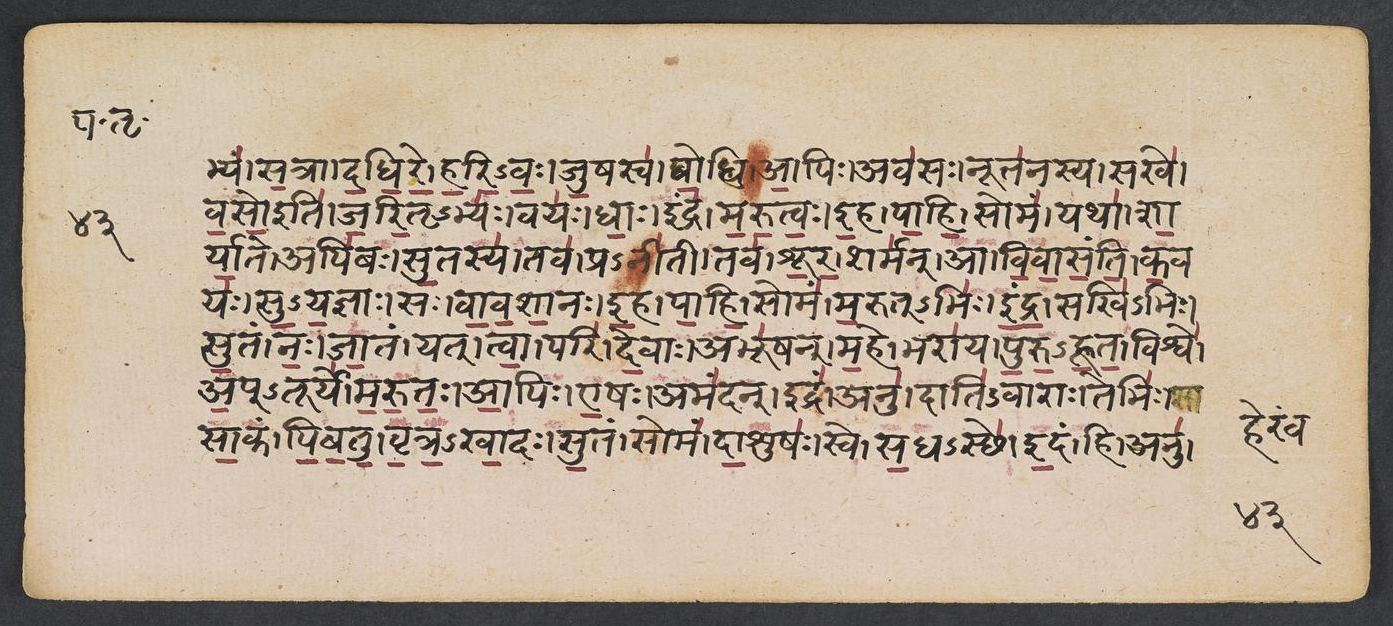
Penn Ms. Coll. 390 Item 41, fol. 233v (numbered 43v by the scribe) (OPenn image 235, upper leaf). Checked on the image: the Rigveda text on this page begins in RV 3.51.6 ‹-tubhyam satrā dadhire hari-vaḥ›. The next page with Rigveda text, fol. 234r (numbered 44r by the scribe), begins in RV 3.51.10 ‹ojasā sutam rādhānām pate›. Verses 3.51.6-9 end on this page; 3.51.6 begins on fol. 233r (numbered 43r by the scribe).
6tubhya̱m brahmā̍ṇi̱ gira̍ indra̱ tubhya̍ṁ sa̱trā da̍dhire harivo ju̱ṣasva̍ | bo̱dhy ā̱3̱̍pir ava̍so̱ nūta̍nasya̱ sakhe̍ vaso jari̱tṛbhyo̱ vayo̍ dhāḥ ||
7indra̍ marutva i̱ha pā̍hi̱ soma̱ṁ yathā̍ śāryā̱te api̍baḥ su̱tasya̍ | tava̱ praṇī̍tī̱ tava̍ śūra̱ śarma̱nn ā vi̍vāsanti ka̱vaya̍ḥ suya̱jñāḥ ||
8sa vā̍vaśā̱na i̱ha pā̍hi̱ soma̍m ma̱rudbhi̍r indra̱ sakhi̍bhiḥ su̱taṁ na̍ḥ | jā̱taṁ yat tvā̱ pari̍ de̱vā abhū̍ṣan ma̱he bharā̍ya puruhūta̱ viśve̍ ||
9a̱ptūrye̍ maruta ā̱pir e̱ṣo 'ma̍nda̱nn indra̱m anu̱ dāti̍vārāḥ | tebhi̍ḥ sā̱kam pi̍batu vṛtrakhā̱daḥ su̱taṁ soma̍ṁ dā̱śuṣa̱ḥ sve sa̱dhasthe̍ ||
Compare: Padapāṭha (word-by-word text written in the manuscript; Sansknet e-text via GRETIL)
6tubhyam | brahmāṇi | giraḥ | indra | tubhyam | satrā | dadhire | hari-vaḥ | juṣasva | bodhi | āpiḥ | avasaḥ | nūtanasya | sakhe | vaso iti | jaritṛ-bhyaḥ | vayaḥ | dhāḥ
7indra | marutvaḥ | iha | pāhi | somam | yathā | śāryāte | apibaḥ | sutasya | tava | pra-nītī | tava | śūra | śarman | ā | vivāsanti | kavayaḥ | su-yajñāḥ
8saḥ | vāvaśānaḥ | iha | pāhi | somam | marut-bhiḥ | indra | sakhi-bhiḥ | sutam | naḥ | jātam | yat | tvā | pari | devāḥ | abhūṣan | mahe | bharāya | puru-hūta | viśve
9ap-tūrye | marutaḥ | āpiḥ | eṣaḥ | amandan | indram | anu | dāti-vārāḥ | tebhiḥ | sākam | pibatu | vṛtra-khādaḥ | sutam | somam | dāśuṣaḥ | sve | sadha-sthe
6To thee, O Indra, Lord of Bays, for ever are offered prayers and songs: accept them gladly. As Kinsman think thou of some fresh assistance; good Friend, give strength and life to those who praise thee.
7Here, Indra, drink thou Soma with the Maruts, as thou didst drink the juice beside Saryata. Under thy guidance, in thy keeping, Hero, the singers serve, skilled in fair sacrifices.
8So eagerly desirous drink the Soma, our juice, O Indra, with thy friends the Maruts, Since at thy birth all Deities adorned thee for the great fight, O thou invoked of many.
9He was your comrade in your zeal, O Maruts: they, rich in noble gifts, rejoiced in Indra. With them together let the Vr̥itra-slayer drink in his home the worshipper's libation.
Where on the image
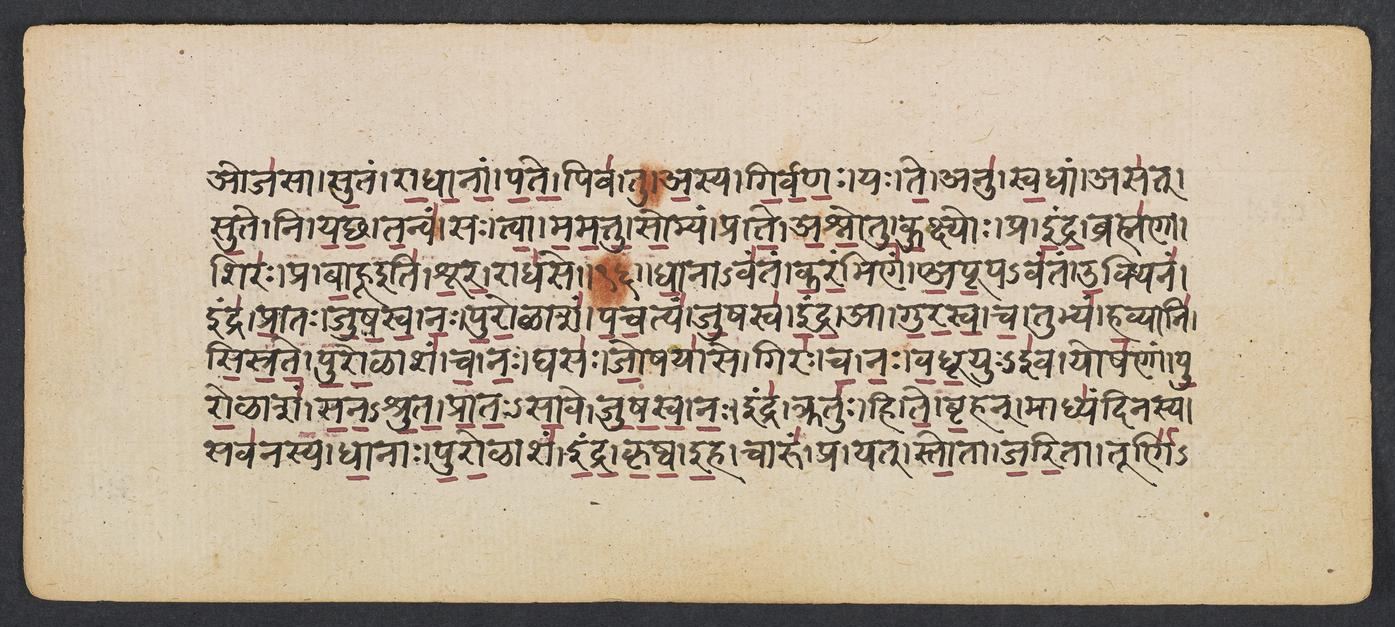
Penn Ms. Coll. 390 Item 41, fol. 234r (numbered 44r by the scribe) (OPenn image 235, lower leaf). Checked on the image: the Rigveda text on this page begins in RV 3.51.10 ‹ojasā sutam rādhānām pate›. The next page with Rigveda text, fol. 234v (numbered 44v by the scribe), begins in RV 3.52.5 ‹-tūrṇi-arthaḥ vṛṣa-yamāṇaḥ upa gīḥ-bhiḥ›. Verses 3.51.10-12 end on this page; 3.51.10 begins on fol. 233v (numbered 43v by the scribe).
10i̱daṁ hy anv oja̍sā su̱taṁ rā̍dhānām pate | pibā̱ tv a1̱̍sya gi̍rvaṇaḥ ||
11yas te̱ anu̍ sva̱dhām asa̍t su̱te ni ya̍ccha ta̱nva̍m | sa tvā̍ mamattu so̱myam ||
12pra te̍ aśnotu ku̱kṣyoḥ prendra̱ brahma̍ṇā̱ śira̍ḥ | pra bā̱hū śū̍ra̱ rādha̍se ||
Compare: Padapāṭha (word-by-word text written in the manuscript; Sansknet e-text via GRETIL)
10idam | hi | anu | ojasā | sutam | rādhānām | pate | piba | tu | asya | girvaṇaḥ
11yaḥ | te | anu | svadhām | asat | sute | ni | yaccha | tanvam | saḥ | tvā | mamattu | somyam
12pra | te | aśnotu | kukṣyoḥ | pra | indra | brahmaṇā | śiraḥ | pra | bāhū iti | śūra | rādhase
10So, Lord of affluent gifts, this juice hath been pressed for thee with strength Drink of it, thou who lovest song.
11Incline thy body to this juice which suits thy Godlike nature well: May it cheer thee who lovest it.
12Brave Indra, let it work through both thy flanks, and through thy head by prayer, And through thine arms, to prosper us.
Notes
- Sanskrit: Aufrecht's edition (1877) with the Vedic accents, as entered by van Nooten and Holland (GRETIL).
- English: Ralph T. H. Griffith, The Hymns of the Rigveda (1889-1892; 2nd ed. 1896-1897), from the VedaWeb digital text; OCR slips in that text were corrected against the printed 2nd edition (data/sources/rigveda/griffith_errata.json).
- Padapāṭha (edition text): Sansknet e-text via GRETIL (CC BY-NC-SA 4.0).
Cite
Sources
- Source: Penn Ms. Coll. 390 Item 41 (undated (catalogued with Penn's 18th-19th c. Vedic manuscripts)), OPenn, Public Domain Mark + Aufrecht's accented text (GRETIL) + Griffith's English (VedaWeb) (holding institution)
- Critical edition: Aufrecht (1877), accented e-text via GRETIL
← previous · → next · v cycle view · l back to library