Rigveda 3.53: To Indra
Introduction
Rigveda 3.53 is a hymn of 24 verses addressed to Indra. It stands in book (maṇḍala) 3, the family book of Viśvāmitra. The Rigveda is the oldest collection of Sanskrit hymns, composed in the second half of the second millennium BCE and handed down orally for many centuries before it was written down.
The manuscript shown is Penn Ms. Coll. 390 Item 41 (University of Pennsylvania), an undated paper manuscript of the padapāṭha (the word-by-word recitation text, in which every word is written separately and compounds are split) of the whole Ṛgveda in Devanāgarī, 884 leaves in fascicles, 7-9 lines to the page, accents in red; this hymn stands on fol. 234v-237v. Each section below gives the verses that end on one page; the page boundaries were read on the images (the opening words of every page), not counted out. Where the manuscript is a padapāṭha (the word-by-word recitation text), the section shows Aufrecht's continuous (saṃhitā) text first and, as the edition text, the padapāṭha of the same verses, which is the form written on the page.
How was this verified? (Provenance)
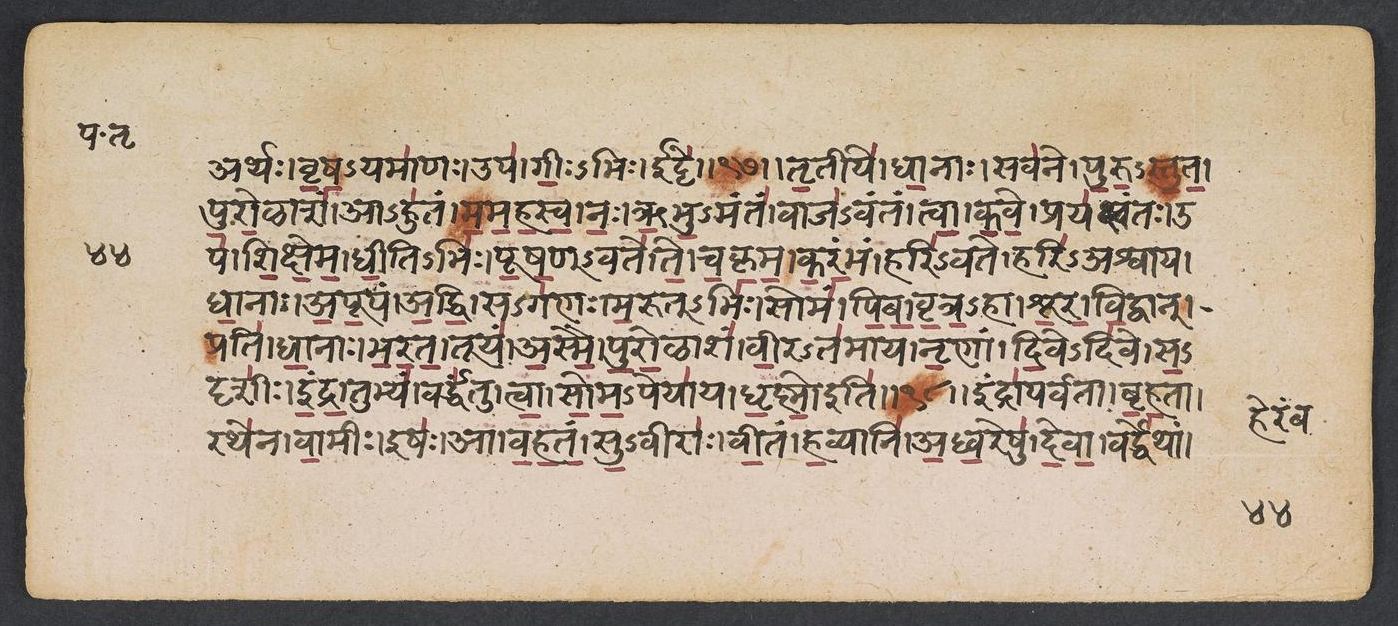
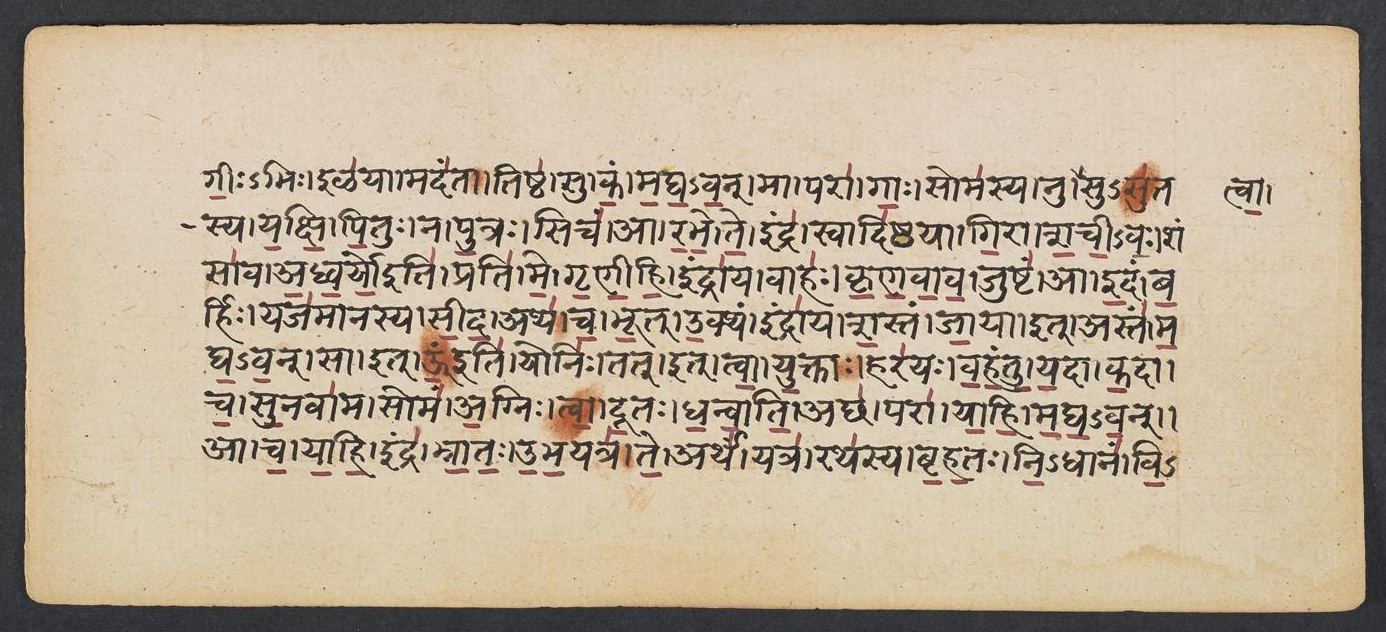
Where on the image
Penn Ms. Coll. 390 Item 41, fol. 235r (numbered 45r by the scribe) (OPenn image 236, lower leaf). Checked on the image: the Rigveda text on this page begins in RV 3.53.1 ‹gīḥ-bhiḥ iḷiyā madantā›. The next page with Rigveda text, fol. 235v (numbered 45v by the scribe), begins in RV 3.53.5 ‹-vi-mocanam vājinaḥ rāsabhasya›. Verses 3.53.1-4 end on this page; 3.53.1 begins on fol. 234v (numbered 44v by the scribe).
1indrā̍parvatā bṛha̱tā rathe̍na vā̱mīr iṣa̱ ā va̍hataṁ su̱vīrā̍ḥ | vī̱taṁ ha̱vyāny a̍dhva̱reṣu̍ devā̱ vardhe̍thāṁ gī̱rbhir iḻa̍yā̱ mada̍ntā ||
2tiṣṭhā̱ su ka̍m maghava̱n mā parā̍ gā̱ḥ soma̍sya̱ nu tvā̱ suṣu̍tasya yakṣi | pi̱tur na pu̱traḥ sica̱m ā ra̍bhe ta̱ indra̱ svādi̍ṣṭhayā gi̱rā śa̍cīvaḥ ||
3śaṁsā̍vādhvaryo̱ prati̍ me gṛṇī̱hīndrā̍ya̱ vāha̍ḥ kṛṇavāva̱ juṣṭa̍m | edam ba̱rhir yaja̍mānasya sī̱dāthā̍ ca bhūd u̱ktham indrā̍ya śa̱stam ||
4jā̱yed asta̍m maghava̱n sed u̱ yoni̱s tad it tvā̍ yu̱ktā hara̍yo vahantu | ya̱dā ka̱dā ca̍ su̱navā̍ma̱ soma̍m a̱gniṣ ṭvā̍ dū̱to dha̍nvā̱ty accha̍ ||
Compare: Padapāṭha (word-by-word text written in the manuscript; Sansknet e-text via GRETIL)
1indrāparvatā | bṛhatā | rathena | vāmīḥ | iṣaḥ | ā | vahatam | su-vīrāḥ | vītam | havyāni | adhvareṣu | devā | vardhethām | gīḥ-bhiḥ | iḷiyā | madantā
2tiṣṭha | su | kam | magha-van | mā | parā | gāḥ | somasya | nu | tvā | su-sutasya | yakṣi | pituḥ | na | putraḥ | sicam | ā | rabhe | te | indra | svādiṣṭhayā | girā | śacī-vaḥ
3śaṃsāva | adhvaryo iti | prati | me | gṛṇīhi | indrāya | vāhaḥ | kṛṇavāva | juṣṭam | ā | idam | barhiḥ | yajamānasya | sīda | atha | ca | bhūt | uktham | indrāya | śastam
4jāyā | it | astam | magha-van | sā | it | oṃ iti | yoniḥ | tat | it | tvā | yuktāḥ | harayaḥ | vahantu | yadā | kadā | ca | sunavāma | somam | agn | tvā | dūtaḥ | dhanvāti | accha
1ON a high car, O Parvata and Indra, bring pleasant viands, with brave heroes, hither. Enjoy the gifts, Gods, at our sacrifices wax strong by hymns, rejoice in our oblation.
2Stay still, O Maghavan, advance no farther. a draught of well-pressed Soma will I give thee. With sweetest song I grasp, O Mighty Indra, thy garment's hem as a child grasps his father's.
3Adhvaryu, sing we both; sing thou in answer: make we a laud acceptable to Indra. Upon this sacrificer's grass he seated: to Indra shall our eulogy be uttered.
4A wife, O Maghavan is home and dwelling: so let thy Bay Steeds yoked convey thee hither. Whenever we press out for thee the Soma, let Agni as our Herald speed to call thee.
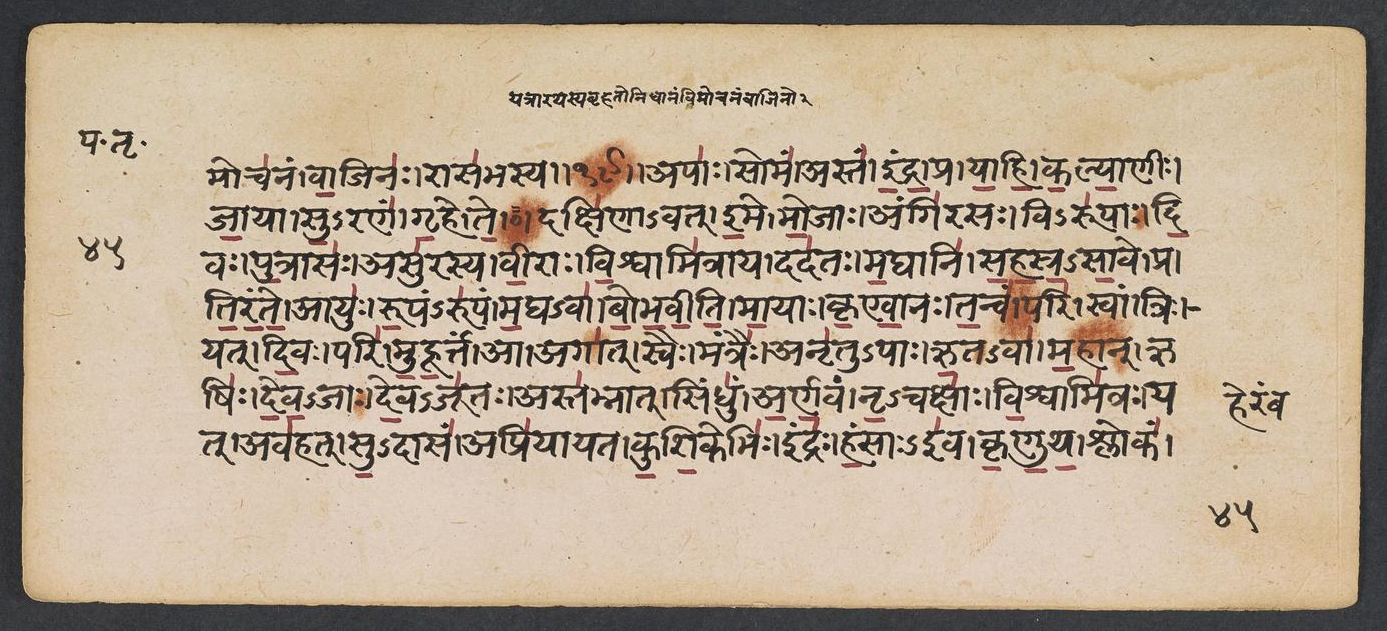
Where on the image
Penn Ms. Coll. 390 Item 41, fol. 235v (numbered 45v by the scribe) (OPenn image 237, upper leaf). Checked on the image: the Rigveda text on this page begins in RV 3.53.5 ‹-vi-mocanam vājinaḥ rāsabhasya›. The next page with Rigveda text, fol. 236r (numbered 46r by the scribe), begins in RV 3.53.10 ‹adri-bhiḥ madantaḥ gīḥ-bhiḥ adhvare›. Verses 3.53.5-9 end on this page; 3.53.5 begins on fol. 235r (numbered 45r by the scribe).
5parā̍ yāhi maghava̱nn ā ca̍ yā̱hīndra̍ bhrātar ubha̱yatrā̍ te̱ artha̍m | yatrā̱ ratha̍sya bṛha̱to ni̱dhāna̍ṁ vi̱moca̍naṁ vā̱jino̱ rāsa̍bhasya ||
6apā̱ḥ soma̱m asta̍m indra̱ pra yā̍hi kalyā̱ṇīr jā̱yā su̱raṇa̍ṁ gṛ̱he te̍ | yatrā̱ ratha̍sya bṛha̱to ni̱dhāna̍ṁ vi̱moca̍naṁ vā̱jino̱ dakṣi̍ṇāvat ||
7i̱me bho̱jā aṅgi̍raso̱ virū̍pā di̱vas pu̱trāso̱ asu̍rasya vī̱rāḥ | vi̱śvāmi̍trāya̱ dada̍to ma̱ghāni̍ sahasrasā̱ve pra ti̍ranta̱ āyu̍ḥ ||
8rū̱paṁ-rū̍pam ma̱ghavā̍ bobhavīti mā̱yāḥ kṛ̍ṇvā̱nas ta̱nva1̱̍m pari̱ svām | trir yad di̱vaḥ pari̍ muhū̱rtam āgā̱t svair mantrai̱r anṛ̍tupā ṛ̱tāvā̍ ||
9ma̱hām̐ ṛṣi̍r deva̱jā de̱vajū̱to 'sta̍bhnā̱t sindhu̍m arṇa̱vaṁ nṛ̱cakṣā̍ḥ | vi̱śvāmi̍tro̱ yad ava̍hat su̱dāsa̱m apri̍yāyata kuśi̱kebhi̱r indra̍ḥ ||
Compare: Padapāṭha (word-by-word text written in the manuscript; Sansknet e-text via GRETIL)
5parā | yāhi | magha-van | ā | ca | yāhi | indra | bhrātaḥ | ubhayatra | te | artham | yatra | rathasya | bṛhataḥ | ni-dhānam | vi-mocanam | vājinaḥ | rāsabhasya
6apāḥ | somam | astam | indra | pra | yāhi | kalyāṇīḥ | jāyā | su-raṇam | gṛhe | te | yatra | rathasya | bṛhataḥ | ni-dhānam | vi-mocanam | vājinaḥ | dakṣiṇāvat
7ime | bhojāḥ | aṅgirasaḥ | vi-rūpāḥ | divaḥ | putrāsaḥ | asurasya | vīrāḥ | viśvāmitrāya | dadataḥ | maghāni | sahasra-sāve | pra | tirante | āyuḥ
8rūpam-rūpam | magha-vā | bobhavīti | māyāḥ | kṛṇvānaḥ | tanvam | pari | svām | tr iḥ | yat | divaḥ | pari | muhūrtam | ā | agāt | svaiḥ | mantraiḥ | anṛtu-pāḥ | ṛta-vā
9mahān | ṛṣiḥ | deva-jāḥ | deva-jūtaḥ | astabhnāt | sindhum | arṇavam | nṛ-cakṣāḥ | viśvāmitraḥ | yat | avahat | su-dāsam | apriyāyata | kuśikebhiḥ | indraḥ
5Depart, O Maghavan;again come hither: both there and here thy goal is Indra, Brother, Where thy tall chariot hath a place to rest in, and where thou loosest thy loud-neighing Courser.
6Thou hast drunk Soma, Indra, turn thee homeward; thy joy is in thy home, thy gracious Consort; Where thy tall chariot hath a place to rest in, and thy strong Courser is set free with guerdon.
7Bounteous are these, Angirases, Virûpas: the Asura's Heroes and the Sons of Heaven. They, giving store of wealth to Viṣvâmitra, prolong his life through countless Soma-pressings.
8Maghavan weareth every shape at pleasure, effecting magic changes in his body, Holy One, drinker out of season, coming thrice, in a moment, through fit prayers, from heaven.
9The mighty sage, God-born and God-incited, who looks on men, restrained the billowy river. When Viṣvâmitra was Sudâs's escort, then Indra through the Kuṣikas grew friendly.
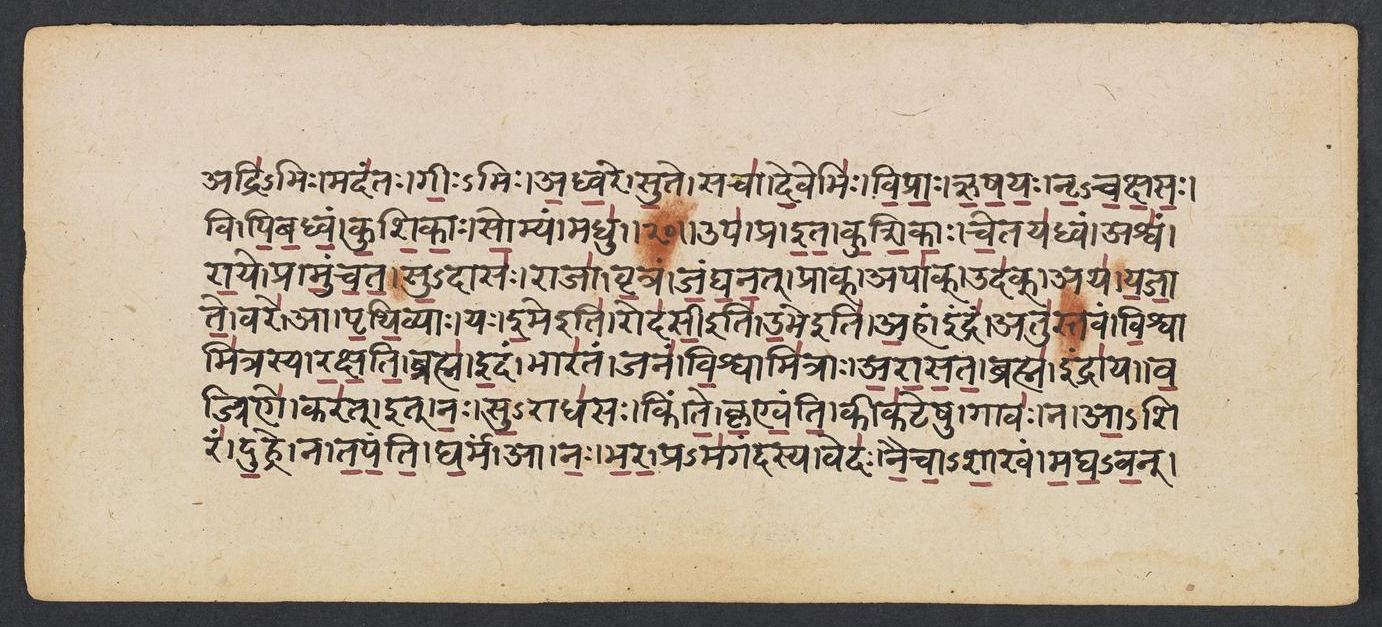
Where on the image
Penn Ms. Coll. 390 Item 41, fol. 236r (numbered 46r by the scribe) (OPenn image 237, lower leaf). Checked on the image: the Rigveda text on this page begins in RV 3.53.10 ‹adri-bhiḥ madantaḥ gīḥ-bhiḥ adhvare›. The next page with Rigveda text, fol. 236v (numbered 46v by the scribe), begins in RV 3.53.14 ‹randhaya naḥ›. Verses 3.53.10-13 end on this page; 3.53.10 begins on fol. 235v (numbered 45v by the scribe).
10ha̱ṁsā i̍va kṛṇutha̱ śloka̱m adri̍bhi̱r mada̍nto gī̱rbhir a̍dhva̱re su̱te sacā̍ | de̱vebhi̍r viprā ṛṣayo nṛcakṣaso̱ vi pi̍badhvaṁ kuśikāḥ so̱myam madhu̍ ||
11upa̱ preta̍ kuśikāś ce̱taya̍dhva̱m aśva̍ṁ rā̱ye pra mu̍ñcatā su̱dāsa̍ḥ | rājā̍ vṛ̱traṁ ja̍ṅghana̱t prāg apā̱g uda̱g athā̍ yajāte̱ vara̱ ā pṛ̍thi̱vyāḥ ||
12ya i̱me roda̍sī u̱bhe a̱ham indra̱m atu̍ṣṭavam | vi̱śvāmi̍trasya rakṣati̱ brahme̱dam bhāra̍ta̱ṁ jana̍m ||
13vi̱śvāmi̍trā arāsata̱ brahmendrā̍ya va̱jriṇe̍ | kara̱d in na̍ḥ su̱rādha̍saḥ ||
Compare: Padapāṭha (word-by-word text written in the manuscript; Sansknet e-text via GRETIL)
10haṃsāḥ-iva | kṛṇutha | ślokam | adri-bhiḥ | madantaḥ | gīḥ-bhiḥ | adhvare | sute | sacā | devebhiḥ | viprāḥ | ṛṣayaḥ | nṛ-cakṣasaḥ | vi | pibadhvam | kuśikāḥ | somyam | madhu
11upa | pra | ita | kuśikāḥ | cetayadhvam | aśvam | rāye | pra | muñcata | su-dāsaḥ | rājā | vṛtram | jaṅghanat | prāk | apāk | udak | atha | yajāte | vare | ā | pṛthivyāḥ
12yaḥ | ime iti | rodasī iti | ubhe iti | aham | indram | atustavam | viśvāmitrasya | rakṣati | brahma | idam | bhāratam | janam
13viśvāmitrāḥ | arāsata | brahma | indrāya | vajriṇe | karat | it | naḥ | su-rādhasaḥ
10Like swans, prepare a song of praise with pressing-stones, glad in your hymns with juice poured forth in sacrifice. Ye singers, with the Gods, sages who look on men, ye Kuṣikas, drink up the Soma's savoury meath.
11Come forward, Kuṣikas, and be attentive; let loose Sudâs's horse to win him riches. East, west, and north, let the King slay the foeman, then at earth's choicest place perform his worship.
12Praises to Indra have I sung, sustainer of this earth and heaven. This prayer of Viṣvâmitra keeps secure the race of Bharatas.
13The Viṣvâmitras have sung forth this prayer to Indra Thunder-aimed: So let him make us prosperous.
Where on the image
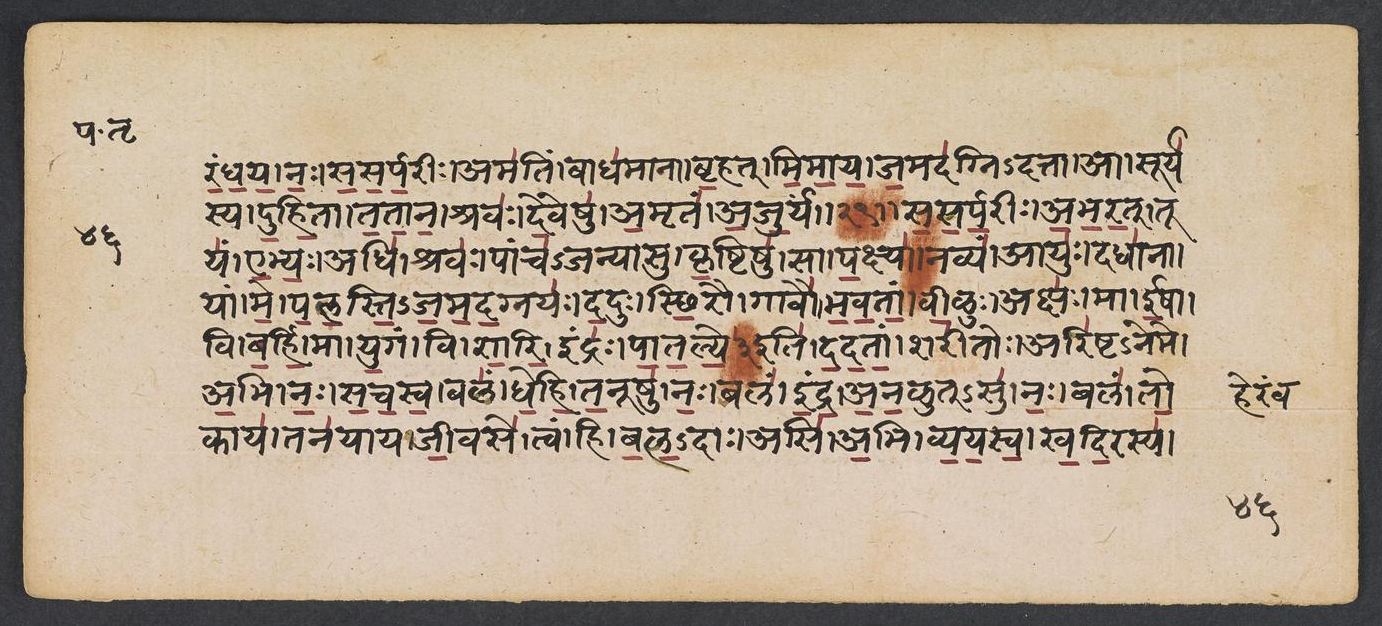
Penn Ms. Coll. 390 Item 41, fol. 236v (numbered 46v by the scribe) (OPenn image 238, upper leaf). Checked on the image: the Rigveda text on this page begins in RV 3.53.14 ‹randhaya naḥ›. The next page with Rigveda text, fol. 237r (numbered 47r by the scribe), begins in RV 3.53.19 ‹sāram ojaḥ dhehi spandane›. Verses 3.53.14-18 end on this page; 3.53.14 begins on fol. 236r (numbered 46r by the scribe).
14kiṁ te̍ kṛṇvanti̱ kīka̍ṭeṣu̱ gāvo̱ nāśira̍ṁ du̱hre na ta̍panti gha̱rmam | ā no̍ bhara̱ prama̍gandasya̱ vedo̍ naicāśā̱kham ma̍ghavan randhayā naḥ ||
15sa̱sa̱rpa̱rīr ama̍ti̱m bādha̍mānā bṛ̱han mi̍māya ja̱mada̍gnidattā | ā sūrya̍sya duhi̱tā ta̍tāna̱ śravo̍ de̱veṣv a̱mṛta̍m aju̱ryam ||
16sa̱sa̱rpa̱rīr a̍bhara̱t tūya̍m e̱bhyo 'dhi̱ śrava̱ḥ pāñca̍janyāsu kṛ̱ṣṭiṣu̍ | sā pa̱kṣyā̱3̱̍ navya̱m āyu̱r dadhā̍nā̱ yām me̍ palastijamada̱gnayo̍ da̱duḥ ||
17sthi̱rau gāvau̍ bhavatāṁ vī̱ḻur akṣo̱ meṣā vi va̍rhi̱ mā yu̱gaṁ vi śā̍ri | indra̍ḥ pāta̱lye̍ dadatā̱ṁ śarī̍to̱r ari̍ṣṭaneme a̱bhi na̍ḥ sacasva ||
18bala̍ṁ dhehi ta̱nūṣu̍ no̱ bala̍m indrāna̱ḻutsu̍ naḥ | bala̍ṁ to̱kāya̱ tana̍yāya jī̱vase̱ tvaṁ hi ba̍la̱dā asi̍ ||
Compare: Padapāṭha (word-by-word text written in the manuscript; Sansknet e-text via GRETIL)
14kim | te | kṛṇvanti | kīkaṭeṣu | gāvaḥ | na | āśiran | duhre | na | tapanti | gharmam | ā | naḥ | bhara | pra-magandasya | vedaḥ | naicāśākham | magha-van | randhaya | naḥ
15sasarparīḥ | amatim | bādhamānā | bṛhat | mimāya | jamadagni-dattā | ā | sūryasya | duhitā | tatāna | śravaḥ | deveṣu | amṛtam | ajuryam
16sasarparīḥ | abharat | tūyam | ebhyaḥ | adhi | śravaḥ | pāñca-janyāsu | kṛṣṭiṣu | sā | pakṣyā | navyam | āyuḥ | dadhānā | yām | me | palasti-jamadagnayaḥ | daduḥ
17sthirau | gāvau | bhavatām | vīḷuḥ | akṣaḥ | mā | īṣā | vi | varhi | mā | yugam | vi | śāri | indraḥ | pātalye iti | dadatām | śarītoḥ | ariṣṭa-neme | abhi | naḥ | sacasva
18balam | dhehi | tanūṣu | naḥ | balam | indra | anaḷut-su | naḥ | balam | tokāya | tanayāya | jīvase | tvam | hi | bala-dāḥ | asi
14Among the Kîkaṭas what do thy cattle? They pour no milky draught, they heat no caldron. Bring thou to us the wealth of Pramaganda; give up to us, O Maghavan, the low-born.
15Sasarparî, the gift of Jamadagnis, hath lowed with mighty voice dispelling famine. The Daughter of the Sun hath spread our glory among the Gods, imperishable, deathless.
16Sasarparî brought glory speedily to these, over the generations of the Fivefold Race; Daughter of Paksa, she bestows new vital power, she whom the ancient Jamadagnis gave to me.
17Strong be the pair of oxen, firm the axles, let not the pole slip nor the yoke be broken. May Indra, keep the yoke-pins from decaying: attend us, thou whose fellies are uninjured.
18O Indra, give our bodies strength, strength to the bulls who draw the wains, Strength to our seed and progeny that they may live, for thou art he who giveth strength.
Where on the image
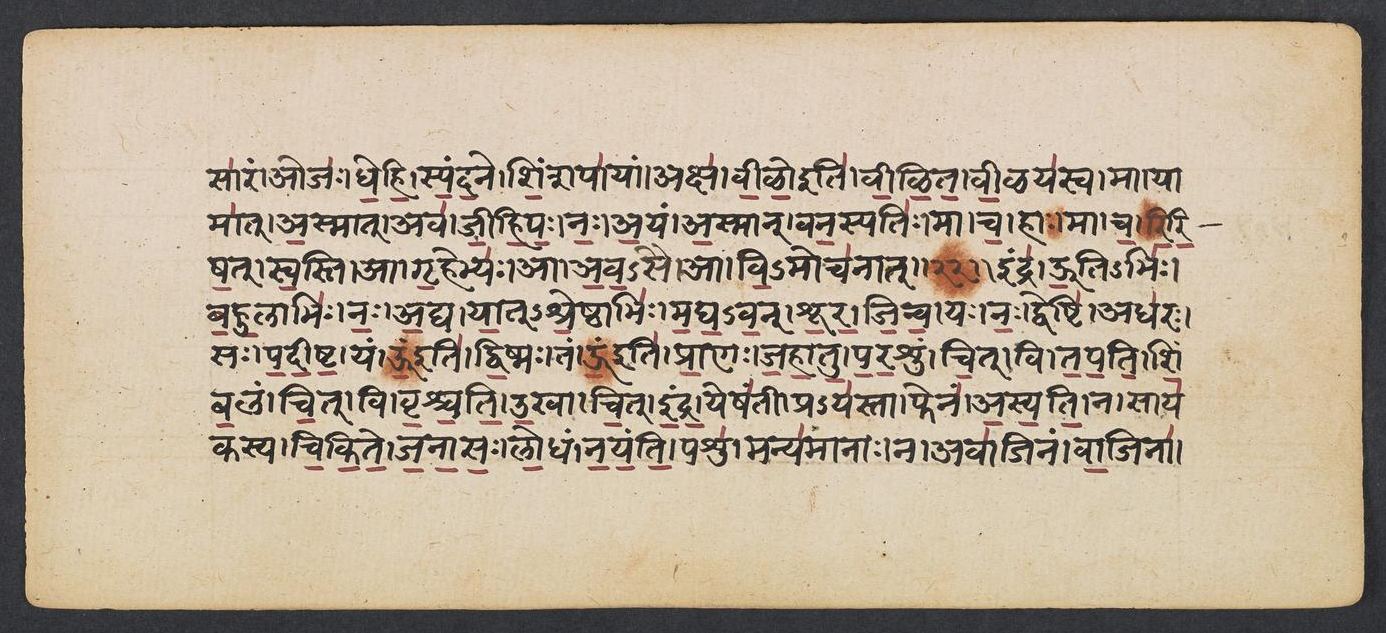
Penn Ms. Coll. 390 Item 41, fol. 237r (numbered 47r by the scribe) (OPenn image 238, lower leaf). Checked on the image: the Rigveda text on this page begins in RV 3.53.19 ‹sāram ojaḥ dhehi spandane›. The next page with Rigveda text, fol. 237v (numbered 47v by the scribe), begins in RV 3.53.23 ‹hāsayanti na gardabham puraḥ›. Verses 3.53.19-22 end on this page; 3.53.19 begins on fol. 236v (numbered 46v by the scribe).
19a̱bhi vya̍yasva khadi̱rasya̱ sāra̱m ojo̍ dhehi spanda̱ne śi̱ṁśapā̍yām | akṣa̍ vīḻo vīḻita vī̱ḻaya̍sva̱ mā yāmā̍d a̱smād ava̍ jīhipo naḥ ||
20a̱yam a̱smān vana̱spati̱r mā ca̱ hā mā ca̍ rīriṣat | sva̱sty ā gṛ̱hebhya̱ āva̱sā ā vi̱moca̍nāt ||
21indro̱tibhi̍r bahu̱lābhi̍r no a̱dya yā̍cchre̱ṣṭhābhi̍r maghavañ chūra jinva | yo no̱ dveṣṭy adha̍ra̱ḥ sas pa̍dīṣṭa̱ yam u̍ dvi̱ṣmas tam u̍ prā̱ṇo ja̍hātu ||
22pa̱ra̱śuṁ ci̱d vi ta̍pati śimba̱laṁ ci̱d vi vṛ̍ścati | u̱khā ci̍d indra̱ yeṣa̍ntī̱ praya̍stā̱ phena̍m asyati ||
Compare: Padapāṭha (word-by-word text written in the manuscript; Sansknet e-text via GRETIL)
19abhi | vyayasva | khadirasya | sāram | ojaḥ | dhehi | spandane | śiṃśapāyām | akṣa | vīḷo iti | vīḷita | vīḷayasva | mā | yāmāt | asmāt | ava | jīhipaḥ | naḥ
20ayam | asmān | vanaspatiḥ | mā | ca | hāḥ | mā | ca | ririṣat | svasti | ā | gṛhebhyaḥ | ā | avasai | ā | vi-mocanāt
21indra | ūti-bhiḥ | bahulābhiḥ | naḥ | adya | yāt-śreṣṭhābhiḥ | magha-van | śūra | ji nva | yaḥ | naḥ | dveṣṭi | adharaḥ | saḥ | padīṣṭa | yam | oṃ iti | dviṣmaḥ | tam | oṃ iti | prāṇaḥ | jahātu
22paraśum | cit | vi | tapati | śimbalam | cit | vi | vṛścati | ukhā | cit | indra yeṣantī | pra-yastā | phenam | asyati
19Enclose thee in the heart of Khayar timber, in the car wrought of Ṣinṣapâ put firmness. Show thyself strong, O Axle, fixed and strengthened: throw us not from the car whereon we travel.
20Let not this sovran of the wood leave us forlorn or injure us. Safe may we be until we reach our homes and rest us and unyoke.
21With various aids this day come to us, Indra, with best aids speed us, Maghavan, thou Hero. Let him who hateth us fall headlong downward: him whom we hate let vital breath abandon.
22He heats his very axe, and then cuts a mere Semal blossom off. O Indra, like a caldron cracked and seething, so he pours out foam.
Where on the image
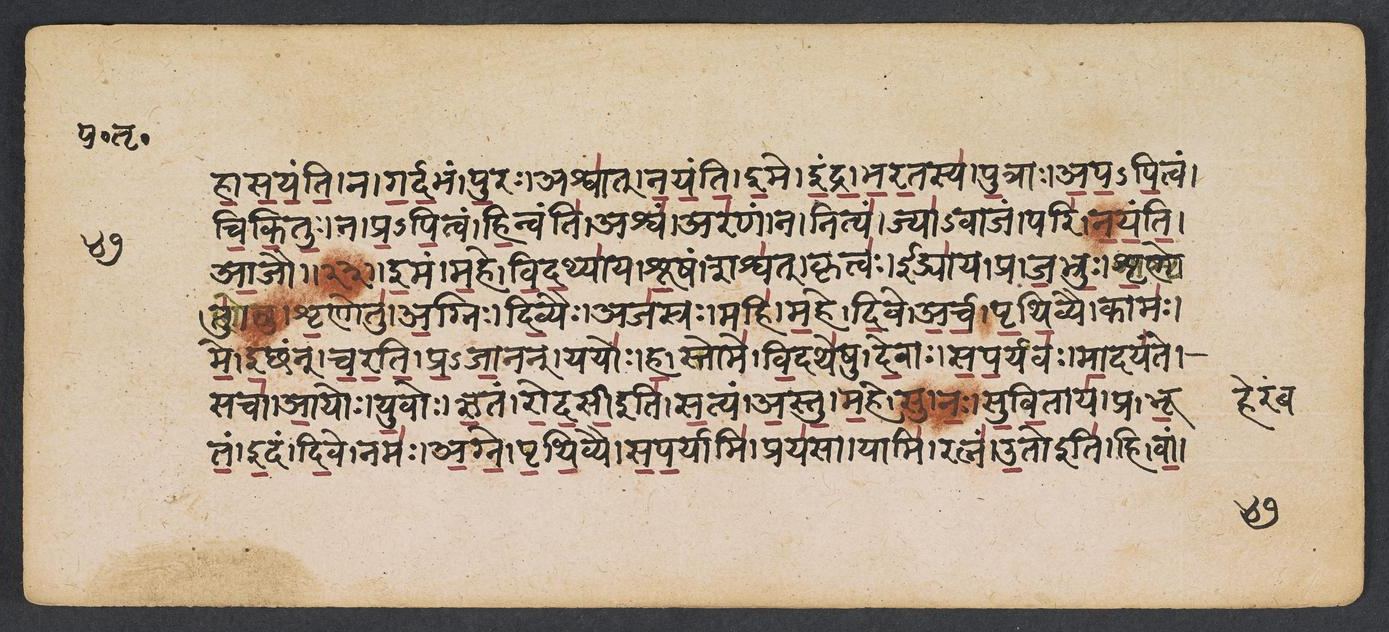
Penn Ms. Coll. 390 Item 41, fol. 237v (numbered 47v by the scribe) (OPenn image 239, upper leaf). Checked on the image: the Rigveda text on this page begins in RV 3.53.23 ‹hāsayanti na gardabham puraḥ›. The next page with Rigveda text, fol. 238r (numbered 48r by the scribe), begins in RV 3.54.4 ‹pūrvyāḥ āvividre ṛtavarī ity›. Verses 3.53.23-24 end on this page; 3.53.23 begins on fol. 237r (numbered 47r by the scribe).
23na sāya̍kasya cikite janāso lo̱dhaṁ na̍yanti̱ paśu̱ manya̍mānāḥ | nāvā̍jinaṁ vā̱jinā̍ hāsayanti̱ na ga̍rda̱bham pu̱ro aśvā̍n nayanti ||
24i̱ma i̍ndra bhara̱tasya̍ pu̱trā a̍papi̱tvaṁ ci̍kitu̱r na pra̍pi̱tvam | hi̱nvanty aśva̱m ara̍ṇa̱ṁ na nitya̱ṁ jyā̍vāja̱m pari̍ ṇayanty ā̱jau ||
Compare: Padapāṭha (word-by-word text written in the manuscript; Sansknet e-text via GRETIL)
23na | sāyakasya | cikite | janāsaḥ | lodham | nayanti | paśu | manyamānāḥ | na | avājinam | vājinā | hāsayanti | na | gardabham | puraḥ | aśvāt | nayanti
24ime | indra | bharatasya | putrāḥ | apa-pitvam | cikituḥ | na | pra-pitvam | hi nvanti | aśvam | araṇam | na | nityam | jyāvājam | pari | nayanti | ājau
23Men notice not the arrow, O ye people; they bring the red beast deeming it a bullock. A sluggish steed men run not with the courser, nor ever lead an ass before a charger.
24These men, the sons of Bharata, O Indra, regard not severance or close connexion. They urge their own steed as it were another's, and take him, swift as the bow's string, to battle.
Notes
- Sanskrit: Aufrecht's edition (1877) with the Vedic accents, as entered by van Nooten and Holland (GRETIL).
- English: Ralph T. H. Griffith, The Hymns of the Rigveda (1889-1892; 2nd ed. 1896-1897), from the VedaWeb digital text; OCR slips in that text were corrected against the printed 2nd edition (data/sources/rigveda/griffith_errata.json).
- Padapāṭha (edition text): Sansknet e-text via GRETIL (CC BY-NC-SA 4.0).
Cite
Sources
- Source: Penn Ms. Coll. 390 Item 41 (undated (catalogued with Penn's 18th-19th c. Vedic manuscripts)), OPenn, Public Domain Mark + Aufrecht's accented text (GRETIL) + Griffith's English (VedaWeb) (holding institution)
- Critical edition: Aufrecht (1877), accented e-text via GRETIL
← previous · → next · v cycle view · l back to library