Rigveda 3.54: To all the gods
Introduction
Rigveda 3.54 is a hymn of 22 verses addressed to all the gods. It stands in book (maṇḍala) 3, the family book of Viśvāmitra. The Rigveda is the oldest collection of Sanskrit hymns, composed in the second half of the second millennium BCE and handed down orally for many centuries before it was written down.
The manuscript shown is Penn Ms. Coll. 390 Item 41 (University of Pennsylvania), an undated paper manuscript of the padapāṭha (the word-by-word recitation text, in which every word is written separately and compounds are split) of the whole Ṛgveda in Devanāgarī, 884 leaves in fascicles, 7-9 lines to the page, accents in red; this hymn stands on fol. 237v-240r. Each section below gives the verses that end on one page; the page boundaries were read on the images (the opening words of every page), not counted out. Where the manuscript is a padapāṭha (the word-by-word recitation text), the section shows Aufrecht's continuous (saṃhitā) text first and, as the edition text, the padapāṭha of the same verses, which is the form written on the page.
How was this verified? (Provenance)
Where on the image
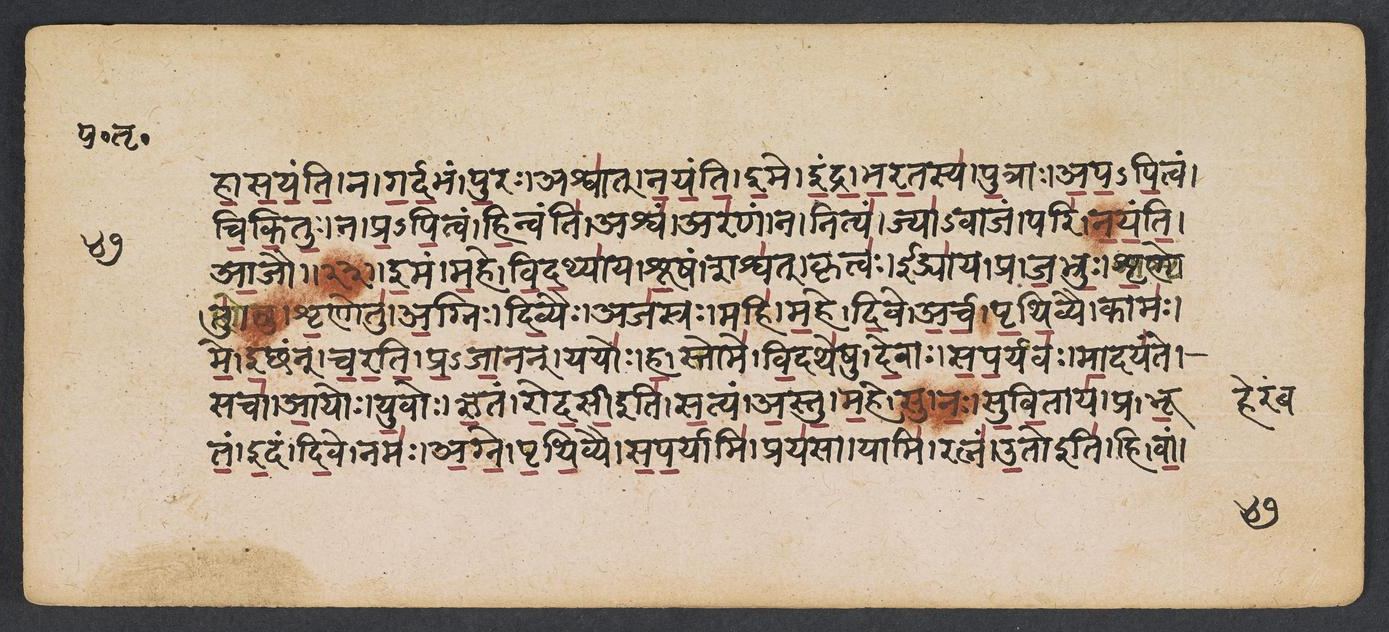
Penn Ms. Coll. 390 Item 41, fol. 237v (numbered 47v by the scribe) (OPenn image 239, upper leaf). Checked on the image: the Rigveda text on this page begins in RV 3.53.23 ‹hāsayanti na gardabham puraḥ›. The next page with Rigveda text, fol. 238r (numbered 48r by the scribe), begins in RV 3.54.4 ‹pūrvyāḥ āvividre ṛtavarī ity›. Verses 3.54.1-3 end on this page.
1i̱mam ma̱he vi̍da̱thyā̍ya śū̱ṣaṁ śaśva̱t kṛtva̱ īḍyā̍ya̱ pra ja̍bhruḥ | śṛ̱ṇotu̍ no̱ damye̍bhi̱r anī̍kaiḥ śṛ̱ṇotv a̱gnir di̱vyair aja̍sraḥ ||
2mahi̍ ma̱he di̱ve a̍rcā pṛthi̱vyai kāmo̍ ma i̱cchañ ca̍rati prajā̱nan | yayo̍r ha̱ stome̍ vi̱dathe̍ṣu de̱vāḥ sa̍pa̱ryavo̍ mā̱daya̍nte̱ sacā̱yoḥ ||
3yu̱vor ṛ̱taṁ ro̍dasī sa̱tyam a̍stu ma̱he ṣu ṇa̍ḥ suvi̱tāya̱ pra bhū̍tam | i̱daṁ di̱ve namo̍ agne pṛthi̱vyai sa̍pa̱ryāmi̱ praya̍sā̱ yāmi̱ ratna̍m ||
Compare: Padapāṭha (word-by-word text written in the manuscript; Sansknet e-text via GRETIL)
1imam | mahe | vidathyāya | śūṣam | śaśvat | kṛtvaḥ | īḍyāya | pra | jabhruḥ | śṛṇotu | naḥ | damyebhiḥ | anīkaiḥ | śṛṇotu | agniḥ | divyaiḥ | ajasraḥ
2mahi | mahe | dive | arca | pṛthivyai | kāmaḥ | me | icchan | carati | pra-jānan | yayoḥ | ha | stome | vidatheṣu | devāḥ | saparyavaḥ | mādayante | sacā | āyoḥ
3yuvoḥ | ṛtam | rodasī iti | satyam | astu | mahe | su | ṇaḥ | su-vitāya | pra | bhūtam | idam | dive | namaḥ | agne | pṛthivyai | saparyāmi | prayasā | yāmi | ratnam
1To him adorable, mighty, meet for synods, this strengthening hymn, unceasing, have they offered. May Agni hear us with his homely splendours, hear us, Eternal One, with heavenly lustre.
2To mighty Heaven and Earth I sing forth loudly: my wish goes out desirous and well knowing Both, at whose laud in synods, showing favour, the Gods rejoice them with the living mortal.
3O Heaven and Earth, may your great law he faithful: he ye our leaders for our high advantage. To Heaven and Earth I offer this my homage, with food, O Agni, as I pray for riches.
Where on the image
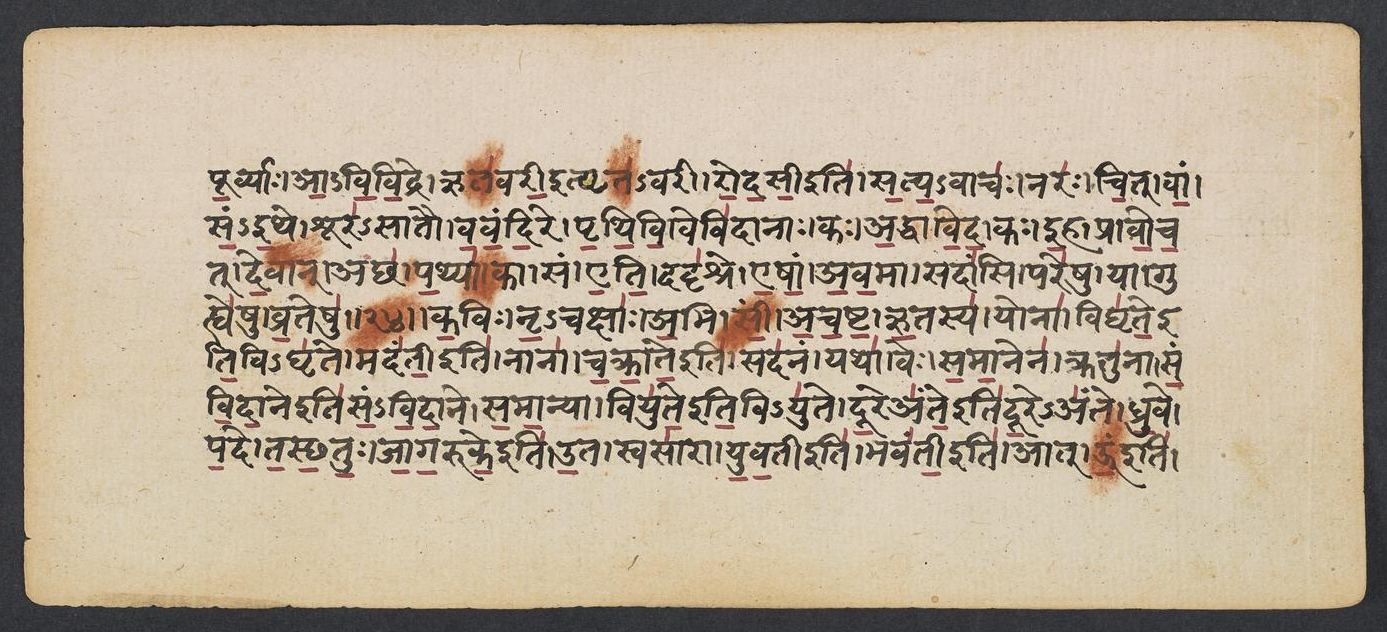
Penn Ms. Coll. 390 Item 41, fol. 238r (numbered 48r by the scribe) (OPenn image 239, lower leaf). Checked on the image: the Rigveda text on this page begins in RV 3.54.4 ‹pūrvyāḥ āvividre ṛtavarī ity›. The next page with Rigveda text, fol. 238v (numbered 48v by the scribe), begins in RV 3.54.7 ‹bruvāteiti mithunāni nāma›. Verses 3.54.4-6 end on this page; 3.54.4 begins on fol. 237v (numbered 47v by the scribe).
4u̱to hi vā̍m pū̱rvyā ā̍vivi̱dra ṛtā̍varī rodasī satya̱vāca̍ḥ | nara̍ś cid vāṁ sami̱the śūra̍sātau vavandi̱re pṛ̍thivi̱ vevi̍dānāḥ ||
5ko a̱ddhā ve̍da̱ ka i̱ha pra vo̍cad de̱vām̐ acchā̍ pa̱thyā̱3̱̍ kā sam e̍ti | dadṛ̍śra eṣām ava̱mā sadā̍ṁsi̱ pare̍ṣu̱ yā guhye̍ṣu vra̱teṣu̍ ||
6ka̱vir nṛ̱cakṣā̍ a̱bhi ṣī̍m acaṣṭa ṛ̱tasya̱ yonā̱ vighṛ̍te̱ mada̍ntī | nānā̍ cakrāte̱ sada̍na̱ṁ yathā̱ veḥ sa̍mā̱nena̱ kratu̍nā saṁvidā̱ne ||
Compare: Padapāṭha (word-by-word text written in the manuscript; Sansknet e-text via GRETIL)
4uto iti | hi | vām | pūrvyāḥ | āvividre | ṛtavarī ity ṛta-varī | rodasī iti | satya-vācaḥ | naraḥ | cit | vām | sam-ithe | śūra-sātau | vavandire | pṛthivi | vevidānāḥ
5kaḥ | addhā | veda | kaḥ | iha | pra | vocat | devān | accha | pathyā | kā | sam | eti | dadṛśre | eṣām | avamā | sadāṃsi | pareṣu | yā | guhyeṣu | vrateṣu
6kaviḥ | nṛ-cakṣā | abhi | sīm | acaṣṭa | ṛtasya | yonā | vighṛteitivi-ghṛte | madantī iti | nānā | cakrāteiti | sadanam | yathā | veḥ | samānena | kratunā | saṃvidāne itisam-vidāne
4Yea, holy Heaven and Earth, the ancient sages whose word was ever true had power to find you; And brave men in the fightwhere heroes conquer, O Earth, have known you well and paid you honour.
5What pathway leadeth to the Gods? Who knoweth this of a truth, and who will now declare it? Seen are their lowest dwelling-places only, but they are in remote and secret regions.
6The Sage who looketh on mankind hath viewed them bedewed, rejoicing in the seat of Order. They make a home as for a bird, though parted, with one same will finding themselves together.
Where on the image
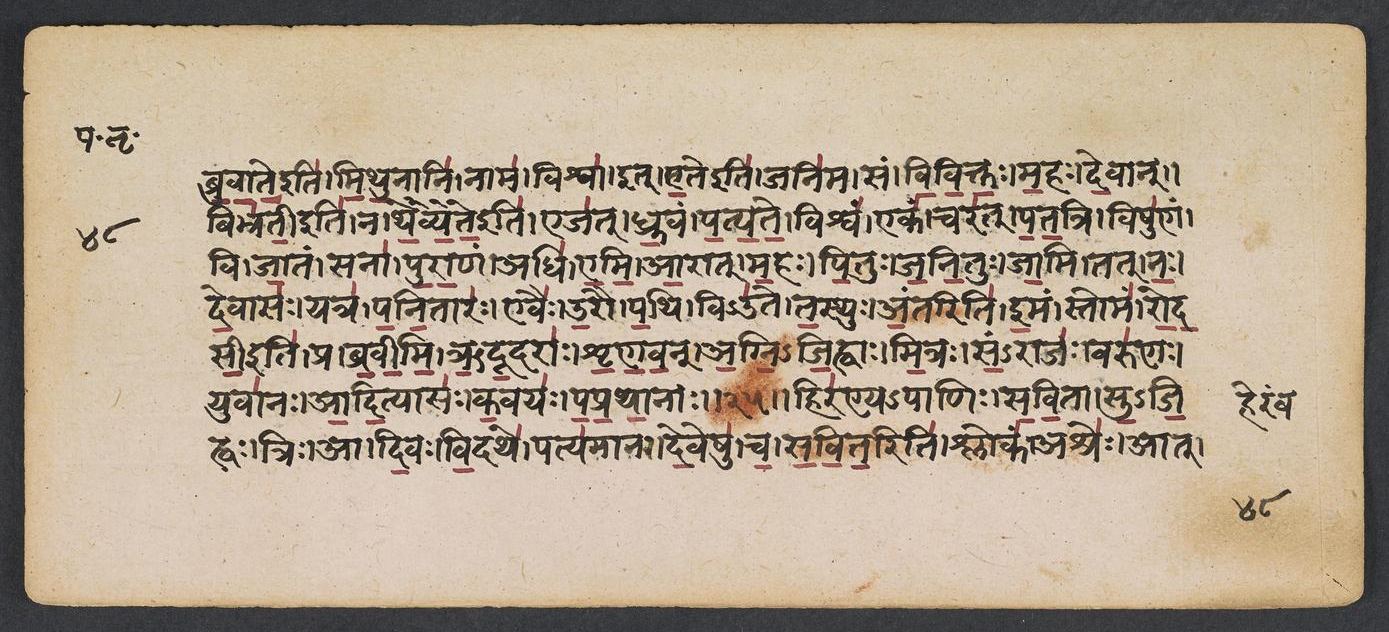
Penn Ms. Coll. 390 Item 41, fol. 238v (numbered 48v by the scribe) (OPenn image 240, upper leaf). Checked on the image: the Rigveda text on this page begins in RV 3.54.7 ‹bruvāteiti mithunāni nāma›. The next page with Rigveda text, fol. 239r (numbered 49r by the scribe), begins in RV 3.54.11 ‹asmabhyam ā suva sarva-tātim›. Verses 3.54.7-10 end on this page; 3.54.7 begins on fol. 238r (numbered 48r by the scribe).
7sa̱mā̱nyā viyu̍te dū̱rea̍nte dhru̱ve pa̱de ta̍sthatur jāga̱rūke̍ | u̱ta svasā̍rā yuva̱tī bhava̍ntī̱ ād u̍ bruvāte mithu̱nāni̱ nāma̍ ||
8viśved e̱te jani̍mā̱ saṁ vi̍vikto ma̱ho de̱vān bibhra̍tī̱ na vya̍thete | eja̍d dhru̱vam pa̍tyate̱ viśva̱m eka̱ṁ cara̍t pata̱tri viṣu̍ṇa̱ṁ vi jā̱tam ||
9sanā̍ purā̱ṇam adhy e̍my ā̱rān ma̱haḥ pi̱tur ja̍ni̱tur jā̱mi tan na̍ḥ | de̱vāso̱ yatra̍ pani̱tāra̱ evai̍r u̱rau pa̱thi vyu̍te ta̱sthur a̱ntaḥ ||
10i̱maṁ stoma̍ṁ rodasī̱ pra bra̍vīmy ṛdū̱darā̍ḥ śṛṇavann agniji̱hvāḥ | mi̱traḥ sa̱mrājo̱ varu̍ṇo̱ yuvā̍na ādi̱tyāsa̍ḥ ka̱vaya̍ḥ paprathā̱nāḥ ||
Compare: Padapāṭha (word-by-word text written in the manuscript; Sansknet e-text via GRETIL)
7samānyā | viyuteitivi-yute | dūreanteitidūre--ante | dhruve | pade | tasthatuḥ jāgarūke | uta | svasārā | yuvatī iti | bhavantī iti | āt | oṃ iti | bruvāteiti | mithunāni | nāma
8viśvā | it | ete iti | janima | sam | viviktaḥ | mahaḥ | devān | bibhratī iti | na | vyatheteiti | ejat | dhruvam | patyate | viśvam | ekam | carat | patatri | v iṣuṇam | vi | jātam
9sanā | purāṇam | adhi | emi | ārāt | mahaḥ | pituḥ | janituḥ | jāmi | tat | naḥ | devāsaḥ | yatra | panitāraḥ | evaiḥ | urau | pathi | vi-ute | tasthuḥ | antariti
10imam | stomam | rodasī iti | pra | bravīmi | ṛdūdarāḥ | śṛṇavan | agni-jihvāḥ | mitraḥ | sam-rājaḥ | varuṇaḥ | yuvānaḥ | ādityāsaḥ | kavayaḥ | paprathānāḥ
7Partners though parted, with far-distant limits, on one firm place both stand for ever watchful, And, being young for evermore, as sisters, speak to each other names that are united.
8All living things they part and keep asunder; though bearing up the mighty Gods they reel not. One All is Lord of what is fixed and moving, that walks, that flies, this multiform creation.
9Afar the Ancient from of old I ponder, our kinship with our mighty Sire and Father,– Singing the praise whereof the Gods by custom stand on the spacious far-extended pathway.
10This laud, O Heaven and Earth, to you I utter: let the kind-hearted hear, whose tongue is Agni, Young, Sovran Rulers, Varuṇa and Mitra, the wise and very glorious Âdityas.
Where on the image
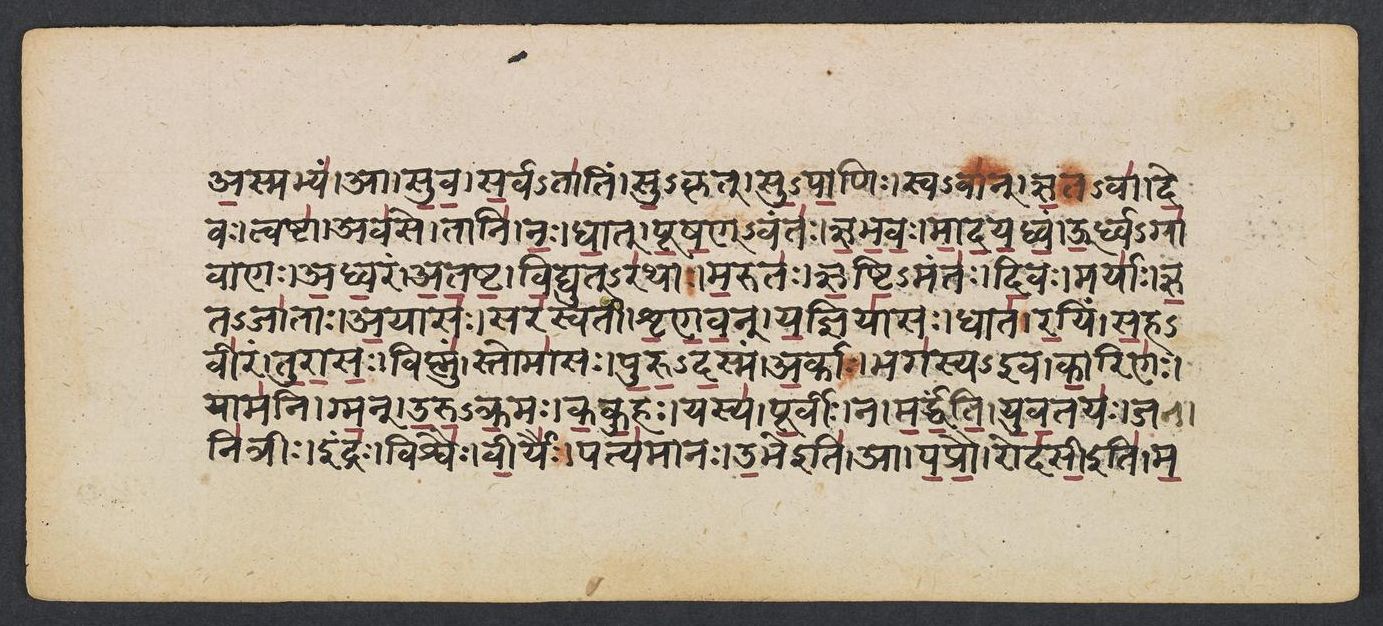
Penn Ms. Coll. 390 Item 41, fol. 239r (numbered 49r by the scribe) (OPenn image 240, lower leaf). Checked on the image: the Rigveda text on this page begins in RV 3.54.11 ‹asmabhyam ā suva sarva-tātim›. The next page with Rigveda text, fol. 239v (numbered 49v by the scribe), begins in RV 3.54.15 ‹-mahi-tvā puram-daraḥ vṛtra-hā dhṛṣṇu-seṇaḥ›. Verses 3.54.11-14 end on this page; 3.54.11 begins on fol. 238v (numbered 48v by the scribe).
11hira̍ṇyapāṇiḥ savi̱tā su̍ji̱hvas trir ā di̱vo vi̱dathe̱ patya̍mānaḥ | de̱veṣu̍ ca savita̱ḥ śloka̱m aśre̱r ād a̱smabhya̱m ā su̍va sa̱rvatā̍tim ||
12su̱kṛt su̍pā̱ṇiḥ svavā̍m̐ ṛ̱tāvā̍ de̱vas tvaṣṭāva̍se̱ tāni̍ no dhāt | pū̱ṣa̱ṇvanta̍ ṛbhavo mādayadhvam ū̱rdhvagrā̍vāṇo adhva̱ram a̍taṣṭa ||
13vi̱dyudra̍thā ma̱ruta̍ ṛṣṭi̱manto̍ di̱vo maryā̍ ṛ̱tajā̍tā a̱yāsa̍ḥ | sara̍svatī śṛṇavan ya̱jñiyā̍so̱ dhātā̍ ra̱yiṁ sa̱havī̍raṁ turāsaḥ ||
14viṣṇu̱ṁ stomā̍saḥ puruda̱smam a̱rkā bhaga̍syeva kā̱riṇo̱ yāma̍ni gman | u̱ru̱kra̱maḥ ka̍ku̱ho yasya̍ pū̱rvīr na ma̍rdhanti yuva̱tayo̱ jani̍trīḥ ||
Compare: Padapāṭha (word-by-word text written in the manuscript; Sansknet e-text via GRETIL)
11hiraṇya-pāṇiḥ | savitā | su-jihvaḥ | triḥ | ā | divaḥ | vidathe | patyamānaḥ | deveṣu | ca | savitariti | ślokam | aśreḥ | āt | asmabhyam | ā | suva | sarva-tātim
12su-kṛt | su-pāṇiḥ | sva-vān | ṛta-vā | devaḥ | tvaṣṭā | avase | tāni | naḥ | dhāt | pūṣaṇ-vantaḥ | ṛbhavaḥ | mādayadhvam | ūrdhva-grāvāṇaḥ | adhvaram | ataṣṭa
13vidyut-rathāḥ | marutaḥ | ṛṣṭi-mantaḥ | divaḥ | maryāḥ | ṛta-jātāḥ | ayāsaḥ | sarasvatī | śṛṇavan | yajñiyāsaḥ | dhāta | rayim | saha-vīram | turāsaḥ
14viṣṇum | stomāsaḥ | puru-dasmam | arkāḥ | bhagasya-iva | kāriṇaḥ | yāmani | gman | uru-kramaḥ | kakuhaḥ | yasya | pūrvīḥ | na | mardhanti | yuvatayaḥ | janitrīḥ
11The fair-tongued Savitar, the golden-handed, comes thrice from heaven as Lord in our assembly. Bear to the Gods this song of praise, and send us, then, Savitar, complete and perfect safety.
12Deft worker, skiful-handed, helpful, holy, may Tvashṭar, God, give us these things to aid us, Take your delight, Ye R̥ibhus joined with Pûshan: ye have prepared the rite with stones adjusted.
13Borne on their flashing car, the spear-armed Maruts, the nimble Youths of Heaven, the Sons of Order, The Holy, and Sarasvatî, shall hear us: ye Mighty, give us wealth with noble offspring.
14To Vishṇu rich in marvels, songs And praises shall go as singers on the road of Bhaga,– The Chieftain of the Mighty Stride, whose Mothers, the many young Dames, never disregard him.
Where on the image
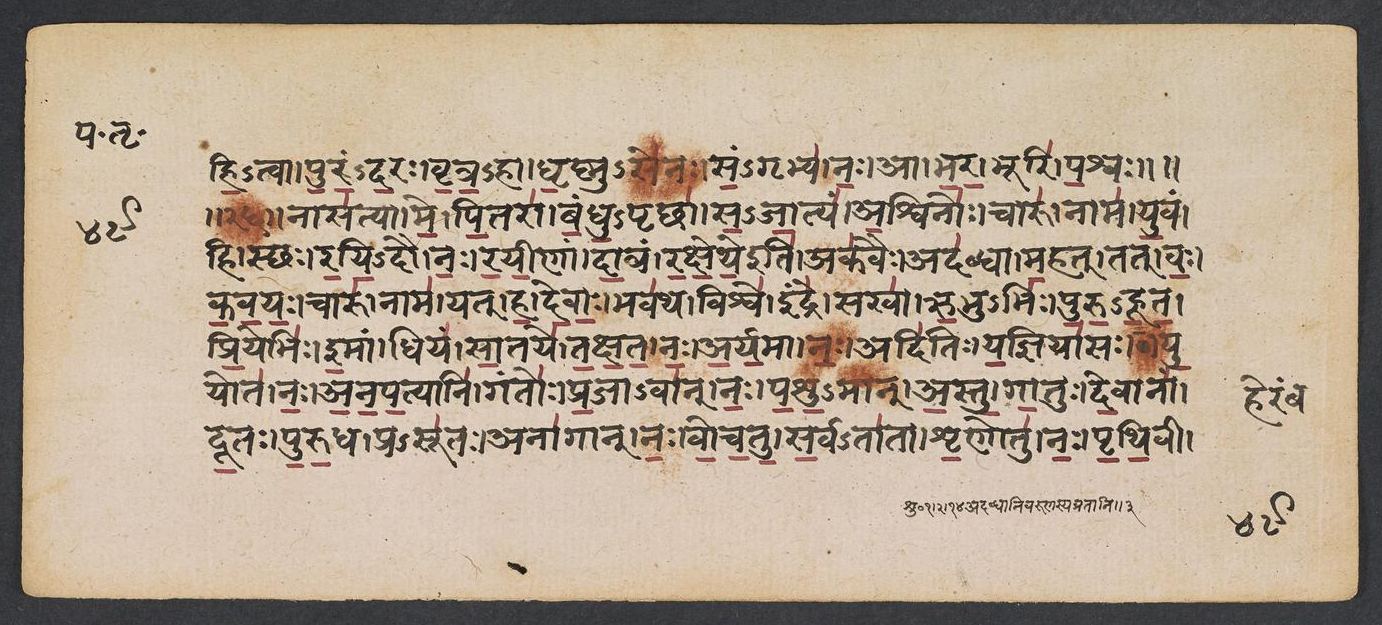
Penn Ms. Coll. 390 Item 41, fol. 239v (numbered 49v by the scribe) (OPenn image 241, upper leaf). Checked on the image: the Rigveda text on this page begins in RV 3.54.15 ‹-mahi-tvā puram-daraḥ vṛtra-hā dhṛṣṇu-seṇaḥ›. The next page with Rigveda text, fol. 240r (numbered 50r by the scribe), begins in RV 3.54.19 ‹dyauḥ uta āpaḥ sūryaḥ›. Verses 3.54.15-18 end on this page; 3.54.15 begins on fol. 239r (numbered 49r by the scribe).
15indro̱ viśvai̍r vī̱ryai̱3̱̍ḥ patya̍māna u̱bhe ā pa̍prau̱ roda̍sī mahi̱tvā | pu̱ra̱ṁda̱ro vṛ̍tra̱hā dhṛ̱ṣṇuṣe̍ṇaḥ sa̱ṁgṛbhyā̍ na̱ ā bha̍rā̱ bhūri̍ pa̱śvaḥ ||
16nāsa̍tyā me pi̱tarā̍ bandhu̱pṛcchā̍ sajā̱tya̍m a̱śvino̱ś cāru̱ nāma̍ | yu̱vaṁ hi stho ra̍yi̱dau no̍ rayī̱ṇāṁ dā̱traṁ ra̍kṣethe̱ aka̍vai̱r ada̍bdhā ||
17ma̱hat tad va̍ḥ kavaya̱ś cāru̱ nāma̱ yad dha̍ devā̱ bhava̍tha̱ viśva̱ indre̍ | sakha̍ ṛ̱bhubhi̍ḥ puruhūta pri̱yebhi̍r i̱māṁ dhiya̍ṁ sā̱taye̍ takṣatā naḥ ||
18a̱rya̱mā ṇo̱ adi̍tir ya̱jñiyā̱so 'da̍bdhāni̱ varu̍ṇasya vra̱tāni̍ | yu̱yota̍ no anapa̱tyāni̱ ganto̍ḥ pra̱jāvā̍n naḥ paśu̱mām̐ a̍stu gā̱tuḥ ||
Compare: Padapāṭha (word-by-word text written in the manuscript; Sansknet e-text via GRETIL)
15indraḥ | viśvaiḥ | vīryaiḥ | patyamānaḥ | ubhe iti | ā | paprau | rodasī iti | mahi-tvā | puram-daraḥ | vṛtra-hā | dhṛṣṇu-seṇaḥ | sam-gṛbhya | naḥ | ā | bhara | bhūri | paśvaḥ
16nāsatyā | me | pitarā | bandhu-pṛcchā | sa-jātyam | aśvinoḥ | cāru | nāma | yuvam | h i | sthaḥ | rayi-dau | naḥ | rayīṇām | dātram | rakṣetheiti | akavaiḥ | adabdhā
17mahat | tat | vaḥ | kavayaḥ | cāru | nāma | yat | ha | devāḥ | bhavatha | viśve | indre | sakhāḥ | ṛbhu-bhiḥ | puru-hūta | priyebhiḥ | imām | dhiyam | sātaye | takṣata | naḥ
18aryamā | ṇaḥ | aditiḥ | yajñiyāsaḥ | adabdhāni | varuṇasya | vratāni | yuyota | naḥ | anapatyāni | gantoḥ | prajāvān | naḥ | paśu-mān | astu | gātuḥ
15Indra, who rules through all his powers heroic, hath with his majesty filled earth and heaven. Lord of brave hosts, Fort-crusher, Vr̥itra-slayer, gather thou up and bring us store of cattle.
16My Sires are the Nâsatyas, kind tokinsmen: the Aṣvins' kinship is a glorious title. For ye are they who give us store of riches: ye guard your gift uncheated by the bounteous.
17This is, ye Wise, your great and glorious title, that all ye Deities abide in Indra. Friend, Much-invoked! art thou with thy dear R̥ibhus: fashion ye this our hymn for our advantage.
18Aryaman, Aditi deserve our worship: the laws of Varuṇa remain unbroken. The lot of childlessness remove ye from us, and let our course be rich in kine and offspring.
Where on the image
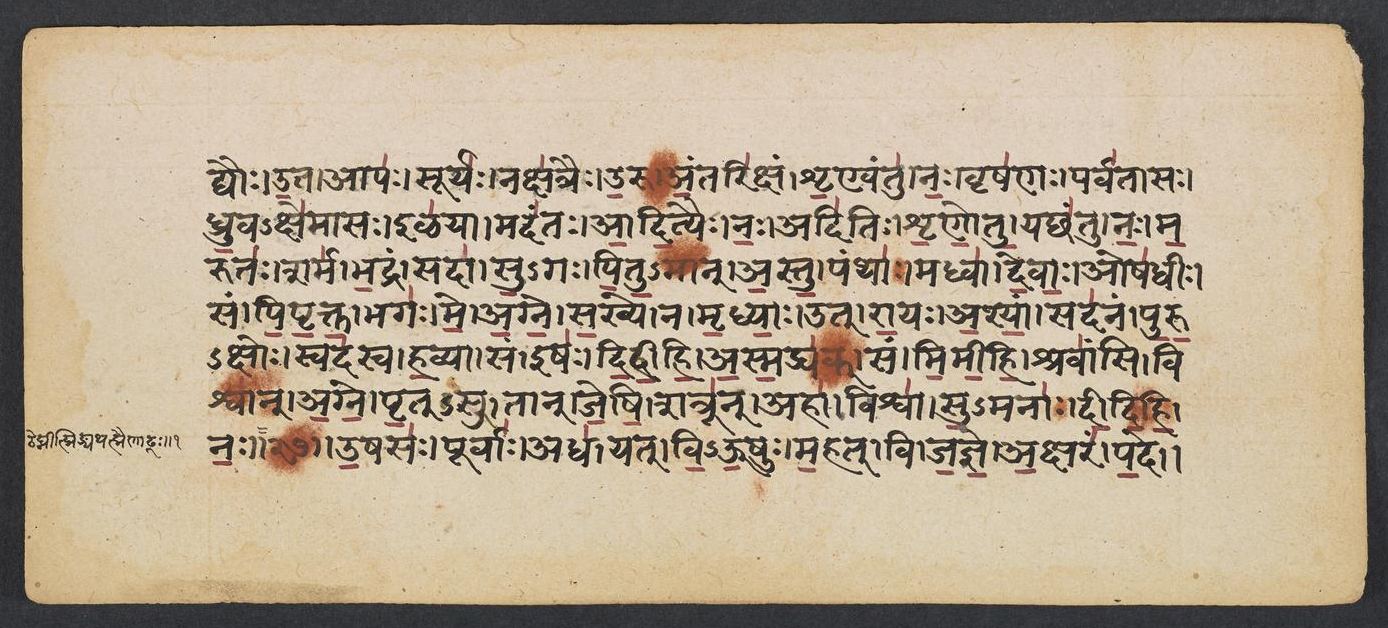
Penn Ms. Coll. 390 Item 41, fol. 240r (numbered 50r by the scribe) (OPenn image 241, lower leaf). Checked on the image: the Rigveda text on this page begins in RV 3.54.19 ‹dyauḥ uta āpaḥ sūryaḥ›. The next page with Rigveda text, fol. 240v (numbered 50v by the scribe), begins in RV 3.55.1 ‹goḥ vratā devānām upa›. Verses 3.54.19-22 end on this page; 3.54.19 begins on fol. 239v (numbered 49v by the scribe).
19de̱vānā̍ṁ dū̱taḥ pu̍ru̱dha prasū̱to 'nā̍gān no vocatu sa̱rvatā̍tā | śṛ̱ṇotu̍ naḥ pṛthi̱vī dyaur u̱tāpa̱ḥ sūryo̱ nakṣa̍trair u̱rv a1̱̍ntari̍kṣam ||
20śṛ̱ṇvantu̍ no̱ vṛṣa̍ṇa̱ḥ parva̍tāso dhru̱vakṣe̍māsa̱ iḻa̍yā̱ mada̍ntaḥ | ā̱di̱tyair no̱ adi̍tiḥ śṛṇotu̱ yaccha̍ntu no ma̱ruta̱ḥ śarma̍ bha̱dram ||
21sadā̍ su̱gaḥ pi̍tu̱mām̐ a̍stu̱ panthā̱ madhvā̍ devā̱ oṣa̍dhī̱ḥ sam pi̍pṛkta | bhago̍ me agne sa̱khye na mṛ̍dhyā̱ ud rā̱yo a̍śyā̱ṁ sada̍nam puru̱kṣoḥ ||
22svada̍sva ha̱vyā sam iṣo̍ didīhy asma̱drya1̱̍k sam mi̍mīhi̱ śravā̍ṁsi | viśvā̍m̐ agne pṛ̱tsu tāñ je̍ṣi̱ śatrū̱n ahā̱ viśvā̍ su̱manā̍ dīdihī naḥ ||
Compare: Padapāṭha (word-by-word text written in the manuscript; Sansknet e-text via GRETIL)
19devānām | dūtaḥ | purudha | pra-sūtaḥ | anāgān | naḥ | vocatu | sarva-tātā | śṛṇotu | naḥ | pṛthivī | dyauḥ | uta | āpaḥ | sūryaḥ | nakṣatraiḥ | uru | antarikṣam
20śṛṇvantu | naḥ | vṛṣaṇaḥ | parvatāsaḥ | dhruva-kṣemāsaḥ | iḷayā | madantaḥ | ādityaiḥ | naḥ | aditiḥ | śṛṇotu | yacchantu | naḥ | marutaḥ | śarma | bhadram
21sadā | su-gaḥ | pitu-mān | astu | panthā | madhvā | devāḥ | oṣadhīḥ | sam | pipṛkta | bhagaḥ | me | agne | sakhye | na | mṛdhyāḥ | ut | rāyaḥ | aśyām | sadanam | puru-kṣoḥ
22svadasva | havyā | sam | iṣaḥ | didīhi | asmadryak | sam | mimīhi | śravāṃsi | viśvān | agne | pṛt-su | tān | jeṣi | śatrūn | ahā | viśvā | su-manāḥ | dīdihi | naḥ
19May the Gods' envoy, sent to many a quarter, proclaim us sinless for our perfect safety. May Earth and Heaven, the Sun, the waters, hear us, and the wide firmament and constellations.
20Hear us the mountains which distil the rain-drops, and, resting firm, rejoice in freshening moisture. May Aditi with the Âdityas hear us, and Maruts grant us their auspicious shelter.
21Soft be our path for ever, well-provisioned: with pleasant meath, O Gods, the herbs besprinkle. Safe be my bliss, O Agni, in thy friendship: may I attain the seat of foodful. riches,
22Enjoy the offering: beam thou strength upon us; combine thou for our good all kinds of glory. Conquer in battle, Agni, all those foemen, and light us every day with loving kindness.
Notes
- Sanskrit: Aufrecht's edition (1877) with the Vedic accents, as entered by van Nooten and Holland (GRETIL).
- English: Ralph T. H. Griffith, The Hymns of the Rigveda (1889-1892; 2nd ed. 1896-1897), from the VedaWeb digital text; OCR slips in that text were corrected against the printed 2nd edition (data/sources/rigveda/griffith_errata.json).
- Padapāṭha (edition text): Sansknet e-text via GRETIL (CC BY-NC-SA 4.0).
Cite
Sources
- Source: Penn Ms. Coll. 390 Item 41 (undated (catalogued with Penn's 18th-19th c. Vedic manuscripts)), OPenn, Public Domain Mark + Aufrecht's accented text (GRETIL) + Griffith's English (VedaWeb) (holding institution)
- Critical edition: Aufrecht (1877), accented e-text via GRETIL
← previous · → next · v cycle view · l back to library