Rigveda 3.56: To all the gods
Introduction
Rigveda 3.56 is a hymn of 8 verses addressed to all the gods. It stands in book (maṇḍala) 3, the family book of Viśvāmitra. The Rigveda is the oldest collection of Sanskrit hymns, composed in the second half of the second millennium BCE and handed down orally for many centuries before it was written down.
The manuscript shown is Penn Ms. Coll. 390 Item 41 (University of Pennsylvania), an undated paper manuscript of the padapāṭha (the word-by-word recitation text, in which every word is written separately and compounds are split) of the whole Ṛgveda in Devanāgarī, 884 leaves in fascicles, 7-9 lines to the page, accents in red; this hymn stands on fol. 243r-244r. Each section below gives the verses that end on one page; the page boundaries were read on the images (the opening words of every page), not counted out. Where the manuscript is a padapāṭha (the word-by-word recitation text), the section shows Aufrecht's continuous (saṃhitā) text first and, as the edition text, the padapāṭha of the same verses, which is the form written on the page.
How was this verified? (Provenance)
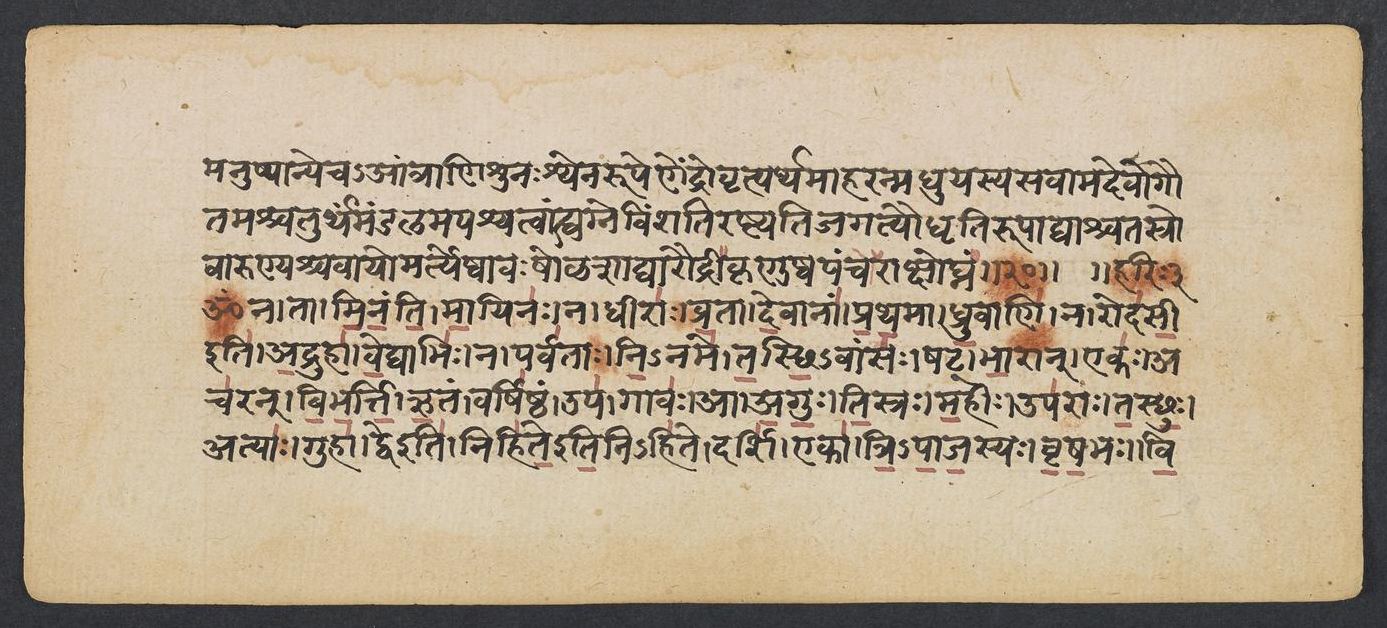
Where on the image
Penn Ms. Coll. 390 Item 41, fol. 243r (numbered 53r by the scribe) (OPenn image 244, lower leaf). Checked on the image: the Rigveda text on this page begins in RV 3.56.1 ‹na tā minanti māyinaḥ›. Lines 1-3 carry the anukramaṇī for aṣṭaka 3, adhyāya 4 and hariḥ oṃ; 3.56.1 begins in line 4. The next page with Rigveda text, fol. 243v (numbered 53v by the scribe), begins in RV 3.56.3 ‹-viśva-rūpaḥ uta tri-udhā purudha›. Verses 3.56.1-2 end on this page.
1na tā mi̍nanti mā̱yino̱ na dhīrā̍ vra̱tā de̱vānā̍m pratha̱mā dhru̱vāṇi̍ | na roda̍sī a̱druhā̍ ve̱dyābhi̱r na parva̍tā ni̱name̍ tasthi̱vāṁsa̍ḥ ||
2ṣaḍ bhā̱rām̐ eko̱ aca̍ran bibharty ṛ̱taṁ varṣi̍ṣṭha̱m upa̱ gāva̱ āgu̍ḥ | ti̱sro ma̱hīr upa̍rās tasthu̱r atyā̱ guhā̱ dve nihi̍te̱ darśy ekā̍ ||
Compare: Padapāṭha (word-by-word text written in the manuscript; Sansknet e-text via GRETIL)
1na | tā | minanti | māyinaḥ | na | dhīrāḥ | vratā | devānām | prathamā | dhruvāṇi | na | rodasī iti | adruhā | vedyābhiḥ | na | parvatāḥ | ni-name | tasthi-vāṃsaḥ
2ṣaṭ | bhārān | ekaḥ | acaran | bibharti | ṛtam | varṣiṣṭham | upa | gāvaḥ | ā | aguḥ | tisraḥ | mahīḥ | uparāḥ | tasthuḥ | atyāḥ | guhā | dve iti | nihiteitini-hite | darśi | ekā
1NOT men of magic skill, not men of wisdom impair the Gods' first steadfast ordinances. Ne'er may the earth and heaven which know not malice, nor the fixed hills, be bowed by sage devices.
2One, moving not away, supports six burthens: the Cows proceed to him the true, the Highest. Near stand three Mighty Ones who travel swiftly: two are concealed from sight, one is apparent.
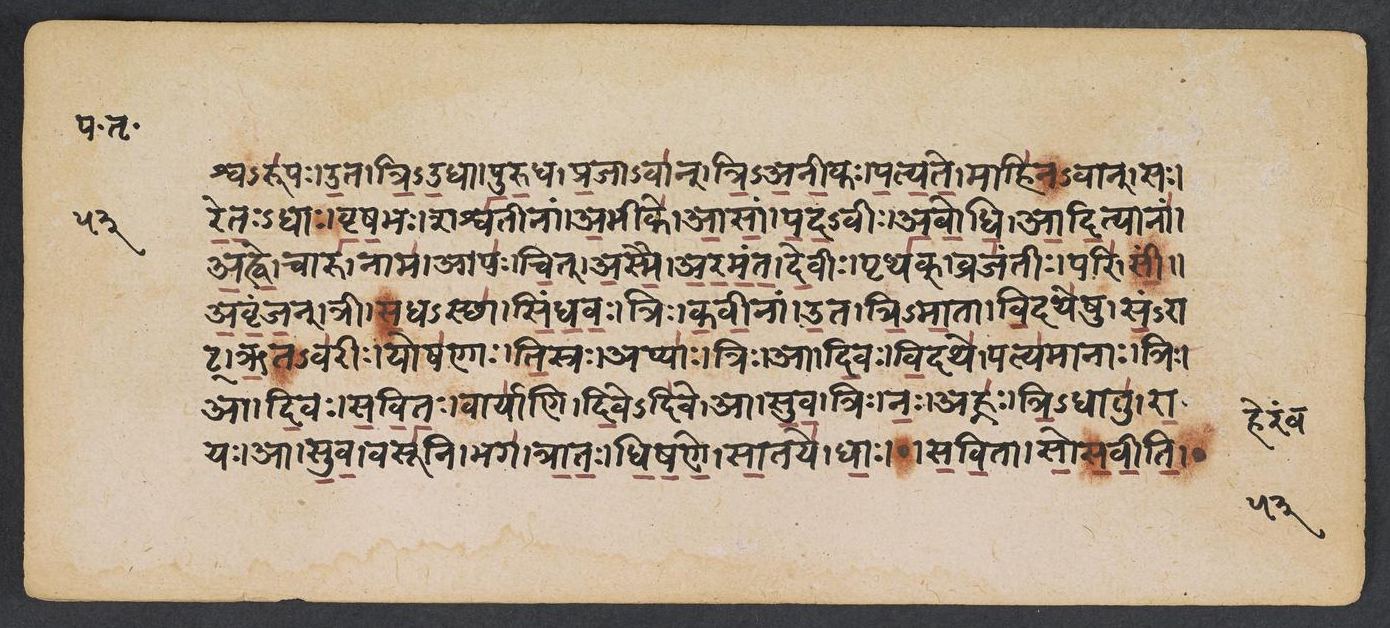
Where on the image
Penn Ms. Coll. 390 Item 41, fol. 243v (numbered 53v by the scribe) (OPenn image 245, upper leaf). Checked on the image: the Rigveda text on this page begins in RV 3.56.3 ‹-viśva-rūpaḥ uta tri-udhā purudha›. The next page with Rigveda text, fol. 244r (numbered 54r by the scribe), begins in RV 3.56.7 ‹āpaḥ cit asya rodasī›. Verses 3.56.3-6 end on this page; 3.56.3 begins on fol. 243r (numbered 53r by the scribe).
3tri̱pā̱ja̱syo vṛ̍ṣa̱bho vi̱śvarū̍pa u̱ta tryu̱dhā pu̍ru̱dha pra̱jāvā̍n | trya̱nī̱kaḥ pa̍tyate̱ māhi̍nāvā̱n sa re̍to̱dhā vṛ̍ṣa̱bhaḥ śaśva̍tīnām ||
4a̱bhīka̍ āsām pada̱vīr a̍bodhy ādi̱tyānā̍m ahve̱ cāru̱ nāma̍ | āpa̍ś cid asmā aramanta de̱vīḥ pṛtha̱g vraja̍ntī̱ḥ pari̍ ṣīm avṛñjan ||
5trī ṣa̱dhasthā̍ sindhava̱s triḥ ka̍vī̱nām u̱ta tri̍mā̱tā vi̱dathe̍ṣu sa̱mrāṭ | ṛ̱tāva̍rī̱r yoṣa̍ṇās ti̱sro apyā̱s trir ā di̱vo vi̱dathe̱ patya̍mānāḥ ||
6trir ā di̱vaḥ sa̍vita̱r vāryā̍ṇi di̱ve-di̍va̱ ā su̍va̱ trir no̱ ahna̍ḥ | tri̱dhātu̍ rā̱ya ā su̍vā̱ vasū̍ni̱ bhaga̍ trātar dhiṣaṇe sā̱taye̍ dhāḥ ||
Compare: Padapāṭha (word-by-word text written in the manuscript; Sansknet e-text via GRETIL)
3tri-pājasyaḥ | vṛṣabhaḥ | viśva-rūpaḥ | uta | tri-udhā | purudha | prajāvān | tri-anīkaḥ | patyate | māhina-vān | saḥ | retaḥ-dhā | vṛṣabhaḥ | śaśvatīnām
4abhīke | āsām | pada-vīḥ | abodhi | ādityānām | ahve | cāru | nāma | āpaḥ | cit | asmai | aramanta | devīḥ | pṛthak | vrajantīḥ | pari | sīm | avṛñjan
5trī | ṣadha-sthā | sindhavaḥ | triḥ | kavīnām | uta | tri-mātā | vidatheṣu | sam-rāṭ | ṛta-varīḥ | yoṣaṇāḥ | tisraḥ | apyāḥ | triḥ | ā | divaḥ | vidathe | patyamānāḥ
6triḥ | ā | divaḥ | savitaḥ | vāryāṇi | dive--dive | ā | suva | triḥ | naḥ | ahnaḥ | tri--dhātu | rāyaḥ | ā | suva | vasūni bhaga | trātaḥ | dhiṣaṇe | sātaye | dhāḥ
3The Bull who wears all shapes, the triple-breasted, three-uddered, with a brood in many places, Ruleth majestic with his triple aspect, the Bull, the Everlasting Ones' impregner.
4When nigh them, as their tracer he observed them: he called aloud the dear name of Âdityas. The Goddesses, the Waters, stayed to meet him: they who were wandering separate enclosed him.
5Streams! the wise Gods have thrice three habitations. Child of three Mothers, he is Lord in synods. Three are the holy Ladies of the Waters, thrice here from heaven supreme in our assembly.
6Do thou, O Savitar, from heaven thrice hither, three times a day, send down thy blessings daily. Send us, O Bhaga, triple wealth and treasure; cause the two worlds to prosper us, Preserver!
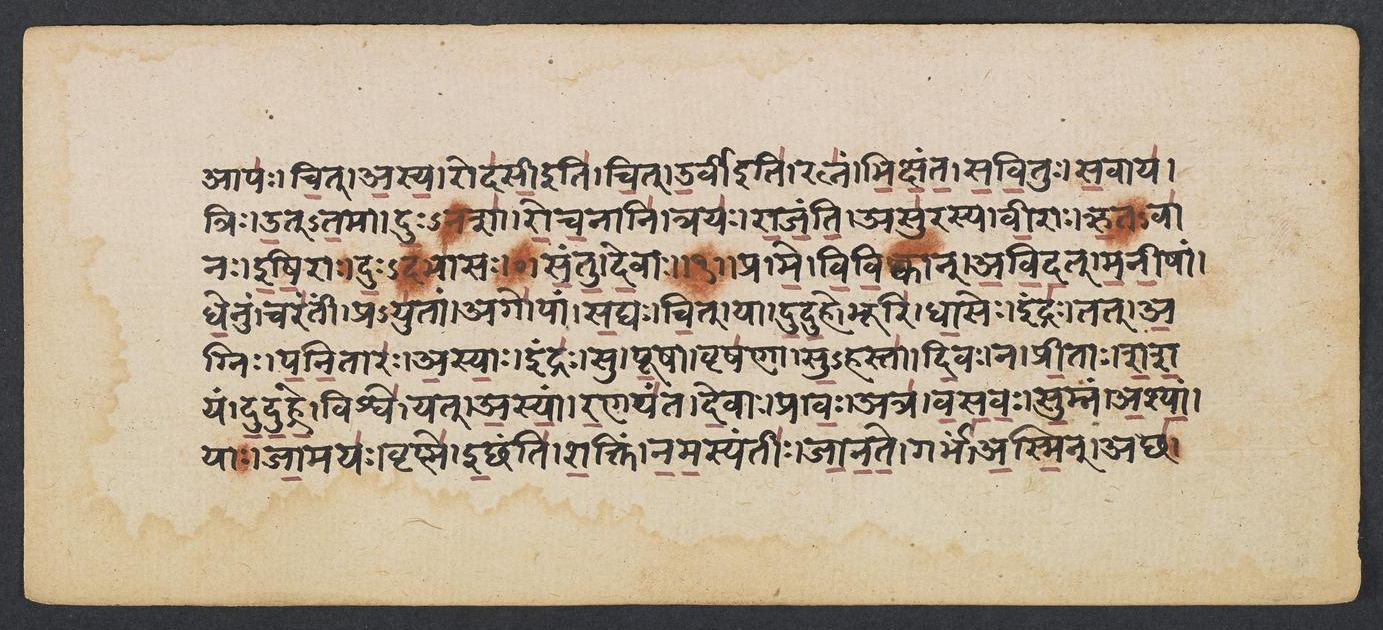
Where on the image
Penn Ms. Coll. 390 Item 41, fol. 244r (numbered 54r by the scribe) (OPenn image 245, lower leaf). Checked on the image: the Rigveda text on this page begins in RV 3.56.7 ‹āpaḥ cit asya rodasī›. The next page with Rigveda text, fol. 244v (numbered 54v by the scribe), begins in RV 3.57.3 ‹putram dhenavaḥ vāvaśānāḥ mahaḥ›. Verses 3.56.7-8 end on this page; 3.56.7 begins on fol. 243v (numbered 53v by the scribe).
7trir ā di̱vaḥ sa̍vi̱tā so̍ṣavīti̱ rājā̍nā mi̱trāvaru̍ṇā supā̱ṇī | āpa̍ś cid asya̱ roda̍sī cid u̱rvī ratna̍m bhikṣanta savi̱tuḥ sa̱vāya̍ ||
8trir u̍tta̱mā dū̱ṇaśā̍ roca̱nāni̱ trayo̍ rāja̱nty asu̍rasya vī̱rāḥ | ṛ̱tāvā̍na iṣi̱rā dū̱ḻabhā̍sa̱s trir ā di̱vo vi̱dathe̍ santu de̱vāḥ ||
Compare: Padapāṭha (word-by-word text written in the manuscript; Sansknet e-text via GRETIL)
7triḥ | ā | divaḥ | savitā | soṣavīti | rājānā | mitrāvaruṇā | supāṇī itisu-pāṇī | āpaḥ | cit | asya | rodasī iti | cit | urvī iti | ratnam | bhikṣanta | savituḥ | savāya
8triḥ | ut-tamā duḥ-naśā | rocanāni | trayaḥ | rājanti | asurasya | vīrāḥ | ṛta-vānaḥ | iṣirāḥ | duḥ-dabhāsaḥ | triḥ | ā | divaḥ | vidathe | santu | devāḥ
7Savitar thrice from heaven pours down abundance, and the fair-handed kings Varuṇa, Mitra; And spacious Heaven and Earth, yea, and the Waters, solicit wealth that Savitar may send us.
8Three are the bright realms, best, beyond attainment, and three, the Asura's Heroes, rule as Sovrans, Holy and vigorous, never to be injured. Thrice may the Gods from heaven attend our synod.
Notes
- Sanskrit: Aufrecht's edition (1877) with the Vedic accents, as entered by van Nooten and Holland (GRETIL).
- English: Ralph T. H. Griffith, The Hymns of the Rigveda (1889-1892; 2nd ed. 1896-1897), from the VedaWeb digital text; OCR slips in that text were corrected against the printed 2nd edition (data/sources/rigveda/griffith_errata.json).
- Padapāṭha (edition text): Sansknet e-text via GRETIL (CC BY-NC-SA 4.0).
Cite
Sources
- Source: Penn Ms. Coll. 390 Item 41 (undated (catalogued with Penn's 18th-19th c. Vedic manuscripts)), OPenn, Public Domain Mark + Aufrecht's accented text (GRETIL) + Griffith's English (VedaWeb) (holding institution)
- Critical edition: Aufrecht (1877), accented e-text via GRETIL
← previous · → next · v cycle view · l back to library