Rigveda 3.57: To all the gods
Introduction
Rigveda 3.57 is a hymn of 6 verses addressed to all the gods. It stands in book (maṇḍala) 3, the family book of Viśvāmitra. The Rigveda is the oldest collection of Sanskrit hymns, composed in the second half of the second millennium BCE and handed down orally for many centuries before it was written down.
The manuscript shown is Penn Ms. Coll. 390 Item 41 (University of Pennsylvania), an undated paper manuscript of the padapāṭha (the word-by-word recitation text, in which every word is written separately and compounds are split) of the whole Ṛgveda in Devanāgarī, 884 leaves in fascicles, 7-9 lines to the page, accents in red; this hymn stands on fol. 244r-244v. Each section below gives the verses that end on one page; the page boundaries were read on the images (the opening words of every page), not counted out. Where the manuscript is a padapāṭha (the word-by-word recitation text), the section shows Aufrecht's continuous (saṃhitā) text first and, as the edition text, the padapāṭha of the same verses, which is the form written on the page.
How was this verified? (Provenance)
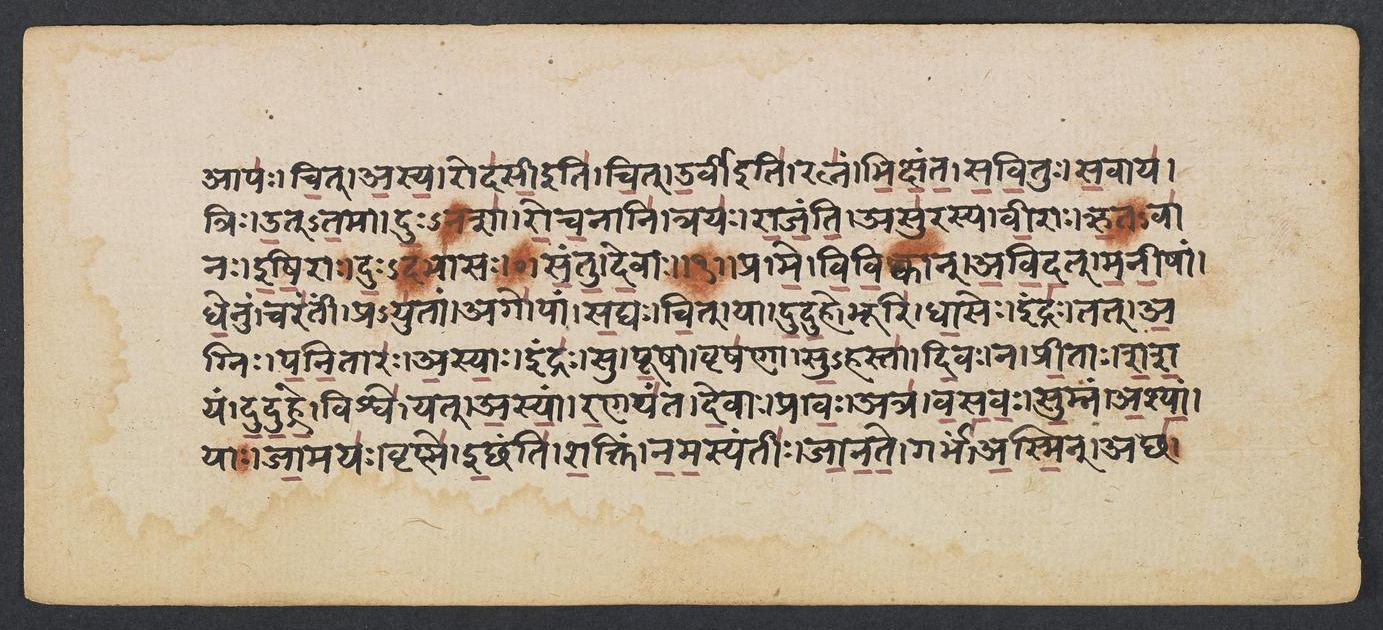
Where on the image
Penn Ms. Coll. 390 Item 41, fol. 244r (numbered 54r by the scribe) (OPenn image 245, lower leaf). Checked on the image: the Rigveda text on this page begins in RV 3.56.7 ‹āpaḥ cit asya rodasī›. The next page with Rigveda text, fol. 244v (numbered 54v by the scribe), begins in RV 3.57.3 ‹putram dhenavaḥ vāvaśānāḥ mahaḥ›. Verses 3.57.1-2 end on this page.
1pra me̍ vivi̱kvām̐ a̍vidan manī̱ṣāṁ dhe̱nuṁ cara̍ntī̱m prayu̍tā̱m ago̍pām | sa̱dyaś ci̱d yā du̍du̱he bhūri̍ dhā̱ser indra̱s tad a̱gniḥ pa̍ni̱tāro̍ asyāḥ ||
2indra̱ḥ su pū̱ṣā vṛṣa̍ṇā su̱hastā̍ di̱vo na prī̱tāḥ śa̍śa̱yaṁ du̍duhre | viśve̱ yad a̍syāṁ ra̱ṇaya̍nta de̱vāḥ pra vo 'tra̍ vasavaḥ su̱mnam a̍śyām ||
Compare: Padapāṭha (word-by-word text written in the manuscript; Sansknet e-text via GRETIL)
1pra | me | vivikvaan | avidat | manīṣām | dhenum | carantīm | pra-yutām | agopām | sadyaḥ | cit | yā | duduhe | bhūri | dhāseḥ | indraḥ | tat | agniḥ | panitāraḥ | asyāḥ
2indraḥ | su | pūṣā | vṛṣaṇā | su-hastā | divaḥ | na | prītāḥ | śaśayam | duduhre | viśve | yat | asyām | raṇayanta | devāḥ | pra | vaḥ | atra | vasavaḥ | sumnam | aśyām
1MY thought with fine discernment hath discovered the Cow who wanders free without a herdsman, Her who hath straightway poured me food in plenty: Indra and Agni therefore are her praisers.
2Indra and Pûshan, deft of hand and mighty, well-pleased have drained the heaven's exhaustless udder. As in this praise the Gods have all delighted, may I win blessing here from you, O Vasus.
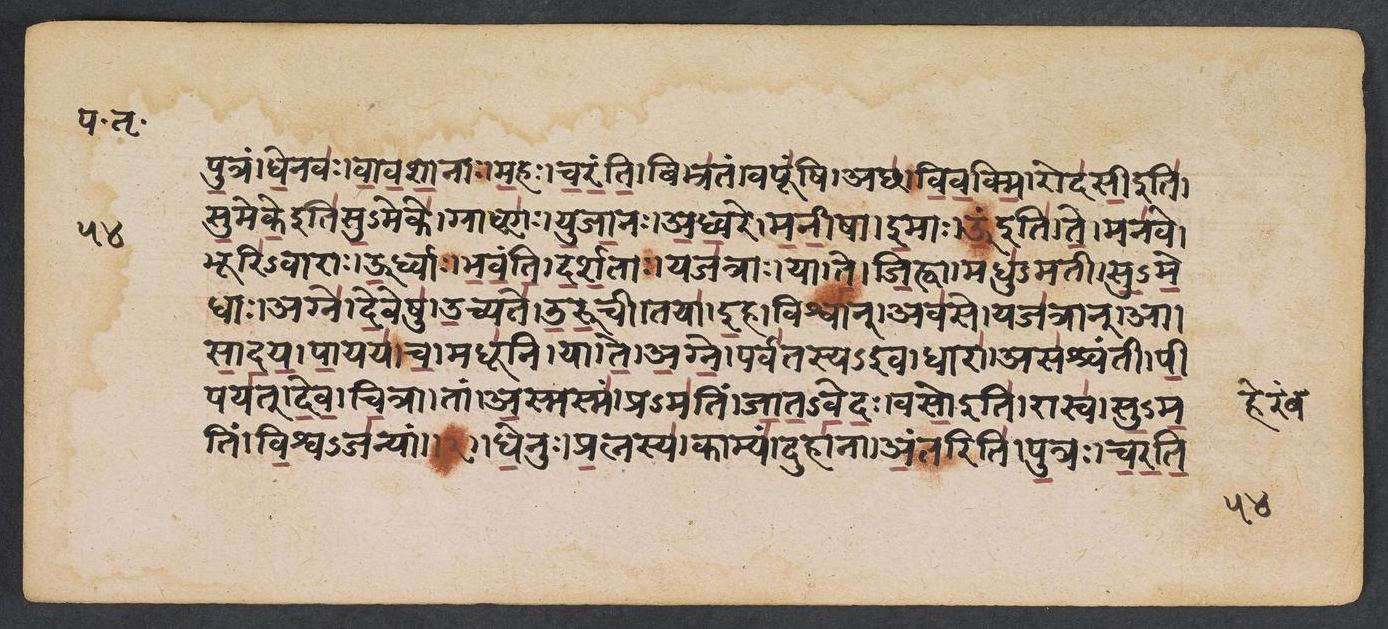
Where on the image
Penn Ms. Coll. 390 Item 41, fol. 244v (numbered 54v by the scribe) (OPenn image 246, upper leaf). Checked on the image: the Rigveda text on this page begins in RV 3.57.3 ‹putram dhenavaḥ vāvaśānāḥ mahaḥ›. The next page with Rigveda text, fol. 245r (numbered 55r by the scribe), begins in RV 3.58.1 ‹dakṣiṇāyāḥ ā dyotanim vahati›. Verses 3.57.3-6 end on this page; 3.57.3 begins on fol. 244r (numbered 54r by the scribe).
3yā jā̱mayo̱ vṛṣṇa̍ i̱cchanti̍ śa̱ktiṁ na̍ma̱syantī̍r jānate̱ garbha̍m asmin | acchā̍ pu̱traṁ dhe̱navo̍ vāvaśā̱nā ma̱haś ca̍ranti̱ bibhra̍ta̱ṁ vapū̍ṁṣi ||
4acchā̍ vivakmi̱ roda̍sī su̱meke̱ grāvṇo̍ yujā̱no a̍dhva̱re ma̍nī̱ṣā | i̱mā u̍ te̱ mana̍ve̱ bhūri̍vārā ū̱rdhvā bha̍vanti darśa̱tā yaja̍trāḥ ||
5yā te̍ ji̱hvā madhu̍matī sume̱dhā agne̍ de̱veṣū̱cyata̍ urū̱cī | taye̱ha viśvā̱m̐ ava̍se̱ yaja̍trā̱n ā sā̍daya pā̱yayā̍ cā̱ madhū̍ni ||
6yā te̍ agne̱ parva̍tasyeva̱ dhārāsa̍ścantī pī̱paya̍d deva ci̱trā | tām a̱smabhya̱m prama̍tiṁ jātavedo̱ vaso̱ rāsva̍ suma̱tiṁ vi̱śvaja̍nyām ||
Compare: Padapāṭha (word-by-word text written in the manuscript; Sansknet e-text via GRETIL)
3yā | jāmaya | vṛṣṇe | icchanti | śaktim | namasyantīḥ | jānate | garbham | asmin | accha | putram | dhenavaḥ | vāvaśānāḥ | mahaḥ | caranti | bibhratam | vapūṃṣi
4accha | vivakmi | rodasī iti | sumeke itisu-meke | grāvṇaḥ | yujānaḥ | adhvare | manīṣā | imāḥ | oṃ iti | te | manave | bhūri-vārāḥ | ūrdhvāḥ | bhavanti | darśatāḥ | yajatrāḥ
5yā | te | jihvā | madhu-matī | su-medhāḥ | agne | deveṣu | ucyate | urūcī | tayā | iha | vi śvān | avase | yajatrān | ā | sādaya | pāyayā | ca | madhūni
6yā | te | agne | parvatasya-iva | dhārā | asaścantī | pīpayat | dv | citrā | tām | asmabhyam | pra-matim | jāta-vedaḥ | vaso iti | rāsva | su-matim | viśva-janyām
3Fain to lend vigour to the Bull, the siste.. with reverence recognize the germ within him. The Cows come lowing hither to the Youngling, to him endued with great and wondrous beauties.
4Fixing with thought, at sacrifice, the press-stones, I bid the well-formed Heaven and Earth come hither; For these thy flames, which give men boons in plenty, rise up on high, the beautiful, the holy.
5Agni, thy meath-sweet tongue that tastes fair viands, which among Gods is called the farextended,– Therewith make all the Holy Ones be seated here for our help, and feed them with sweet juices.
6Let thy stream give us drink, O God, O Agni, wonderful and exhaustless like the rain-clouds. Thus care for us, O Vasu Jâtavedas, show us thy loving-kindness, reaching all men.
Notes
- Sanskrit: Aufrecht's edition (1877) with the Vedic accents, as entered by van Nooten and Holland (GRETIL).
- English: Ralph T. H. Griffith, The Hymns of the Rigveda (1889-1892; 2nd ed. 1896-1897), from the VedaWeb digital text; OCR slips in that text were corrected against the printed 2nd edition (data/sources/rigveda/griffith_errata.json).
- Padapāṭha (edition text): Sansknet e-text via GRETIL (CC BY-NC-SA 4.0).
Cite
Sources
- Source: Penn Ms. Coll. 390 Item 41 (undated (catalogued with Penn's 18th-19th c. Vedic manuscripts)), OPenn, Public Domain Mark + Aufrecht's accented text (GRETIL) + Griffith's English (VedaWeb) (holding institution)
- Critical edition: Aufrecht (1877), accented e-text via GRETIL
← previous · → next · v cycle view · l back to library