Rigveda 3.58: To Asvins
Introduction
Rigveda 3.58 is a hymn of 9 verses addressed to Asvins. It stands in book (maṇḍala) 3, the family book of Viśvāmitra. The Rigveda is the oldest collection of Sanskrit hymns, composed in the second half of the second millennium BCE and handed down orally for many centuries before it was written down.
The manuscript shown is Penn Ms. Coll. 390 Item 41 (University of Pennsylvania), an undated paper manuscript of the padapāṭha (the word-by-word recitation text, in which every word is written separately and compounds are split) of the whole Ṛgveda in Devanāgarī, 884 leaves in fascicles, 7-9 lines to the page, accents in red; this hymn stands on fol. 244v-246v. Each section below gives the verses that end on one page; the page boundaries were read on the images (the opening words of every page), not counted out. Where the manuscript is a padapāṭha (the word-by-word recitation text), the section shows Aufrecht's continuous (saṃhitā) text first and, as the edition text, the padapāṭha of the same verses, which is the form written on the page.
How was this verified? (Provenance)
Where on the image
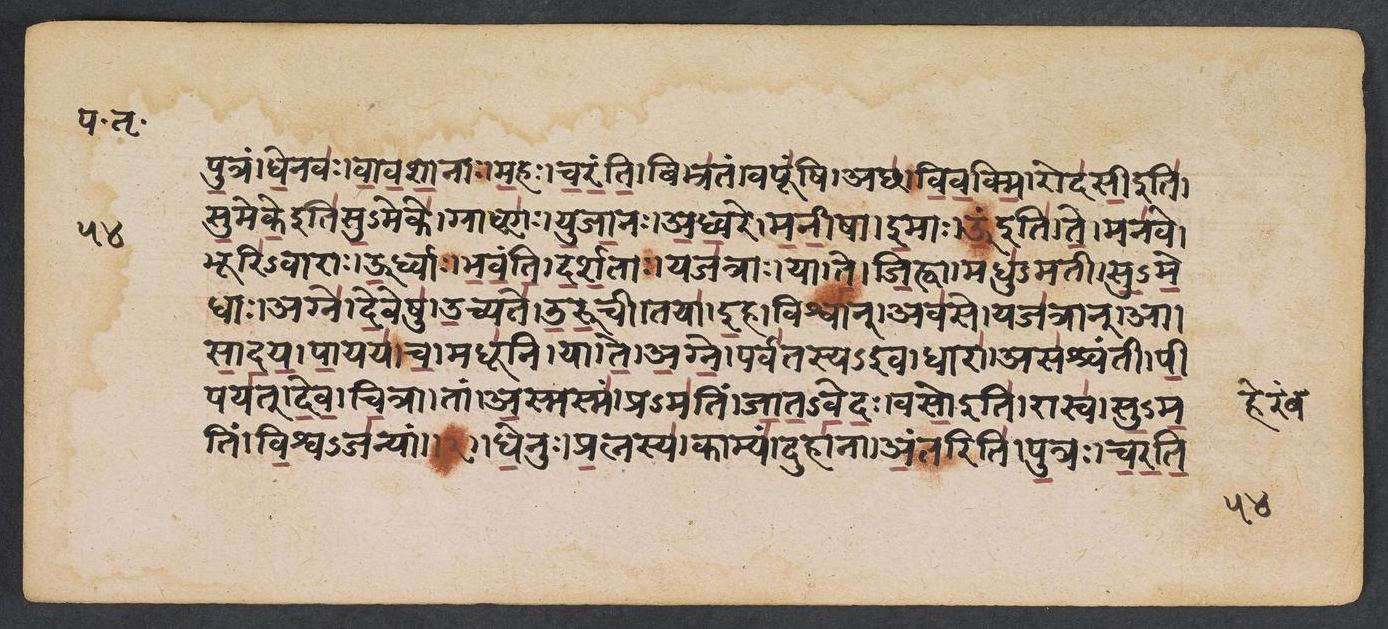
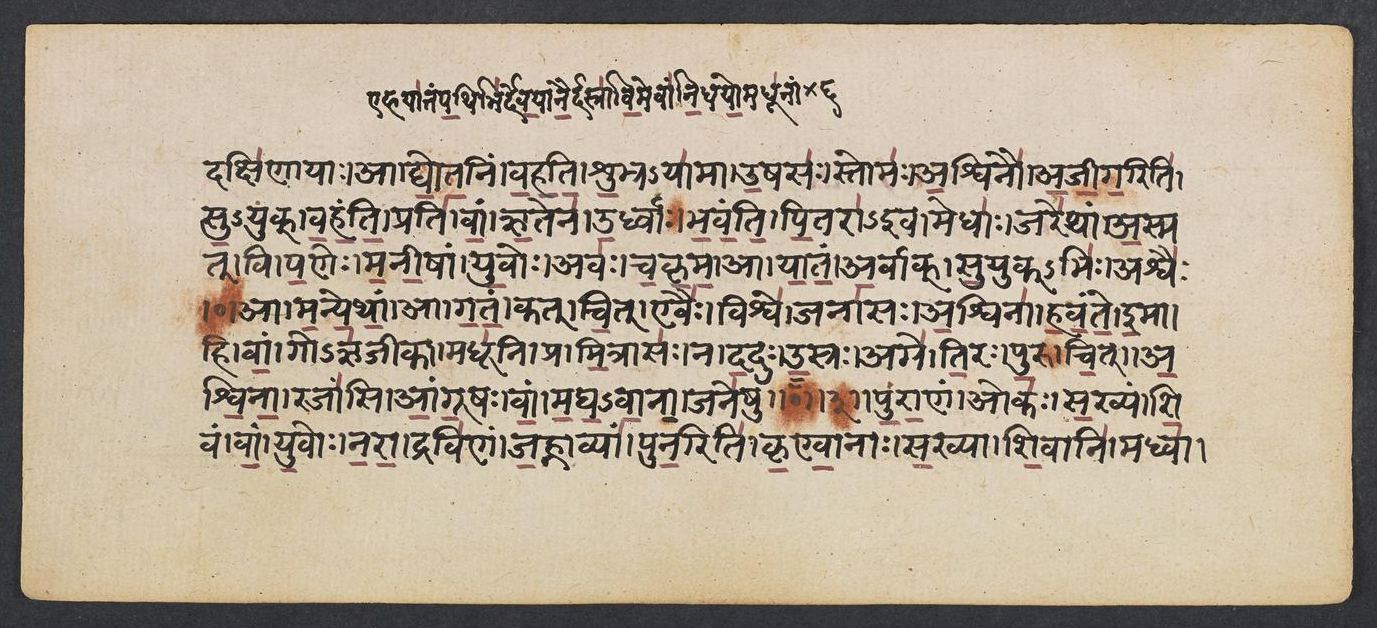
Penn Ms. Coll. 390 Item 41, fol. 245r (numbered 55r by the scribe) (OPenn image 246, lower leaf). Checked on the image: the Rigveda text on this page begins in RV 3.58.1 ‹dakṣiṇāyāḥ ā dyotanim vahati›. The next page with Rigveda text, fol. 246v (numbered 55v by the scribe), begins in RV 3.58.6 ‹madema saha nu samānāḥ›. Verses 3.58.1-5 end on this page; 3.58.1 begins on fol. 244v (numbered 54v by the scribe).
1dhe̱nuḥ pra̱tnasya̱ kāmya̱ṁ duhā̍nā̱ntaḥ pu̱traś ca̍rati̱ dakṣi̍ṇāyāḥ | ā dyo̍ta̱niṁ va̍hati śu̱bhrayā̍mo̱ṣasa̱ḥ stomo̍ a̱śvinā̍v ajīgaḥ ||
2su̱yug va̍hanti̱ prati̍ vām ṛ̱teno̱rdhvā bha̍vanti pi̱tare̍va̱ medhā̍ḥ | jare̍thām a̱smad vi pa̱ṇer ma̍nī̱ṣāṁ yu̱vor ava̍ś cakṛ̱mā yā̍tam a̱rvāk ||
3su̱yugbhi̱r aśvai̍ḥ su̱vṛtā̱ rathe̍na̱ dasrā̍v i̱maṁ śṛ̍ṇuta̱ṁ śloka̱m adre̍ḥ | kim a̱ṅga vā̱m praty ava̍rti̱ṁ gami̍ṣṭhā̱hur viprā̍so aśvinā purā̱jāḥ ||
4ā ma̍nyethā̱m ā ga̍ta̱ṁ kac ci̱d evai̱r viśve̱ janā̍so a̱śvinā̍ havante | i̱mā hi vā̱ṁ goṛ̍jīkā̱ madhū̍ni̱ pra mi̱trāso̱ na da̱dur u̱sro agre̍ ||
5ti̱raḥ pu̱rū ci̍d aśvinā̱ rajā̍ṁsy āṅgū̱ṣo vā̍m maghavānā̱ jane̍ṣu | eha yā̍tam pa̱thibhi̍r deva̱yānai̱r dasrā̍v i̱me vā̍ṁ ni̱dhayo̱ madhū̍nām ||
Compare: Padapāṭha (word-by-word text written in the manuscript; Sansknet e-text via GRETIL)
1dhenuḥ | pratnasya | kāmyam | duhānā | antariti | putraḥ | carati | dakṣiṇāyāḥ | ā | dyotanim | vahati | śubhra-yāmā | uṣasaḥ | stomaḥ | aśvinau | ajīgariti
2su-yuk | vahanti | prati | vām | ṛtena | ūrdhvā | bhavanti | pitarāiva | medhāḥ | jarethām | asmat | vi | paṇeḥ | manīṣām | yuvoḥ | avaḥ | cakṛma | ā | yātam | arvāk
3suyuk-bhiḥ | aśvaiḥ | su-vṛtā | rathena | dasrau | imam | śṛṇutam | ślokam | adreḥ | kim | aṅga | vām | prati | avartim | gamiṣṭhā | āhuḥ | viprāsaḥ | aśvinā | purājāḥ
4ā | manyethām | ā | gatam | kat | cit | evaiḥ | viśve | janāsaḥ | aśvinā | havante | imā | hi | vām | go--ṛjīkā | madhūni | pra | mitrāsaḥ | na | daduḥ | usraḥ | agre
5tiraḥ | puru | cit | aśvinā | rajāṃsi | āṅgūṣaḥ | vām | magha-vānā | janeṣu | ā | iha | yātam | pathi-bhiḥ | deva-yānaiḥ | dasrau | ime | vām | ni-dhayaḥ | madhūnām
1THE Ancient's Milch-cow yields the things we long for: the Son of Dakshina travels between them. She with the splendid chariot brings refulgence. The praise of Ushas hath awoke the Aṣvins.
2They bear you hither by well-ordered statute: our sacred offerings rise as if to parents. Destroy in us the counsel of the niggard come hitherward, for we have shown you favour.
3With lightly-rolling car and well-yoked horses hear this, the press-stone's song, ye Wonder- Workers. Have not the sages of old time, ye Aṣvins, called you most prompt to come and stay misfortune?
4Remember us, and come to us, for ever men, as their wont is, invocate the Aṣvins. Friends as it were have offered you these juices, sweet, blent with milk at the first break of morning.
5Even through many regions, O ye Aṣvins high praise is yours among mankind, ye Mighty- Come, helpers, on the paths which Gods have travelled: here your libations of sweet meath are ready.
Where on the image
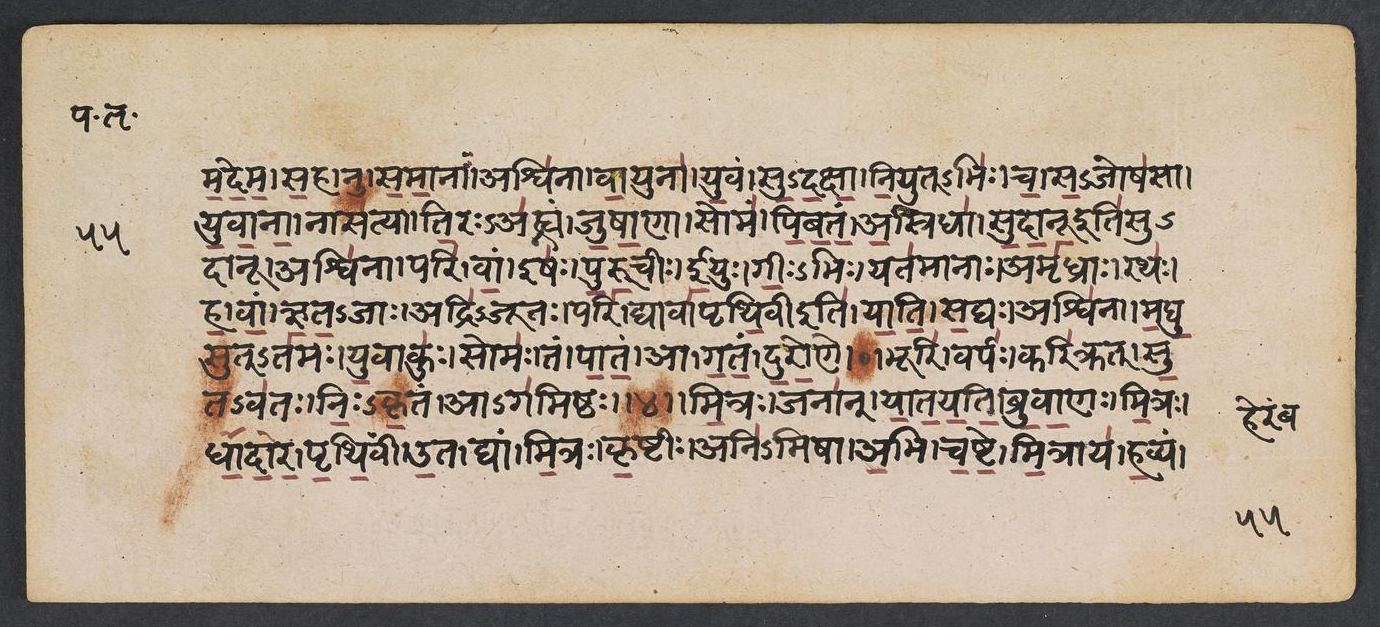
Penn Ms. Coll. 390 Item 41, fol. 246v (numbered 55v by the scribe) (OPenn image 247, upper leaf). Checked on the image: the Rigveda text on this page begins in RV 3.58.6 ‹madema saha nu samānāḥ›. The next page with Rigveda text, fol. 247r (numbered 56r by the scribe), begins in RV 3.59.1 ‹ghṛta-vat juhota›. Verses 3.58.6-9 end on this page; 3.58.6 begins on fol. 245r (numbered 55r by the scribe).
6pu̱rā̱ṇam oka̍ḥ sa̱khyaṁ śi̱vaṁ vā̍ṁ yu̱vor na̍rā̱ dravi̍ṇaṁ ja̱hnāvyā̍m | puna̍ḥ kṛṇvā̱nāḥ sa̱khyā śi̱vāni̱ madhvā̍ madema sa̱ha nū sa̍mā̱nāḥ ||
7aśvi̍nā vā̱yunā̍ yu̱vaṁ su̍dakṣā ni̱yudbhi̍ṣ ca sa̱joṣa̍sā yuvānā | nāsa̍tyā ti̱roa̍hnyaṁ juṣā̱ṇā soma̍m pibatam a̱sridhā̍ sudānū ||
8aśvi̍nā̱ pari̍ vā̱m iṣa̍ḥ purū̱cīr ī̱yur gī̱rbhir yata̍mānā̱ amṛ̍dhrāḥ | ratho̍ ha vām ṛta̱jā adri̍jūta̱ḥ pari̱ dyāvā̍pṛthi̱vī yā̍ti sa̱dyaḥ ||
9aśvi̍nā madhu̱ṣutta̍mo yu̱vāku̱ḥ soma̱s tam pā̍ta̱m ā ga̍taṁ duro̱ṇe | ratho̍ ha vā̱m bhūri̱ varpa̱ḥ kari̍krat su̱tāva̍to niṣkṛ̱tam āga̍miṣṭhaḥ ||
Compare: Padapāṭha (word-by-word text written in the manuscript; Sansknet e-text via GRETIL)
6purāṇam | okaḥ | sakhyam | śivam | vām | yuvoḥ | narā | draviṇam | jahnāvyām | punariti | kṛṇvānāḥ | sakhyā | śivāni | madhvā | madema | saha | nu | samānāḥ
7aśvinā | vāyunā | yuvam | su-dakṣā | niyut-bhiḥ | ca | sa-joṣasā | yuvānā | nāsatyā | tiraḥ-ahnyam | juṣāṇā | somam | pibatam | asridhā | sudānūitisu-dānū
8aśvinā | pari | vām | iṣaḥ | purūcīḥ | īyuḥ | gīḥ-bhiḥ | yatamānāḥ | amṛdhrāḥ | rathaḥ | ha | vām | ṛta-jāḥ | adri-jūtaḥ | pari | dyāvāpṛthivī iti | yāti | sadyaḥ
9aśvinā | madhusut-tamaḥ | yuvākuḥ | somaḥ | tam | pātam | ā | gatam | duroṇe | rathaḥ | ha | vām | bhūri | varpaḥ | karikrat | suta-vataḥ | niḥ-kṛtam | āgamiṣṭhaḥ
6Ancient your home, auspicious is your friendship: Heroes, your wealth is with the house of Jahnu. Forming again with you auspicious friendship, let us rejoice with draughts of meath together.
7O Aṣvins, Very Mighty ones, with Vâyu and with his steeds, one-minded, ever-youthful, Nâsatyas, joying in the third day's Soma, drink it, not hostile, Very Bounteous Givers.
8Aṣvins, to you are brought abundant viands in rivalry with sacred songs, unceasing. Sprung from high Law your car, urged on by press-stones, goes round the earth and heaven in one brief moment.
9Aṣvins, your Soma sheds delicious sweetness: drink ye thereof and come unto our dwelling. Your car, assuming many a shape, most often goes to the Soma-presser's place of meeting.
Notes
- Sanskrit: Aufrecht's edition (1877) with the Vedic accents, as entered by van Nooten and Holland (GRETIL).
- English: Ralph T. H. Griffith, The Hymns of the Rigveda (1889-1892; 2nd ed. 1896-1897), from the VedaWeb digital text; OCR slips in that text were corrected against the printed 2nd edition (data/sources/rigveda/griffith_errata.json).
- Padapāṭha (edition text): Sansknet e-text via GRETIL (CC BY-NC-SA 4.0).
Cite
Sources
- Source: Penn Ms. Coll. 390 Item 41 (undated (catalogued with Penn's 18th-19th c. Vedic manuscripts)), OPenn, Public Domain Mark + Aufrecht's accented text (GRETIL) + Griffith's English (VedaWeb) (holding institution)
- Critical edition: Aufrecht (1877), accented e-text via GRETIL
← previous · → next · v cycle view · l back to library