Rigveda 3.62: To Indra-Varuna, Brihaspati, Pushan, Savitar (the Gayatri), Soma and Mitra-Varuna
Introduction
Rigveda 3.62 is a hymn of 18 verses addressed to diverse gods. It stands in book (maṇḍala) 3, the family book of Viśvāmitra. The Rigveda is the oldest collection of Sanskrit hymns, composed in the second half of the second millennium BCE and handed down orally for many centuries before it was written down.
The manuscript shown is Penn Ms. Coll. 390 Item 35 (University of Pennsylvania), a paper manuscript of the third aṣṭaka (RV 3.7-4.50) of the Ṛgveda Saṃhitā in Devanāgarī, 77 leaves, 8-9 lines to the page, accents in red; the colophon gives Saṃvat 1794 (1737 CE) and names Vārāṇasī; this hymn stands on fol. 33r-34r. Each section below gives the verses that end on one page; the page boundaries were read on the images (the opening words of every page), not counted out.
How was this verified? (Provenance)
Where on the image
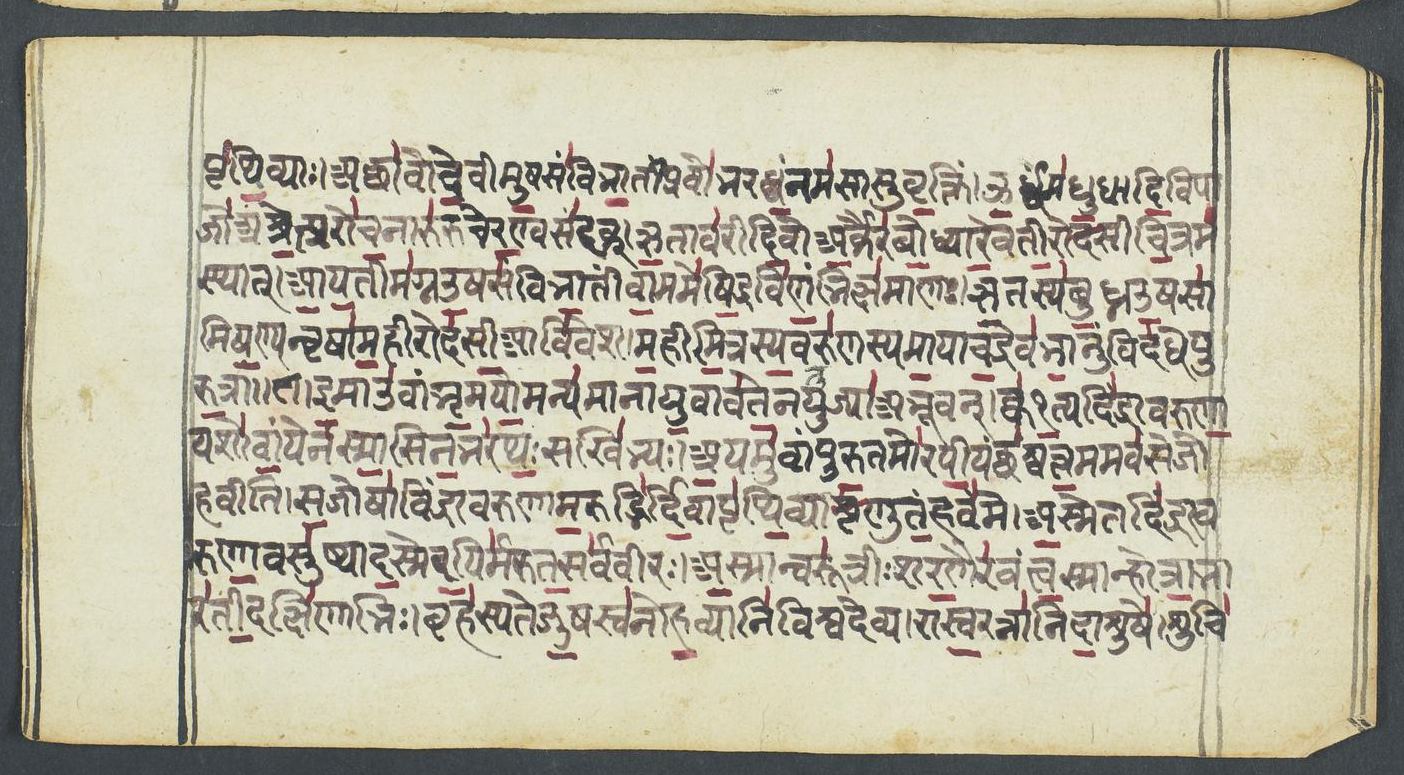
Penn Ms. Coll. 390 Item 35, fol. 33r (OPenn image 32, lower leaf). Checked on the image: the Rigveda text on this page begins in RV 3.61.4 ‹ā pṛthivyāḥ›. 3.62.1 begins in line 5 (imā u vāṃ bhṛmayo manyamānā). The next page with Rigveda text, fol. 33v, begins in RV 3.62.5 ‹-śucim arkair bṛhaspatim adhvareṣu›. Verses 3.62.1-4 end on this page.
1i̱mā u̍ vām bhṛ̱mayo̱ manya̍mānā yu̱vāva̍te̱ na tujyā̍ abhūvan | kva1̱̍ tyad i̍ndrāvaruṇā̱ yaśo̍ vā̱ṁ yena̍ smā̱ sina̱m bhara̍tha̱ḥ sakhi̍bhyaḥ ||
2a̱yam u̍ vām puru̱tamo̍ rayī̱yañ cha̍śvatta̱mam ava̍se johavīti | sa̱joṣā̍v indrāvaruṇā ma̱rudbhi̍r di̱vā pṛ̍thi̱vyā śṛ̍ṇuta̱ṁ hava̍m me ||
3a̱sme tad i̍ndrāvaruṇā̱ vasu̍ ṣyād a̱sme ra̱yir ma̍ruta̱ḥ sarva̍vīraḥ | a̱smān varū̍trīḥ śara̱ṇair a̍vantv a̱smān hotrā̱ bhāra̍tī̱ dakṣi̍ṇābhiḥ ||
4bṛha̍spate ju̱ṣasva̍ no ha̱vyāni̍ viśvadevya | rāsva̱ ratnā̍ni dā̱śuṣe̍ ||
1YOUR well-known prompt activities aforetime needed no impulse from your faithful servant. Where, Indra-Varuṇa, is now that glory wherewith ye brought support to those who loved you?
2This man, most diligent, seeking after riches, incessantly invokes you for your favour. Accordant, Indra-Varuṇa, with Maruts, with Heaven and Earth, hear ye mine invocation.
3O Indra-Varuṇa, ours be this treasure ours be wealth, Maruts, with full store of heroes. May the Varûtrîs with their shelter aid us, and Bhâratî and Hotrâ with the Mornings.
4Be pleased! with our oblations, thou loved of all Gods, Br̥ihaspati: Give wealth to him who brings thee gifts.
Where on the image
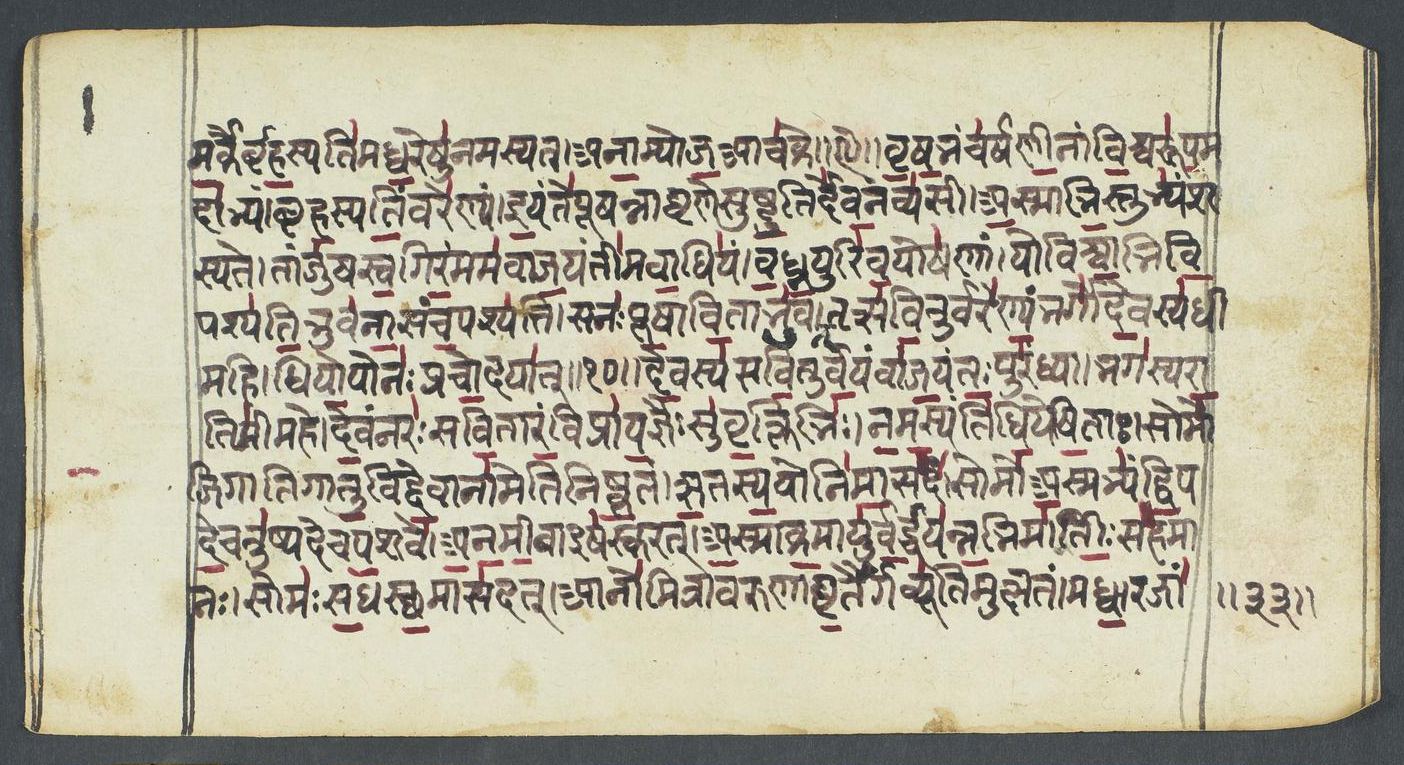
Penn Ms. Coll. 390 Item 35, fol. 33v (OPenn image 33, upper leaf). Checked on the image: the Rigveda text on this page begins in RV 3.62.5 ‹-śucim arkair bṛhaspatim adhvareṣu›. 3.62.10 (tat savitur vareṇyaṃ bhargo devasya dhīmahi dhiyo yo naḥ pracodayāt) stands in lines 4-5, followed by the varga number 10. The next page with Rigveda text, fol. 34r, begins in RV 3.62.16 ‹-sukratū›. Verses 3.62.5-15 end on this page; 3.62.5 begins on fol. 33r.
5śuci̍m a̱rkair bṛha̱spati̍m adhva̱reṣu̍ namasyata | anā̱my oja̱ ā ca̍ke ||
6vṛ̱ṣa̱bhaṁ ca̍rṣaṇī̱nāṁ vi̱śvarū̍pa̱m adā̍bhyam | bṛha̱spati̱ṁ vare̍ṇyam ||
7i̱yaṁ te̍ pūṣann āghṛṇe suṣṭu̱tir de̍va̱ navya̍sī | a̱smābhi̱s tubhya̍ṁ śasyate ||
8tāṁ ju̍ṣasva̱ gira̱m mama̍ vāja̱yantī̍m avā̱ dhiya̍m | va̱dhū̱yur i̍va̱ yoṣa̍ṇām ||
9yo viśvā̱bhi vi̱paśya̍ti̱ bhuva̍nā̱ saṁ ca̱ paśya̍ti | sa na̍ḥ pū̱ṣāvi̱tā bhu̍vat ||
10tat sa̍vi̱tur vare̍ṇya̱m bhargo̍ de̱vasya̍ dhīmahi | dhiyo̱ yo na̍ḥ praco̱dayā̍t ||
11de̱vasya̍ savi̱tur va̱yaṁ vā̍ja̱yanta̱ḥ pura̍ṁdhyā | bhaga̍sya rā̱tim ī̍mahe ||
12de̱vaṁ nara̍ḥ savi̱tāra̱ṁ viprā̍ ya̱jñaiḥ su̍vṛ̱ktibhi̍ḥ | na̱ma̱syanti̍ dhi̱yeṣi̱tāḥ ||
13somo̍ jigāti gātu̱vid de̱vānā̍m eti niṣkṛ̱tam | ṛ̱tasya̱ yoni̍m ā̱sada̍m ||
14somo̍ a̱smabhya̍ṁ dvi̱pade̱ catu̍ṣpade ca pa̱śave̍ | a̱na̱mī̱vā iṣa̍s karat ||
15a̱smāka̱m āyu̍r va̱rdhaya̍nn a̱bhimā̍tī̱ḥ saha̍mānaḥ | soma̍ḥ sa̱dhastha̱m āsa̍dat ||
5At sacrifices, with your hymns worship the pure Br̥ihaspati- I pray for power which none may bend-
6The Bull of men, whom none deceive, the wearer of each shape at will, Br̥ihaspati Most Excellent.
7Divine, resplendent Pûshan, this our newest hymn of eulogy, By us is chanted forth to thee.
8Accept with favour this my song, be gracious to the earnest thought, Even as a bridegroom to his bride.
9May he who sees all living things, see, them together at a glancc,– May lie, may Pûshan be our help.
10May we attain that excellent glory of Savitar the God: So May he stimulate our prayers.
11With understanding, earnestly, of Savitar the God we crave Our portion of prosperity.
12Men, singers worship Savitar the God with hymn and holy rites, Urged by the impulse of their thoughts.
13Soma who gives success goes forth, goes to the gathering place of Gods, To seat him at the seat of Law.
14To us and to our cattle may Soma give salutary food, To biped and to quadruped.
15May Soma, strengthening our power of life, and conquering our foes, In our assembly take his seat.
Where on the image
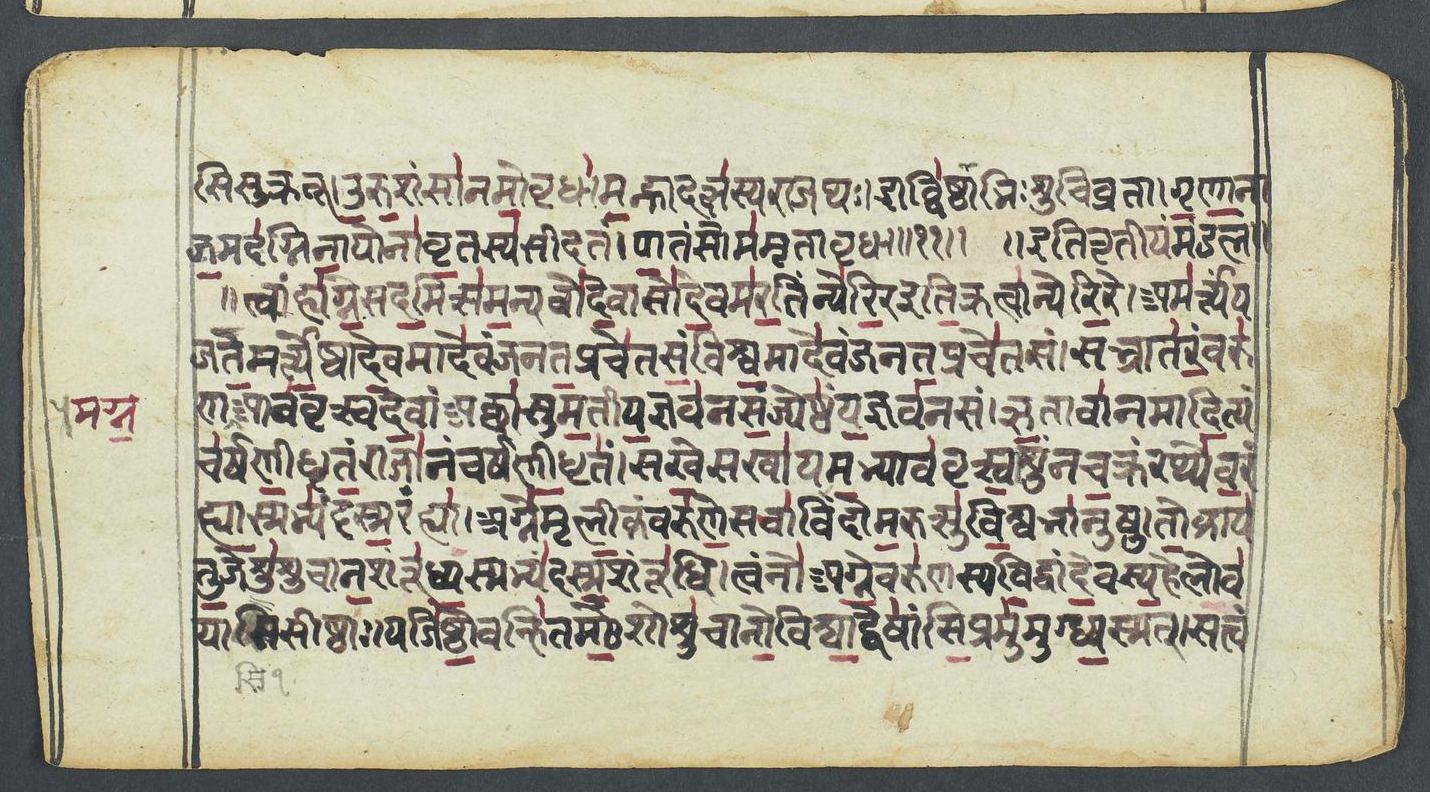
Penn Ms. Coll. 390 Item 35, fol. 34r (OPenn image 33, lower leaf). Checked on the image: the Rigveda text on this page begins in RV 3.62.16 ‹-sukratū›. 3.62.18 ends in line 2 with the varga number, followed by the colophon iti tṛtīyaṃ maṇḍalam; 4.1.1 begins in line 3. The next page with Rigveda text, fol. 34v, begins in RV 4.1.5 ‹no agne 'vamo bhavotī›. Verses 3.62.16-18 end on this page; 3.62.16 begins on fol. 33v.
16ā no̍ mitrāvaruṇā ghṛ̱tair gavyū̍tim ukṣatam | madhvā̱ rajā̍ṁsi sukratū ||
17u̱ru̱śaṁsā̍ namo̱vṛdhā̍ ma̱hnā dakṣa̍sya rājathaḥ | drāghi̍ṣṭhābhiḥ śucivratā ||
18gṛ̱ṇā̱nā ja̱mada̍gninā̱ yonā̍v ṛ̱tasya̍ sīdatam | pā̱taṁ soma̍m ṛtāvṛdhā ||
16May Mitra-Varuṇa, sapient Pair, bedew our pasturage with oil, With meath the regions of the air.
17Far-ruling, joyful when adored, ye reign through majesty of might, With pure laws everlastingly.
18Lauded by Jamadagni's song, sit in the place of holy Law: Drink Soma, ye who strengthen Law.
Notes
- Sanskrit: Aufrecht's edition (1877) with the Vedic accents, as entered by van Nooten and Holland (GRETIL).
- English: Ralph T. H. Griffith, The Hymns of the Rigveda (1889-1892; 2nd ed. 1896-1897), from the VedaWeb digital text; OCR slips in that text were corrected against the printed 2nd edition (data/sources/rigveda/griffith_errata.json).
Cite
Sources
- Source: Penn Ms. Coll. 390 Item 35 (1737 CE (colophon: Saṃvat 1794, copied at Vārāṇasī)), OPenn, Public Domain Mark + Aufrecht's accented text (GRETIL) + Griffith's English (VedaWeb) (holding institution)
- Critical edition: Aufrecht (1877), accented e-text via GRETIL
← previous · → next · v cycle view · l back to library