Rigveda 4.1: To Agni
Introduction
Rigveda 4.1 is a hymn of 20 verses addressed to Agni. It stands in book (maṇḍala) 4, the family book of Vāmadeva. The Rigveda is the oldest collection of Sanskrit hymns, composed in the second half of the second millennium BCE and handed down orally for many centuries before it was written down.
The manuscript shown is Penn Ms. Coll. 390 Item 41 (University of Pennsylvania), an undated paper manuscript of the padapāṭha (the word-by-word recitation text, in which every word is written separately and compounds are split) of the whole Ṛgveda in Devanāgarī, 884 leaves in fascicles, 7-9 lines to the page, accents in red; this hymn stands on fol. 250v-253r. Each section below gives the verses that end on one page; the page boundaries were read on the images (the opening words of every page), not counted out. Where the manuscript is a padapāṭha (the word-by-word recitation text), the section shows Aufrecht's continuous (saṃhitā) text first and, as the edition text, the padapāṭha of the same verses, which is the form written on the page.
How was this verified? (Provenance)
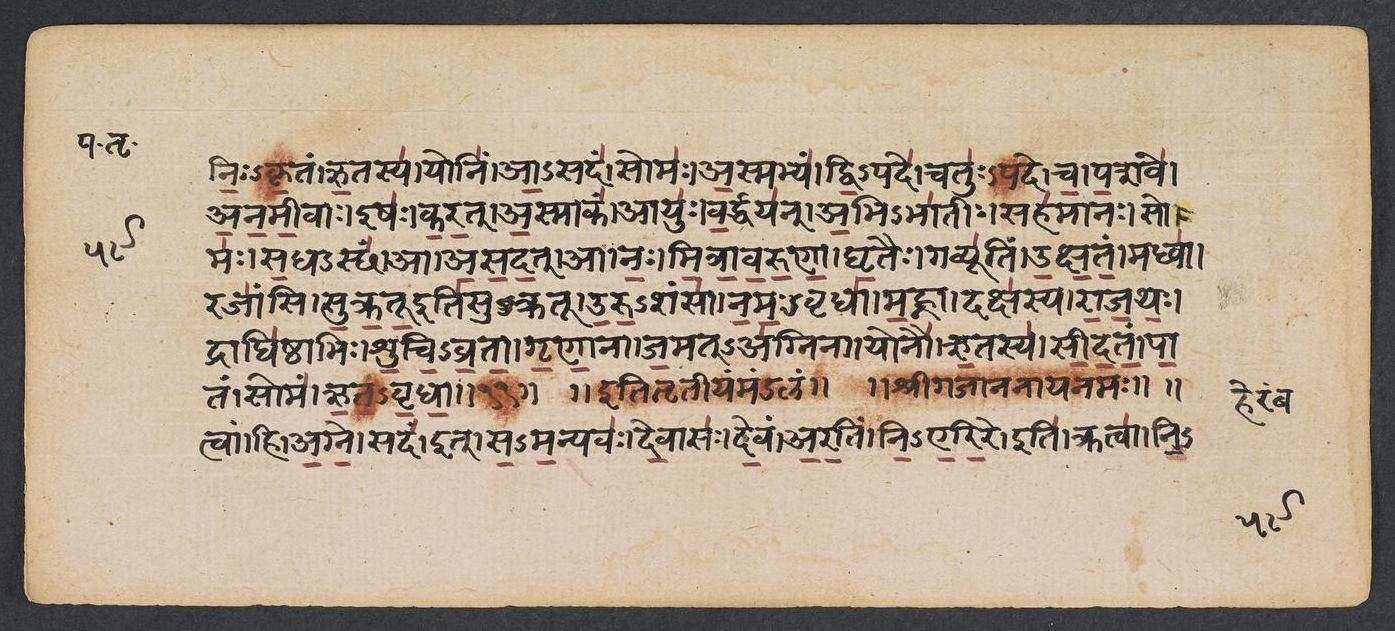
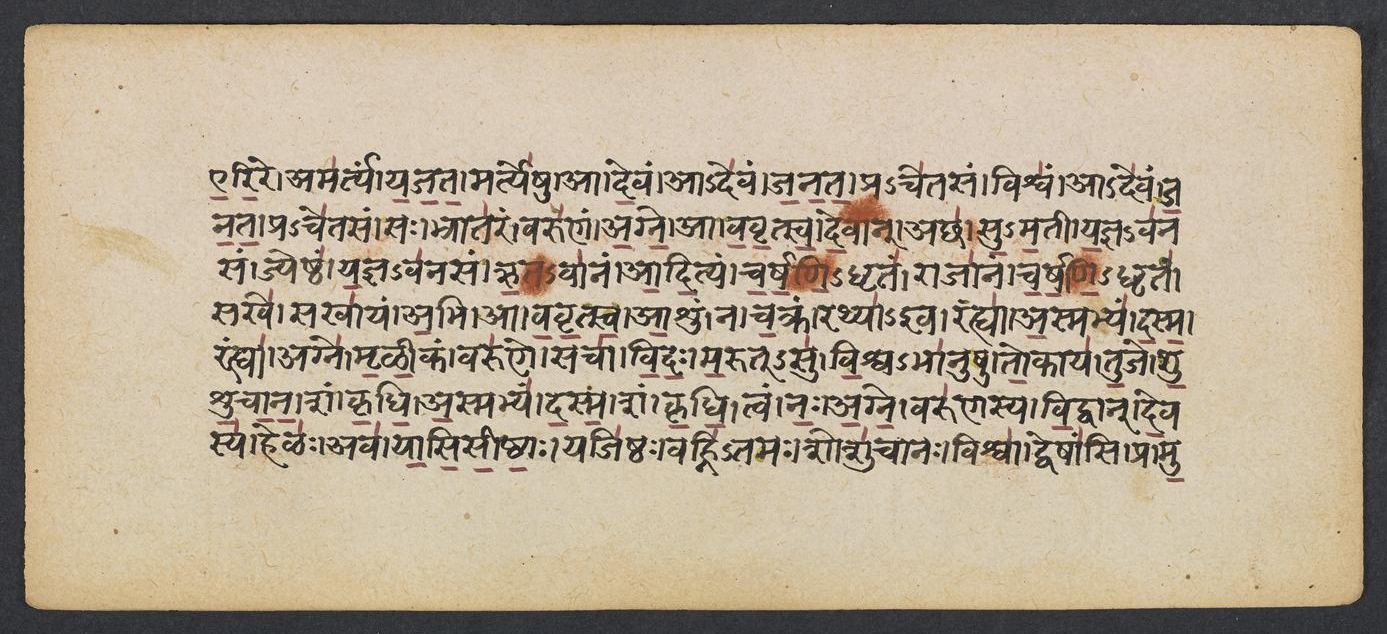
Where on the image
Penn Ms. Coll. 390 Item 41, fol. 251r (numbered 60r by the scribe) (OPenn image 251, lower leaf). Checked on the image: the Rigveda text on this page begins in RV 4.1.1 ‹-ni-erire amartyam yajata martyeṣu›. The next page with Rigveda text, fol. 251v (numbered 60v by the scribe), begins in RV 4.1.4 ‹-mumugdhi asmat›. Verses 4.1.1-3 end on this page; 4.1.1 begins on fol. 250v (numbered 59v by the scribe).
1tvāṁ hy a̍gne̱ sada̱m it sa̍ma̱nyavo̍ de̱vāso̍ de̱vam a̍ra̱tiṁ nye̍ri̱ra iti̱ kratvā̍ nyeri̱re | ama̍rtyaṁ yajata̱ martye̱ṣv ā de̱vam āde̍vaṁ janata̱ prace̍tasa̱ṁ viśva̱m āde̍vaṁ janata̱ prace̍tasam ||
2sa bhrāta̍ra̱ṁ varu̍ṇam agna̱ ā va̍vṛtsva de̱vām̐ acchā̍ suma̱tī ya̱jñava̍nasa̱ṁ jyeṣṭha̍ṁ ya̱jñava̍nasam | ṛ̱tāvā̍nam ādi̱tyaṁ ca̍rṣaṇī̱dhṛta̱ṁ rājā̍naṁ carṣaṇī̱dhṛta̍m ||
3sakhe̱ sakhā̍yam a̱bhy ā va̍vṛtsvā̱śuṁ na ca̱kraṁ rathye̍va̱ raṁhyā̱smabhya̍ṁ dasma̱ raṁhyā̍ | agne̍ mṛḻī̱kaṁ varu̍ṇe̱ sacā̍ vido ma̱rutsu̍ vi̱śvabhā̍nuṣu | to̱kāya̍ tu̱je śu̍śucāna̱ śaṁ kṛ̍dhy a̱smabhya̍ṁ dasma̱ śaṁ kṛ̍dhi ||
Compare: Padapāṭha (word-by-word text written in the manuscript; Sansknet e-text via GRETIL)
1tvām | hi | agne | sadam | it | sa-manyavaḥ | devāsaḥ | devam | aratim | ni-erire | iti | kratvā | ni-erire | amartyam | yajata | martyeṣu | ā | devam | ādevam | janata | pra-cetasam | viśvam | ādevam | janata | pra-cetasam
2saḥ | bhrātaram | varuṇam | agne | ā | vavṛtsva | devān | accha | su-matī | yajña-vanasam | jyeṣṭham | yajña-vanasam | ṛta-vānam | ādityam | carṣaṇi-dhṛtam | rājānam | carṣaṇi-dhṛtam
3sakhe | sakhāyam | abhi | ā | vavṛtsva | āśum | na | cakram | rathyāiva | raṃhyā | asmabhyam | dasma | raṃhyā | agne | mṛḷīkam | varuṇe | sacā | vidaḥ | marut-su | viśva-bhānuṣu | tokāya | tuje | śuśucāna | śam | kṛdhi | asmabhyam | dasma | śam | kṛdhi
1, THEE Agni, have the Gods, ever of one accord, sent hither down, a God, appointed messenger, yea, with their wisdom sent thee down. The Immortal, O thou Holy One, mid mortal men, the God-devoted God, the wise, have they brought forth, brought forth the omnipresent God-devoted Sage.
2As such, O Agni, bring with favour to the Gods thy Brother Varuṇa who loveth sacrifice, True to the Law, the Âditya who supporteth men, the King, supporter of mankind.
3Do thou, O Friend, turn hither him who is our Friend, swift as a wheel, like two car-steeds in rapid course, Wondrous! to us in rapid course. O Agni, find thou grace for us with Varuṇa, with Maruts who illumine all. Bless us, thou Radiant One, for seed and progeny, yea, bless us, O thou Wondrous God.
Where on the image
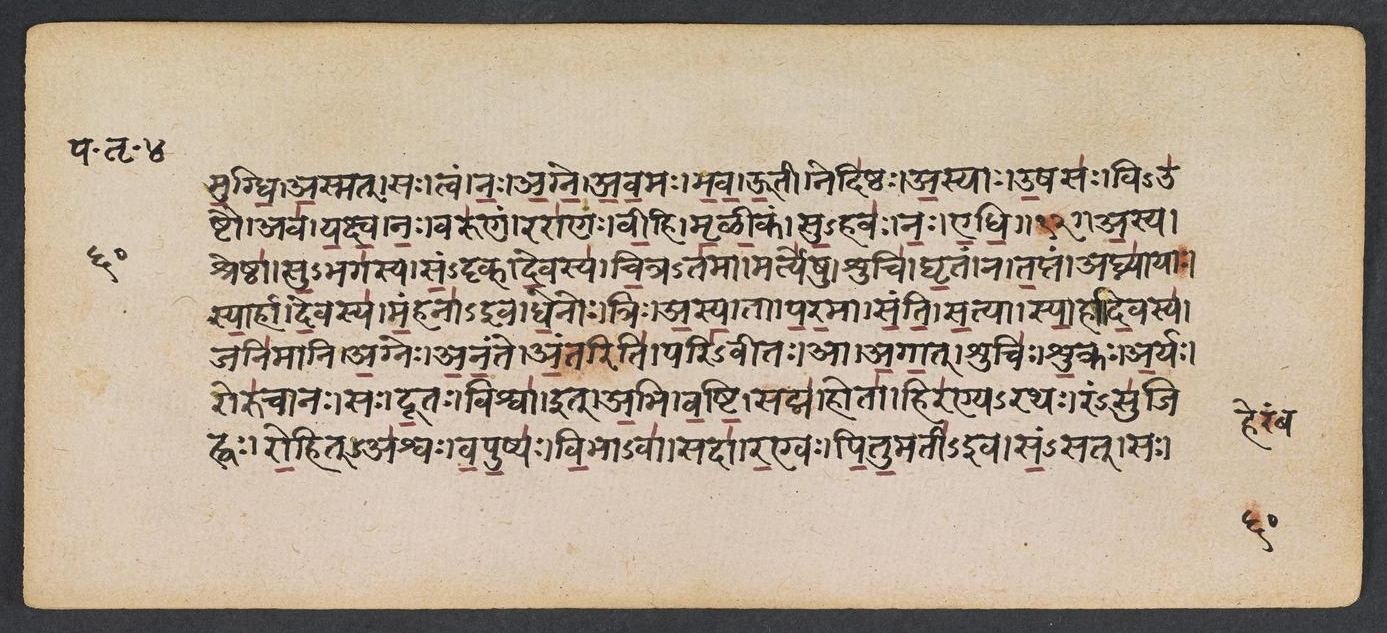
Penn Ms. Coll. 390 Item 41, fol. 251v (numbered 60v by the scribe) (OPenn image 252, upper leaf). Checked on the image: the Rigveda text on this page begins in RV 4.1.4 ‹-mumugdhi asmat›. The next page with Rigveda text, fol. 252r (numbered 61r by the scribe), begins in RV 4.1.9 ‹cetayat manuṣaḥ yajña-bandhuḥ pra›. Verses 4.1.4-8 end on this page; 4.1.4 begins on fol. 251r (numbered 60r by the scribe).
4tvaṁ no̍ agne̱ varu̍ṇasya vi̱dvān de̱vasya̱ heḻo 'va̍ yāsisīṣṭhāḥ | yaji̍ṣṭho̱ vahni̍tama̱ḥ śośu̍cāno̱ viśvā̱ dveṣā̍ṁsi̱ pra mu̍mugdhy a̱smat ||
5sa tvaṁ no̍ agne 'va̱mo bha̍vo̱tī nedi̍ṣṭho a̱syā u̱ṣaso̱ vyu̍ṣṭau | ava̍ yakṣva no̱ varu̍ṇa̱ṁ rarā̍ṇo vī̱hi mṛ̍ḻī̱kaṁ su̱havo̍ na edhi ||
6a̱sya śreṣṭhā̍ su̱bhaga̍sya sa̱ṁdṛg de̱vasya̍ ci̱trata̍mā̱ martye̍ṣu | śuci̍ ghṛ̱taṁ na ta̱ptam aghnyā̍yāḥ spā̱rhā de̱vasya̍ ma̱ṁhane̍va dhe̱noḥ ||
7trir a̍sya̱ tā pa̍ra̱mā sa̍nti sa̱tyā spā̱rhā de̱vasya̱ jani̍māny a̱gneḥ | a̱na̱nte a̱ntaḥ pari̍vīta̱ āgā̱c chuci̍ḥ śu̱kro a̱ryo roru̍cānaḥ ||
8sa dū̱to viśved a̱bhi va̍ṣṭi̱ sadmā̱ hotā̱ hira̍ṇyaratho̱ raṁsu̍jihvaḥ | ro̱hida̍śvo vapu̱ṣyo̍ vi̱bhāvā̱ sadā̍ ra̱ṇvaḥ pi̍tu̱matī̍va sa̱ṁsat ||
Compare: Padapāṭha (word-by-word text written in the manuscript; Sansknet e-text via GRETIL)
4tvam | naḥ | agne | varuṇasya | vidvān | devasya | heḷaḥ | ava | yāsisīṣṭhāḥ | yajiṣṭhaḥ | vahni-tamaḥ | śośucānaḥ | viśvā | dveṣāṃsi | pra mumugdhi | asmat
5saḥ | tvam | naḥ | agne | avamaḥ | bhava | ūtī | nediṣṭhaḥ | asyāḥ | uṣasaḥ | vi-uṣṭau | ava | yakṣva | naḥ | varuṇam | rarāṇaḥ | vīhi | mṛḷīkam | su-havaḥ | naḥ | edhi
6asya | śreṣṭhā | su-bhagasya | sam-dṛk | devasya | citra-tamā | martyeṣu | śuci | ghṛtam | na | taptam | aghnyāyāḥ | spārhā | devasya | maṃhanāiva | dhenoḥ
7triḥ | asya | tā | paramā | santi | satyā | spārhā | devasya | janimāni | agneḥ | anante | antariti | pari-vītaḥ | ā | agāt | śuciḥ | śukraḥ | aryaḥ | rorucānaḥ
8saḥ | dūtaḥ | viśvā | it | abhi | vaṣṭi | sadma | hotā | hiraṇya-rathaḥ | ram-sujihvaḥ | rohit-aśvaḥ | vapuṣyaḥ | vibhāvā | sadā | raṇvaḥ | pitumatī-iva | saṃsat
4Do thou who knowest Varuṇa, O Agni, put far away from us the God's displeasure. Best Sacrificer, brightest One, refulgent remove thou far from us all those who hate us.
5Be thou, O Agni, nearest us with succour, our closest Friend while now this Morn is breaking. Reconcile to us Varuṇa, be bounteous enjoy the gracious juice; be swift to hear us.
6Excellent is the glance, of brightest splendour, which the auspicious God bestows on mortals- The God's glance, longed-for even as the butter, pure, heated, of the cow, the milch-cow's bounty.
7Three are those births, the true, the most exalted, eagerly longed-for, of the God, of Agni. He came invested in the boundless region, pure, radiant, friendly, mightily resplendent.
8This envoy joyeth in all seats of worship, borne on his golden car, sweet-tongued Invoker: Lovely to look on, with red steeds, effulgent, like a feast rich in food, joyous for ever.
Where on the image
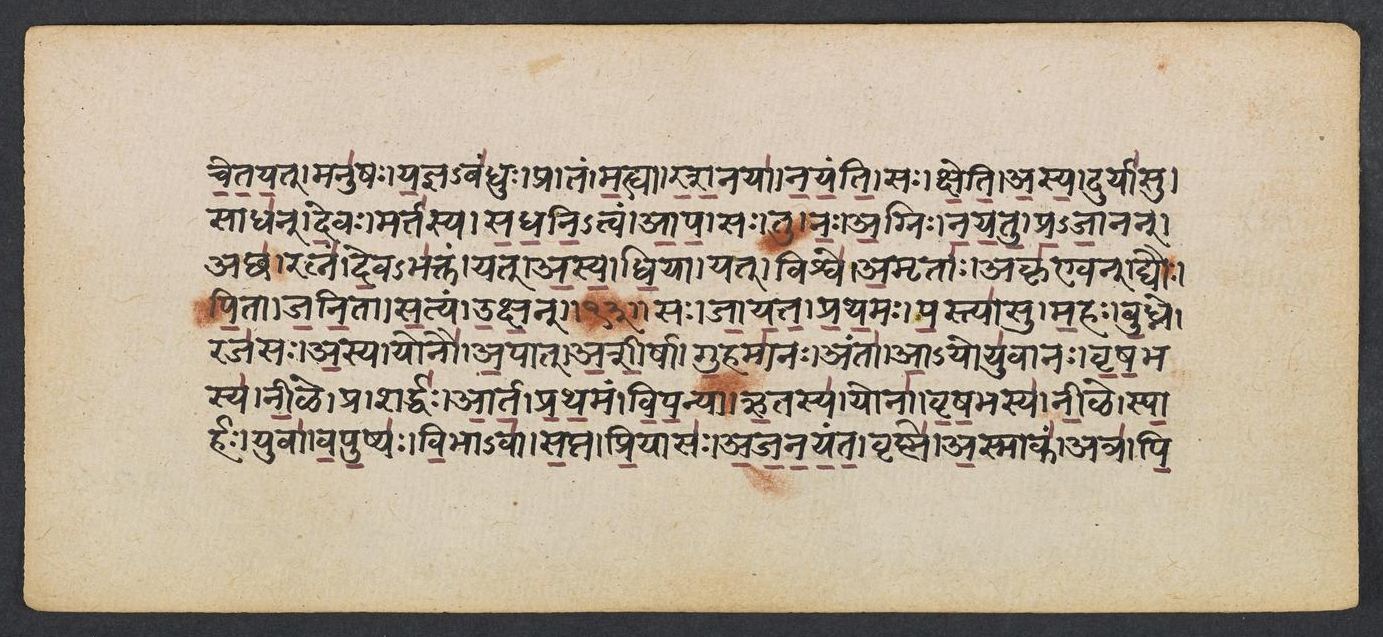
Penn Ms. Coll. 390 Item 41, fol. 252r (numbered 61r by the scribe) (OPenn image 252, lower leaf). Checked on the image: the Rigveda text on this page begins in RV 4.1.9 ‹cetayat manuṣaḥ yajña-bandhuḥ pra›. The next page with Rigveda text, fol. 252v (numbered 61v by the scribe), begins in RV 4.1.13 ‹-pitaraḥ manuṣyāḥ abhi pra›. Verses 4.1.9-12 end on this page; 4.1.9 begins on fol. 251v (numbered 60v by the scribe).
9sa ce̍taya̱n manu̍ṣo ya̱jñaba̍ndhu̱ḥ pra tam ma̱hyā ra̍śa̱nayā̍ nayanti | sa kṣe̍ty asya̱ duryā̍su̱ sādha̍n de̱vo marta̍sya sadhani̱tvam ā̍pa ||
10sa tū no̍ a̱gnir na̍yatu prajā̱nann acchā̱ ratna̍ṁ de̱vabha̍kta̱ṁ yad a̍sya | dhi̱yā yad viśve̍ a̱mṛtā̱ akṛ̍ṇva̱n dyauṣ pi̱tā ja̍ni̱tā sa̱tyam u̍kṣan ||
11sa jā̍yata pratha̱maḥ pa̱styā̍su ma̱ho bu̱dhne raja̍so a̱sya yonau̍ | a̱pād a̍śī̱rṣā gu̱hamā̍no̱ antā̱yoyu̍vāno vṛṣa̱bhasya̍ nī̱ḻe ||
12pra śardha̍ ārta pratha̱maṁ vi̍pa̱nyām̐ ṛ̱tasya̱ yonā̍ vṛṣa̱bhasya̍ nī̱ḻe | spā̱rho yuvā̍ vapu̱ṣyo̍ vi̱bhāvā̍ sa̱pta pri̱yāso̍ 'janayanta̱ vṛṣṇe̍ ||
Compare: Padapāṭha (word-by-word text written in the manuscript; Sansknet e-text via GRETIL)
9saḥ | cetayat | manuṣaḥ | yajña-bandhuḥ | pra | tam | mahyā | raśanayā | nayanti | saḥ | kṣeti | asya | duryāsu | sādhan | devaḥ | martasya | sadhani-tvam | āpa
10saḥ | tu | naḥ | agniḥ | nayatu | pra-jānan | accha | ratnam | deva-bhaktam | yat | asya | dhiyā | yat | viśve | amṛtāḥ | akṛṇvan | dyauḥ | pitā | janitā | satyam | ukṣan
11saḥ | jāyata | prathamaḥ | pastyāsu | mahaḥ | budhne | rajasaḥ | asya | yonau | apāt | aśīrṣā | guhamānaḥ | antā | āyoyuvānaḥ | vṛṣabhasya | nīḷe
12pra | śardhaḥ | ārta | prathamam | vi-panyā | ṛtasya | yonā | vṛṣabhasya | nīḷe | spārhaḥ | yuvā | vapuṣyaḥ | vibhāvā | sapta | priyāsaḥ | ajanayanta | vṛṣṇe
9Allied by worship, let him give man knowledge: by an extended cord they lead him onward. He stays, effectual in this mortal's dwelling, and the God wins a share in his possessions.
10Let Agni -for he knows the way- conduct us to all that he enjoys of God-sent riches, What all the Immortals have prepared with wisdom, Dyaus, Sire, Begetter, raining down true blessings.
11In houses first he sprang into existence, at great heaven's base, and in this region's bosom; Footless and headless, both his ends concealing, in his Bull's lair drawing himself together.
12Wondrously first he rose aloft, defiant, in the Bull's lair, the homeof holy Order, Longed-for, young, beautiful, and far-resplendent: and sevendear frieuds sprang up unto the Mighty.
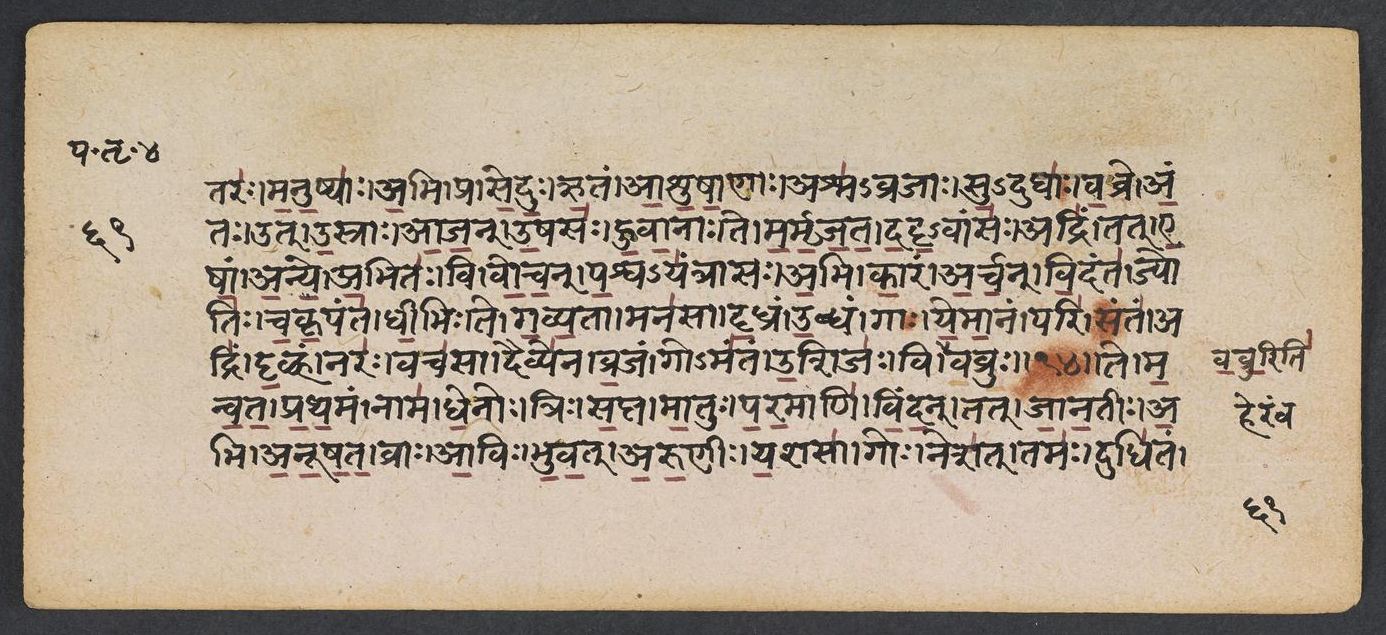
Where on the image
Penn Ms. Coll. 390 Item 41, fol. 252v (numbered 61v by the scribe) (OPenn image 253, upper leaf). Checked on the image: the Rigveda text on this page begins in RV 4.1.13 ‹-pitaraḥ manuṣyāḥ abhi pra›. The next page with Rigveda text, fol. 253r (numbered 62r by the scribe), begins in RV 4.1.17 ‹-dudhitam rocata dyauḥ ut›. Verses 4.1.13-16 end on this page; 4.1.13 begins on fol. 252r (numbered 61r by the scribe).
13a̱smāka̱m atra̍ pi̱taro̍ manu̱ṣyā̍ a̱bhi pra se̍dur ṛ̱tam ā̍śuṣā̱ṇāḥ | aśma̍vrajāḥ su̱dughā̍ va̱vre a̱ntar ud u̱srā ā̍jann u̱ṣaso̍ huvā̱nāḥ ||
14te ma̍rmṛjata dadṛ̱vāṁso̱ adri̱ṁ tad e̍ṣām a̱nye a̱bhito̱ vi vo̍can | pa̱śvaya̍ntrāso a̱bhi kā̱ram a̍rcan vi̱danta̱ jyoti̍ś cakṛ̱panta̍ dhī̱bhiḥ ||
15te ga̍vya̱tā mana̍sā dṛ̱dhram u̱bdhaṁ gā ye̍mā̱nam pari̱ ṣanta̱m adri̍m | dṛ̱ḻhaṁ naro̱ vaca̍sā̱ daivye̍na vra̱jaṁ goma̍ntam u̱śijo̱ vi va̍vruḥ ||
16te ma̍nvata pratha̱maṁ nāma̍ dhe̱nos triḥ sa̱pta mā̱tuḥ pa̍ra̱māṇi̍ vindan | taj jā̍na̱tīr a̱bhy a̍nūṣata̱ vrā ā̱vir bhu̍vad aru̱ṇīr ya̱śasā̱ goḥ ||
Compare: Padapāṭha (word-by-word text written in the manuscript; Sansknet e-text via GRETIL)
13asmākam | atra | pitaraḥ | manuṣyāḥ | abhi | pra | seduḥ | ṛtam | āśuṣāṇāḥ | aśma-vrajāḥ | su-dughā | vavre | antaḥ | ut | usrāḥ | ājan | uṣasaḥ | huvānāḥ
14te | marmṛjat a | dadṛ-vāṃsaḥ | adrim | tat | eṣām | anye | abhitaḥ | vi | vocan | paśva-yantrāsaḥ | abhi | kāram | arcan | vidanta | jyotiḥ | cakṛpanta | dhībhiḥ
15te | gavyatā | manasā | dṛdhram | ubdham | gāḥ | yemānam | pari | santam | adrim | dṛḷham | naraḥ | vacasā | daivyena | vrajam | go--mantam | uśijaḥ | vi | vavruḥ
16te | manvata | prathamam | nāma | dhenoḥ | triḥ | sapta | mātuḥ | paramāṇi | vindan | tat | jānatīḥ | abhi | anūṣata | vrāḥ | āviḥ | bhuvat | aruṇīḥ | yaśasā | goḥ
13Here did our human fathers take their places, fain to fulfil the sacred Law of worship. Forth drave they, with loud call, Dawn's teeming Milch-kine hid in the mountainstable, in the cavern.
14Splendid were they when they had rent the mountain: others, around, shall tell forth this their exploit. They sang their song, prepared to free the cattle: they found the light; with holy hymns they worshipped.
15Eager, with thought intent upon the booty, the men with their celestial speech threw open, The solid mountain firm, compact, enclosing, confining Cows, the stable full of cattle.
16The Milch-cow's earliest name they comprehended: they found the Mother's thrice-seven noblest titles. This the bands knew, and sent forth acclamation:with the Bull's sheen the Red One was apparent.
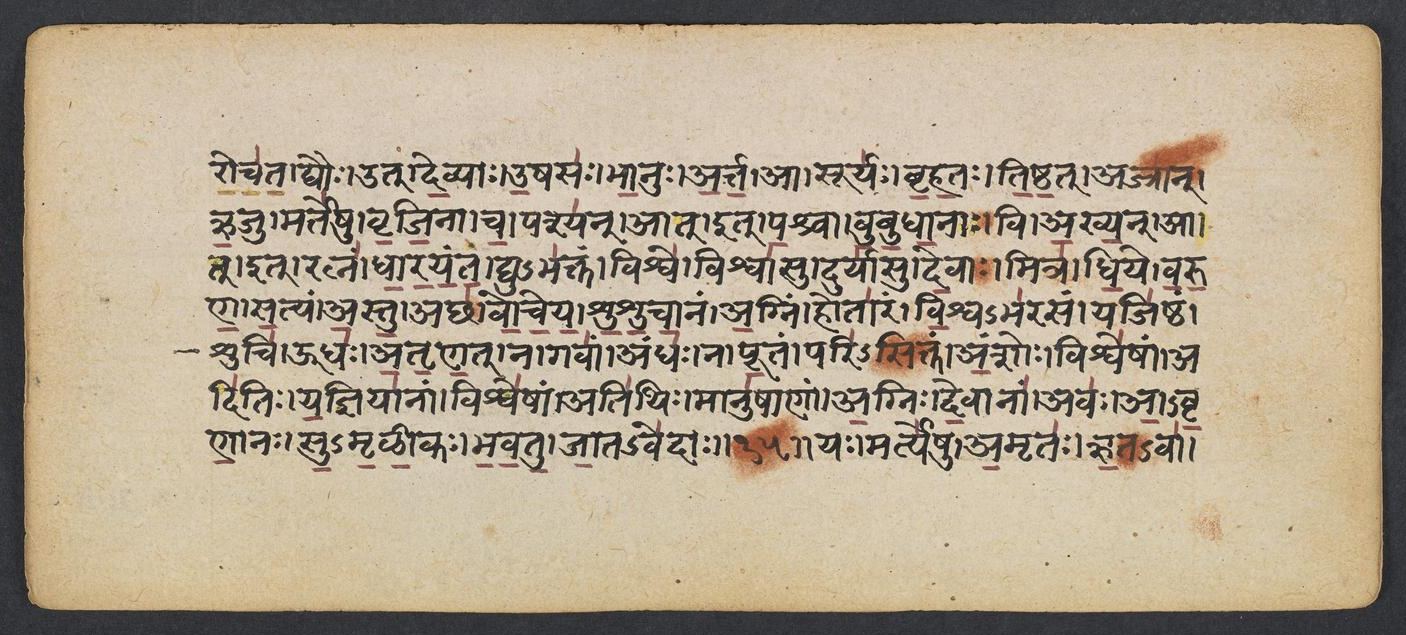
Where on the image
Penn Ms. Coll. 390 Item 41, fol. 253r (numbered 62r by the scribe) (OPenn image 253, lower leaf). Checked on the image: the Rigveda text on this page begins in RV 4.1.17 ‹-dudhitam rocata dyauḥ ut›. The next page with Rigveda text, fol. 253v (numbered 62v by the scribe), begins in RV 4.2.1 ‹devaḥ deveṣu aratiḥ ni-dhāyi›. Verses 4.1.17-20 end on this page; 4.1.17 begins on fol. 252v (numbered 61v by the scribe).
17neśa̱t tamo̱ dudhi̍ta̱ṁ roca̍ta̱ dyaur ud de̱vyā u̱ṣaso̍ bhā̱nur a̍rta | ā sūryo̍ bṛha̱tas ti̍ṣṭha̱d ajrā̍m̐ ṛ̱ju marte̍ṣu vṛji̱nā ca̱ paśya̍n ||
18ād it pa̱ścā bu̍budhā̱nā vy a̍khya̱nn ād id ratna̍ṁ dhārayanta̱ dyubha̍ktam | viśve̱ viśvā̍su̱ duryā̍su de̱vā mitra̍ dhi̱ye va̍ruṇa sa̱tyam a̍stu ||
19acchā̍ voceya śuśucā̱nam a̱gniṁ hotā̍raṁ vi̱śvabha̍rasa̱ṁ yaji̍ṣṭham | śucy ūdho̍ atṛṇa̱n na gavā̱m andho̱ na pū̱tam pari̍ṣiktam a̱ṁśoḥ ||
20viśve̍ṣā̱m adi̍tir ya̱jñiyā̍nā̱ṁ viśve̍ṣā̱m ati̍thi̱r mānu̍ṣāṇām | a̱gnir de̱vānā̱m ava̍ āvṛṇā̱naḥ su̍mṛḻī̱ko bha̍vatu jā̱tave̍dāḥ ||
Compare: Padapāṭha (word-by-word text written in the manuscript; Sansknet e-text via GRETIL)
17neśat | tamaḥ | dudhitam | rocata | dyauḥ | ut | devyāḥ | uṣasaḥ | bhānuḥ | arta | ā | sūryaḥ | bṛhataḥ | tiṣṭhat | ajrān | ṛju | marteṣu | vṛjina | ca | paśyan
18āt | it | paścā | bubudhānāḥ | vi | akhyan | āt | it | ratnam | dhārayanta | dyu-bhaktam | viśve | viśvāsu | duryāsu | devāḥ | mitra | dhiye | varuṇa | satyam | astu
19accha | voceya | śuśucānam | agnim | hotāram | viśva-bharasam | yajiṣṭham | śuci | ūdhaḥ | atṛṇat | na | gavām | andhaḥ | na | pūtam | pari-siktam | aṃśoḥ
20viśveṣām | aditiḥ | yajñiyānām | viśveṣām | atithiḥ | mānuṣāṇām | agniḥ | devānām | avaḥ | āvṛṇānaḥ | su-mṛḷīkaḥ | bhavatu | jāta-vedāḥ
17The turbid darkness fled, the heaven was sp, endid! up rose the bright beam of celestial Morning. Sûrya ascended to the wide expanses, beholding deeds of men both good and evil.
18Then, afterwards they looked around, awakened, when first they held that Heaven allotted treasure. Now all the Gods abide in all their dwellings. Varuṇa, Mitra, be the prayer effective.
19I will call hither brightly-beaming Agni, the Herald, all-supporting, best at worship. He hath disclosed, like the milch cows' pure udder, the Sorria's juice when cleansed and poured from beakers.
20The freest God of all who should be worshipped, the guest who is received in all men's houses, Agni who hath secured the Gods' high favour,– may he be gracious, to us Jâtavedas.
Notes
- Sanskrit: Aufrecht's edition (1877) with the Vedic accents, as entered by van Nooten and Holland (GRETIL).
- English: Ralph T. H. Griffith, The Hymns of the Rigveda (1889-1892; 2nd ed. 1896-1897), from the VedaWeb digital text; OCR slips in that text were corrected against the printed 2nd edition (data/sources/rigveda/griffith_errata.json).
- Padapāṭha (edition text): Sansknet e-text via GRETIL (CC BY-NC-SA 4.0).
Cite
Sources
- Source: Penn Ms. Coll. 390 Item 41 (undated (catalogued with Penn's 18th-19th c. Vedic manuscripts)), OPenn, Public Domain Mark + Aufrecht's accented text (GRETIL) + Griffith's English (VedaWeb) (holding institution)
- Critical edition: Aufrecht (1877), accented e-text via GRETIL
← previous · → next · v cycle view · l back to library