Rigveda 4.26: To Indra
Introduction
Rigveda 4.26 is a hymn of 7 verses addressed to Indra. It stands in book (maṇḍala) 4, the family book of Vāmadeva. The Rigveda is the oldest collection of Sanskrit hymns, composed in the second half of the second millennium BCE and handed down orally for many centuries before it was written down.
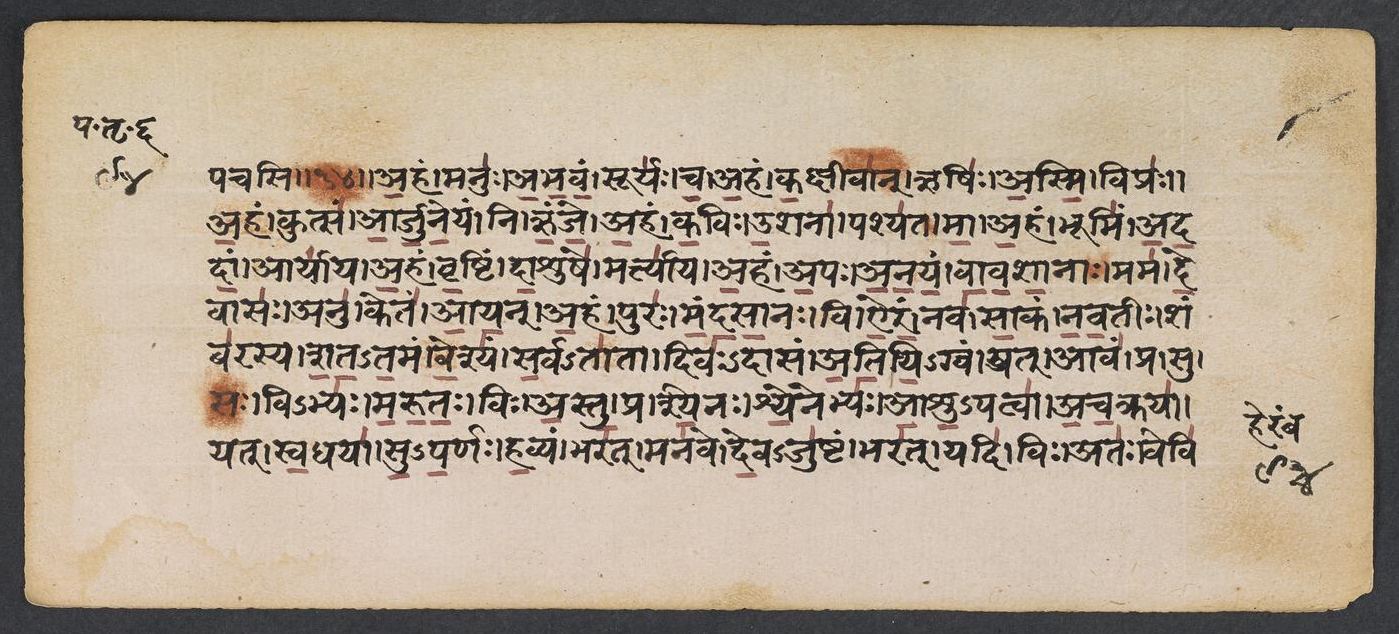
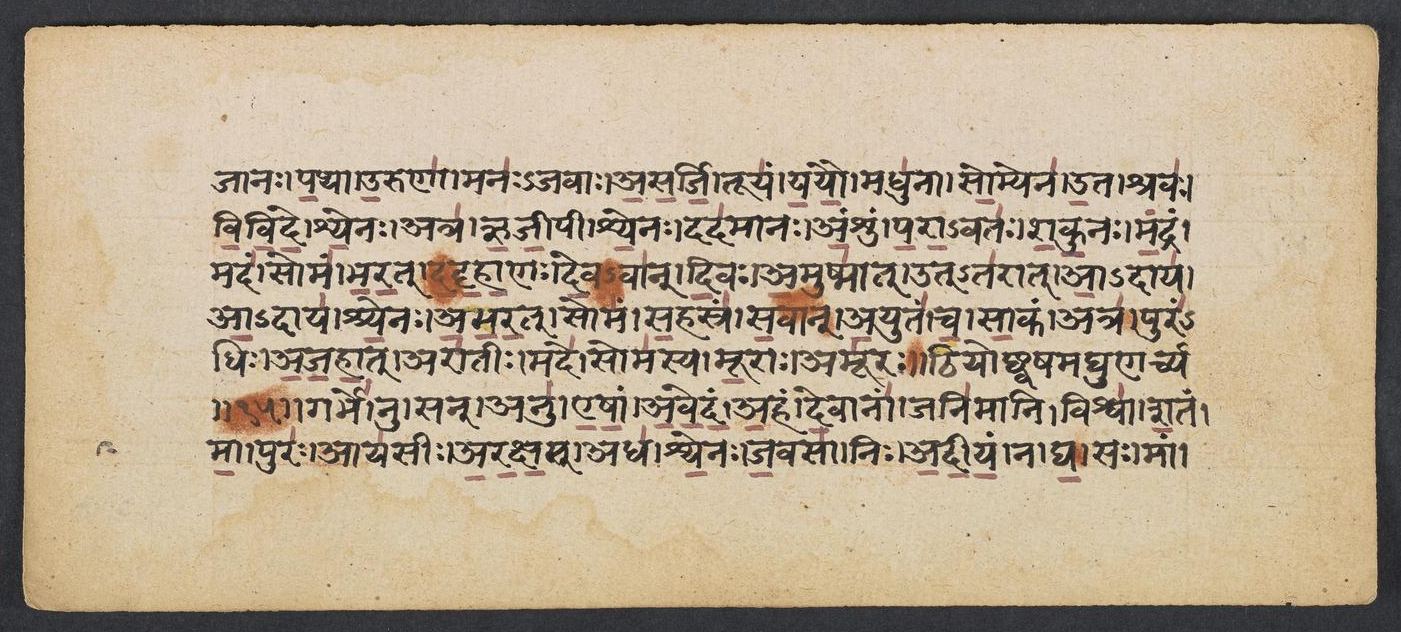
The manuscript shown is Penn Ms. Coll. 390 Item 41 (University of Pennsylvania), an undated paper manuscript of the padapāṭha (the word-by-word recitation text, in which every word is written separately and compounds are split) of the whole Ṛgveda in Devanāgarī, 884 leaves in fascicles, 7-9 lines to the page, accents in red; this hymn stands on fol. 285v-286r. Each section below gives the verses that end on one page; the page boundaries were read on the images (the opening words of every page), not counted out. Where the manuscript is a padapāṭha (the word-by-word recitation text), the section shows Aufrecht's continuous (saṃhitā) text first and, as the edition text, the padapāṭha of the same verses, which is the form written on the page.
How was this verified? (Provenance)
Where on the image
Penn Ms. Coll. 390 Item 41, fol. 285v (numbered 94v by the scribe) (OPenn image 286, upper leaf). Checked on the image: the Rigveda text on this page begins in RV 4.26.1 ‹aham manuḥ abhavam sūryaḥ›. The next page with Rigveda text, fol. 286r (numbered 95r by the scribe), begins in RV 4.26.5 ‹-vevijānaḥ pathā uruṇā manaḥ-javāḥ›. Verses 4.26.1-4 end on this page.
1a̱ham manu̍r abhava̱ṁ sūrya̍ś cā̱haṁ ka̱kṣīvā̱m̐ ṛṣi̍r asmi̱ vipra̍ḥ | a̱haṁ kutsa̍m ārjune̱yaṁ ny ṛ̍ñje̱ 'haṁ ka̱vir u̱śanā̱ paśya̍tā mā ||
2a̱ham bhūmi̍m adadā̱m āryā̍yā̱haṁ vṛ̱ṣṭiṁ dā̱śuṣe̱ martyā̍ya | a̱ham a̱po a̍nayaṁ vāvaśā̱nā mama̍ de̱vāso̱ anu̱ keta̍m āyan ||
3a̱ham puro̍ mandasā̱no vy ai̍ra̱ṁ nava̍ sā̱kaṁ na̍va̱tīḥ śamba̍rasya | śa̱ta̱ta̱maṁ ve̱śya̍ṁ sa̱rvatā̍tā̱ divo̍dāsam atithi̱gvaṁ yad āva̍m ||
4pra su ṣa vibhyo̍ maruto̱ vir a̍stu̱ pra śye̱naḥ śye̱nebhya̍ āśu̱patvā̍ | a̱ca̱krayā̱ yat sva̱dhayā̍ supa̱rṇo ha̱vyam bhara̱n mana̍ve de̱vaju̍ṣṭam ||
Compare: Padapāṭha (word-by-word text written in the manuscript; Sansknet e-text via GRETIL)
1aham | manuḥ | abhavam | sūryaḥ | ca | aham | kakṣīvān | ṛṣiḥ | asmi | vipraḥ | aham | kutsam | ārjuneyam | ni | ṛñje | aham | kaviḥ | uśanā | paśyata | mā
2aham | bhūmim | adadām | āryāya | aham | vṛṣṭim | dāśuṣe | martyāya | aham | apaḥ | anayam | vavaśānāḥ | mama | devāsaḥ | anu | ketam | āyan
3aham | puraḥ | mandasānaḥ | vi | airam | nava | sākam | navatīḥ | śambarasya | śata-tamam | veśyam | sarva-tātā | divaḥ-dāsam | atithi-gvam | yat | āvam
4pra | su | saḥ | vi-bhyaḥ | marutaḥ | viḥ | astu | pra | śyenaḥ | śyenebhyaḥ | āśu-patvā | acakrayā | yat | svadhayā | su-parṇaḥ | havyam | bharat | manave | deva-juṣṭam
1I WAS aforetime Manu, I was Sûrya: I am the sage Kakshîvân, holy singer. Kutsa the son of Arjuni I master. I am the sapient Uṣanâ behold me.
2I have bestowed the earth upon the Ârya, and rain upon the man who brings oblation. I guided forth the loudly-roaring waters, and the Gods moved according to my pleasure.
3In the wild joy of Soma I demolished Ṣambara's forts, ninety-and-nine, together; And, utterly, the hundredth habitation, when helping Divodâsa Âtithigva.
4Before all birds be ranked this Bird, O Maruts; supreme of falcons be this fleet-winged Falcon, Because, strong- pinioned, with no car to bear him, he brought to Manu the Godloved oblation.
Where on the image
Penn Ms. Coll. 390 Item 41, fol. 286r (numbered 95r by the scribe) (OPenn image 286, lower leaf). Checked on the image: the Rigveda text on this page begins in RV 4.26.5 ‹-vevijānaḥ pathā uruṇā manaḥ-javāḥ›. The next page with Rigveda text, fol. 286v (numbered 95v by the scribe), begins in RV 4.27.2 ‹apa joṣam jabhāra abhi›. Verses 4.26.5-7 end on this page; 4.26.5 begins on fol. 285v (numbered 94v by the scribe).
5bhara̱d yadi̱ vir ato̱ vevi̍jānaḥ pa̱thoruṇā̱ mano̍javā asarji | tūya̍ṁ yayau̱ madhu̍nā so̱myeno̱ta śravo̍ vivide śye̱no atra̍ ||
6ṛ̱jī̱pī śye̱no dada̍māno a̱ṁśum pa̍rā̱vata̍ḥ śaku̱no ma̱ndram mada̍m | soma̍m bharad dādṛhā̱ṇo de̱vāvā̍n di̱vo a̱muṣmā̱d utta̍rād ā̱dāya̍ ||
7ā̱dāya̍ śye̱no a̍bhara̱t soma̍ṁ sa̱hasra̍ṁ sa̱vām̐ a̱yuta̍ṁ ca sā̱kam | atrā̱ pura̍ṁdhir ajahā̱d arā̍tī̱r made̱ soma̍sya mū̱rā amū̍raḥ ||
Compare: Padapāṭha (word-by-word text written in the manuscript; Sansknet e-text via GRETIL)
5bharat | yadi | viḥ | ataḥ | vevijānaḥ | pathā | uruṇā | manaḥ-javāḥ | asarji | tūyam | yayau | madhunā | somyena | uta | śravaḥ | vivide | śyenaḥ | atra
6ṛjīpī | śyenaḥ | dadamānaḥ | aṃśum | parāvataḥ | śakunaḥ | mandram | madam | somam | bharat | dadṛhāṇaḥ | deva-vān | divaḥ | amuṣmāt | ut-tārāt | ādāya
7ādāya | śyenaḥ | abharat | somam | sahasram | savān | ayutam | ca | sākam | atra | puram-dhiḥ | ajahāt | arātīḥ | made | somasya | mūrāḥ | amūraḥ
5When the Bird brought it, hence in rapid motion sent on the wide path fleet as thought he hurried. Swift he returned with sweetness of the Soma, and hence the Falcon hath acquired his glory.
6Bearing the stalk, the Falcon speeding onward, Bird bringing from afar the draught that gladdens, Friend of the Gods, brought, grasping fast, the Soma which be bad taken from yon loftiest heaven.
7The Falcon took and brought the Soma, bearing thousand libations with him, yea, ten thousand. The Bold One left Malignities behind him, wise, in wild joy of Soma, left the foolish.
Notes
- Sanskrit: Aufrecht's edition (1877) with the Vedic accents, as entered by van Nooten and Holland (GRETIL).
- English: Ralph T. H. Griffith, The Hymns of the Rigveda (1889-1892; 2nd ed. 1896-1897), from the VedaWeb digital text; OCR slips in that text were corrected against the printed 2nd edition (data/sources/rigveda/griffith_errata.json).
- Padapāṭha (edition text): Sansknet e-text via GRETIL (CC BY-NC-SA 4.0).
Cite
Sources
- Source: Penn Ms. Coll. 390 Item 41 (undated (catalogued with Penn's 18th-19th c. Vedic manuscripts)), OPenn, Public Domain Mark + Aufrecht's accented text (GRETIL) + Griffith's English (VedaWeb) (holding institution)
- Critical edition: Aufrecht (1877), accented e-text via GRETIL
← previous · → next · v cycle view · l back to library