Rigveda 4.25: To Indra
Introduction
Rigveda 4.25 is a hymn of 8 verses addressed to Indra. It stands in book (maṇḍala) 4, the family book of Vāmadeva. The Rigveda is the oldest collection of Sanskrit hymns, composed in the second half of the second millennium BCE and handed down orally for many centuries before it was written down.
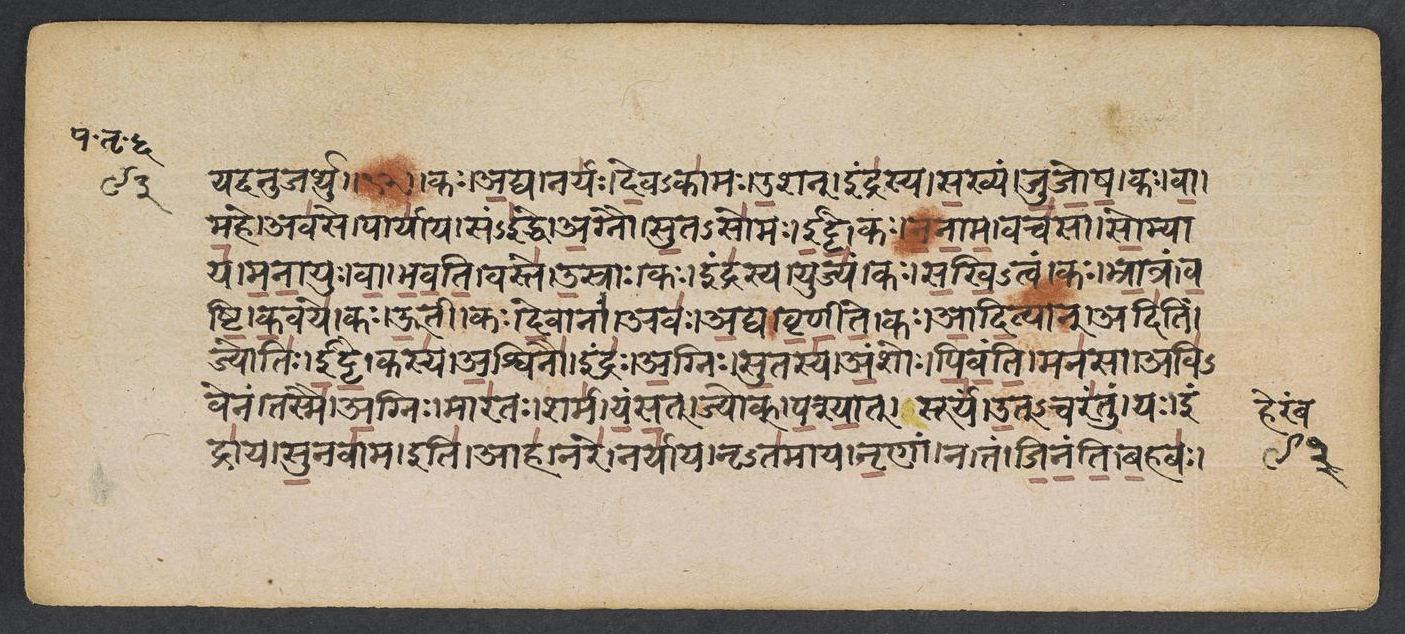
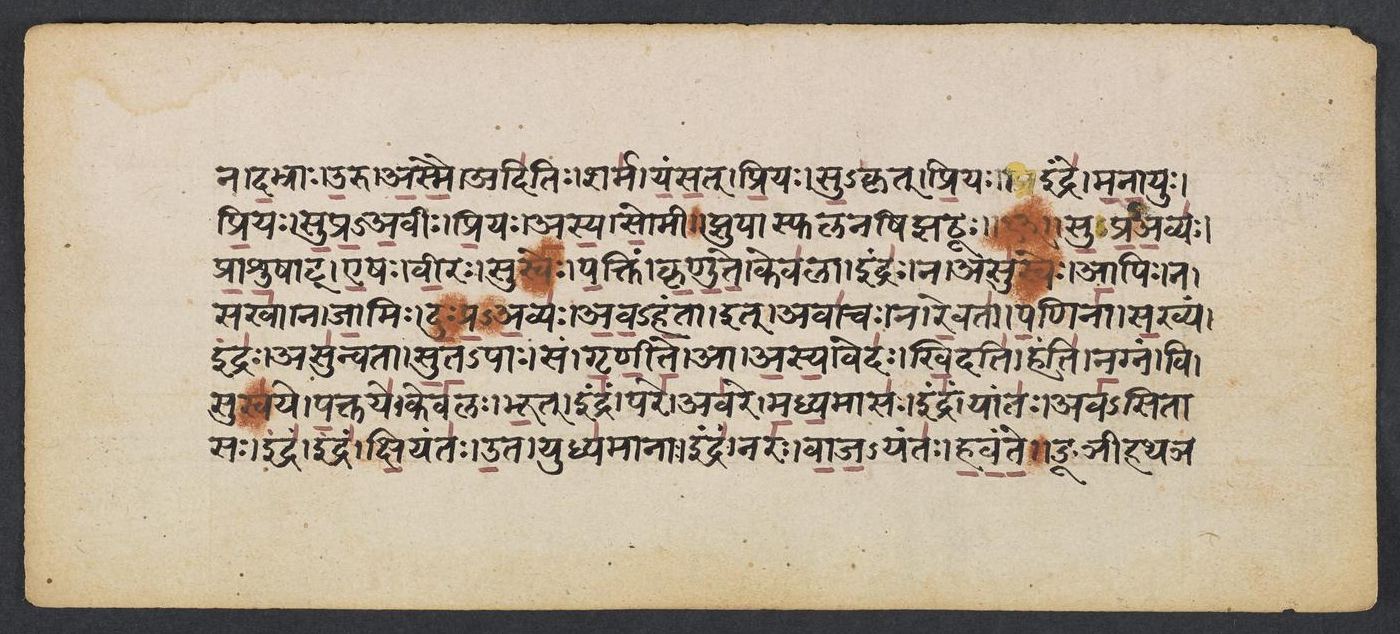
The manuscript shown is Penn Ms. Coll. 390 Item 41 (University of Pennsylvania), an undated paper manuscript of the padapāṭha (the word-by-word recitation text, in which every word is written separately and compounds are split) of the whole Ṛgveda in Devanāgarī, 884 leaves in fascicles, 7-9 lines to the page, accents in red; this hymn stands on fol. 284v-285r. Each section below gives the verses that end on one page; the page boundaries were read on the images (the opening words of every page), not counted out. Where the manuscript is a padapāṭha (the word-by-word recitation text), the section shows Aufrecht's continuous (saṃhitā) text first and, as the edition text, the padapāṭha of the same verses, which is the form written on the page.
How was this verified? (Provenance)
Where on the image
Penn Ms. Coll. 390 Item 41, fol. 284v (numbered 93v by the scribe) (OPenn image 285, upper leaf). Checked on the image: the Rigveda text on this page begins in RV 4.25.1 ‹kaḥ adya naryaḥ deva-kāmaḥ›. The next page with Rigveda text, fol. 285r (numbered 94r by the scribe), begins in RV 4.25.5 ‹na dabhrāḥ uru asmai›. Verses 4.25.1-4 end on this page.
1ko a̱dya naryo̍ de̱vakā̍ma u̱śann indra̍sya sa̱khyaṁ ju̍joṣa | ko vā̍ ma̱he 'va̍se̱ pāryā̍ya̱ sami̍ddhe a̱gnau su̱taso̍ma īṭṭe ||
2ko nā̍nāma̱ vaca̍sā so̱myāya̍ manā̱yur vā̍ bhavati̱ vasta̍ u̱srāḥ | ka indra̍sya̱ yujya̱ṁ kaḥ sa̍khi̱tvaṁ ko bhrā̱traṁ va̍ṣṭi ka̱vaye̱ ka ū̱tī ||
3ko de̱vānā̱m avo̍ a̱dyā vṛ̍ṇīte̱ ka ā̍di̱tyām̐ adi̍ti̱ṁ jyoti̍r īṭṭe | kasyā̱śvinā̱v indro̍ a̱gniḥ su̱tasyā̱ṁśoḥ pi̍banti̱ mana̱sāvi̍venam ||
4tasmā̍ a̱gnir bhāra̍ta̱ḥ śarma̍ yaṁsa̱j jyok pa̍śyā̱t sūrya̍m u̱ccara̍ntam | ya indrā̍ya su̱navā̱mety āha̱ nare̱ naryā̍ya̱ nṛta̍māya nṛ̱ṇām ||
Compare: Padapāṭha (word-by-word text written in the manuscript; Sansknet e-text via GRETIL)
1kaḥ | adya | naryaḥ | deva-kāmaḥ | uśan | indrasya | sakhyam | jujoṣa | kaḥ | vā | mahe | avase | pāryāya | sam-iddhe | agnau | suta-somaḥ | īṭe
2kaḥ | nanāma | vacasā | somyāya | manāyuḥ | vā | bhavati | vaste | usrāḥ | kaḥ | indrasya | yujyam | kaḥ | sakhi-tvam | kaḥ | bhrātram | vaṣṭi | kavaye | kaḥ | ūtī
3kaḥ | devānām | avaḥ | adya | vṛṇīte | kaḥ | ādityān | aditim | jyotiḥ | īṭe | kasya | aśvi nau | indraḥ | agniḥ | sutasya | aṃśoḥ | pibanti | manasā | avi-venam
4tasmai | agniḥ | bhārataḥ | śarma | yaṃsat | jyok | paśyāt | sūryam | ut-carantam | yaḥ | indrāya | sunavāma | iti | āha | nare | naryāya | nṛ-tamāya | nṛṇām
1WHAT friend of man, God-loving, hath delighted, yearning therefor, this day in Indra's friendship? Who with enkindled flame and flowing Soma laudeth him for his great protecting favour?
2Who hath with prayer bowed to the Soma-lover? What pious man endues the beams of morning? Who seeks bond, friendship, brotherhood with Indra? Who hath recourse unto the Sage for succour?
3Who claims to-day the Deities' protection, asks Aditi for light, or the Âdityas? Of whose pressed stalk of Soma drink the Aṣvins, Indra, and Agni, well-inclined in spirit?
4To him shall Agni Bharata give shelter: long shall he look upon the Sun up-rising, Who sayeth, Let us press the juice for Indra, man's Friend, the Hero manliest of heroes.
Where on the image
Penn Ms. Coll. 390 Item 41, fol. 285r (numbered 94r by the scribe) (OPenn image 285, lower leaf). Checked on the image: the Rigveda text on this page begins in RV 4.25.5 ‹na dabhrāḥ uru asmai›. The next page with Rigveda text, fol. 285v (numbered 94v by the scribe), begins in RV 4.26.1 ‹aham manuḥ abhavam sūryaḥ›. Verses 4.25.5-8 end on this page; 4.25.5 begins on fol. 284v (numbered 93v by the scribe).
5na taṁ ji̍nanti ba̱havo̱ na da̱bhrā u̱rv a̍smā̱ adi̍ti̱ḥ śarma̍ yaṁsat | pri̱yaḥ su̱kṛt pri̱ya indre̍ manā̱yuḥ pri̱yaḥ su̍prā̱vīḥ pri̱yo a̍sya so̱mī ||
6su̱prā̱vya̍ḥ prāśu̱ṣāḻ e̱ṣa vī̱raḥ suṣve̍ḥ pa̱ktiṁ kṛ̍ṇute̱ keva̱lendra̍ḥ | nāsu̍ṣver ā̱pir na sakhā̱ na jā̱mir du̍ṣprā̱vyo̍ 'vaha̱nted avā̍caḥ ||
7na re̱vatā̍ pa̱ṇinā̍ sa̱khyam indro 'su̍nvatā suta̱pāḥ saṁ gṛ̍ṇīte | āsya̱ veda̍ḥ khi̱dati̱ hanti̍ na̱gnaṁ vi suṣva̍ye pa̱ktaye̱ keva̍lo bhūt ||
8indra̱m pare 'va̍re madhya̱māsa̱ indra̱ṁ yānto 'va̍sitāsa̱ indra̍m | indra̍ṁ kṣi̱yanta̍ u̱ta yudhya̍mānā̱ indra̱ṁ naro̍ vāja̱yanto̍ havante ||
Compare: Padapāṭha (word-by-word text written in the manuscript; Sansknet e-text via GRETIL)
5na | tam | jinanti | bahavaḥ | na | dabhrāḥ | uru | asmai | aditiḥ | śarma | yaṃsat | priyaḥ | su-kṛt | priyaḥ | indre | manāyuḥ | priyaḥ | supra-avīḥ | priyaḥ | asya | somī
6supra-avyaḥ | prāśuṣāṭ | eṣaḥ | vīraḥ | susveḥ | paktim | kṛṇute | kevalā | indraḥ | na | asusveḥ | apiḥ | na | sakhā | na | jāmiḥ | duḥpra-avyaḥ | ava-hantā | it | avācaḥ
7na | revatā | paṇinā | sakhyam | indraḥ | asunvatā | suta-pāḥ | sam | gṛṇīte | ā | asya | vedaḥ | khidati | hanti | nagnam | vi | susvaye | paktaye | kevalaḥ | bhūt
8indram | pare | avare | madhyamāsaḥ | indram | yāntaḥ | ava-sitāsaḥ | indram | indram | kṣiyantaḥ | uta | yudhyamānāḥ | indram | naraḥ | vājayantaḥ | havante
5Him neither few men overcome, nor many to him shall Aditi give spacious shelter. Dear is the pious, the devout, to Indra dear is the zealous, dear the Soma-bringer.
6This Hero curbs the mighty for the zealous: the presser's brew Indra possesses solely: No brother, kin, or friend to him who pours not, destroyer of the dumb who would resist him.
7Not with the wealthy churl who pours no Soma doth Indra, Soma-drinker, bind alliance. He draws away his wealth and slays him naked, own Friend to him who offers, for oblation.
8Highest and lowest, men who stand between diem, going, returning, dwelling in contentment, Those who show forth their strength when urged to battle-these are the men who call for aid on Indra.
Notes
- Sanskrit: Aufrecht's edition (1877) with the Vedic accents, as entered by van Nooten and Holland (GRETIL).
- English: Ralph T. H. Griffith, The Hymns of the Rigveda (1889-1892; 2nd ed. 1896-1897), from the VedaWeb digital text; OCR slips in that text were corrected against the printed 2nd edition (data/sources/rigveda/griffith_errata.json).
- Padapāṭha (edition text): Sansknet e-text via GRETIL (CC BY-NC-SA 4.0).
Cite
Sources
- Source: Penn Ms. Coll. 390 Item 41 (undated (catalogued with Penn's 18th-19th c. Vedic manuscripts)), OPenn, Public Domain Mark + Aufrecht's accented text (GRETIL) + Griffith's English (VedaWeb) (holding institution)
- Critical edition: Aufrecht (1877), accented e-text via GRETIL
← previous · → next · v cycle view · l back to library