Rigveda 4.28: To Indra and Soma
Introduction
Rigveda 4.28 is a hymn of 5 verses addressed to Indra and Soma. It stands in book (maṇḍala) 4, the family book of Vāmadeva. The Rigveda is the oldest collection of Sanskrit hymns, composed in the second half of the second millennium BCE and handed down orally for many centuries before it was written down.
The manuscript shown is Penn Ms. Coll. 390 Item 41 (University of Pennsylvania), an undated paper manuscript of the padapāṭha (the word-by-word recitation text, in which every word is written separately and compounds are split) of the whole Ṛgveda in Devanāgarī, 884 leaves in fascicles, 7-9 lines to the page, accents in red; this hymn stands on fol. 287r-287v. Each section below gives the verses that end on one page; the page boundaries were read on the images (the opening words of every page), not counted out. Where the manuscript is a padapāṭha (the word-by-word recitation text), the section shows Aufrecht's continuous (saṃhitā) text first and, as the edition text, the padapāṭha of the same verses, which is the form written on the page.
How was this verified? (Provenance)
Where on the image
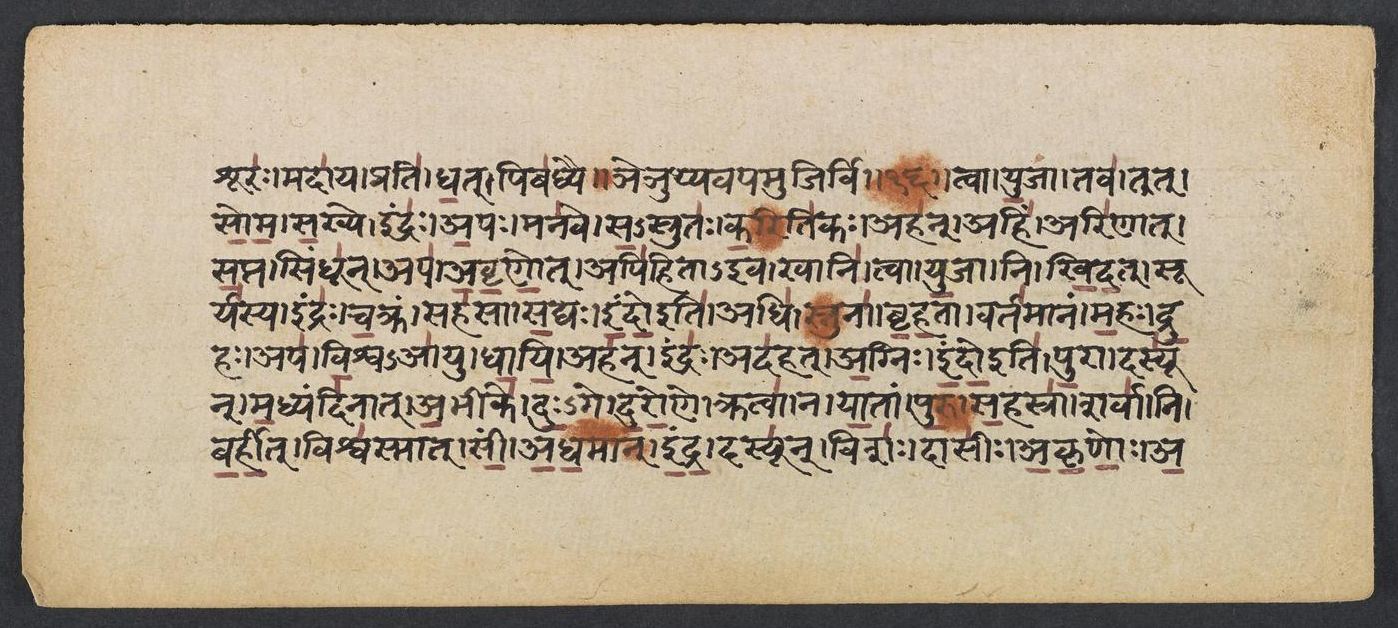
Penn Ms. Coll. 390 Item 41, fol. 287r (numbered 96r by the scribe) (OPenn image 287, lower leaf). Checked on the image: the Rigveda text on this page begins in RV 4.27.5 ‹śūraḥ madāya prati dhat›. The next page with Rigveda text, fol. 287v (numbered 96v by the scribe), begins in RV 4.28.4 ‹-apra-śastāḥ abādhethām amṛṇatam ni›. Verses 4.28.1-3 end on this page.
1tvā yu̱jā tava̱ tat so̍ma sa̱khya indro̍ a̱po mana̍ve sa̱sruta̍s kaḥ | aha̱nn ahi̱m ari̍ṇāt sa̱pta sindhū̱n apā̍vṛṇo̱d api̍hiteva̱ khāni̍ ||
2tvā yu̱jā ni khi̍da̱t sūrya̱syendra̍ś ca̱kraṁ saha̍sā sa̱dya i̍ndo | adhi̱ ṣṇunā̍ bṛha̱tā varta̍mānam ma̱ho dru̱ho apa̍ vi̱śvāyu̍ dhāyi ||
3aha̱nn indro̱ ada̍had a̱gnir i̍ndo pu̱rā dasyū̍n ma̱dhyaṁdi̍nād a̱bhīke̍ | du̱rge du̍ro̱ṇe kratvā̱ na yā̱tām pu̱rū sa̱hasrā̱ śarvā̱ ni ba̍rhīt ||
Compare: Padapāṭha (word-by-word text written in the manuscript; Sansknet e-text via GRETIL)
1tvā | yujā | tava | tat | soma | sakhye | indraḥ | apaḥ | manave | sa-srutaḥ | karitikaḥ | ahan | ahim | ariṇāt | sapta | sindhūn | apa | avṛṇot | apihitāiva | khāni
2tvā | yujā | ni | khidat | sūryasya | indraḥ | cakram | sahasā | sadyaḥ | indo iti | adhi | snunā | bṛhatā | vartamānam | mahaḥ | druhaḥ | apa | viśva-āyu | dhāyi
3ahan | indraḥ | adahat | agniḥ | indo iti | purā | damyūn | madhyandināt | abhīke | duḥ-ge | duroṇe | kratvā | na | yātām | puru | sahasrā | śarvā | ni | barhīt
1ALLIED with thee, in this thy friendship, Soma, Indra for man made waters flow together, Slew Ahi, and sent forth the Seven Rivers, and opened as it were obstructed fountains.
2Indu, with thee for his confederate, Indra swiftly with might pressed down the wheel of Sûrya. What rolled, all life's support, on heaven's high summit was separated from the great oppressor.
3Indra smote down, Agni consumed, O Indu, the Dasyus ere the noontide in the conflict. Of those who gladly sought a hard-won dwelling he cast down many a thousand with his arrow.
Where on the image
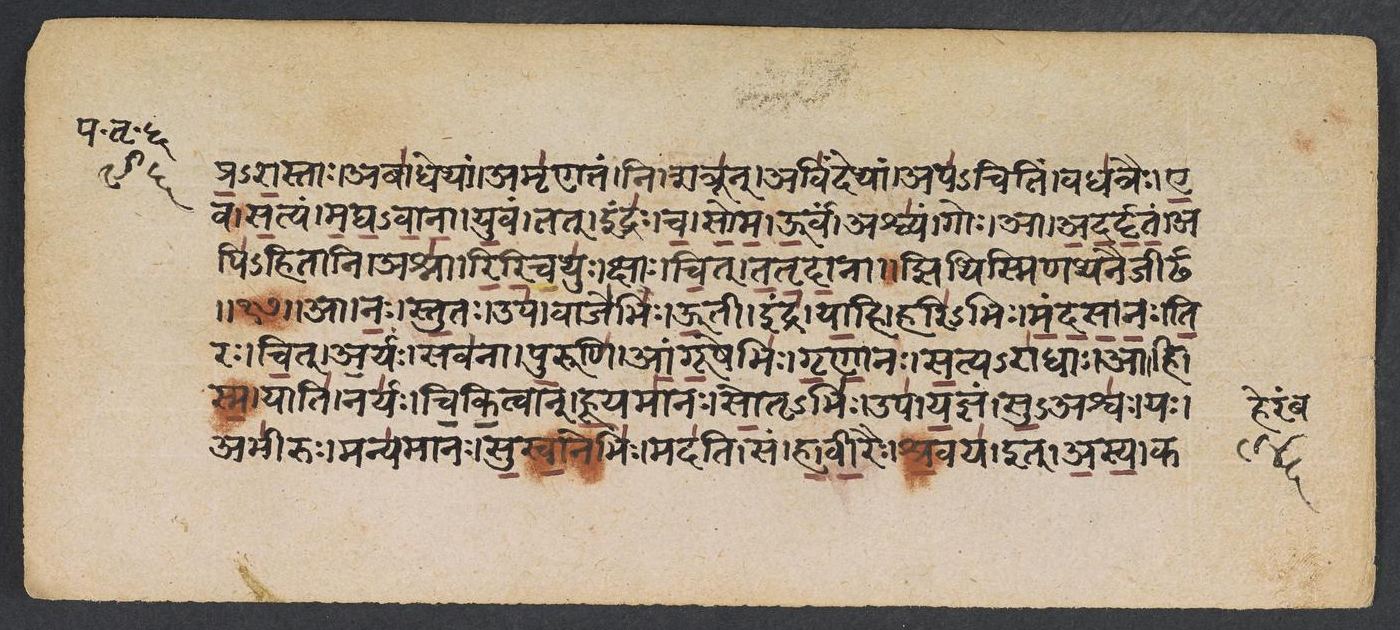
Penn Ms. Coll. 390 Item 41, fol. 287v (numbered 96v by the scribe) (OPenn image 288, upper leaf). Checked on the image: the Rigveda text on this page begins in RV 4.28.4 ‹-apra-śastāḥ abādhethām amṛṇatam ni›. The next page with Rigveda text, fol. 288r (numbered 97r by the scribe), begins in RV 4.29.3 ‹-karṇā vājayadhyai juṣṭām anu›. Verses 4.28.4-5 end on this page; 4.28.4 begins on fol. 287r (numbered 96r by the scribe).
4viśva̍smāt sīm adha̱mām̐ i̍ndra̱ dasyū̱n viśo̱ dāsī̍r akṛṇor apraśa̱stāḥ | abā̍dhethā̱m amṛ̍ṇata̱ṁ ni śatrū̱n avi̍ndethā̱m apa̍citi̱ṁ vadha̍traiḥ ||
5e̱vā sa̱tyam ma̍ghavānā yu̱vaṁ tad indra̍ś ca somo̱rvam aśvya̱ṁ goḥ | āda̍rdṛta̱m api̍hitā̱ny aśnā̍ riri̱cathu̱ḥ kṣāś ci̍t tatṛdā̱nā ||
Compare: Padapāṭha (word-by-word text written in the manuscript; Sansknet e-text via GRETIL)
4viśvasmāt | sīm | adhamān | indra | dasyūn | viśaḥ | dāsīḥ | akṛṇoḥ | apra-śastāḥ | abādhethām | amṛṇatam | ni | śatrūn | avindethām | apa-citim | vadhatraiḥ
5eva | satyam | maghavānā | yuvam | tat | indraḥ | ca | soma | ūrvam | aśvyam | goḥ | ā | adardṛtam | api-hitāni | aśnā | riricathuḥ | kṣāḥ | cit | tatṛdānā
4Lower than all besides hast thou, O Indra, cast down the Dasyus, abject tribes of Dâsas. Ye drave away, ye put to death the foemen, and took great vengeance with your murdering weapons.
5So, of a truth, Indra and Soma, Heroes, ye burst the stable of the kine and horses, The stable which the bar or stone obstructed; and piercing through set free the habitations.
Notes
- Sanskrit: Aufrecht's edition (1877) with the Vedic accents, as entered by van Nooten and Holland (GRETIL).
- English: Ralph T. H. Griffith, The Hymns of the Rigveda (1889-1892; 2nd ed. 1896-1897), from the VedaWeb digital text; OCR slips in that text were corrected against the printed 2nd edition (data/sources/rigveda/griffith_errata.json).
- Padapāṭha (edition text): Sansknet e-text via GRETIL (CC BY-NC-SA 4.0).
Cite
Sources
- Source: Penn Ms. Coll. 390 Item 41 (undated (catalogued with Penn's 18th-19th c. Vedic manuscripts)), OPenn, Public Domain Mark + Aufrecht's accented text (GRETIL) + Griffith's English (VedaWeb) (holding institution)
- Critical edition: Aufrecht (1877), accented e-text via GRETIL
← previous · → next · v cycle view · l back to library