Rigveda 4.29: To Indra
Introduction
Rigveda 4.29 is a hymn of 5 verses addressed to Indra. It stands in book (maṇḍala) 4, the family book of Vāmadeva. The Rigveda is the oldest collection of Sanskrit hymns, composed in the second half of the second millennium BCE and handed down orally for many centuries before it was written down.
The manuscript shown is Penn Ms. Coll. 390 Item 41 (University of Pennsylvania), an undated paper manuscript of the padapāṭha (the word-by-word recitation text, in which every word is written separately and compounds are split) of the whole Ṛgveda in Devanāgarī, 884 leaves in fascicles, 7-9 lines to the page, accents in red; this hymn stands on fol. 287v-288r. Each section below gives the verses that end on one page; the page boundaries were read on the images (the opening words of every page), not counted out. Where the manuscript is a padapāṭha (the word-by-word recitation text), the section shows Aufrecht's continuous (saṃhitā) text first and, as the edition text, the padapāṭha of the same verses, which is the form written on the page.
How was this verified? (Provenance)
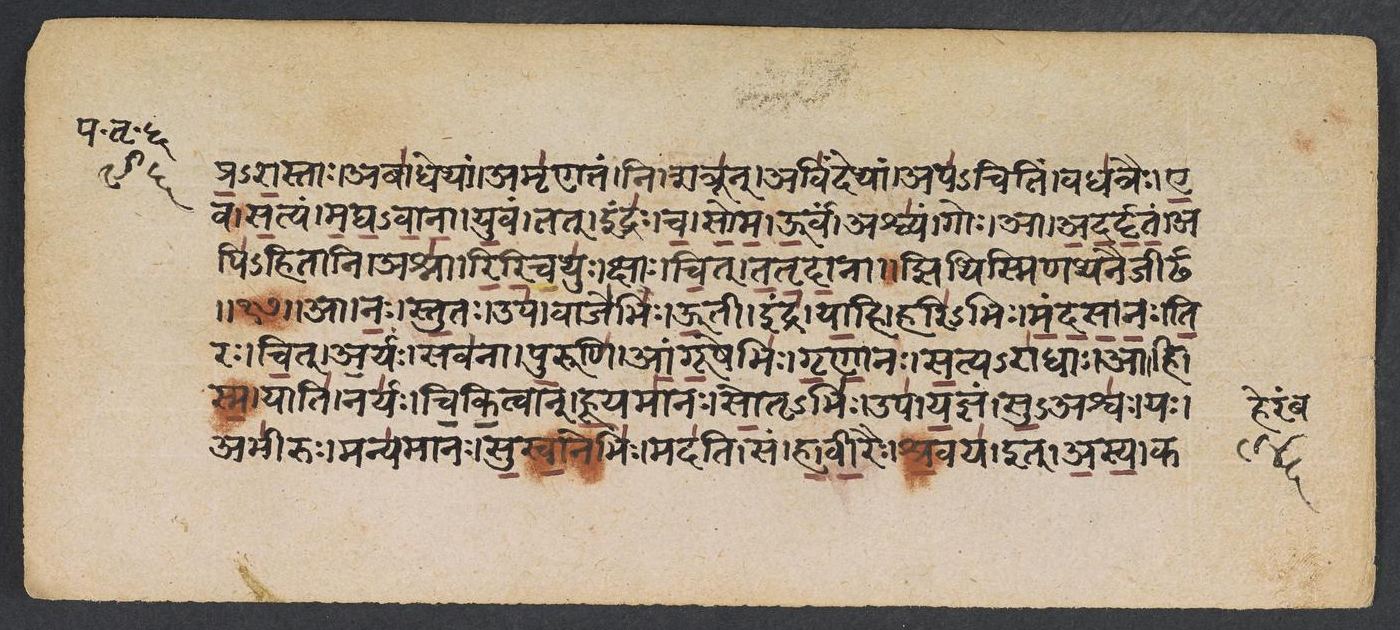
Where on the image
Penn Ms. Coll. 390 Item 41, fol. 287v (numbered 96v by the scribe) (OPenn image 288, upper leaf). Checked on the image: the Rigveda text on this page begins in RV 4.28.4 ‹-apra-śastāḥ abādhethām amṛṇatam ni›. The next page with Rigveda text, fol. 288r (numbered 97r by the scribe), begins in RV 4.29.3 ‹-karṇā vājayadhyai juṣṭām anu›. Verses 4.29.1-2 end on this page.
1ā na̍ḥ stu̱ta upa̱ vāje̍bhir ū̱tī indra̍ yā̱hi hari̍bhir mandasā̱naḥ | ti̱raś ci̍d a̱ryaḥ sava̍nā pu̱rūṇy ā̍ṅgū̱ṣebhi̍r gṛṇā̱naḥ sa̱tyarā̍dhāḥ ||
2ā hi ṣmā̱ yāti̱ narya̍ś ciki̱tvān hū̱yamā̍naḥ so̱tṛbhi̱r upa̍ ya̱jñam | svaśvo̱ yo abhī̍ru̱r manya̍mānaḥ suṣvā̱ṇebhi̱r mada̍ti̱ saṁ ha̍ vī̱raiḥ ||
Compare: Padapāṭha (word-by-word text written in the manuscript; Sansknet e-text via GRETIL)
1ā | naḥ | stutaḥ | upa | vājebhiḥ | ūtī | indra | yāhi | hari-bhiḥ | mandasānaḥ | ti raḥ | cit | aryaḥ | savanā | purūṇi | āṅgūṣebhiḥ | gṛṇānaḥ | satya-rādhāḥ
2ā | hi | sma | yāti | naryaḥ | cikitvān | hūyamānaḥ | sotṛ-bhiḥ | upa | yajñam | su-aśvaḥ | yaḥ | abhīruḥ | manyamānaḥ | su-svāṇebhiḥ | madati | sam | ha | vīraiḥ
1COME, lauded, unto us with powers and succours, O Indra, with thy Tawny Steeds; exulting, Past even the foeman's manifold libations, glorified with our hymns, true Wealth-bestower.
2Man's Friend, to this our sacrifice he cometh marking how he is called by Soma-pressers. Fearless, and conscious that his Steeds are noble, he joyeth with the Soma-pouring heroes.
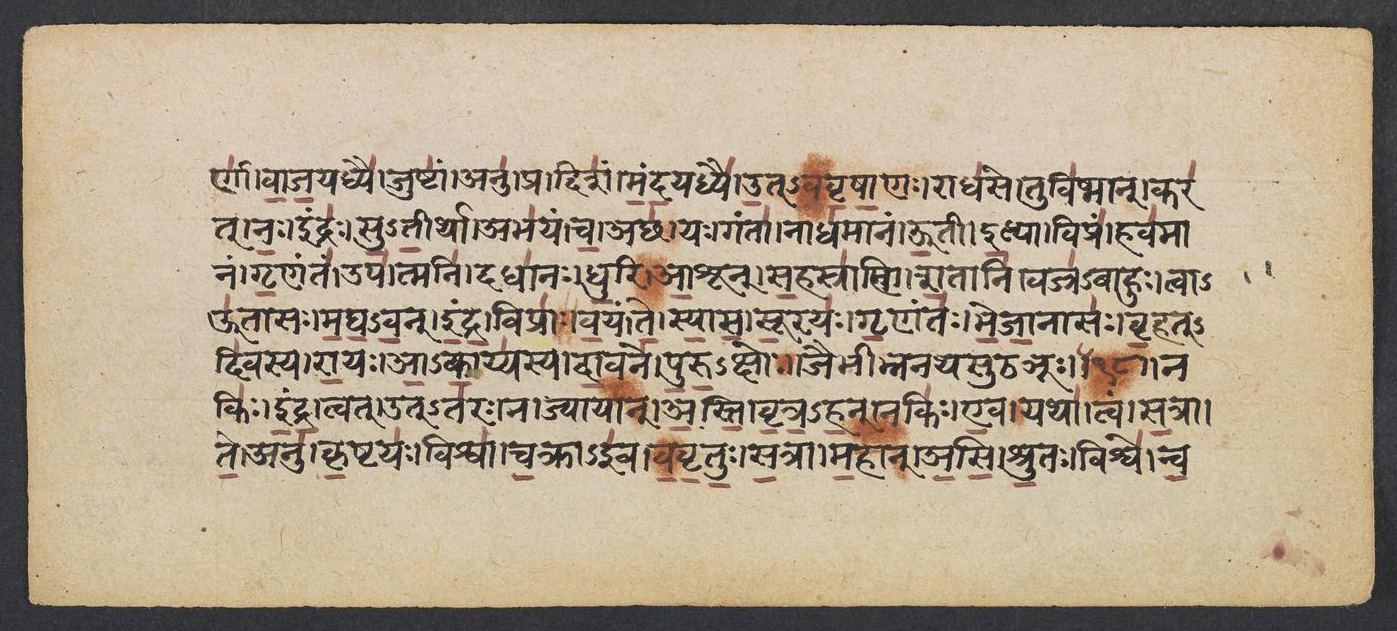
Where on the image
Penn Ms. Coll. 390 Item 41, fol. 288r (numbered 97r by the scribe) (OPenn image 288, lower leaf). Checked on the image: the Rigveda text on this page begins in RV 4.29.3 ‹-karṇā vājayadhyai juṣṭām anu›. The next page with Rigveda text, fol. 288v (numbered 97v by the scribe), begins in RV 4.30.3 ‹-cana it anā tvā›. Verses 4.29.3-5 end on this page; 4.29.3 begins on fol. 287v (numbered 96v by the scribe).
3śrā̱vayed a̍sya̱ karṇā̍ vāja̱yadhyai̱ juṣṭā̱m anu̱ pra diśa̍m manda̱yadhyai̍ | u̱dvā̱vṛ̱ṣā̱ṇo rādha̍se̱ tuvi̍ṣmā̱n kara̍n na̱ indra̍ḥ sutī̱rthābha̍yaṁ ca ||
4acchā̱ yo gantā̱ nādha̍mānam ū̱tī i̱tthā vipra̱ṁ hava̍mānaṁ gṛ̱ṇanta̍m | upa̱ tmani̱ dadhā̍no dhu̱ry ā̱3̱̍śūn sa̱hasrā̍ṇi śa̱tāni̱ vajra̍bāhuḥ ||
5tvotā̍so maghavann indra̱ viprā̍ va̱yaṁ te̍ syāma sū̱rayo̍ gṛ̱ṇanta̍ḥ | bhe̱jā̱nāso̍ bṛ̱haddi̍vasya rā̱ya ā̍kā̱yya̍sya dā̱vane̍ puru̱kṣoḥ ||
Compare: Padapāṭha (word-by-word text written in the manuscript; Sansknet e-text via GRETIL)
3śrāvaya | it | asya | karṇā | vājayadhyai | juṣṭām | anu | pra | diśam | mandayadhyai | ut-vavṛṣāṇaḥ | rādhase | tuviṣmān | karat | naḥ | indraḥ | su-tīrthā | abhayam | ca
4accha | yaḥ | gantā | nādhamānam | ūtī | itthā | vipram | havamānam | gṛṇantam | upa | tmani | dadhānaḥ | dhuri | āśūn | sahasrāṇi | śatāni | vajra-bāhuḥ
5tvāūtāsaḥ | magha-van | indra | viprāḥ | vayam | te | syāma | sūrayaḥ | gṛṇantaḥ | bhejānāsaḥ | bṛhat-divasya | rāyaḥ | ākāyyasya | dāvane | puru-kṣoḥ
3Make his ears hear, that he may show his vigour and may be joyful in the way he loveth. May mighty Indra pouring forth in bounty bestow on us good roads and perfect safety;
4He who with succour comes to his implorer, the singer here who with his song invites him; He who himself sets to the pole swift Coursers, he who hath hundreds, thousands, Thunder-wielder.
5O Indra Maghavan, by thee protected may we be thine, princes and priests and singers, Sharing the riches sent from lofty heaven which yields much food, and all desire its bounty.
Notes
- Sanskrit: Aufrecht's edition (1877) with the Vedic accents, as entered by van Nooten and Holland (GRETIL).
- English: Ralph T. H. Griffith, The Hymns of the Rigveda (1889-1892; 2nd ed. 1896-1897), from the VedaWeb digital text; OCR slips in that text were corrected against the printed 2nd edition (data/sources/rigveda/griffith_errata.json).
- Padapāṭha (edition text): Sansknet e-text via GRETIL (CC BY-NC-SA 4.0).
Cite
Sources
- Source: Penn Ms. Coll. 390 Item 41 (undated (catalogued with Penn's 18th-19th c. Vedic manuscripts)), OPenn, Public Domain Mark + Aufrecht's accented text (GRETIL) + Griffith's English (VedaWeb) (holding institution)
- Critical edition: Aufrecht (1877), accented e-text via GRETIL
← previous · → next · v cycle view · l back to library