Rigveda 4.33: To the Ribhus
Introduction
Rigveda 4.33 is a hymn of 11 verses addressed to the Ribhus. It stands in book (maṇḍala) 4, the family book of Vāmadeva. The Rigveda is the oldest collection of Sanskrit hymns, composed in the second half of the second millennium BCE and handed down orally for many centuries before it was written down.
The manuscript shown is Penn Ms. Coll. 390 Item 41 (University of Pennsylvania), an undated paper manuscript of the padapāṭha (the word-by-word recitation text, in which every word is written separately and compounds are split) of the whole Ṛgveda in Devanāgarī, 884 leaves in fascicles, 7-9 lines to the page, accents in red; this hymn stands on fol. 293v-294v. Each section below gives the verses that end on one page; the page boundaries were read on the images (the opening words of every page), not counted out. Where the manuscript is a padapāṭha (the word-by-word recitation text), the section shows Aufrecht's continuous (saṃhitā) text first and, as the edition text, the padapāṭha of the same verses, which is the form written on the page.
How was this verified? (Provenance)
Where on the image
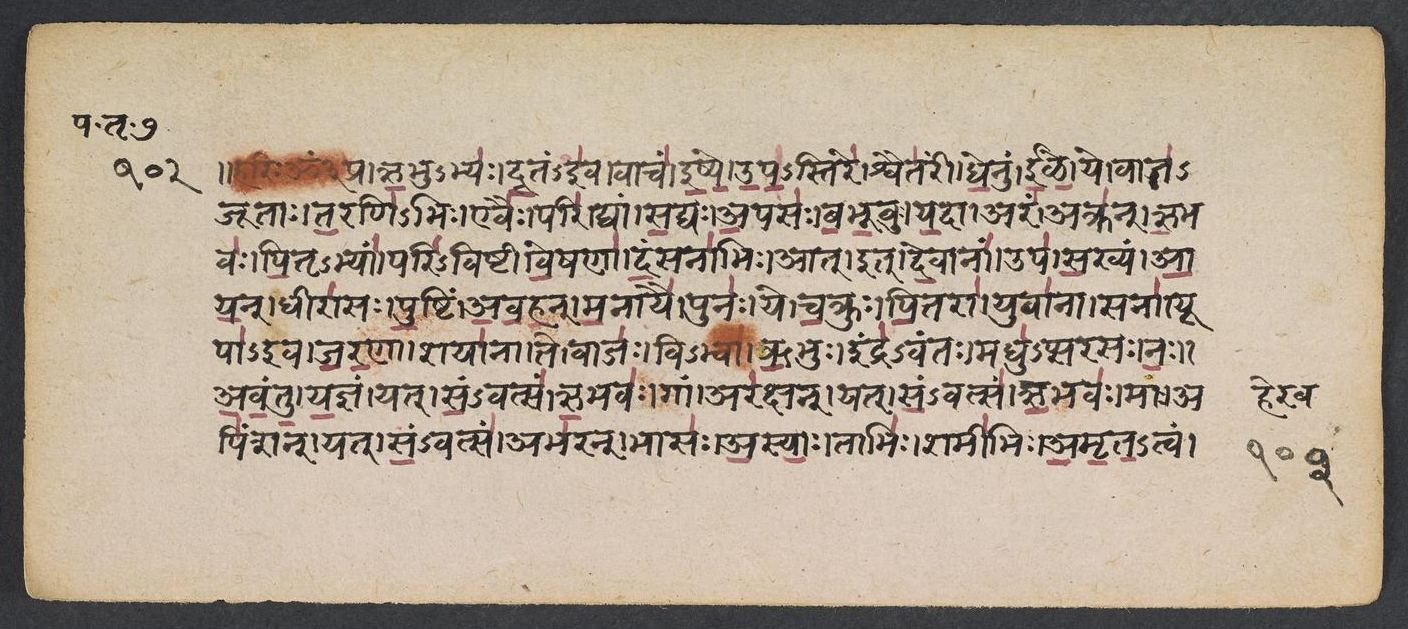
Penn Ms. Coll. 390 Item 41, fol. 293v (numbered 102v by the scribe) (OPenn image 294, upper leaf). Checked on the image: the Rigveda text on this page begins in RV 4.33.1 ‹pra ṛbhu-bhyaḥ dūtam-iva vācam›. Line 1 opens with hariḥ oṃ (stained), then 4.33.1. The next page with Rigveda text, fol. 294r (numbered 103r by the scribe), begins in RV 4.33.4 ‹āśuḥ›. Verses 4.33.1-3 end on this page.
1pra ṛ̱bhubhyo̍ dū̱tam i̍va̱ vāca̍m iṣya upa̱stire̱ śvaita̍rīṁ dhe̱num ī̍ḻe | ye vāta̍jūtās ta̱raṇi̍bhi̱r evai̱ḥ pari̱ dyāṁ sa̱dyo a̱paso̍ babhū̱vuḥ ||
2ya̱dāra̱m akra̍nn ṛ̱bhava̍ḥ pi̱tṛbhyā̱m pari̍viṣṭī ve̱ṣaṇā̍ da̱ṁsanā̍bhiḥ | ād id de̱vānā̱m upa̍ sa̱khyam ā̍ya̱n dhīrā̍saḥ pu̱ṣṭim a̍vahan ma̱nāyai̍ ||
3puna̱r ye ca̱kruḥ pi̱tarā̱ yuvā̍nā̱ sanā̱ yūpe̍va jara̱ṇā śayā̍nā | te vājo̱ vibhvā̍m̐ ṛ̱bhur indra̍vanto̱ madhu̍psaraso no 'vantu ya̱jñam ||
Compare: Padapāṭha (word-by-word text written in the manuscript; Sansknet e-text via GRETIL)
1pra | ṛbhu-bhyaḥ | dūtam-iva | vācam | iṣye | upa-stire | śvaitarīm | dhenum | īḷe | ye | vāta-jūtāḥ | taraṇi-bhiḥ | evaiḥ | pari | dyām | sadyaḥ | apasaḥ | babhūvuḥ
2yadā | aram | akran | ṛbhavaḥ | pitṛ-bhyām | pari-viṣṭī | veṣaṇā | daṃsanābhiḥ | āt | it | devānām | upa | sakhyam | āyan | dhīrāsaḥ | puṣṭim | avahan | manāyai
3punaḥ | ye | cakruḥ | pitarā | yuvānā | sanā | yūpāiva | jaraṇā | śayānā | te | vājaḥ | vi-bhvā | ṛbhuḥ | indravantaḥ | madhu-psarasaḥ | naḥ | avantu | yajñam
1I SEND my voice as herald to the R̥ibhus; I crave the white cow for the overspreading. Wind-sped, the Skillful Ones in rapid motion have in an instant compassed round the heaven.
2What time the Rbus had with care and marvels done proper service to assist their Parents, They won the friendship of the Gods; the Sages carried away the fruit of their devotion.
3May they who made their Parents, who were lying like posts that moulder, young again for ever,– May Vâja, Vibhvan, R̥ibhu, joined with Indra , protect our sacrifice, the Soma-lovers.
Where on the image
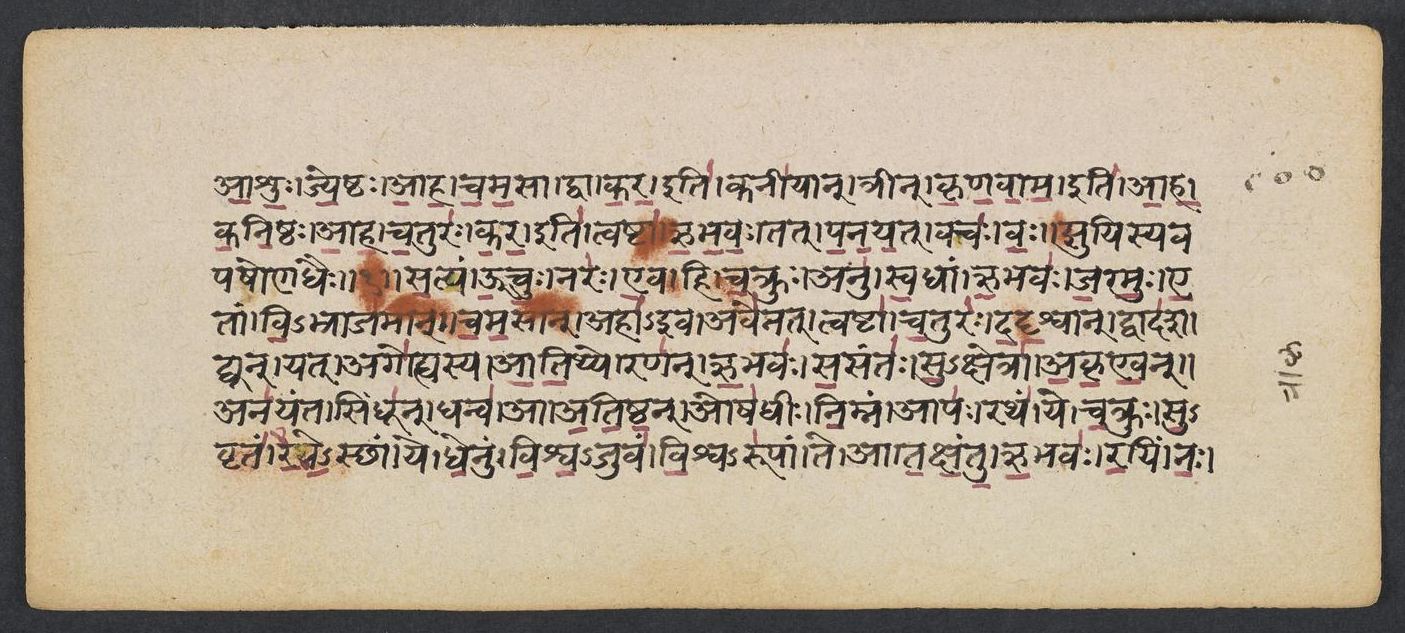
Penn Ms. Coll. 390 Item 41, fol. 294r (numbered 103r by the scribe) (OPenn image 294, lower leaf). Checked on the image: the Rigveda text on this page begins in RV 4.33.4 ‹āśuḥ›. The next page with Rigveda text, fol. 294v (numbered 103v by the scribe), begins in RV 4.33.8 ‹su-avasaḥ su-apasaḥ su-hastāḥ›. Verses 4.33.4-7 end on this page; 4.33.4 begins on fol. 293v (numbered 102v by the scribe).
4yat sa̱ṁvatsa̍m ṛ̱bhavo̱ gām ara̍kṣa̱n yat sa̱ṁvatsa̍m ṛ̱bhavo̱ mā api̍ṁśan | yat sa̱ṁvatsa̱m abha̍ra̱n bhāso̍ asyā̱s tābhi̱ḥ śamī̍bhir amṛta̱tvam ā̍śuḥ ||
5jye̱ṣṭha ā̍ha cama̱sā dvā ka̱reti̱ kanī̍yā̱n trīn kṛ̍ṇavā̱mety ā̍ha | ka̱ni̱ṣṭha ā̍ha ca̱tura̍s ka̱reti̱ tvaṣṭa̍ ṛbhava̱s tat pa̍naya̱d vaco̍ vaḥ ||
6sa̱tyam ū̍cu̱r nara̍ e̱vā hi ca̱krur anu̍ sva̱dhām ṛ̱bhavo̍ jagmur e̱tām | vi̱bhrāja̍mānām̐ś cama̱sām̐ ahe̱vāve̍na̱t tvaṣṭā̍ ca̱turo̍ dadṛ̱śvān ||
7dvāda̍śa̱ dyūn yad ago̍hyasyāti̱thye raṇa̍nn ṛ̱bhava̍ḥ sa̱santa̍ḥ | su̱kṣetrā̍kṛṇva̱nn ana̍yanta̱ sindhū̱n dhanvāti̍ṣṭha̱nn oṣa̍dhīr ni̱mnam āpa̍ḥ ||
Compare: Padapāṭha (word-by-word text written in the manuscript; Sansknet e-text via GRETIL)
4yat | sam-vatsam | ṛbhavaḥ | gām | arakṣan | yat | sam-vatsam | ṛbhavaḥ | māḥ | apiṃśan | yat | sam-vatsam | abharan | bhāsaḥ | asyāḥ | tābhiḥ | śamībhiḥ | amṛta-tvam | āśuḥ
5jyeṣṭhaḥ | āha | camasā | dvā | kara | iti | kanīyān | trīn | kṛṇavāma | iti | āha | kan iṣṭhaḥ | āha | caturaḥ | kara | iti | tvaṣṭā | ṛbhavaḥ | tat | panayat | vacaḥ | vaḥ
6satyam | ūcuḥ | naraḥ | eva | hi | cakruḥ | anu | svadhām | ṛbhavaḥ | jagmuḥ | etām | vi-bhrājamānān | camasān | ahāiva | avenat | tvaṣṭā | caturaḥ | dadṛśvān
7dvādaśa | dyūn | yat | agohyasya | ātithye | raṇan | ṛbhavaḥ | sasantaḥ | su-kṣetrā | akṛṇvan | anayanta | sindhūn | dhanva | ā | atiṣṭhan | oṣadhīḥ | nimnam | āpaḥ
4As for a year the R̥ibhus kept the Milch-cow, throughout a year fashioned and formed her body, And through a year's space still sustained her brightness, through these their labours they were made immortal.
5Two beakers let us make,– thus said the eldest. Let us make three,– this was the younger's sentence. Four beakers let us make,– thus spoke the youngest. Tvashṭar approved this rede of yours, O R̥ibhus.
6The men spake truth and even so they acted: this Godlike way of theirs the R̥ibhus followed. And Tvashṭar, when he looked on the four beakers resplendent as the day, was moved with envy.
7When for twelve days the R̥ibhus joyed reposing as guests of him who never may be hidden, lley made fair fertile fields, they brought the rivers. Plants spread o'er deserts, waters filled the hollows.
Where on the image
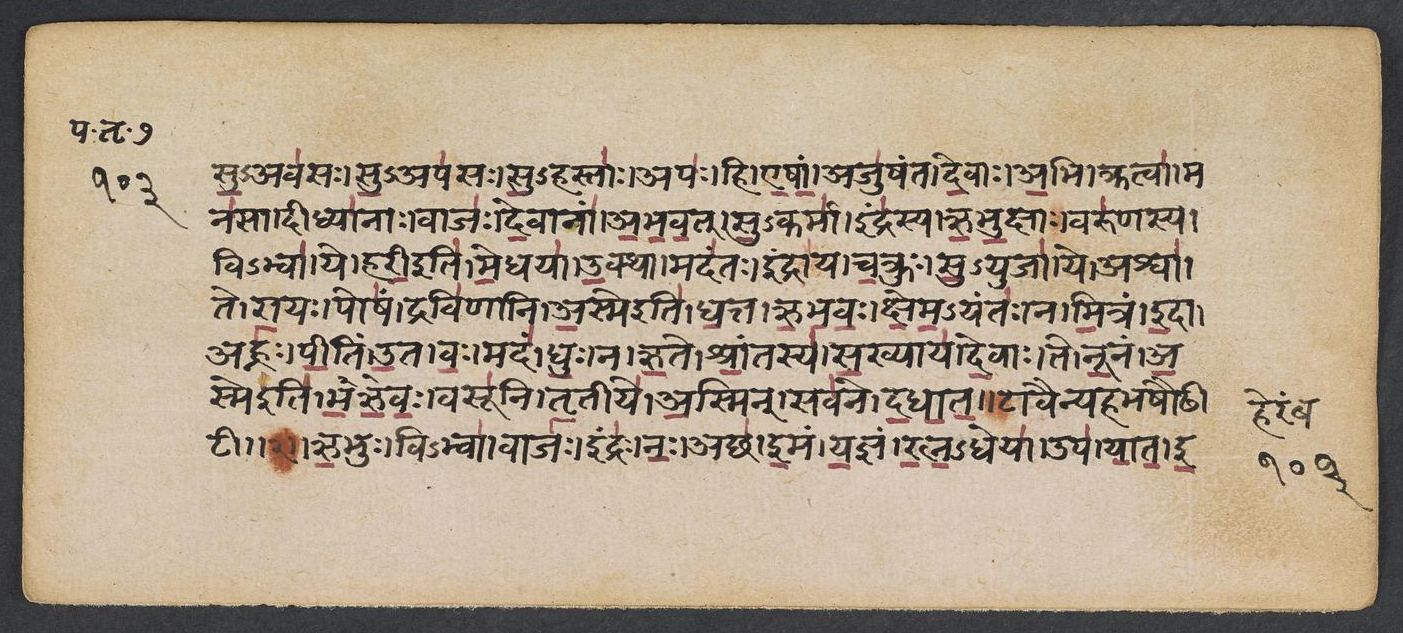
Penn Ms. Coll. 390 Item 41, fol. 294v (numbered 103v by the scribe) (OPenn image 295, upper leaf). Checked on the image: the Rigveda text on this page begins in RV 4.33.8 ‹su-avasaḥ su-apasaḥ su-hastāḥ›. The next page with Rigveda text, fol. 295r (numbered 104r by the scribe), begins in RV 4.34.1 ‹-idā hi vaḥ dhiṣaṇā›. Verses 4.33.8-11 end on this page; 4.33.8 begins on fol. 294r (numbered 103r by the scribe).
8ratha̱ṁ ye ca̱kruḥ su̱vṛta̍ṁ nare̱ṣṭhāṁ ye dhe̱nuṁ vi̍śva̱juva̍ṁ vi̱śvarū̍pām | ta ā ta̍kṣantv ṛ̱bhavo̍ ra̱yiṁ na̱ḥ svava̍sa̱ḥ svapa̍saḥ su̱hastā̍ḥ ||
9apo̱ hy e̍ṣā̱m aju̍ṣanta de̱vā a̱bhi kratvā̱ mana̍sā̱ dīdhyā̍nāḥ | vājo̍ de̱vānā̍m abhavat su̱karmendra̍sya ṛbhu̱kṣā varu̍ṇasya̱ vibhvā̍ ||
10ye harī̍ me̱dhayo̱kthā mada̍nta̱ indrā̍ya ca̱kruḥ su̱yujā̱ ye aśvā̍ | te rā̱yas poṣa̱ṁ dravi̍ṇāny a̱sme dha̱tta ṛ̍bhavaḥ kṣema̱yanto̱ na mi̱tram ||
11i̱dāhna̍ḥ pī̱tim u̱ta vo̱ mada̍ṁ dhu̱r na ṛ̱te śrā̱ntasya̍ sa̱khyāya̍ de̱vāḥ | te nū̱nam a̱sme ṛ̍bhavo̱ vasū̍ni tṛ̱tīye̍ a̱smin sava̍ne dadhāta ||
Compare: Padapāṭha (word-by-word text written in the manuscript; Sansknet e-text via GRETIL)
8ratham | ye | cakruḥ | su-vṛtam | nare--sthām | ye | dhenum | viśva-juvam | viśva-rūpām | te | ā | takṣantu | ṛbhavaḥ | rayim | naḥ | su-avasaḥ | su-apasaḥ | su-hastāḥ
9apaḥ | hi | eṣām | ajuṣanta | devāḥ | abhi | kratvā | manasā | dīdhyānāḥ | vājaḥ | devānām | abhavat | su-karmā | indrasya | ṛbhukṣāḥ | varuṇasya | vi-bhvā
10ye | harī iti | medhayā | ukthā | madantaḥ | indrāya | cakruḥ | su-yujā | ye | aśvā | te | rāyaḥ | poṣam | draviṇāni | asme iti | dhatta | ṛbhavaḥ | kṣema-yantaḥ | na | mitram
11idā | ahnaḥ pītim | uta | vaḥ | madam | dhuḥ | na | ṛte | śrāntasya | sakhyāya | devāḥ | te | nūnam | asme iti | ṛbhavaḥ | vasūni | tṛtīye | asmin | savane | dadhāta
8May they who formed the swift car, bearing Heroes, and the Cow omniform and all-impelling, Even may they form wealth for us,– the R̥ibhus, dexterous-handed, deft in work and gracious.
9So in their work the Gods had satisfaction, pondering it with thought and mental insight. The Gods' expert artificer was Vâja, Indra's R̥ibhukshan, Varuṇa's was Vibhvan.
10They who, made glad with sacrifice and praises, wrought the two Bays, his docile Steeds, for Indra,– R̥ibhus, as those who wish a friend to prosper, bestow upon us gear and growth of riches.
11This day have they set gladdening drink before you. Not without toil are Gods inclined to friendship. Therefore do ye who are so great, O R̥ibhus, vouchsafe us treasures at this third libation.
Notes
- Sanskrit: Aufrecht's edition (1877) with the Vedic accents, as entered by van Nooten and Holland (GRETIL).
- English: Ralph T. H. Griffith, The Hymns of the Rigveda (1889-1892; 2nd ed. 1896-1897), from the VedaWeb digital text; OCR slips in that text were corrected against the printed 2nd edition (data/sources/rigveda/griffith_errata.json).
- Padapāṭha (edition text): Sansknet e-text via GRETIL (CC BY-NC-SA 4.0).
Cite
Sources
- Source: Penn Ms. Coll. 390 Item 41 (undated (catalogued with Penn's 18th-19th c. Vedic manuscripts)), OPenn, Public Domain Mark + Aufrecht's accented text (GRETIL) + Griffith's English (VedaWeb) (holding institution)
- Critical edition: Aufrecht (1877), accented e-text via GRETIL
← previous · → next · v cycle view · l back to library