Rigveda 4.32: To Indra
Introduction
Rigveda 4.32 is a hymn of 24 verses addressed to Indra. It stands in book (maṇḍala) 4, the family book of Vāmadeva. The Rigveda is the oldest collection of Sanskrit hymns, composed in the second half of the second millennium BCE and handed down orally for many centuries before it was written down.
The manuscript shown is Penn Ms. Coll. 390 Item 41 (University of Pennsylvania), an undated paper manuscript of the padapāṭha (the word-by-word recitation text, in which every word is written separately and compounds are split) of the whole Ṛgveda in Devanāgarī, 884 leaves in fascicles, 7-9 lines to the page, accents in red; this hymn stands on fol. 291r-292v. Each section below gives the verses that end on one page; the page boundaries were read on the images (the opening words of every page), not counted out. Where the manuscript is a padapāṭha (the word-by-word recitation text), the section shows Aufrecht's continuous (saṃhitā) text first and, as the edition text, the padapāṭha of the same verses, which is the form written on the page.
How was this verified? (Provenance)
Where on the image
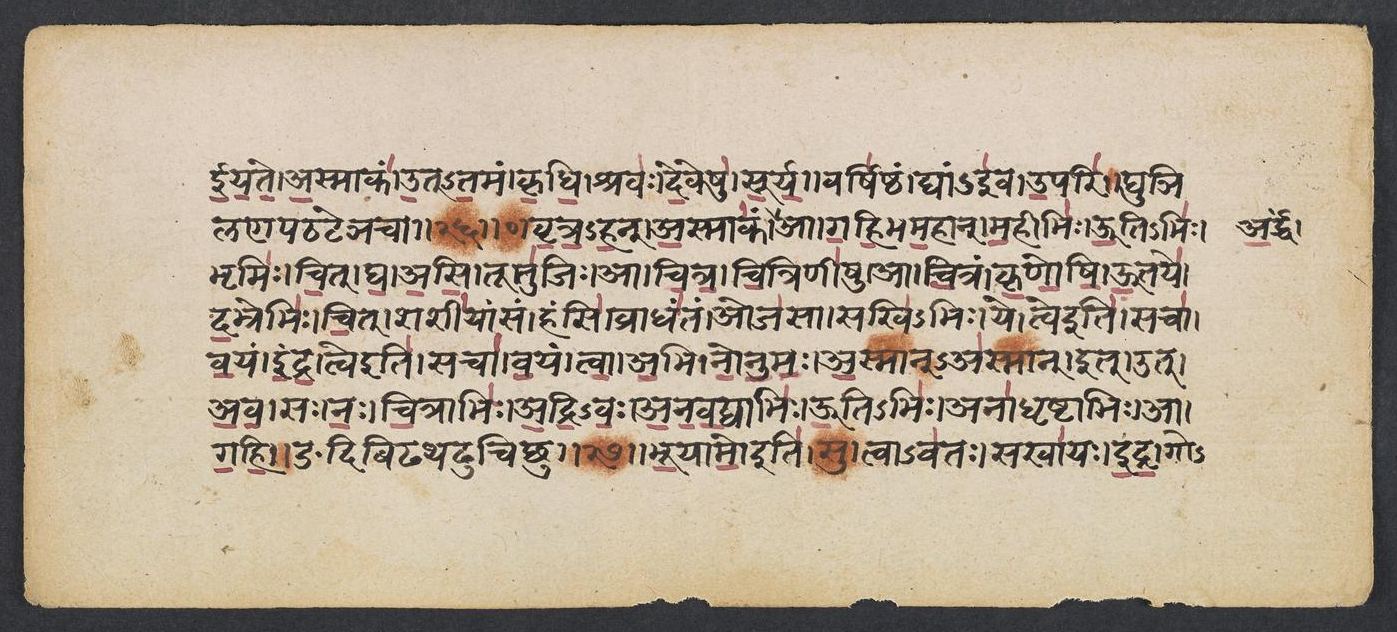
Penn Ms. Coll. 390 Item 41, fol. 291r (numbered 100r by the scribe) (OPenn image 291, lower leaf). Checked on the image: the Rigveda text on this page begins in RV 4.31.14 ‹īyate›. The next page with Rigveda text, fol. 291v (numbered 100v by the scribe), begins in RV 4.32.6 ‹-go--mataḥ yujaḥ vājāya ghṛṣvaye›. Verses 4.32.1-5 end on this page.
1ā tū na̍ indra vṛtrahann a̱smāka̍m a̱rdham ā ga̍hi | ma̱hān ma̱hībhi̍r ū̱tibhi̍ḥ ||
2bhṛmi̍ś cid ghāsi̱ tūtu̍ji̱r ā ci̍tra ci̱triṇī̱ṣv ā | ci̱traṁ kṛ̍ṇoṣy ū̱taye̍ ||
3da̱bhrebhi̍ś ci̱c chaśī̍yāṁsa̱ṁ haṁsi̱ vrādha̍nta̱m oja̍sā | sakhi̍bhi̱r ye tve sacā̍ ||
4va̱yam i̍ndra̱ tve sacā̍ va̱yaṁ tvā̱bhi no̍numaḥ | a̱smām̐-a̍smā̱m̐ id ud a̍va ||
5sa na̍ś ci̱trābhi̍r adrivo 'nava̱dyābhi̍r ū̱tibhi̍ḥ | anā̍dhṛṣṭābhi̱r ā ga̍hi ||
Compare: Padapāṭha (word-by-word text written in the manuscript; Sansknet e-text via GRETIL)
1ā | tu | naḥ | indra | vṛtra-han | asmākam | ardham | ā | gahi | mahān | mahībhiḥ | ūti-bhiḥ
2bhṛmiḥ | cit | gha | asi | tūtujiḥ | ā | citra | citriṇīṣu | ā | citram | kṛṇoṣi | ūtaye
3dabhrebhiḥ | cit | śaśīyāṃsam | haṃsi | vrādhantam | ojasā | sakhi-bhiḥ | ye | tve iti | sacā
4vayam | indra | tve iti | sacā | vayam | tvā | abhi | nonumaḥ | asmān-asmān | it | ut | ava
5saḥ | naḥ | citrābhiḥ | adri-vaḥ | anavadyābhiḥ | ūti-bhiḥ | anādhṛṣṭābhiḥ | ā | gah i
1O THOU who slewest Vr̥itra, come, O Indra, hither to our side, Mighty One with thy mighty aids.
2Swift and impetuous art thou, wondrous amid the well-dressed folk: Thou doest marvels for our help.
3Even with the weak thou smitest down him who is stronger, with thy strength The mighty, with the Friends thou hast.
4O Indra, we are close to thee; to thee we sing aloud our songs: Help and defend us, even us.
5As such, O Caster of the Stone, come with thy succours wonderful, Blameless, and irresistible.
Where on the image
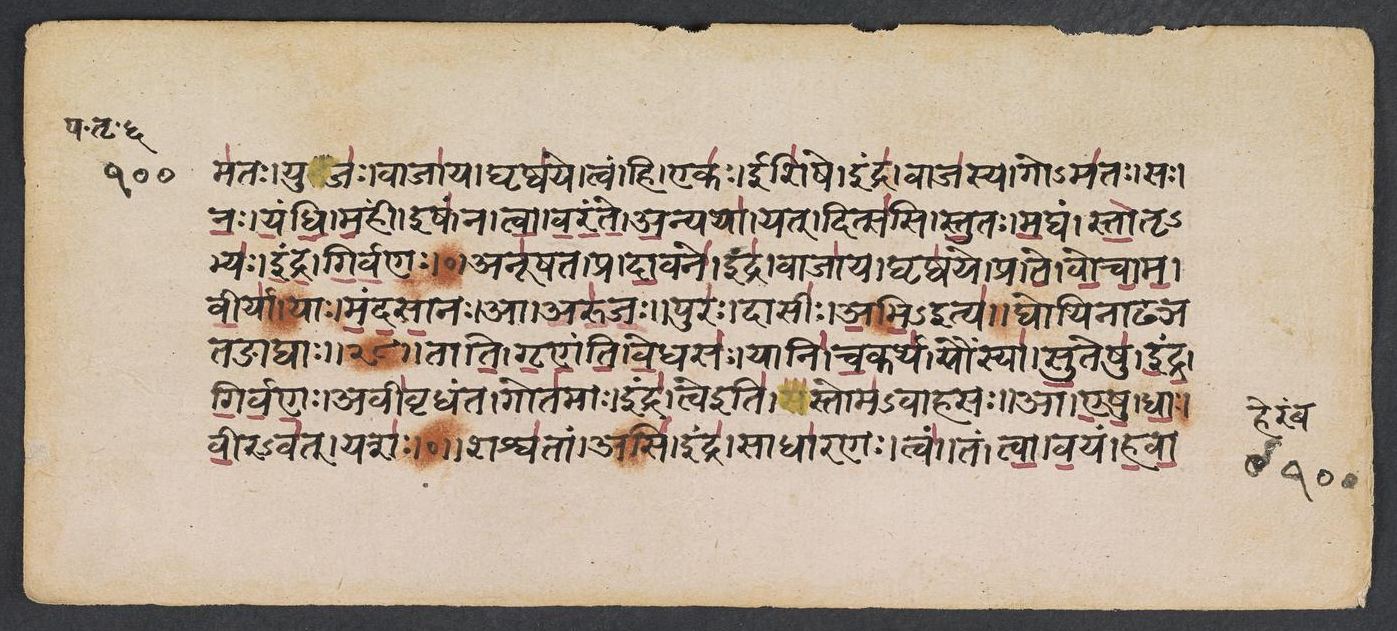
Penn Ms. Coll. 390 Item 41, fol. 291v (numbered 100v by the scribe) (OPenn image 292, upper leaf). Checked on the image: the Rigveda text on this page begins in RV 4.32.6 ‹-go--mataḥ yujaḥ vājāya ghṛṣvaye›. The next page with Rigveda text, fol. 292r (numbered 101r by the scribe), begins in RV 4.32.13 ‹-hāvāmahe›. Verses 4.32.6-12 end on this page; 4.32.6 begins on fol. 291r (numbered 100r by the scribe).
6bhū̱yāmo̱ ṣu tvāva̍ta̱ḥ sakhā̍ya indra̱ goma̍taḥ | yujo̱ vājā̍ya̱ ghṛṣva̍ye ||
7tvaṁ hy eka̱ īśi̍ṣa̱ indra̱ vāja̍sya̱ goma̍taḥ | sa no̍ yandhi ma̱hīm iṣa̍m ||
8na tvā̍ varante a̱nyathā̱ yad ditsa̍si stu̱to ma̱gham | sto̱tṛbhya̍ indra girvaṇaḥ ||
9a̱bhi tvā̱ gota̍mā gi̱rānū̍ṣata̱ pra dā̱vane̍ | indra̱ vājā̍ya̱ ghṛṣva̍ye ||
10pra te̍ vocāma vī̱ryā̱3̱̍ yā ma̍ndasā̱na āru̍jaḥ | puro̱ dāsī̍r a̱bhītya̍ ||
11tā te̍ gṛṇanti ve̱dhaso̱ yāni̍ ca̱kartha̱ pauṁsyā̍ | su̱teṣv i̍ndra girvaṇaḥ ||
12avī̍vṛdhanta̱ gota̍mā̱ indra̱ tve stoma̍vāhasaḥ | aiṣu̍ dhā vī̱rava̱d yaśa̍ḥ ||
Compare: Padapāṭha (word-by-word text written in the manuscript; Sansknet e-text via GRETIL)
6bhūyāmo iti | su | tvāvataḥ | sakhāyaḥ | indra | go--mataḥ | yujaḥ | vājāya | ghṛṣvaye
7tvam | hi | ekaḥ | īśiṣe | indra | vājasya | go--mataḥ | saḥ | naḥ | yandhi | mahīm | iṣam
8na | tvā | varante | anyathā | yat | ditsasi | stutaḥ | magham | stotṛ-bhyaḥ | indra | girvaṇaḥ
9abhi | tvā | gotamāḥ | girā | anūṣata | pra | dāvane | indra | vājāya | ghṛṣvaye
10pra | te | vocāma | vīryā | yāḥ | mandasanaḥ | ā | arujaḥ | puraḥ | dāsīḥ | abhi-itya
11tā | te | gṛṇanti | vedhasaḥ | yāni | cakartha | paiṃsyā | suteṣu | indra | girvaṇaḥ
12avīvṛdhanta | gotamāḥ | indra | tve iti | stoma-vāhasaḥ | ā | eṣu | dhāḥ | vīra-vat | yaśaḥ
6May we be friends of one like thee, O Indra, with the wealth of kine, Comrades for lively energy.
7For thou, O Indra, art alone the Lord of strength that comes from kine So grant thou us abundant food.
8They turn thee not another way, when, lauded, Lover of the Song, Thou wilt give wealth to those who praise.
9The Gotamas have sung their song of praise to thee that thou mayst give, Indra, for lively energy.
10We will declare thy hero deeds, what Disa forts thou brakest down, Attacking them in rapturous joy.
11The sages sing those manly deeds which, Indra, Lover of the Song, Thou wrougbtest when the Soma flowed.
12Indra, the Gotamas who bring thee praises have grown strong by thee. Give them renown with hero sons.
Where on the image
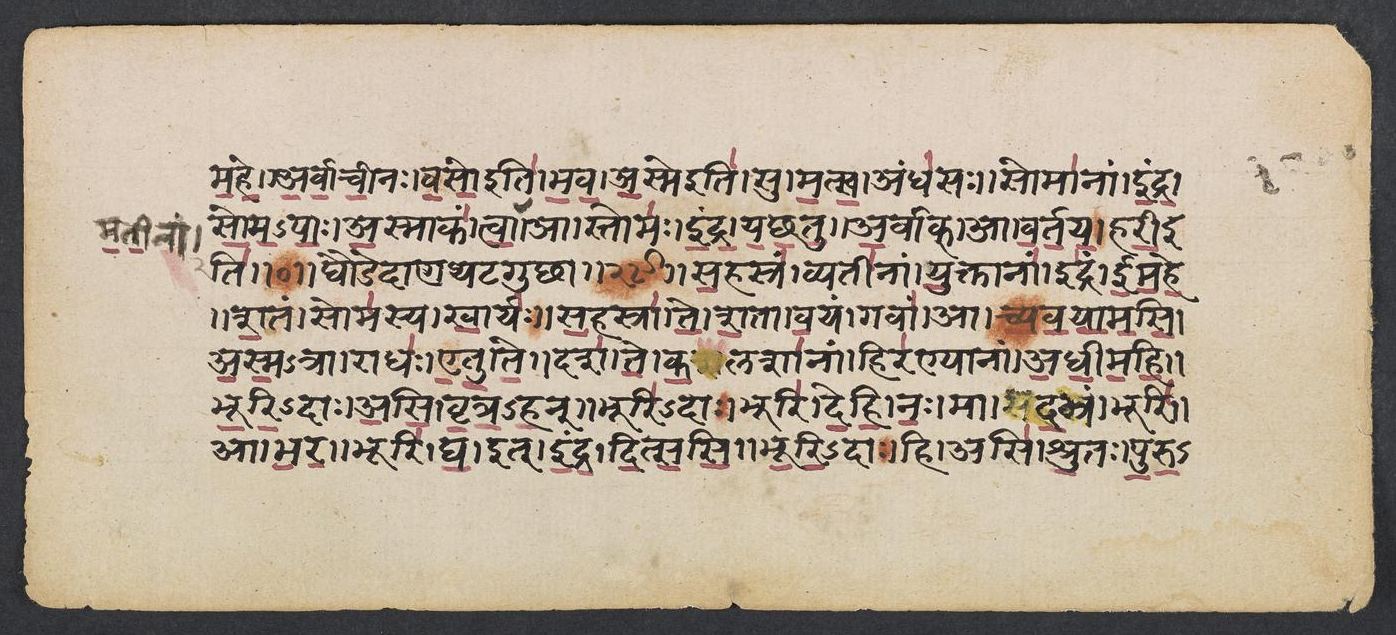
Penn Ms. Coll. 390 Item 41, fol. 292r (numbered 101r by the scribe) (OPenn image 292, lower leaf). Checked on the image: the Rigveda text on this page begins in RV 4.32.13 ‹-hāvāmahe›. The next page with Rigveda text, fol. 292v (numbered 101v by the scribe), begins in RV 4.32.21 ‹-puru-trā śūra vṛtra-han ā›. Verses 4.32.13-20 end on this page; 4.32.13 begins on fol. 291v (numbered 100v by the scribe).
13yac ci̱d dhi śaśva̍tā̱m asīndra̱ sādhā̍raṇa̱s tvam | taṁ tvā̍ va̱yaṁ ha̍vāmahe ||
14a̱rvā̱cī̱no va̍so bhavā̱sme su ma̱tsvāndha̍saḥ | somā̍nām indra somapāḥ ||
15a̱smāka̍ṁ tvā matī̱nām ā stoma̍ indra yacchatu | a̱rvāg ā va̍rtayā̱ harī̍ ||
16pu̱ro̱ḻāśa̍ṁ ca no̱ ghaso̍ jo̱ṣayā̍se̱ gira̍ś ca naḥ | va̱dhū̱yur i̍va̱ yoṣa̍ṇām ||
17sa̱hasra̱ṁ vyatī̍nāṁ yu̱ktānā̱m indra̍m īmahe | śa̱taṁ soma̍sya khā̱rya̍ḥ ||
18sa̱hasrā̍ te śa̱tā va̱yaṁ gavā̱m ā cyā̍vayāmasi | a̱sma̱trā rādha̍ etu te ||
19daśa̍ te ka̱laśā̍nā̱ṁ hira̍ṇyānām adhīmahi | bhū̱ri̱dā a̍si vṛtrahan ||
20bhūri̍dā̱ bhūri̍ dehi no̱ mā da̱bhram bhūry ā bha̍ra | bhūri̱ ghed i̍ndra ditsasi ||
Compare: Padapāṭha (word-by-word text written in the manuscript; Sansknet e-text via GRETIL)
13yat | cit | hi | śaśvatām | asi | indra | sādhāraṇaḥ | tvam | tam | tvā | vayam | hāvāmahe
14arvācīnaḥ | vaso iti | bhava | asme iti | su | matsva | andhasaḥ | somānām | indra | soma-pāḥ
15asmākam | tvā | matīnām | ā | stomaḥ | indra | yacchatu | arvāk | ā | vartaya | harī iti
16puroḷāsam | ca | naḥ | ghasaḥ | joṣayāse | giraḥ | ca | naḥ | vadhūyuḥ-iva | yoṣaṇām
17sahasram | vyatīnām | yuktānām | indram | īmahe | śatam | somasya | khāryaḥ
18sahasrā | te | śatā | vayam | gavām | ā | cyāvayāmasi | asma-trā | rādhaḥ | etu | te
19daśa | te | kalaśānām | hiraṇyānām | adhīmahi | bhūri-dāḥ | asi | vṛtra-han
20bhūri-dāḥ | bhūri | dehi | naḥ | mā | dabhram | bhūri | ā | bhara | bhūri | gha | it | indra | ditsasi
13For, Indra, verily thou art the general treasure even of all . Thee, therefore, do we invocate.
14Excellent Indra, turn to us: glad thee among us with the juice Of Somas, Soma-drinker thou.
15May praise from us who think Qn thee, O Indra, bring thee near to us. Turn thy two Bay Steeds hitherward.
16Eat of our sacrificial cake: rejoice thee in the songs we sing. Even as a lover in his bride.
17To Indra for a thousand steeds well-trained and fleet of foot we pray, And hundred jars of Soma juice.
18We make a hundred of thy kine, yea, and a thousand, hasten nigh: So let thy bounty come to us.
19We have obtained, a gift from thee, ten water-ewers wrought of gold: Thou, Vr̥itra-slayer, givest much.
20A bounteous Giver, give us much, bring much and not a trifling gift: Much, Indra, wilt thou fain bestow.
Where on the image
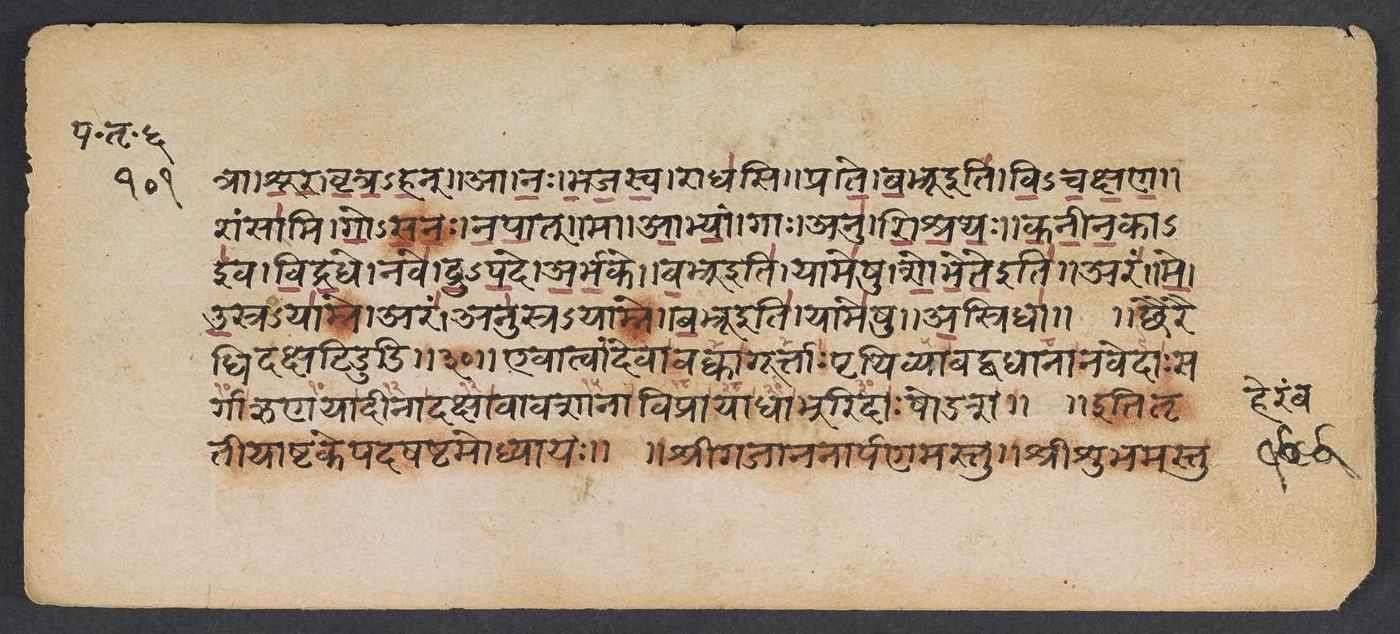
Penn Ms. Coll. 390 Item 41, fol. 292v (numbered 101v by the scribe) (OPenn image 293, upper leaf). Checked on the image: the Rigveda text on this page begins in RV 4.32.21 ‹-puru-trā śūra vṛtra-han ā›. The next page with Rigveda text, fol. 293v (numbered 102v by the scribe), begins in RV 4.33.1 ‹pra ṛbhu-bhyaḥ dūtam-iva vācam›. Verses 4.32.21-24 end on this page; 4.32.21 begins on fol. 292r (numbered 101r by the scribe).
21bhū̱ri̱dā hy asi̍ śru̱taḥ pu̍ru̱trā śū̍ra vṛtrahan | ā no̍ bhajasva̱ rādha̍si ||
22pra te̍ ba̱bhrū vi̍cakṣaṇa̱ śaṁsā̍mi goṣaṇo napāt | mābhyā̱ṁ gā anu̍ śiśrathaḥ ||
23ka̱nī̱na̱keva̍ vidra̱dhe nave̍ drupa̱de a̍rbha̱ke | ba̱bhrū yāme̍ṣu śobhete ||
24ara̍m ma u̱srayā̱mṇe 'ra̱m anu̍srayāmṇe | ba̱bhrū yāme̍ṣv a̱sridhā̍ ||
Compare: Padapāṭha (word-by-word text written in the manuscript; Sansknet e-text via GRETIL)
21bhūri-dāḥ | hi | asi | śrutaḥ | puru-trā | śūra | vṛtra-han | ā | naḥ | bhajasva | rādhasi
22pra | te | babhrū iti | vi-cakṣaṇa | śaṃsāmi | go--saṇaḥ | napāt | mā | ābhyām | gāḥ | anu | śiśrathaḥ
23kanīnakāiva | vidradhe | nave | dru-pade | arbhake | babhrū iti | yāmeṣu | śobheteiti
24aram | me | usra-yāmṇe | aram | anusra-yāmṇe | babhrū iti | yāmeṣu | asridhā
21O Vr̥itra-slayer, thou art famed in many a place as bountiful Hero, thy bounty let us share.
22I praise thy pair of Tawny Steeds, wise Son of him who giveth kine Terrify not the cows with these.
23Like two slight images of girls, unrobed, upon a new-wrought post, So shine thy Bay Steeds in their course.
24For me the Bays are ready when I start, or start not, with the dawn, Innocuous in the ways they take.
Notes
- Sanskrit: Aufrecht's edition (1877) with the Vedic accents, as entered by van Nooten and Holland (GRETIL).
- English: Ralph T. H. Griffith, The Hymns of the Rigveda (1889-1892; 2nd ed. 1896-1897), from the VedaWeb digital text; OCR slips in that text were corrected against the printed 2nd edition (data/sources/rigveda/griffith_errata.json).
- Padapāṭha (edition text): Sansknet e-text via GRETIL (CC BY-NC-SA 4.0).
Cite
Sources
- Source: Penn Ms. Coll. 390 Item 41 (undated (catalogued with Penn's 18th-19th c. Vedic manuscripts)), OPenn, Public Domain Mark + Aufrecht's accented text (GRETIL) + Griffith's English (VedaWeb) (holding institution)
- Critical edition: Aufrecht (1877), accented e-text via GRETIL
← previous · → next · v cycle view · l back to library