Rigveda 4.36: To the Ribhus
Introduction
Rigveda 4.36 is a hymn of 9 verses addressed to the Ribhus. It stands in book (maṇḍala) 4, the family book of Vāmadeva. The Rigveda is the oldest collection of Sanskrit hymns, composed in the second half of the second millennium BCE and handed down orally for many centuries before it was written down.
The manuscript shown is Penn Ms. Coll. 390 Item 41 (University of Pennsylvania), an undated paper manuscript of the padapāṭha (the word-by-word recitation text, in which every word is written separately and compounds are split) of the whole Ṛgveda in Devanāgarī, 884 leaves in fascicles, 7-9 lines to the page, accents in red; this hymn stands on fol. 297r-298v. Each section below gives the verses that end on one page; the page boundaries were read on the images (the opening words of every page), not counted out. Where the manuscript is a padapāṭha (the word-by-word recitation text), the section shows Aufrecht's continuous (saṃhitā) text first and, as the edition text, the padapāṭha of the same verses, which is the form written on the page.
How was this verified? (Provenance)
Where on the image
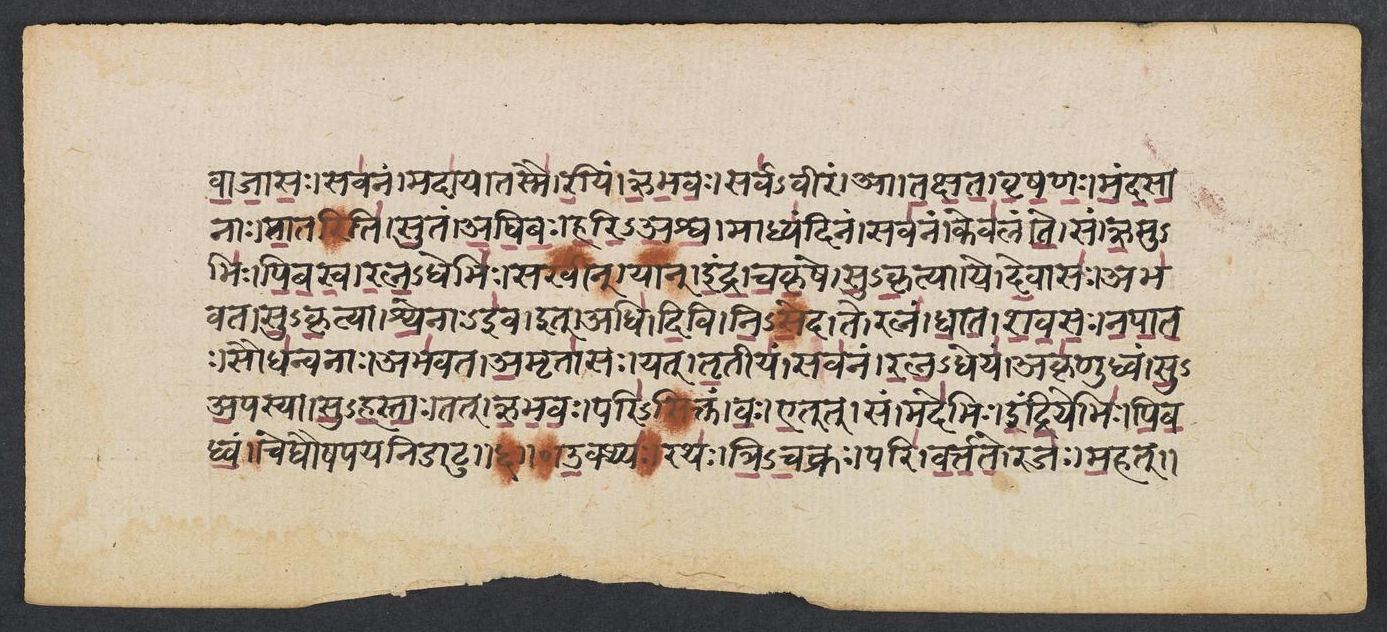
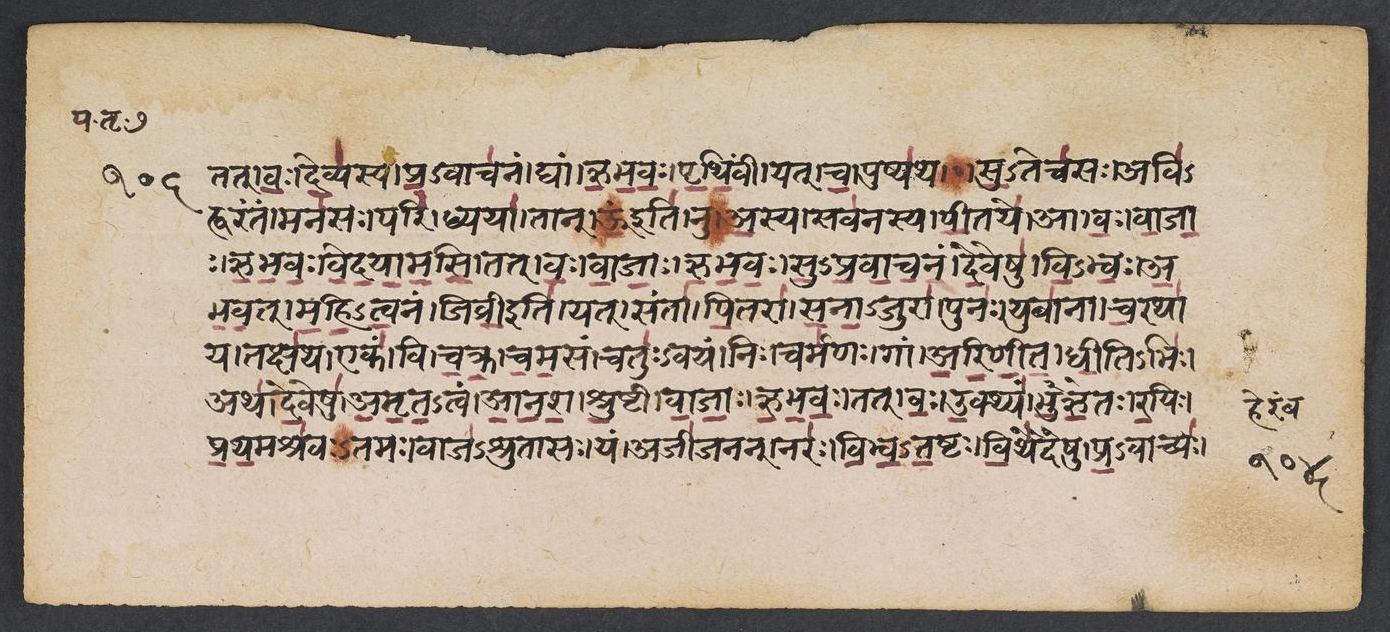
Penn Ms. Coll. 390 Item 41, fol. 297v (numbered 106v by the scribe) (OPenn image 298, upper leaf). Checked on the image: the Rigveda text on this page begins in RV 4.36.1 ‹-mahat tat vaḥ devyasya›. The next page with Rigveda text, fol. 298r (numbered 107r by the scribe), begins in RV 4.36.5 ‹yam devāsaḥ avatha saḥ›. Verses 4.36.1-4 end on this page; 4.36.1 begins on fol. 297r (numbered 106r by the scribe).
1a̱na̱śvo jā̱to a̍nabhī̱śur u̱kthyo̱3̱̍ ratha̍s trica̱kraḥ pari̍ vartate̱ raja̍ḥ | ma̱hat tad vo̍ de̱vya̍sya pra̱vāca̍na̱ṁ dyām ṛ̍bhavaḥ pṛthi̱vīṁ yac ca̱ puṣya̍tha ||
2ratha̱ṁ ye ca̱kruḥ su̱vṛta̍ṁ su̱ceta̱so 'vi̍hvaranta̱m mana̍sa̱s pari̱ dhyayā̍ | tām̐ ū̱ nv a1̱̍sya sava̍nasya pī̱taya̱ ā vo̍ vājā ṛbhavo vedayāmasi ||
3tad vo̍ vājā ṛbhavaḥ supravāca̱naṁ de̱veṣu̍ vibhvo abhavan mahitva̱nam | jivrī̱ yat santā̍ pi̱tarā̍ sanā̱jurā̱ puna̱r yuvā̍nā ca̱rathā̍ya̱ takṣa̍tha ||
4eka̱ṁ vi ca̍kra cama̱saṁ catu̍rvaya̱ṁ niś carma̍ṇo̱ gām a̍riṇīta dhī̱tibhi̍ḥ | athā̍ de̱veṣv a̍mṛta̱tvam ā̍naśa śru̱ṣṭī vā̍jā ṛbhava̱s tad va̍ u̱kthya̍m ||
Compare: Padapāṭha (word-by-word text written in the manuscript; Sansknet e-text via GRETIL)
1anaśvaḥ | jātaḥ | anabhīśuḥ | ukthyaḥ | rathaḥ | tri-cakraḥ | pari | vartate | rajaḥ | mahat | tat | vaḥ | devyasya | pra-vācanam | dyām | ṛbhavaḥ | pṛthivīm | yat | ca | puṣyatha
2ratham | ye | cakruḥ | su-vṛtam | su-cetasaḥ | avi-hvarantam | manasaḥ | pari | dhyayā | tān | oṃ iti | nu | asya | savanasya | pītaye | ā | vaḥ | vājāḥ | ṛbhavaḥ | vedayāmasi
3tat | vaḥ | vājāḥ | ṛbhavaḥ | su-pravācanam | deveṣu | vi-bhvaḥ | abhavat | mah i-tvanam | jivrī iti | yat | santā | pitarā | sanājurā | punaḥ | yuvānā | carathāya | takṣatha
4ekam | vi | cakra | camasam | catuḥ-vayam | niḥ | carmaṇaḥ | gām | ariṇīta | dhīti-bhiḥ | atha | deveṣu | amṛta-tvam | ānaśa | śruśṭī | vājāḥ | ṛbhavaḥ | tat | vaḥ | ukthyam
1THia car that was not made for horses or for reins, three-wheeled, worthy of lauds, rolls round the firmament. That is the great announcement of your Deity, that, O ye R̥ibhus, ye sustain the earth and heaven.
2Ye Sapient Ones who made the lightly-rolling car out of your mind, by thought, the car that never errs, You, being such, to drink of this drinkoffering, you, O ye Vâjas, and ye R̥ibhus, we invoke.
3O Vâjas, R̥ibhus, reaching far, among the Gods this was your exaltation gloriously declared, In that your aged Parents, worn with length of days, ye wrought again to youth so that they moved at will.
4The chalice that was single ye have made fourfold, and by your wisdom brought the Cow forth from the hide. So quickly, mid the Gods, ye gained immortal life. Vâjas and R̥ibhus, your great work must be extolled.
Where on the image
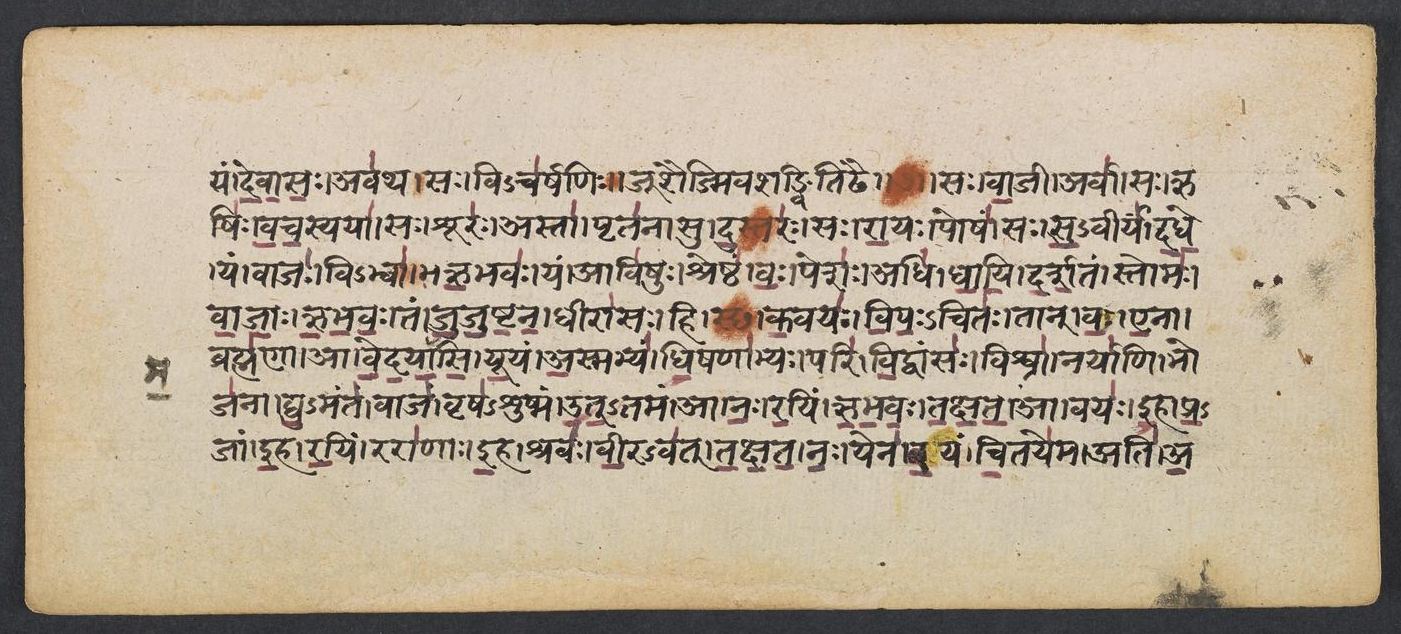
Penn Ms. Coll. 390 Item 41, fol. 298r (numbered 107r by the scribe) (OPenn image 298, lower leaf). Checked on the image: the Rigveda text on this page begins in RV 4.36.5 ‹yam devāsaḥ avatha saḥ›. The next page with Rigveda text, fol. 298v (numbered 107v by the scribe), begins in RV 4.36.9 ‹anyān tam vājam citram›. Verses 4.36.5-8 end on this page; 4.36.5 begins on fol. 297v (numbered 106v by the scribe).
5ṛ̱bhu̱to ra̱yiḥ pra̍tha̱maśra̍vastamo̱ vāja̍śrutāso̱ yam ajī̍jana̱n nara̍ḥ | vi̱bhva̱ta̱ṣṭo vi̱dathe̍ṣu pra̱vācyo̱ yaṁ de̍vā̱so 'va̍thā̱ sa vica̍rṣaṇiḥ ||
6sa vā̱jy arvā̱ sa ṛṣi̍r vaca̱syayā̱ sa śūro̱ astā̱ pṛta̍nāsu du̱ṣṭara̍ḥ | sa rā̱yas poṣa̱ṁ sa su̱vīrya̍ṁ dadhe̱ yaṁ vājo̱ vibhvā̍m̐ ṛ̱bhavo̱ yam āvi̍ṣuḥ ||
7śreṣṭha̍ṁ va̱ḥ peśo̱ adhi̍ dhāyi darśa̱taṁ stomo̍ vājā ṛbhava̱s taṁ ju̍juṣṭana | dhīrā̍so̱ hi ṣṭhā ka̱vayo̍ vipa̱ścita̱s tān va̍ e̱nā brahma̱ṇā ve̍dayāmasi ||
8yū̱yam a̱smabhya̍ṁ dhi̱ṣaṇā̍bhya̱s pari̍ vi̱dvāṁso̱ viśvā̱ naryā̍ṇi̱ bhoja̍nā | dyu̱manta̱ṁ vāja̱ṁ vṛṣa̍śuṣmam utta̱mam ā no̍ ra̱yim ṛ̍bhavas takṣa̱tā vaya̍ḥ ||
Compare: Padapāṭha (word-by-word text written in the manuscript; Sansknet e-text via GRETIL)
5ṛbhutaḥ | rayiḥ | prathamaśravaḥ-tamaḥ | vāja-śrutāsaḥ | yam | ajījanan | naraḥ | vibhva-taṣṭaḥ | vidatheṣu | pra-vācyaḥ | yam | devāsaḥ | avatha | saḥ | vi-carṣaṇiḥ
6saḥ | vājī | arvā | saḥ | ṛṣiḥ | vacasyayā | saḥ | śūraḥ | astā | pṛtanāsu | dustaraḥ | saḥ | rāyaḥ | poṣam | saḥ | su-vīryam | dadhe | yam | vājaḥ | vi-bhvā | ṛbhavaḥ | yam | āviṣuḥ
7śreṣṭham | vaḥ | peśaḥ | adhi | dhāyi | darśatam | stomaḥ | vājāḥ | ṛbhavaḥ | tam | jujuṣṭana | dhīrāsaḥ | hi | stha | kavayaḥ | vipaḥ-citaḥ | tān | vaḥ | enā | brahmaṇā | ā | vedayāmasi
8yūyam | asmabhyam | dhiṣaṇābhyaḥ | pari | vidvāṃsaḥ | viśvā | naryāṇi | bhojanā | dyu-mantam | vājam | vṛṣa-śuṣmam | ut-tamam | ā | naḥ | rayim | ṛbhavaḥ | takṣata | ā | vayaḥ
5Wealth from the R̥ibhus is most glorious in renown, that which the Heroes, famed for vigour, have produced. In synods must be sung the car which Vibhvan wrought: that which ye favour, Gods! is famed among mankind.
6Strong is the steed, the man a sage in eloquence, the bowman is a hero hard to beat in fight, Great store of wealth and manly power hath he obtained whom Vâja, Vibhvan, R̥ibhus have looked kindly on.
7To you hath been assigned the fairest ornament, the hymn of praise: Vâjas and R̥ibhus, joy therein; For ye have lore and wisdom and poetic skill: as such, with this our prayer we call on you to come.
8According to the wishes of our hearts may ye, who have full knowledge of all the delights of men, Fashion for us, O R̥ibhus, power and splendid wealth, rich in high courage, excellent, and vital strength.
Where on the image
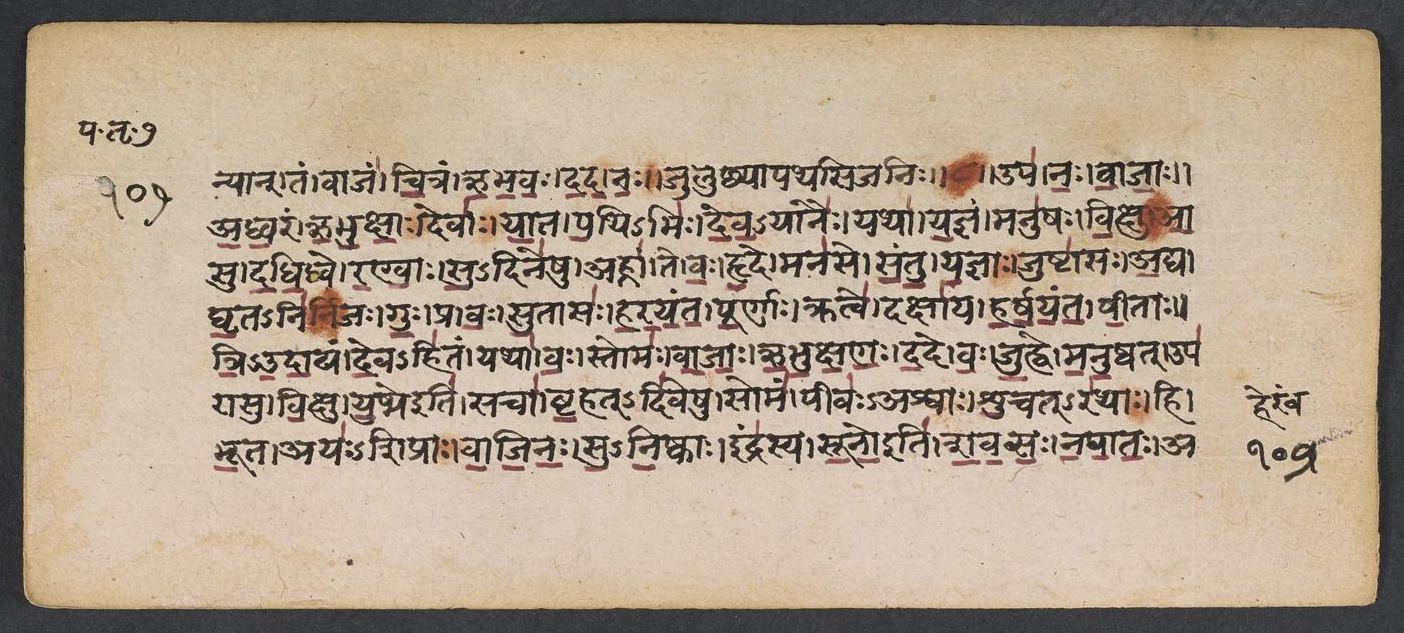
Penn Ms. Coll. 390 Item 41, fol. 298v (numbered 107v by the scribe) (OPenn image 299, upper leaf). Checked on the image: the Rigveda text on this page begins in RV 4.36.9 ‹anyān tam vājam citram›. The next page with Rigveda text, fol. 299r (numbered 108r by the scribe), begins in RV 4.37.4 ‹-anu vaḥ ceti agriyam›. Verse 4.36.9 ends on this page; 4.36.9 begins on fol. 298r (numbered 107r by the scribe).
9i̱ha pra̱jām i̱ha ra̱yiṁ rarā̍ṇā i̱ha śravo̍ vī̱rava̍t takṣatā naḥ | yena̍ va̱yaṁ ci̱taye̱māty a̱nyān taṁ vāja̍ṁ ci̱tram ṛ̍bhavo dadā naḥ ||
Compare: Padapāṭha (word-by-word text written in the manuscript; Sansknet e-text via GRETIL)
9iha | pra-jām | iha | rayim | rarāṇāḥ | iha | śravaḥ | vīra-vat | takṣata | naḥ | yena | vayam | citayema | ati | anyān | tam | vājam | citram | ṛbhavaḥ | dada | naḥ
9Bestowing on us here riches and offspring, here fashion fame for us befitting heroes. Vouchsafe us wealth of splendid sort, O R̥ibhus, that we may make us more renowned than others.
Notes
- Sanskrit: Aufrecht's edition (1877) with the Vedic accents, as entered by van Nooten and Holland (GRETIL).
- English: Ralph T. H. Griffith, The Hymns of the Rigveda (1889-1892; 2nd ed. 1896-1897), from the VedaWeb digital text; OCR slips in that text were corrected against the printed 2nd edition (data/sources/rigveda/griffith_errata.json).
- Padapāṭha (edition text): Sansknet e-text via GRETIL (CC BY-NC-SA 4.0).
Cite
Sources
- Source: Penn Ms. Coll. 390 Item 41 (undated (catalogued with Penn's 18th-19th c. Vedic manuscripts)), OPenn, Public Domain Mark + Aufrecht's accented text (GRETIL) + Griffith's English (VedaWeb) (holding institution)
- Critical edition: Aufrecht (1877), accented e-text via GRETIL
← previous · → next · v cycle view · l back to library