Rigveda 4.37: To the Ribhus
Introduction
Rigveda 4.37 is a hymn of 8 verses addressed to the Ribhus. It stands in book (maṇḍala) 4, the family book of Vāmadeva. The Rigveda is the oldest collection of Sanskrit hymns, composed in the second half of the second millennium BCE and handed down orally for many centuries before it was written down.
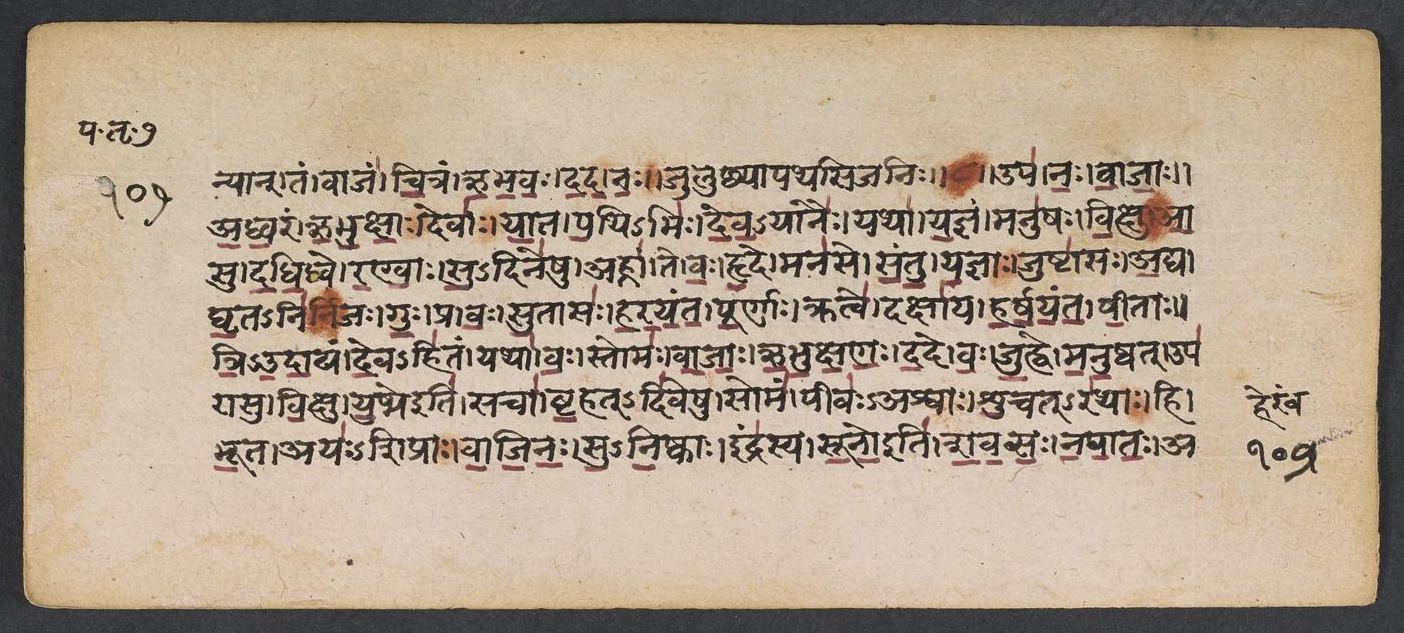
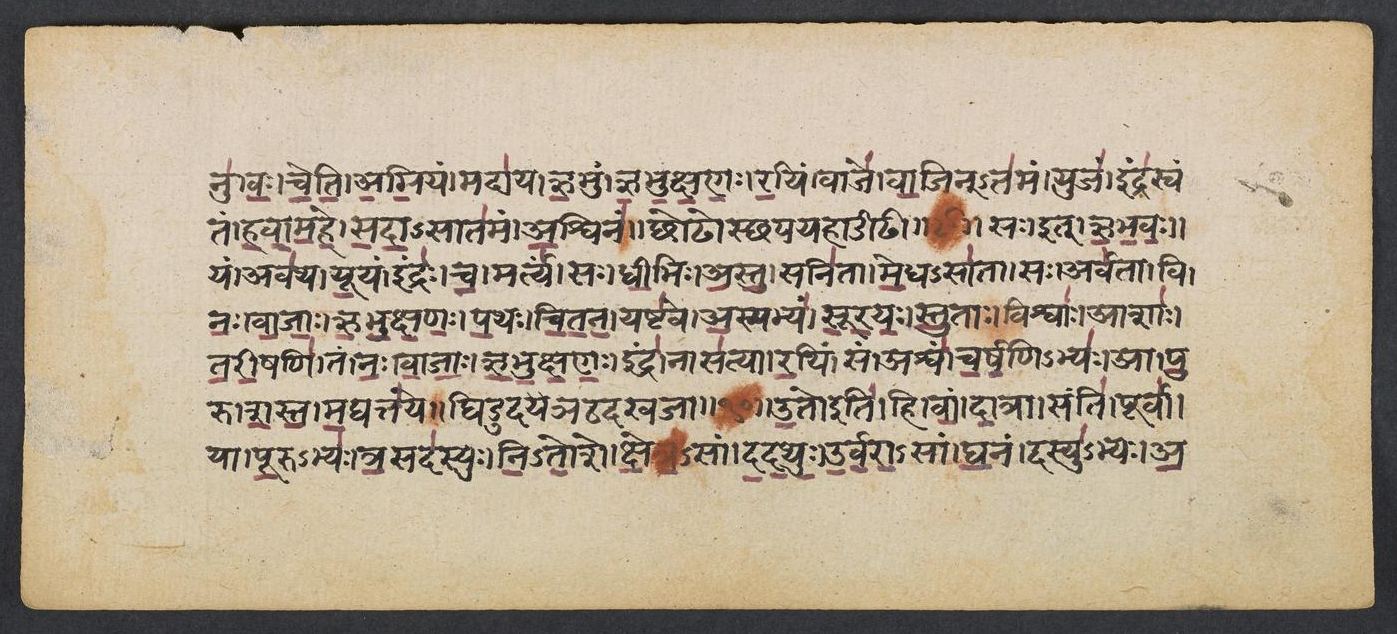
The manuscript shown is Penn Ms. Coll. 390 Item 41 (University of Pennsylvania), an undated paper manuscript of the padapāṭha (the word-by-word recitation text, in which every word is written separately and compounds are split) of the whole Ṛgveda in Devanāgarī, 884 leaves in fascicles, 7-9 lines to the page, accents in red; this hymn stands on fol. 298v-299r. Each section below gives the verses that end on one page; the page boundaries were read on the images (the opening words of every page), not counted out. Where the manuscript is a padapāṭha (the word-by-word recitation text), the section shows Aufrecht's continuous (saṃhitā) text first and, as the edition text, the padapāṭha of the same verses, which is the form written on the page.
How was this verified? (Provenance)
Where on the image
Penn Ms. Coll. 390 Item 41, fol. 298v (numbered 107v by the scribe) (OPenn image 299, upper leaf). Checked on the image: the Rigveda text on this page begins in RV 4.36.9 ‹anyān tam vājam citram›. The next page with Rigveda text, fol. 299r (numbered 108r by the scribe), begins in RV 4.37.4 ‹-anu vaḥ ceti agriyam›. Verses 4.37.1-3 end on this page.
1upa̍ no vājā adhva̱ram ṛ̍bhukṣā̱ devā̍ yā̱ta pa̱thibhi̍r deva̱yānai̍ḥ | yathā̍ ya̱jñam manu̍ṣo vi̱kṣv ā̱3̱̍su da̍dhi̱dhve ra̍ṇvāḥ su̱dine̱ṣv ahnā̍m ||
2te vo̍ hṛ̱de mana̍se santu ya̱jñā juṣṭā̍so a̱dya ghṛ̱tani̍rṇijo guḥ | pra va̍ḥ su̱tāso̍ harayanta pū̱rṇāḥ kratve̱ dakṣā̍ya harṣayanta pī̱tāḥ ||
3tryu̱dā̱yaṁ de̱vahi̍ta̱ṁ yathā̍ va̱ḥ stomo̍ vājā ṛbhukṣaṇo da̱de va̍ḥ | ju̱hve ma̍nu̱ṣvad upa̍rāsu vi̱kṣu yu̱ṣme sacā̍ bṛ̱haddi̍veṣu̱ soma̍m ||
Compare: Padapāṭha (word-by-word text written in the manuscript; Sansknet e-text via GRETIL)
1upa | naḥ | vājāḥ | adhvaram | ṛbhukṣāḥ | devāḥ | yāta | pathi-bhiḥ | deva-yānaiḥ | yathā | yajñam | manuṣaḥ | vikṣu | āsu | dadhidhve | raṇvāḥ | su-dineṣu | ahnām
2te | vaḥ | hrade | manase | santu | yajñāḥ | juṣṭāsaḥ | adya | ghṛta-nirnijaḥ | guḥ | pra | vaḥ | sutāsaḥ | harayanta | pūrṇāḥ | kratve | dakṣāya | harṣayanta | pītāḥ
3tri-udāyam | deva-hitam | vaḥ | stomaḥ | vājāḥ | ṛbhukṣaṇaḥ | dade | vaḥ | juhve | manuṣvat | uparāsu | vikṣu | yuṣme iti | sacā | bṛhat-diveṣu | somam
1COME to our sacrifice, Vâjas, R̥ibhukshans, Gods, by the paths which Gods are wont to travel, As ye, gay Gods, accept in splendid weather the sacrifice among these folk of Manus.
2May these rites please you in your heart and spirit; may the drops clothed in oil this day approach you. May the abundant juices bear you onward to power and strength, and, when imbibed, delight you.
3Your threefold going near is God-appointed, so praise is given you, Vâjas and R̥ibhukshans. So, Manus-like, mid younger folk I offer, to you who are aloft in heaven, the Soma.
Where on the image
Penn Ms. Coll. 390 Item 41, fol. 299r (numbered 108r by the scribe) (OPenn image 299, lower leaf). Checked on the image: the Rigveda text on this page begins in RV 4.37.4 ‹-anu vaḥ ceti agriyam›. The next page with Rigveda text, fol. 299v (numbered 108v by the scribe), begins in RV 4.38.1 ‹-abhi-bhūtim ugram›. Verses 4.37.4-8 end on this page; 4.37.4 begins on fol. 298v (numbered 107v by the scribe).
4pīvo̍aśvāḥ śu̱cadra̍thā̱ hi bhū̱tāya̍ḥśiprā vājinaḥ suni̱ṣkāḥ | indra̍sya sūno śavaso napā̱to 'nu̍ vaś cety agri̱yam madā̍ya ||
5ṛ̱bhum ṛ̍bhukṣaṇo ra̱yiṁ vāje̍ vā̱jinta̍ma̱ṁ yuja̍m | indra̍svantaṁ havāmahe sadā̱sāta̍mam a̱śvina̍m ||
6sed ṛ̍bhavo̱ yam ava̍tha yū̱yam indra̍ś ca̱ martya̍m | sa dhī̱bhir a̍stu̱ sani̍tā me̱dhasā̍tā̱ so arva̍tā ||
7vi no̍ vājā ṛbhukṣaṇaḥ pa̱thaś ci̍tana̱ yaṣṭa̍ve | a̱smabhya̍ṁ sūrayaḥ stu̱tā viśvā̱ āśā̍s tarī̱ṣaṇi̍ ||
8taṁ no̍ vājā ṛbhukṣaṇa̱ indra̱ nāsa̍tyā ra̱yim | sam aśva̍ṁ carṣa̱ṇibhya̱ ā pu̱ru śa̍sta ma̱ghatta̍ye ||
Compare: Padapāṭha (word-by-word text written in the manuscript; Sansknet e-text via GRETIL)
4pīvaḥ-aśvāḥ | śucat--rathāḥ | hi | bhūta | āyaḥ-śiprāḥ | vājinaḥ | su-niṣkāḥ | indrasya | sūnaḥ | śavasaḥ | napātaḥ | anu | vaḥ | ceti | agriyam | madāya
5ṛbhum | ṛbhukṣaṇaḥ | rayim | vāje | vājin-tamam | yujam | indrasvantam | havāmahe | sadāsātamam | aśvinam
6saḥ | it | ṛbhavaḥ | yam | avatha | yūyam | indraḥ | ca | martyam | saḥ | dhībhiḥ | astu | sanitā | medha-sātā | saḥ | arvatā
7vi | naḥ | vājāḥ | ṛbhukṣaṇaḥ | pathaḥ | citana | yaṣṭave | asmabhyam | sūrayaḥ | stutāḥ | viśvāḥ | āśāḥ | tarīṣaṇi
8tam | naḥ | vājāḥ | ṛbhukṣaṇaḥ | indra | nāsatyā | rayim | sam | aśvam | carṣaṇi-bhyaḥ | ā | puru | śasta | maghattaye
4Strong, with fair chains of gold and jaws of iron, ye have a splendid car and well-fed horses. Ye Sons of Strength, ye progeny of Indra, to you the best is offered to delight you.
5R̥ibhukshans! him, for handy wealth, the mightiest comrade in the fight, Him, Indra's equal, we invoke, most bounteous ever, rich in steeds.
6The mortal man whom, R̥ibhus, ye and Indra favour with your help, Must be successful, by his thoughts, at sacrifice and with the steed.
7O Vâjas and R̥ibhukshans, free for us the paths to sacrifice, Ye Princes, lauded, that we may press forward to each point of heaven.
8O Vâjas and R̥ibhukshans, ye Nâsatyas, Indra, bless this wealth, And, before other men's, the steed, that ample riches may be won.
Notes
- Sanskrit: Aufrecht's edition (1877) with the Vedic accents, as entered by van Nooten and Holland (GRETIL).
- English: Ralph T. H. Griffith, The Hymns of the Rigveda (1889-1892; 2nd ed. 1896-1897), from the VedaWeb digital text; OCR slips in that text were corrected against the printed 2nd edition (data/sources/rigveda/griffith_errata.json).
- Padapāṭha (edition text): Sansknet e-text via GRETIL (CC BY-NC-SA 4.0).
Cite
Sources
- Source: Penn Ms. Coll. 390 Item 41 (undated (catalogued with Penn's 18th-19th c. Vedic manuscripts)), OPenn, Public Domain Mark + Aufrecht's accented text (GRETIL) + Griffith's English (VedaWeb) (holding institution)
- Critical edition: Aufrecht (1877), accented e-text via GRETIL
← previous · → next · v cycle view · l back to library