Rigveda 4.43: To Asvins
Introduction
Rigveda 4.43 is a hymn of 7 verses addressed to Asvins. It stands in book (maṇḍala) 4, the family book of Vāmadeva. The Rigveda is the oldest collection of Sanskrit hymns, composed in the second half of the second millennium BCE and handed down orally for many centuries before it was written down.
The manuscript shown is Penn Ms. Coll. 390 Item 41 (University of Pennsylvania), an undated paper manuscript of the padapāṭha (the word-by-word recitation text, in which every word is written separately and compounds are split) of the whole Ṛgveda in Devanāgarī, 884 leaves in fascicles, 7-9 lines to the page, accents in red; this hymn stands on fol. 304v-305v. Each section below gives the verses that end on one page; the page boundaries were read on the images (the opening words of every page), not counted out. Where the manuscript is a padapāṭha (the word-by-word recitation text), the section shows Aufrecht's continuous (saṃhitā) text first and, as the edition text, the padapāṭha of the same verses, which is the form written on the page.
How was this verified? (Provenance)
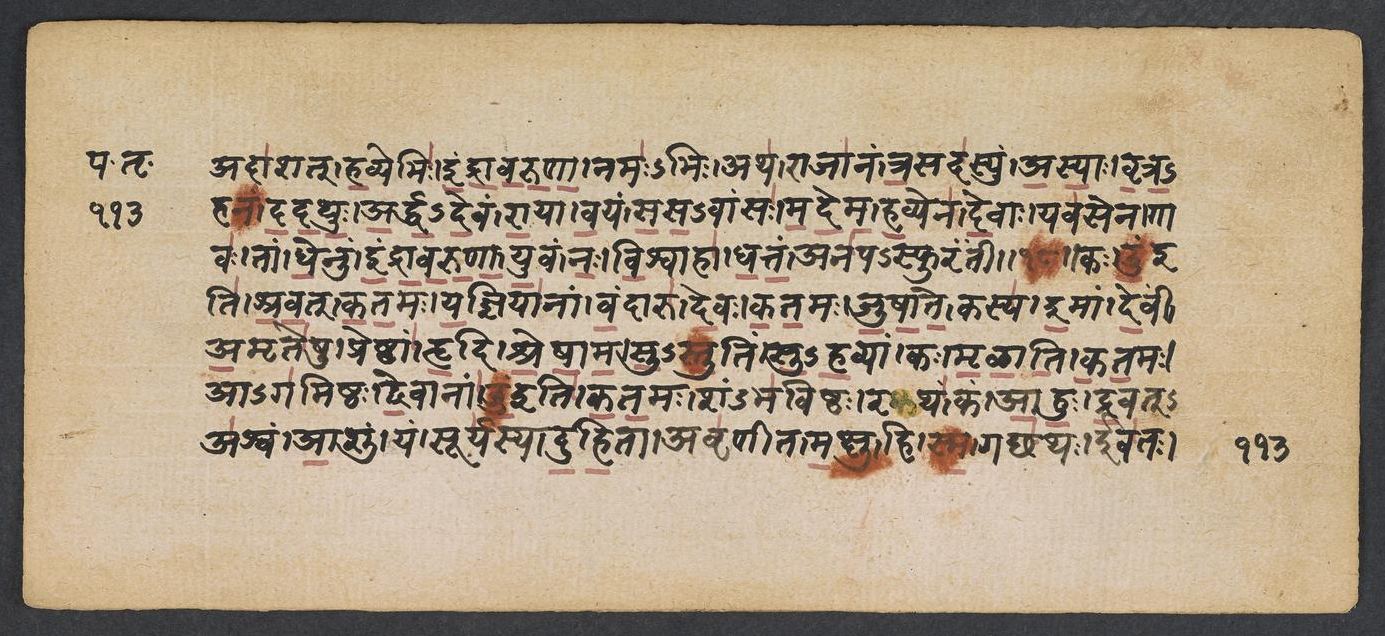
Where on the image
Penn Ms. Coll. 390 Item 41, fol. 304v (numbered 113v by the scribe) (OPenn image 305, upper leaf). Checked on the image: the Rigveda text on this page begins in RV 4.42.9 ‹adāśat havyebhiḥ indrāvaruṇā namaḥ-bhiḥ›. The next page with Rigveda text, fol. 305r (numbered 114r by the scribe), begins in RV 4.43.3 ‹dyūn indraḥ na śaktim›. Verses 4.43.1-2 end on this page.
1ka u̍ śravat kata̱mo ya̱jñiyā̍nāṁ va̱ndāru̍ de̱vaḥ ka̍ta̱mo ju̍ṣāte | kasye̱māṁ de̱vīm a̱mṛte̍ṣu̱ preṣṭhā̍ṁ hṛ̱di śre̍ṣāma suṣṭu̱tiṁ su̍ha̱vyām ||
2ko mṛ̍ḻāti kata̱ma āga̍miṣṭho de̱vānā̍m u kata̱maḥ śambha̍viṣṭhaḥ | ratha̱ṁ kam ā̍hur dra̱vada̍śvam ā̱śuṁ yaṁ sūrya̍sya duhi̱tāvṛ̍ṇīta ||
Compare: Padapāṭha (word-by-word text written in the manuscript; Sansknet e-text via GRETIL)
1kaḥ | oṃ iti | śravat | katamaḥ | yajñiyānām | vandāru | devaḥ | katamaḥ | juṣāte | kasya | imām | devīm | amṛteṣu | preṣṭhām | hṛdi | śreṣāma | su-stutim | su-havyām
2kaḥ | mṛḷāti | katamaḥ | āgamiṣṭhaḥ | devānām | oṃ itikatamaḥ | śam-bhaviṣṭhaḥ | ratham | kam | āhuḥ | dravat-aśvam | āśum | yam | sūryasya | duhitā | avṛṇīta
1WHO will hear, who of those who merit worship, which of all Gods take pleasure in our homage? On whose heart shall we lay this laud celestial, rich with fair offerings, dearest to Immortals?
2Who will be gracious? Who will come most quickly of all the Gods? Who will bring liss most largely? What car do they call swift with rapid coursers? That which the Daughter of the Sun elected.
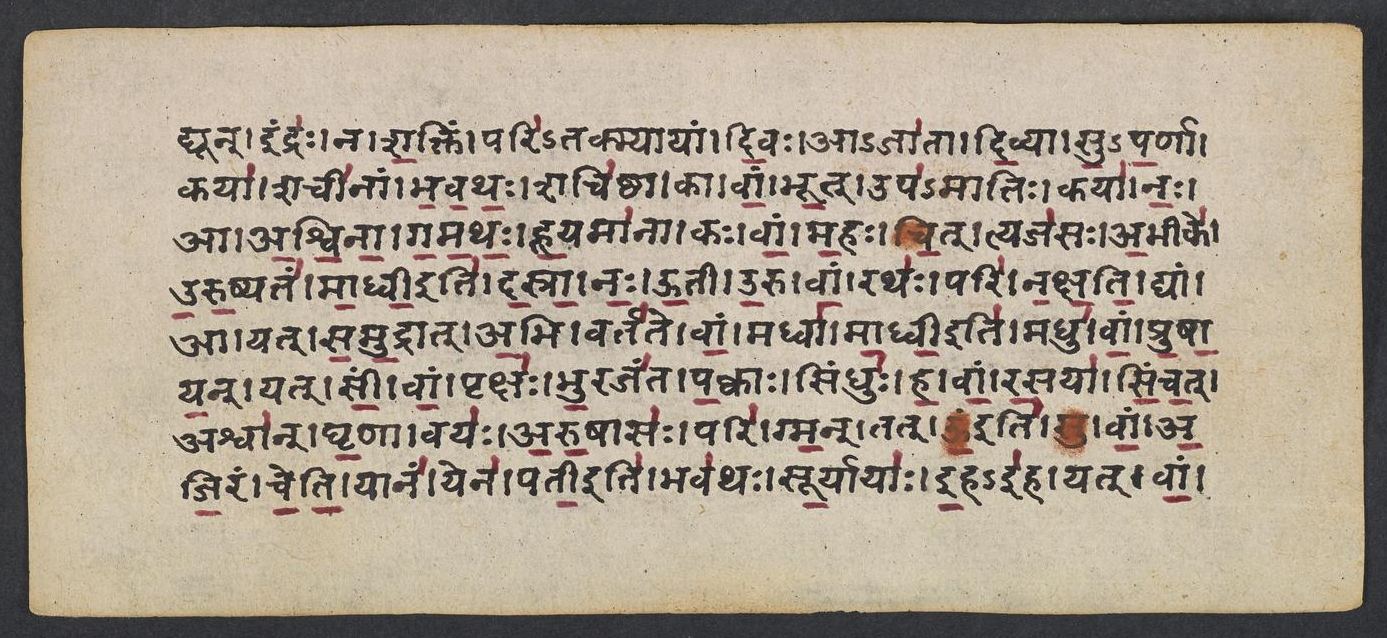
Where on the image
Penn Ms. Coll. 390 Item 41, fol. 305r (numbered 114r by the scribe) (OPenn image 305, lower leaf). Checked on the image: the Rigveda text on this page begins in RV 4.43.3 ‹dyūn indraḥ na śaktim›. The next page with Rigveda text, fol. 305v (numbered 114v by the scribe), begins in RV 4.43.7 ‹samanā papṛkṣe sā iyam›. Verses 4.43.3-6 end on this page; 4.43.3 begins on fol. 304v (numbered 113v by the scribe).
3ma̱kṣū hi ṣmā̱ gaccha̍tha̱ īva̍to̱ dyūn indro̱ na śa̱ktim pari̍takmyāyām | di̱va ājā̍tā di̱vyā su̍pa̱rṇā kayā̱ śacī̍nām bhavatha̱ḥ śaci̍ṣṭhā ||
4kā vā̍m bhū̱d upa̍māti̱ḥ kayā̍ na̱ āśvi̍nā gamatho hū̱yamā̍nā | ko vā̍m ma̱haś ci̱t tyaja̍so a̱bhīka̍ uru̱ṣyata̍m mādhvī dasrā na ū̱tī ||
5u̱ru vā̱ṁ ratha̱ḥ pari̍ nakṣati̱ dyām ā yat sa̍mu̱drād a̱bhi varta̍te vām | madhvā̍ mādhvī̱ madhu̍ vām pruṣāya̱n yat sī̍ṁ vā̱m pṛkṣo̍ bhu̱raja̍nta pa̱kvāḥ ||
6sindhu̍r ha vāṁ ra̱sayā̍ siñca̱d aśvā̍n ghṛ̱ṇā vayo̍ 'ru̱ṣāsa̱ḥ pari̍ gman | tad ū̱ ṣu vā̍m aji̱raṁ ce̍ti̱ yāna̱ṁ yena̱ patī̱ bhava̍thaḥ sū̱ryāyā̍ḥ ||
Compare: Padapāṭha (word-by-word text written in the manuscript; Sansknet e-text via GRETIL)
3makṣu | hi | sma | gacchathaḥ | īvataḥ | dyūn | indraḥ | na | śaktim | pari-takmyāyām | divaḥ | ājātā | divyā | su-parṇā | kayā | śacīnām | bhavathaḥ | śaciṣṭhā
4kā | vām | bhūt | upa-mātiḥ | kayā | naḥ | ā | aśvinā | gamathaḥ | hūyamānā | kaḥ | vām | mahaḥ | cit | tyajasaḥ | abhīke | uruṣyatam | mādhvī iti | dasrā | naḥ | ūtī
5uru | vām | rathaḥ | pari | nakṣati | dyām | ā | yat | samudrāt | abhi | varate | vām | madhvā | mādhvī iti | madhu | vām | pruṣāyan | yat | sīm | vām | pṛkṣaḥ | bhurajanta | pakvaaḥ
6sindhuḥ | ha | vām | rasayā | siñcat | aśvān | ghṛṇā | vayaḥ | aruṣāsaḥ | pari | gman | tat | oṃ iti | su | vām | ajiram | ceti | yānam | yena | patī iti | bhavathaḥ | sūryāyāḥ
3So many days do ye come swiftly hither, as Indra to give help in stress of battle. Descended from the sky, divine, strong-pinioned, by which of all your powers are ye most mighty?
4What is the prayer that we should bring you, Aṣvins, whereby ye come to us when invocated? Whether of you confronts e'en great betrayal? Lovers of sweetness, Dasras, help and save us.
5In the wide space your chariot reacheth heaven, what time it turneth hither from the ocean. Sweets from your sweet shall drop, lovers of sweetness! These have they dressed for you as dainty viands.
6Let Sindhu with his wave bedew your horses: in fiery glow have the red birds come hither. Observed of all was that your rapid going, whereby ye were the Lords of Siirya's Daughter.
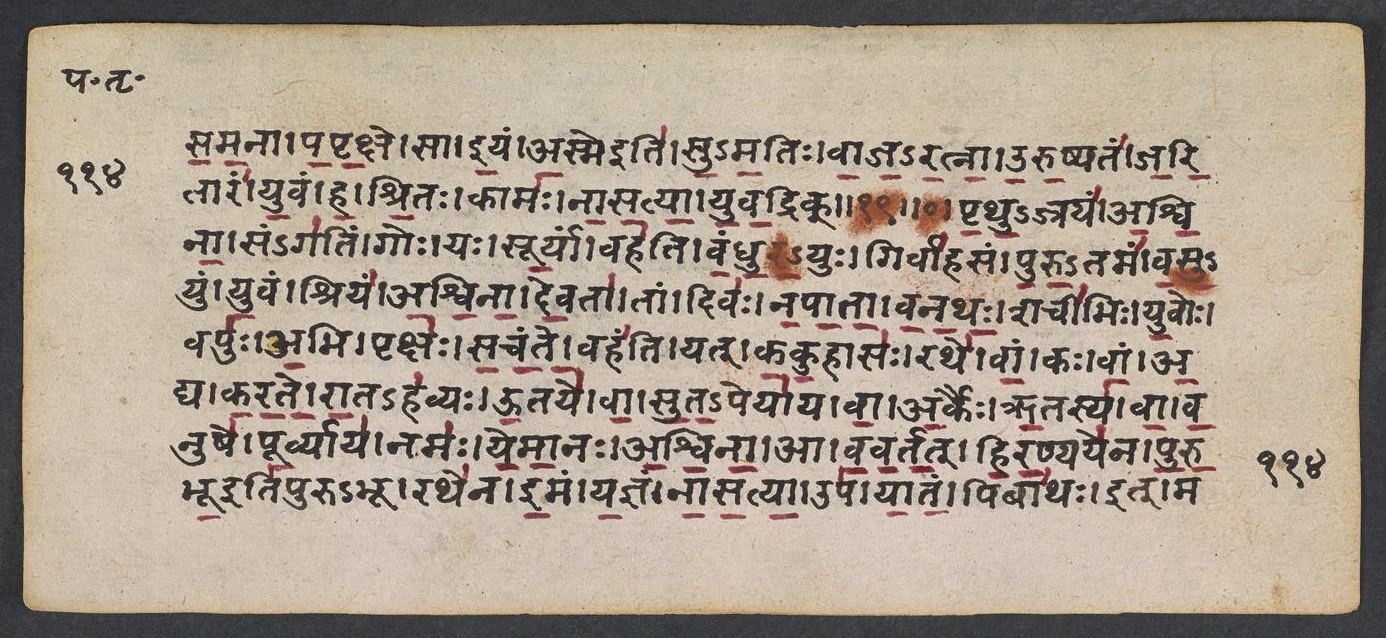
Where on the image
Penn Ms. Coll. 390 Item 41, fol. 305v (numbered 114v by the scribe) (OPenn image 306, upper leaf). Checked on the image: the Rigveda text on this page begins in RV 4.43.7 ‹samanā papṛkṣe sā iyam›. The next page with Rigveda text, fol. 306r (numbered 115r by the scribe), begins in RV 4.44.4 ‹-madhunaḥ somyasya dadhathaḥ ratnam›. Verse 4.43.7 ends on this page; 4.43.7 begins on fol. 305r (numbered 114r by the scribe).
7i̱heha̱ yad vā̍ṁ sama̱nā pa̍pṛ̱kṣe seyam a̱sme su̍ma̱tir vā̍jaratnā | u̱ru̱ṣyata̍ṁ jari̱tāra̍ṁ yu̱vaṁ ha̍ śri̱taḥ kāmo̍ nāsatyā yuva̱drik ||
Compare: Padapāṭha (word-by-word text written in the manuscript; Sansknet e-text via GRETIL)
7iha-iha | yat | vām | samanā | papṛkṣe | sā | iyam | asme iti | su-matiḥ | vāja-ratnā | uruṣyatam | jaritāram | yuvam | ha | śritaḥ | kāmaḥ | nāsatyā | yuvadrik
7Whene'er I gratified you here together, your grace was given us, O ye rich in booty. Protect, ye Twain, the singer of your praises: to you, Nâsatyas, is my wish directed.
Notes
- Sanskrit: Aufrecht's edition (1877) with the Vedic accents, as entered by van Nooten and Holland (GRETIL).
- English: Ralph T. H. Griffith, The Hymns of the Rigveda (1889-1892; 2nd ed. 1896-1897), from the VedaWeb digital text; OCR slips in that text were corrected against the printed 2nd edition (data/sources/rigveda/griffith_errata.json).
- Padapāṭha (edition text): Sansknet e-text via GRETIL (CC BY-NC-SA 4.0).
Cite
Sources
- Source: Penn Ms. Coll. 390 Item 41 (undated (catalogued with Penn's 18th-19th c. Vedic manuscripts)), OPenn, Public Domain Mark + Aufrecht's accented text (GRETIL) + Griffith's English (VedaWeb) (holding institution)
- Critical edition: Aufrecht (1877), accented e-text via GRETIL
← previous · → next · v cycle view · l back to library