Rigveda 4.42: To Indra and Varuna
Introduction
Rigveda 4.42 is a hymn of 10 verses addressed to Indra and Varuna. It stands in book (maṇḍala) 4, the family book of Vāmadeva. The Rigveda is the oldest collection of Sanskrit hymns, composed in the second half of the second millennium BCE and handed down orally for many centuries before it was written down.
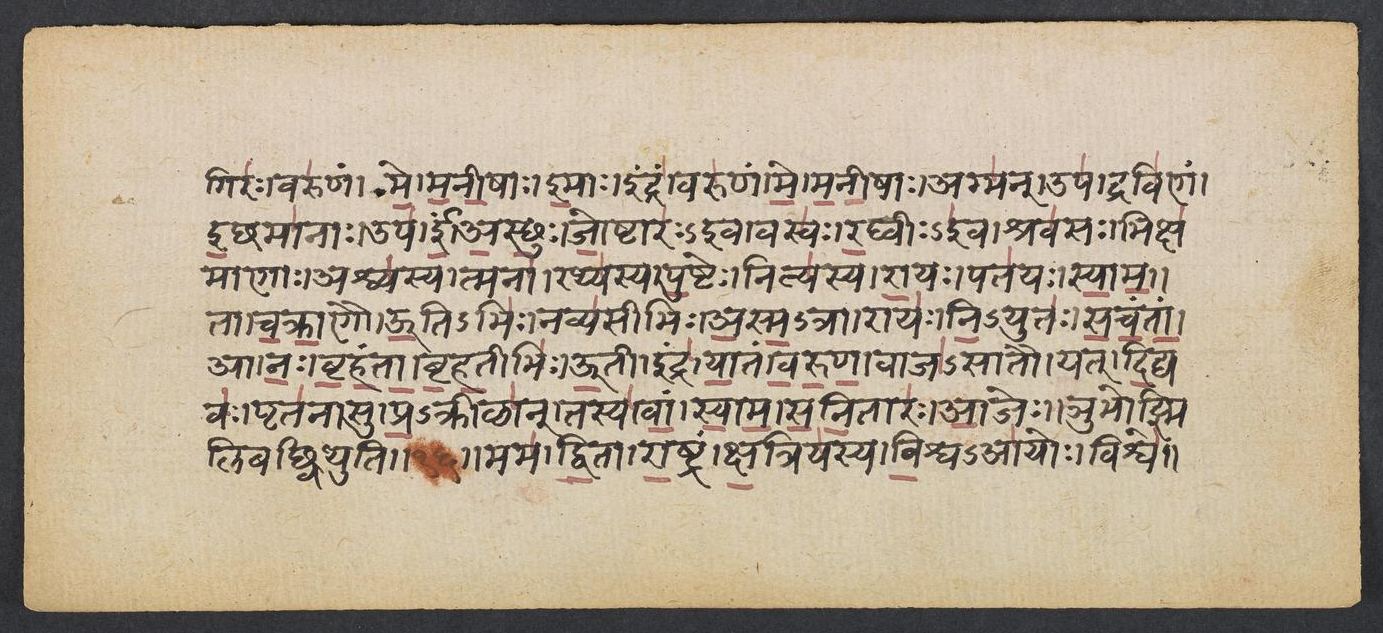
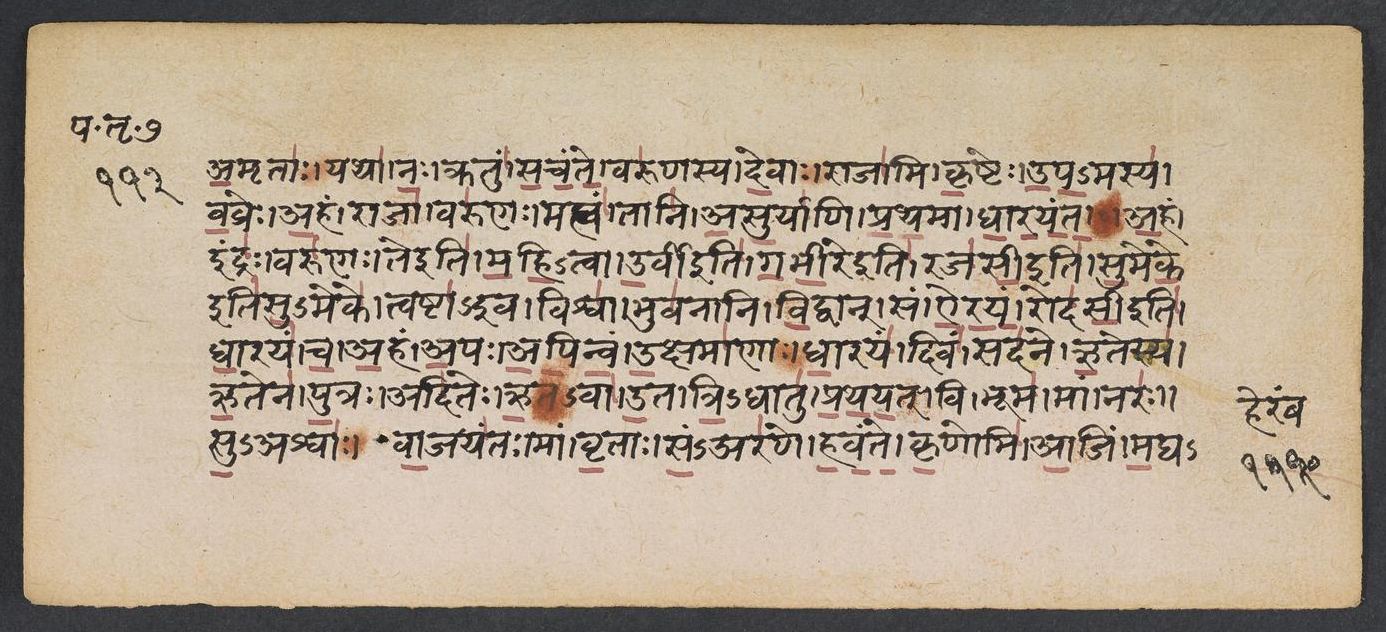
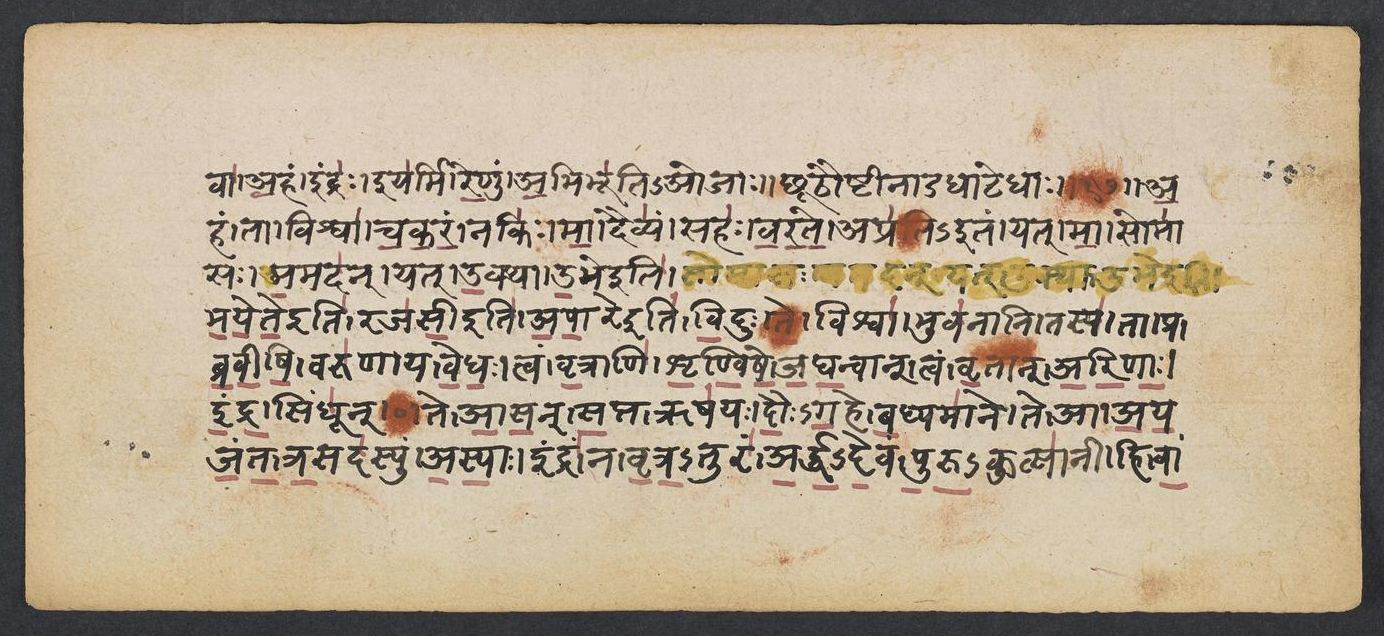
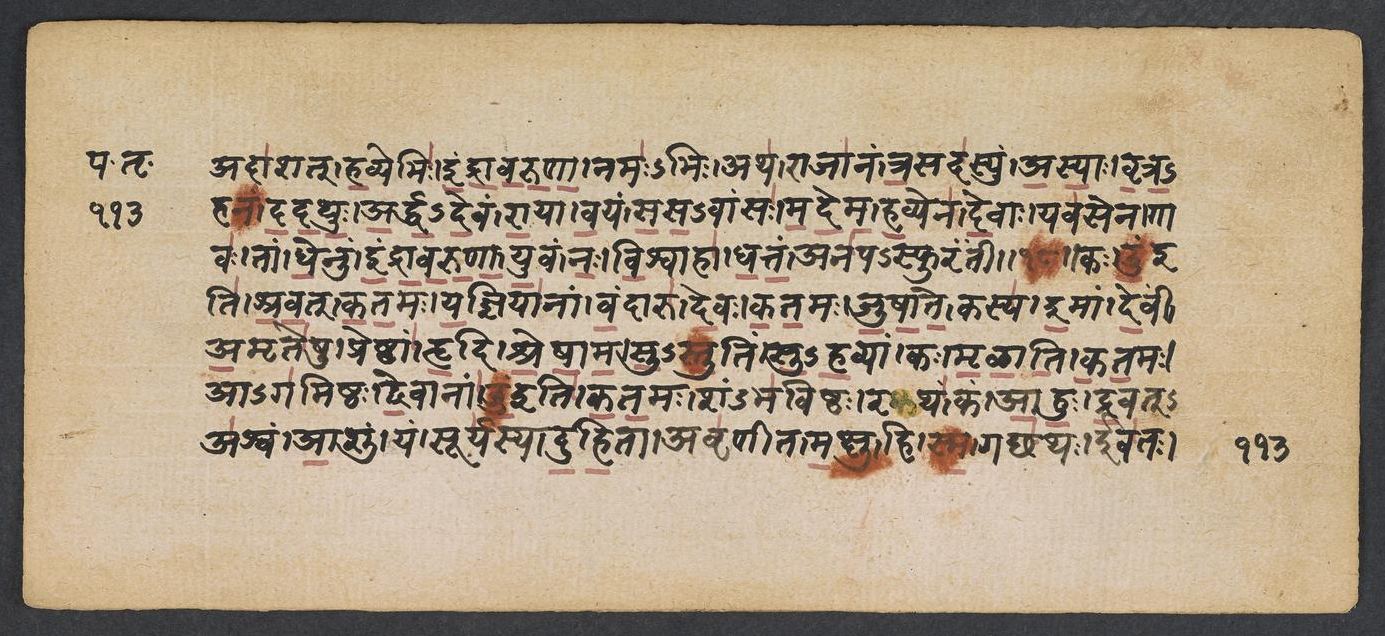
The manuscript shown is Penn Ms. Coll. 390 Item 41 (University of Pennsylvania), an undated paper manuscript of the padapāṭha (the word-by-word recitation text, in which every word is written separately and compounds are split) of the whole Ṛgveda in Devanāgarī, 884 leaves in fascicles, 7-9 lines to the page, accents in red; this hymn stands on fol. 303r-304v. Each section below gives the verses that end on one page; the page boundaries were read on the images (the opening words of every page), not counted out. Where the manuscript is a padapāṭha (the word-by-word recitation text), the section shows Aufrecht's continuous (saṃhitā) text first and, as the edition text, the padapāṭha of the same verses, which is the form written on the page.
How was this verified? (Provenance)
Where on the image
Penn Ms. Coll. 390 Item 41, fol. 303v (numbered 112v by the scribe) (OPenn image 304, upper leaf). Checked on the image: the Rigveda text on this page begins in RV 4.42.1 ‹amṛtāḥ yathā naḥ kratum›. The next page with Rigveda text, fol. 304r (numbered 113r by the scribe), begins in RV 4.42.5 ‹-magha-vā aham indraḥ iyarmi›. Verses 4.42.1-4 end on this page; 4.42.1 begins on fol. 303r (numbered 112r by the scribe).
1mama̍ dvi̱tā rā̱ṣṭraṁ kṣa̱triya̍sya vi̱śvāyo̱r viśve̍ a̱mṛtā̱ yathā̍ naḥ | kratu̍ṁ sacante̱ varu̍ṇasya de̱vā rājā̍mi kṛ̱ṣṭer u̍pa̱masya̍ va̱vreḥ ||
2a̱haṁ rājā̱ varu̍ṇo̱ mahya̱ṁ tāny a̍su̱ryā̍ṇi pratha̱mā dhā̍rayanta | kratu̍ṁ sacante̱ varu̍ṇasya de̱vā rājā̍mi kṛ̱ṣṭer u̍pa̱masya̍ va̱vreḥ ||
3a̱ham indro̱ varu̍ṇa̱s te ma̍hi̱tvorvī ga̍bhī̱re raja̍sī su̱meke̍ | tvaṣṭe̍va̱ viśvā̱ bhuva̍nāni vi̱dvān sam ai̍raya̱ṁ roda̍sī dhā̱raya̍ṁ ca ||
4a̱ham a̱po a̍pinvam u̱kṣamā̍ṇā dhā̱raya̱ṁ diva̱ṁ sada̍na ṛ̱tasya̍ | ṛ̱tena̍ pu̱tro adi̍ter ṛ̱tāvo̱ta tri̱dhātu̍ prathaya̱d vi bhūma̍ ||
Compare: Padapāṭha (word-by-word text written in the manuscript; Sansknet e-text via GRETIL)
1mama | dvitā | rāṣṭram | kṣatriyasya | viśva-āyoḥ | viśve | amṛtāḥ | yathā | naḥ | kratum | sacante | varuṇasya | devāḥ | rājāmi | kṛṣṭeḥ | upamasya | vavreḥ
2aham | rājā | varuṇaḥ | mahyam | tāni | asuryāṇi | prathamā | dhārayanta | kratum | sacante | varuṇasya | devāḥ | rājāmi | kṛṣṭeḥ | upamasya | vavreḥ
3aham | indraḥ | varuṇaḥ | te iti | mahi-tvā | urvī iti | gabhīre | rajasī iti | sumeke itisu-meke | tvaṣṭāiva | viśvā | bhuvanāni | vidvān | sam | airayam | rodasī iti | dhārayam | ca
4aham | apaḥ | apinvam | ukṣamāṇāḥ | dharayam | divam | sadane | ṛtasya | ṛtena | putraḥ | aditeḥ | ṛta-vā | uta | tri-dhātu | prathayat | vi | bhūma
1I AM the royal Ruler, mine is empire, as mine who sway all life are all Immortals. Varuṇa's will the Gods obey and follow. I am the King of men's most lofty cover.
2I am King Varuṇa. To me were given these first existinghigh celestial powers. Varuṇa's will the Gods obey and follow. I am the King of men's most lofty cover.
3I Varuṇa am Indra: in their greatness, these the two wide deep fairly-fashioned regions, These the two world-halves have I, even as Tvashṭar knowing all beings, joined and held together.
4I made to flow the moisture-shedding waters, and set the heaven firm in the seat of Order. By Law the Son of Aditi, Law Observer, hath spread abroad the world in threefold measure.
Where on the image
Penn Ms. Coll. 390 Item 41, fol. 304r (numbered 113r by the scribe) (OPenn image 304, lower leaf). Checked on the image: the Rigveda text on this page begins in RV 4.42.5 ‹-magha-vā aham indraḥ iyarmi›. The next page with Rigveda text, fol. 304v (numbered 113v by the scribe), begins in RV 4.42.9 ‹adāśat havyebhiḥ indrāvaruṇā namaḥ-bhiḥ›. Verses 4.42.5-8 end on this page; 4.42.5 begins on fol. 303v (numbered 112v by the scribe).
5māṁ nara̱ḥ svaśvā̍ vā̱jaya̍nto̱ māṁ vṛ̱tāḥ sa̱mara̍ṇe havante | kṛ̱ṇomy ā̱jim ma̱ghavā̱ham indra̱ iya̍rmi re̱ṇum a̱bhibhū̍tyojāḥ ||
6a̱haṁ tā viśvā̍ cakara̱ṁ naki̍r mā̱ daivya̱ṁ saho̍ varate̱ apra̍tītam | yan mā̱ somā̍so ma̱mada̱n yad u̱kthobhe bha̍yete̱ raja̍sī apā̱re ||
7vi̱duṣ ṭe̱ viśvā̱ bhuva̍nāni̱ tasya̱ tā pra bra̍vīṣi̱ varu̍ṇāya vedhaḥ | tvaṁ vṛ̱trāṇi̍ śṛṇviṣe jagha̱nvān tvaṁ vṛ̱tām̐ a̍riṇā indra̱ sindhū̍n ||
8a̱smāka̱m atra̍ pi̱tara̱s ta ā̍san sa̱pta ṛṣa̍yo daurga̱he ba̱dhyamā̍ne | ta āya̍janta tra̱sada̍syum asyā̱ indra̱ṁ na vṛ̍tra̱tura̍m ardhade̱vam ||
Compare: Padapāṭha (word-by-word text written in the manuscript; Sansknet e-text via GRETIL)
5mām | naraḥ | su-aśvāḥ | vāja-yantaḥ | mām | vṛtāḥ | sam-araṇe | havante | kṛṇomi | ājim | magha-vā | aham | indraḥ | iyarmi | reṇum | abhibhūti-ojāḥ
6aham | tā | viśvā | cakaram | nakiḥ | mā | daivyam | sahaḥ | varate | aprati-itam | yat | mā | somāsaḥ | mamadan | yat | ukthā | ubhe iti | bhayeteiti | rajasī iti | apāre iti
7viduḥ | te | viśvā | bhuvanāni | tasya | tā | pra | bravīṣi | varuṇāya | vedhaḥ | tvam | vṛtrāṇi | śṛṇviṣe | jaghanvān | tvam | vṛtām | ariṇāḥ | indra | sindhūn
8asmākam | atra | pitaraḥ | te | āsan | sapta | ṛṣayaḥ | dauḥ-gahe | badhyamāne | te | ā | ayajanta | trasadasyum | asyāḥ | indram | na | vṛtra-turam | ardha-devam
5Heroes with noble horses, fain for battle, selected warriors, call on me in combat. I Indra Maghavan, excite the conflict; I stir the dust, Lord of surpassing vigour.
6All this I did. The Gods' own conquering power never impedeth me whom none opposeth. When lauds and Soma juice have made me joyful, both the unbounded regions are affrighted.
7All beings know these deeds of thine thou tellest this unto Varuṇa, thou great Disposer! Thou art renowned as having slain the Vr̥itras. Thou madest flow the floods that were obstructed.
8Our fathers then were these, the Seven his, what time the son of Durgaha was captive. For her they gained by sacrifice Trasadasyu, a demi-god, like Indra, conquering foemen.
Where on the image
Penn Ms. Coll. 390 Item 41, fol. 304v (numbered 113v by the scribe) (OPenn image 305, upper leaf). Checked on the image: the Rigveda text on this page begins in RV 4.42.9 ‹adāśat havyebhiḥ indrāvaruṇā namaḥ-bhiḥ›. The next page with Rigveda text, fol. 305r (numbered 114r by the scribe), begins in RV 4.43.3 ‹dyūn indraḥ na śaktim›. Verses 4.42.9-10 end on this page; 4.42.9 begins on fol. 304r (numbered 113r by the scribe).
9pu̱ru̱kutsā̍nī̱ hi vā̱m adā̍śad dha̱vyebhi̍r indrāvaruṇā̱ namo̍bhiḥ | athā̱ rājā̍naṁ tra̱sada̍syum asyā vṛtra̱haṇa̍ṁ dadathur ardhade̱vam ||
10rā̱yā va̱yaṁ sa̍sa̱vāṁso̍ madema ha̱vyena̍ de̱vā yava̍sena̱ gāva̍ḥ | tāṁ dhe̱num i̍ndrāvaruṇā yu̱vaṁ no̍ vi̱śvāhā̍ dhatta̱m ana̍pasphurantīm ||
Compare: Padapāṭha (word-by-word text written in the manuscript; Sansknet e-text via GRETIL)
9puru-kutsānī | hi | vām | adāśat | havyebhiḥ | indrāvaruṇā | namaḥ-bhiḥ | atha | rājānam | trasadasyum | asyāḥ | vṛtra-hanam | dadathuḥ | ardha-devam
10rāyāḥ | vayam | sasa-vāṃsaḥ | madema | havyena | devāḥ | yavasena | gāvaḥ | tām | dhenum | indrāvaruṇā | yuvam | naḥ | viśvāhā | dhattam | anapa-sphurantīm
9The spouse of Purukutsa gave oblations to you, O Indra-Varuṇa, with homage. Then unto her ye gave King Trasadasyu, the demi-god, the slayer of the foeman.
10May we, possessing much, delight in riches, Gods in oblations and the kine in pasture; And that Milch-cow who shrinks not from the milking, O Indra-Varuṇa, give to us daily.
Notes
- Sanskrit: Aufrecht's edition (1877) with the Vedic accents, as entered by van Nooten and Holland (GRETIL).
- English: Ralph T. H. Griffith, The Hymns of the Rigveda (1889-1892; 2nd ed. 1896-1897), from the VedaWeb digital text; OCR slips in that text were corrected against the printed 2nd edition (data/sources/rigveda/griffith_errata.json).
- Padapāṭha (edition text): Sansknet e-text via GRETIL (CC BY-NC-SA 4.0).
Cite
Sources
- Source: Penn Ms. Coll. 390 Item 41 (undated (catalogued with Penn's 18th-19th c. Vedic manuscripts)), OPenn, Public Domain Mark + Aufrecht's accented text (GRETIL) + Griffith's English (VedaWeb) (holding institution)
- Critical edition: Aufrecht (1877), accented e-text via GRETIL
← previous · → next · v cycle view · l back to library