Rigveda 4.51: To Usas
Introduction
Rigveda 4.51 is a hymn of 11 verses addressed to Usas. It stands in book (maṇḍala) 4, the family book of Vāmadeva. The Rigveda is the oldest collection of Sanskrit hymns, composed in the second half of the second millennium BCE and handed down orally for many centuries before it was written down.
The manuscript shown is Penn Ms. Coll. 390 Item 41 (University of Pennsylvania), an undated paper manuscript of the padapāṭha (the word-by-word recitation text, in which every word is written separately and compounds are split) of the whole Ṛgveda in Devanāgarī, 884 leaves in fascicles, 7-9 lines to the page, accents in red; this hymn stands on fol. 310r-311v. Each section below gives the verses that end on one page; the page boundaries were read on the images (the opening words of every page), not counted out. Where the manuscript is a padapāṭha (the word-by-word recitation text), the section shows Aufrecht's continuous (saṃhitā) text first and, as the edition text, the padapāṭha of the same verses, which is the form written on the page.
How was this verified? (Provenance)
Where on the image
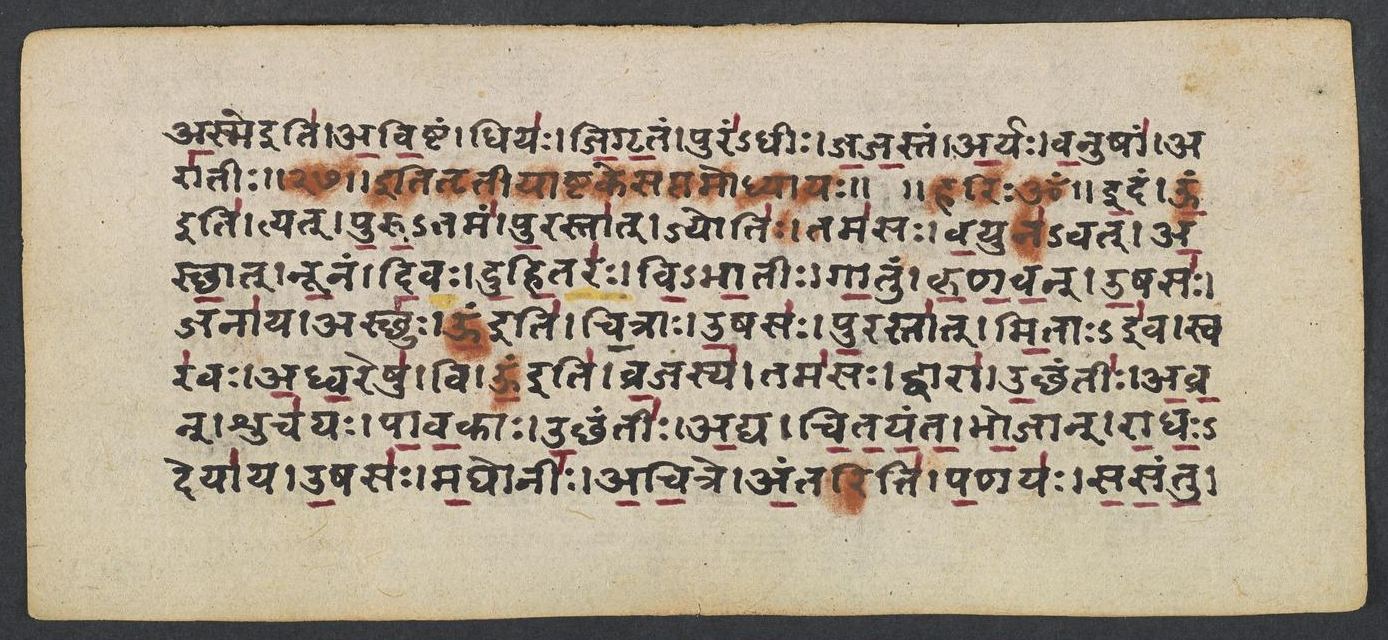
Penn Ms. Coll. 390 Item 41, fol. 310r (numbered 119r by the scribe) (OPenn image 310, lower leaf). Checked on the image: the Rigveda text on this page begins in RV 4.50.11 ‹asme iti aviṣṭam dhiyaḥ›. The next page with Rigveda text, fol. 310v (numbered 119v by the scribe), begins in RV 4.51.3 ‹abudhyamānāḥ tamasaḥ vi-madhye›. Verses 4.51.1-2 end on this page.
1i̱dam u̱ tyat pu̍ru̱tama̍m pu̱rastā̱j jyoti̱s tama̍so va̱yunā̍vad asthāt | nū̱naṁ di̱vo du̍hi̱taro̍ vibhā̱tīr gā̱tuṁ kṛ̍ṇavann u̱ṣaso̱ janā̍ya ||
2asthu̍r u ci̱trā u̱ṣasa̍ḥ pu̱rastā̍n mi̱tā i̍va̱ svara̍vo 'dhva̱reṣu̍ | vy ū̍ vra̱jasya̱ tama̍so̱ dvāro̱cchantī̍r avra̱ñ chuca̍yaḥ pāva̱kāḥ ||
Compare: Padapāṭha (word-by-word text written in the manuscript; Sansknet e-text via GRETIL)
1idam | oṃ iti | tyat | puru-tamam | purastāt | jyotiḥ | tamasaḥ | vayuna-vat | asthāt | nūnam | divaḥ | duhitaraḥ | vi-bhātīḥ | gātum | kṛṇavan | uṣasaḥ | janāya
2asthuḥ | oṃ iti | citrāḥ | uṣasaḥ | purastāt | mitāḥ-iva | svaravaḥ | adhvareṣu | vi | oṃ iti | vrajasya | tamasaḥ | dvārā | ucchantīḥ | avran | śucayaḥ | pāvakāḥ
1FORTH from the darkness in the region eastward this most abundant splendid light hath mounted. Now verily the far-refulgent Mornings, Daughters of Heaven, bring welfare to the people.
2The richly-coloured Dawns have mounted eastward, like pillars planted at our sacrifices, And, flushing far, splendid and purifying, unbarred the portals of the fold of darkness.
Where on the image
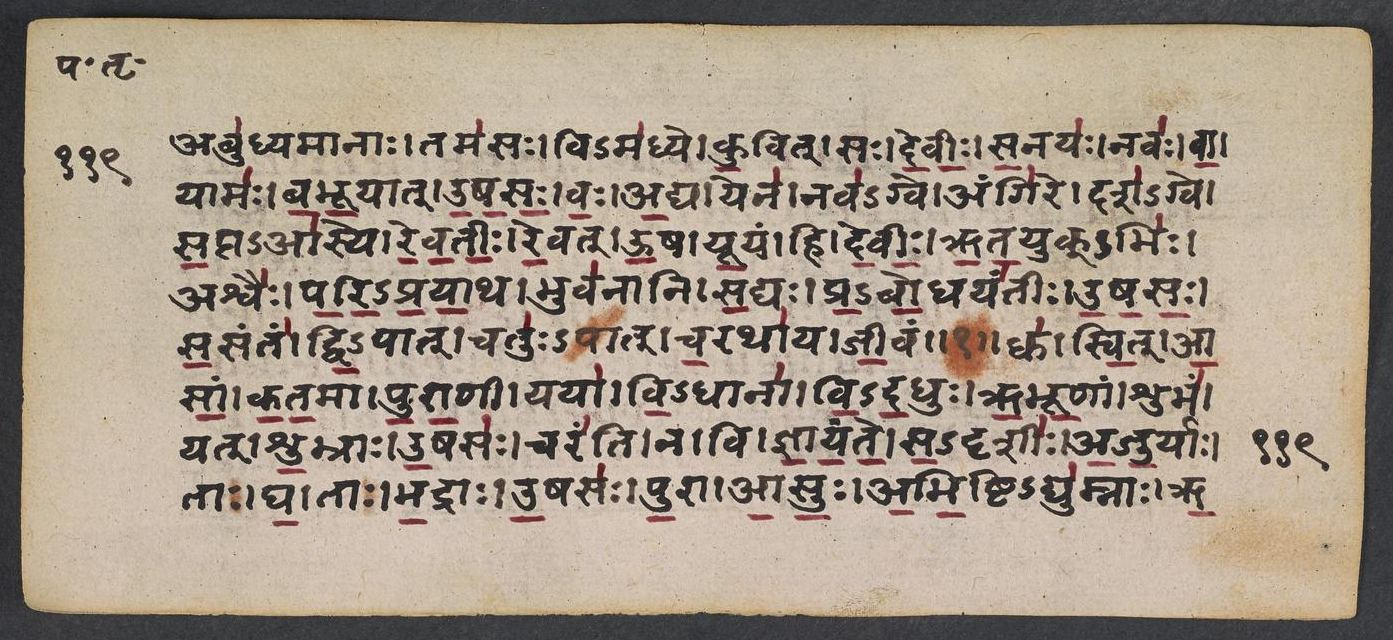
Penn Ms. Coll. 390 Item 41, fol. 310v (numbered 119v by the scribe) (OPenn image 311, upper leaf). Checked on the image: the Rigveda text on this page begins in RV 4.51.3 ‹abudhyamānāḥ tamasaḥ vi-madhye›. The next page with Rigveda text, fol. 311r (numbered 120r by the scribe), begins in RV 4.51.7 ‹-ṛtajāta-satyāḥ yāsu ījānaḥ śaśamānaḥ›. Verses 4.51.3-6 end on this page; 4.51.3 begins on fol. 310r (numbered 119r by the scribe).
3u̱cchantī̍r a̱dya ci̍tayanta bho̱jān rā̍dho̱deyā̍yo̱ṣaso̍ ma̱ghonī̍ḥ | a̱ci̱tre a̱ntaḥ pa̱ṇaya̍ḥ sasa̱ntv abu̍dhyamānā̱s tama̍so̱ vima̍dhye ||
4ku̱vit sa de̍vīḥ sa̱nayo̱ navo̍ vā̱ yāmo̍ babhū̱yād u̍ṣaso vo a̱dya | yenā̱ nava̍gve̱ aṅgi̍re̱ daśa̍gve sa̱ptāsye̍ revatī re̱vad ū̱ṣa ||
5yū̱yaṁ hi de̍vīr ṛta̱yugbhi̱r aśvai̍ḥ pariprayā̱tha bhuva̍nāni sa̱dyaḥ | pra̱bo̱dhaya̍ntīr uṣasaḥ sa̱santa̍ṁ dvi̱pāc catu̍ṣpāc ca̱rathā̍ya jī̱vam ||
6kva̍ svid āsāṁ kata̱mā pu̍rā̱ṇī yayā̍ vi̱dhānā̍ vida̱dhur ṛ̍bhū̱ṇām | śubha̱ṁ yac chu̱bhrā u̱ṣasa̱ś cara̍nti̱ na vi jñā̍yante sa̱dṛśī̍r aju̱ryāḥ ||
Compare: Padapāṭha (word-by-word text written in the manuscript; Sansknet e-text via GRETIL)
3ucchantīḥ | adya | citayanta | bhojān | rādhaḥ-deyāya | uṣasaḥ | maghonīḥ | acitre | antariti | paṇayaḥ | sasantu | abudhyamānāḥ | tamasaḥ | vi-madhye
4kuvit | saḥ | devīḥ | sanayaḥ | navaḥ | vā | yāmaḥ | babhūyāt | uṣasaḥ | vaḥ | adya | yena | nava-gve | aṅgire | daśa-gve | sapta-āsye | revatīḥ | revat | ūṣa
5yūyam | hi | devīḥ | ṛtayuk-bhiḥ | aśvaiḥ | pari-prayātha | bhuvanāni | sadyaḥ | pra-bodhayantīḥ | uṣasaḥ | sasantam | dvi-pāt | catuḥ-pāt | carathāya | jīvam
6kva | svit | āsām | katamā | purāṇī | yayā | vi-dhānā | vi-dadhuḥ | ṛbhūṇām | śubham | yat | śubhrāḥ | uṣasaḥ | caranti | na | vi | jñāyante | sa-dṛśīḥ | ajuryāḥ
3Dispelling gloom this day the wealthy Mornings urge liberal givers to present their treasures. In the unlightened depth of darkness round them let niggard traffickers sleep unawakened.
4O Goddesses, is this your car, I ask you, ancient this day, or is it new, ye Mornings, Wherewith, rich Dawns, ye seek with wealth Navagva, Daṣagva Angira, the seven-toned singer?
5With horses harnessed by eternal Order, Goddesses, swiftly round the worlds ye travel, Arousing from their rest, O Dawns, the sleeping, and all that lives, man, bird, and beast, to motion.
6Which among these is eldest, and where is she through whom they fixed the R̥ibhus' regulations? What time the splendid Dawns go forth for splendour, they are not known apart, alike, unwasting.
Where on the image
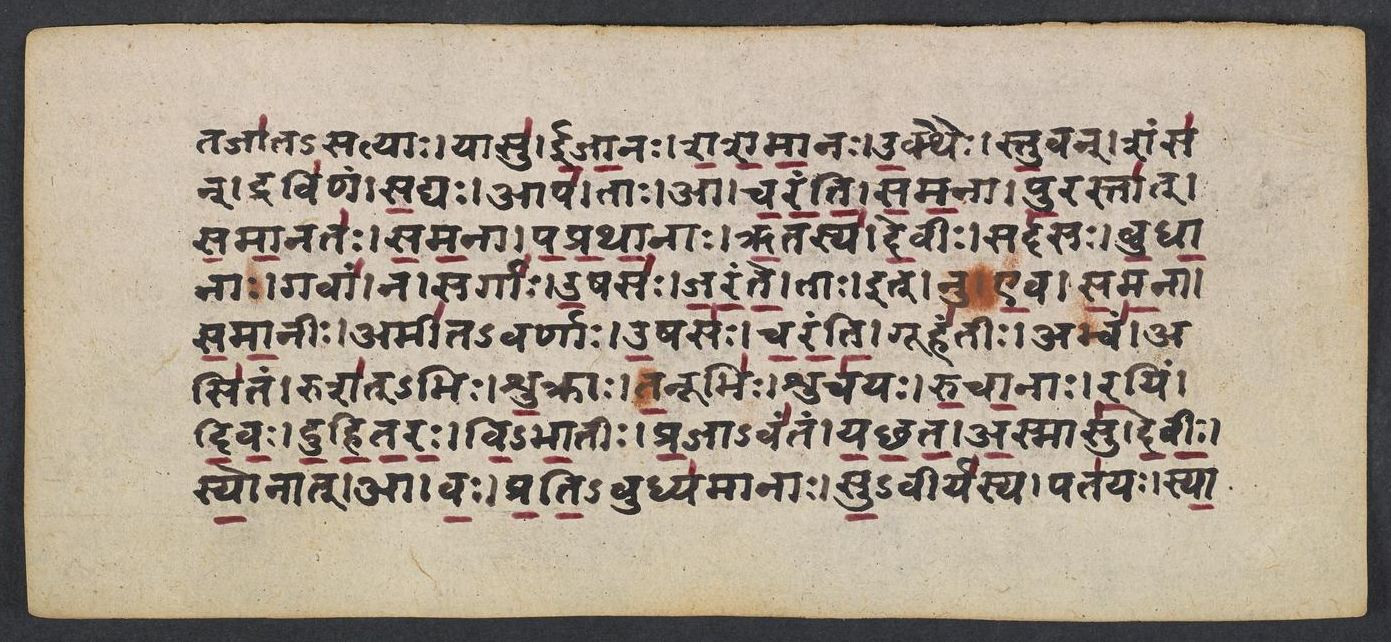
Penn Ms. Coll. 390 Item 41, fol. 311r (numbered 120r by the scribe) (OPenn image 311, lower leaf). Checked on the image: the Rigveda text on this page begins in RV 4.51.7 ‹-ṛtajāta-satyāḥ yāsu ījānaḥ śaśamānaḥ›. The next page with Rigveda text, fol. 311v (numbered 120v by the scribe), begins in RV 4.51.10 ‹-syāma›. Verses 4.51.7-9 end on this page; 4.51.7 begins on fol. 310v (numbered 119v by the scribe).
7tā ghā̱ tā bha̱drā u̱ṣasa̍ḥ pu̱rāsu̍r abhi̱ṣṭidyu̍mnā ṛ̱tajā̍tasatyāḥ | yāsv ī̍jā̱naḥ śa̍śamā̱na u̱kthaiḥ stu̱vañ chaṁsa̱n dravi̍ṇaṁ sa̱dya āpa̍ ||
8tā ā ca̍ranti sama̱nā pu̱rastā̍t samā̱nata̍ḥ sama̱nā pa̍prathā̱nāḥ | ṛ̱tasya̍ de̱vīḥ sada̍so budhā̱nā gavā̱ṁ na sargā̍ u̱ṣaso̍ jarante ||
9tā in nv e̱3̱̍va sa̍ma̱nā sa̍mā̱nīr amī̍tavarṇā u̱ṣasa̍ś caranti | gūha̍ntī̱r abhva̱m asi̍ta̱ṁ ruśa̍dbhiḥ śu̱krās ta̱nūbhi̱ḥ śuca̍yo rucā̱nāḥ ||
Compare: Padapāṭha (word-by-word text written in the manuscript; Sansknet e-text via GRETIL)
7tāḥ | gha | tāḥ | bhadrāḥ | uṣasaḥ | purā | āsuḥ | abhiṣṭi-dyumnāḥ | ṛtajāta-satyāḥ | yāsu | ījānaḥ | śaśamānaḥ | ukthaiḥ | stuvan | śaṃsan | draviṇam | sadyaḥ | āpa
8tāḥ | ā | caranti | samanā | purastāt | samānataḥ | samanā | paprathānāḥ | ṛtasya | devīḥ | sadasaḥ | budhānāḥ | gavām | na | sargāḥ | uṣasaḥ | jarante
9tāḥ | it | nu | eva | samanā | samānīḥ | amīta-varṇāḥ | uṣasaḥ | caranti | gūhantīḥ | abhvam | asitam | ruśat-bhiḥ | śukrāḥ | tanūbhiḥ | śucayaḥ | rucānāḥ
7Blest were these Dawns of old, shining with succour, true with the truth that springs from holy Order; With whom the toiling worshipper, by praises, hymning and lauding, soon attained to riches.
8Hither from eastward all at once they travel, from one place spreading in the selfsame manner. Awaking, from the seat of holy Order the Godlike Dawns come nigh like troops of cattle.
9Thus they go forth with undiminished colours, these Mornings similar, in self-same fashion, Concealing the gigantic might of darkness with radiant bodies bright and pure and shining.
Where on the image
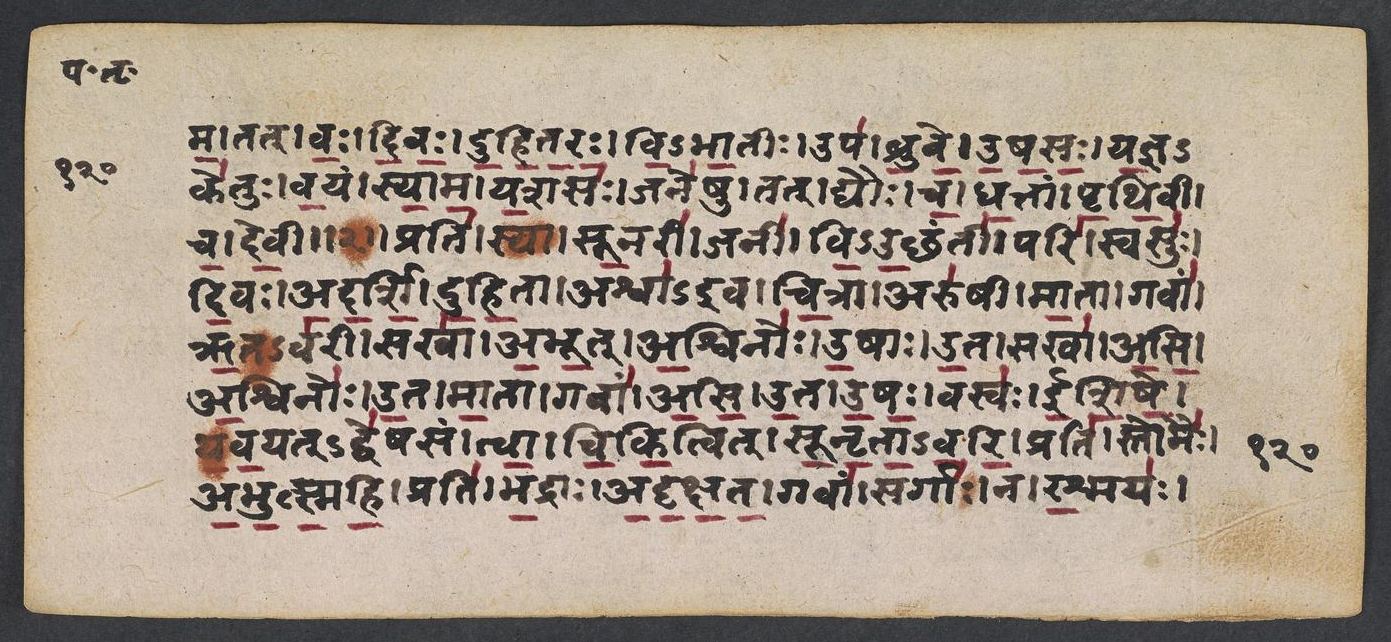
Penn Ms. Coll. 390 Item 41, fol. 311v (numbered 120v by the scribe) (OPenn image 312, upper leaf). Checked on the image: the Rigveda text on this page begins in RV 4.51.10 ‹-syāma›. The next page with Rigveda text, fol. 312r (numbered 121r by the scribe), begins in RV 4.52.5 ‹ā uṣāḥ aprāḥ uru›. Verses 4.51.10-11 end on this page; 4.51.10 begins on fol. 311r (numbered 120r by the scribe).
10ra̱yiṁ di̍vo duhitaro vibhā̱tīḥ pra̱jāva̍ntaṁ yacchatā̱smāsu̍ devīḥ | syo̱nād ā va̍ḥ prati̱budhya̍mānāḥ su̱vīrya̍sya̱ pata̍yaḥ syāma ||
11tad vo̍ divo duhitaro vibhā̱tīr upa̍ bruva uṣaso ya̱jñake̍tuḥ | va̱yaṁ syā̍ma ya̱śaso̱ jane̍ṣu̱ tad dyauś ca̍ dha̱ttām pṛ̍thi̱vī ca̍ de̱vī ||
Compare: Padapāṭha (word-by-word text written in the manuscript; Sansknet e-text via GRETIL)
10rayim | divaḥ | duhitaraḥ | vi-bhātīḥ | prajāvantam | yacchata | asmāsu | devīḥ | syonāt | ā | vaḥ | prati-budhyamānāḥ | su-vīryasya | patayaḥ | syāma
11tat | vaḥ | divaḥ | duhitaraḥ | vi-bhātīḥ | upa | bruve | uṣasaḥ | yajña-ketuḥ | vayam | syāma | yaśasaḥ | janeṣu | tat | dyauḥ | ca | dhattām | pṛthivī | ca | devī
10O Goddesses, O Heaven's refulgent Daughters, bestow upon us wealth with store of children. As from our pleasant place of rest ye rouse us may we be masters of heroic vigour.
11Well-skilled in lore of sacrifice, ye Daughters of Heaven, refulgent Dawns, I thus address you. May we be glorious among the people. May Heaven vouchsafe us this, and Earth the Goddess,
Notes
- Sanskrit: Aufrecht's edition (1877) with the Vedic accents, as entered by van Nooten and Holland (GRETIL).
- English: Ralph T. H. Griffith, The Hymns of the Rigveda (1889-1892; 2nd ed. 1896-1897), from the VedaWeb digital text; OCR slips in that text were corrected against the printed 2nd edition (data/sources/rigveda/griffith_errata.json).
- Padapāṭha (edition text): Sansknet e-text via GRETIL (CC BY-NC-SA 4.0).
Cite
Sources
- Source: Penn Ms. Coll. 390 Item 41 (undated (catalogued with Penn's 18th-19th c. Vedic manuscripts)), OPenn, Public Domain Mark + Aufrecht's accented text (GRETIL) + Griffith's English (VedaWeb) (holding institution)
- Critical edition: Aufrecht (1877), accented e-text via GRETIL
← previous · → next · v cycle view · l back to library