Rigveda 4.50: To Brihaspati
Introduction
Rigveda 4.50 is a hymn of 11 verses addressed to Brihaspati. It stands in book (maṇḍala) 4, the family book of Vāmadeva. The Rigveda is the oldest collection of Sanskrit hymns, composed in the second half of the second millennium BCE and handed down orally for many centuries before it was written down.
The manuscript shown is Penn Ms. Coll. 390 Item 41 (University of Pennsylvania), an undated paper manuscript of the padapāṭha (the word-by-word recitation text, in which every word is written separately and compounds are split) of the whole Ṛgveda in Devanāgarī, 884 leaves in fascicles, 7-9 lines to the page, accents in red; this hymn stands on fol. 308v-310r. Each section below gives the verses that end on one page; the page boundaries were read on the images (the opening words of every page), not counted out. Where the manuscript is a padapāṭha (the word-by-word recitation text), the section shows Aufrecht's continuous (saṃhitā) text first and, as the edition text, the padapāṭha of the same verses, which is the form written on the page.
How was this verified? (Provenance)
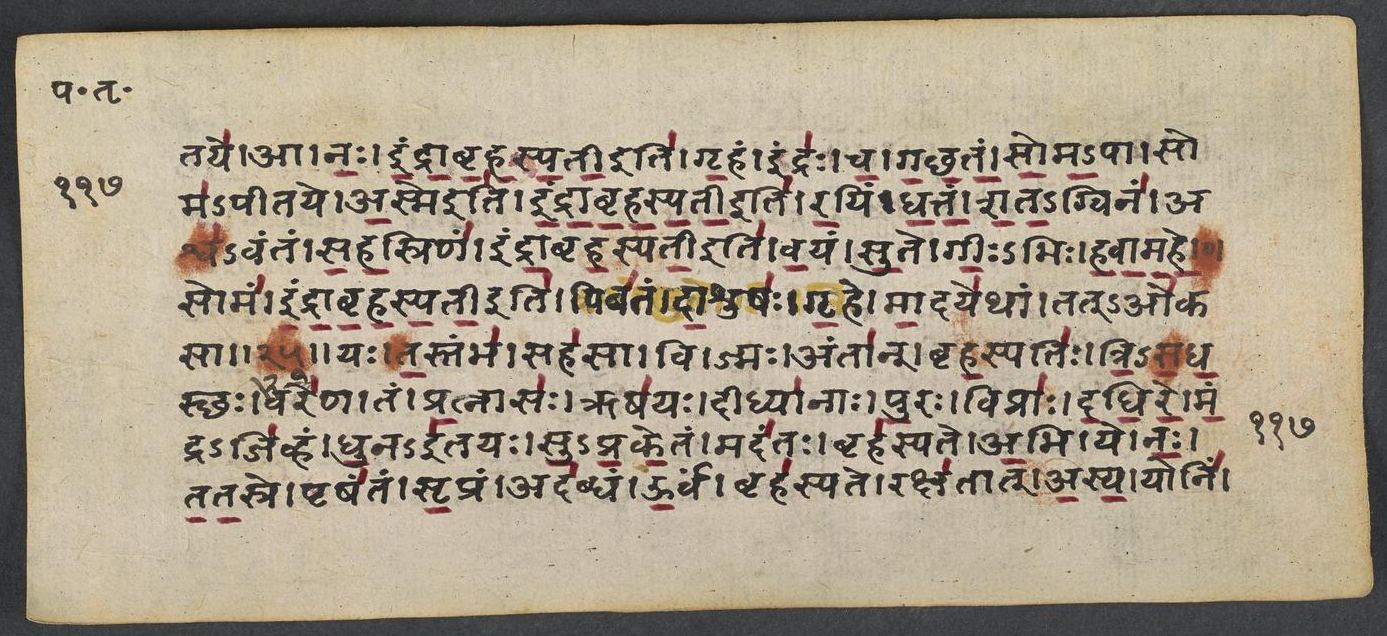
Where on the image
Penn Ms. Coll. 390 Item 41, fol. 308v (numbered 117v by the scribe) (OPenn image 309, upper leaf). Checked on the image: the Rigveda text on this page begins in RV 4.49.2 ‹-pītaye›. The next page with Rigveda text, fol. 309r (numbered 118r by the scribe), begins in RV 4.50.3 ‹bṛhaspate yā paramā parāvat›. Verses 4.50.1-2 end on this page.
1yas ta̱stambha̱ saha̍sā̱ vi jmo antā̱n bṛha̱spati̍s triṣadha̱stho rave̍ṇa | tam pra̱tnāsa̱ ṛṣa̍yo̱ dīdhyā̍nāḥ pu̱ro viprā̍ dadhire ma̱ndraji̍hvam ||
2dhu̱neta̍yaḥ suprake̱tam mada̍nto̱ bṛha̍spate a̱bhi ye na̍s tata̱sre | pṛṣa̍ntaṁ sṛ̱pram ada̍bdham ū̱rvam bṛha̍spate̱ rakṣa̍tād asya̱ yoni̍m ||
Compare: Padapāṭha (word-by-word text written in the manuscript; Sansknet e-text via GRETIL)
1yaḥ | tastambha | sahasā | vi | jmaḥ | antān | bṛhaspatiḥ | tri-sadhasthaḥ | raveṇa | tam | pratnāsaḥ | ṛṣayaḥ | dīdhyānāḥ | puraḥ | viprāḥ | dadhire | mandra-jihvam
2dhuna-itayaḥ | su-praketam | madantaḥ | bṛhaspate | abhi | ye | naḥ | tatasre | pṛṣantam | sṛpram | adabdham | ūrvam | bṛhaspate | rakṣatāt | asya | yonim
1Him who with might hath propped earth's ends, who sitteth in threefold seat, Br̥ihaspati, with thunder, Him of the pleasant tongue have ancient sages, deep-thinking, holy singers, set before them.
2Wild in their course, in well-marked wise rejoicing were they, Br̥ihaspati, who pressed around us. Preserve Br̥ihaspati, the stall uninjured, this company's raining, ever-moving birthplace.
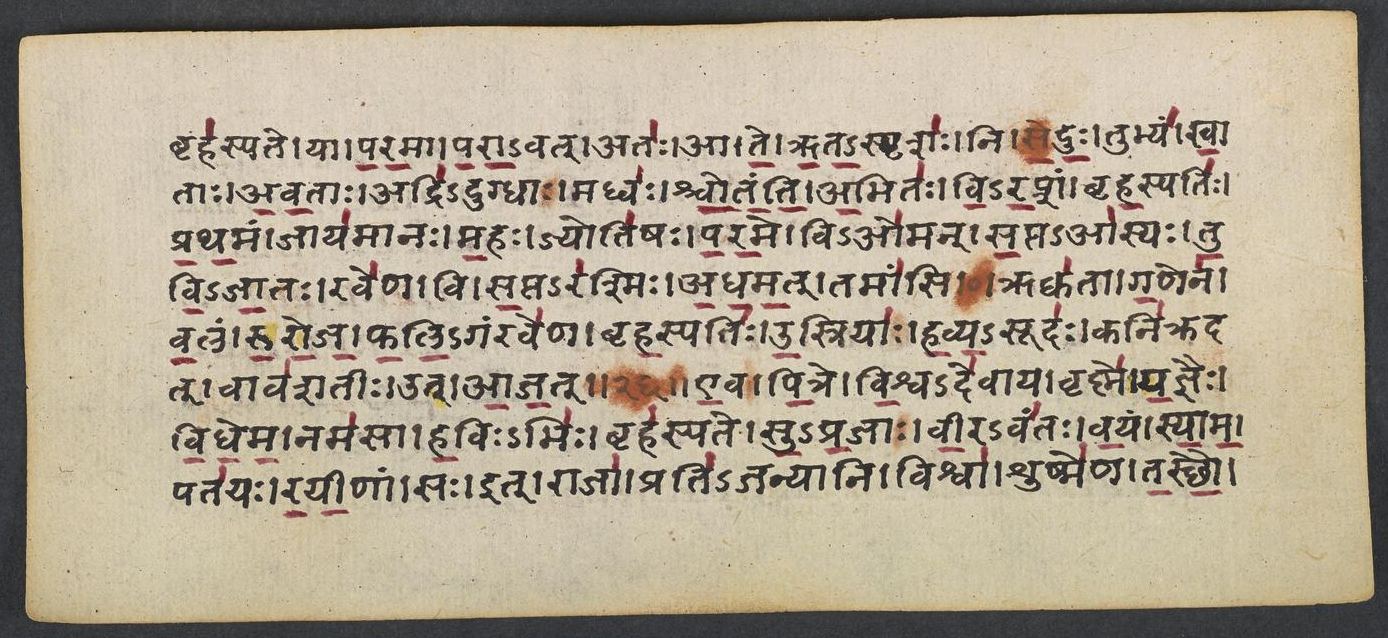
Where on the image
Penn Ms. Coll. 390 Item 41, fol. 309r (numbered 118r by the scribe) (OPenn image 309, lower leaf). Checked on the image: the Rigveda text on this page begins in RV 4.50.3 ‹bṛhaspate yā paramā parāvat›. The next page with Rigveda text, fol. 309v (numbered 118v by the scribe), begins in RV 4.50.7 ‹abhi vīryeṇa bṛhaspatim yaḥ›. Verses 4.50.3-6 end on this page.
3bṛha̍spate̱ yā pa̍ra̱mā pa̍rā̱vad ata̱ ā ta̍ ṛta̱spṛśo̱ ni ṣe̍duḥ | tubhya̍ṁ khā̱tā a̍va̱tā adri̍dugdhā̱ madhva̍ḥ ścotanty a̱bhito̍ vira̱pśam ||
4bṛha̱spati̍ḥ pratha̱maṁ jāya̍māno ma̱ho jyoti̍ṣaḥ para̱me vyo̍man | sa̱ptāsya̍s tuvijā̱to rave̍ṇa̱ vi sa̱ptara̍śmir adhama̱t tamā̍ṁsi ||
5sa su̱ṣṭubhā̱ sa ṛkva̍tā ga̱ṇena̍ va̱laṁ ru̍roja phali̱gaṁ rave̍ṇa | bṛha̱spati̍r u̱sriyā̍ havya̱sūda̱ḥ kani̍krada̱d vāva̍śatī̱r ud ā̍jat ||
6e̱vā pi̱tre vi̱śvade̍vāya̱ vṛṣṇe̍ ya̱jñair vi̍dhema̱ nama̍sā ha̱virbhi̍ḥ | bṛha̍spate supra̱jā vī̱rava̍nto va̱yaṁ syā̍ma̱ pata̍yo rayī̱ṇām ||
Compare: Padapāṭha (word-by-word text written in the manuscript; Sansknet e-text via GRETIL)
3bṛhaspate | yā | paramā | parāvat | ataḥ | ā | te | ṛta-spṛśaḥ | ni | seduḥ | tubhyam | khātāḥ | avatāḥ | adri-dugdhāḥ | madhvaḥ | ścotanti | abhitaḥ | vi-rapśam
4bṛhaspatiḥ | prathamam | jāyamānaḥ | mahaḥ | jyotiṣaḥ | parame | vi-oman | sapta-āsyaḥ | tuvi-jātaḥ | raveṇa | vi | sapta-raśmiḥ | adhamat | tamāṃsi
5saḥ | su-stubhā | saḥ | ṛkvatā | gaṇena | valam | ruroja | phali-gam | raveṇa | bṛhaspatiḥ | usriyāḥ | havya-sūdaḥ | kanikradat | vāvaśatīḥ | ut | ājat
6eva | pitre | viśva-devāya | vṛṣṇe | yajñaiḥ | vidhema | namasā | haviḥ-bhiḥ | bṛhaspate | su-prajāḥ | vīra-vantaḥ | vayam | syāma | patayaḥ | rayīṇām
3Br̥ihaspati, from thy remotest distance have they sat down who love the law eternal. For thee were dug wells springing from the mountain, which murmuring round about pour streams of sweetness.
4Br̥ihaspati, when first he had his being from mighty splendour in supremest heaven, Strong, with his sevenfold mouth, with noise of thunder, with his seven rays, blew and dispersed the darkness.
5With the loud-shouting band who sang his praises, with thunder, he destroyed obstructive Vala. Br̥ihaspati thundering drave forth the cattle, the lowing cows who make oblations ready.
6Serve we with sacrifices, gifts, and homage even thus the Steer of all the Gods, the Father. Br̥ihaspati, may we be lords of riches, with noble progeny and store of heroes.
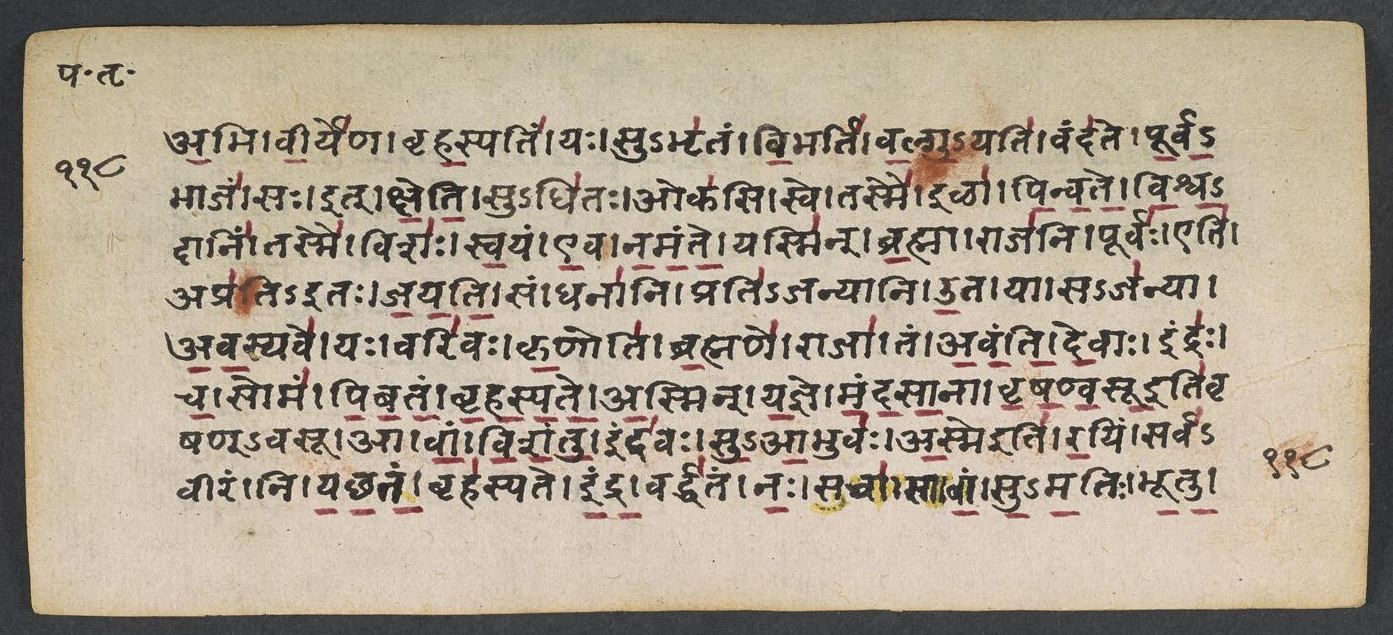
Where on the image
Penn Ms. Coll. 390 Item 41, fol. 309v (numbered 118v by the scribe) (OPenn image 310, upper leaf). Checked on the image: the Rigveda text on this page begins in RV 4.50.7 ‹abhi vīryeṇa bṛhaspatim yaḥ›. The next page with Rigveda text, fol. 310r (numbered 119r by the scribe), begins in RV 4.50.11 ‹asme iti aviṣṭam dhiyaḥ›. Verses 4.50.7-10 end on this page; 4.50.7 begins on fol. 309r (numbered 118r by the scribe).
7sa id rājā̱ prati̍janyāni̱ viśvā̱ śuṣme̍ṇa tasthāv a̱bhi vī̱rye̍ṇa | bṛha̱spati̱ṁ yaḥ subhṛ̍tam bi̱bharti̍ valgū̱yati̱ vanda̍te pūrva̱bhāja̍m ||
8sa it kṣe̍ti̱ sudhi̍ta̱ oka̍si̱ sve tasmā̱ iḻā̍ pinvate viśva̱dānī̍m | tasmai̱ viśa̍ḥ sva̱yam e̱vā na̍mante̱ yasmi̍n bra̱hmā rāja̍ni̱ pūrva̱ eti̍ ||
9apra̍tīto jayati̱ saṁ dhanā̍ni̱ prati̍janyāny u̱ta yā saja̍nyā | a̱va̱syave̱ yo vari̍vaḥ kṛ̱ṇoti̍ bra̱hmaṇe̱ rājā̱ tam a̍vanti de̱vāḥ ||
10indra̍ś ca̱ soma̍m pibatam bṛhaspate̱ 'smin ya̱jñe ma̍ndasā̱nā vṛ̍ṣaṇvasū | ā vā̍ṁ viśa̱ntv inda̍vaḥ svā̱bhuvo̱ 'sme ra̱yiṁ sarva̍vīra̱ṁ ni ya̍cchatam ||
Compare: Padapāṭha (word-by-word text written in the manuscript; Sansknet e-text via GRETIL)
7saḥ | it | rājā | prati-janyāni | viśvā | śuṣmeṇa | tasthau | abhi | vīryeṇa | bṛhaspatim | yaḥ | su-bhṛtam | bibharti | valgu-yati | vandate | pūrva-bhājam
8saḥ | it | kṣeti | su-dhitaḥ | okasi | sve | tasmai | iḷā | pinvate | viśva-dānīm | tasmai | viśaḥ | svayam | eva | namante | yasmin | brahmā | rājani | pūrvaḥ | et i
9aprati-itaḥ | jayati | sam | dhanāni | prati-janyāni | uta | yā | sa-janyā | avasyave | yaḥ | varivaḥ | kṛṇoti | brahmaṇe | rājā | tam | avanti | devāḥ
10indraḥ | ca | somam | pibatam | bṛhaspate | asmin | yajñe | mandasānā | vṛṣaṇvasūitivṛṣaṇ-vasū | ā | vām | viśantu | indavaḥ | su-ābhuvaḥ | asme iti | rayim | sarva-vīram | ni | yacchatam
7Surely that King by power and might heroic hath made him lord of all his foes' possessions, Who cherishes Br̥ihaspati well-tended, adorns and worships him as foremost sharer.
8In his own house he dwells in peace and comfort: to him for ever holy food flows richly. To him the people with free will pay homage-the King with whom the Brahman hath precedence.
9He, unopposed, is master of the riches.of his own subjects and of hostile people. The Gods uphold that King with their protection who helps the Brahman when he seeks his favour.
10Indra, Br̥ihaspati, rainers of treasure, rejoicing at this sacrifice drink the Soma. Let the abundant drops sink deep within you: vouchsafe us riches with full store of heroes.
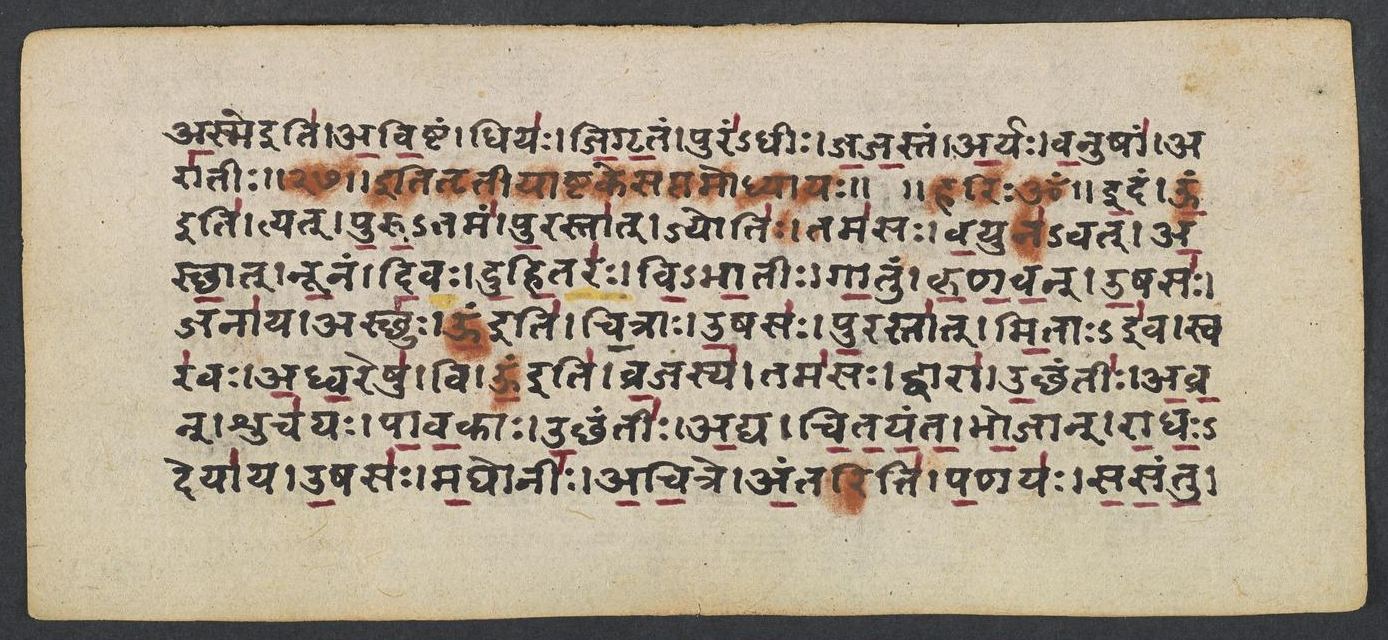
Where on the image
Penn Ms. Coll. 390 Item 41, fol. 310r (numbered 119r by the scribe) (OPenn image 310, lower leaf). Checked on the image: the Rigveda text on this page begins in RV 4.50.11 ‹asme iti aviṣṭam dhiyaḥ›. The next page with Rigveda text, fol. 310v (numbered 119v by the scribe), begins in RV 4.51.3 ‹abudhyamānāḥ tamasaḥ vi-madhye›. Verse 4.50.11 ends on this page; 4.50.11 begins on fol. 309v (numbered 118v by the scribe).
11bṛha̍spata indra̱ vardha̍taṁ na̱ḥ sacā̱ sā vā̍ṁ suma̱tir bhū̍tv a̱sme | a̱vi̱ṣṭaṁ dhiyo̍ jigṛ̱tam pura̍ṁdhīr jaja̱stam a̱ryo va̱nuṣā̱m arā̍tīḥ ||
Compare: Padapāṭha (word-by-word text written in the manuscript; Sansknet e-text via GRETIL)
11bṛhaspate | indra | vardhatam | naḥ | sacā | sā | vām | su-matiḥ | bhūtu | asme iti | aviṣṭam | dhiyaḥ | jigṛtam | puram-dhīḥ | jajastam | aryaḥ | vanuṣām | arātīḥ
11Br̥ihaspati and Indra, make us prosper may this be your benevolence to usward. Assist our holy thoughts, wake up our spirit: weaken the hatred of our foe and rivals.
Notes
- Sanskrit: Aufrecht's edition (1877) with the Vedic accents, as entered by van Nooten and Holland (GRETIL).
- English: Ralph T. H. Griffith, The Hymns of the Rigveda (1889-1892; 2nd ed. 1896-1897), from the VedaWeb digital text; OCR slips in that text were corrected against the printed 2nd edition (data/sources/rigveda/griffith_errata.json).
- Padapāṭha (edition text): Sansknet e-text via GRETIL (CC BY-NC-SA 4.0).
Cite
Sources
- Source: Penn Ms. Coll. 390 Item 41 (undated (catalogued with Penn's 18th-19th c. Vedic manuscripts)), OPenn, Public Domain Mark + Aufrecht's accented text (GRETIL) + Griffith's English (VedaWeb) (holding institution)
- Critical edition: Aufrecht (1877), accented e-text via GRETIL
← previous · → next · v cycle view · l back to library