Rigveda 5.1: To Agni
Introduction
Rigveda 5.1 is a hymn of 12 verses addressed to Agni. It stands in book (maṇḍala) 5, the family book of the Atri clan. The Rigveda is the oldest collection of Sanskrit hymns, composed in the second half of the second millennium BCE and handed down orally for many centuries before it was written down.
The manuscript shown is Penn Ms. Coll. 390 Item 41 (University of Pennsylvania), an undated paper manuscript of the padapāṭha (the word-by-word recitation text, in which every word is written separately and compounds are split) of the whole Ṛgveda in Devanāgarī, 884 leaves in fascicles, 7-9 lines to the page, accents in red; this hymn stands on fol. 317v-319r. Each section below gives the verses that end on one page; the page boundaries were read on the images (the opening words of every page), not counted out. Where the manuscript is a padapāṭha (the word-by-word recitation text), the section shows Aufrecht's continuous (saṃhitā) text first and, as the edition text, the padapāṭha of the same verses, which is the form written on the page.
How was this verified? (Provenance)
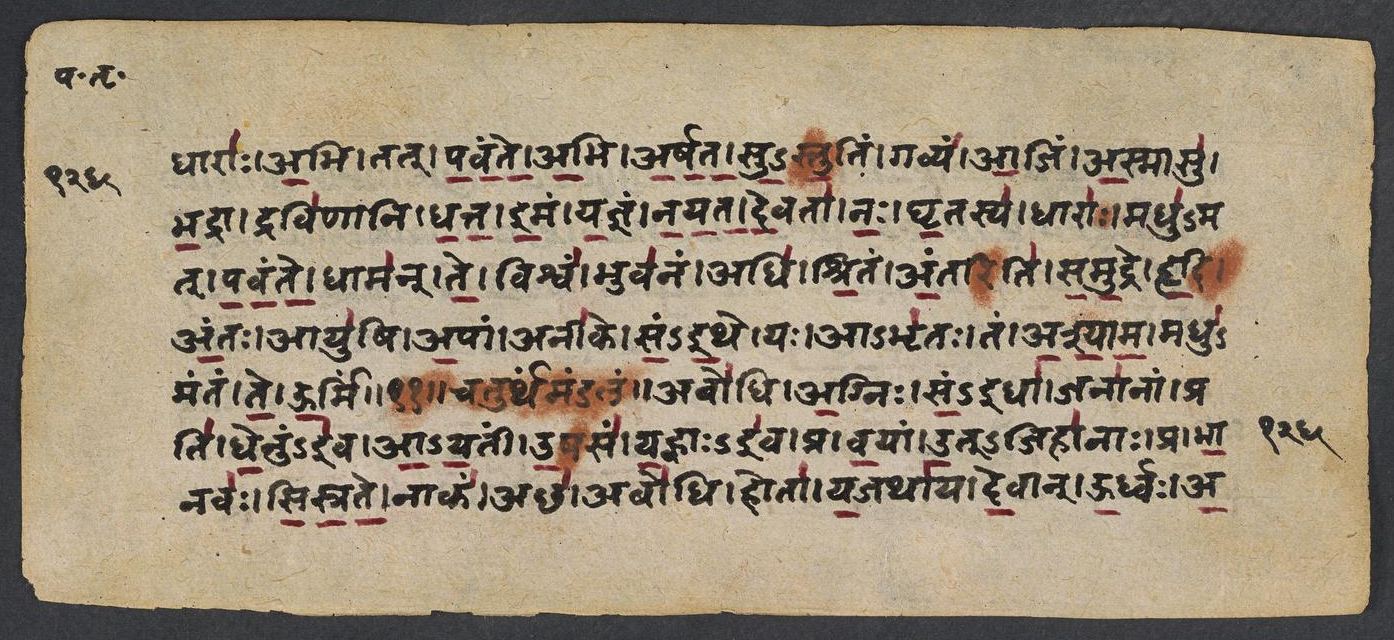
Where on the image
Penn Ms. Coll. 390 Item 41, fol. 317v (numbered 126v by the scribe) (OPenn image 318, upper leaf). Checked on the image: the Rigveda text on this page begins in RV 4.58.9 ‹dhārāḥ abhi tat pavante›. The next page with Rigveda text, fol. 318r (numbered 127r by the scribe), begins in RV 5.1.2 ‹-agniḥ su-manāḥ prātaḥ asthāt›. Verse 5.1.1 ends on this page.
1abo̍dhy a̱gniḥ sa̱midhā̱ janā̍nā̱m prati̍ dhe̱num i̍vāya̱tīm u̱ṣāsa̍m | ya̱hvā i̍va̱ pra va̱yām u̱jjihā̍nā̱ḥ pra bhā̱nava̍ḥ sisrate̱ nāka̱m accha̍ ||
Compare: Padapāṭha (word-by-word text written in the manuscript; Sansknet e-text via GRETIL)
1abodhi | agniḥ | sam-idhā | janānām | prati | dhenum-iva | āyatīm | uṣasam | yahvāḥ-iva | pra | vayām | ut-jihānāḥ | pra | bhānavaḥ | sisrate | nākam | accha
1Agni is wakened by the people's fuel to meet the Dawn who cometh like a milch-cow. Like young trees shooting up on high their branches, his flames are rising to the vault of heaven.
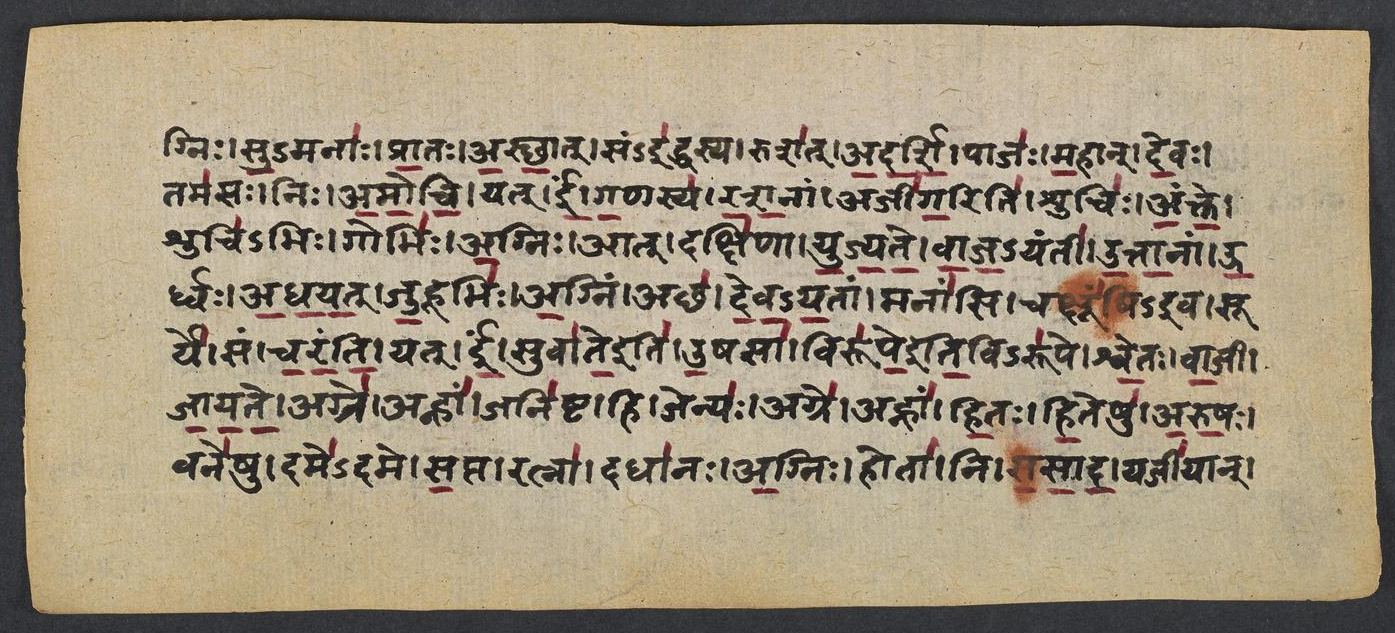
Where on the image
Penn Ms. Coll. 390 Item 41, fol. 318r (numbered 127r by the scribe) (OPenn image 318, lower leaf). Checked on the image: the Rigveda text on this page begins in RV 5.1.2 ‹-agniḥ su-manāḥ prātaḥ asthāt›. The next page with Rigveda text, fol. 318v (numbered 127v by the scribe), begins in RV 5.1.6 ‹agniḥ hotā ni asīdat›. Verses 5.1.2-5 end on this page; 5.1.2 begins on fol. 317v (numbered 126v by the scribe).
2abo̍dhi̱ hotā̍ ya̱jathā̍ya de̱vān ū̱rdhvo a̱gniḥ su̱manā̍ḥ prā̱tar a̍sthāt | sami̍ddhasya̱ ruśa̍d adarśi̱ pājo̍ ma̱hān de̱vas tama̍so̱ nir a̍moci ||
3yad ī̍ṁ ga̱ṇasya̍ raśa̱nām ajī̍ga̱ḥ śuci̍r aṅkte̱ śuci̍bhi̱r gobhi̍r a̱gniḥ | ād dakṣi̍ṇā yujyate vāja̱yanty u̍ttā̱nām ū̱rdhvo a̍dhayaj ju̱hūbhi̍ḥ ||
4a̱gnim acchā̍ devaya̱tām manā̍ṁsi̱ cakṣū̍ṁṣīva̱ sūrye̱ saṁ ca̍ranti | yad ī̱ṁ suvā̍te u̱ṣasā̱ virū̍pe śve̱to vā̱jī jā̍yate̱ agre̱ ahnā̍m ||
5jani̍ṣṭa̱ hi jenyo̱ agre̱ ahnā̍ṁ hi̱to hi̱teṣv a̍ru̱ṣo vane̍ṣu | dame̍-dame sa̱pta ratnā̱ dadhā̍no̱ 'gnir hotā̱ ni ṣa̍sādā̱ yajī̍yān ||
Compare: Padapāṭha (word-by-word text written in the manuscript; Sansknet e-text via GRETIL)
2abodhi | hotā | yajathāya | devān | ūrdhvaḥ | agniḥ | su-manāḥ | prātaḥ | asthāt | sam-iddhasya | ruśat | adarśi | pājaḥ | mahān | devaḥ | tamasaḥ | niḥ | amoci
3yat | īm | gaṇasya | raśanām | ajīgariti | śuciḥ | aṅkte | śuci-bhiḥ | go--bhiḥ | agniḥ | āt | dakṣiṇā | yujyate | vāja-yantī | uttānām | ūrdhvaḥ | adhayat | juhūbhiḥ
4agnim | accha | deva-yatām | manāṃsi | cakṣūṃṣī-iva | sūrye | sam | caranti | yat | īm | suvāte | uṣasā | virūpeitivi-rūpe | śvetaḥ | vājī | jāyate | agre | ahnām
5janiṣṭa | hi | jenyaḥ | agre | ahnām | hitaḥ | hiteṣu | aruṣaḥ | vaneṣu | dame--dame | sapta | ratnā | dadhānaḥ | agniḥ | hotā | ni | sasāda | yajīyān
2For worship of the Gods the Priest was wakened: at morning gracious Agni hath arisen. Kindled, his radiant might is made apparent, and the great Deity set free from darkness.
3When he hath stirred the line of his attendants, with the pure milk pure Agni is anointed. The strength-bestowing gift is then made ready, which spread in front, with tongues, erect, he drinketh.
4The spirits of the pious turn together to Agni, as the eyes of all to Sûrya. He, when both Dawns of different hues have borne him, springs up at daybreak as a strong white charger.
5The noble One was born at days' beginning, laid red in colour mid the well-laid fuel. Yielding in every house his seven rich treasures, Agni is seated, Priest most skilled in worship.
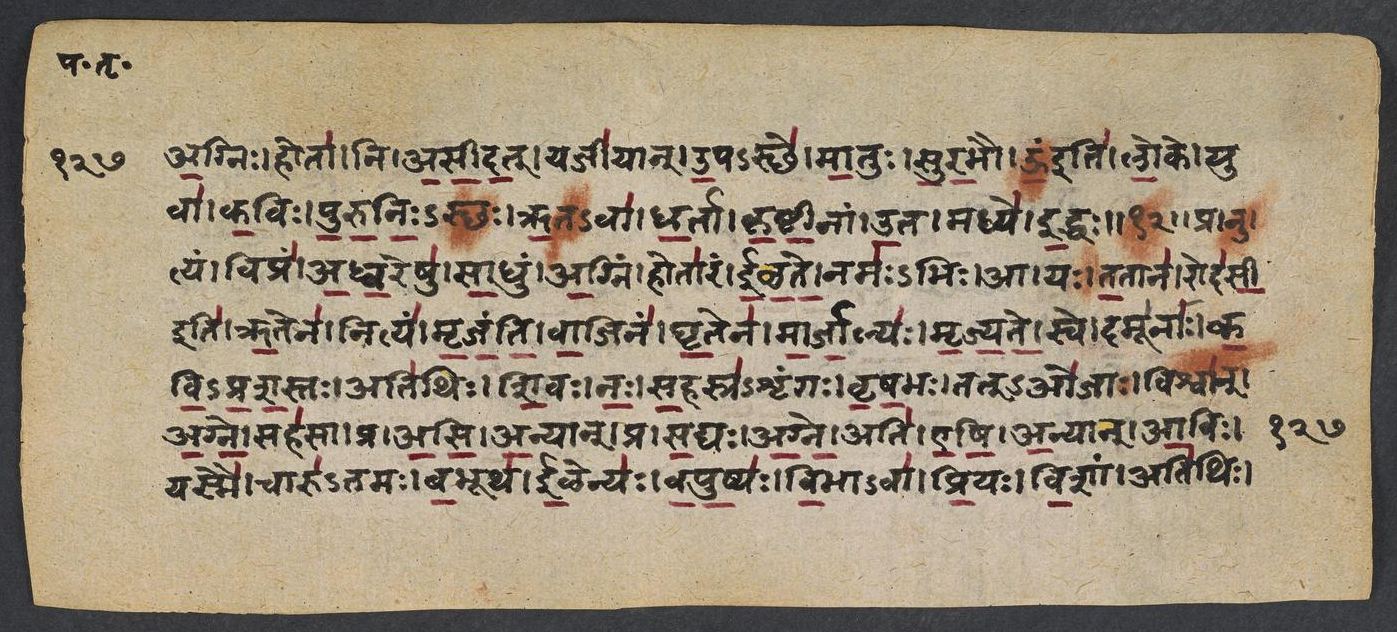
Where on the image
Penn Ms. Coll. 390 Item 41, fol. 318v (numbered 127v by the scribe) (OPenn image 319, upper leaf). Checked on the image: the Rigveda text on this page begins in RV 5.1.6 ‹agniḥ hotā ni asīdat›. The next page with Rigveda text, fol. 319r (numbered 128r by the scribe), begins in RV 5.1.9 ‹mānuṣīṇām›. Verses 5.1.6-8 end on this page.
6a̱gnir hotā̱ ny a̍sīda̱d yajī̍yān u̱pasthe̍ mā̱tuḥ su̍ra̱bhā u̍ lo̱ke | yuvā̍ ka̱viḥ pu̍runi̱ṣṭha ṛ̱tāvā̍ dha̱rtā kṛ̍ṣṭī̱nām u̱ta madhya̍ i̱ddhaḥ ||
7pra ṇu tyaṁ vipra̍m adhva̱reṣu̍ sā̱dhum a̱gniṁ hotā̍ram īḻate̱ namo̍bhiḥ | ā yas ta̱tāna̱ roda̍sī ṛ̱tena̱ nitya̍m mṛjanti vā̱jina̍ṁ ghṛ̱tena̍ ||
8mā̱rjā̱lyo̍ mṛjyate̱ sve damū̍nāḥ kavipraśa̱sto ati̍thiḥ śi̱vo na̍ḥ | sa̱hasra̍śṛṅgo vṛṣa̱bhas tado̍jā̱ viśvā̍m̐ agne̱ saha̍sā̱ prāsy a̱nyān ||
Compare: Padapāṭha (word-by-word text written in the manuscript; Sansknet e-text via GRETIL)
6agniḥ | hotā | ni | asīdat | yajīyān | upa-sthe | mātuḥ | surabhau | oṃ iti | loke | yuvā | kaviḥ | puruniḥ-ṣṭhaḥ | ṛta-vā | dhartā | kṛṣṭīnām | uta | madhye | iddhaḥ
7pra | nu | tyam | vipram | adhvareṣu | sādhum | agnim | hotāram | īḷate | namaḥ-bhi ḥ | ā | yaḥ | tatāna | rodasī iti | ṛtena | nityam | mṛjanti | vājinam | ghṛtena
8mārjālyaḥ | mṛjyate | sve | damūnāḥ | kavi-praśastaḥ | atithiḥ | śivaḥ | naḥ | sahasra-śṛṅgaḥ | vṛṣabhaḥ | tat-ojā | viśvān | agne | sahasā | pra | asi | anyān
6Agni hath sat him down, a Priest most skilful, on a sweet-smelling place, his Mother's bosom. Young, faithful, sage, preeminent o'er many, kindled among the folk whom he sustaineth.
7This Singer excellent at sacrifices, Agni the Priest, they glorify with homage. Him who spread out both worlds by Law Eternal they balm with oil, strong Steed who never faileth.
8He, worshipful House-Friend, in his home is worshipped, our own auspicious guest, lauded by sages. That strength the Bull with thousand horns possesses. In might, O Agni, thou excellest others.
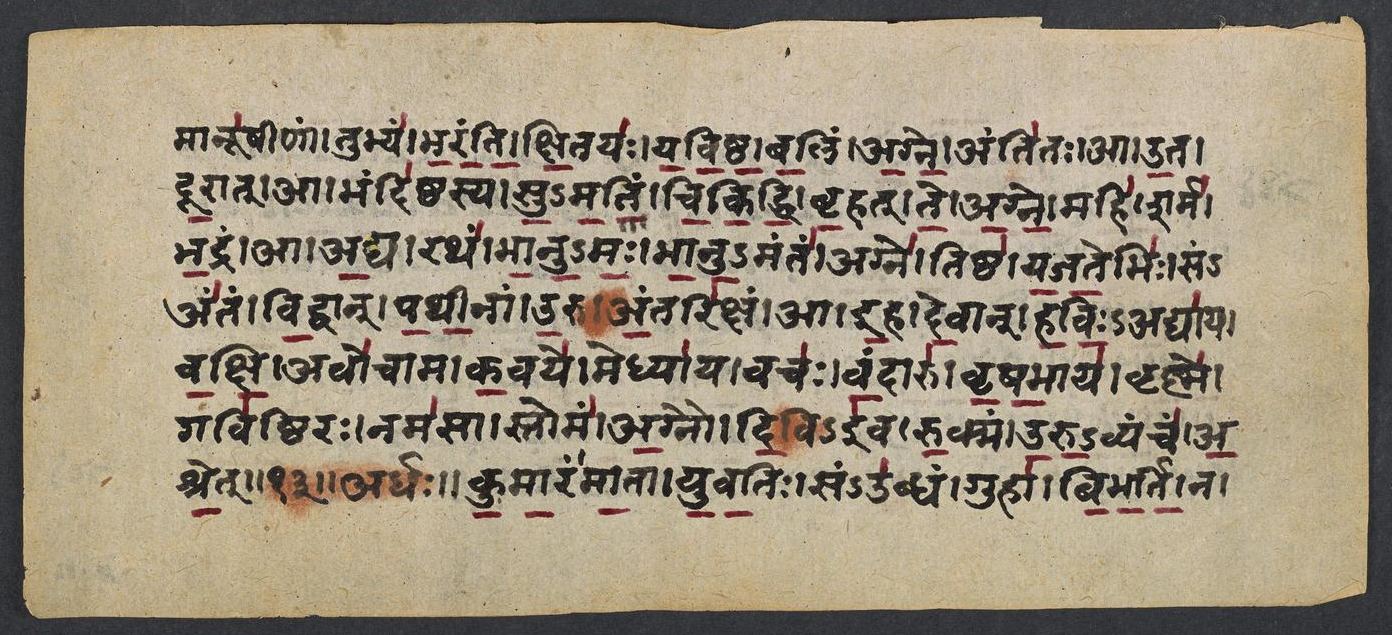
Where on the image
Penn Ms. Coll. 390 Item 41, fol. 319r (numbered 128r by the scribe) (OPenn image 319, lower leaf). Checked on the image: the Rigveda text on this page begins in RV 5.1.9 ‹mānuṣīṇām›. The next page with Rigveda text, fol. 319v (numbered 128v by the scribe), begins in RV 5.2.1 ‹dadāti pitre anīkam asya›. Verses 5.1.9-12 end on this page; 5.1.9 begins on fol. 318v (numbered 127v by the scribe).
9pra sa̱dyo a̍gne̱ aty e̍ṣy a̱nyān ā̱vir yasmai̱ cāru̍tamo ba̱bhūtha̍ | ī̱ḻenyo̍ vapu̱ṣyo̍ vi̱bhāvā̍ pri̱yo vi̱śām ati̍thi̱r mānu̍ṣīṇām ||
10tubhya̍m bharanti kṣi̱tayo̍ yaviṣṭha ba̱lim a̍gne̱ anti̍ta̱ ota dū̱rāt | ā bhandi̍ṣṭhasya suma̱tiṁ ci̍kiddhi bṛ̱hat te̍ agne̱ mahi̱ śarma̍ bha̱dram ||
11ādya ratha̍m bhānumo bhānu̱manta̱m agne̱ tiṣṭha̍ yaja̱tebhi̱ḥ sama̍ntam | vi̱dvān pa̍thī̱nām u̱rv a1̱̍ntari̍kṣa̱m eha de̱vān ha̍vi̱radyā̍ya vakṣi ||
12avo̍cāma ka̱vaye̱ medhyā̍ya̱ vaco̍ va̱ndāru̍ vṛṣa̱bhāya̱ vṛṣṇe̍ | gavi̍ṣṭhiro̱ nama̍sā̱ stoma̍m a̱gnau di̱vī̍va ru̱kmam u̍ru̱vyañca̍m aśret ||
Compare: Padapāṭha (word-by-word text written in the manuscript; Sansknet e-text via GRETIL)
9pra | sadyaḥ | agne | ati | eṣi | anyān | āviḥ | yasmai | cāru-tamaḥ | babhūtha | īḷenyaḥ | vapuṣyaḥ | vibhāvā | priyaḥ | viśām | atithiḥ | mānuṣīṇām
10tubhyam | bharanti | kṣitayaḥ | yaviṣṭha | balim | agne | antitaḥ | ā | uta | dūrāt | ā | bhandiṣṭhasya | su-matim | cikiddhi | bṛhat | te | agne | mahi | śarma | bhadram
11ā | adya | ratham | bhānu-maḥ | bhānum | antam | agne | tiṣṭha | yajatebhiḥ | sam-antam | vidvān | pathīnām | uru | antarikṣam | ā | iha | devān | haviḥ-adyāya | vakṣi
12avocāma | kavaye | medhyāya | vacaḥ | vandāru | vṛṣabhāya | vṛṣṇe | gaviṣṭhiraḥ | namasā | stomam | agnau | divi-iva | rukmam | uru-vyañcam | aśret
9Thou quickly passest by all others, Agni, for him to whom thou hast appeared most lovely, Wondrously fair, adorable, effulgent, the guest of men, the darling of the people.
10To thee, Most Youthful God! to thee, O Agni from near and far the people bring their tribute. Mark well the prayer of him who best extols thee. Great, high, auspicious, Agni, is thy shelter.
11Ascend to-day thy splendid car, O Agni, in splendour, with the Holy Ones around it. Knowing the paths by mid-air's spacious region bring hither Gods to feast on our oblation.
12To him adorable, sage, strong and mighty we have sung forth our song of praise and homage. Gavishṭhira hath raised with prayer to Agni this laud far-reaching, like gold light to heaven.
Notes
- Sanskrit: Aufrecht's edition (1877) with the Vedic accents, as entered by van Nooten and Holland (GRETIL).
- English: Ralph T. H. Griffith, The Hymns of the Rigveda (1889-1892; 2nd ed. 1896-1897), from the VedaWeb digital text; OCR slips in that text were corrected against the printed 2nd edition (data/sources/rigveda/griffith_errata.json).
- Padapāṭha (edition text): Sansknet e-text via GRETIL (CC BY-NC-SA 4.0).
Cite
Sources
- Source: Penn Ms. Coll. 390 Item 41 (undated (catalogued with Penn's 18th-19th c. Vedic manuscripts)), OPenn, Public Domain Mark + Aufrecht's accented text (GRETIL) + Griffith's English (VedaWeb) (holding institution)
- Critical edition: Aufrecht (1877), accented e-text via GRETIL
← previous · → next · v cycle view · l back to library