Rigveda 5.2: To Agni
Introduction
Rigveda 5.2 is a hymn of 12 verses addressed to Agni. It stands in book (maṇḍala) 5, the family book of the Atri clan. The Rigveda is the oldest collection of Sanskrit hymns, composed in the second half of the second millennium BCE and handed down orally for many centuries before it was written down.
The manuscript shown is Penn Ms. Coll. 390 Item 41 (University of Pennsylvania), an undated paper manuscript of the padapāṭha (the word-by-word recitation text, in which every word is written separately and compounds are split) of the whole Ṛgveda in Devanāgarī, 884 leaves in fascicles, 7-9 lines to the page, accents in red; this hymn stands on fol. 319r-321r. Each section below gives the verses that end on one page; the page boundaries were read on the images (the opening words of every page), not counted out. Where the manuscript is a padapāṭha (the word-by-word recitation text), the section shows Aufrecht's continuous (saṃhitā) text first and, as the edition text, the padapāṭha of the same verses, which is the form written on the page.
How was this verified? (Provenance)
Where on the image
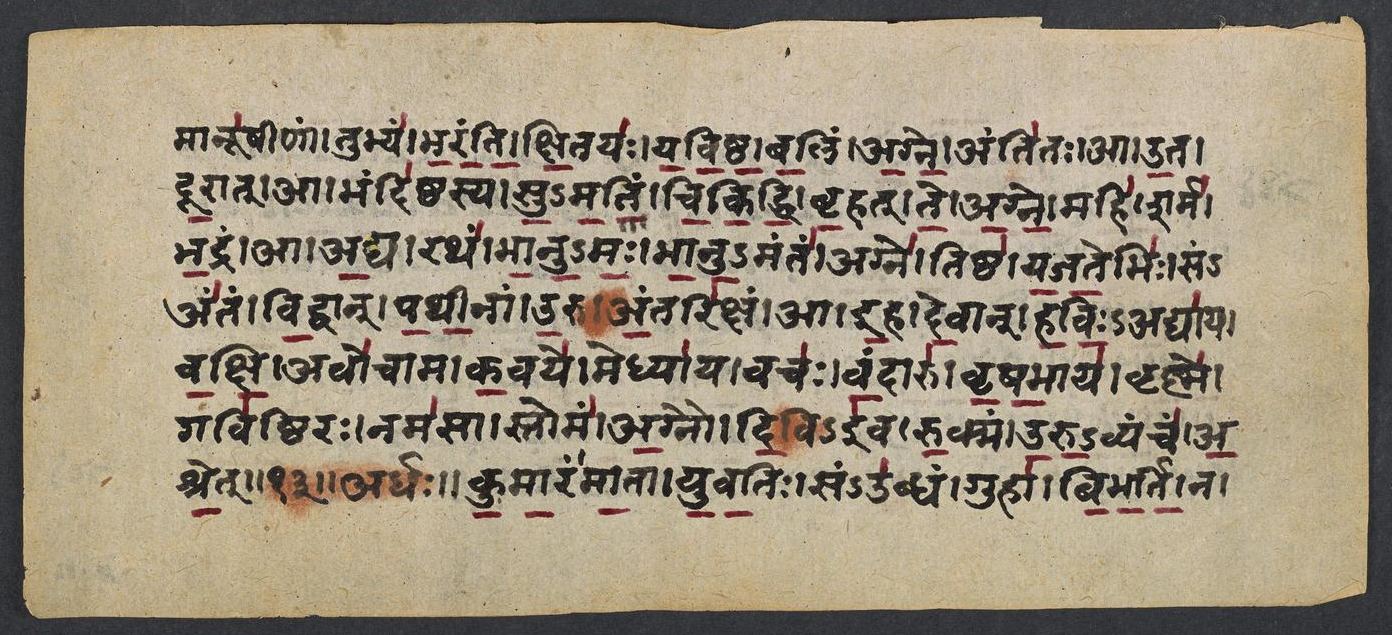
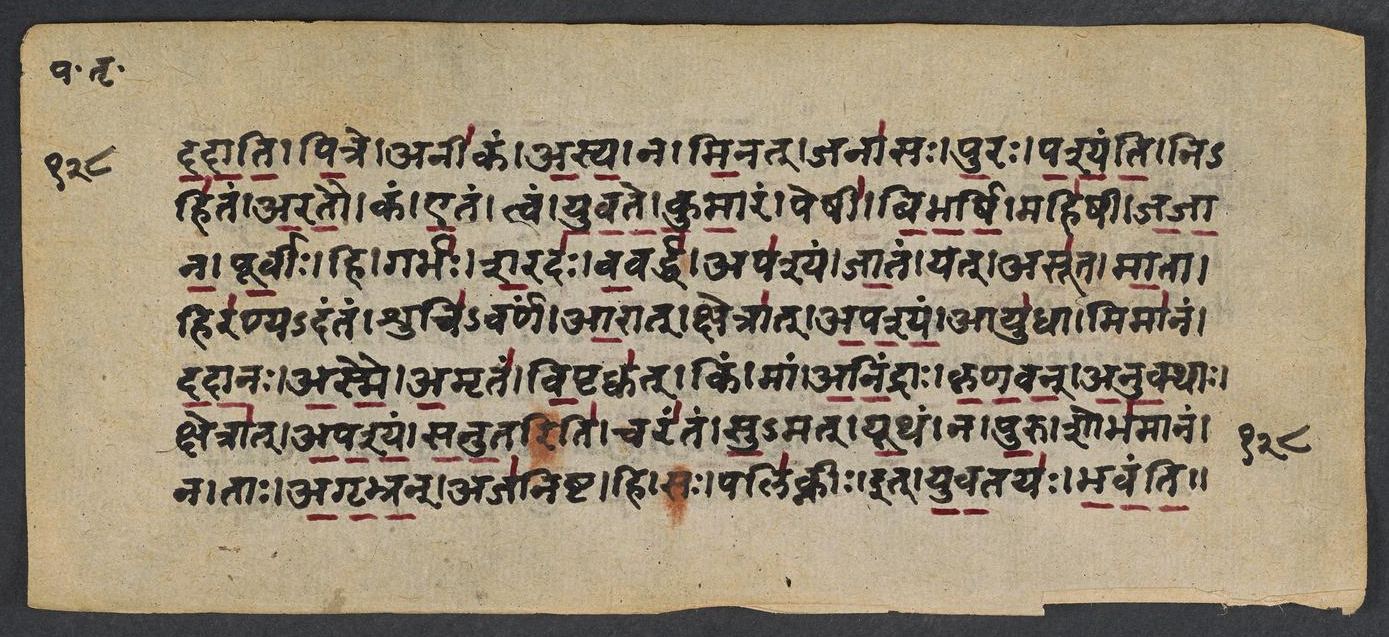
Penn Ms. Coll. 390 Item 41, fol. 319v (numbered 128v by the scribe) (OPenn image 320, upper leaf). Checked on the image: the Rigveda text on this page begins in RV 5.2.1 ‹dadāti pitre anīkam asya›. The next page with Rigveda text, fol. 320r (numbered 129r by the scribe), begins in RV 5.2.5 ‹ke me maryakam vi›. Verses 5.2.1-4 end on this page; 5.2.1 begins on fol. 319r (numbered 128r by the scribe).
1ku̱mā̱ram mā̱tā yu̍va̱tiḥ samu̍bdha̱ṁ guhā̍ bibharti̱ na da̍dāti pi̱tre | anī̍kam asya̱ na mi̱naj janā̍saḥ pu̱raḥ pa̍śyanti̱ nihi̍tam ara̱tau ||
2kam e̱taṁ tvaṁ yu̍vate kumā̱ram peṣī̍ bibharṣi̱ mahi̍ṣī jajāna | pū̱rvīr hi garbha̍ḥ śa̱rado̍ va̱vardhāpa̍śyaṁ jā̱taṁ yad asū̍ta mā̱tā ||
3hira̍ṇyadanta̱ṁ śuci̍varṇam ā̱rāt kṣetrā̍d apaśya̱m āyu̍dhā̱ mimā̍nam | da̱dā̱no a̍smā a̱mṛta̍ṁ vi̱pṛkva̱t kim mām a̍ni̱ndrāḥ kṛ̍ṇavann anu̱kthāḥ ||
4kṣetrā̍d apaśyaṁ sanu̱taś cara̍ntaṁ su̱mad yū̱thaṁ na pu̱ru śobha̍mānam | na tā a̍gṛbhra̱nn aja̍niṣṭa̱ hi ṣaḥ pali̍knī̱r id yu̍va̱tayo̍ bhavanti ||
Compare: Padapāṭha (word-by-word text written in the manuscript; Sansknet e-text via GRETIL)
1kumāram | mātā | yuvatiḥ | sam-ubdham | guhā | bibharti | na | dadāti | pitre | anīkam | asya | na | minat | janāsaḥ | puraḥ | paśyanti | ni-hitam | aratau
2kam | etam | tvam | yuvate | kumāram | peṣī | bibharṣi | mahiṣī | jajāna | pūrvīḥ | h i | garbhaḥ | śaradaḥ | vavardha | apaśyam | jātam | yat | asūta | mātā
3hiraṇya-dantam | śuci-varṇam | ārāt | kṣetrāt | apaśyam | āyudhā | mimānam | dadānaḥ | asmai | amṛtam | vipṛkvat | kim | mām | anindrāḥ | kṛṇavan | anukthāḥ
4kṣetrāt | apaśyam | sanutariti | carantam | su-mat | yūtham | na | puru | śobhamānam | na | tāḥ | agṛbhran | ajaniṣṭa | hi | saḥ | paliknīḥ | it | yuvatayaḥ | bhavanti
1THE youthful Mother keeps the Boy in secret pressed to her close, nor yields him to the Father. But, when he lies upon the arm, the people see his unfading countenance before them.
2What child is this thou carriest as handmaid, O Youthful One? The Consort-Queen hath bome him. The Babe unborn increased through many autumns. I saw him born what time his Mother bare him.
3I saw him from afar gold-toothed, bright-coloured, hurling his weapons from his habitation, What time I gave him Amrit free from mixture. How can the Indraless, the hymnless harm me?
4I saw him moving from the place he dwells in, even as with a herd, brilliantly shining. These seized him not: he had been born already. They who were grey with age again grow youthful.
Where on the image
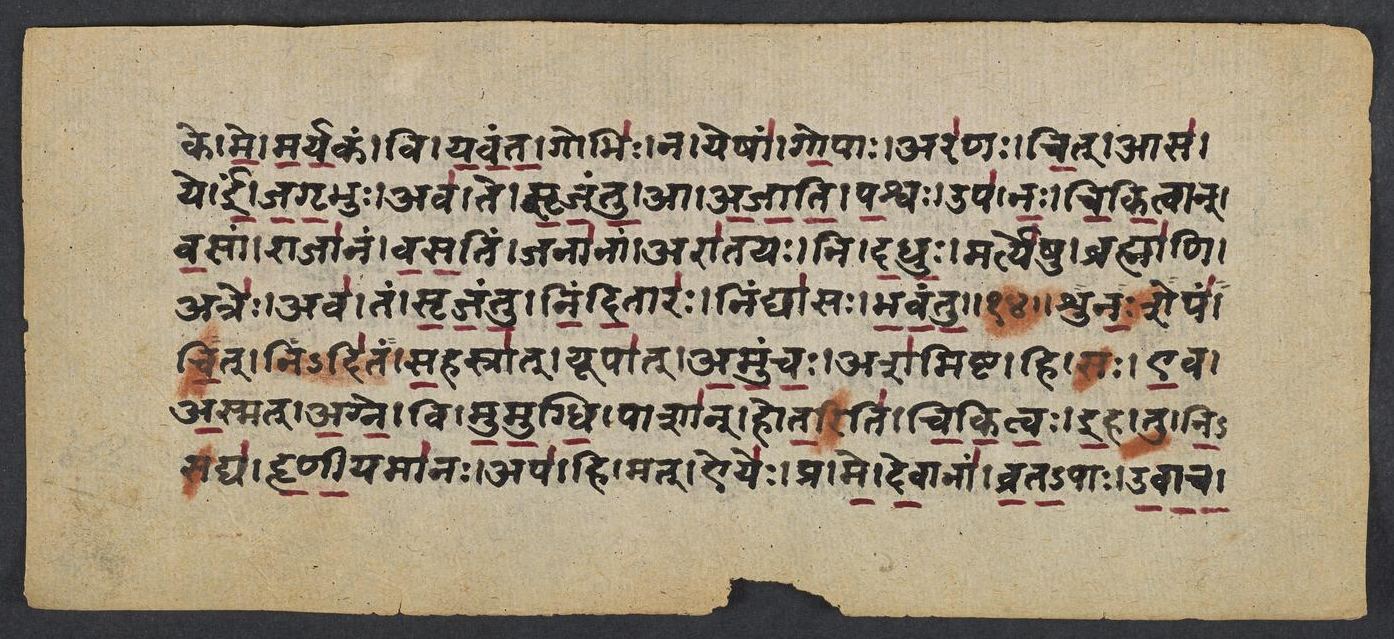
Penn Ms. Coll. 390 Item 41, fol. 320r (numbered 129r by the scribe) (OPenn image 320, lower leaf). Checked on the image: the Rigveda text on this page begins in RV 5.2.5 ‹ke me maryakam vi›. The next page with Rigveda text, fol. 320v (numbered 129v by the scribe), begins in RV 5.2.8 ‹indraḥ vidvān anu hi›. Verses 5.2.5-7 end on this page.
5ke me̍ marya̱kaṁ vi ya̍vanta̱ gobhi̱r na yeṣā̍ṁ go̱pā ara̍ṇaś ci̱d āsa̍ | ya ī̍ṁ jagṛ̱bhur ava̱ te sṛ̍ja̱ntv ājā̍ti pa̱śva upa̍ naś ciki̱tvān ||
6va̱sāṁ rājā̍naṁ vasa̱tiṁ janā̍nā̱m arā̍tayo̱ ni da̍dhu̱r martye̍ṣu | brahmā̱ṇy atre̱r ava̱ taṁ sṛ̍jantu nindi̱tāro̱ nindyā̍so bhavantu ||
7śuna̍ś ci̱c chepa̱ṁ nidi̍taṁ sa̱hasrā̱d yūpā̍d amuñco̱ aśa̍miṣṭa̱ hi ṣaḥ | e̱vāsmad a̍gne̱ vi mu̍mugdhi̱ pāśā̱n hota̍ś cikitva i̱ha tū ni̱ṣadya̍ ||
Compare: Padapāṭha (word-by-word text written in the manuscript; Sansknet e-text via GRETIL)
5ke | me | maryakam | vi | yavanta | gobhiḥ | na | yeṣām | gopāḥ | araṇaḥ | cit | āsa | ye | īm | jagṛbhuḥ | ava | te | sṛjantu | ā | ajāti | paśvaḥ | upa | naḥ | cikitvān
6vasām | rājānam | vasatim | janānām | arātayaḥ | ni | dadhuḥ | martyeṣu | brahmāṇi | atreḥ | ava | tam | sṛjantu | ninditāraḥ | nindyāsaḥ | bhavantu
7śunaḥ-śepam | cit | ni-ditam | sahasrāt | yūpāt | amuñcaḥ | aśamiṣṭa | hi | saḥ | eva | asmat | agne | vi | mumugdhi | pāsān | hotariti | cikitvaḥ | iha | tu | ni-sadya
5Who separate my young bull from the cattle, they whose protector was in truth no stranger? Let those whose hands have seized upon them free them. May he, observant, drive the herd to usward.
6Mid mortal men godless have secreted the King of all who live, home of the people. So may the prayers of Atri give him freedom. Reproached in turn be those who now reproach him.
7Thou from the stake didst loose e'en Ṣunaḥṣepa bound for a thousand; for he prayed with fervour. So, Agni, loose from us the bonds that bind us, when thou art seated here, O Priest who knowest.
Where on the image
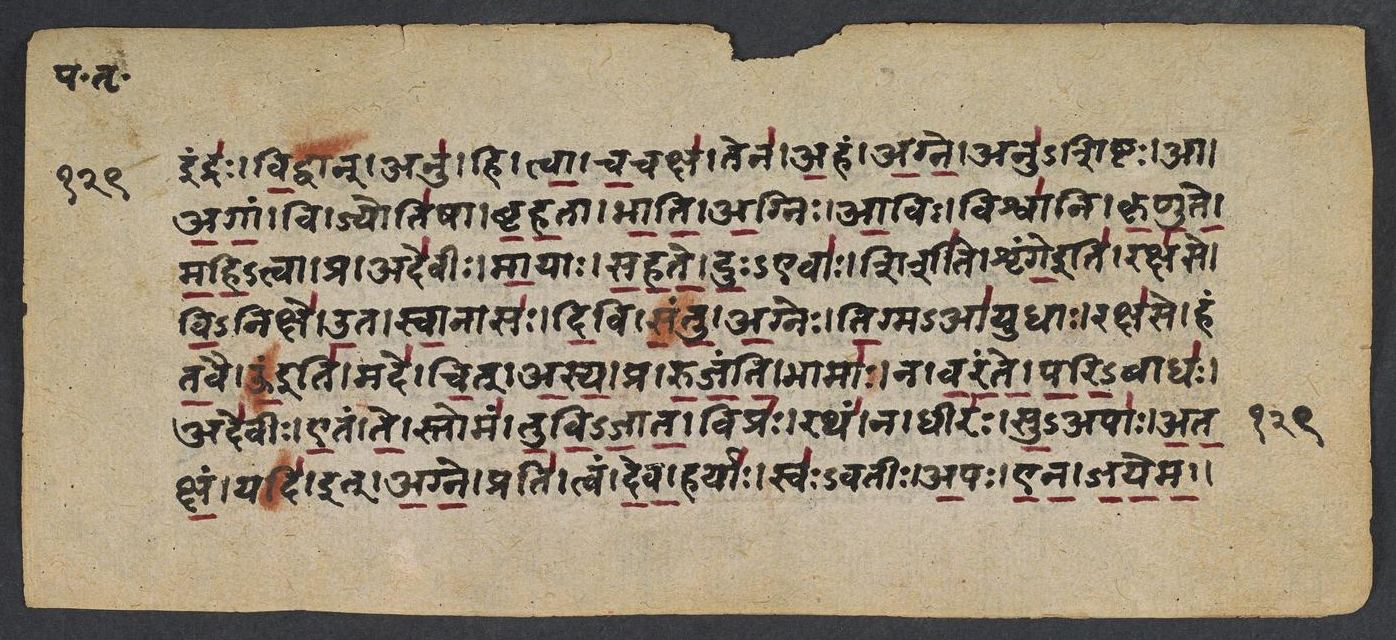
Penn Ms. Coll. 390 Item 41, fol. 320v (numbered 129v by the scribe) (OPenn image 321, upper leaf). Checked on the image: the Rigveda text on this page begins in RV 5.2.8 ‹indraḥ vidvān anu hi›. The next page with Rigveda text, fol. 321r (numbered 130r by the scribe), begins in RV 5.2.12 ‹tuvi-grīvaḥ vṛṣabhaḥ vavṛdhānaḥ aśatru›. Verses 5.2.8-11 end on this page; 5.2.8 begins on fol. 320r (numbered 129r by the scribe).
8hṛ̱ṇī̱yamā̍no̱ apa̱ hi mad aiye̱ḥ pra me̍ de̱vānā̍ṁ vrata̱pā u̍vāca | indro̍ vi̱dvām̐ anu̱ hi tvā̍ ca̱cakṣa̱ tenā̱ham a̍gne̱ anu̍śiṣṭa̱ āgā̍m ||
9vi jyoti̍ṣā bṛha̱tā bhā̍ty a̱gnir ā̱vir viśvā̍ni kṛṇute mahi̱tvā | prāde̍vīr mā̱yāḥ sa̍hate du̱revā̱ḥ śiśī̍te̱ śṛṅge̱ rakṣa̍se vi̱nikṣe̍ ||
10u̱ta svā̱nāso̍ di̱vi ṣa̍ntv a̱gnes ti̱gmāyu̍dhā̱ rakṣa̍se̱ hanta̱vā u̍ | made̍ cid asya̱ pra ru̍janti̱ bhāmā̱ na va̍rante pari̱bādho̱ ade̍vīḥ ||
11e̱taṁ te̱ stoma̍ṁ tuvijāta̱ vipro̱ ratha̱ṁ na dhīra̱ḥ svapā̍ atakṣam | yadīd a̍gne̱ prati̱ tvaṁ de̍va̱ haryā̱ḥ sva̍rvatīr a̱pa e̍nā jayema ||
Compare: Padapāṭha (word-by-word text written in the manuscript; Sansknet e-text via GRETIL)
8hṛṇīyamānaḥ | apa | hi | mat | aiye | pra | me | devānām | vrata-pāḥ | uvāca | indraḥ | vidvān | anu | hi | tvā | cacakṣa | tena | aham | agne | anu-śiṣṭaḥ | ā | agām
9vi | jyotiṣā | bṛhatā | bhāti | agniḥ | āviḥ | viśvāni | kṛṇute | mahi-tvā | pra | adevīḥ | māyāḥ | sahate | duḥ-evāḥ | śiśīte | śṛṅgeiti | rakṣase | vi-nikṣe
10uta | khānāsaḥ | divi | santu | agneḥ | tigma-āyudhāḥ | rakṣase | hantavai | oṃ iti | made | cit | asya | pra | rujanti | bhāmāḥ | na | varante | pari-bādhaḥ | adevīḥ
11etam | te | stomam | tuvi-jāta | vipraḥ | ratham | na | dhīraḥ | su-apāḥ | atakṣam | yadi | it | agne | prati | tvam | deva | haryāḥ | svaḥ-vatīḥ | apaḥ | ena | jayema
8Thou hast sped from me, Agni, in thine anger: this the protector of Gods' Laws hath told me. Indra who knoweth bent his eye upon thee: by him instructed am I come, O Agni.
9Agni shines far and wide with lofty splendour, and by his greatness makes all things apparent. He conquers godless and malign enchantments, and sharpens both his horns to gore the Raksas.
10Loud in the heaven above be Agni's roarings with keen-edged weapons to destroy the demons. Forth burst his splendours in the Soma's rapture. The godless bands press round but cannot stayhim.
11As a skilled craftsman makes a car, a singer I, Mighty One! this hymn for thee have fashioned. If thou, O Agni, God, accept it gladly, may we obtain thereby the heavenly Waters.
Where on the image
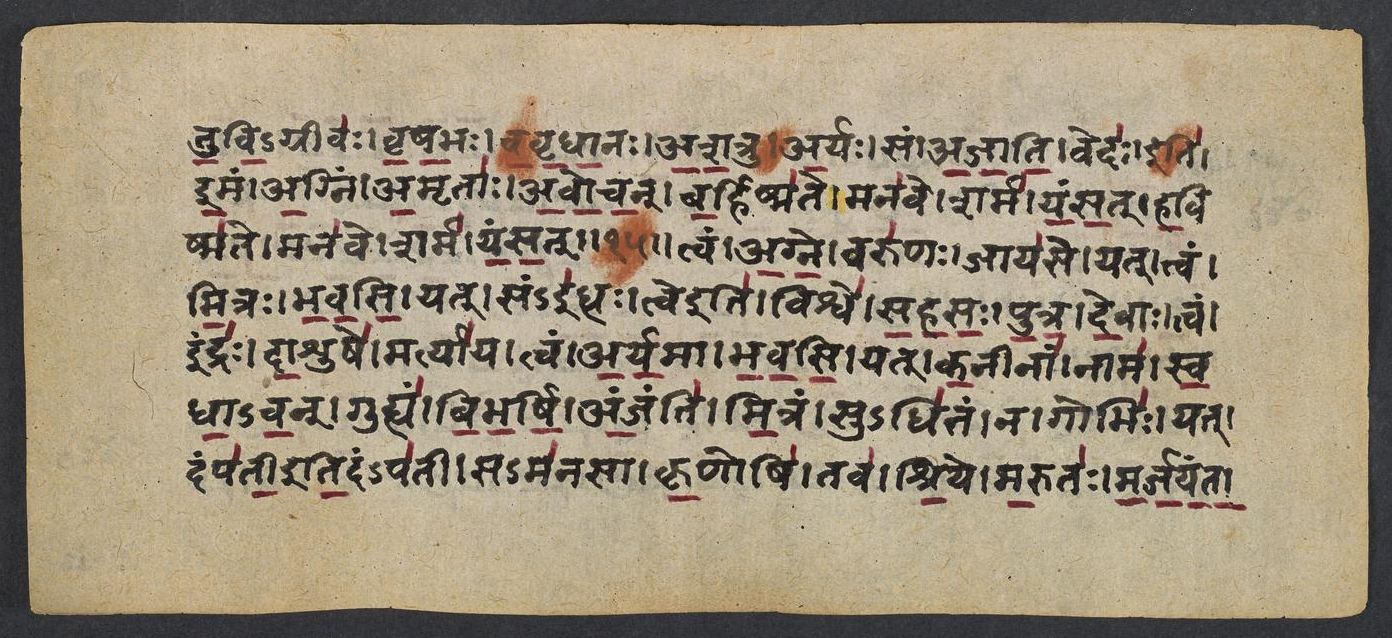
Penn Ms. Coll. 390 Item 41, fol. 321r (numbered 130r by the scribe) (OPenn image 321, lower leaf). Checked on the image: the Rigveda text on this page begins in RV 5.2.12 ‹tuvi-grīvaḥ vṛṣabhaḥ vavṛdhānaḥ aśatru›. The next page with Rigveda text, fol. 321v (numbered 130v by the scribe), begins in RV 5.3.3 ‹rudra yat te janima›. Verse 5.2.12 ends on this page.
12tu̱vi̱grīvo̍ vṛṣa̱bho vā̍vṛdhā̱no̍ 'śa̱trv a1̱̍ryaḥ sam a̍jāti̱ veda̍ḥ | itī̱mam a̱gnim a̱mṛtā̍ avocan ba̱rhiṣma̍te̱ mana̍ve̱ śarma̍ yaṁsad dha̱viṣma̍te̱ mana̍ve̱ śarma̍ yaṁsat ||
Compare: Padapāṭha (word-by-word text written in the manuscript; Sansknet e-text via GRETIL)
12tuvi-grīvaḥ | vṛṣabhaḥ | vavṛdhānaḥ | aśatru | aryaḥ | sam | ajāti | vedaḥ | iti | imam | agnim | amṛtāḥ | avocan | barhiṣmate | manave | śarma | yaṃsat | havi ṣmate | manave | śarma | yaṃsat
12May he, the strong-necked Steer, waxing in vigour, gather the foeman's wealth with none to check him. Thus to this Agni have the Immortals spoken. To man who spreads the grass may he grant shelter, grant shelter to the man who brings oblation.
Notes
- Sanskrit: Aufrecht's edition (1877) with the Vedic accents, as entered by van Nooten and Holland (GRETIL).
- English: Ralph T. H. Griffith, The Hymns of the Rigveda (1889-1892; 2nd ed. 1896-1897), from the VedaWeb digital text; OCR slips in that text were corrected against the printed 2nd edition (data/sources/rigveda/griffith_errata.json).
- Padapāṭha (edition text): Sansknet e-text via GRETIL (CC BY-NC-SA 4.0).
Cite
Sources
- Source: Penn Ms. Coll. 390 Item 41 (undated (catalogued with Penn's 18th-19th c. Vedic manuscripts)), OPenn, Public Domain Mark + Aufrecht's accented text (GRETIL) + Griffith's English (VedaWeb) (holding institution)
- Critical edition: Aufrecht (1877), accented e-text via GRETIL
← previous · → next · v cycle view · l back to library