Rigveda 5.45: To all the gods
Introduction
Rigveda 5.45 is a hymn of 11 verses addressed to all the gods. It stands in book (maṇḍala) 5, the family book of the Atri clan. The Rigveda is the oldest collection of Sanskrit hymns, composed in the second half of the second millennium BCE and handed down orally for many centuries before it was written down.
The manuscript shown is Penn Ms. Coll. 390 Item 41 (University of Pennsylvania), an undated paper manuscript of the padapāṭha (the word-by-word recitation text, in which every word is written separately and compounds are split) of the whole Ṛgveda in Devanāgarī, 884 leaves in fascicles, 7-9 lines to the page, accents in red; this hymn stands on fol. 362v-364r. Each section below gives the verses that end on one page; the page boundaries were read on the images (the opening words of every page), not counted out. Where the manuscript is a padapāṭha (the word-by-word recitation text), the section shows Aufrecht's continuous (saṃhitā) text first and, as the edition text, the padapāṭha of the same verses, which is the form written on the page.
How was this verified? (Provenance)
Where on the image
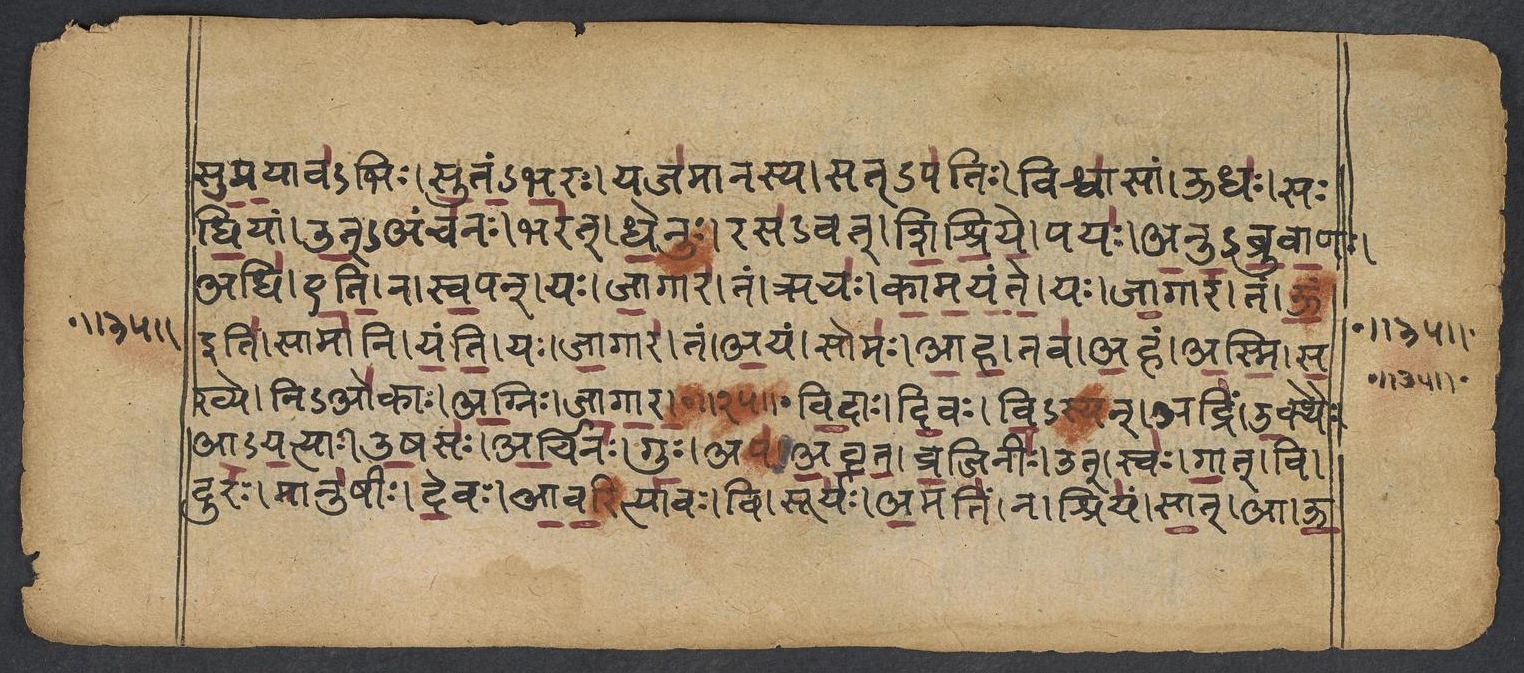
Penn Ms. Coll. 390 Item 41, fol. 362v (numbered 35v by the scribe) (OPenn image 363, upper leaf). Checked on the image: the Rigveda text on this page begins in RV 5.44.12 ‹-bhajate suprayāva-bhiḥ›. The next page with Rigveda text, fol. 363r (numbered 36r by the scribe), begins in RV 5.45.2 ‹-ūrvāt gavām mātā jānatī›. Verse 5.45.1 ends on this page.
1vi̱dā di̱vo vi̱ṣyann adri̍m u̱kthair ā̍ya̱tyā u̱ṣaso̍ a̱rcino̍ guḥ | apā̍vṛta vra̱jinī̱r ut sva̍r gā̱d vi duro̱ mānu̍ṣīr de̱va ā̍vaḥ ||
Compare: Padapāṭha (word-by-word text written in the manuscript; Sansknet e-text via GRETIL)
1vidāḥ | divaḥ | vi-syan | adrim | ukthaiḥ | āyatyāḥ | uṣasaḥ | arcinaḥ | guḥ | apa | avṛta | vrajinīḥ | ut | svaḥ | gāt | vi | duraḥ | mānuṣīḥ | devaḥ | āvar ity āvaḥ
1BARDS of approaching Dawn who know the heavens are come with hymns to throw the mountain open. The Sun hath risen and oped the stable portals: the doors of men, too, hath the God thrown open.
Where on the image
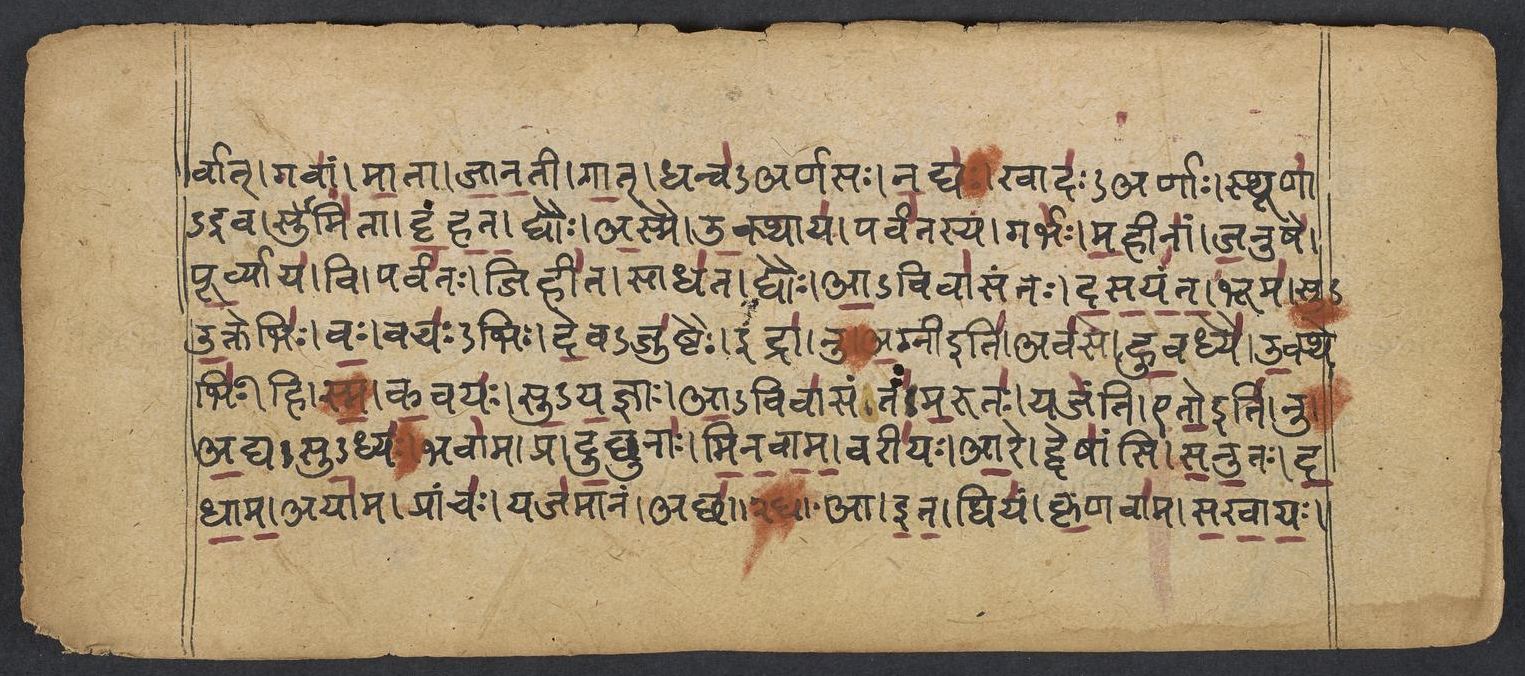
Penn Ms. Coll. 390 Item 41, fol. 363r (numbered 36r by the scribe) (OPenn image 363, lower leaf). Checked on the image: the Rigveda text on this page begins in RV 5.45.2 ‹-ūrvāt gavām mātā jānatī›. The next page with Rigveda text, fol. 363v (numbered 36v by the scribe), begins in RV 5.45.6 ‹apa yā mātā ṛṇuta›. Verses 5.45.2-5 end on this page; 5.45.2 begins on fol. 362v (numbered 35v by the scribe).
2vi sūryo̍ a̱mati̱ṁ na śriya̍ṁ sā̱d orvād gavā̍m mā̱tā jā̍na̱tī gā̍t | dhanva̍rṇaso na̱dya1̱̍ḥ khādo̍arṇā̱ḥ sthūṇe̍va̱ sumi̍tā dṛṁhata̱ dyauḥ ||
3a̱smā u̱kthāya̱ parva̍tasya̱ garbho̍ ma̱hīnā̍ṁ ja̱nuṣe̍ pū̱rvyāya̍ | vi parva̍to̱ jihī̍ta̱ sādha̍ta̱ dyaur ā̱vivā̍santo dasayanta̱ bhūma̍ ||
4sū̱ktebhi̍r vo̱ vaco̍bhir de̱vaju̍ṣṭai̱r indrā̱ nv a1̱̍gnī ava̍se hu̱vadhyai̍ | u̱kthebhi̱r hi ṣmā̍ ka̱vaya̍ḥ suya̱jñā ā̱vivā̍santo ma̱ruto̱ yaja̍nti ||
5eto̱ nv a1̱̍dya su̱dhyo̱3̱̍ bhavā̍ma̱ pra du̱cchunā̍ minavāmā̱ varī̍yaḥ | ā̱re dveṣā̍ṁsi sanu̱tar da̍dhā̱māyā̍ma̱ prāñco̱ yaja̍māna̱m accha̍ ||
Compare: Padapāṭha (word-by-word text written in the manuscript; Sansknet e-text via GRETIL)
2vi | sūryaḥ | amatim | na | śriyam | sāt | ā | ūrvāt | gavām | mātā | jānatī | gāt | dhanva-arṇasaḥ | nadyaḥ | khādaḥ-arṇāḥ | sthūṇāiva | su-mitā | dṛṃhata | dyauḥ
3asmai | ukthāya | parvatasya | garbhaḥ | mahīnām | januṣe | pūrvyāya | vi | pavartaḥ | jihīta | sādhata | dyauḥ | āvivāsantaḥ | dasayanta | bhūma
4su-uktebhiḥ | vaḥ | vacaḥ-bhiḥ | deva-juṣṭaiḥ | indrā | nu | agnī iti | avase | huvadhyai | ukthebhiḥ | hi | sma | kavayaḥ | s-yajñāḥ | āvivāsantaḥ | marutaḥ | yajanti
5eto iti | nu | adya | su-dhyaḥ | bhavāma | pra | ducchunāḥ | minavāma | varīyaḥ | āre | dveṣāṃsi | sanutaḥ | dadhāma | ayāma | prāñcaḥ | yajamānam | accha
2Sûrya hath spread his light as splendour: hither came the Cows' Mother, conscious, from the stable, To streams that flow with biting waves to deserts; and heaven is stablished like a firm-set pillar.
3This laud hath won the burden of the mountain. To aid the ancient birth of mighty waters The mountain parted, Heaven performed his office. The worshippers were worn with constant serving.
4With hymns and God-loved words will I invoke you, Indra and Agni, to obtain your favour, For verily sages, skilled in sacrificing, worship the Maruts and with lauds invite them.
5This day approach us: may our thoughts be holy, far from us let us cast away misfortune. Let us keep those who hate us at a distance, and haste to meet the man who sacrifices.
Where on the image
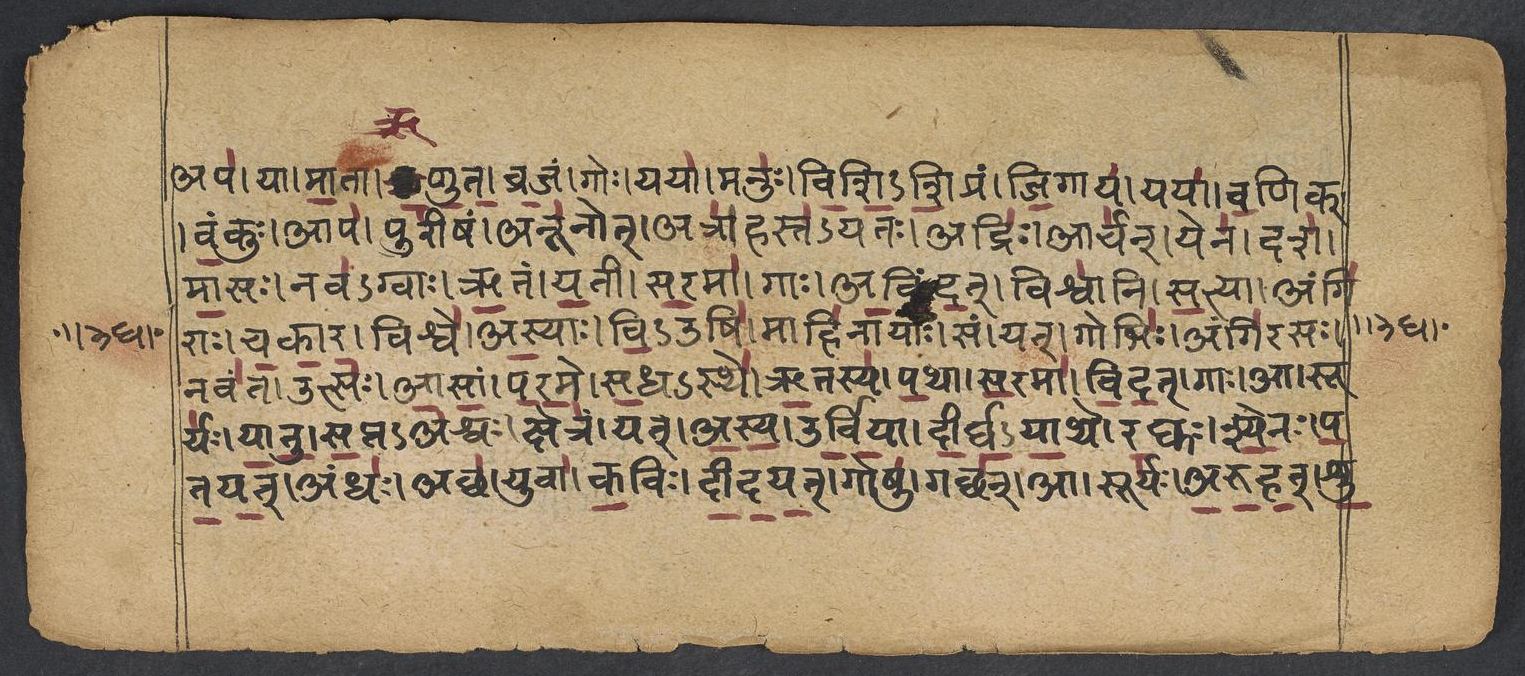
Penn Ms. Coll. 390 Item 41, fol. 363v (numbered 36v by the scribe) (OPenn image 364, upper leaf). Checked on the image: the Rigveda text on this page begins in RV 5.45.6 ‹apa yā mātā ṛṇuta›. The next page with Rigveda text, fol. 364r (numbered 37r by the scribe), begins in RV 5.45.10 ‹-śukram arṇaḥ ayukta yat›. Verses 5.45.6-9 end on this page; 5.45.6 begins on fol. 363r (numbered 36r by the scribe).
6etā̱ dhiya̍ṁ kṛ̱ṇavā̍mā sakhā̱yo 'pa̱ yā mā̱tām̐ ṛ̍ṇu̱ta vra̱jaṁ goḥ | yayā̱ manu̍r viśiśi̱praṁ ji̱gāya̱ yayā̍ va̱ṇig va̱ṅkur āpā̱ purī̍ṣam ||
7anū̍no̱d atra̱ hasta̍yato̱ adri̱r ārca̱n yena̱ daśa̍ mā̱so nava̍gvāḥ | ṛ̱taṁ ya̱tī sa̱ramā̱ gā a̍vinda̱d viśvā̍ni sa̱tyāṅgi̍rāś cakāra ||
8viśve̍ a̱syā vyuṣi̱ māhi̍nāyā̱ḥ saṁ yad gobhi̱r aṅgi̍raso̱ nava̍nta | utsa̍ āsām para̱me sa̱dhastha̍ ṛ̱tasya̍ pa̱thā sa̱ramā̍ vida̱d gāḥ ||
9ā sūryo̍ yātu sa̱ptāśva̱ḥ kṣetra̱ṁ yad a̍syorvi̱yā dī̍rghayā̱the | ra̱ghuḥ śye̱naḥ pa̍taya̱d andho̱ acchā̱ yuvā̍ ka̱vir dī̍daya̱d goṣu̱ gaccha̍n ||
Compare: Padapāṭha (word-by-word text written in the manuscript; Sansknet e-text via GRETIL)
6ā | ita | dhiyam | kṛṇavāma | sakhāyaḥ | apa | yā | mātā | ṛṇuta | vrajam | goḥ | yayā | manuḥ | viśi-śipram | jigāya | yayā | vaṇik | vaṅkuḥ | āpa | purīṣam
7anūnot | atra | hasta-yataḥ | adriḥ | ārcan | yena | daśa | māsaḥ | nava-gvāḥ | ṛtam | yatī | saramā | gāḥ | avindat | viśvāni | satyā | aṅgirāḥ | cakāra
8viśve | asyāḥ | vi-uṣi | māhināyāḥ | sam | yat | gobhiḥ | aṅgirasaḥ | navanta | utsaḥ | āsām | parame | sadha-sthe | ṛtasya | pathā | saramā | vidat | gāḥ
9ā | sūryaḥ | yātu | sapta-aśvaḥ | kṣetram | yat | asya | urviyā | dīrgha-yāthe | raghuḥ | śyenaḥ | patayat | andhaḥ | accha | yuvā | kaviḥ | dīdayat | goṣu | gacchan
6Come, let us carry out, O friends, the purpose wherewith the Mother threw the Cow's stall open, That wherewith Manu conquered Viṣiṣipra, wherewith the wandering merchant gained heaven's water.
7Here, urged by hands, loudly hath rung the press-stone wherewith Navagvas through ten months sang praises. Saramâ went aright and found the cattle. Angiras gave effect to all their labours.
8When at the dawning of this mighty Goddess, Angirases all sang forth with the cattle,– Their spring is in the loftiest place of meeting,– Saramâ found the kine by Order's pathway.
9Borne by his Coursers Seven may Sûrya visit the field that spreadeth wide for his long journey. Down on the Soma swooped the rapid Falcon. Bright was the young Sage moving mid his cattle.
Where on the image
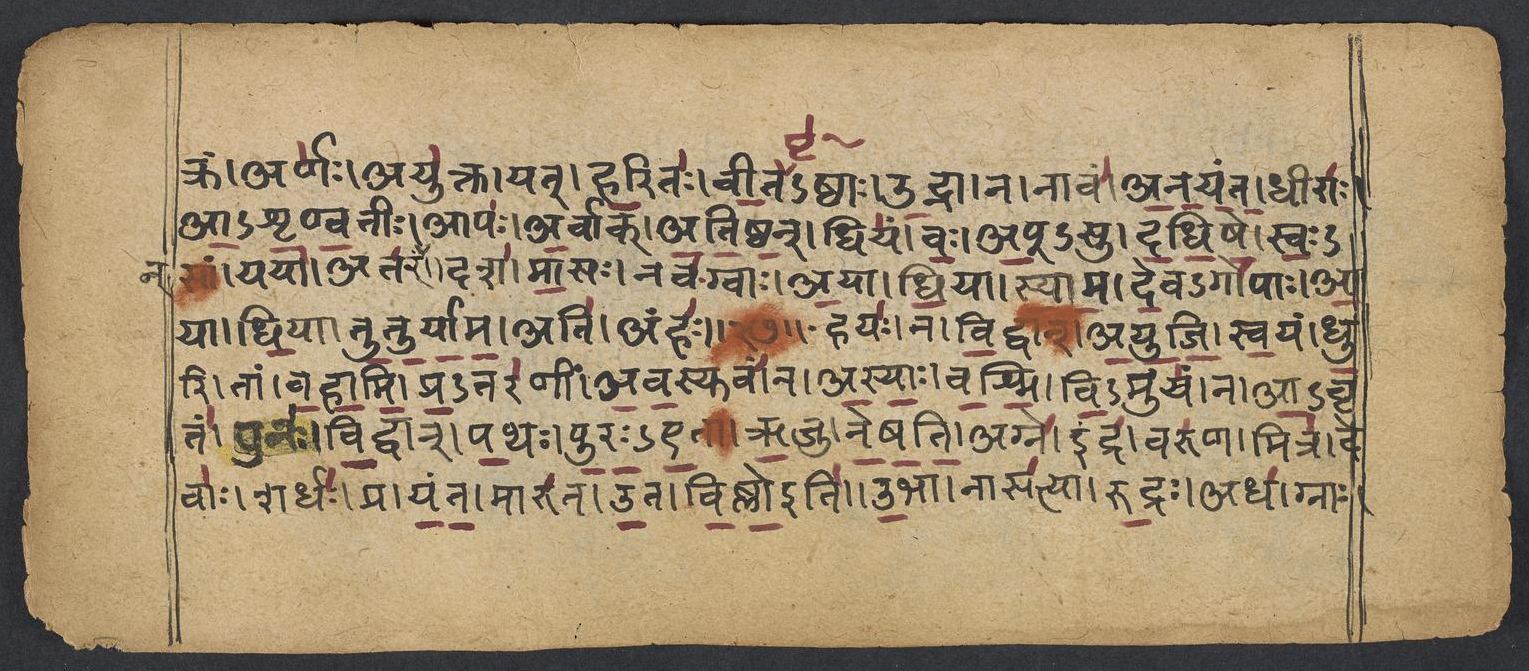
Penn Ms. Coll. 390 Item 41, fol. 364r (numbered 37r by the scribe) (OPenn image 364, lower leaf). Checked on the image: the Rigveda text on this page begins in RV 5.45.10 ‹-śukram arṇaḥ ayukta yat›. The next page with Rigveda text, fol. 364v (numbered 37v by the scribe), begins in RV 5.46.2 ‹pūṣā bhagaḥ sarasvatī juṣanta›. Verses 5.45.10-11 end on this page; 5.45.10 begins on fol. 363v (numbered 36v by the scribe).
10ā sūryo̍ aruhac chu̱kram arṇo 'yu̍kta̱ yad dha̱rito̍ vī̱tapṛ̍ṣṭhāḥ | u̱dnā na nāva̍m anayanta̱ dhīrā̍ āśṛṇva̱tīr āpo̍ a̱rvāg a̍tiṣṭhan ||
11dhiya̍ṁ vo a̱psu da̍dhiṣe sva̱rṣāṁ yayāta̍ra̱n daśa̍ mā̱so nava̍gvāḥ | a̱yā dhi̱yā syā̍ma de̱vago̍pā a̱yā dhi̱yā tu̍turyā̱māty aṁha̍ḥ ||
Compare: Padapāṭha (word-by-word text written in the manuscript; Sansknet e-text via GRETIL)
10ā | sūryaḥ | aruhat | śukram | arṇaḥ | ayukta | yat | haritaḥ | vīta-pṛṣṭhāḥ | udnā | na | nāvam | anayanta | dhīrāḥ | āśṛṇvatīḥ | āpaḥ | arvāk | atiṣṭhan
11dhiyam | vaḥ | ap-su | dadhiṣe | svaḥ-sām | yayā | ataran | daśa | māsaḥ | nava-gvāḥ | ayā | dhiyā | syāma | deva-gopāḥ | ayā | dhiyā | tuturyāma | ati | aṃhaḥ
10Sûrya hath mounted to the shining ocean when he hath yoked his fair-backed Tawny Horses. The wise have drawn him like a ship through water: the floods obedient have descended hither.
11I lay upon the Floods your hymn, lightwinning, wherewith Navagvas their ten months completed. Through this our hymn may we have Gods to guard us: through this our hymn pass safe beyond affliction.
Notes
- Sanskrit: Aufrecht's edition (1877) with the Vedic accents, as entered by van Nooten and Holland (GRETIL).
- English: Ralph T. H. Griffith, The Hymns of the Rigveda (1889-1892; 2nd ed. 1896-1897), from the VedaWeb digital text; OCR slips in that text were corrected against the printed 2nd edition (data/sources/rigveda/griffith_errata.json).
- Padapāṭha (edition text): Sansknet e-text via GRETIL (CC BY-NC-SA 4.0).
Cite
Sources
- Source: Penn Ms. Coll. 390 Item 41 (undated (catalogued with Penn's 18th-19th c. Vedic manuscripts)), OPenn, Public Domain Mark + Aufrecht's accented text (GRETIL) + Griffith's English (VedaWeb) (holding institution)
- Critical edition: Aufrecht (1877), accented e-text via GRETIL
← previous · → next · v cycle view · l back to library