Rigveda 5.44: To all the gods
Introduction
Rigveda 5.44 is a hymn of 15 verses addressed to all the gods. It stands in book (maṇḍala) 5, the family book of the Atri clan. The Rigveda is the oldest collection of Sanskrit hymns, composed in the second half of the second millennium BCE and handed down orally for many centuries before it was written down.
The manuscript shown is Penn Ms. Coll. 390 Item 41 (University of Pennsylvania), an undated paper manuscript of the padapāṭha (the word-by-word recitation text, in which every word is written separately and compounds are split) of the whole Ṛgveda in Devanāgarī, 884 leaves in fascicles, 7-9 lines to the page, accents in red; this hymn stands on fol. 360v-362v. Each section below gives the verses that end on one page; the page boundaries were read on the images (the opening words of every page), not counted out. Where the manuscript is a padapāṭha (the word-by-word recitation text), the section shows Aufrecht's continuous (saṃhitā) text first and, as the edition text, the padapāṭha of the same verses, which is the form written on the page.
How was this verified? (Provenance)
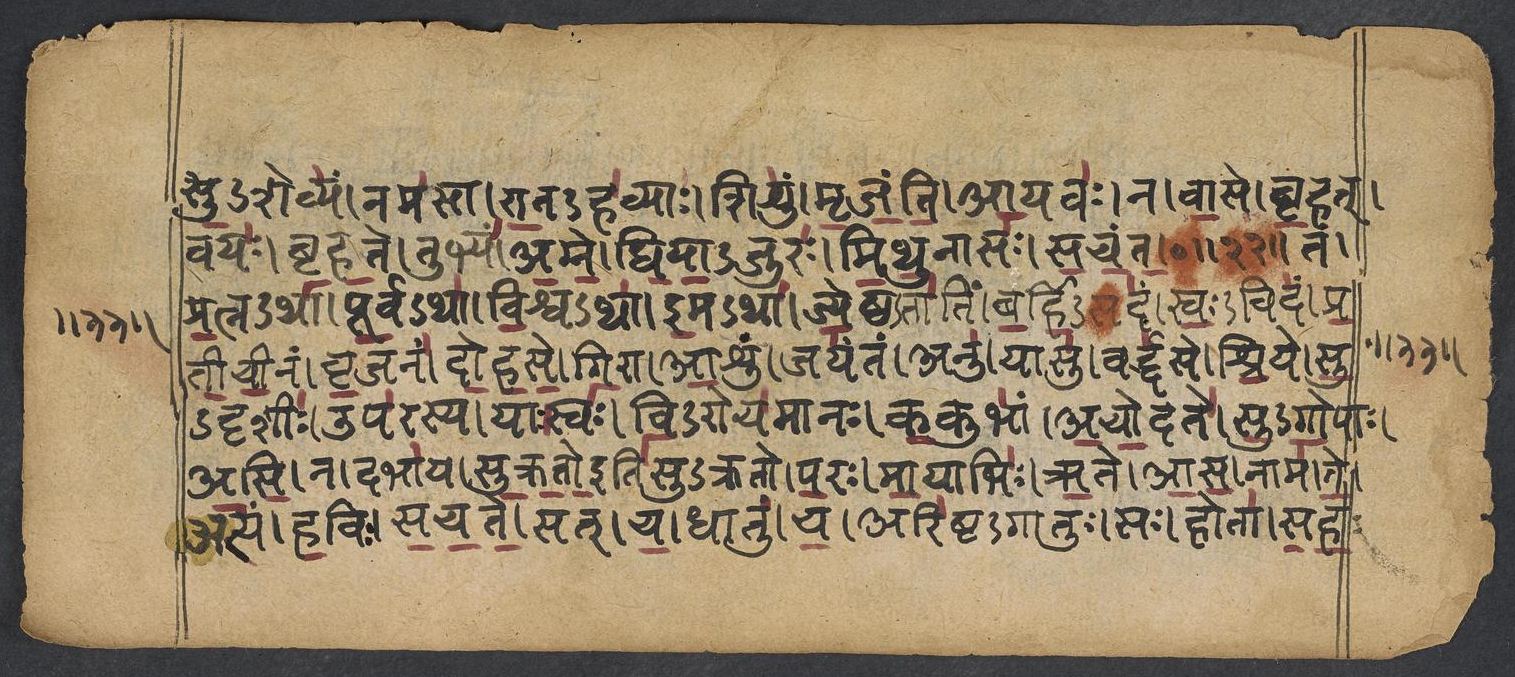
Where on the image
Penn Ms. Coll. 390 Item 41, fol. 360v (numbered 33v by the scribe) (OPenn image 361, upper leaf). Checked on the image: the Rigveda text on this page begins in RV 5.43.14 ‹su-śevyam namasā rāta-havyāḥ śiśum›. The next page with Rigveda text, fol. 361r (numbered 34r by the scribe), begins in RV 5.44.3 ‹-sahaḥ-bhariḥ pra-sarsrāṇaḥ anu barhiḥ›. Verses 5.44.1-2 end on this page.
1tam pra̱tnathā̍ pū̱rvathā̍ vi̱śvathe̱mathā̍ jye̱ṣṭhatā̍tim barhi̱ṣada̍ṁ sva̱rvida̍m | pra̱tī̱cī̱naṁ vṛ̱jana̍ṁ dohase gi̱rāśuṁ jaya̍nta̱m anu̱ yāsu̱ vardha̍se ||
2śri̱ye su̱dṛśī̱r upa̍rasya̱ yāḥ sva̍r vi̱roca̍mānaḥ ka̱kubhā̍m aco̱date̍ | su̱go̱pā a̍si̱ na dabhā̍ya sukrato pa̱ro mā̱yābhi̍r ṛ̱ta ā̍sa̱ nāma̍ te ||
Compare: Padapāṭha (word-by-word text written in the manuscript; Sansknet e-text via GRETIL)
1tam | pratna-thā | pūrva-thā | viśva-thā | im-athā | jyeṣṭha-tātim | barhi-sadam | svaḥ-vidam | pratīcīnam | vṛjanam | dohase | girā | āśum | jayantam | anu | yāsu | vardhase
2śriye | su-dṛśīḥ | uparasya | yāḥ | svaḥ | vi-rocamānaḥ | kakubhām | acodate | su-gopāḥ | asi | na | dabhāya | sukrato itisu-krato | paraḥ | māyābhiḥ | ṛte | āsa | nāma | te
1As in the first old times, as all were wont, as now, he draweth forth the power turned hitherward with song, The Princedom throned on holy grass, who findeth light, swift, conquering in the' plants wherein he waxeth strong.
2Shining to him who leaves heaven's regions undisturbed, which to his sheen who is beneath show fair in light, Good guardian art thou, not to be deceived, Most Wise! Far from deceits thy name dwelleth in holy Law.
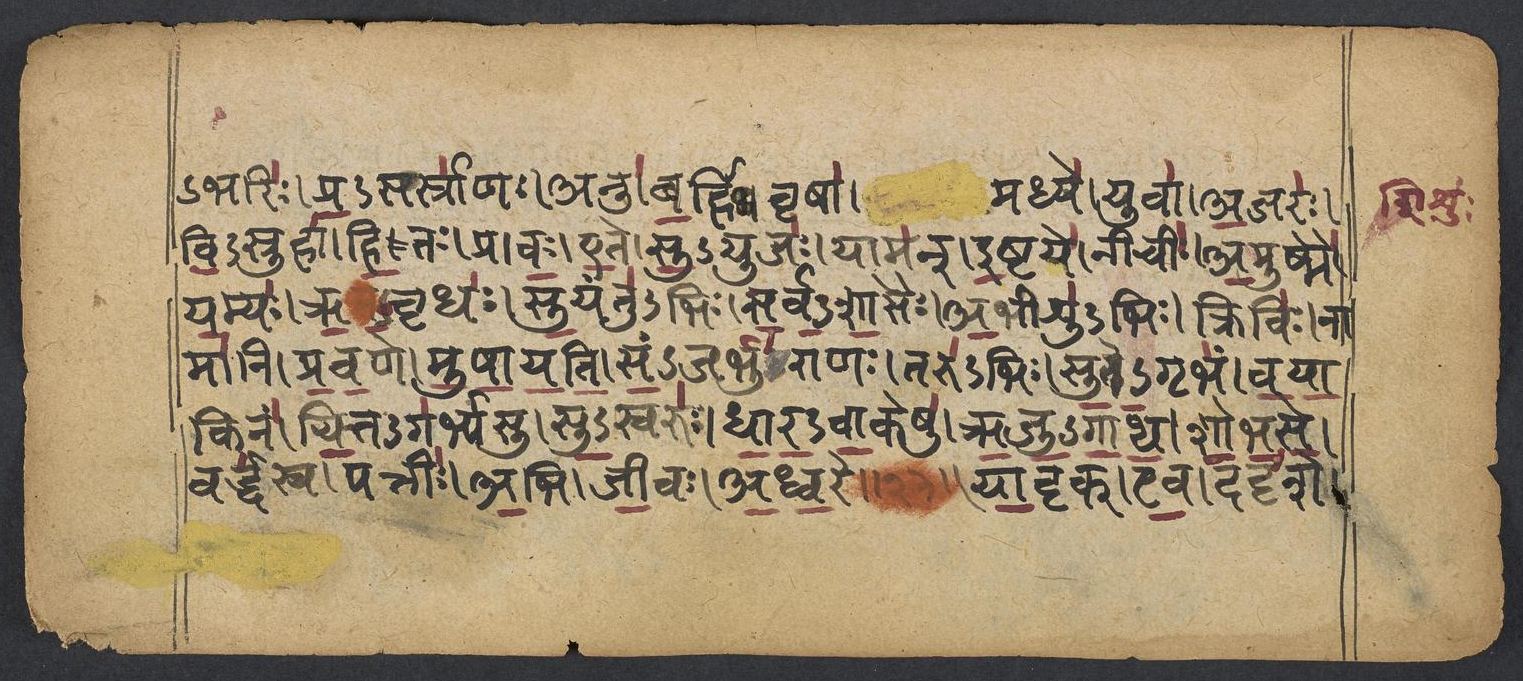
Where on the image
Penn Ms. Coll. 390 Item 41, fol. 361r (numbered 34r by the scribe) (OPenn image 361, lower leaf). Checked on the image: the Rigveda text on this page begins in RV 5.44.3 ‹-sahaḥ-bhariḥ pra-sarsrāṇaḥ anu barhiḥ›. The next page with Rigveda text, fol. 361v (numbered 34v by the scribe), begins in RV 5.44.6 ‹tādṛk ucyate sam chāyayā›. Verses 5.44.3-5 end on this page; 5.44.3 begins on fol. 360v (numbered 33v by the scribe).
3atya̍ṁ ha̱viḥ sa̍cate̱ sac ca̱ dhātu̱ cāri̍ṣṭagātu̱ḥ sa hotā̍ saho̱bhari̍ḥ | pra̱sarsrā̍ṇo̱ anu̍ ba̱rhir vṛṣā̱ śiśu̱r madhye̱ yuvā̱jaro̍ vi̱sruhā̍ hi̱taḥ ||
4pra va̍ e̱te su̱yujo̱ yāma̍nn i̱ṣṭaye̱ nīcī̍r a̱muṣmai̍ ya̱mya̍ ṛtā̱vṛdha̍ḥ | su̱yantu̍bhiḥ sarvaśā̱sair a̱bhīśu̍bhi̱ḥ krivi̱r nāmā̍ni prava̱ṇe mu̍ṣāyati ||
5sa̱ṁjarbhu̍rāṇa̱s taru̍bhiḥ sute̱gṛbha̍ṁ vayā̱kina̍ṁ ci̱ttaga̍rbhāsu su̱svaru̍ḥ | dhā̱ra̱vā̱keṣv ṛ̍jugātha śobhase̱ vardha̍sva̱ patnī̍r a̱bhi jī̱vo a̍dhva̱re ||
Compare: Padapāṭha (word-by-word text written in the manuscript; Sansknet e-text via GRETIL)
3atyam | haviḥ | sacate | sat | ca | dhātu | ca | ariṣta-gātuḥ | saḥ | hotā | sahaḥ-bhariḥ | pra-sarsrāṇaḥ | anu | barhiḥ | vṛṣā | śiśuḥ | madhye | yuvā | ajaraḥ | vi-sruhā | hitaḥ
4pra | vaḥ | ete | su-yujaḥ | yāman | iṣṭaye | nīcīḥ | amuṣmai | yamyaḥ | ṛta-vṛdhaḥ | suyantu-bhiḥ | sarva-śāsaiḥ | abhīśu-bhiḥ | kriviḥ | nāmāni | pravaṇe | muṣāyati
5sam-jarbhurāṇaḥ | taru-bhiḥ | sute--gṛbham | vayākinam | citta-garbhāsu | su-svaruḥ | dhāra-vākeṣu | ṛju-gātha | śobhase | vardhasva | patnīḥ | abhi | jīvaḥ | adhvare
3Truth waits upon oblation present and to come: naught checks him in his way, this vic torybringing Priest: The Mighty Child who glides along the sacred grass, the undecaying Youth set in the midst of plants.
4These come, well-yoked, to you for furtherance in the rite: down come the twinborn strengtheners of Law for him, With reins easily guided and commanding all. In the deep fall the hide stealeth away their names.
5Thou, moving beauteously in visibly pregnant ones, snatching with trees the branching plant that grasps the juice, Shinest, true Singer! mid the upholders of the voice. Increase thy Consorts thou, lively at sacrifice.
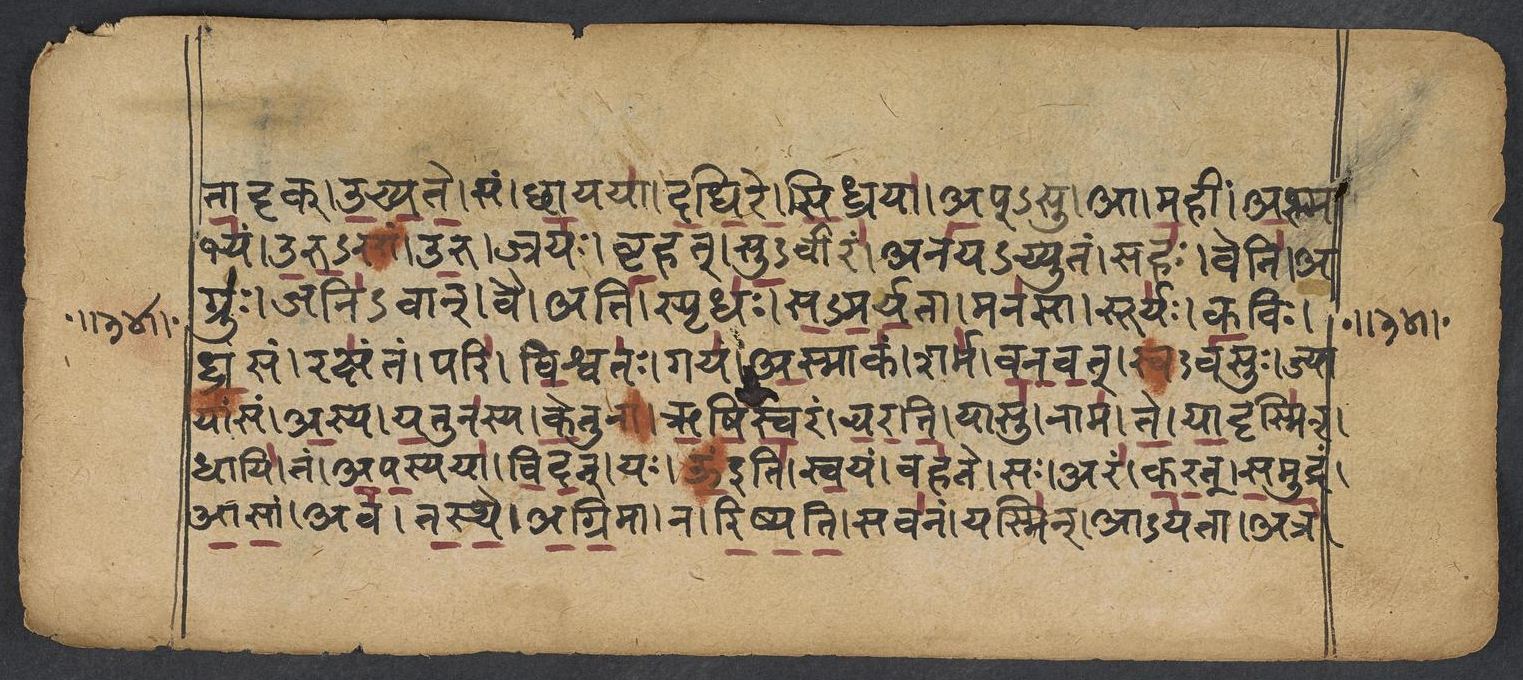
Where on the image
Penn Ms. Coll. 390 Item 41, fol. 361v (numbered 34v by the scribe) (OPenn image 362, upper leaf). Checked on the image: the Rigveda text on this page begins in RV 5.44.6 ‹tādṛk ucyate sam chāyayā›. The next page with Rigveda text, fol. 362r (numbered 35r by the scribe), begins in RV 5.44.9 ‹na hārdi kravaṇasya rejate›. Verses 5.44.6-8 end on this page; 5.44.6 begins on fol. 361r (numbered 34r by the scribe).
6yā̱dṛg e̱va dadṛ̍śe tā̱dṛg u̍cyate̱ saṁ chā̱yayā̍ dadhire si̱dhrayā̱psv ā | ma̱hīm a̱smabhya̍m uru̱ṣām u̱ru jrayo̍ bṛ̱hat su̱vīra̱m ana̍pacyuta̱ṁ saha̍ḥ ||
7vety agru̱r jani̍vā̱n vā ati̱ spṛdha̍ḥ samarya̱tā mana̍sā̱ sūrya̍ḥ ka̱viḥ | ghra̱ṁsaṁ rakṣa̍nta̱m pari̍ vi̱śvato̱ gaya̍m a̱smāka̱ṁ śarma̍ vanava̱t svāva̍suḥ ||
8jyāyā̍ṁsam a̱sya ya̱tuna̍sya ke̱tuna̍ ṛṣisva̱raṁ ca̍rati̱ yāsu̱ nāma̍ te | yā̱dṛśmi̱n dhāyi̱ tam a̍pa̱syayā̍ vida̱d ya u̍ sva̱yaṁ vaha̍te̱ so ara̍ṁ karat ||
Compare: Padapāṭha (word-by-word text written in the manuscript; Sansknet e-text via GRETIL)
6yādṛk | eva | dadṛśe | tādṛk | ucyate | sam | chāyayā | dadhire | sidhrayā | ap-su | ā | mahīm | asmabhyam | uru-sām | uru | jrayaḥ | bṛhat | su-vīram | anapa-cyutam | sahaḥ
7veti | agruḥ | jani-vān | vai | ati | spṛdhaḥ | sa-maryatā | manasā | sūryaḥ | kaviḥ | ghraṃsam | rakṣantam | pari | viśvataḥ | gayam | asmākam | śarma | vanavat | sva-vasuḥ
8jyāyāṃsam | asya | yatunasya | ketunā | ṛṣi-svaram | carati | yāsu | nāma | te | yādṛśmin | dhāyi | tam | apasyayā | vidat | yaḥ | oṃ iti | svayam | vahate | saḥ | aram | karat
6Like as he is beheld such is he said to be. They with effectual splendour in the floods have made Earth yield us room enough and amply wide extent, great might invincible, with store of hero sons.
7Sûrya the Sage, as if unwedded, with a Spouse, in battle-loving spirit moveth o'er the foes. May he, self-excellent, grant us a sheltering home, a house that wards the fierce heat off on every side.
8Thy name, sung forth by R̥ishis in these hymns of ours, goes to the loftier One with this swift mover's light. By skill he wins the boon whereon his heart is set: he who bestirs himself shall bring the thing to pass.
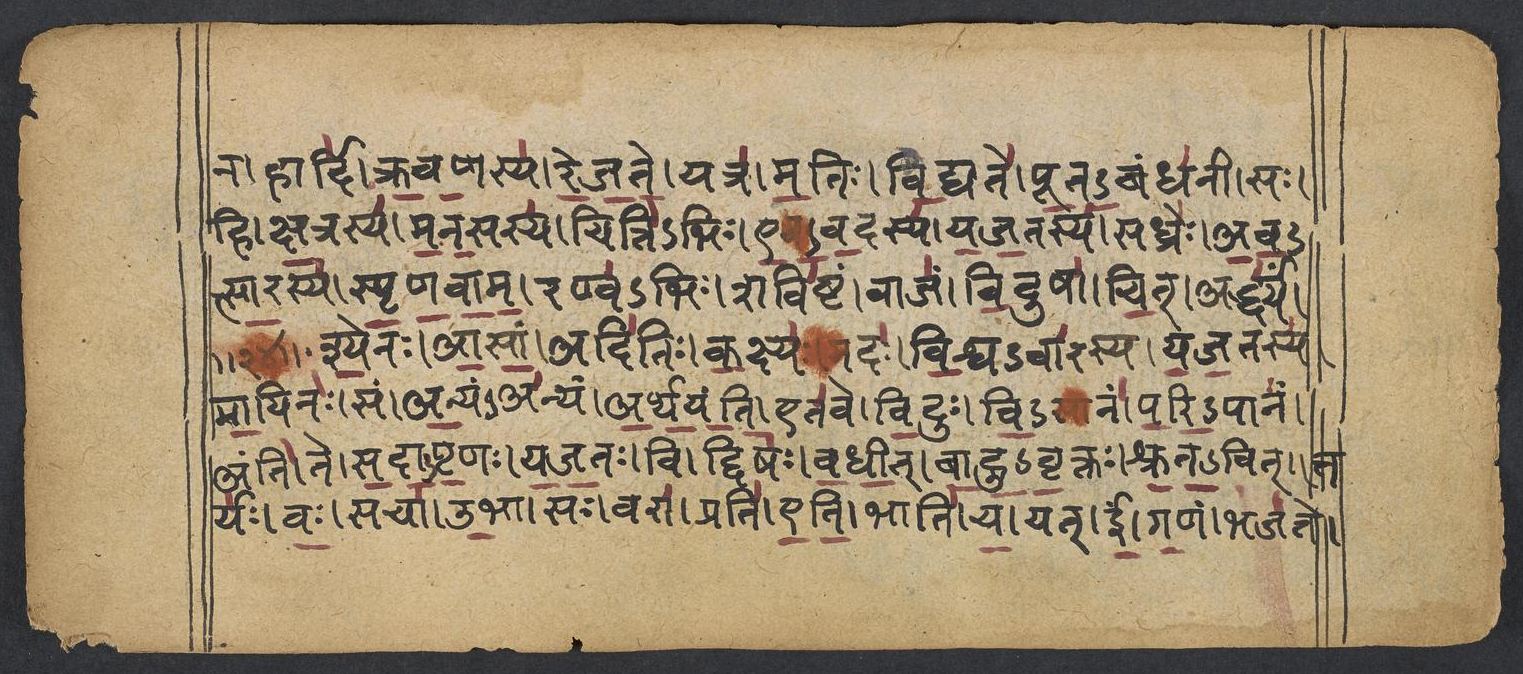
Where on the image
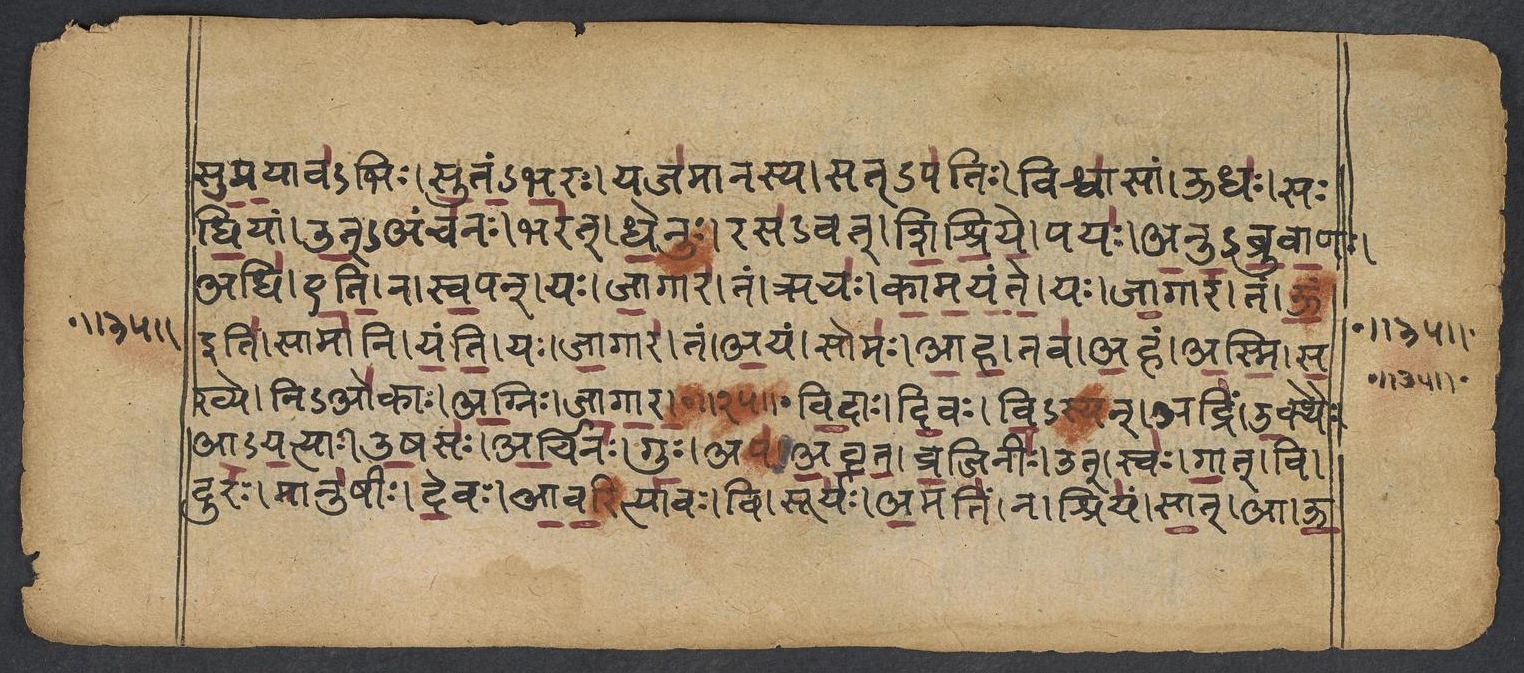
Penn Ms. Coll. 390 Item 41, fol. 362r (numbered 35r by the scribe) (OPenn image 362, lower leaf). Checked on the image: the Rigveda text on this page begins in RV 5.44.9 ‹na hārdi kravaṇasya rejate›. The next page with Rigveda text, fol. 362v (numbered 35v by the scribe), begins in RV 5.44.12 ‹-bhajate suprayāva-bhiḥ›. Verses 5.44.9-11 end on this page; 5.44.9 begins on fol. 361v (numbered 34v by the scribe).
9sa̱mu̱dram ā̍sā̱m ava̍ tasthe agri̱mā na ri̍ṣyati̱ sava̍na̱ṁ yasmi̱nn āya̍tā | atrā̱ na hārdi̍ krava̱ṇasya̍ rejate̱ yatrā̍ ma̱tir vi̱dyate̍ pūta̱bandha̍nī ||
10sa hi kṣa̱trasya̍ mana̱sasya̱ citti̍bhir evāva̱dasya̍ yaja̱tasya̱ sadhre̍ḥ | a̱va̱tsā̱rasya̍ spṛṇavāma̱ raṇva̍bhi̱ḥ śavi̍ṣṭha̱ṁ vāja̍ṁ vi̱duṣā̍ ci̱d ardhya̍m ||
11śye̱na ā̍sā̱m adi̍tiḥ ka̱kṣyo̱3̱̍ mado̍ vi̱śvavā̍rasya yaja̱tasya̍ mā̱yina̍ḥ | sam a̱nyam-a̍nyam arthaya̱nty eta̍ve vi̱dur vi̱ṣāṇa̍m pari̱pāna̱m anti̱ te ||
Compare: Padapāṭha (word-by-word text written in the manuscript; Sansknet e-text via GRETIL)
9samudram | āsām | ava | tasthe | agrimā | na | riṣyati | savanam | yasmin | āyatā | atra | na | hārdi | kravaṇasya | rejate | yatra | matiḥ | vidyate | pūta-bandhanī
10saḥ | hi | kṣatrasya | manasasya | citti-bhiḥ | eva-vadasya | yajatasya | sadhreḥ | ava-tsārasya | spṛṇavāma | raṇva-bhiḥ | śaviṣṭham | vājam | viduṣā | cit | ardhyam
11śyenaḥ | āsām | aditiḥ | kakṣyaḥ | madaḥ | viśva-vārasya | yajatasya | māyinaḥ | sam | anyam-anyam | arthayanti | etave | viduḥ | vi-sāṇam | pari-pānam | anti | te
9The chief and best of these abideth in the sea, nor doth libation fail wherein it is prolonged. The heart of him who praiseth trembleth not in fear there where the hymn is found connected with the pure.
10For it is he: with though to of Kshatra, Mânasa, of Yajata, and Sadhri, and Evâvada, With Avatsâra's sweet songs will we strive to win the mightiest strength which even he who knows should gain.
11The Hawk is their full source, girth-stretching rapturous drink of Viṣvavâra, of Mayin, and Yajata. They ever seek a fresh draught so that they may come, know when thy time to halt and drink thy fill is near.
Where on the image
Penn Ms. Coll. 390 Item 41, fol. 362v (numbered 35v by the scribe) (OPenn image 363, upper leaf). Checked on the image: the Rigveda text on this page begins in RV 5.44.12 ‹-bhajate suprayāva-bhiḥ›. The next page with Rigveda text, fol. 363r (numbered 36r by the scribe), begins in RV 5.45.2 ‹-ūrvāt gavām mātā jānatī›. Verses 5.44.12-15 end on this page; 5.44.12 begins on fol. 362r (numbered 35r by the scribe).
12sa̱dā̱pṛ̱ṇo ya̍ja̱to vi dviṣo̍ vadhīd bāhuvṛ̱ktaḥ śru̍ta̱vit taryo̍ va̱ḥ sacā̍ | u̱bhā sa varā̱ praty e̍ti̱ bhāti̍ ca̱ yad ī̍ṁ ga̱ṇam bhaja̍te supra̱yāva̍bhiḥ ||
13su̱ta̱mbha̱ro yaja̍mānasya̱ satpa̍ti̱r viśvā̍sā̱m ūdha̱ḥ sa dhi̱yām u̱dañca̍naḥ | bhara̍d dhe̱nū rasa̍vac chiśriye̱ payo̍ 'nubruvā̱ṇo adhy e̍ti̱ na sva̱pan ||
14yo jā̱gāra̱ tam ṛca̍ḥ kāmayante̱ yo jā̱gāra̱ tam u̱ sāmā̍ni yanti | yo jā̱gāra̱ tam a̱yaṁ soma̍ āha̱ tavā̱ham a̍smi sa̱khye nyo̍kāḥ ||
15a̱gnir jā̍gāra̱ tam ṛca̍ḥ kāmayante̱ 'gnir jā̍gāra̱ tam u̱ sāmā̍ni yanti | a̱gnir jā̍gāra̱ tam a̱yaṁ soma̍ āha̱ tavā̱ham a̍smi sa̱khye nyo̍kāḥ ||
Compare: Padapāṭha (word-by-word text written in the manuscript; Sansknet e-text via GRETIL)
12sadāpṛṇaḥ | yajataḥ | vi | dviṣaḥ | vadhīt | bāhu-vṛktaḥ | śruta-vit | taryaḥ | vaḥ | sacā | ubhā | saḥ | varā | prati | eti | bhāti | ca | yat | īm | gaṇam | bhajate | suprayāva-bhiḥ
13sutam-bharaḥ | yajamānasya | sat-patiḥ | viśvāsām | ūdhaḥ | saḥ | dhiyām | ut-añcanaḥ | bharat | dhenuḥ | rasa-vat | śiśriye | payaḥ | anu-bruvāṇaḥ | adhi | eti | na | svapan
14yaḥ | jāgāra | tam | ṛcaḥ | kāmayante | yaḥ | jāgāra | tam | oṃ iti | sāmāni | yanti | yaḥ | jāgāra | tam | ayam | somaḥ | āha | tava | aham | asmi | sakhye | ni-okāḥ
15agniḥ | jāgāra | tam | ṛcaḥ | kāmayante | agniḥ | jāgāra | tam | oṃ iti | sāmāni | yanti | agniḥ | jāgāra | tam | ayam | somaḥ | āha | tava | aham | asmi | sakhye | ni-okāḥ
12Sadâpr̥iṇa the holy, Tarya, Ṣrutavit, and Bâhuvr̥ikta, joined with you, have slain the foes. He gains his wish in both the worlds and brightly shines-when he adores the host with welladvancing steeds.
13The worshipper's defender is Sutambhara, producer and uplifter of all holy thoughts. The milch-cow brought, sweet-flavoured milk was dealt around. Who speaks the bidding text knows this, not he who sleeps.
14The sacred hymns love him who wakes and watches: to him who watches come the Sâma verses. This Soma saith unto the man who watches, I rest and have my dwelling in thy friendship.
15Agni is watchful, and the gcas love him; Agni is watchful, Sâma verses seek him. Agni is watchful, to him saith this Soma, I rest and have my dwelling in thy friendship.
Notes
- Sanskrit: Aufrecht's edition (1877) with the Vedic accents, as entered by van Nooten and Holland (GRETIL).
- English: Ralph T. H. Griffith, The Hymns of the Rigveda (1889-1892; 2nd ed. 1896-1897), from the VedaWeb digital text; OCR slips in that text were corrected against the printed 2nd edition (data/sources/rigveda/griffith_errata.json).
- Padapāṭha (edition text): Sansknet e-text via GRETIL (CC BY-NC-SA 4.0).
Cite
Sources
- Source: Penn Ms. Coll. 390 Item 41 (undated (catalogued with Penn's 18th-19th c. Vedic manuscripts)), OPenn, Public Domain Mark + Aufrecht's accented text (GRETIL) + Griffith's English (VedaWeb) (holding institution)
- Critical edition: Aufrecht (1877), accented e-text via GRETIL
← previous · → next · v cycle view · l back to library