Rigveda 5.47: To all the gods
Introduction
Rigveda 5.47 is a hymn of 7 verses addressed to all the gods. It stands in book (maṇḍala) 5, the family book of the Atri clan. The Rigveda is the oldest collection of Sanskrit hymns, composed in the second half of the second millennium BCE and handed down orally for many centuries before it was written down.
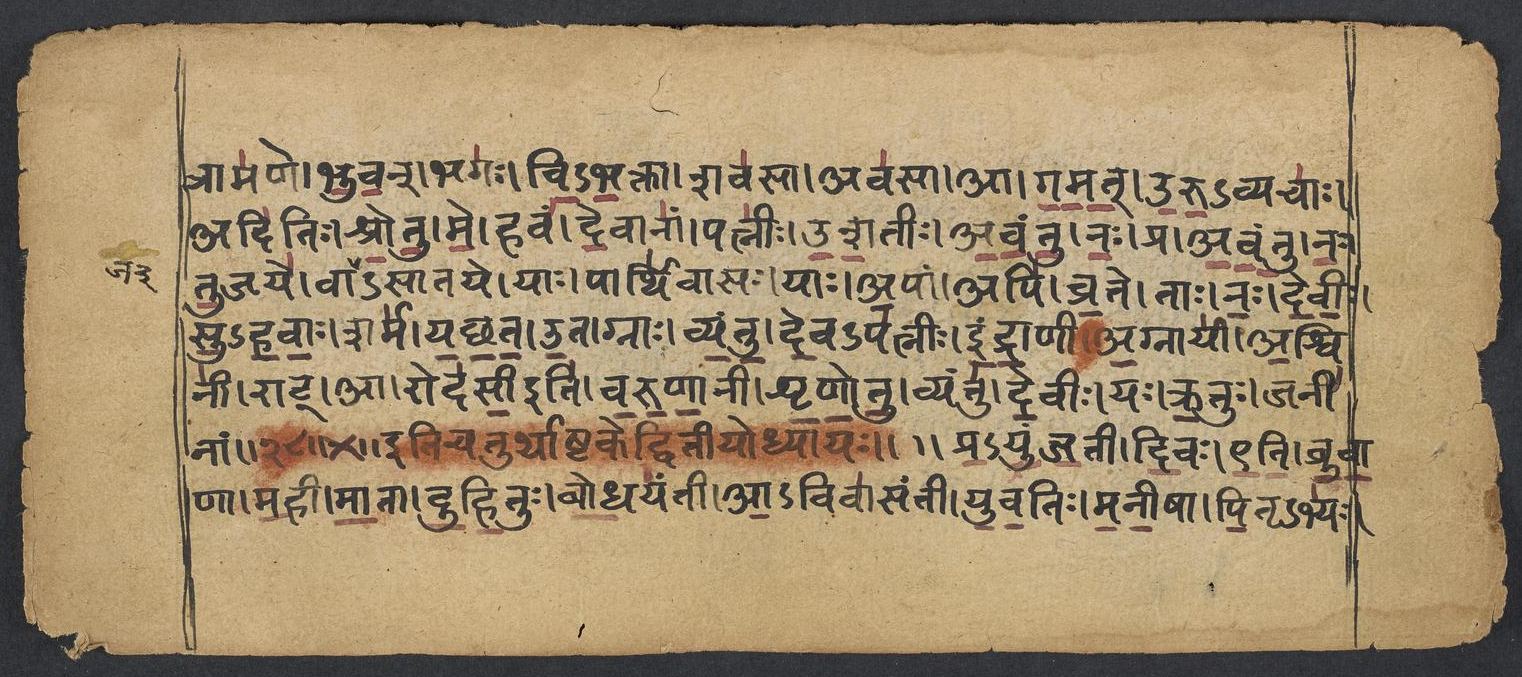
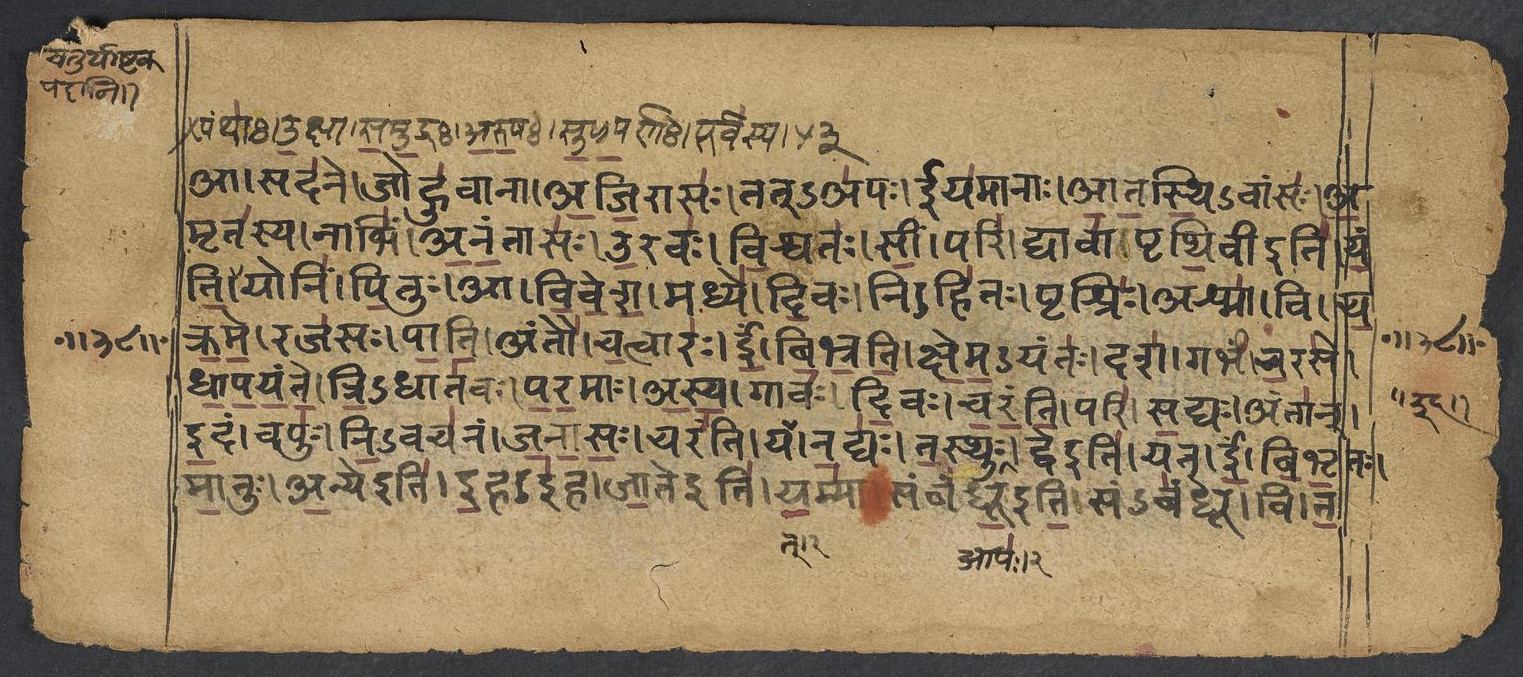
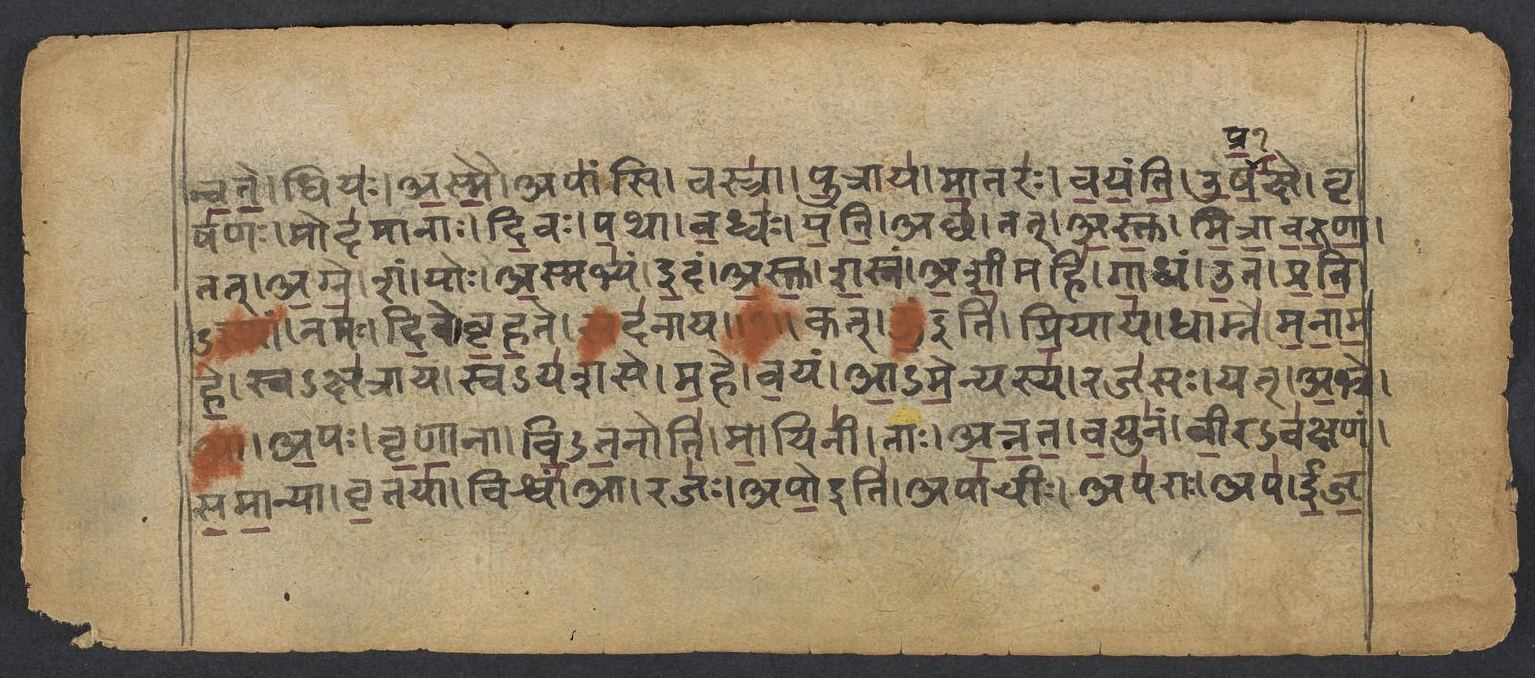
The manuscript shown is Penn Ms. Coll. 390 Item 41 (University of Pennsylvania), an undated paper manuscript of the padapāṭha (the word-by-word recitation text, in which every word is written separately and compounds are split) of the whole Ṛgveda in Devanāgarī, 884 leaves in fascicles, 7-9 lines to the page, accents in red; this hymn stands on fol. 365r-366r. Each section below gives the verses that end on one page; the page boundaries were read on the images (the opening words of every page), not counted out. Where the manuscript is a padapāṭha (the word-by-word recitation text), the section shows Aufrecht's continuous (saṃhitā) text first and, as the edition text, the padapāṭha of the same verses, which is the form written on the page.
How was this verified? (Provenance)
Where on the image
Penn Ms. Coll. 390 Item 41, fol. 365v (numbered 38v by the scribe) (OPenn image 366, upper leaf). Checked on the image: the Rigveda text on this page begins in RV 5.47.1 ‹ā sadane johuvānā›. A short count note in a smaller hand stands above line 1; line 1 continues 5.47.1, which begins on fol. 365r line 6 after the colophon of aṣṭaka 4, adhyāya 2. The next page with Rigveda text, fol. 366r (numbered 39r by the scribe), begins in RV 5.47.6 ‹-tanvate dhiyaḥ asmai apāṃsi›. Verses 5.47.1-5 end on this page; 5.47.1 begins on fol. 365r (numbered 38r by the scribe).
1pra̱yu̱ñja̱tī di̱va e̍ti bruvā̱ṇā ma̱hī mā̱tā du̍hi̱tur bo̱dhaya̍ntī | ā̱vivā̍santī yuva̱tir ma̍nī̱ṣā pi̱tṛbhya̱ ā sada̍ne̱ johu̍vānā ||
2a̱ji̱rāsa̱s tada̍pa̱ īya̍mānā ātasthi̱vāṁso̍ a̱mṛta̍sya̱ nābhi̍m | a̱na̱ntāsa̍ u̱ravo̍ vi̱śvata̍ḥ sī̱m pari̱ dyāvā̍pṛthi̱vī ya̍nti̱ panthā̍ḥ ||
3u̱kṣā sa̍mu̱dro a̍ru̱ṣaḥ su̍pa̱rṇaḥ pūrva̍sya̱ yoni̍m pi̱tur ā vi̍veśa | madhye̍ di̱vo nihi̍ta̱ḥ pṛśni̱r aśmā̱ vi ca̍krame̱ raja̍sas pā̱ty antau̍ ||
4ca̱tvāra̍ īm bibhrati kṣema̱yanto̱ daśa̱ garbha̍ṁ ca̱rase̍ dhāpayante | tri̱dhāta̍vaḥ para̱mā a̍sya̱ gāvo̍ di̱vaś ca̍ranti̱ pari̍ sa̱dyo antā̍n ||
5i̱daṁ vapu̍r ni̱vaca̍naṁ janāsa̱ś cara̍nti̱ yan na̱dya̍s ta̱sthur āpa̍ḥ | dve yad ī̍m bibhṛ̱to mā̱tur a̱nye i̱heha̍ jā̱te ya̱myā̱3̱̍ saba̍ndhū ||
Compare: Padapāṭha (word-by-word text written in the manuscript; Sansknet e-text via GRETIL)
1prayuñjatī | divaḥ | eti | bruvāṇā | mahī | mātā | duhituḥ | bodhayantī | āvivāsantī | yuvatiḥ | manīṣā | pitṛ-bhyaḥ | ā | sadane | johuvānā
2ajirāsaḥ | tat-apaḥ | īyamānāḥ | ātasthi-vāṃsaḥ | amṛtasya | nābhim | anantāsaḥ | uravaḥ | viśvataḥ | sīm | pari | dyāvāpṛthivī iti | yanti | panthāḥ
3ukṣā | samudraḥ | aruṣaḥ | su-parṇaḥ | pūrvasya | yonim | pituḥ | ā | viveśa | madhye | divaḥ | ni-hitaḥ | pṛśniḥ | aśmā | vi | cakrame | rajasaḥ | pāti | antau
4catvāraḥ | īm | bibhrati | kṣema-yantaḥ | daśa | garbham | carase | dhāpayante | tri-dhātavaḥ | paramāḥ | asya | gāvaḥ | divaḥ | caranti | pari | sadyaḥ | antān
5idam | vapuḥ | ni-vacanam | janāsaḥ | caranti | yat | nadyaḥ | tasthuḥ | āpaḥ | dve iti | yat | īm | bibhṛtaḥ | mātuḥ | anye | iha-iha | jāte iti | yamyā | sabandhūitisa-bandhū
1URGING to toil and making proclamation, seeking Heaven's Daughter comes the Mighty Mother: She comes, the youthful Hymn, unto the Fathers, inviting to her home and loudly calling.
2Swift in their motion, hasting to their duty, reaching the central point of life immortal, On every side about the earth and heaven go forth the spacious paths without a limit.
3Steer, Sea, Red Bird with strong wings, he hath entered the dwelling-place of the Primeval Father. A gay-hued Stone set in the midst of heaven, he hath gone forth and guards mid-air's two limits.
4Four bear him up and give him rest and quiet, and ten invigorate the Babe for travel. His kine most excellent, of threefold nature, pass swiftly round the boundaries of heaven.
5Wondrous, O people, is the mystic knowledge that while the waters stand the streams are flowing: That, separate from his Mother, Two support him, closely-united, twins, here made apparent.
Where on the image
Penn Ms. Coll. 390 Item 41, fol. 366r (numbered 39r by the scribe) (OPenn image 366, lower leaf). Checked on the image: the Rigveda text on this page begins in RV 5.47.6 ‹-tanvate dhiyaḥ asmai apāṃsi›. The next page with Rigveda text, fol. 366v (numbered 39v by the scribe), begins in RV 5.48.2 ‹-ījate pra pūrvābhiḥ tirate›. Verses 5.47.6-7 end on this page; 5.47.6 begins on fol. 365v (numbered 38v by the scribe).
6vi ta̍nvate̱ dhiyo̍ asmā̱ apā̍ṁsi̱ vastrā̍ pu̱trāya̍ mā̱taro̍ vayanti | u̱pa̱pra̱kṣe vṛṣa̍ṇo̱ moda̍mānā di̱vas pa̱thā va̱dhvo̍ ya̱nty accha̍ ||
7tad a̍stu mitrāvaruṇā̱ tad a̍gne̱ śaṁ yor a̱smabhya̍m i̱dam a̍stu śa̱stam | a̱śī̱mahi̍ gā̱dham u̱ta pra̍ti̱ṣṭhāṁ namo̍ di̱ve bṛ̍ha̱te sāda̍nāya ||
Compare: Padapāṭha (word-by-word text written in the manuscript; Sansknet e-text via GRETIL)
6vi | tanvate | dhiyaḥ | asmai | apāṃsi | vastrā | putrāya | mātaraḥ | vayanti | upa-prakṣe | vṛṣaṇaḥ | modamānāḥ | divaḥ | pathā | vadhvaḥ | yanti | accha
7tat | astu | mitrāvaruṇā | tat | agne | śam | yoḥ | asmabhyam | idam | astu | śastam | aśīmahi | gādham | uta | prati-sthām | namaḥ | dive | bṛhate | sādanāya
6For him they lengthen prayers and acts of worship: the Mothers weave garments for him their offspring. Rejoicing, for the Steer's impregning contact, his Spouses move on paths or heaven to meet him.
7Be this our praise, O Varuṇa and Mitra may this be health and force to us, O Agni. May we obtain firm ground and room for resting: Glory to Heaven, the lofty habitation!
Notes
- Sanskrit: Aufrecht's edition (1877) with the Vedic accents, as entered by van Nooten and Holland (GRETIL).
- English: Ralph T. H. Griffith, The Hymns of the Rigveda (1889-1892; 2nd ed. 1896-1897), from the VedaWeb digital text; OCR slips in that text were corrected against the printed 2nd edition (data/sources/rigveda/griffith_errata.json).
- Padapāṭha (edition text): Sansknet e-text via GRETIL (CC BY-NC-SA 4.0).
Cite
Sources
- Source: Penn Ms. Coll. 390 Item 41 (undated (catalogued with Penn's 18th-19th c. Vedic manuscripts)), OPenn, Public Domain Mark + Aufrecht's accented text (GRETIL) + Griffith's English (VedaWeb) (holding institution)
- Critical edition: Aufrecht (1877), accented e-text via GRETIL
← previous · → next · v cycle view · l back to library