Rigveda 5.73: To Asvins
Introduction
Rigveda 5.73 is a hymn of 10 verses addressed to Asvins. It stands in book (maṇḍala) 5, the family book of the Atri clan. The Rigveda is the oldest collection of Sanskrit hymns, composed in the second half of the second millennium BCE and handed down orally for many centuries before it was written down.
The manuscript shown is Penn Ms. Coll. 390 Item 41 (University of Pennsylvania), an undated paper manuscript of the padapāṭha (the word-by-word recitation text, in which every word is written separately and compounds are split) of the whole Ṛgveda in Devanāgarī, 884 leaves in fascicles, 7-9 lines to the page, accents in red; this hymn stands on fol. 388v-389v. Each section below gives the verses that end on one page; the page boundaries were read on the images (the opening words of every page), not counted out. Where the manuscript is a padapāṭha (the word-by-word recitation text), the section shows Aufrecht's continuous (saṃhitā) text first and, as the edition text, the padapāṭha of the same verses, which is the form written on the page.
How was this verified? (Provenance)
Where on the image
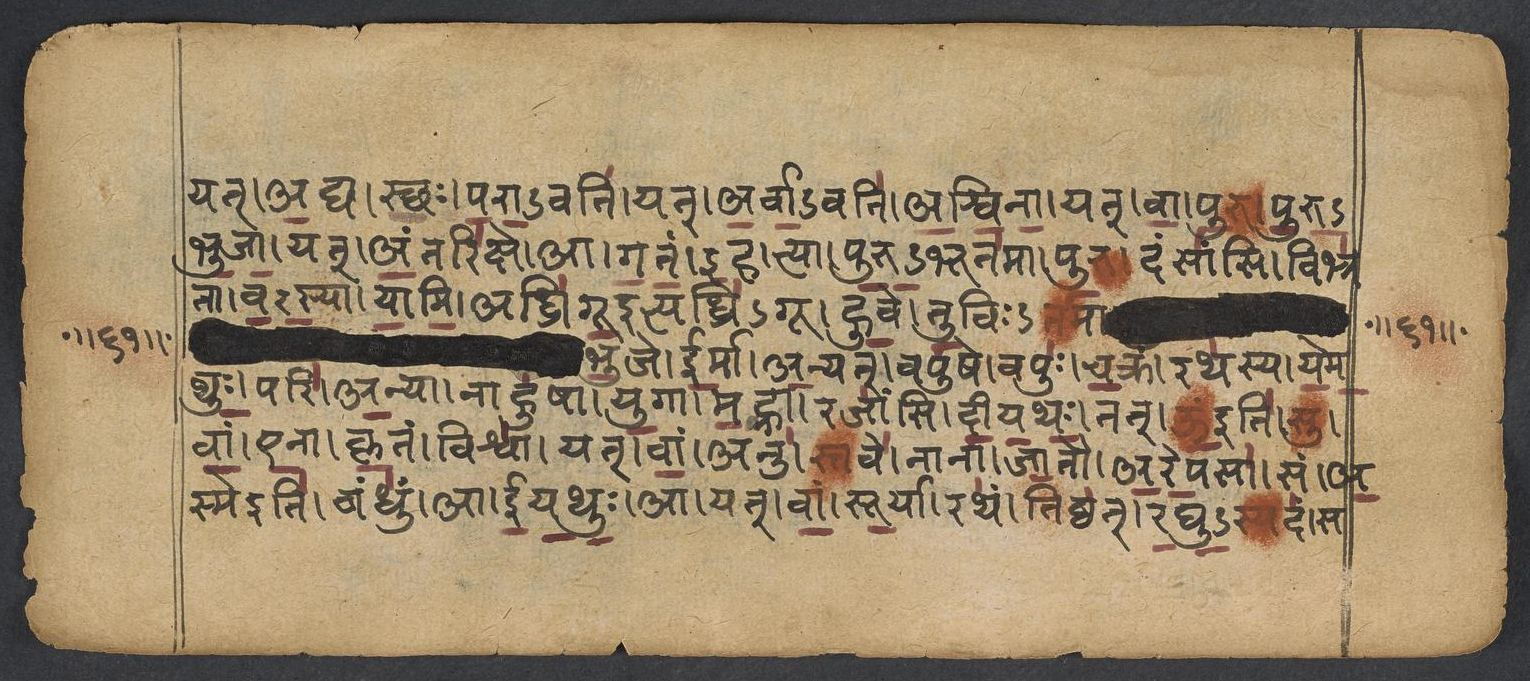
Penn Ms. Coll. 390 Item 41, fol. 388v (numbered 61v by the scribe) (OPenn image 389, upper leaf). Checked on the image: the Rigveda text on this page begins in RV 5.73.1 ‹yat adya sthaḥ pārāvati›. The next page with Rigveda text, fol. 389r (numbered 62r by the scribe), begins in RV 5.73.5 ‹-sadā pari vām aruṣāḥ›. Verses 5.73.1-4 end on this page.
1yad a̱dya sthaḥ pa̍rā̱vati̱ yad a̍rvā̱vaty a̍śvinā | yad vā̍ pu̱rū pu̍rubhujā̱ yad a̱ntari̍kṣa̱ ā ga̍tam ||
2i̱ha tyā pu̍ru̱bhūta̍mā pu̱rū daṁsā̍ṁsi̱ bibhra̍tā | va̱ra̱syā yā̱my adhri̍gū hu̱ve tu̱viṣṭa̍mā bhu̱je ||
3ī̱rmānyad vapu̍ṣe̱ vapu̍ś ca̱kraṁ ratha̍sya yemathuḥ | pary a̱nyā nāhu̍ṣā yu̱gā ma̱hnā rajā̍ṁsi dīyathaḥ ||
4tad ū̱ ṣu vā̍m e̱nā kṛ̱taṁ viśvā̱ yad vā̱m anu̱ ṣṭave̍ | nānā̍ jā̱tāv a̍re̱pasā̱ sam a̱sme bandhu̱m eya̍thuḥ ||
Compare: Padapāṭha (word-by-word text written in the manuscript; Sansknet e-text via GRETIL)
1yat | adya | sthaḥ | pārāvati | yat | ārvāvati | aśvinā | yat | vā | puru | puru-bhujā | yat | antarikṣe | ā | gatam
2iha | tyā | puru-bhūtamā | puru | daṃsāṃsi | bibhratā | varasyā | yāmi | adhrigūity adhri-gū | huve | tuviḥ-tamā | bhuje
3īrmā | anyat | vapuṣe | vapuḥ | cakram | rathasya | yemathuḥ | pari | anyā | nāhuṣā | yugā | mahnā | rajāṃsi | dīyathaḥ
4tat | oṃ iti | su | vām | enā | kṛtam | viśvā | yat | vām | anu | stave | nānā | jātau | arepasā | sam | asme iti | bandhum | ā | īyathuḥ
1WHETHER, O Aṣvins, ye this day be far remote or near at hand, In many spots or in mid-air, come hither, Lords of ample wealth.
2These here, who show o'er widest space, bringing full many a wondrous act, Resistless, lovingly I seek, I call the Mightiest to enjoy.
3Another beauteous wheel have ye fixed there to decorate your car. With others through the realms ye roam in might unto the neighbouring tribes.
4That deed of yours that is extolled, Viṣvas! hath all been done with this. Born otherwise, and spotless, ye have entered kinship's bonds with us.
Where on the image
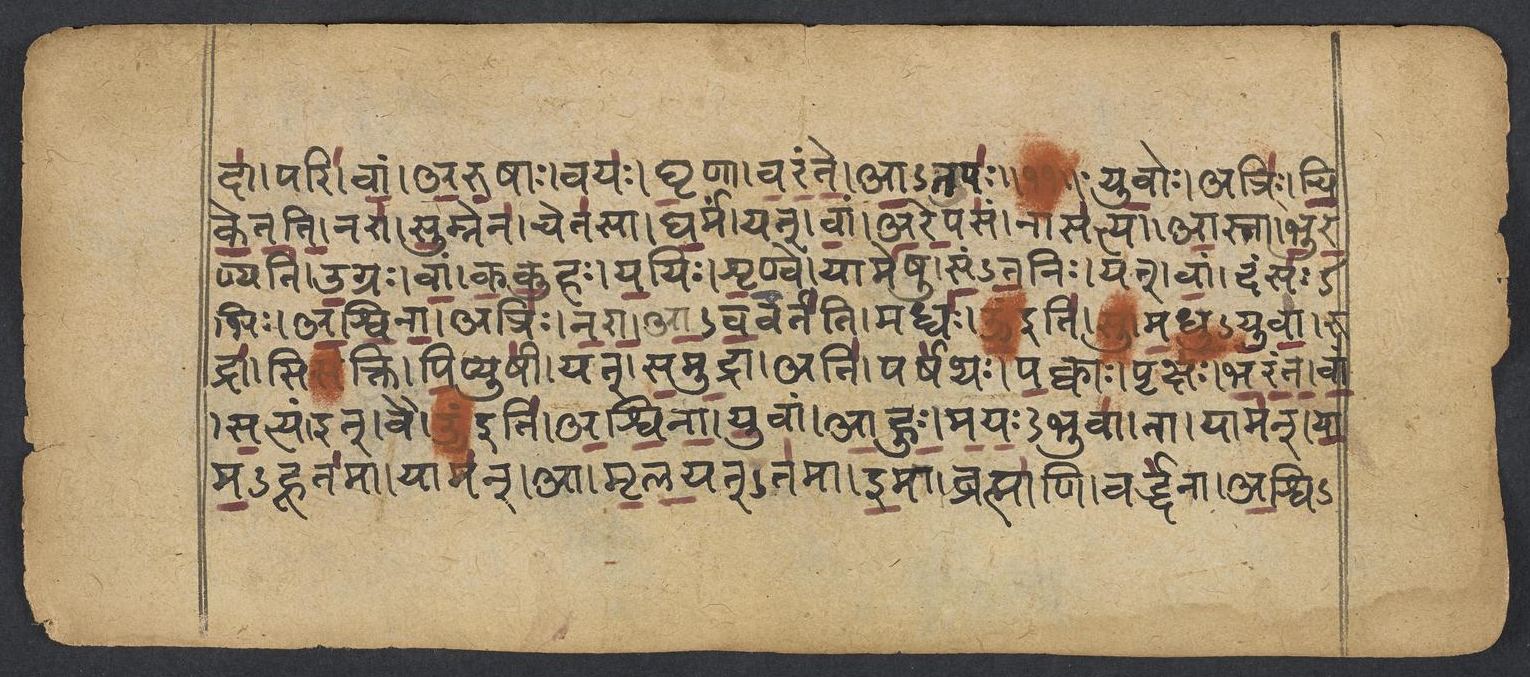
Penn Ms. Coll. 390 Item 41, fol. 389r (numbered 62r by the scribe) (OPenn image 389, lower leaf). Checked on the image: the Rigveda text on this page begins in RV 5.73.5 ‹-sadā pari vām aruṣāḥ›. The next page with Rigveda text, fol. 389v (numbered 62v by the scribe), begins in RV 5.73.10 ‹-aśvi-bhyām santu śam-tamā yā›. Verses 5.73.5-9 end on this page; 5.73.5 begins on fol. 388v (numbered 61v by the scribe).
5ā yad vā̍ṁ sū̱ryā ratha̱ṁ tiṣṭha̍d raghu̱ṣyada̱ṁ sadā̍ | pari̍ vām aru̱ṣā vayo̍ ghṛ̱ṇā va̍ranta ā̱tapa̍ḥ ||
6yu̱vor atri̍ś ciketati̱ narā̍ su̱mnena̱ ceta̍sā | gha̱rmaṁ yad vā̍m are̱pasa̱ṁ nāsa̍tyā̱snā bhu̍ra̱ṇyati̍ ||
7u̱gro vā̍ṁ kaku̱ho ya̱yiḥ śṛ̱ṇve yāme̍ṣu saṁta̱niḥ | yad vā̱ṁ daṁso̍bhir aśvi̱nātri̍r narāva̱varta̍ti ||
8madhva̍ ū̱ ṣu ma̍dhūyuvā̱ rudrā̱ siṣa̍kti pi̱pyuṣī̍ | yat sa̍mu̱drāti̱ parṣa̍thaḥ pa̱kvāḥ pṛkṣo̍ bharanta vām ||
9sa̱tyam id vā u̍ aśvinā yu̱vām ā̍hur mayo̱bhuvā̍ | tā yāma̍n yāma̱hūta̍mā̱ yāma̱nn ā mṛ̍ḻa̱yatta̍mā ||
Compare: Padapāṭha (word-by-word text written in the manuscript; Sansknet e-text via GRETIL)
5ā | yat | vām | sūryā | ratham | tiṣṭhat | raghu-syadam | sadā | pari | vām | aruṣāḥ | vayaḥ | ghṛṇā | varante | ātapaḥ
6yuvoḥ | atriḥ | ciketati | narā | sumnena | cetasā | gharmam | yat | vām | arepasam | nāsatyā | āsnā | bhuraṇyati
7ugraḥ | vām | kakuhaḥ | yayiḥ | śṛṇve | yāmeṣu | sam-taniḥ | yat | vām | daṃsaḥ-bhiḥ | aśvinā | atriḥ | narā | āvavartati
8madhvaḥ | oṃ iti | su | madhu-yuvā | rudrā | sisakti | pipyuṣī | yat | samudrā | ati | parṣathaḥ | pakvāḥ | pṛkṣaḥ | bharanta | vām
9satyam | it | vai | oṃ iti | aśvinā | yuvām | āhuḥ | mayaḥ-bhuvā | tā | yāman | yāma-hūtamā | yāman | ā | mṛḷayat-tamā
5When Sûryâ mounted on your car that rolls for ever rapidly, Birds of red hue were round about and burning splendours compassed you.
6Atri bethinks himself of you, O Heroes, with a friendly mind, What time, Nâsatyas, with his mouth he stirs the spotless flame for you.
7Strong is your swiftly moving steed, famed his exertion in the course When by your great deeds, Aṣvins, Chiefs, Atri is brought to us again.
8Lovers of sweetness, Rudras, she who streams with sweetness waits on you. When ye have travelled through the seas men bring you gifts of well-dressed food.
9Aṣvins, with truth they call you Twain bestowers of felicity; At sacrifice most prompt to hear, most gracious ye at sacrifice.
Where on the image
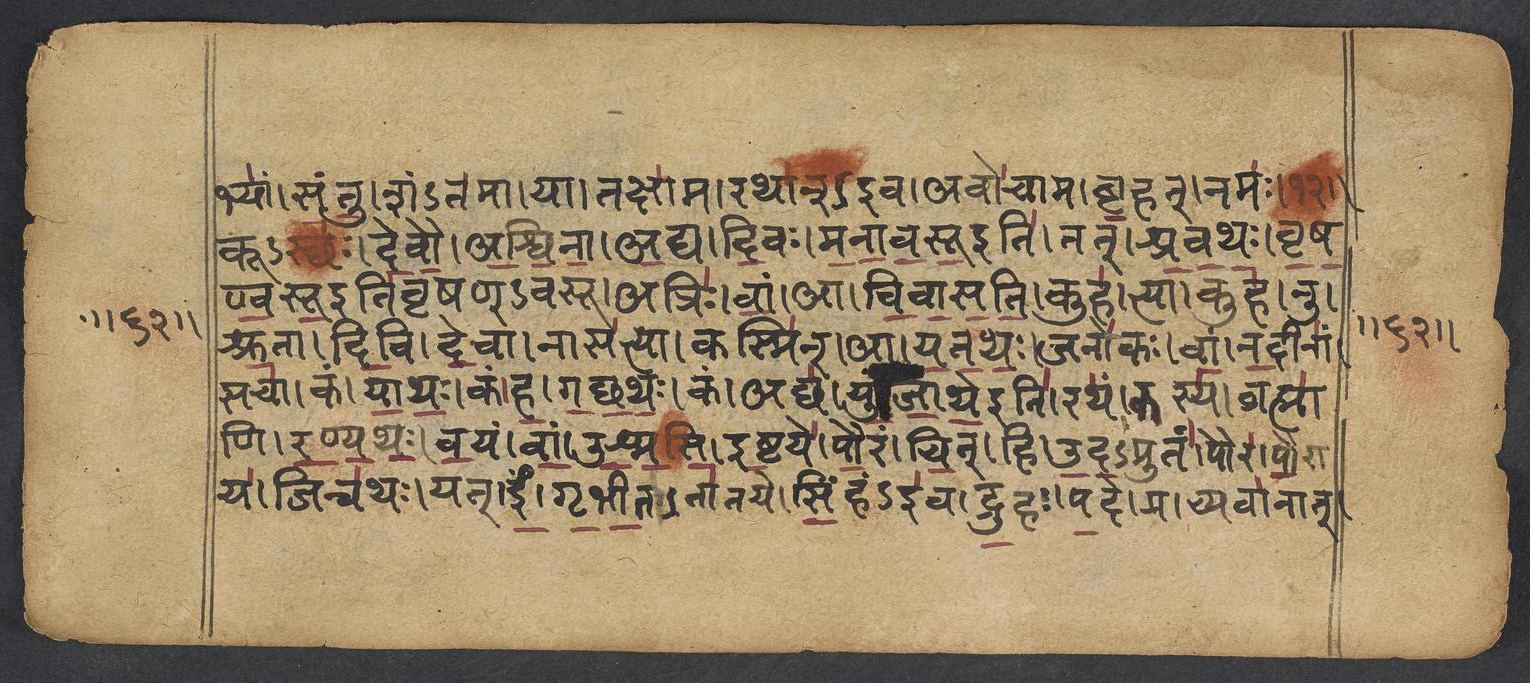
Penn Ms. Coll. 390 Item 41, fol. 389v (numbered 62v by the scribe) (OPenn image 390, upper leaf). Checked on the image: the Rigveda text on this page begins in RV 5.73.10 ‹-aśvi-bhyām santu śam-tamā yā›. The next page with Rigveda text, fol. 390r (numbered 63r by the scribe), begins in RV 5.74.5 ‹jujuruṣaḥ vavrim atkam na›. Verse 5.73.10 ends on this page; 5.73.10 begins on fol. 389r (numbered 62r by the scribe).
10i̱mā brahmā̍ṇi̱ vardha̍nā̱śvibhyā̍ṁ santu̱ śaṁta̍mā | yā takṣā̍ma̱ rathā̍m̐ i̱vāvo̍cāma bṛ̱han nama̍ḥ ||
Compare: Padapāṭha (word-by-word text written in the manuscript; Sansknet e-text via GRETIL)
10imā | brahmāṇi | vardhanā | aśvi-bhyām | santu | śam-tamā | yā | takṣāma | rathān-iva | avocāma | bṛhat | namaḥ
10Most pleasing to the Aṣvins be these prayers which magnify their might, Which we have fashioned, even as cars high reverence have we spoken forth.
Notes
- Sanskrit: Aufrecht's edition (1877) with the Vedic accents, as entered by van Nooten and Holland (GRETIL).
- English: Ralph T. H. Griffith, The Hymns of the Rigveda (1889-1892; 2nd ed. 1896-1897), from the VedaWeb digital text; OCR slips in that text were corrected against the printed 2nd edition (data/sources/rigveda/griffith_errata.json).
- Padapāṭha (edition text): Sansknet e-text via GRETIL (CC BY-NC-SA 4.0).
Cite
Sources
- Source: Penn Ms. Coll. 390 Item 41 (undated (catalogued with Penn's 18th-19th c. Vedic manuscripts)), OPenn, Public Domain Mark + Aufrecht's accented text (GRETIL) + Griffith's English (VedaWeb) (holding institution)
- Critical edition: Aufrecht (1877), accented e-text via GRETIL
← previous · → next · v cycle view · l back to library