Rigveda 5.74: To Asvins
Introduction
Rigveda 5.74 is a hymn of 10 verses addressed to Asvins. It stands in book (maṇḍala) 5, the family book of the Atri clan. The Rigveda is the oldest collection of Sanskrit hymns, composed in the second half of the second millennium BCE and handed down orally for many centuries before it was written down.
The manuscript shown is Penn Ms. Coll. 390 Item 41 (University of Pennsylvania), an undated paper manuscript of the padapāṭha (the word-by-word recitation text, in which every word is written separately and compounds are split) of the whole Ṛgveda in Devanāgarī, 884 leaves in fascicles, 7-9 lines to the page, accents in red; this hymn stands on fol. 389v-390v. Each section below gives the verses that end on one page; the page boundaries were read on the images (the opening words of every page), not counted out. Where the manuscript is a padapāṭha (the word-by-word recitation text), the section shows Aufrecht's continuous (saṃhitā) text first and, as the edition text, the padapāṭha of the same verses, which is the form written on the page.
How was this verified? (Provenance)
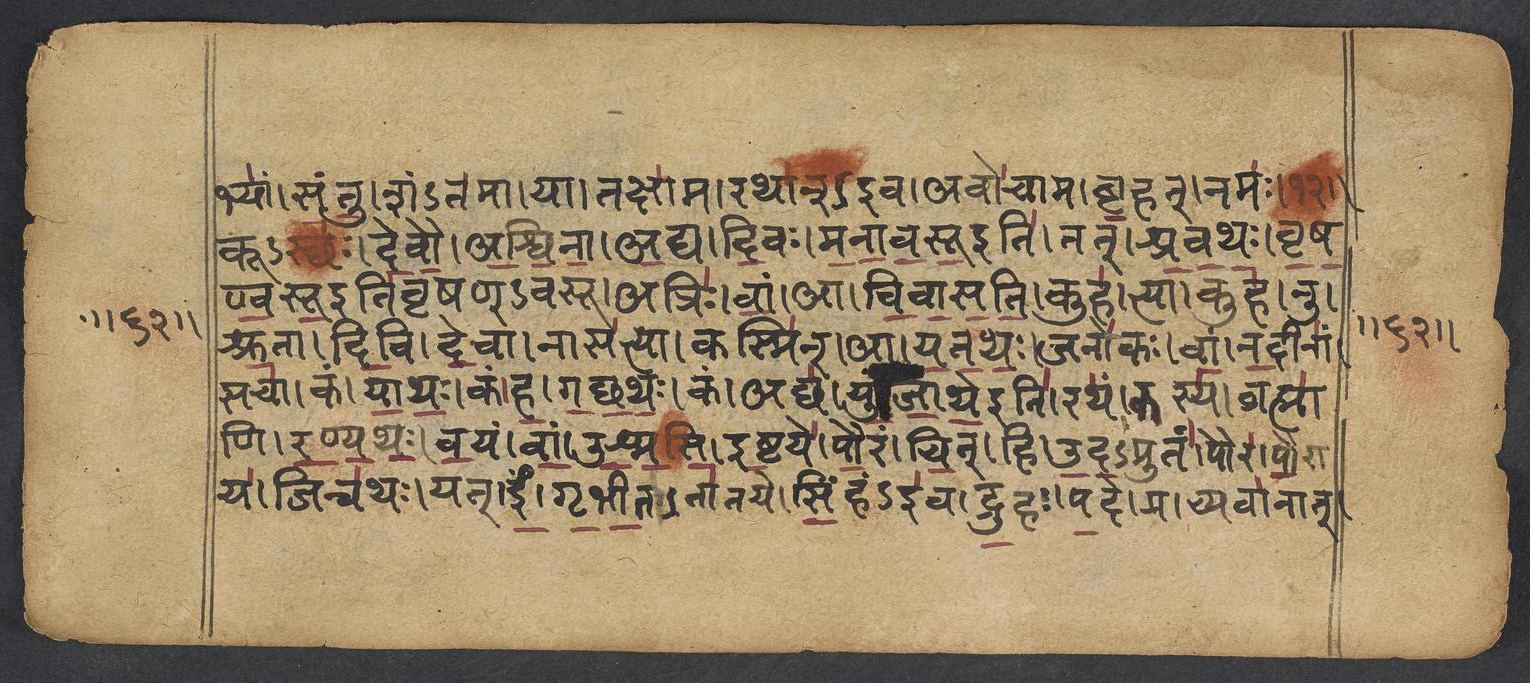
Where on the image
Penn Ms. Coll. 390 Item 41, fol. 389v (numbered 62v by the scribe) (OPenn image 390, upper leaf). Checked on the image: the Rigveda text on this page begins in RV 5.73.10 ‹-aśvi-bhyām santu śam-tamā yā›. The next page with Rigveda text, fol. 390r (numbered 63r by the scribe), begins in RV 5.74.5 ‹jujuruṣaḥ vavrim atkam na›. Verses 5.74.1-4 end on this page.
1kūṣṭho̍ devāv aśvinā̱dyā di̱vo ma̍nāvasū | tac chra̍vatho vṛṣaṇvasū̱ atri̍r vā̱m ā vi̍vāsati ||
2kuha̱ tyā kuha̱ nu śru̱tā di̱vi de̱vā nāsa̍tyā | kasmi̱nn ā ya̍tatho̱ jane̱ ko vā̍ṁ na̱dīnā̱ṁ sacā̍ ||
3kaṁ yā̍tha̱ḥ kaṁ ha̍ gacchatha̱ḥ kam acchā̍ yuñjāthe̱ ratha̍m | kasya̱ brahmā̍ṇi raṇyatho va̱yaṁ vā̍m uśmasī̱ṣṭaye̍ ||
4pau̱raṁ ci̱d dhy u̍da̱pruta̱m paura̍ pau̱rāya̱ jinva̍thaḥ | yad ī̍ṁ gṛbhī̱tatā̍taye si̱ṁham i̍va dru̱has pa̱de ||
Compare: Padapāṭha (word-by-word text written in the manuscript; Sansknet e-text via GRETIL)
1kū-sthaḥ | devau | aśvinā | adya | divaḥ | manāvasūiti | tat | śravathaḥ | vṛṣaṇvasūitivṛṣaṇ-vasū | atriḥ | vām | ā | vivāsati
2kuha | tyā | kuha | nu | śrutā | divi | devā | nāsatyā | kasmin | ā | yatathaḥ | jane | kaḥ | vām | nadīnām | sacā
3kam | yāthaḥ | kam | ha | gacchathaḥ | kam | accha | yuñjātheiti | ratham | kasya | brahmāṇi | raṇyathaḥ | vayam | vām | uśmasi | iṣṭaye
4pauram | cit | hi | uda-prutam | paura | paurāya | jinvathaḥ | yat | īm | gṛbhīta-tātaye | siṃham-iva | druhaḥ | pade
1WHERE in the heavens are ye to-day, Gods, Aṣvins, rich in constancy? Hear this, ye excellent as Steers: Atri inviteth you to come.
2Where are they now? Where are the Twain, the famed Nâsatyas, Gods in heaven? Who is the man ye strive to reach? Who of your suppliants is with you?
3Whom do ye visit, whom approach? to whom direct your harnessed car? With whose devotions are ye pleased? We long for you to further us.
4Ye, Strengtheners, for Paura stir the filler swimming in the flood, Advancing to be captured like a lion to the ambuscade.
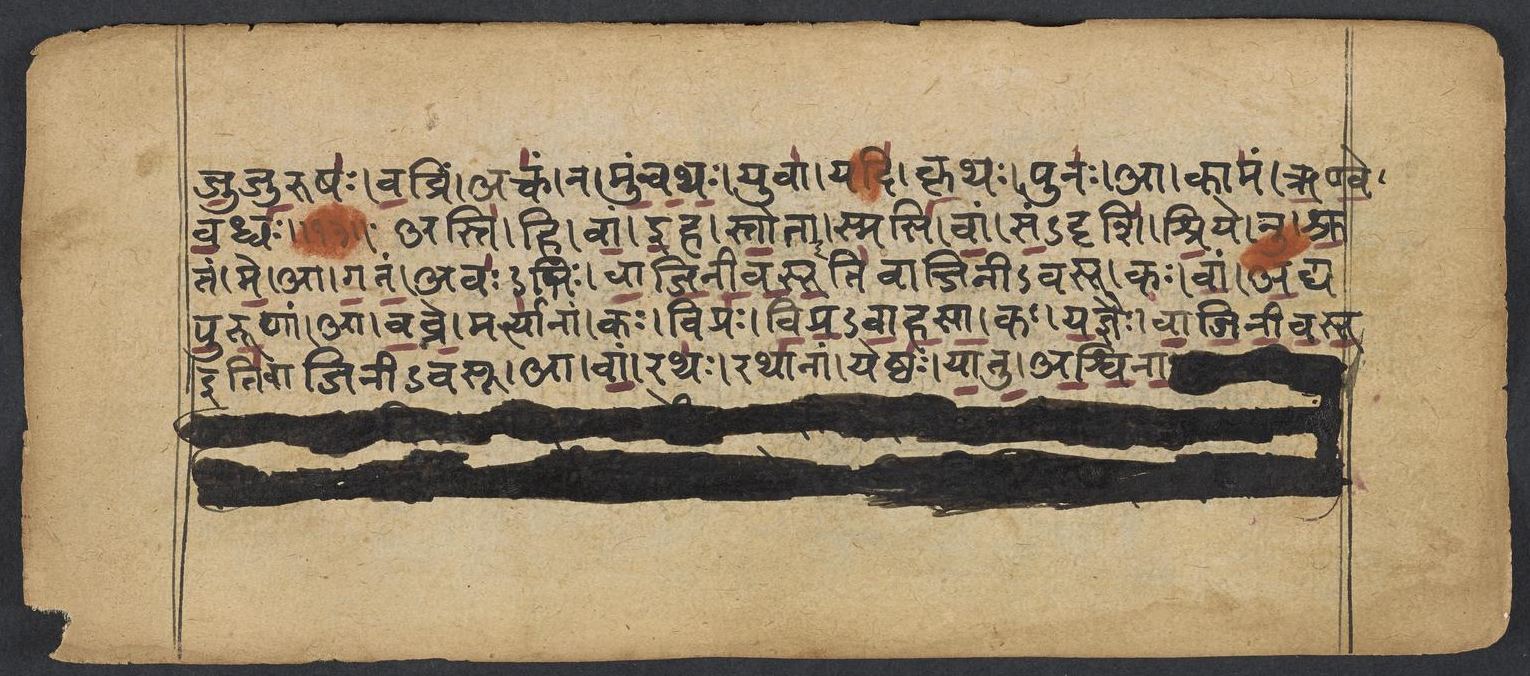
Where on the image
Penn Ms. Coll. 390 Item 41, fol. 390r (numbered 63r by the scribe) (OPenn image 390, lower leaf). Checked on the image: the Rigveda text on this page begins in RV 5.74.5 ‹jujuruṣaḥ vavrim atkam na›. The next page with Rigveda text, fol. 390v (numbered 63v by the scribe), begins in RV 5.74.8 ‹puru cit asma-yuḥ tiraḥ›. Verses 5.74.5-7 end on this page; 5.74.5 begins on fol. 389v (numbered 62v by the scribe).
5pra cyavā̍nāj juju̱ruṣo̍ va̱vrim atka̱ṁ na mu̍ñcathaḥ | yuvā̱ yadī̍ kṛ̱thaḥ puna̱r ā kāma̍m ṛṇve va̱dhva̍ḥ ||
6asti̱ hi vā̍m i̱ha sto̱tā smasi̍ vāṁ sa̱ṁdṛśi̍ śri̱ye | nū śru̱tam ma̱ ā ga̍ta̱m avo̍bhir vājinīvasū ||
7ko vā̍m a̱dya pu̍rū̱ṇām ā va̍vne̱ martyā̍nām | ko vipro̍ vipravāhasā̱ ko ya̱jñair vā̍jinīvasū ||
Compare: Padapāṭha (word-by-word text written in the manuscript; Sansknet e-text via GRETIL)
5pra | cyavānāt | jujuruṣaḥ | vavrim | atkam | na | muñcathaḥ | yuvā | yadi | kṛthaḥ | punaḥ | ā | kāmam | ṛṇve | vadhvaḥ
6asti | hi | vām | iha | stotā | smasi | vām | sam-dṛśi | śṛiye | nu | śrutam | me | ā | gatam | avaḥ-bhiḥ | vājinīvasūitivājinī-vasū
7kaḥ | vām | adya | purūṇām | ā | vavne | martyānām | kaḥ | vipraḥ | vipra-vāhasā | kaḥ | yajñaiḥ | vājinīvasūitivājinī-vasū
5Ye from Chyavâna worn with age removed his skin as 'twere a robe. So, when ye made him young again, he stirred the longing of a dame.
6Here is the man who lauds you both: to see your glory are we here. Now hear me, come with saving help, ye who are rich in store of wealth.
7Who among many mortal men this day hath won you to himself? What bard, accepters of the bard? Who, rich in wealth! with sacrifice?
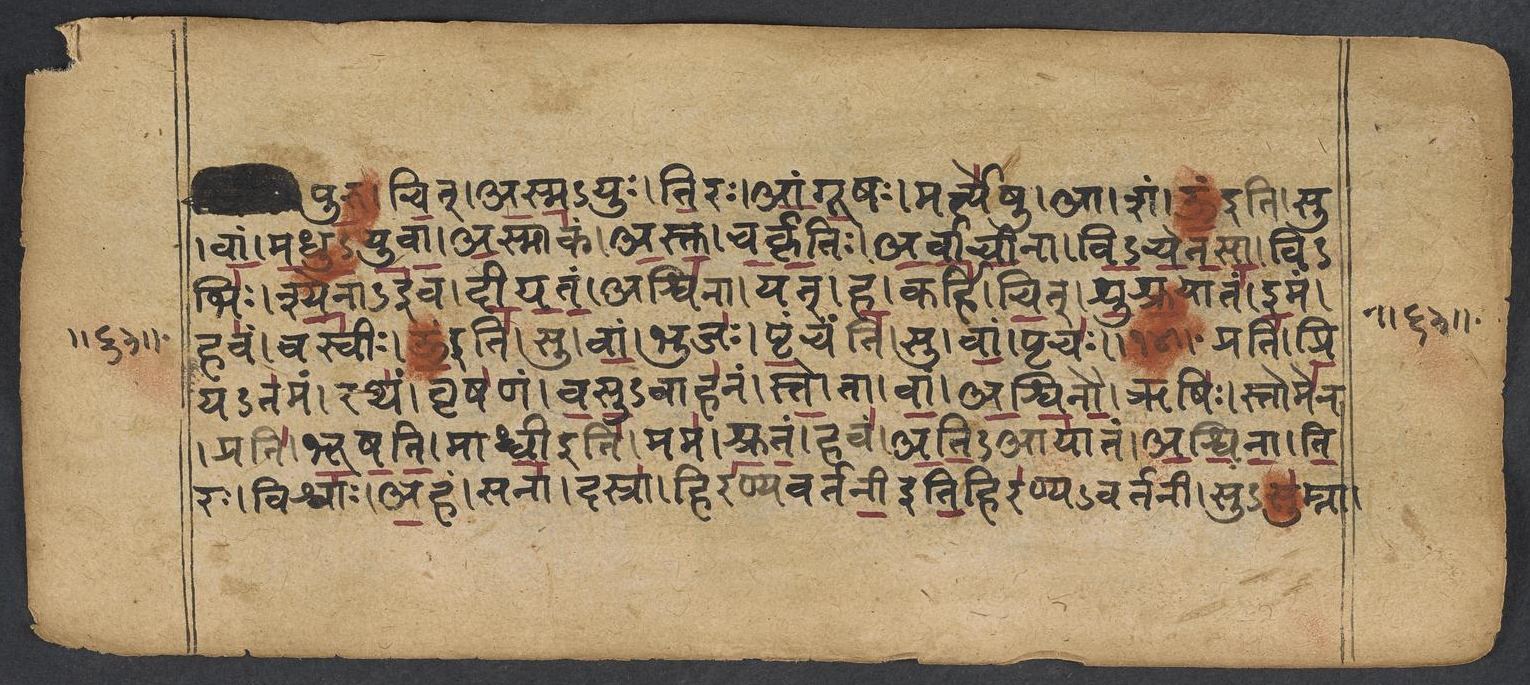
Where on the image
Penn Ms. Coll. 390 Item 41, fol. 390v (numbered 63v by the scribe) (OPenn image 391, upper leaf). Checked on the image: the Rigveda text on this page begins in RV 5.74.8 ‹puru cit asma-yuḥ tiraḥ›. The next page with Rigveda text, fol. 391r (numbered 64r by the scribe), begins in RV 5.75.2 ‹sindhu-vāhasā mādhvī iti mama›. Verses 5.74.8-10 end on this page; 5.74.8 begins on fol. 390r (numbered 63r by the scribe).
8ā vā̱ṁ ratho̱ rathā̍nā̱ṁ yeṣṭho̍ yātv aśvinā | pu̱rū ci̍d asma̱yus ti̱ra ā̍ṅgū̱ṣo martye̱ṣv ā ||
9śam ū̱ ṣu vā̍m madhūyuvā̱smāka̍m astu carkṛ̱tiḥ | a̱rvā̱cī̱nā vi̍cetasā̱ vibhi̍ḥ śye̱neva̍ dīyatam ||
10aśvi̍nā̱ yad dha̱ karhi̍ cic chuśrū̱yāta̍m i̱maṁ hava̍m | vasvī̍r ū̱ ṣu vā̱m bhuja̍ḥ pṛ̱ñcanti̱ su vā̱m pṛca̍ḥ ||
Compare: Padapāṭha (word-by-word text written in the manuscript; Sansknet e-text via GRETIL)
8ā | vām | rathaḥ | rathānām | yeṣṭhaḥ | yātu | aśvinā | puru | cit | asma-yuḥ | tiraḥ | āṅgūṣaḥ | martyeṣu | ā
9śam | oṃ iti | su | vām | madhu-yuvā | asmākam | astu | carkṛtiḥ | arvācīnā | vi-cetasā | vi-bh iḥ | śyenāiva | dīyatam
10aśvinā | yat | ha | karhi | cit | śuśruyātam | imam | havam | vasvīḥ | oṃ iti | su | vām | bhujaḥ | pṛñcanti | su | vām | pṛcaḥ
8O Aṣvins, may your car approach, most excellent of cars for speed. Through many regions may our praise pass onward among mortal men.
9May our laudation of you Twain, lovers of meath! be sweet to you. Fly hitherward, ye wise of heart, like falcons with your winged steeds.
10O Aṣvins, when at any time ye listen to this call of mine, For you is dainty food prepared: they mix refreshing food for you.
Notes
- Sanskrit: Aufrecht's edition (1877) with the Vedic accents, as entered by van Nooten and Holland (GRETIL).
- English: Ralph T. H. Griffith, The Hymns of the Rigveda (1889-1892; 2nd ed. 1896-1897), from the VedaWeb digital text; OCR slips in that text were corrected against the printed 2nd edition (data/sources/rigveda/griffith_errata.json).
- Padapāṭha (edition text): Sansknet e-text via GRETIL (CC BY-NC-SA 4.0).
Cite
Sources
- Source: Penn Ms. Coll. 390 Item 41 (undated (catalogued with Penn's 18th-19th c. Vedic manuscripts)), OPenn, Public Domain Mark + Aufrecht's accented text (GRETIL) + Griffith's English (VedaWeb) (holding institution)
- Critical edition: Aufrecht (1877), accented e-text via GRETIL
← previous · → next · v cycle view · l back to library