Rigveda 5.75: To Asvins
Introduction
Rigveda 5.75 is a hymn of 9 verses addressed to Asvins. It stands in book (maṇḍala) 5, the family book of the Atri clan. The Rigveda is the oldest collection of Sanskrit hymns, composed in the second half of the second millennium BCE and handed down orally for many centuries before it was written down.
The manuscript shown is Penn Ms. Coll. 390 Item 41 (University of Pennsylvania), an undated paper manuscript of the padapāṭha (the word-by-word recitation text, in which every word is written separately and compounds are split) of the whole Ṛgveda in Devanāgarī, 884 leaves in fascicles, 7-9 lines to the page, accents in red; this hymn stands on fol. 390v-391v. Each section below gives the verses that end on one page; the page boundaries were read on the images (the opening words of every page), not counted out. Where the manuscript is a padapāṭha (the word-by-word recitation text), the section shows Aufrecht's continuous (saṃhitā) text first and, as the edition text, the padapāṭha of the same verses, which is the form written on the page.
How was this verified? (Provenance)
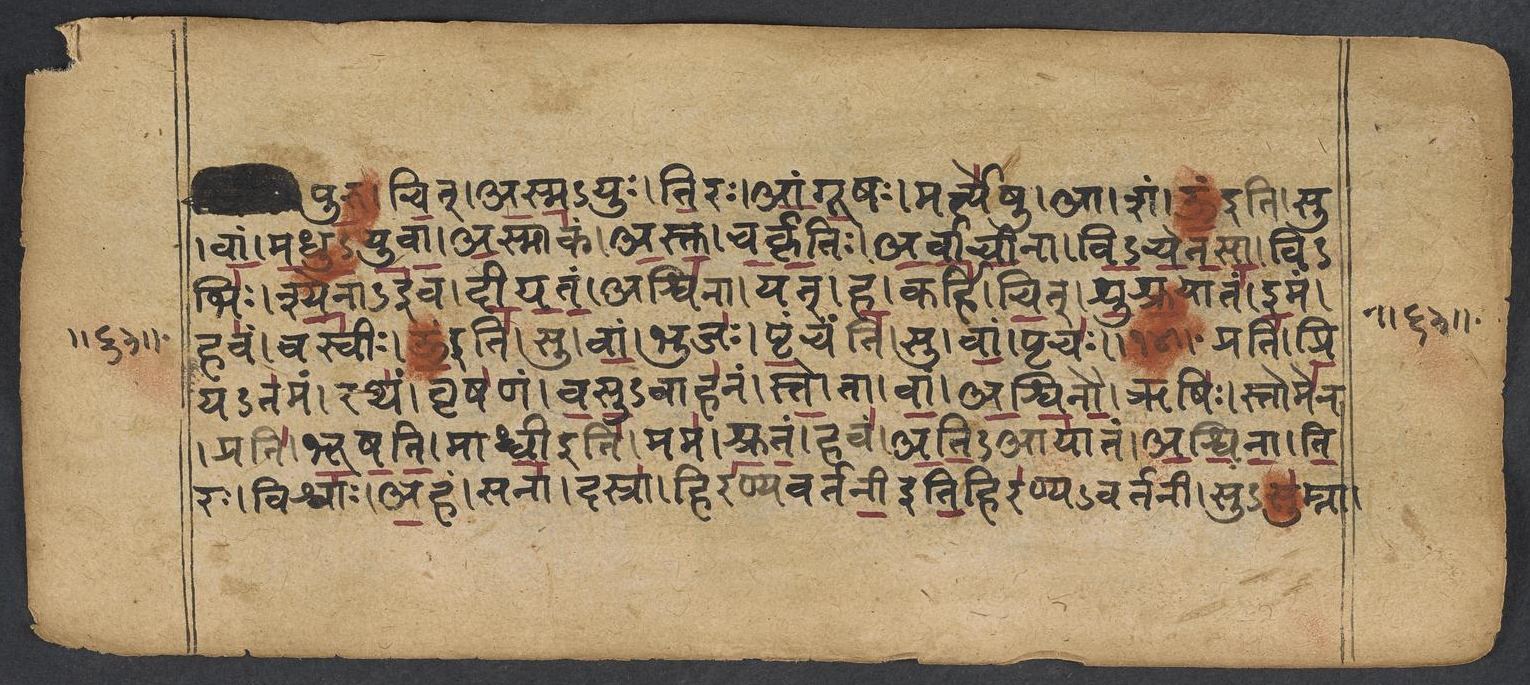
Where on the image
Penn Ms. Coll. 390 Item 41, fol. 390v (numbered 63v by the scribe) (OPenn image 391, upper leaf). Checked on the image: the Rigveda text on this page begins in RV 5.74.8 ‹puru cit asma-yuḥ tiraḥ›. The next page with Rigveda text, fol. 391r (numbered 64r by the scribe), begins in RV 5.75.2 ‹sindhu-vāhasā mādhvī iti mama›. Verse 5.75.1 ends on this page.
1prati̍ pri̱yata̍ma̱ṁ ratha̱ṁ vṛṣa̍ṇaṁ vasu̱vāha̍nam | sto̱tā vā̍m aśvinā̱v ṛṣi̱ḥ stome̍na̱ prati̍ bhūṣati̱ mādhvī̱ mama̍ śruta̱ṁ hava̍m ||
Compare: Padapāṭha (word-by-word text written in the manuscript; Sansknet e-text via GRETIL)
1prati | priya-tamam | ratham | vṛṣaṇam | vasu-vāhanam | stotā | vām | aśvinau | ṛṣiḥ | stomena | prati | bhūṣati | mādhvī iti | mama | śrutam | havam
1To meet your treasure-bringing car, the mighty car most dear to us, Aṣvins, the R̥ishi is prepared, your raiser, with his song of praise. Lovers of sweetness, hear my call.
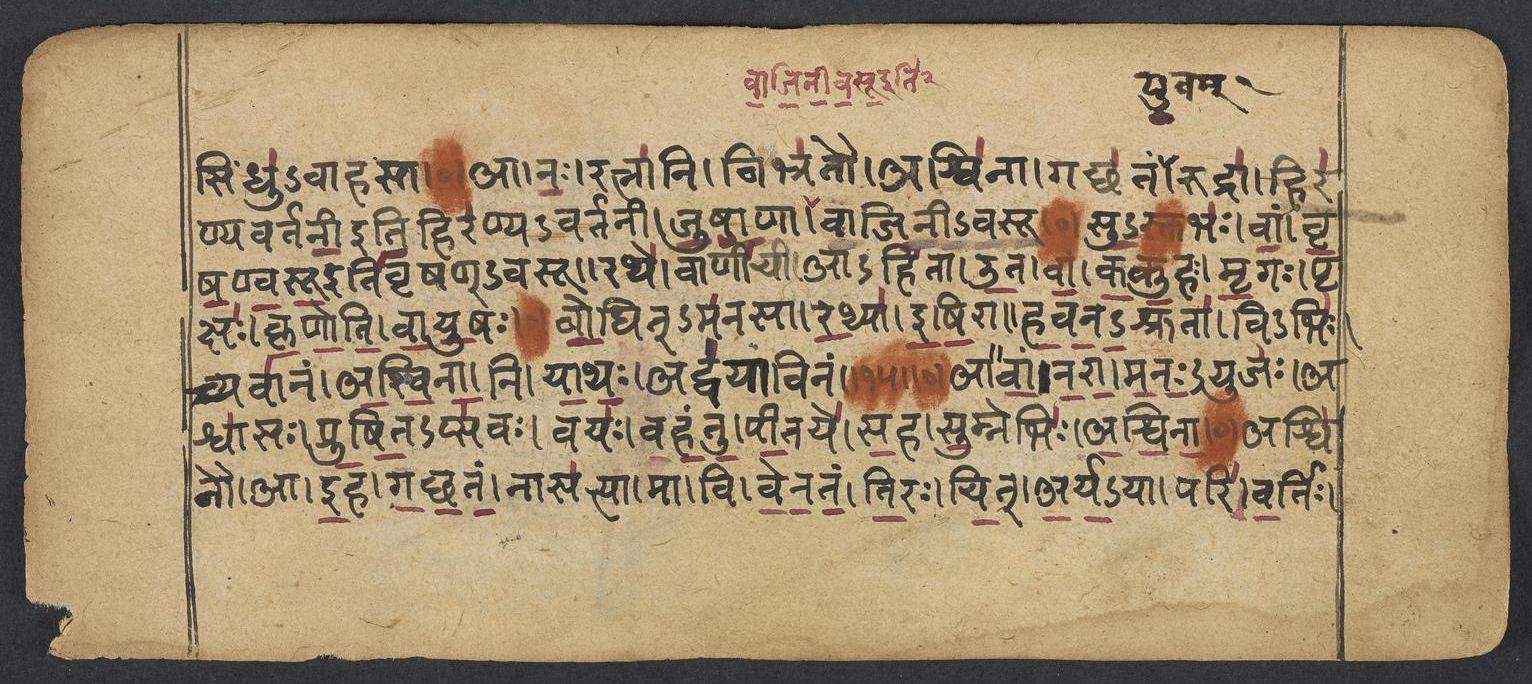
Where on the image
Penn Ms. Coll. 390 Item 41, fol. 391r (numbered 64r by the scribe) (OPenn image 391, lower leaf). Checked on the image: the Rigveda text on this page begins in RV 5.75.2 ‹sindhu-vāhasā mādhvī iti mama›. The next page with Rigveda text, fol. 391v (numbered 64v by the scribe), begins in RV 5.75.7 ‹yātam adābhyā mādhvī iti›. Verses 5.75.2-6 end on this page; 5.75.2 begins on fol. 390v (numbered 63v by the scribe).
2a̱tyāyā̍tam aśvinā ti̱ro viśvā̍ a̱haṁ sanā̍ | dasrā̱ hira̍ṇyavartanī̱ suṣu̍mnā̱ sindhu̍vāhasā̱ mādhvī̱ mama̍ śruta̱ṁ hava̍m ||
3ā no̱ ratnā̍ni̱ bibhra̍tā̱v aśvi̍nā̱ gaccha̍taṁ yu̱vam | rudrā̱ hira̍ṇyavartanī juṣā̱ṇā vā̍jinīvasū̱ mādhvī̱ mama̍ śruta̱ṁ hava̍m ||
4su̱ṣṭubho̍ vāṁ vṛṣaṇvasū̱ rathe̱ vāṇī̱cy āhi̍tā | u̱ta vā̍ṁ kaku̱ho mṛ̱gaḥ pṛkṣa̍ḥ kṛṇoti vāpu̱ṣo mādhvī̱ mama̍ śruta̱ṁ hava̍m ||
5bo̱dhinma̍nasā ra̱thye̍ṣi̱rā ha̍vana̱śrutā̍ | vibhi̱ś cyavā̍nam aśvinā̱ ni yā̍tho̱ adva̍yāvina̱m mādhvī̱ mama̍ śruta̱ṁ hava̍m ||
6ā vā̍ṁ narā mano̱yujo 'śvā̍saḥ pruṣi̱tapsa̍vaḥ | vayo̍ vahantu pī̱taye̍ sa̱ha su̱mnebhi̍r aśvinā̱ mādhvī̱ mama̍ śruta̱ṁ hava̍m ||
Compare: Padapāṭha (word-by-word text written in the manuscript; Sansknet e-text via GRETIL)
2ati-āyātam | aśvinā | tiraḥ | viśvāḥ | aham | sanā | dasrā | hiraṇya-vartanī itihiraṇya-vartanī | su-sumnā | sindhu-vāhasā | mādhvī iti | mama | śrutam | havam
3ā | naḥ | ratnāni | bibhratau | aśvinā | gacchatam | yuvam | rudrā | hiraṇya-vartanī itihiraṇya-vartanī | juṣāṇā | vājinīvasūitivājinī-vasū | mādhvī iti | mama | śrutam | havam
4su-stubhaḥ | vām | vṛṣaṇvasūitivṛṣaṇ-vasū | rathe | vāṇīcī | āhitā | uta | vām | kakuhaḥ | mṛgaḥ | pṛkṣaḥ | kṛṇoti | vāpuṣaḥ | mādhvī iti | mama | śrutam | havam
5bodhit-manasā | rathyā | iṣirā | havana-śrutā | vi-bhiḥ | cyavānam | aśvinā | ni | yāthaḥ | advayāvinam | mādhvī iti | mama | śrutam | havam
6ā | vām | narā | manaḥ-yujaḥ | aśvāsaḥ | pruṣita-psavaḥ | vayaḥ | vahantu | pītaye | saha | sumnebhiḥ | aśvinā | mādhvī iti | mama | śrutam | havam
2Pass, O ye Aṣvins, pass away beyond all tribes of selfish men, Wonderful, with your golden paths, most gracious, bringers of the flood. Lovers of sweetness, hear my call.
3Come to us, O ye Aṣvin Pair, bringing your precious treasures, come Ye Rudras, on your paths of gold, rejoicing, rich in store of wealth. Lovers of sweetness, hear my call.
4O strong and Good, the voice of him who lauds you well cleaves to your car. And that great beast, your chariot-steed, fair, wonderful, makes dainty food. Lovers of sweetness, hear my call.
5Watchful in spirit, born on cars, impetuous, listing to his cry, Aṣvins, with winged steeds ye speed down to Chyavâna void of guile. Lovers of sweetness, hear my call.
6Hither, O Heroes, let your steeds, of dappled hue, yoked at the thought, Your flying steeds, O Aṣvins, bring you hitherward, with bliss, to drink. Lovers of sweetness, hear my call.
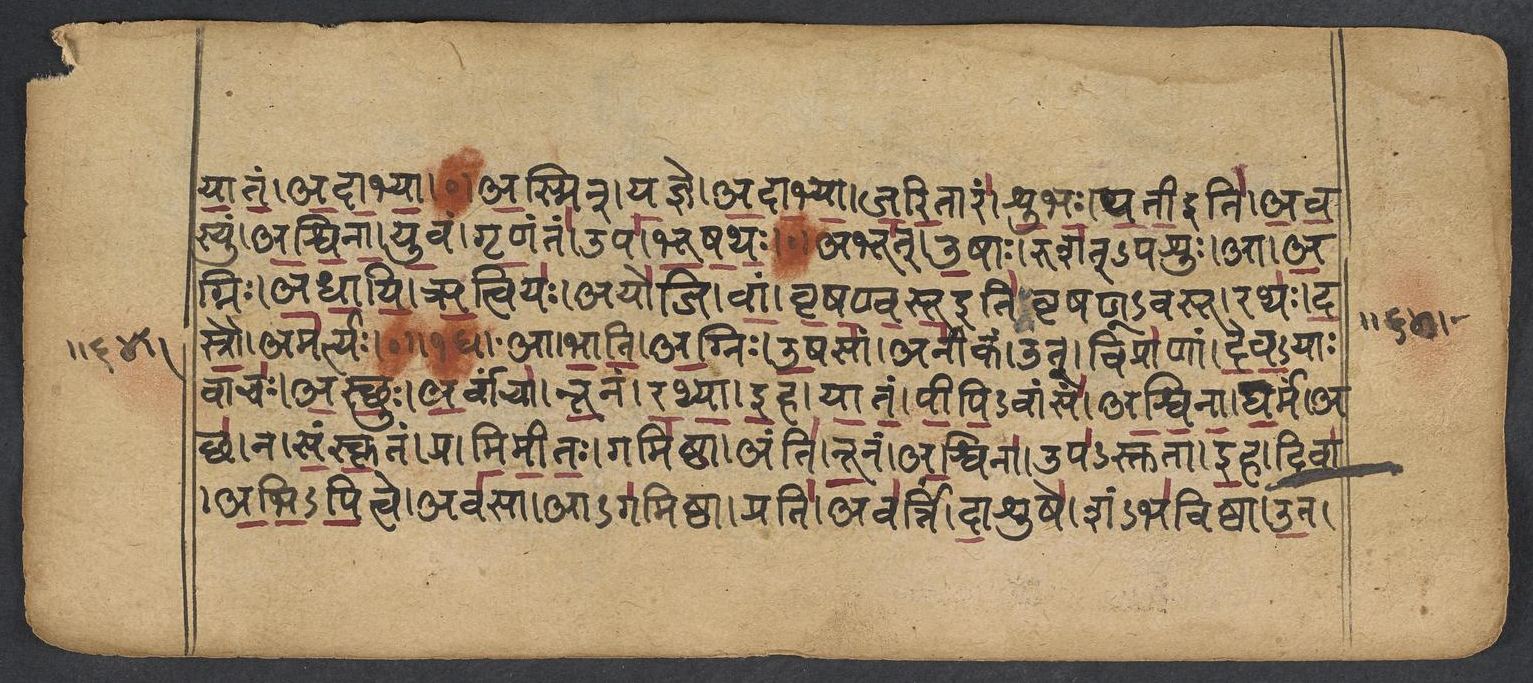
Where on the image
Penn Ms. Coll. 390 Item 41, fol. 391v (numbered 64v by the scribe) (OPenn image 392, upper leaf). Checked on the image: the Rigveda text on this page begins in RV 5.75.7 ‹yātam adābhyā mādhvī iti›. The next page with Rigveda text, fol. 392r (numbered 65r by the scribe), begins in RV 5.76.3 ‹ā yātam sam-gave prātaḥ›. Verses 5.75.7-9 end on this page; 5.75.7 begins on fol. 391r (numbered 64r by the scribe).
7aśvi̍nā̱v eha ga̍cchata̱ṁ nāsa̍tyā̱ mā vi ve̍natam | ti̱raś ci̍d arya̱yā pari̍ va̱rtir yā̍tam adābhyā̱ mādhvī̱ mama̍ śruta̱ṁ hava̍m ||
8a̱smin ya̱jñe a̍dābhyā jari̱tāra̍ṁ śubhas patī | a̱va̱syum a̍śvinā yu̱vaṁ gṛ̱ṇanta̱m upa̍ bhūṣatho̱ mādhvī̱ mama̍ śruta̱ṁ hava̍m ||
9abhū̍d u̱ṣā ruśa̍tpaśu̱r āgnir a̍dhāyy ṛ̱tviya̍ḥ | ayo̍ji vāṁ vṛṣaṇvasū̱ ratho̍ dasrā̱v ama̍rtyo̱ mādhvī̱ mama̍ śruta̱ṁ hava̍m ||
Compare: Padapāṭha (word-by-word text written in the manuscript; Sansknet e-text via GRETIL)
7aśvinau | ā | iha | gacchatam | nāsatyā | mā | vi | venatam | tiraḥ | cit | arya-yā | pari | vartiḥ | yātam | adābhyā | mādhvī iti | mama | śrutam | havam
8asmin | yajñe | adābhyā | jaritāram | śubhaḥ | patī iti | avasyum | aśvinā | yuvam | gṛṇantam | upa | bhūṣathaḥ | mādhvī iti | mama | śrutam | havam
9abhūt | uṣā | ruśat-paśuḥ | ā | agniḥ | adhāyi | ṛtviyaḥ | ayoji | vām | vṛṣaṇvasūit ivṛṣaṇ-vasū | rathaḥ | dasrau | amartyaḥ | mādhvī iti | mama | śrutam | havam
7O Aṣvins, hither come to us; Nâsatyas, be not disinclined. Through longing for the pious turn out of the way to reach our home. Lovers of sweetness, hear my call.
8Ye Lords of Splendour, free from guile, come, stand at this our sacrifice. Beside the singer, Aṣvins, who longs for your grace and lauds you both. Lovers of sweetness, hear my call.
9Dawn with her white herd hath appeared, and in due time hath fire been placed. Harnessed is your immortal car, O WonderWorkers, strong and kind. Lovers of sweetness, hear my call.
Notes
- Sanskrit: Aufrecht's edition (1877) with the Vedic accents, as entered by van Nooten and Holland (GRETIL).
- English: Ralph T. H. Griffith, The Hymns of the Rigveda (1889-1892; 2nd ed. 1896-1897), from the VedaWeb digital text; OCR slips in that text were corrected against the printed 2nd edition (data/sources/rigveda/griffith_errata.json).
- Padapāṭha (edition text): Sansknet e-text via GRETIL (CC BY-NC-SA 4.0).
Cite
Sources
- Source: Penn Ms. Coll. 390 Item 41 (undated (catalogued with Penn's 18th-19th c. Vedic manuscripts)), OPenn, Public Domain Mark + Aufrecht's accented text (GRETIL) + Griffith's English (VedaWeb) (holding institution)
- Critical edition: Aufrecht (1877), accented e-text via GRETIL
← previous · → next · v cycle view · l back to library