Rigveda 5.77: To Asvins
Introduction
Rigveda 5.77 is a hymn of 5 verses addressed to Asvins. It stands in book (maṇḍala) 5, the family book of the Atri clan. The Rigveda is the oldest collection of Sanskrit hymns, composed in the second half of the second millennium BCE and handed down orally for many centuries before it was written down.
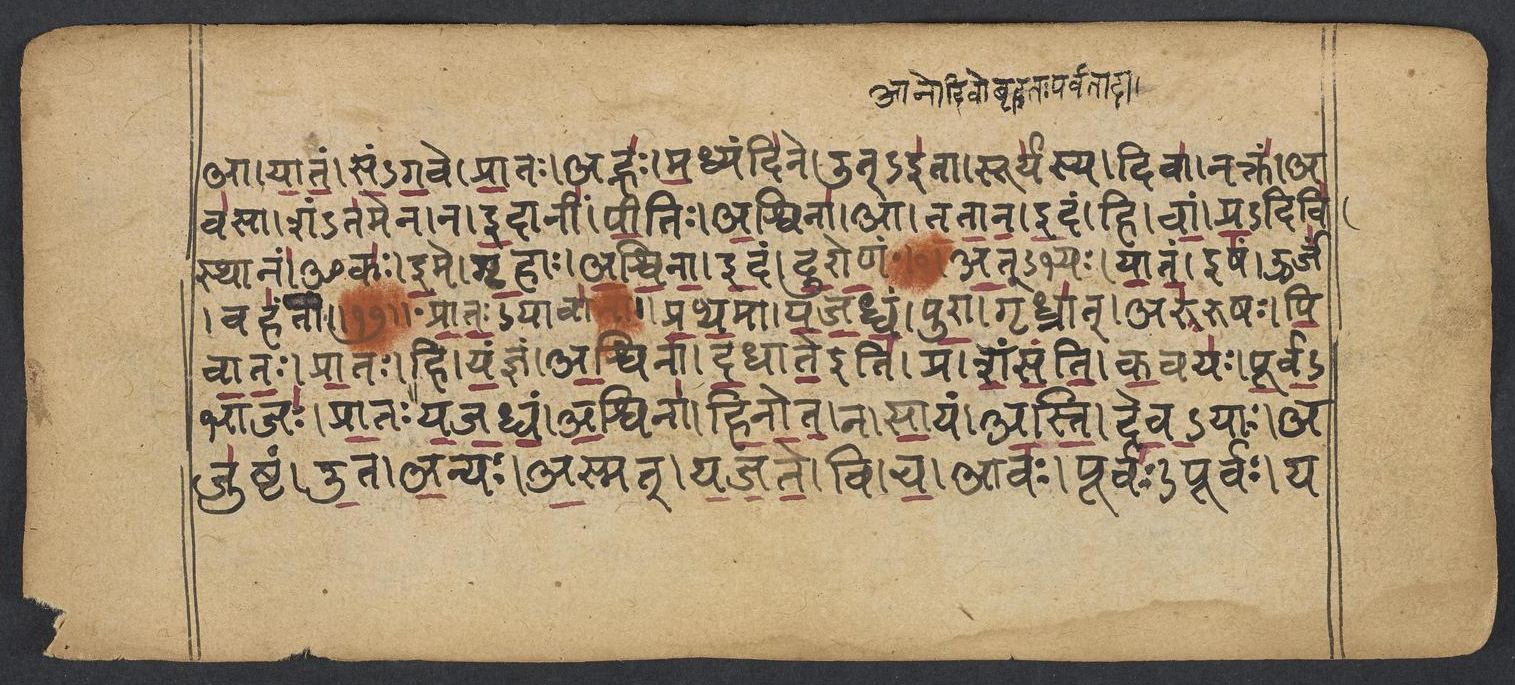
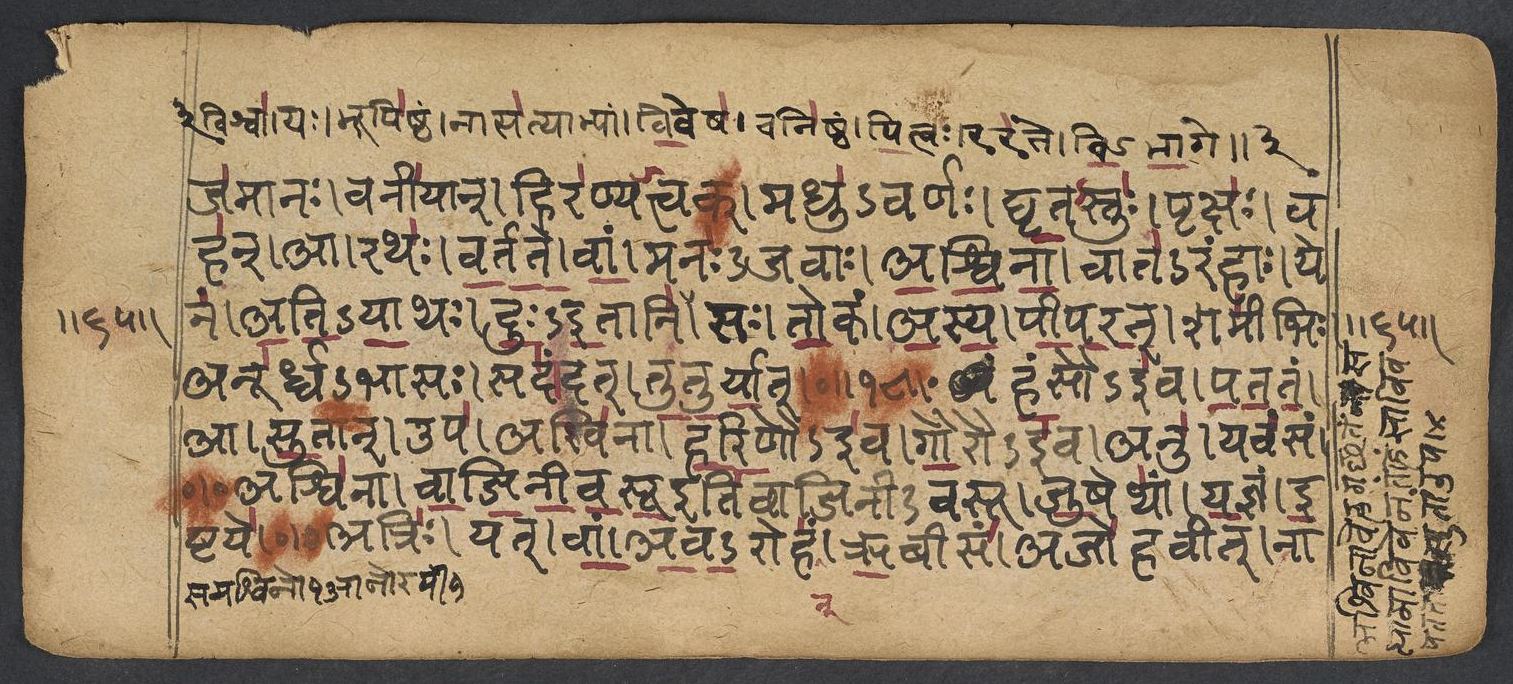
The manuscript shown is Penn Ms. Coll. 390 Item 41 (University of Pennsylvania), an undated paper manuscript of the padapāṭha (the word-by-word recitation text, in which every word is written separately and compounds are split) of the whole Ṛgveda in Devanāgarī, 884 leaves in fascicles, 7-9 lines to the page, accents in red; this hymn stands on fol. 392r-392v. Each section below gives the verses that end on one page; the page boundaries were read on the images (the opening words of every page), not counted out. Where the manuscript is a padapāṭha (the word-by-word recitation text), the section shows Aufrecht's continuous (saṃhitā) text first and, as the edition text, the padapāṭha of the same verses, which is the form written on the page.
How was this verified? (Provenance)
Where on the image
Penn Ms. Coll. 390 Item 41, fol. 392r (numbered 65r by the scribe) (OPenn image 392, lower leaf). Checked on the image: the Rigveda text on this page begins in RV 5.76.3 ‹ā yātam sam-gave prātaḥ›. The next page with Rigveda text, fol. 392v (numbered 65v by the scribe), begins in RV 5.77.2 ‹-yajamānaḥ vanīyān›. Verse 5.77.1 ends on this page.
1prā̱ta̱ryāvā̍ṇā pratha̱mā ya̍jadhvam pu̱rā gṛdhrā̱d ara̍ruṣaḥ pibātaḥ | prā̱tar hi ya̱jñam a̱śvinā̍ da̱dhāte̱ pra śa̍ṁsanti ka̱vaya̍ḥ pūrva̱bhāja̍ḥ ||
Compare: Padapāṭha (word-by-word text written in the manuscript; Sansknet e-text via GRETIL)
1prātaḥ-yāvānā | prathamā | yajadhvam | purā | gṛdhrāt | araruṣaḥ | pibātaḥ | prātaḥ | hi | yajñam | aśvinā | dadhāteiti | pra | śaṃsanti | kavayaḥ | pūrva-bhājaḥ
1FIRST worship those who come at early morning: let the Twain drink before the giftless niggard. The Aṣvins claim the sacrifice at daybreak: the sages yielding the first share extol them.
Where on the image
Penn Ms. Coll. 390 Item 41, fol. 392v (numbered 65v by the scribe) (OPenn image 393, upper leaf). Checked on the image: the Rigveda text on this page begins in RV 5.77.2 ‹-yajamānaḥ vanīyān›. The next page with Rigveda text, fol. 393r (numbered 66r by the scribe), begins in RV 5.78.4 ‹-nādhamānāiva yoṣā śyenasya cit›. Verses 5.77.2-5 end on this page; 5.77.2 begins on fol. 392r (numbered 65r by the scribe).
2prā̱tar ya̍jadhvam a̱śvinā̍ hinota̱ na sā̱yam a̍sti deva̱yā aju̍ṣṭam | u̱tānyo a̱smad ya̍jate̱ vi cāva̱ḥ pūrva̍ḥ-pūrvo̱ yaja̍māno̱ vanī̍yān ||
3hira̍ṇyatva̱ṅ madhu̍varṇo ghṛ̱tasnu̱ḥ pṛkṣo̱ vaha̱nn ā ratho̍ vartate vām | mano̍javā aśvinā̱ vāta̍raṁhā̱ yenā̍tiyā̱tho du̍ri̱tāni̱ viśvā̍ ||
4yo bhūyi̍ṣṭha̱ṁ nāsa̍tyābhyāṁ vi̱veṣa̱ cani̍ṣṭham pi̱tvo rara̍te vibhā̱ge | sa to̱kam a̍sya pīpara̱c chamī̍bhi̱r anū̍rdhvabhāsa̱ḥ sada̱m it tu̍turyāt ||
5sam a̱śvino̱r ava̍sā̱ nūta̍nena mayo̱bhuvā̍ su̱praṇī̍tī gamema | ā no̍ ra̱yiṁ va̍hata̱m ota vī̱rān ā viśvā̍ny amṛtā̱ saubha̍gāni ||
Compare: Padapāṭha (word-by-word text written in the manuscript; Sansknet e-text via GRETIL)
2prātaḥ | yajadhvam | aśvinā | hinota | na | sāyam | asti | deva-yāḥ | ajuṣṭam | uta | anyaḥ | asmat | yajate | vi | ca | āvaḥ | pūrvaḥ-pūrvaḥ | yajamānaḥ | vanīyān
3hiraṇya-tvak | madhu-varṇaḥ | ghṛta-snuḥ | pṛkṣaḥ | vahan | ā | rathaḥ | vatarte | vām | manaḥ-javāḥ | aśvinā | vāta-raṃhāḥ | yena | ati-yāthaḥ | duḥ-ritāni | viśvā
4yaḥ | bhūyiṣṭham | nāsatyābhyām | viveṣa | caniṣṭham | pitvaḥ | rarate | vi-bhāge | saḥ | tokam | asya | pīparat | śamībhiḥ | anūrdhva-bhāsaḥ | sadam | it | tuturyāt
5sam | aśvinoḥ | avasā | nūtanena | mayaḥ-bhuvā | su-pranītī | gamema | ā | naḥ | rayim | vahatam | ā | uta | vīrān | ā | viśvāni | amṛtā | saubhagāni
2Worship at dawn and instigate the Aṣvins:nor is the worshipper at eve rejected. Besides ourselves another craves and worships: each first in worship is most highly favoured.
3Covered with gold, meath-tinted, dropping fatness, your chariot with its freight of food comes hither, Swift as thought, Aṣvins, rapid as the tempest, wherewith ye travel over all obstructions.
4He who hath served most often the Nâsatyas, and gives the sweetest food at distribution, Furthers with his own holy works his offspring, and ever passes those whose flames ascend not.
5May we obtain the Aṣvins' newest favour, and gain their health-bestowing happy guidance. Bring riches hither unto us, and heroes, and all felicity and joy, Immortals!
Notes
- Sanskrit: Aufrecht's edition (1877) with the Vedic accents, as entered by van Nooten and Holland (GRETIL).
- English: Ralph T. H. Griffith, The Hymns of the Rigveda (1889-1892; 2nd ed. 1896-1897), from the VedaWeb digital text; OCR slips in that text were corrected against the printed 2nd edition (data/sources/rigveda/griffith_errata.json).
- Padapāṭha (edition text): Sansknet e-text via GRETIL (CC BY-NC-SA 4.0).
Cite
Sources
- Source: Penn Ms. Coll. 390 Item 41 (undated (catalogued with Penn's 18th-19th c. Vedic manuscripts)), OPenn, Public Domain Mark + Aufrecht's accented text (GRETIL) + Griffith's English (VedaWeb) (holding institution)
- Critical edition: Aufrecht (1877), accented e-text via GRETIL
← previous · → next · v cycle view · l back to library